
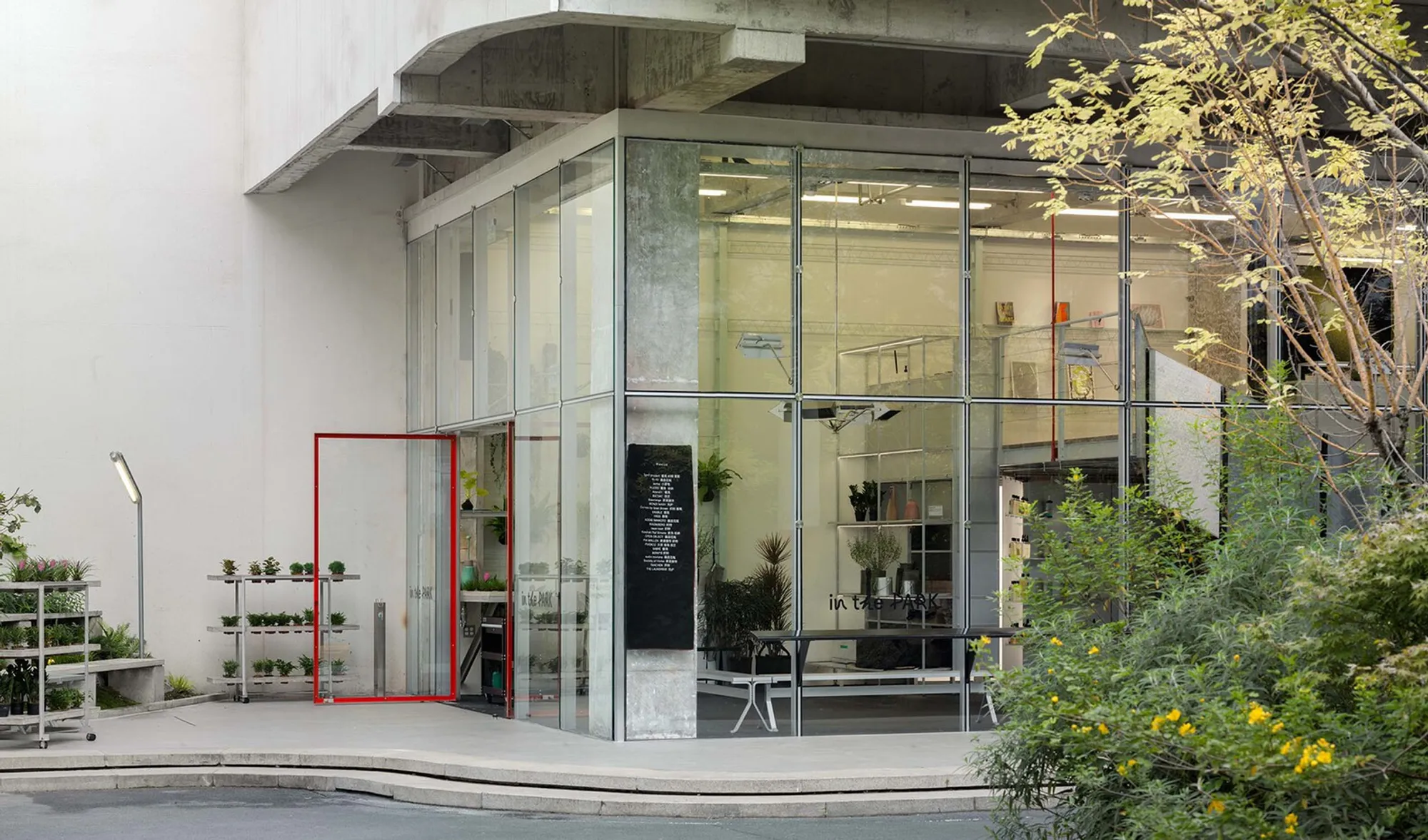
In the PARK Regular Store by CASE PAVILION: Adaptive Retail Architecture in Urban Nature
Adaptive retail store in Chengdu blending modular design, natural light, and sustainable materials within a reclaimed park’s green sunken courtyard.


Located in the southern suburbs of Chengdu, In the PARK Regular Store by CASE PAVILION exemplifies a powerful blend of adaptive reuse, ecological sensitivity, and modern retail architecture. Once a degraded landfill, the site—now Dayuan Central Park—has undergone significant ecological restoration and has become a vibrant public green space. Nestled within one of the park’s sunken courtyards, this retail store redefines how commercial design can coexist harmoniously with nature.

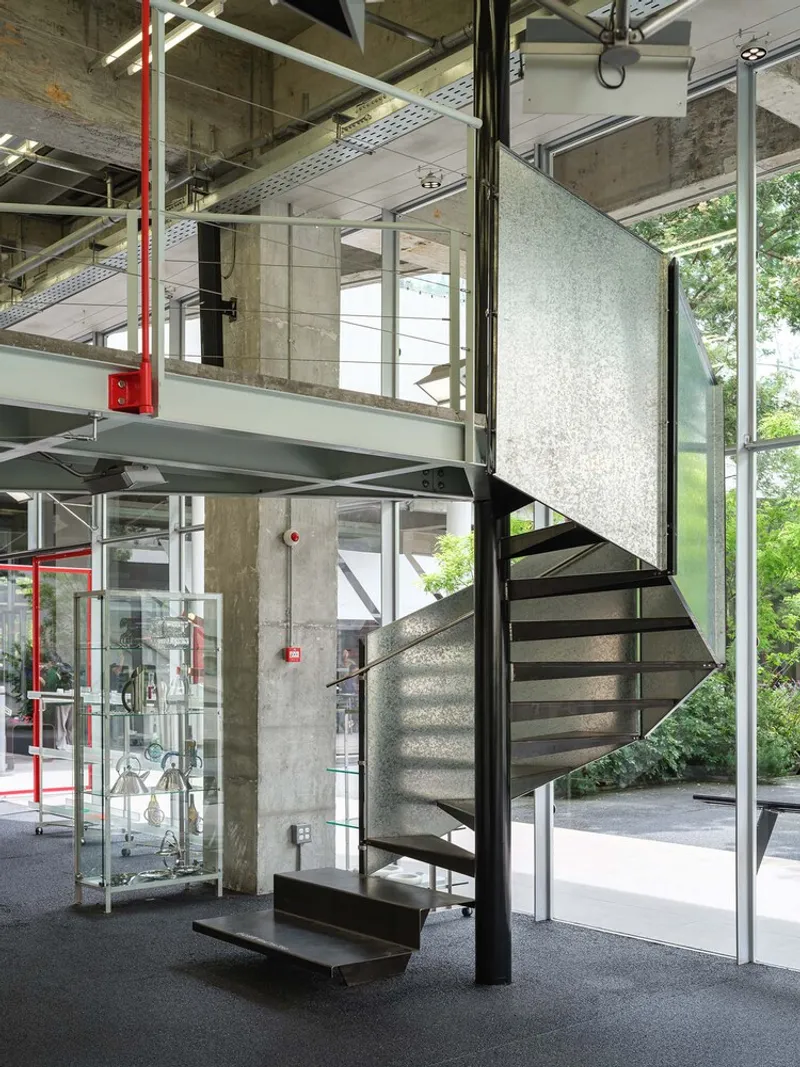
A Longhouse Concept Inspired by Eames
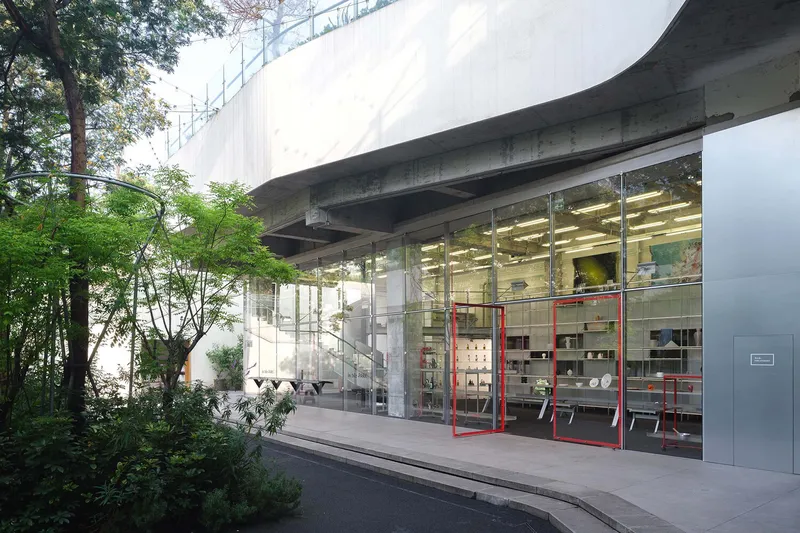
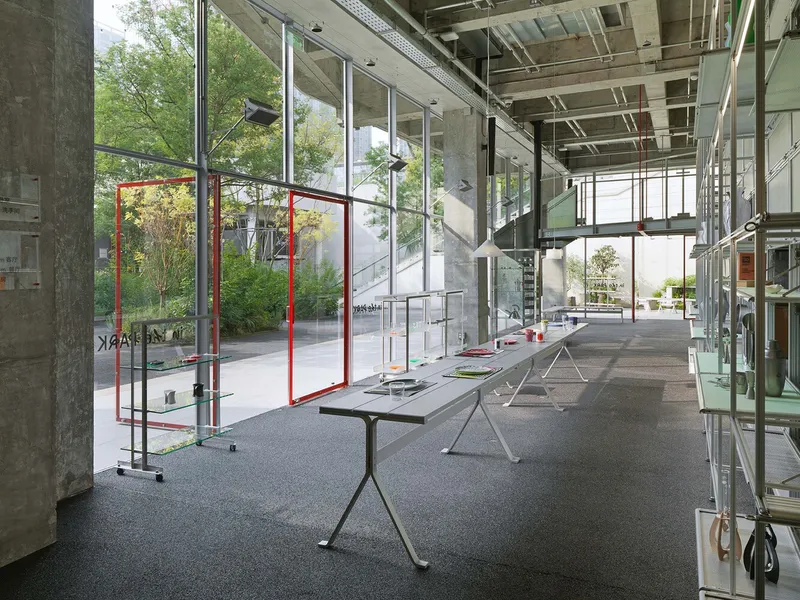
At the heart of the architectural narrative lies the idea of the longhouse, inspired by the iconic Eames House. The site spans 25 meters in length and over 6 meters in depth, with two-thirds of its facade opening toward the lush green courtyard. This linear proportion allows the space to evolve into a contemporary longhouse, embodying both artistic living and constructive clarity—values central to Eames’ philosophy.

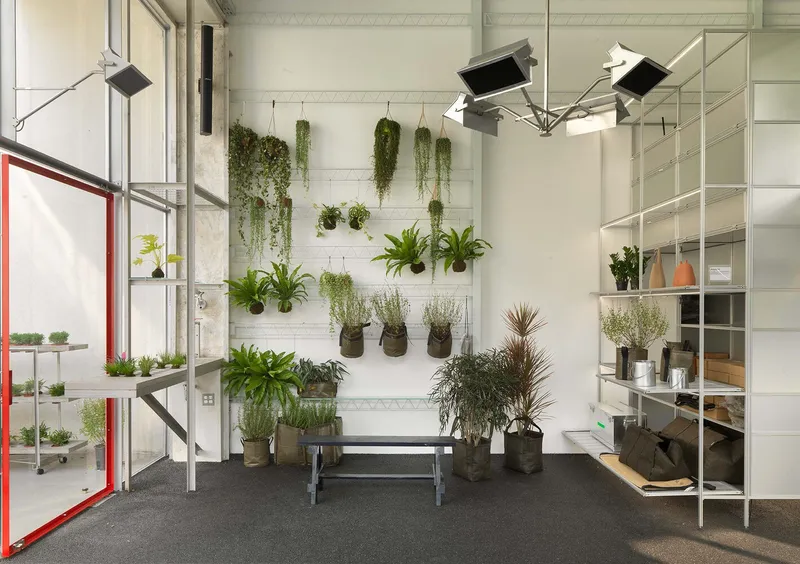
Natural sunlight enters the east-west-oriented space, gradually filtering from the south to the west. This daylighting strategy, combined with openness to the greenery, creates a soft, evolving light experience that elevates the sensory atmosphere throughout the day.

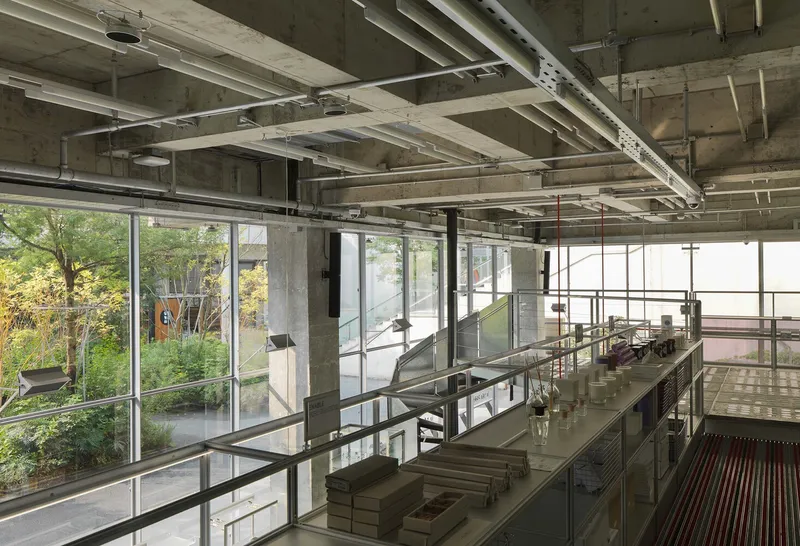
Spatial Design with Function at Every Layer
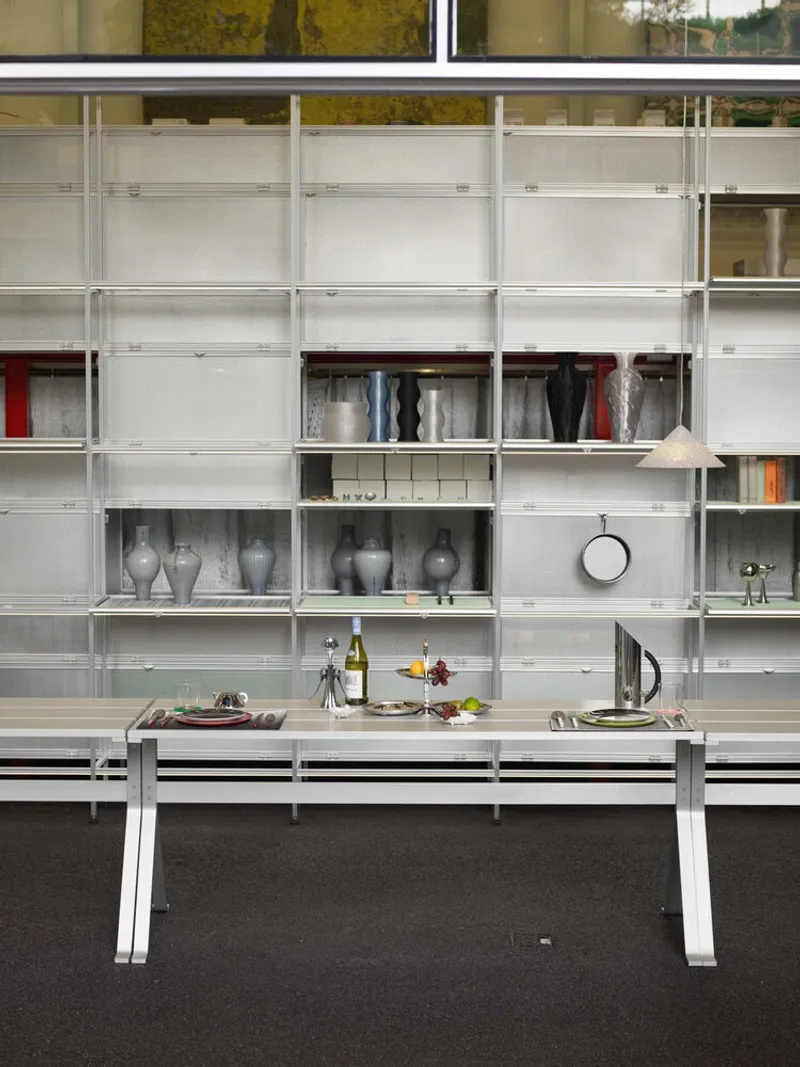
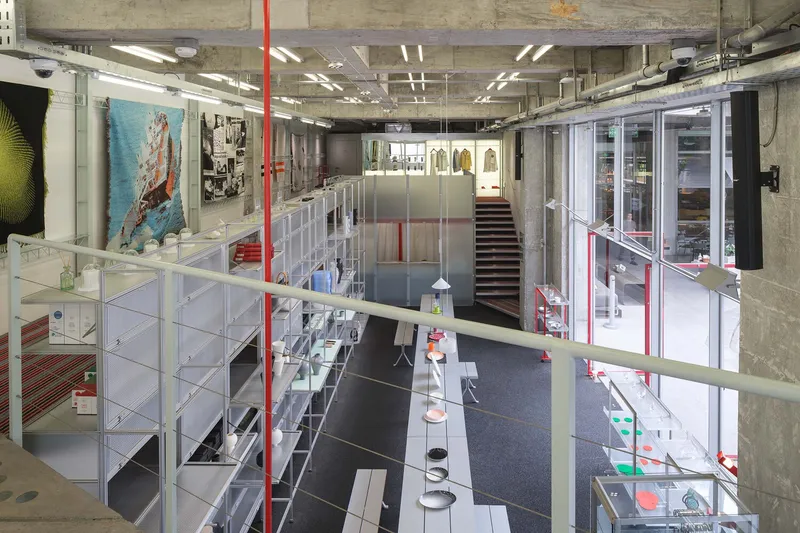
CASE PAVILION approached the spatial organization by emphasizing vertical layering and flexible modularity. A tall, multifunctional aluminum shelving system acts as the structural spine and visual partition. This element integrates a variety of functions—front-facing product displays, hidden stock storage, and a raised platform for additional exhibits on the second level—all within a single continuous form. It becomes a “mega-building” within a building, serving both function and form.
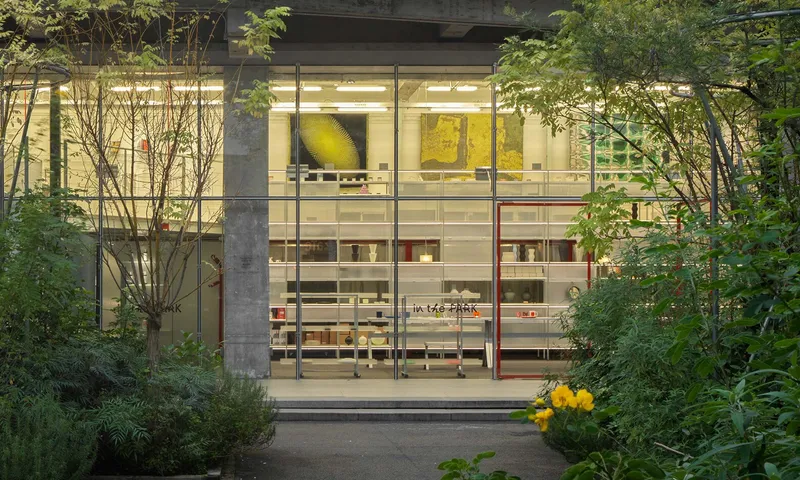
Circulation is designed as a dynamic experience. A combination of a spiral staircase and a straight stair creates a looped pathway, inviting visitors to explore the interior in varied, three-dimensional perspectives. The path encourages movement, discovery, and engagement.
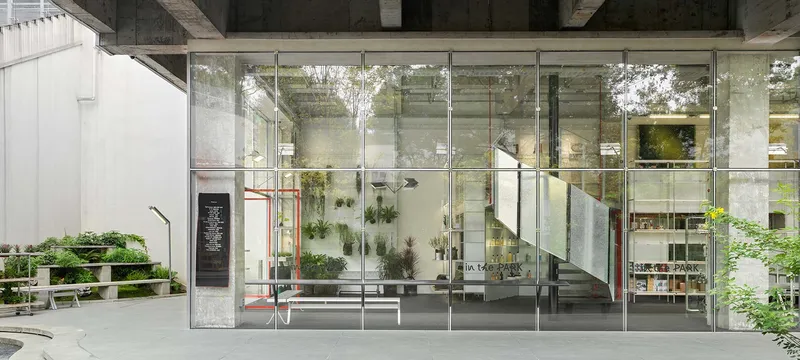
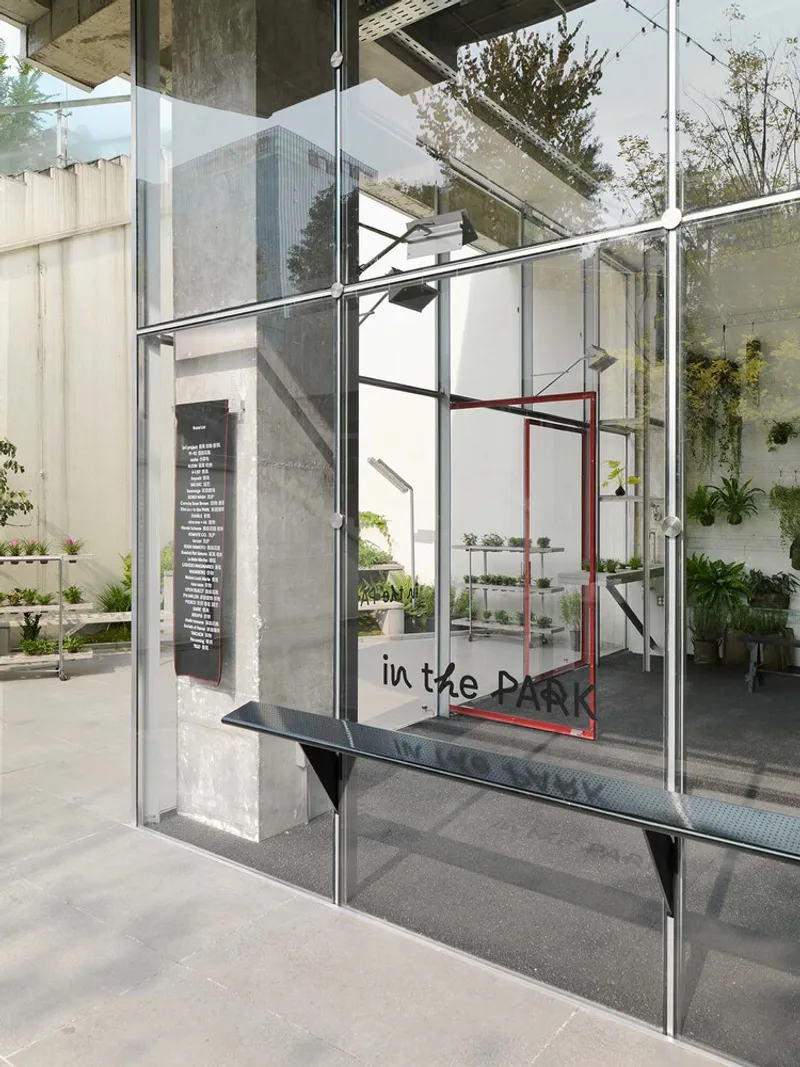
An L-shaped glass curtain wall blurs the line between inside and outside. The transparency not only reflects surrounding nature but also acts as a passive visual display, embedding the retail space into the ecological and architectural fabric of the park.

Retail as Infrastructure: Constructive, Flexible, and Scalable
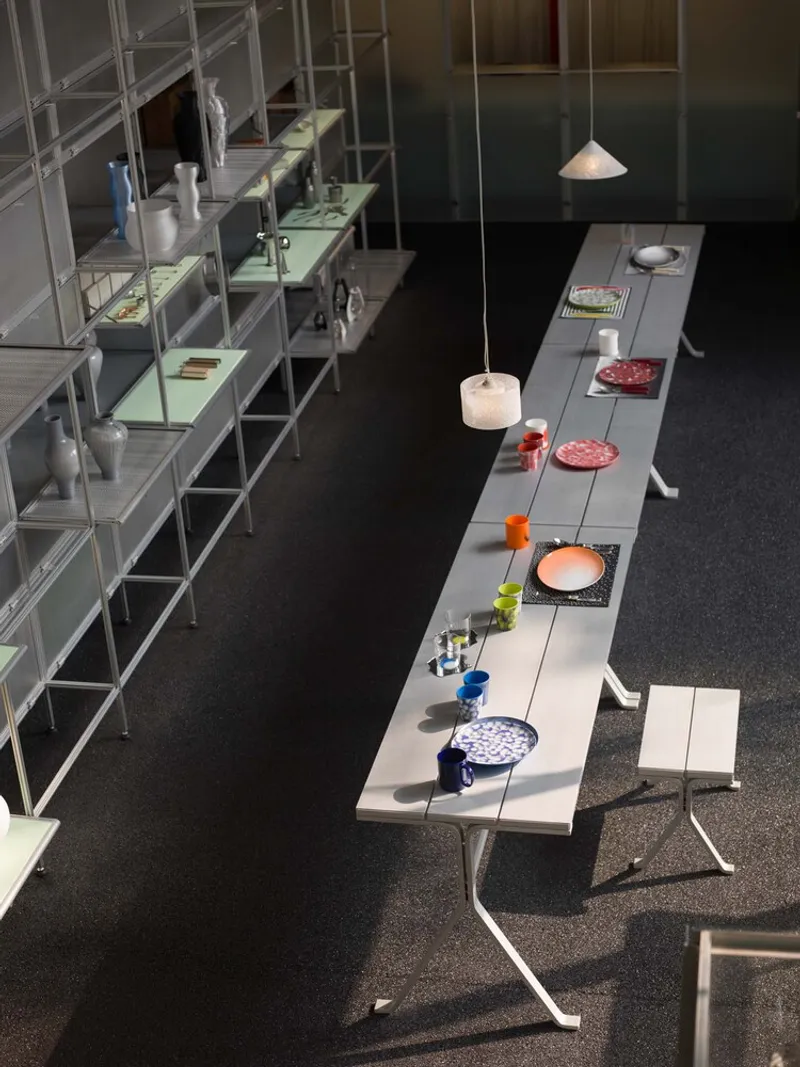
The design also explores retail as urban infrastructure, using architecture as a tool for long-term utility and adaptability. Fixtures—such as long display tables, foldable aluminum units, and wall-mounted trusses—were chosen for their versatility and sustainability. The alignment of these elements with the main facade creates a layered visual field, enhancing product visibility while maintaining a coherent aesthetic.


By employing industrial-grade profiles, prefabricated systems, and sustainable hardware, the store offers insights into scalable, cost-efficient retail design. It becomes a prototype for how small-scale architecture can address themes of modularity, environmental integration, and evolving user needs without sacrificing design integrity.




Popular Articles
Popular articles from the community


Riyadh For All: Intergenerational Urban Design for Active Aging in Rabat
Riyadh For All reimagines urban design in Rabat with intergenerational co-living, adaptive courtyards, and Moroccan cultural exchange today.

Lunar Spiral: Space Architecture Shaped by the Mathematics of the Universe
Lunar Spiral reimagines space architecture through Fibonacci geometry, lunar regolith, levitating habitats, and self-sustaining Moon living.

Conexión: Biophilic Design Reimagines High-Rise Living in Hong Kong
Conexión reimagines high-rise living in Hong Kong through biophilic design, green facades, shared spaces, daylight, water and nature within.

The Musturak Paradise: Senior Living Architecture for a Connected Future in Temara, Morocco
The Musturak Paradise reimagines senior living architecture in Temara via private homes, social spaces, culture, community, and shared care.


Similar Reads
You might also enjoy these articles


Hodi-Mandai Geram
Project Function: Preservation and revitalization of the Intangible heritage and socio-spatial identity of the Hodi by Housing, Cultural Memory Center, Sacred Grove, landscape, local tourism economy


Olio Towers: A Mid-Rise for Performers That Fuses Housing, Rehearsal, and Stage
Located blocks from Houston's Theater District, this modular tower stacks living units around a central performance atrium.

Oasis: Modular Green Housing Carved into Dhaka's Urban Fabric
A shortlisted Plugin Housing entry reclaims unauthorized settlements in Dhaka with stepped concrete volumes, green roofs, and ventilation-driven design.

Black Hole: A Floating Megastructure for the Post-Physical Era
Emiliano Mazzarotto envisions a spherical, self-scaling arena where e-sports, digital hotels, and holographic stadiums replace traditional public space.

Explore Commercial Buildings Competitions
Discover active competitions in this discipline



Challenge to reimagine the Iron Throne


Photograph architecture without architects


Illustrate the lost glory of Angkor Wat - Render Challenge


Design challenge to reuse E-waste
Comments (0)
Please login or sign up to add comments
No comments yet. Be the first to comment!