
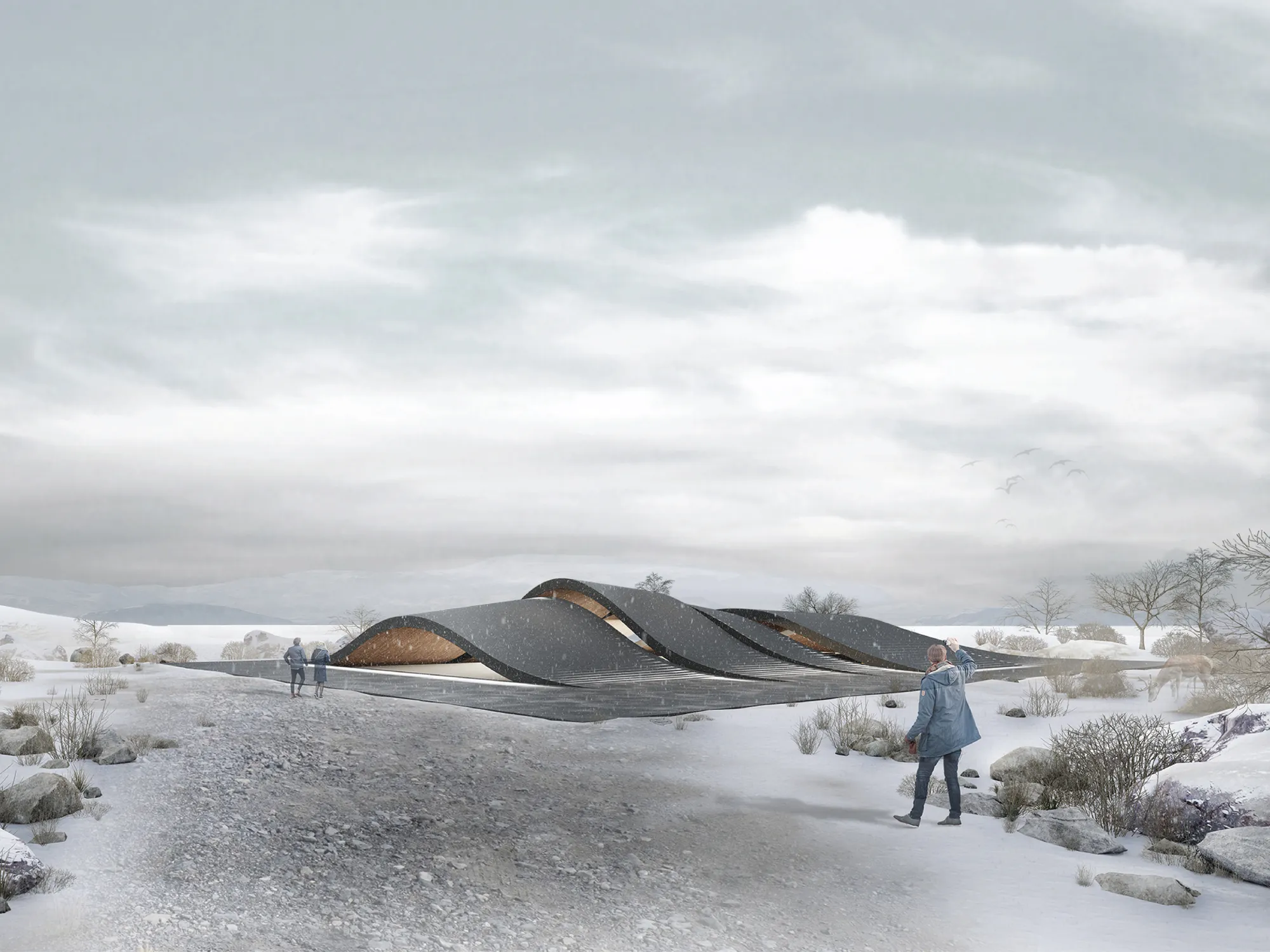
INDELIBLE WOUND
Project of geology museum in Þingvellir, Iceland

1. Main premise
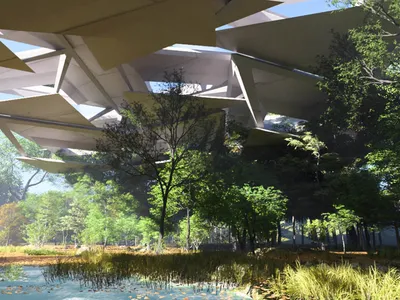
We want to express the harmony and contrast between the natural and the artificial in this project. There are two main project goals. The first is to be a building buried in nature without compromising the skyline around the site. The second is to inform people about the process of geological change by unraveling the past, present, future, and future events into an exhibition space. Unlike general buildings built on the ground, the building embedded in the ground under a flat roof provides a view into the ground, not into the sky. In addition, it provides a space where visitors can feel the beauty by experiencing the spaces under the ground, and at the same time give visitors a sense of awareness due to research and development.
2. Design goals
- Experiential
- Engaging and Educative
The idea and design of the museum is rooted in creating a holistic and realistic experience for visitors. To design an engaging and educational space, we focused at the interaction of geologic history with human experience. Therefore, rather than building a building on the ground, we lowered it underground and designed the space. As a result, the exterior of the building takes on the form of concrete resting on the site. The exterior of the building signifies the wounds of the earth against the recklessly developing modern society. In addition, by designing exhibitions and learning spaces where you can see geology between spaces, it provides an educational aspect to humans.
3. Mass study
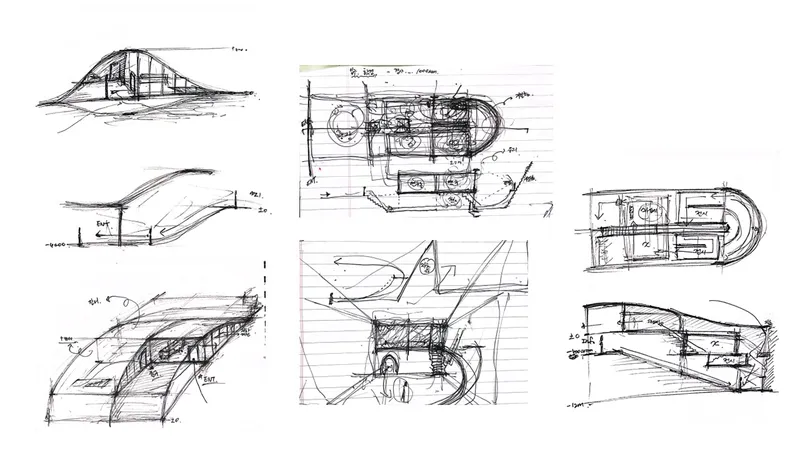
The mass concept was inspired by the Rift Valley. The motif was a rift that gave the feeling of being torn on a field where there was nothing. We decided to express this according to the current situation that is being developed indiscriminately. A concrete plate was laid on the ground and a cut was made between them.

Various attempts were made to express the appearance of the land raised by volcanic activity, such as tearing paper and cutting it with a knife.

4. Space program
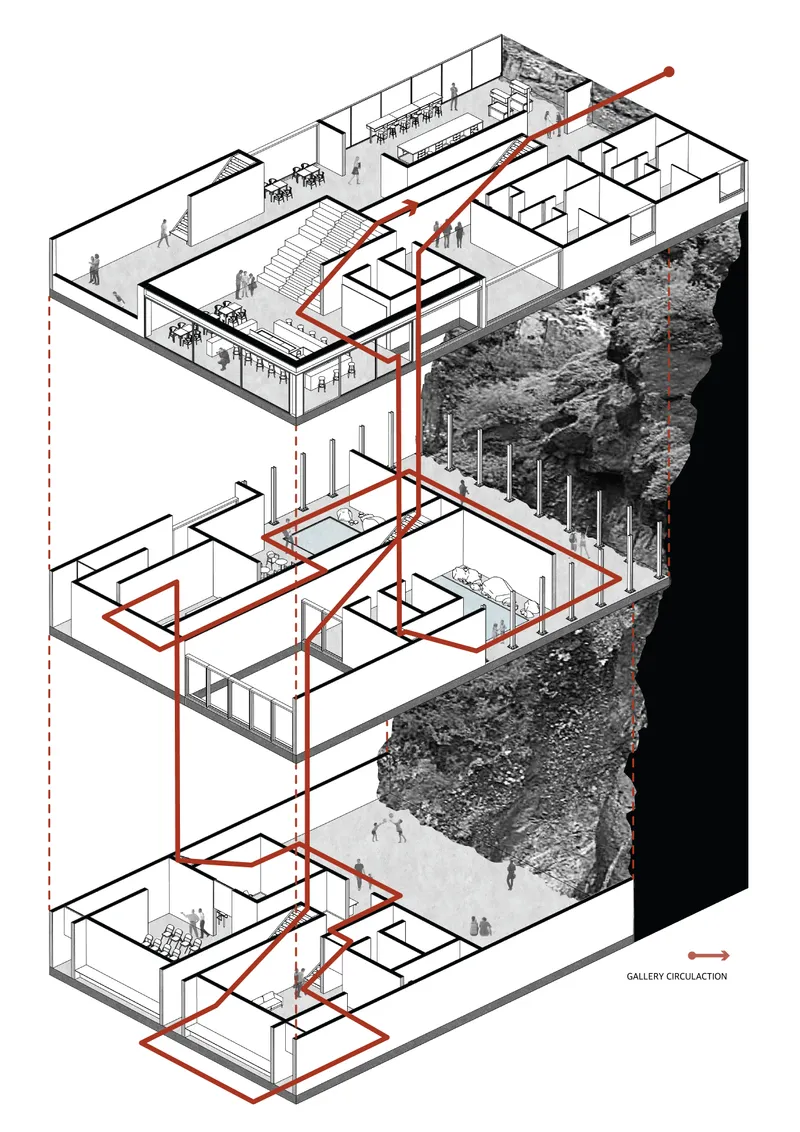
We separated the circulation of researchers and visitors. The main flow is the visitor flow. Therefore, when entering the building, the entrance was placed in the most conspicuous and nearest place. There was a lot of study in the exhibition circulation plan because it had to go into the ground at the ground level and then come out again. Among the many circulations, we chose the exhibition circulation that rises from the lowest level to the ground. The point we focused on in this part was to come up without getting bored. Through the connection between the exhibition space and the rest area, and impactful spaces, we created a flow line that allows people to naturally view the exhibition and come out to the entrance. The space for the researchers was placed as close to the ground level as possible to make it easier to go out, and the movement was drawn so that it did not overlap with the exhibition space.
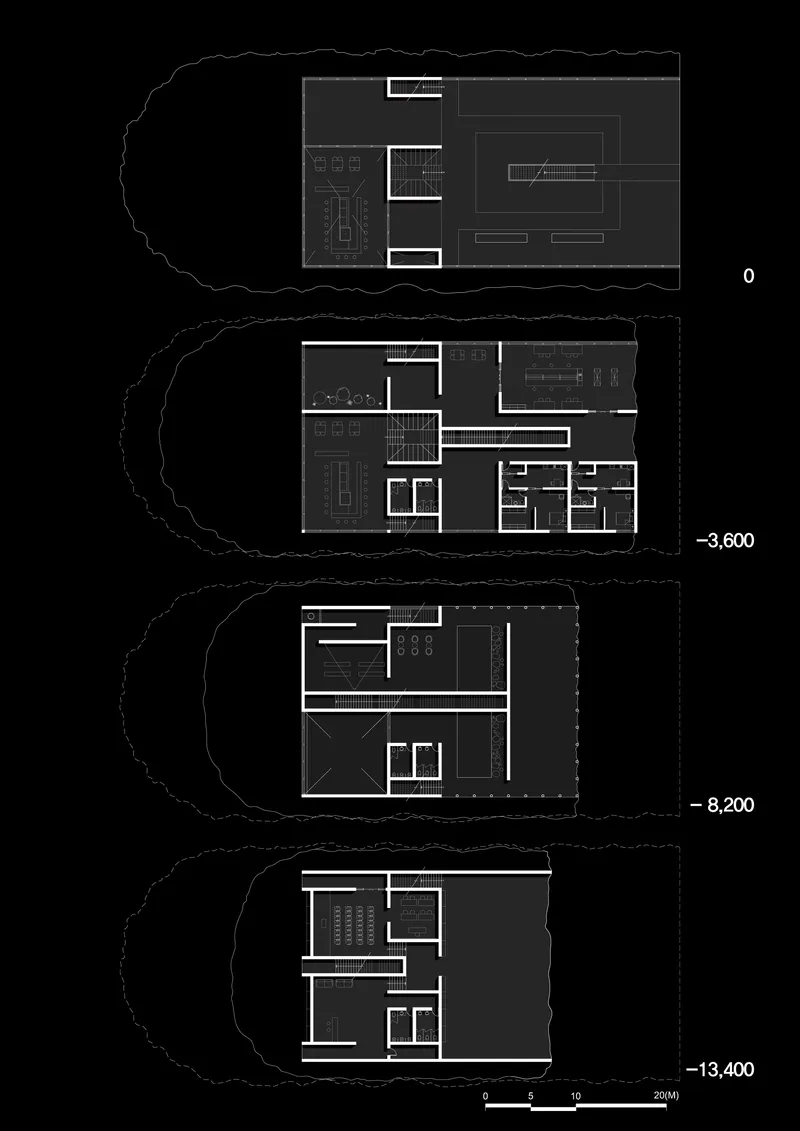
5. Plan
- Research : Laboratories, researchers offices, researchers entry, guest rooms
- Learning and recreation : Exhibition Hall, Auditorium, Learning/workshop areas, Cafes
- Services : Administration office, Curator's office, Entrance Lobby, Washrooms/Toilets, Utility.
- Geological Observation Space : The main observation space where you can see the entire geology from the lowest level
6. Used materials
- traditional materials : Lava, Gras and truf
- modern materials : Exposed concrete, Cortain steel, Cross laminated lumber (heat treated lumber)
We paid attention to the historicity of the land and chose materials that can connect the past and the present. This is because human memory of the land will disappear in the future, but the memory of the land is being reproduced through architecture.
Concrete and corten steel, which are frank materials that reveal physical properties, and traditional Icelandic materials that respond to the flow of time were used as finishing materials for the space.
Zatova wood was used for the interior of the roof and the overall finishing material for the space, and cortain steel was mainly used for the stairs and cafe. Concrete was utilized for the roof and floor.

7. Future development
As it is located at the entrance of the national park, this museum will provide a lot of education to a variety of people, including tourists and learners. We hope that researchers working here will also be provided with an opportunity to conduct research while looking at the geology under the ground, and will be more inspired. Although this museum shows only the present, in the far future, this museum will also be the past. Visitors who visit at that time will come to see the present underground scene as a more beautiful nature. In addition, the exhibition space below the ground will provide new inspiration and be a good resource for those who will do research in the future.


Popular Articles
Popular articles from the community


Co-Life: Senior Housing Design That Reconnects Older Adults With the City
Co-Life reimagines senior housing design through healing gardens, shared streets, workshops, and a sustainable community across generations.
EW PARK: Sustainable Architecture Reimagines the Future of Urban Parking
EW PARK reimagines city parking as a modular wooden tower combining automation, solar energy, electric mobility, and adaptable urban design.

AL-JANNAH: Sustainable Architecture and Permaculture for Afghan Widows
AL-JANNAH uses sustainable architecture and permaculture to create resilient oasis of housing, learning, work and renewal for Afghan widows.

The Musturak Paradise: Senior Living Architecture for a Connected Future in Temara, Morocco
The Musturak Paradise reimagines senior living architecture in Temara via private homes, social spaces, culture, community, and shared care.


Similar Reads
You might also enjoy these articles
The Rhythm of Seasons
A Farmers' Market Connecting Nature and the City


More Than a Building-Designing a Living System
More Than a Building-Designing a Living System
Base Beyond
DESERT COMPOUND ARID: TOURISM OF ABSENCE AND ABUNDANCE
Explore Interior Design Competitions
Discover active competitions in this discipline


Challenge to design luxury tourism on rails


Challenge to reimagine the Iron Throne


Photograph architecture without architects


VR headsets Storefront design competition
Comments (0)
Please login or sign up to add comments
No comments yet. Be the first to comment!