

Indigenous Hub by BDP Quadrangle + Two Row Architect + Stantec Architecture + ERA Architects, Toronto
A culturally grounded urban hub integrating healthcare, housing, and education, fostering Indigenous identity, healing, and community in Toronto’s evolving landscape.


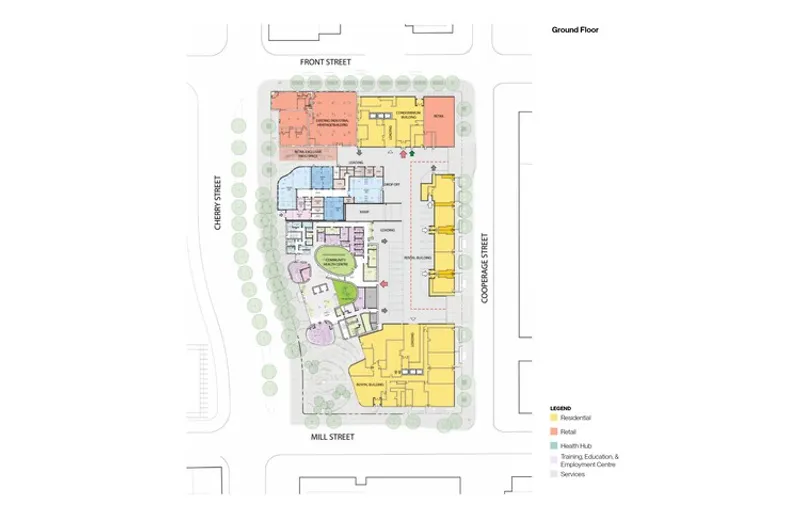
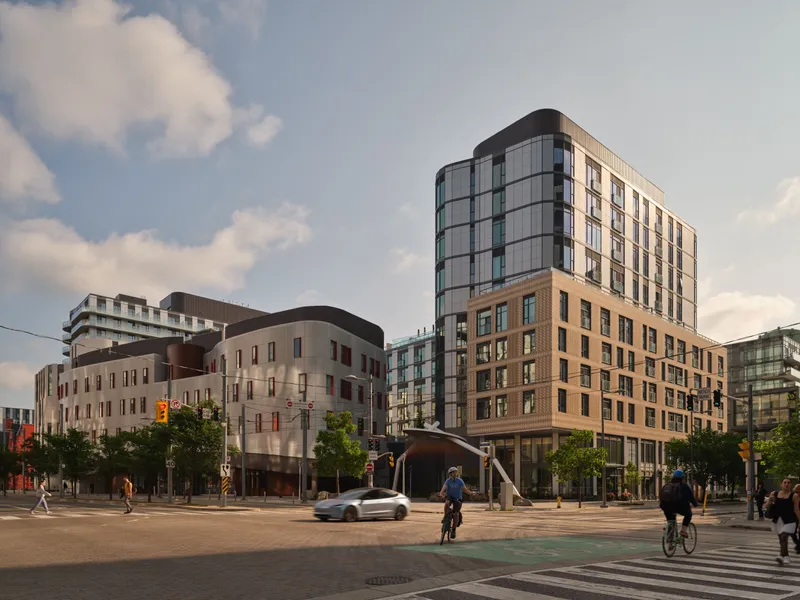
The Indigenous Hub in Toronto’s Canary District stands as a transformative model of architecture rooted in healing, reconciliation, and cultural resurgence. Designed collaboratively by BDP Quadrangle, Two Row Architect, Stantec Architecture, and ERA Architects, this 40,000 m² mixed-use development occupies an entire urban block and redefines how cities can support Indigenous communities through integrated design.
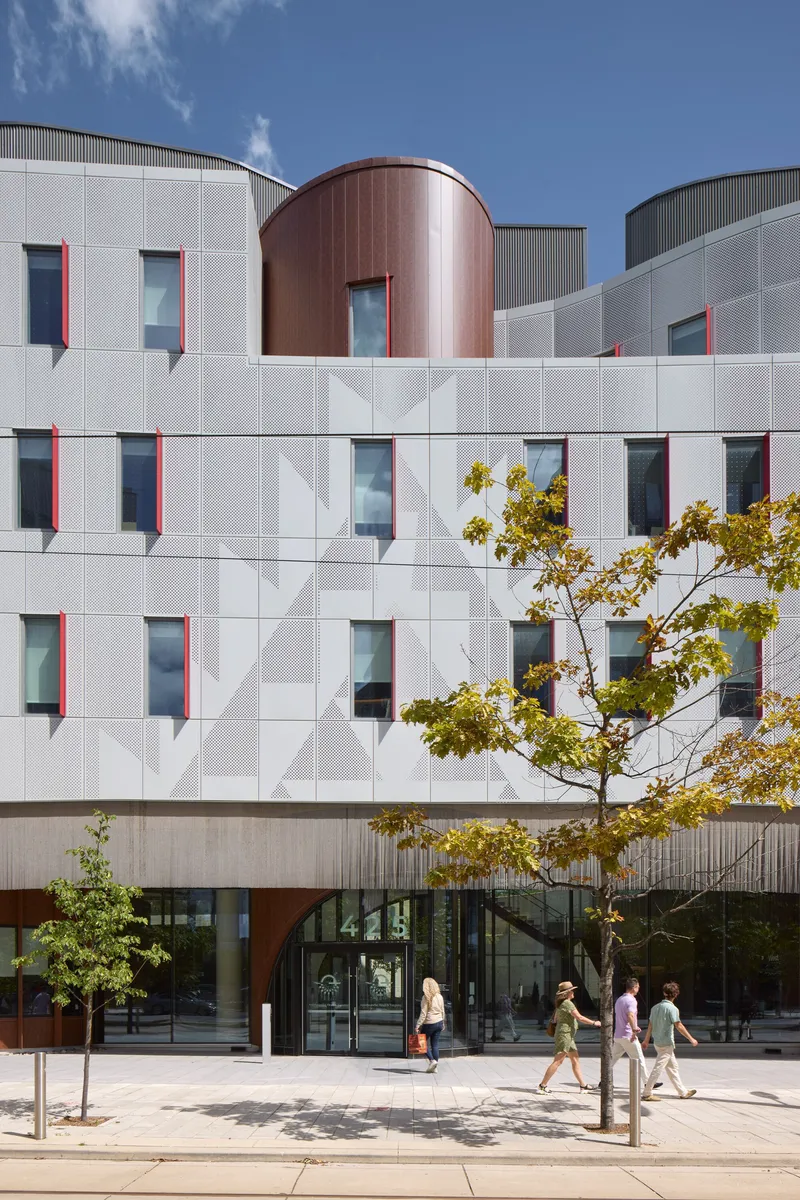
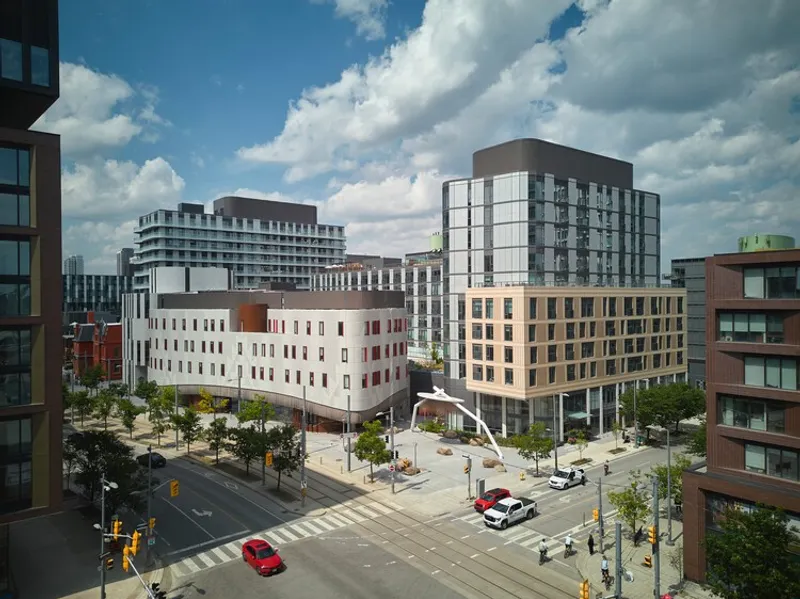
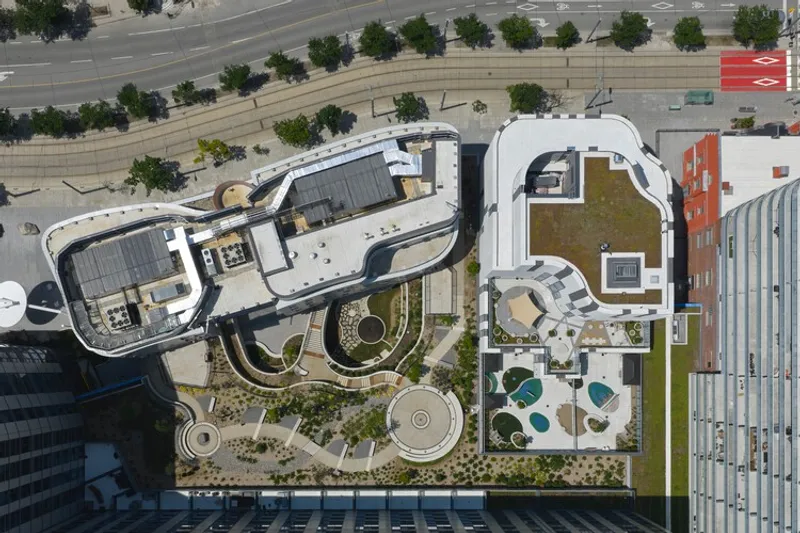
More than a building, the Indigenous Hub is conceived as a living urban ecosystem. It brings together an Indigenous Community Health Centre, two residential buildings: Canary House and Birch House: offering approximately 400 homes, the Miziwe Biik Training Institute, and a network of public spaces including a civic plaza and the Indigenous Peoples Garden Patio. Together, these elements form a holistic environment that addresses health, housing, education, employment, and cultural expression for Toronto’s urban Indigenous population.
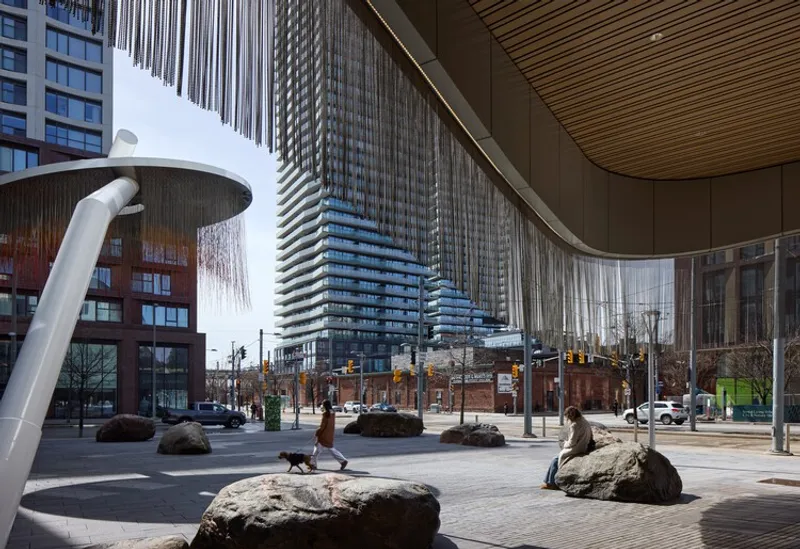
The project is deeply rooted in a long-term vision initiated by Indigenous leader Joe Hester, whose advocacy led to the return of 9,700 m² of ancestral land to Anishnawbe Health Toronto. This act of land restitution enabled the creation of a culturally grounded urban space that reflects Indigenous values, traditions, and ways of knowing.
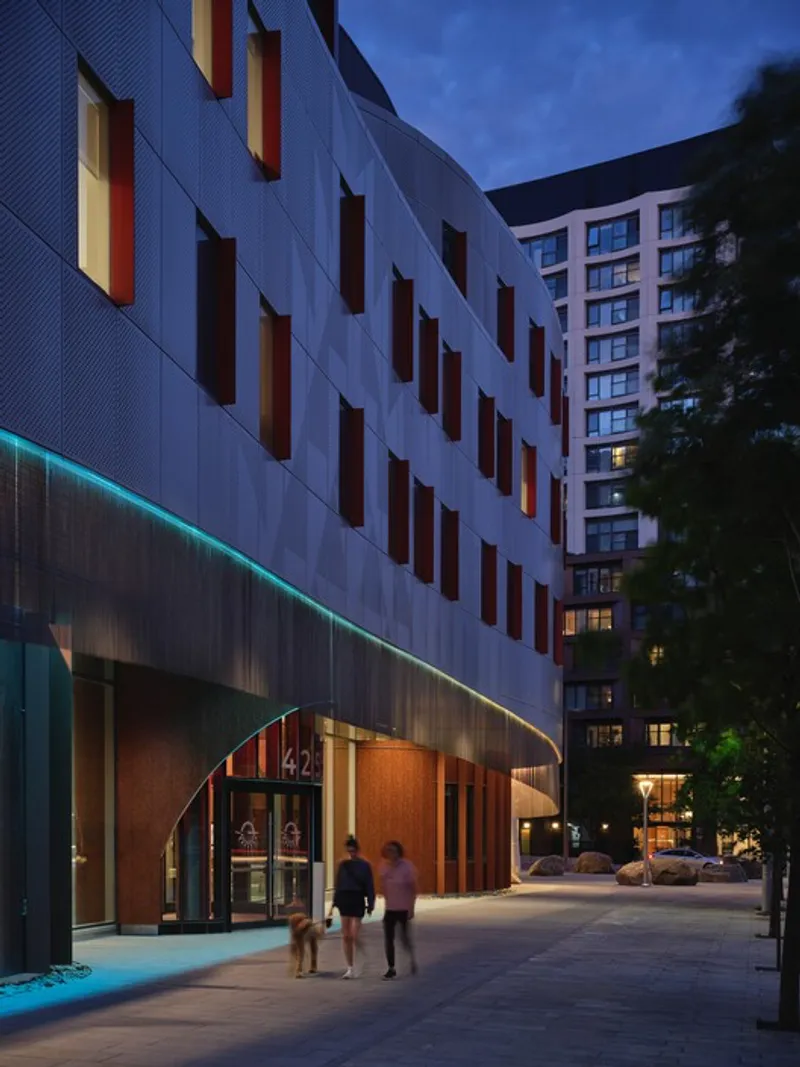
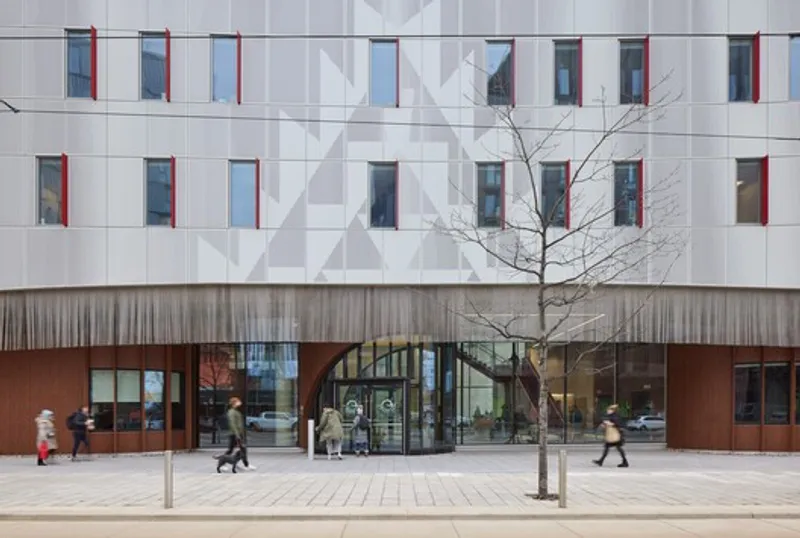
Central to the design approach is the Indigenous principle of “Two-Eyed Seeing,” which integrates Indigenous knowledge systems with Western architectural practices. This co-design methodology ensured that every aspect of the project, from spatial organization to material selection, reflects a dialogue between cultures rather than a dominance of one over the other.
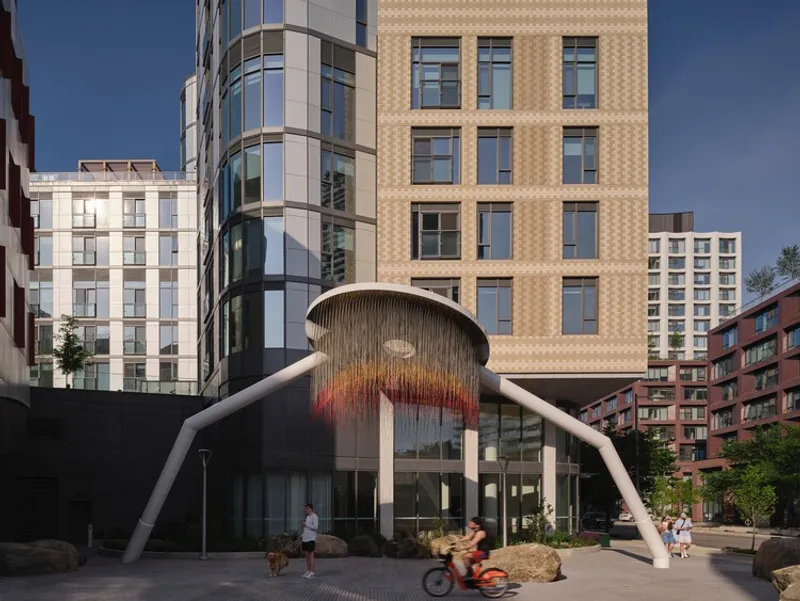
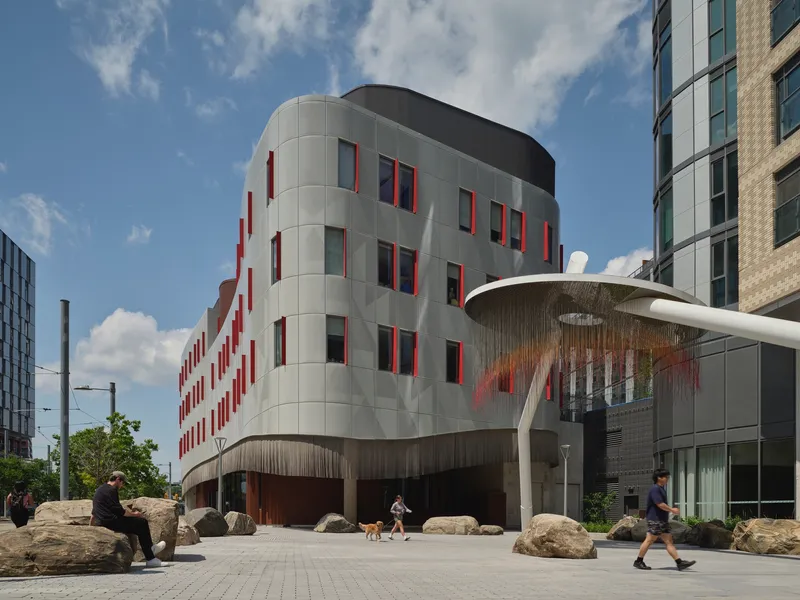
The Indigenous Community Health Centre serves as the symbolic and functional heart of the development. Its curved form is inspired by a traditional shawl, representing protection, care, and community. The building’s east-facing orientation aligns with the sunrise, reinforcing themes of renewal and spiritual connection. The façade, composed of cast-in-place concrete and metal panels, deliberately avoids colonial architectural materials such as brick, establishing a distinct and culturally meaningful identity.
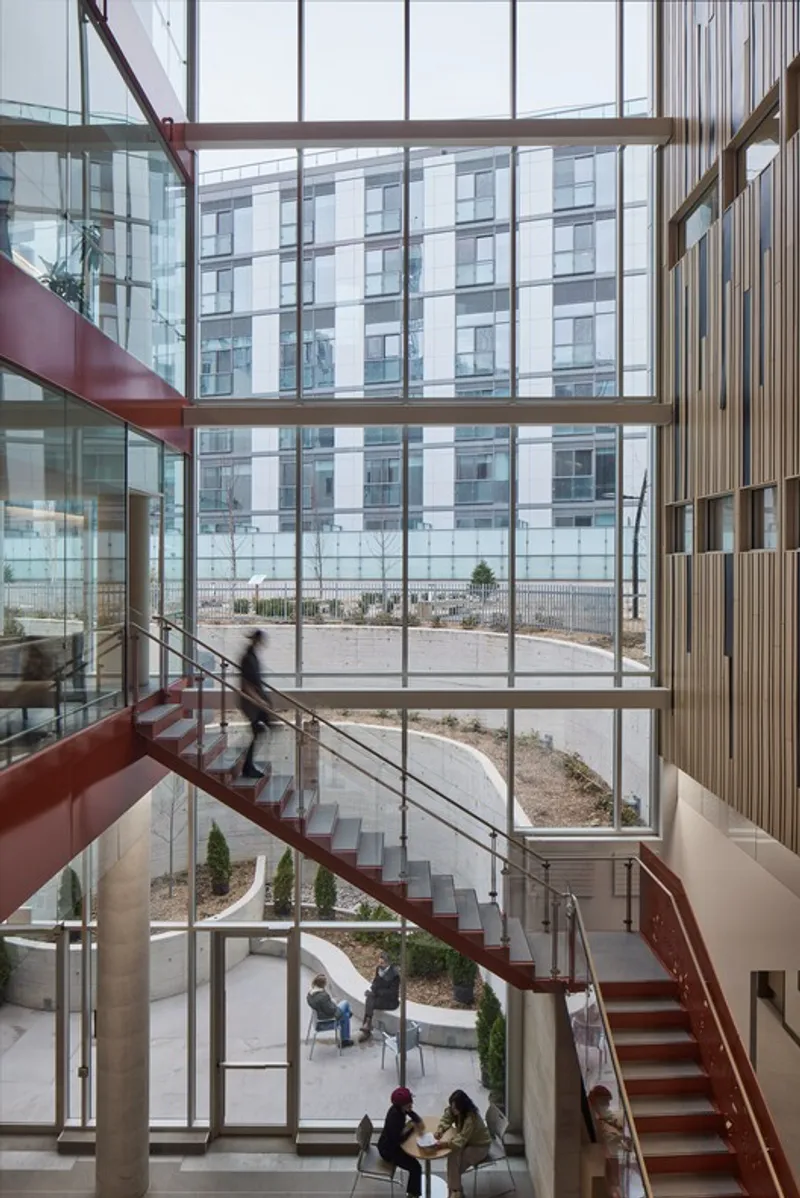
Eight guiding Indigenous design principles informed the entire project. These include referencing natural forms such as stones in a creek, responding to solar movement, incorporating native plant species, and embedding Indigenous art throughout the site. These principles are not decorative but foundational, shaping both the physical and experiential qualities of the architecture.
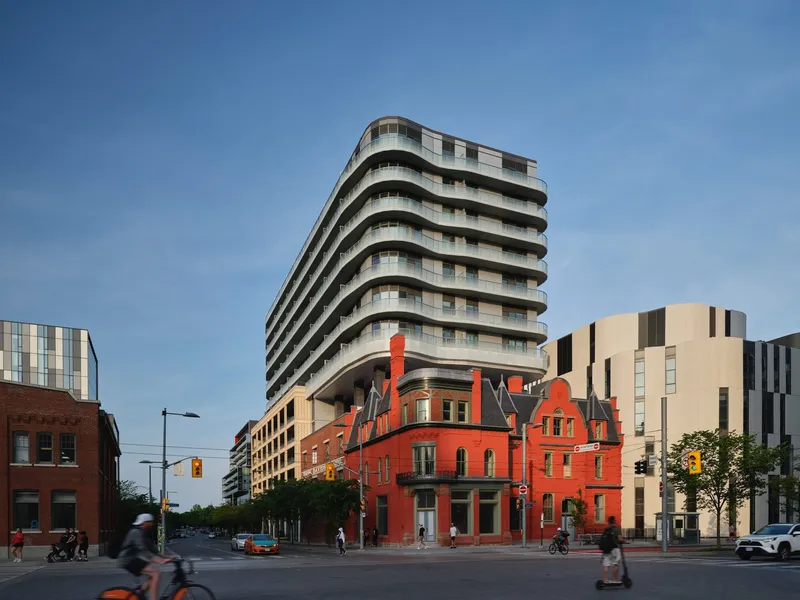
The residential components, Canary House and Birch House, extend these ideas through textured brick façades that evoke traditional woven baskets, symbolizing shelter and continuity. Meanwhile, the Miziwe Biik Training Institute draws inspiration from birch forests, with prefabricated panels that mimic bark textures and window arrangements that reflect the life cycle of trees.
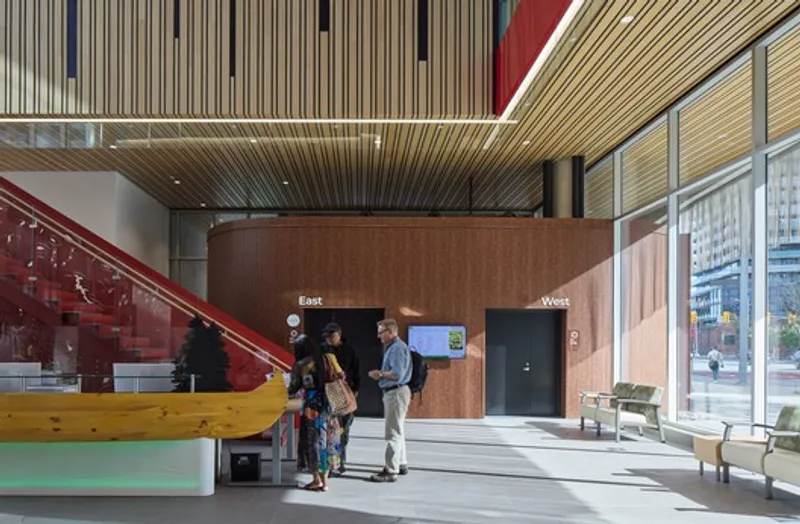
Public space plays a critical role in reinforcing community connections. The elevated Indigenous Peoples Garden Patio, set 6.5 meters above street level, provides a space for cultivating medicinal plants such as sage and sweetgrass. Adjacent play areas and civic spaces enriched with Indigenous art create an inclusive environment that encourages gathering, learning, and cultural expression.
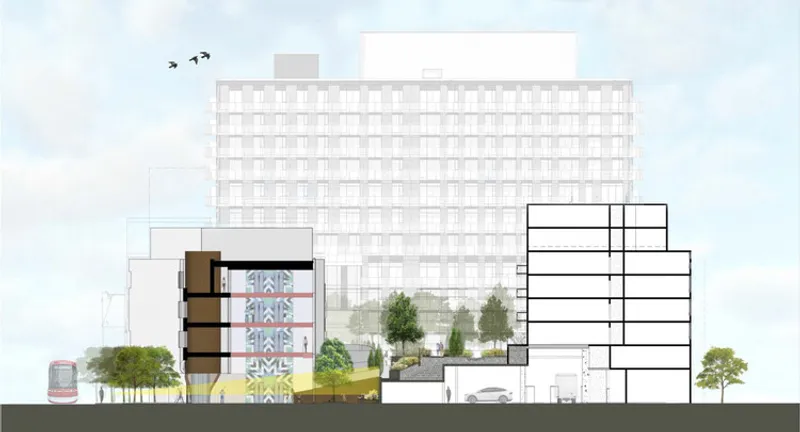
Ultimately, the Indigenous Hub is not just an architectural achievement but a powerful urban statement. It demonstrates how design can actively contribute to reconciliation by embedding cultural narratives, supporting community needs, and restoring connections to land. By merging contemporary architecture with Indigenous knowledge systems, the project establishes a new paradigm for inclusive, meaningful, and future-oriented urban development.
All the Photographs are works of Riley Snelling, James Brittai


Popular Articles
Popular articles from the community

Extended Shell: Retrofitting Kolkata's Balconies as Living Urban Thresholds
A modular retrofit system recovers the social and environmental intelligence of Kolkata's historic verandas for contemporary Park Street residents.

Singing Woman: Contemporary Architecture Inspired by Estonia’s Voice and the Sea
Singing Woman turns Estonia’s song culture into flowing opera house architecture, blending public life, landscape, sea, and national memory.

The Amber Palace Opera: A Geological Fiction Surfaces on Tallinn's Baltic Waterfront
Pierre Brillard reimagines a Baltic legend as a public landscape, opera house, and waterfront promenade rooted in Tallinn's coastal identity.

Opera on the Sea: Driftwood Logic Shapes a Timber Opera House on Estonia's Coast
Trevor Orgill's opera house translates the entangled drift of floating timber into a civic building where wood, water, and music converge.

Similar Reads
You might also enjoy these articles


Hodi-Mandai Geram
Project Function: Preservation and revitalization of the Intangible heritage and socio-spatial identity of the Hodi by Housing, Cultural Memory Center, Sacred Grove, landscape, local tourism economy


Olio Towers: A Mid-Rise for Performers That Fuses Housing, Rehearsal, and Stage
Located blocks from Houston's Theater District, this modular tower stacks living units around a central performance atrium.

Oasis: Modular Green Housing Carved into Dhaka's Urban Fabric
A shortlisted Plugin Housing entry reclaims unauthorized settlements in Dhaka with stepped concrete volumes, green roofs, and ventilation-driven design.

Black Hole: A Floating Megastructure for the Post-Physical Era
Emiliano Mazzarotto envisions a spherical, self-scaling arena where e-sports, digital hotels, and holographic stadiums replace traditional public space.

Explore Architecture Competitions
Discover active competitions in this discipline

Challenge to reimagine the Iron Throne

Photograph architecture without architects

Illustrate the lost glory of Angkor Wat - Render Challenge

Design challenge to reuse E-waste
Comments (0)
Please login or sign up to add comments
No comments yet. Be the first to comment!