
Industrial Interior Design: The Art of Raw Elegance
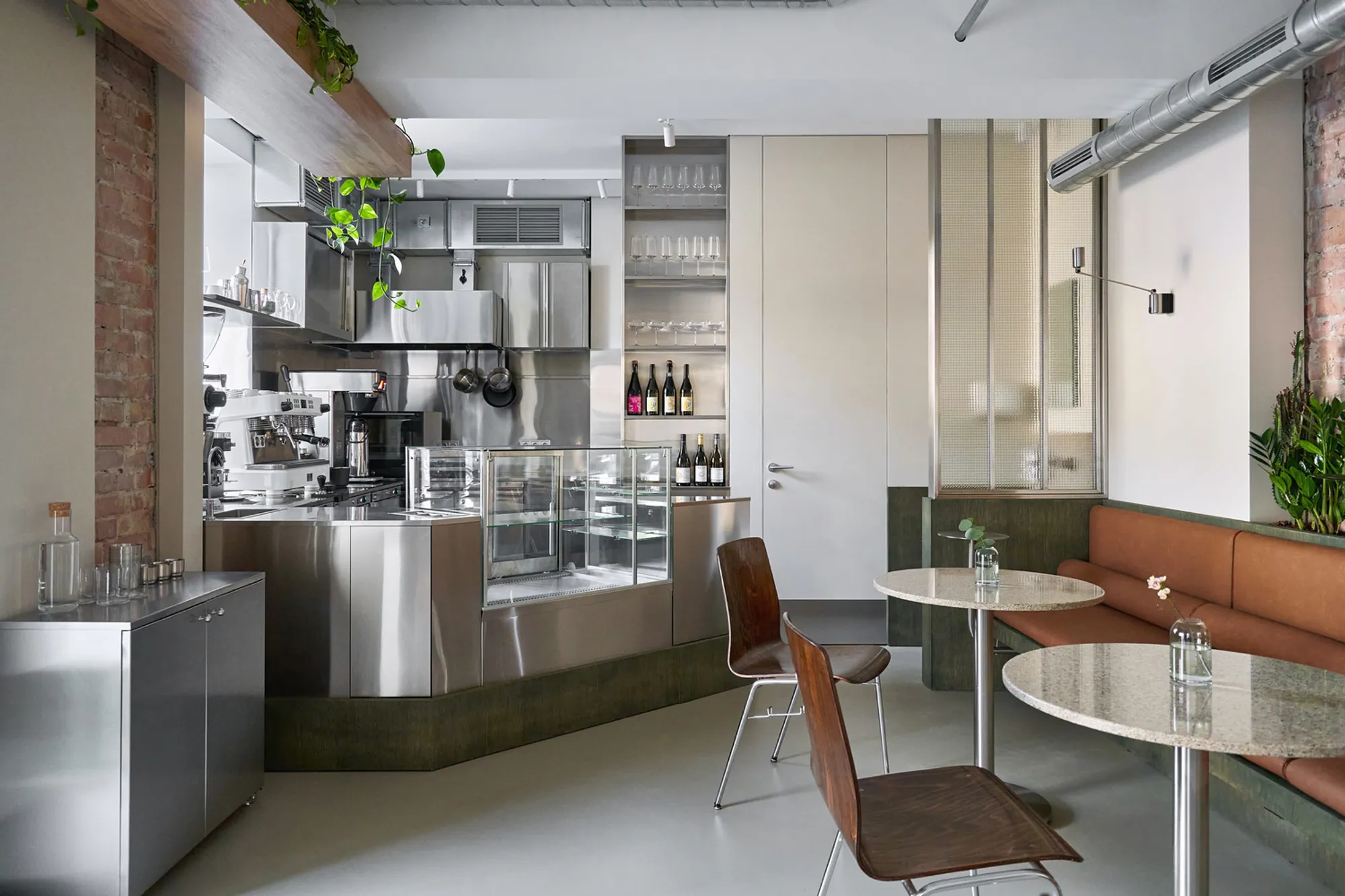
Acacia Coffee & Wine Bar blends industrial interior design with raw materials, vintage furniture, and warm textures, creating an intimate, sophisticated atmosphere.


In the realm of contemporary architecture, industrial interior design stands out as a testament to the beauty of raw materials and minimalist aesthetics. This design philosophy embraces the unrefined, celebrating elements like exposed brick, steel, and concrete, while integrating warmth through textures like leather and wood. The Acacia Coffee & Wine Bar in Odesa, Ukraine, designed by A-Malysheva Studio, exemplifies this style, offering a cozy yet sophisticated space that invites patrons to experience the charm of industrial elegance.
What is Industrial Interior Design?
Industrial interior design draws inspiration from the utilitarian spaces of factories and warehouses, transforming them into stylish, functional environments. Key characteristics include:
- Exposed Structural Elements: Visible beams, ducts, and piping.
- Raw Materials: Use of concrete, steel, and reclaimed wood.
- Open Spaces: High ceilings and large windows.
- Neutral Color Palettes: Shades of gray, black, and brown.
- Vintage Furnishings: Incorporation of retro or salvaged furniture pieces.
This design approach not only highlights the beauty of raw materials but also creates spaces that are both functional and aesthetically pleasing.
The Acacia Coffee & Wine Bar: A Case Study in Industrial Elegance
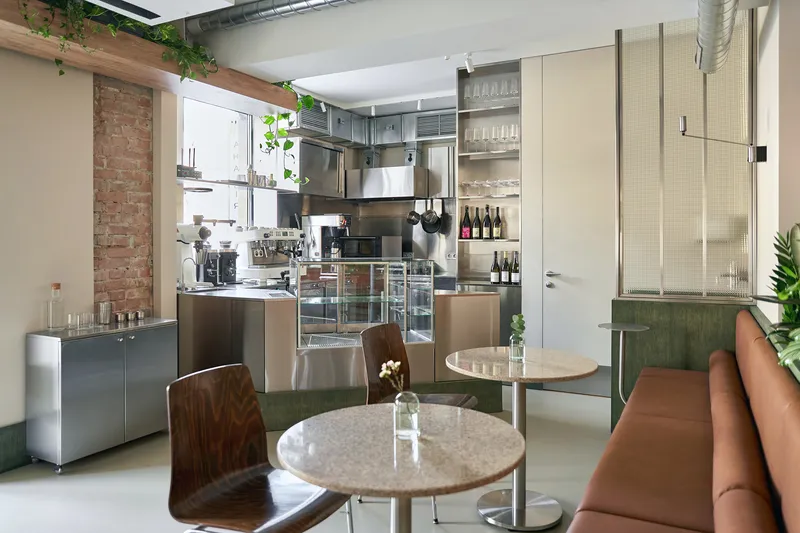
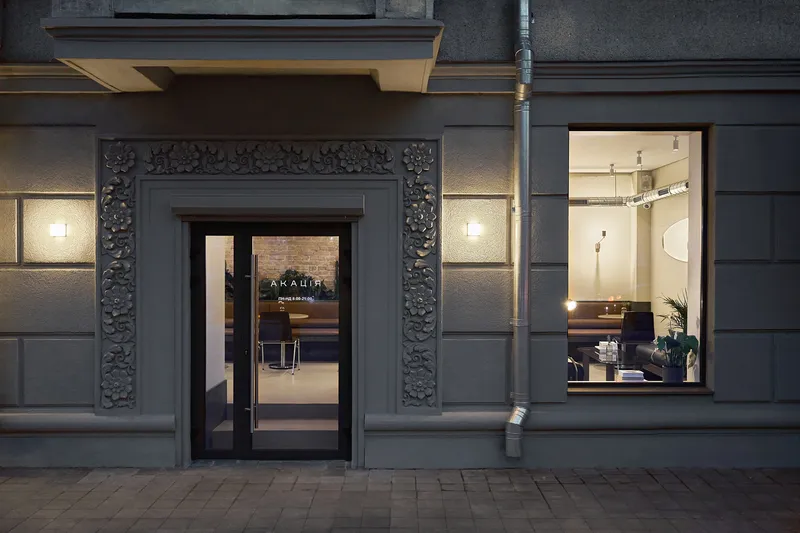
Designed by A-Malysheva Studio, the Acacia Coffee & Wine Bar is a prime example of industrial interior design in action. Located in a quiet residential neighborhood of Odesa, Ukraine, this 47 m² space accommodates 10–12 guests, fostering an intimate atmosphere. The design seamlessly merges raw materials with delicate detailing:
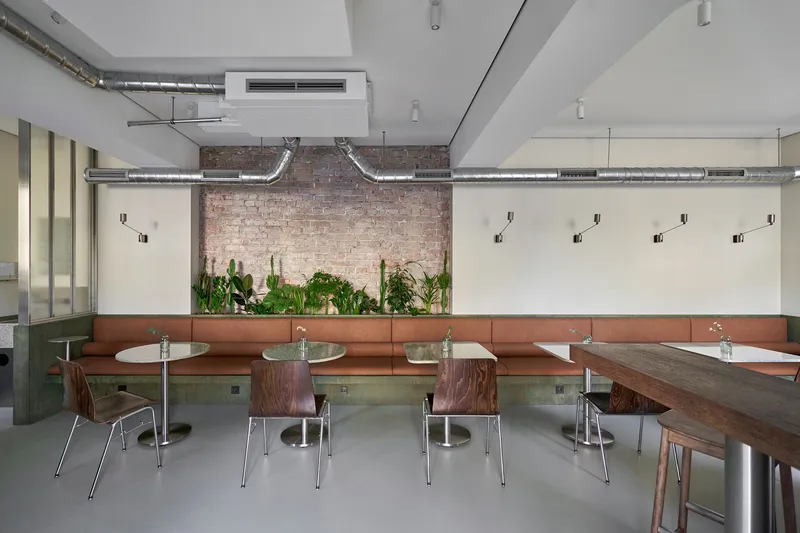
- Exposed Old Brick: Adds texture and history to the space.
- Brushed Stainless Steel: Provides a sleek, modern contrast.
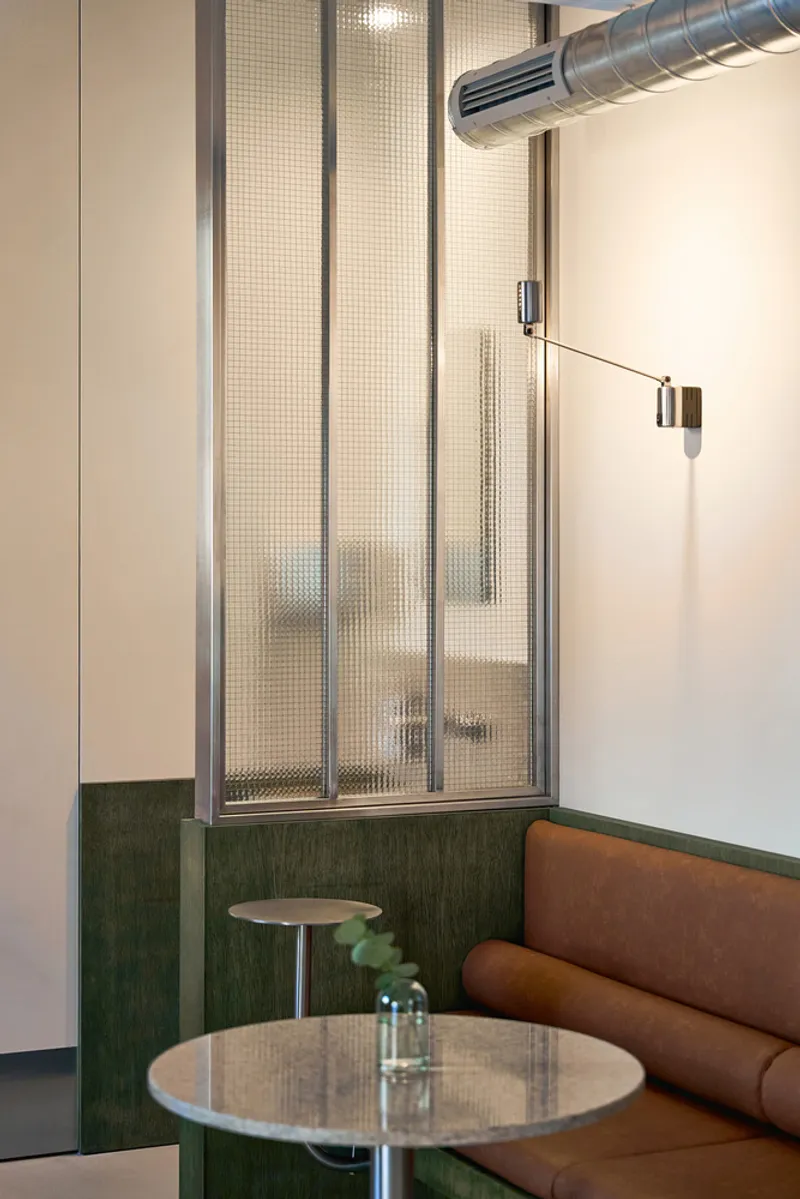
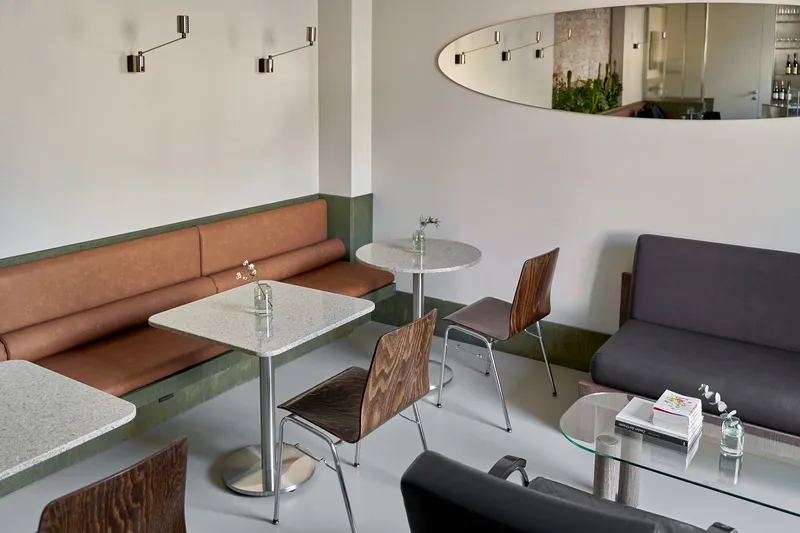
- Green-Tinted Oak Veneer: Introduces warmth and natural elements.
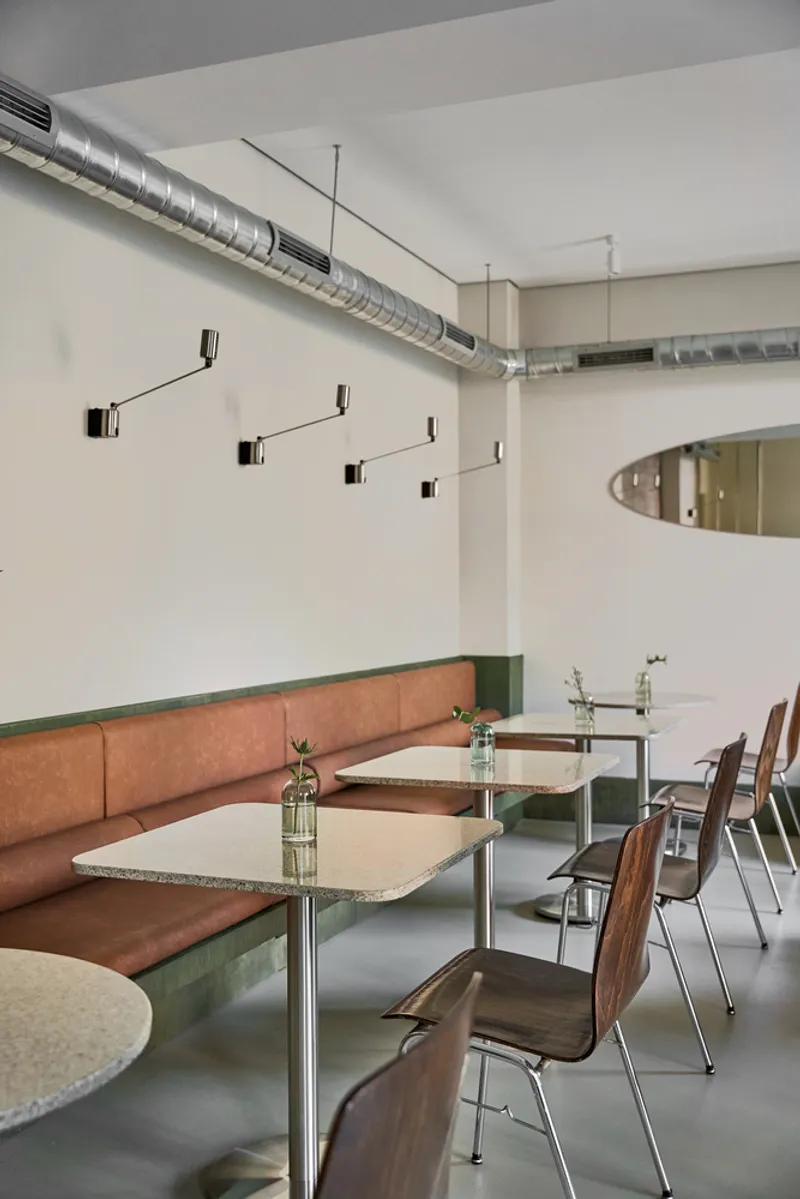
- Soft Leather: Offers comfort and luxury.
- Microcement Flooring: Ensures durability and a clean aesthetic.
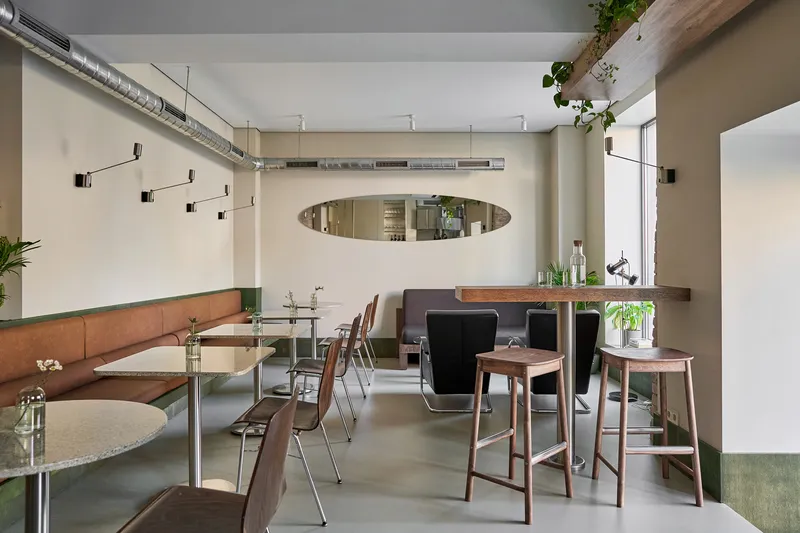
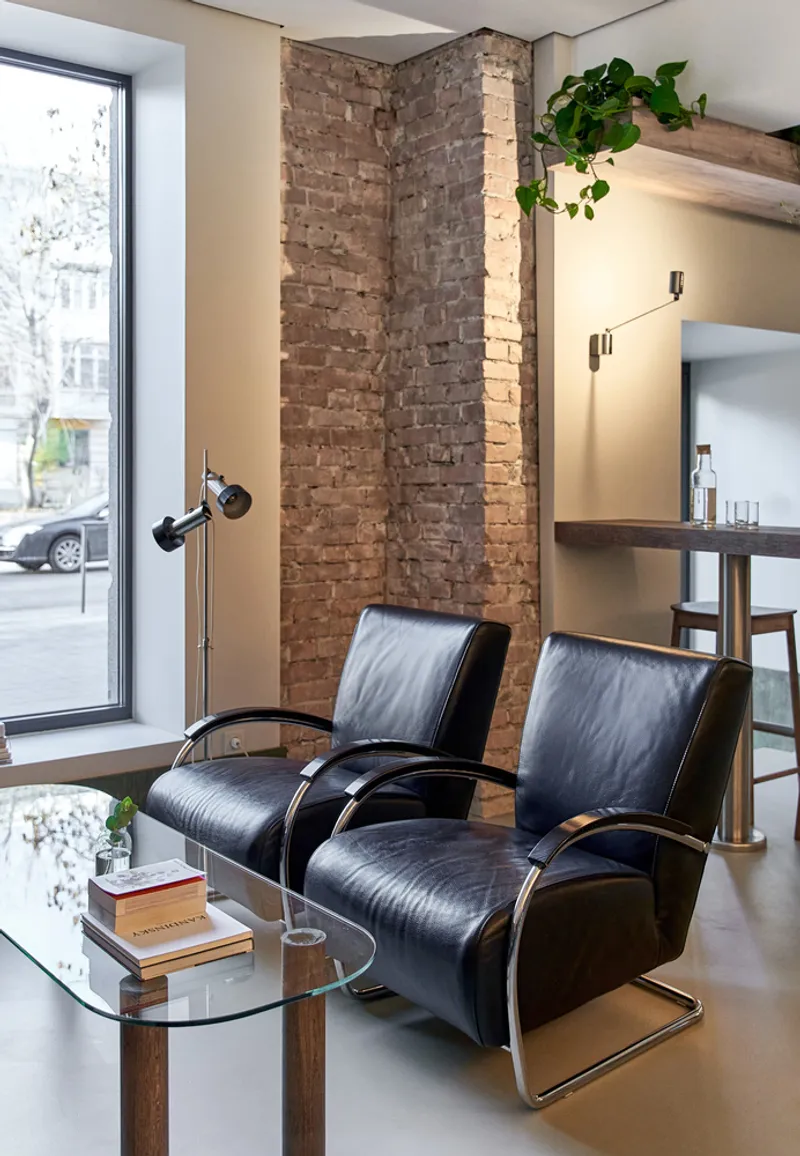
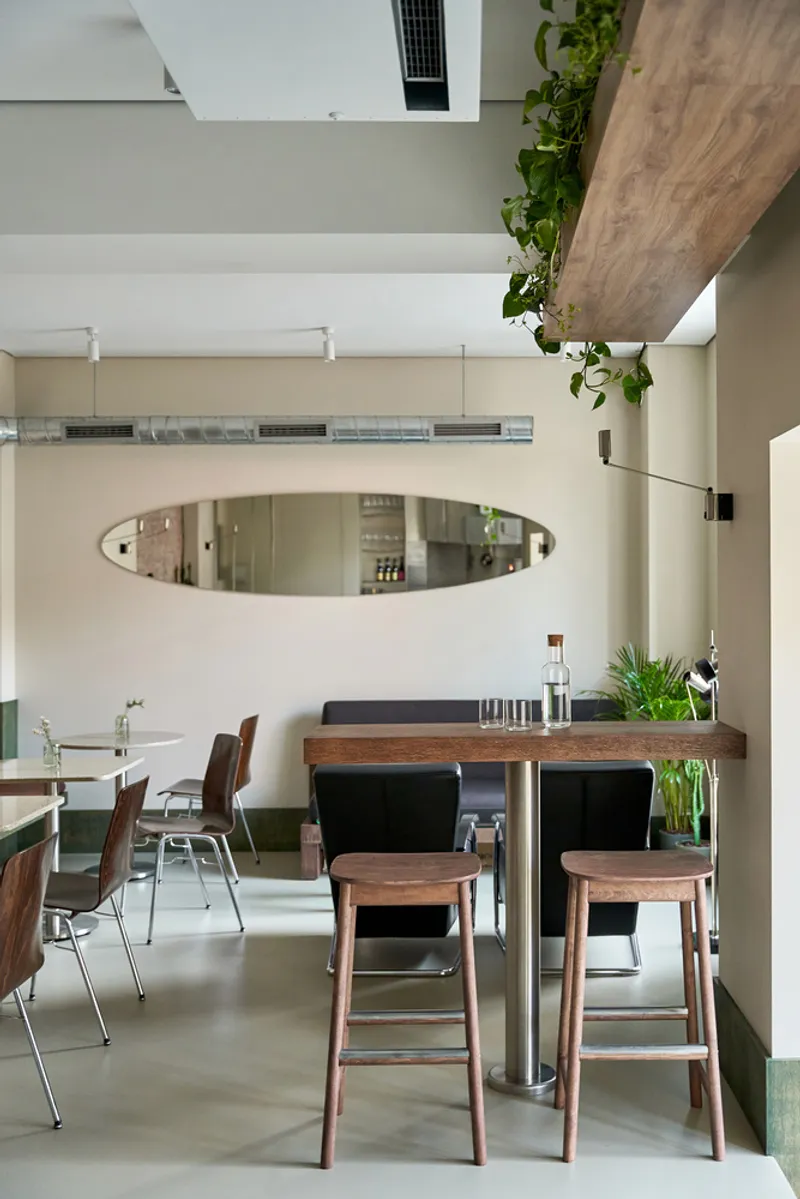
The furniture selection is deliberate, featuring vintage leather armchairs from the Netherlands and 1970s chairs from Germany, which bring patina and texture to the minimal setting. A bold oval mirror, custom metal shelves, and simple geometric forms add a sense of rhythm and structure. Lighting by Lumina highlights the spatial transitions and materials without overwhelming the composition.
Key Elements of Industrial Interior Design
To achieve the industrial look, consider incorporating the following elements:
- Exposed Brick Walls: Adds character and a sense of history.
- Metal Fixtures: Use of steel or iron for furniture and lighting.
- Open Shelving: Displays items in a functional yet decorative manner.
- Neutral Color Schemes: Focus on grays, blacks, and browns.
- Vintage Accents: Incorporate retro furniture or decor items.
These elements work together to create a cohesive industrial aesthetic that is both stylish and functional.
Integrating Nature into Industrial Spaces
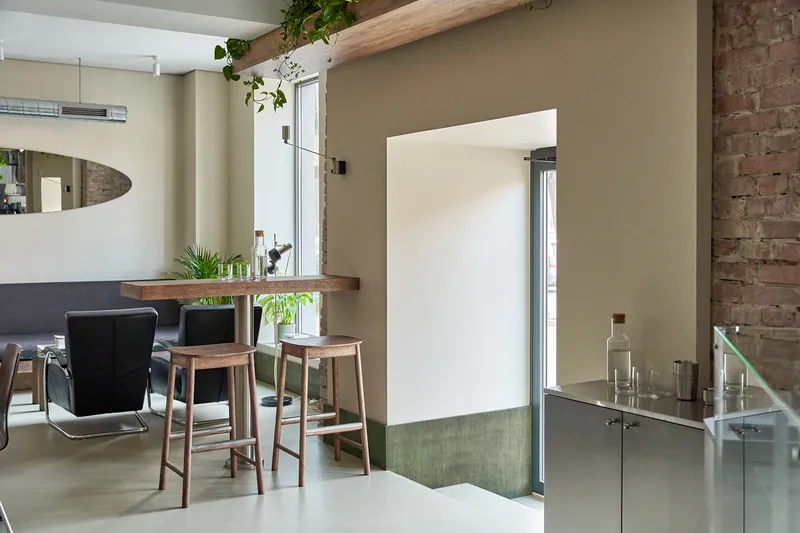
While industrial interior design often emphasizes raw materials, integrating natural elements can soften the space and add warmth. In the Acacia Coffee & Wine Bar, green-tinted oak veneer and soft leather furnishings introduce natural textures that balance the industrial elements. Incorporating plants, natural light, and wooden accents can further enhance this balance, creating a welcoming and comfortable environment.
By thoughtfully combining these elements, you can create a space that embodies the essence of industrial elegance.
Industrial interior design offers a unique approach to creating spaces that are both functional and aesthetically pleasing. The Acacia Coffee & Wine Bar serves as an exemplary model, demonstrating how raw materials and minimalist design can come together to form a cohesive and inviting environment. Whether you're designing a commercial space or a private residence, embracing industrial design principles can lead to the creation of timeless and sustainable interiors.
All Photographs are works of Yevhen Karev



Popular Articles
Popular articles from the community


The Earth Pod: 3D Printed Homes for Resilient Refugee Communities
The Earth Pod reimagines refugee housing through 3D printed homes made from clay, combining resilience, self-sufficiency, and rapid shelter.

Conexión: Biophilic Design Reimagines High-Rise Living in Hong Kong
Conexión reimagines high-rise living in Hong Kong through biophilic design, green facades, shared spaces, daylight, water and nature within.

Riyadh For All: Intergenerational Urban Design for Active Aging in Rabat
Riyadh For All reimagines urban design in Rabat with intergenerational co-living, adaptive courtyards, and Moroccan cultural exchange today.

EW PARK: Sustainable Architecture Reimagines the Future of Urban Parking
EW PARK reimagines city parking as a modular wooden tower combining automation, solar energy, electric mobility, and adaptable urban design.


Similar Reads
You might also enjoy these articles


Hodi-Mandai Geram
Project Function: Preservation and revitalization of the Intangible heritage and socio-spatial identity of the Hodi by Housing, Cultural Memory Center, Sacred Grove, landscape, local tourism economy


Olio Towers: A Mid-Rise for Performers That Fuses Housing, Rehearsal, and Stage
Located blocks from Houston's Theater District, this modular tower stacks living units around a central performance atrium.

Oasis: Modular Green Housing Carved into Dhaka's Urban Fabric
A shortlisted Plugin Housing entry reclaims unauthorized settlements in Dhaka with stepped concrete volumes, green roofs, and ventilation-driven design.

Black Hole: A Floating Megastructure for the Post-Physical Era
Emiliano Mazzarotto envisions a spherical, self-scaling arena where e-sports, digital hotels, and holographic stadiums replace traditional public space.


Explore Furniture & Interior Design Competitions
Discover active competitions in this discipline


Challenge to design luxury tourism on rails


Challenge to reimagine the Iron Throne


Photograph architecture without architects


VR headsets Storefront design competition
Comments (0)
Please login or sign up to add comments
No comments yet. Be the first to comment!