
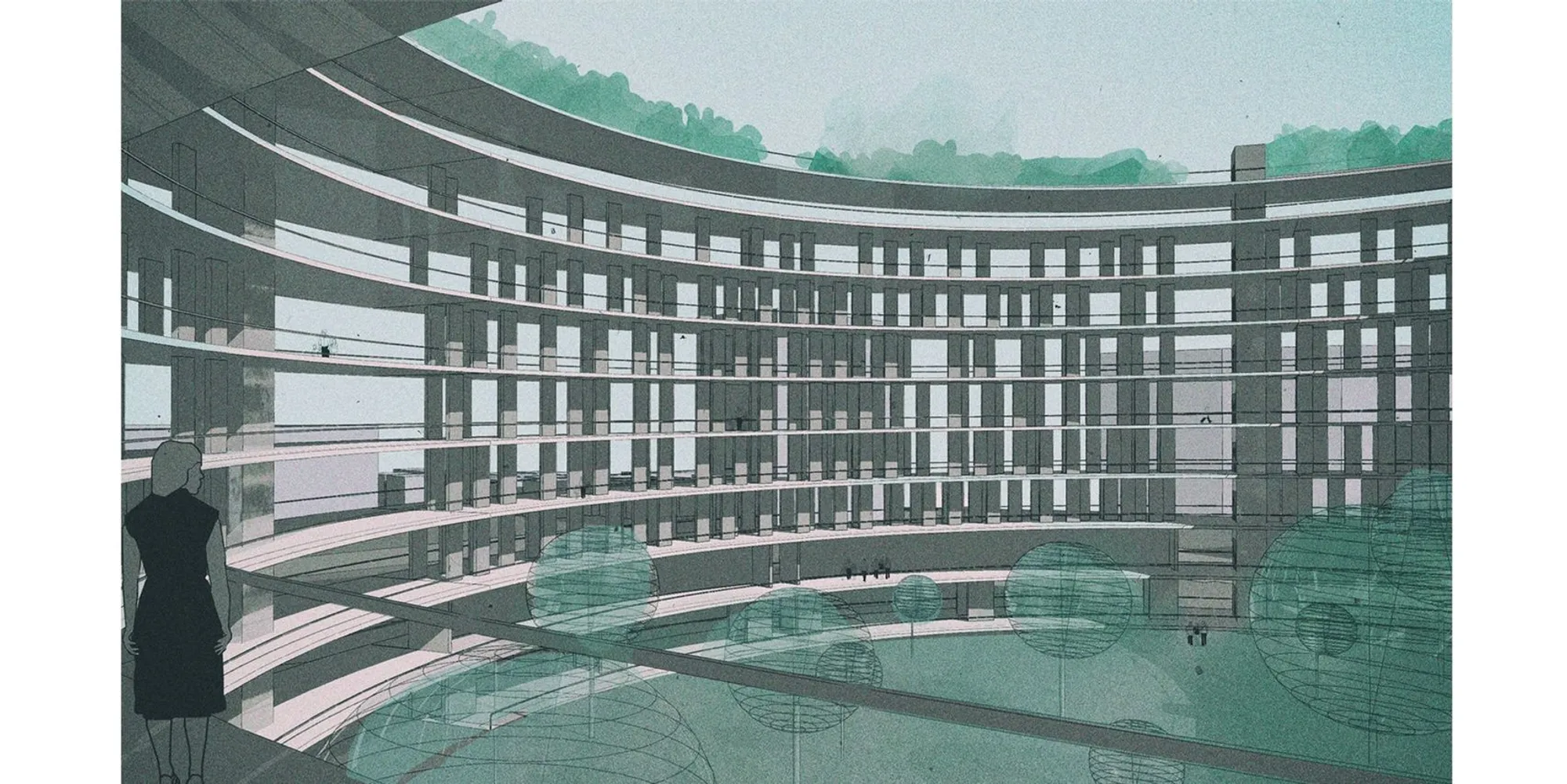
Infinity – Circle of Life: A Vertical Cemetery That Spirals Into the Sky
Izolda Font reimagines funerary architecture as a continuous ascending loop of commemoration, ritual, and urban green space.


What happens to cemeteries when cities run out of ground? Most architects avoid the question. Izolda Font confronts it directly with Infinity – Circle of Life, a conceptual vertical cemetery built around a single, audacious spatial move: one continuous spiral ramp that rises from an open memorial park into the sky, eliminating floors entirely. The dead rest in urn walls along the ascending loop. The living walk upward in a procession that turns grief into a physical, architectural experience. It is cemetery as civic infrastructure, scaled for density and designed for spiritual inclusivity.
Published on uni.xyz, the project operates at the intersection of funerary tradition and urban pragmatism. Font's proposal deliberately separates cremation from the site, focusing the architecture solely on commemoration. The result is a structure that could, in theory, extend vertically without limit, absorbing the memorial needs of generations without consuming additional land. In a world of vertical living, Font argues, vertical remembrance is the logical next step.
One Continuous Ramp Instead of Stacked Floors
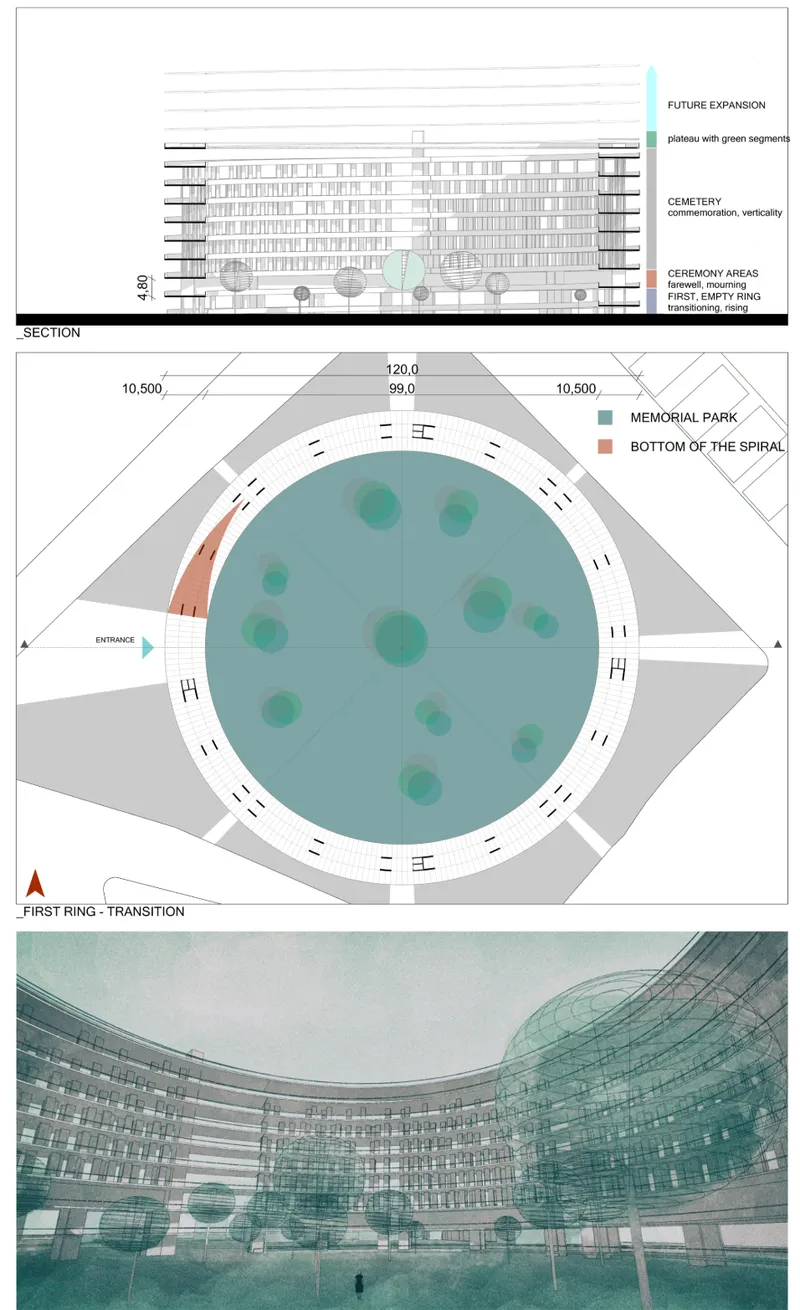
The section drawing and plan views reveal the core spatial logic: a circular footprint organized into concentric rings, each assigned a distinct programmatic role. The first ring is deliberately left empty, functioning as a buffer zone between the noise of the city and the solemnity within. The second ring houses ceremony areas designed to accommodate multiple religious traditions, acknowledging the diversity of belief systems in contemporary urban populations. The third ring contains the urn walls themselves, offering dignified resting places for cremated remains. What makes the organization exceptional is that these rings are not discrete floors but segments of a single, unbroken ramp. Mourners enter at grade and ascend gradually, moving through transition, ritual, and commemoration as a continuous spatial sequence.
The circular plan also concentrates the building's footprint, a critical advantage in land-scarce cities. Font notes that upper levels can be added as demand grows, making the structure modular in the truest sense. The spiral, she writes, "could be extended endlessly." Elevators are provided for accessibility, but the design privileges walking. The slow, deliberate ascent echoes the emotional arc of farewell.
A Translucent Green Facade That Softens the Monumental
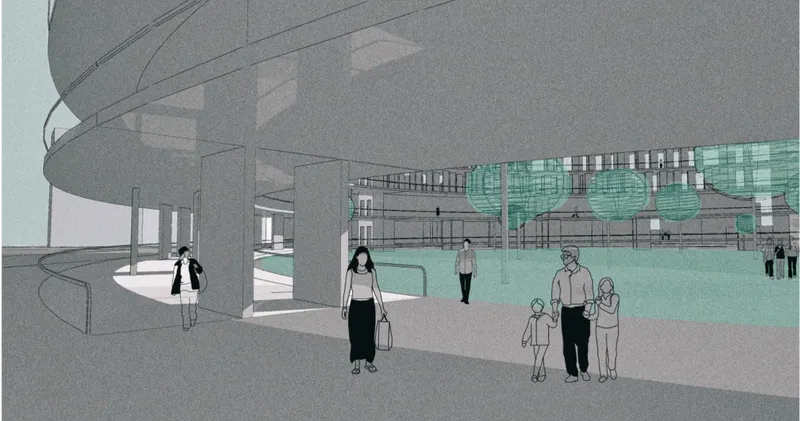
The perspective rendering captures visitors walking along the curving ramp beside a translucent green facade, and the effect is striking. Rather than presenting a forbidding monolith, the building filters light through layers of green, evoking the dappled quality of a forest canopy. Suspended between levels are ethereal green spheres that Font describes as "inner tree-like forms." These elements soften the built mass and create moments of visual relief along the ascending promenade. The facade does double duty: it screens the interior from the city while allowing enough transparency for mourners to remain visually connected to the sky and the landscape below.
Concentric Terraces and the Central Void
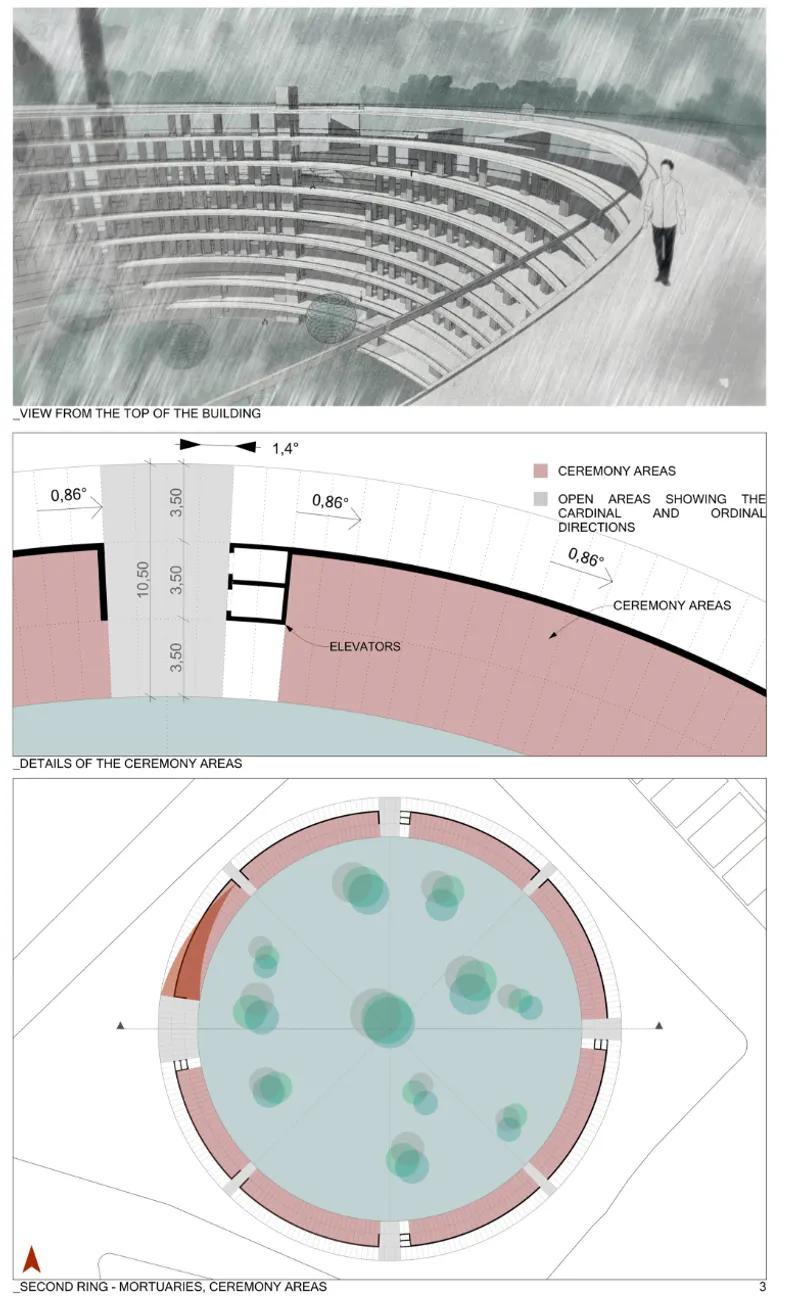
Viewed from above, the building reads as a series of concentric terraced rings descending around a central void. A lone figure stands at the edge, giving immediate scale to the structure's ambition. The void is not incidental; it is the spatial engine of the design, drawing light and air down through the spiral while reinforcing the symbolic narrative of infinity. The rings widen as they descend, culminating in the open memorial park at ground level, a green, publicly accessible space that blurs the boundary between cemetery and urban park. Font's commitment to civic openness is legible here: this is not a gated necropolis but a space where passersby can pause, reflect, and engage with the architecture of memory on their own terms.
Urn Walls Along a Curved Corridor of Light
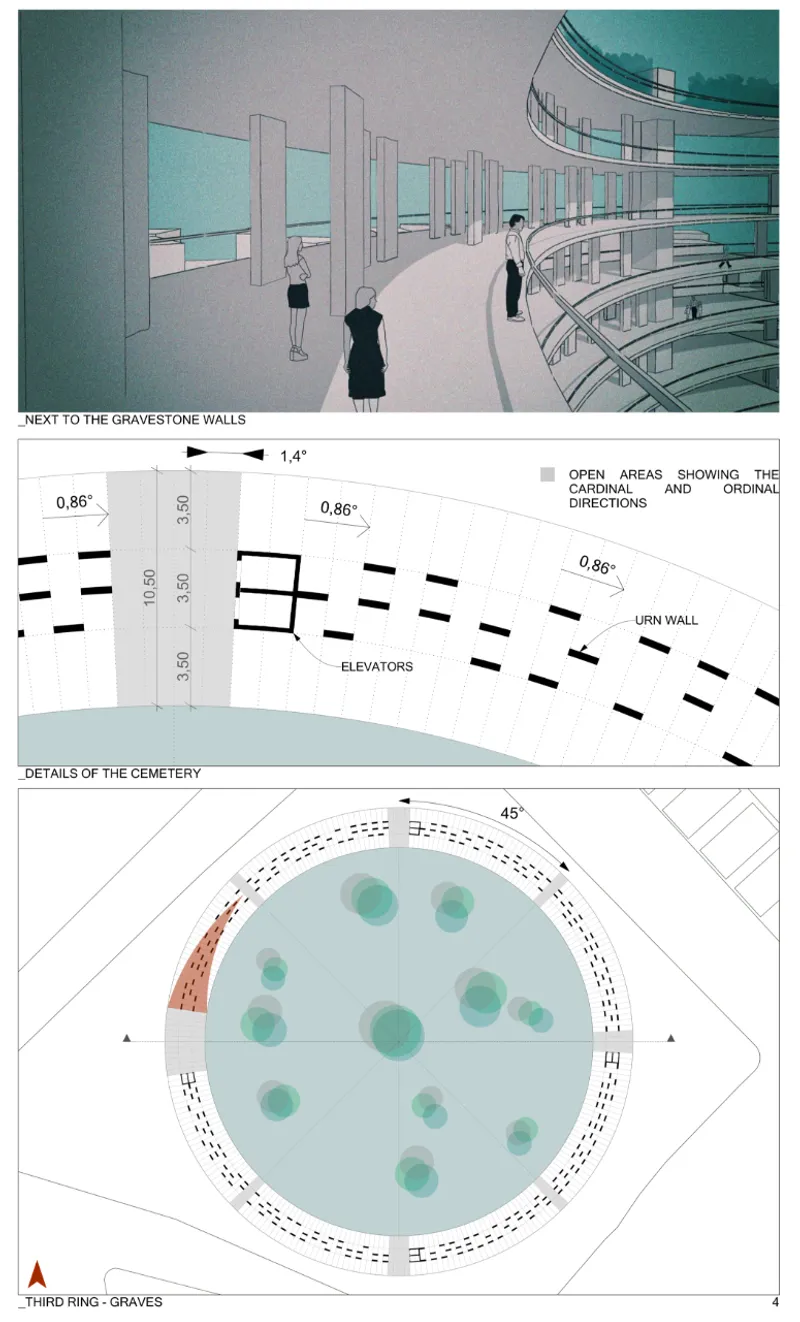
The interior perspective rendering shows the urn walls in context: vertical columns rhythmically line a curved corridor while visitors pause near gravestone surfaces. The proportions are generous, avoiding the claustrophobic quality that often plagues columbaria. Natural light enters from the facade side, washing across the memorial walls and lending the space a quiet luminosity. The decision to house only urns, rather than full burial plots, is both practical and philosophical. It minimizes the environmental footprint of the structure while concentrating the architecture's energy on the act of commemoration rather than the logistics of disposal.
Font's choice of a curved corridor is worth noting. A straight hallway would reduce the urn wall to a filing system. The curve keeps the path from revealing its full length, maintaining a sense of discovery and intimacy even within a potentially vast structure. Each visitor encounters the wall in a slightly different way depending on where they enter the spiral.
Why This Project Matters
Funerary architecture tends to be conservative, bound by tradition and understandably resistant to formal experimentation. Infinity – Circle of Life breaks that pattern by treating the cemetery as a genuine design problem with spatial, environmental, and social dimensions. The single-ramp concept is elegant in its simplicity: it resolves circulation, program distribution, and symbolic narrative in one geometric gesture. The modular, extendable structure addresses the very real challenge of urban land scarcity without resorting to sterile, warehouse-like stacking.
What distinguishes Izolda Font's proposal from other vertical cemetery concepts is its insistence on inclusivity and civic generosity. The open memorial park, the multi-faith ceremony rings, and the publicly accessible promenade position the building not as an isolated monument to death but as a living piece of urban infrastructure. In an era when cities must accommodate every aspect of human existence within tighter and tighter footprints, this project makes a compelling case that commemoration deserves the same architectural ambition we grant to housing, transit, and culture.
View the Full Project
About the Designers
Designer: Izolda Font
Enter a Design Competition on uni.xyz
uni.xyz runs architecture and design competitions year-round that reward proposals with spatial conviction and real site intelligence.
Project credits: Infinity – Circle of Life by Izolda Font.




Popular Articles
Popular articles from the community


Hill & Cross Opera: Sculptural Opera House Architecture Shaped by Tallinn’s Landscape and Identity
Hill & Cross Opera reimagines opera house architecture in Tallinn through its sculptural hill, civic plaza, glass wave and a luminous cross.

Co-Life: Senior Housing Design That Reconnects Older Adults With the City
Co-Life reimagines senior housing design through healing gardens, shared streets, workshops, and a sustainable community across generations.

The Musturak Paradise: Senior Living Architecture for a Connected Future in Temara, Morocco
The Musturak Paradise reimagines senior living architecture in Temara via private homes, social spaces, culture, community, and shared care.

Lunar Spiral: Space Architecture Shaped by the Mathematics of the Universe
Lunar Spiral reimagines space architecture through Fibonacci geometry, lunar regolith, levitating habitats, and self-sustaining Moon living.


Similar Reads
You might also enjoy these articles

Day and Night Park: A Time-Based Urban Newsstand in Beijing
A temporary urban newsstand in Beijing blending travel, light, and reading through poetic colors, compact form, and community-focused design.

Modernist Patio Renovation in El Masnou, Barcelona by Oliver Segura Arquitectura + Cebrià Arquitectura
Modernist patio renovation blending tradition and innovation with a movable pool, leveled floors, and Catalan materials in El Masnou.

Alto Residencial Coop: Cooperative Housing Development in Santiago de Compostela by Carbajo Barrios Arquitectos
A linear cooperative housing complex blending white volumes and perforated metal façades, enhancing community living, natural light, privacy, and urban integration.
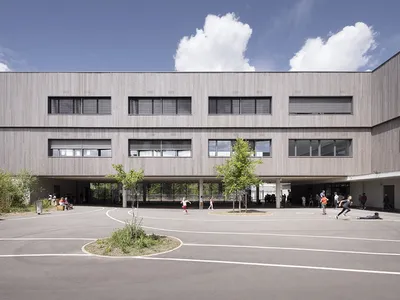
Vil Genis School by BPA ARCHITECTURE – Massy, France
Vil Genis School in Massy, France, features sustainable design, south-facing classrooms, community integration, accessible spaces, and modern educational architecture.


Explore Vertical Cemetery Competitions
Discover active competitions in this discipline



Challenge to design locus for the upliftment of human rights


Bring back Drive In's


Design challenge to reuse E-waste
Comments (0)
Please login or sign up to add comments
No comments yet. Be the first to comment!