

Inhabiting the River Intervention by Erazo Pugliese
Inhabiting the River Intervention by Erazo Pugliese is a sustainable wooden installation in Logroño, activating riverfront space for social and ecological engagement.


A Temporary Installation for Concéntrico 2025
Inhabiting the River Intervention, also known as Habitar el Río, was conceived for Concéntrico 2025, the International Festival of Architecture and Design in Logroño. This annual festival transforms underused urban spaces through temporary architectural installations, inviting architects and designers to explore human interaction with the city across key themes including climate, water, food, and social rituals.
The 2025 edition focused on ecological awareness and collective inhabitation, turning Logroño’s public spaces into experimental grounds for sustainable and inclusive urban futures.
Site Context and Design Concept
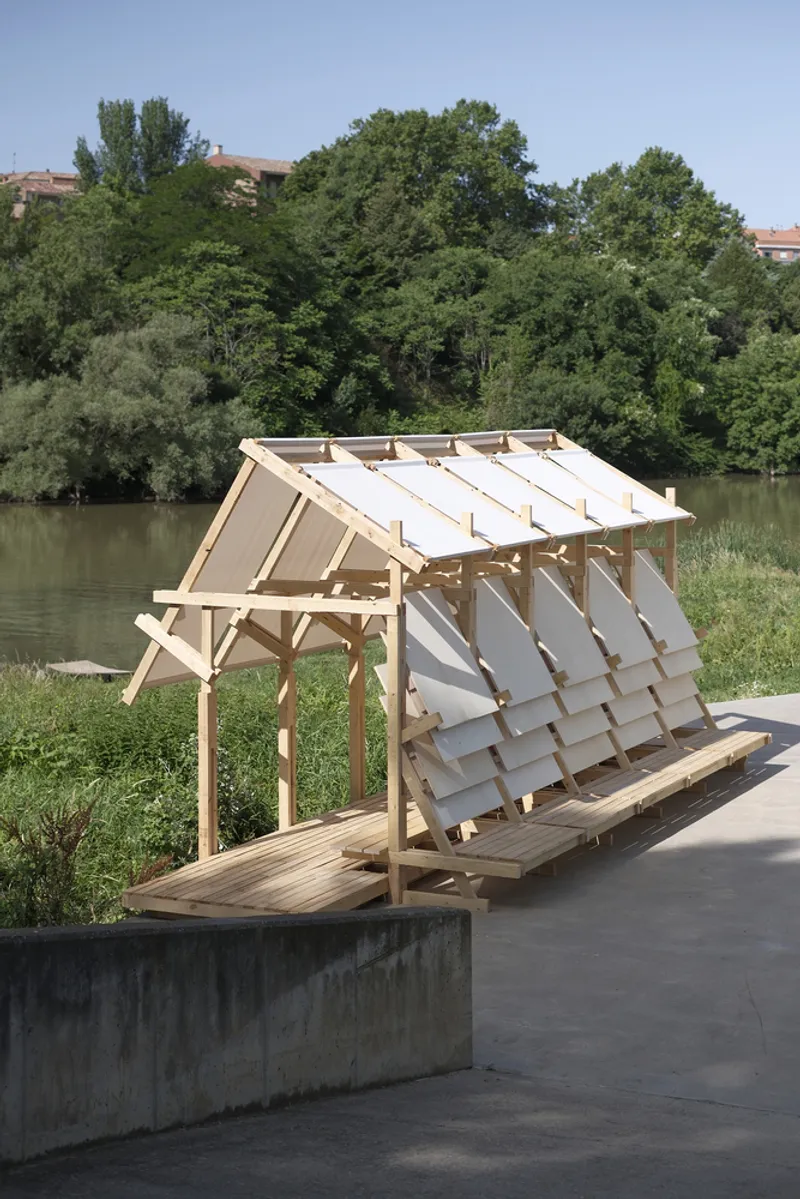
The installation was strategically located on the north bank of the Ebro River, occupying the transitional zone between an underused concrete dock and the river’s seasonal waterline. This unique site offered an opportunity to design a habitable interface between urban life and the natural environment.
Erazo Pugliese created a handcrafted wooden structure designed to reactivate the neglected riverfront, historically a bathing area, now reduced to a mere passageway. The installation functions as both an environmentally responsive space and a social hub, encouraging visitors to pause, learn, interact, and contemplate river life.
Architectural Features and Sustainability
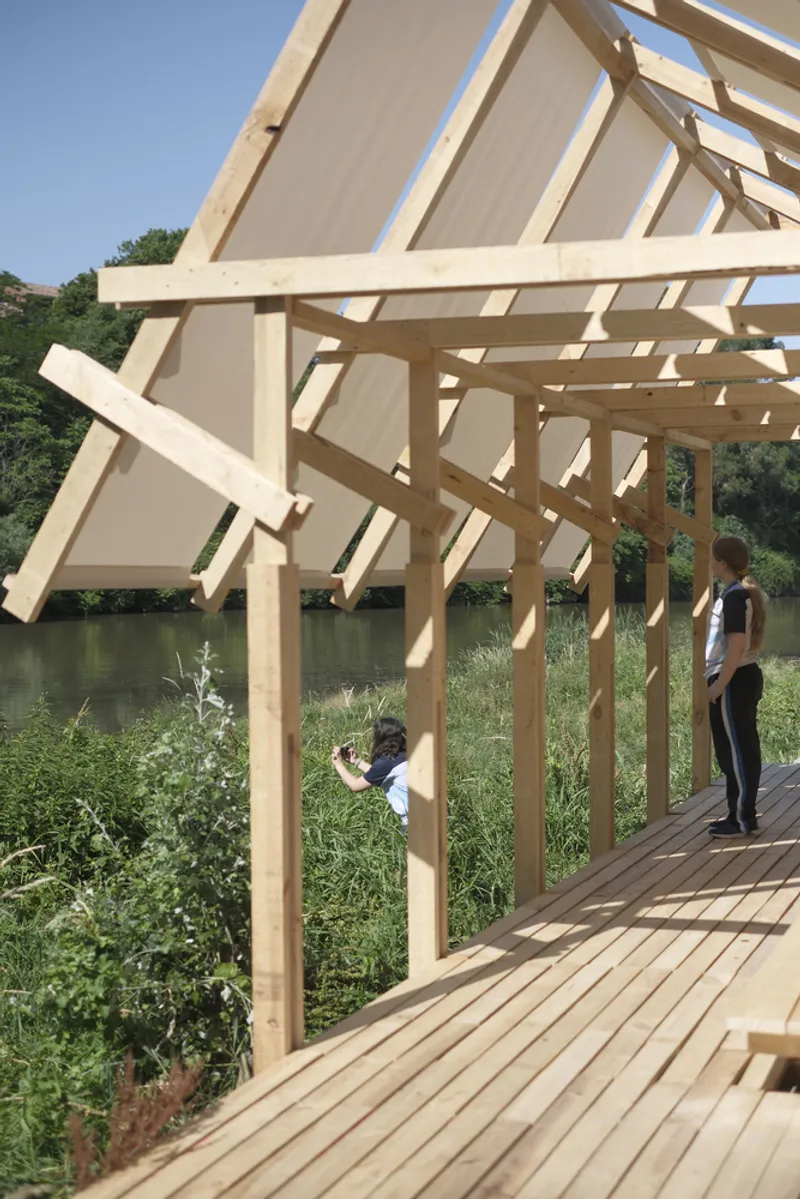
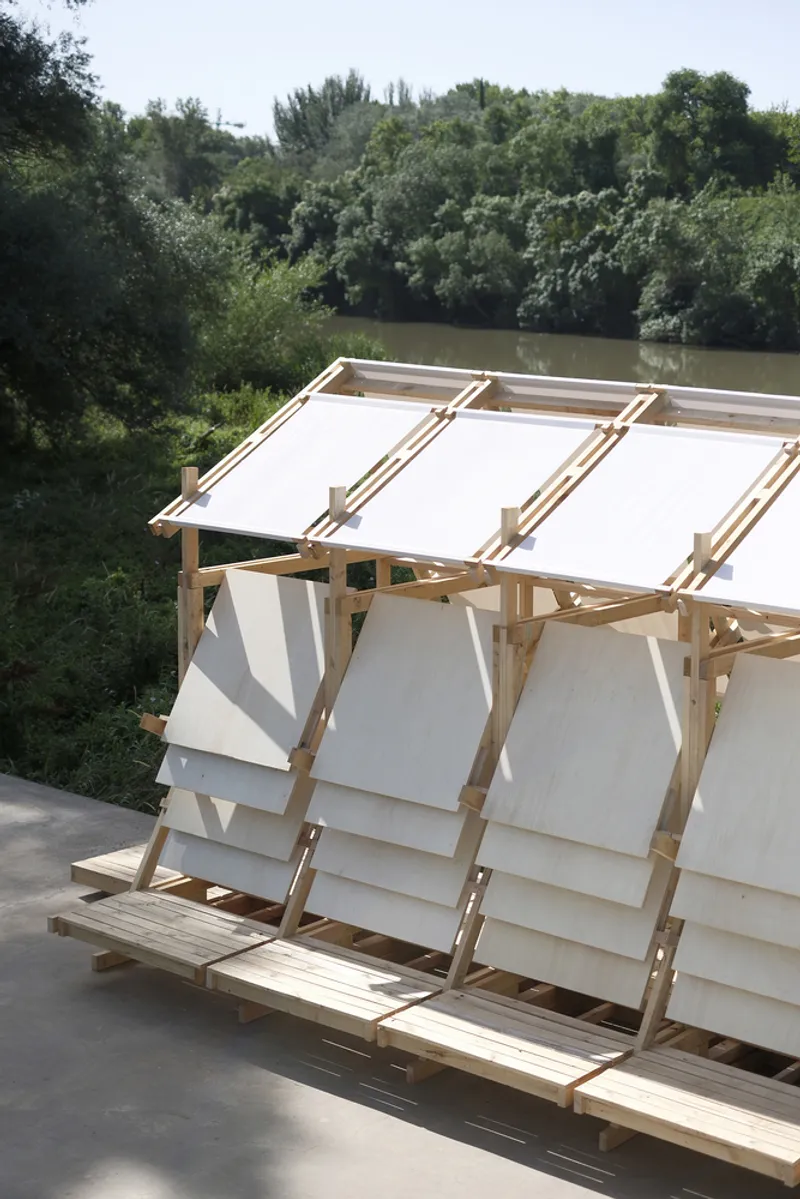
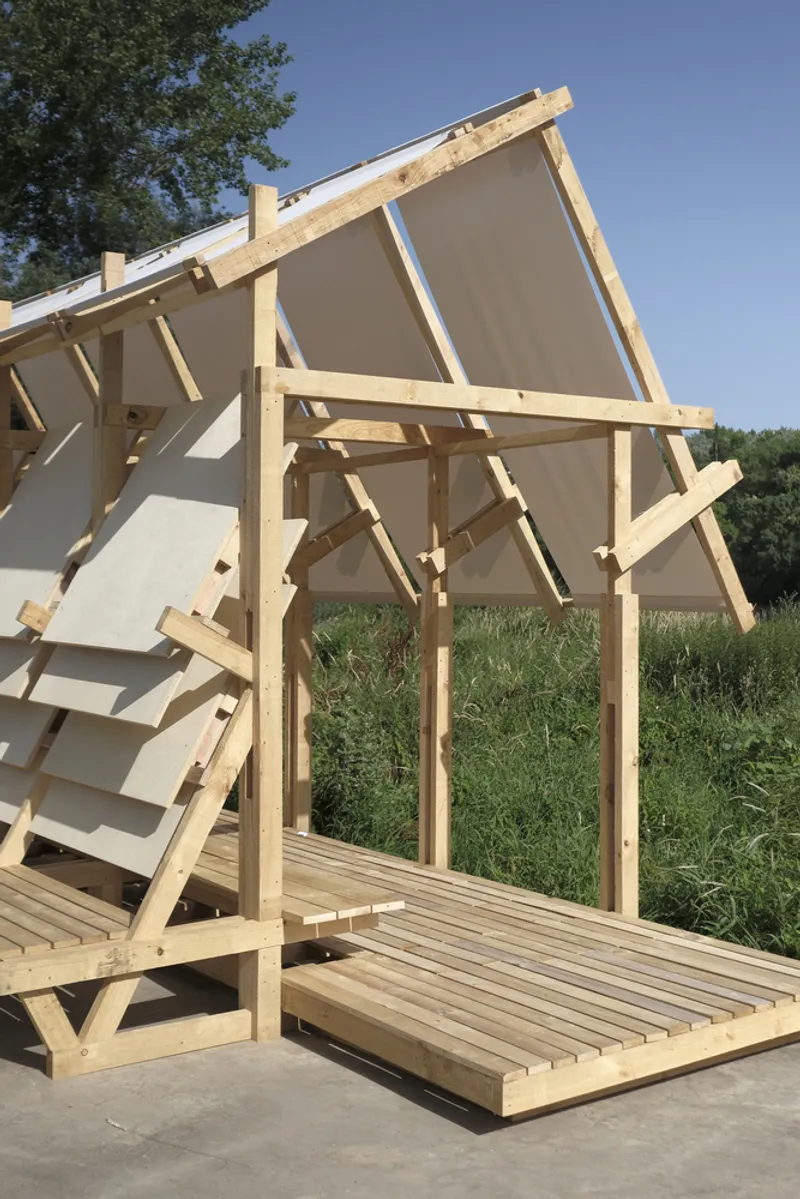
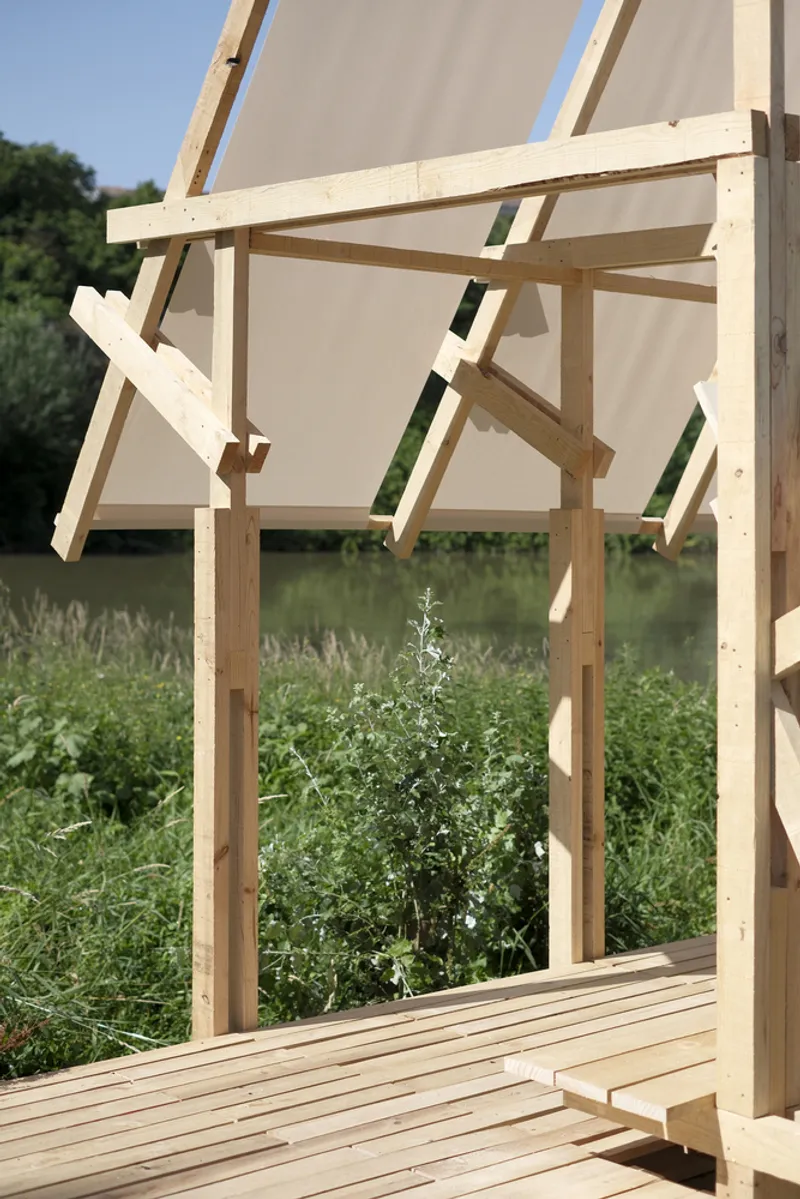
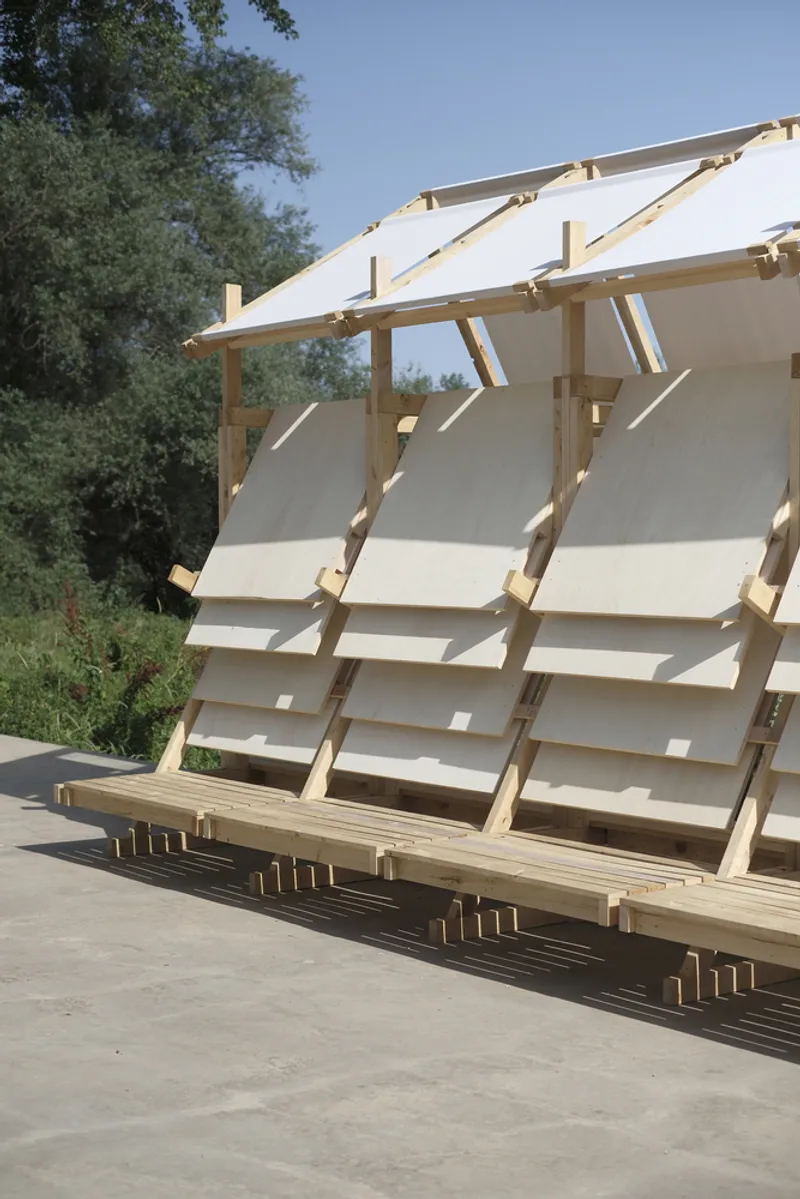
The installation’s southern façade opens towards the river, providing natural views while remaining shaded from direct sunlight. On the northern side, plywood panels block glare from the adjacent concrete wall and facilitate passive ventilation, guiding hot air upwards to reduce heat accumulation.
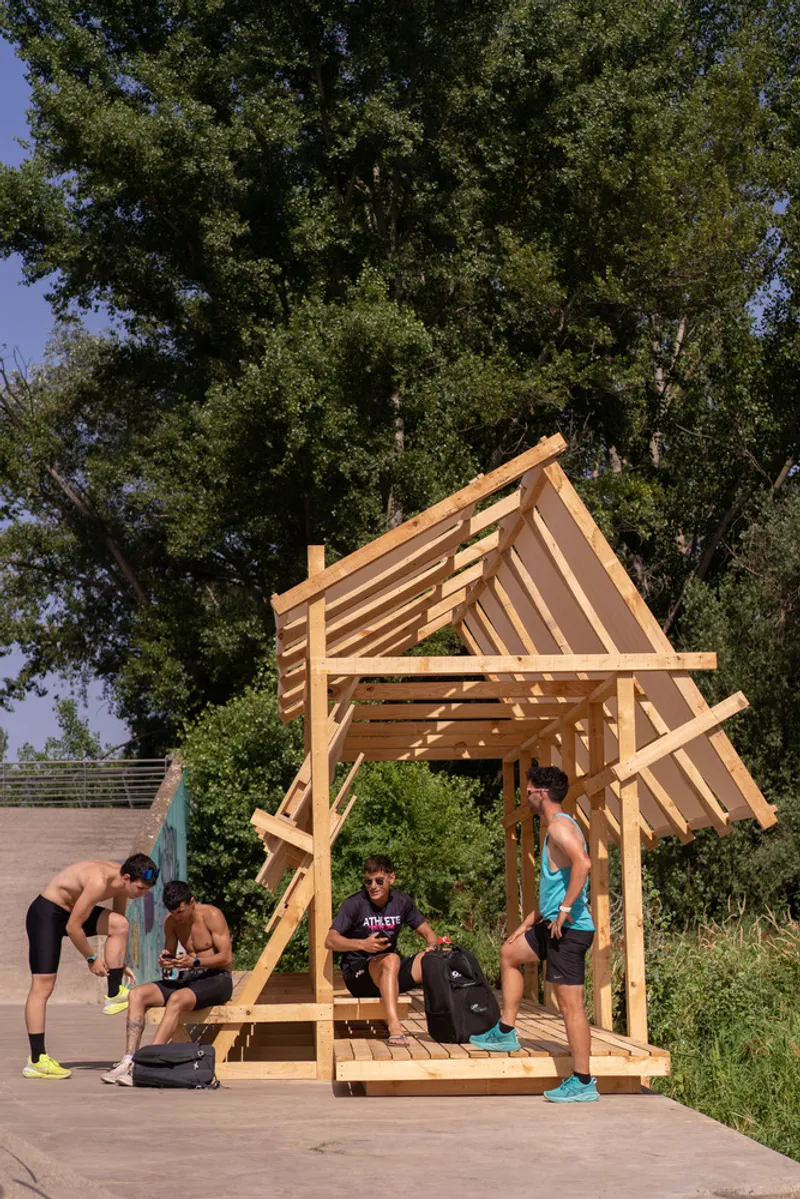
This climate-responsive design enhances comfort while integrating sustainable materials, including locally sourced wood and plywood. Visitors can sit, lie down, or pass through the structure while observing daily river activities: canoeists rowing, birds singing, trees swaying, and riverside life unfolding.
Community Engagement and Collaborative Construction
A secondary bench was later added on the northern side, responding to on-site activities such as canoeing lessons, equipment preparation, and theoretical workshops. This addition strengthened the project’s core concept: bridging urban life and river activities through a transitional public infrastructure.
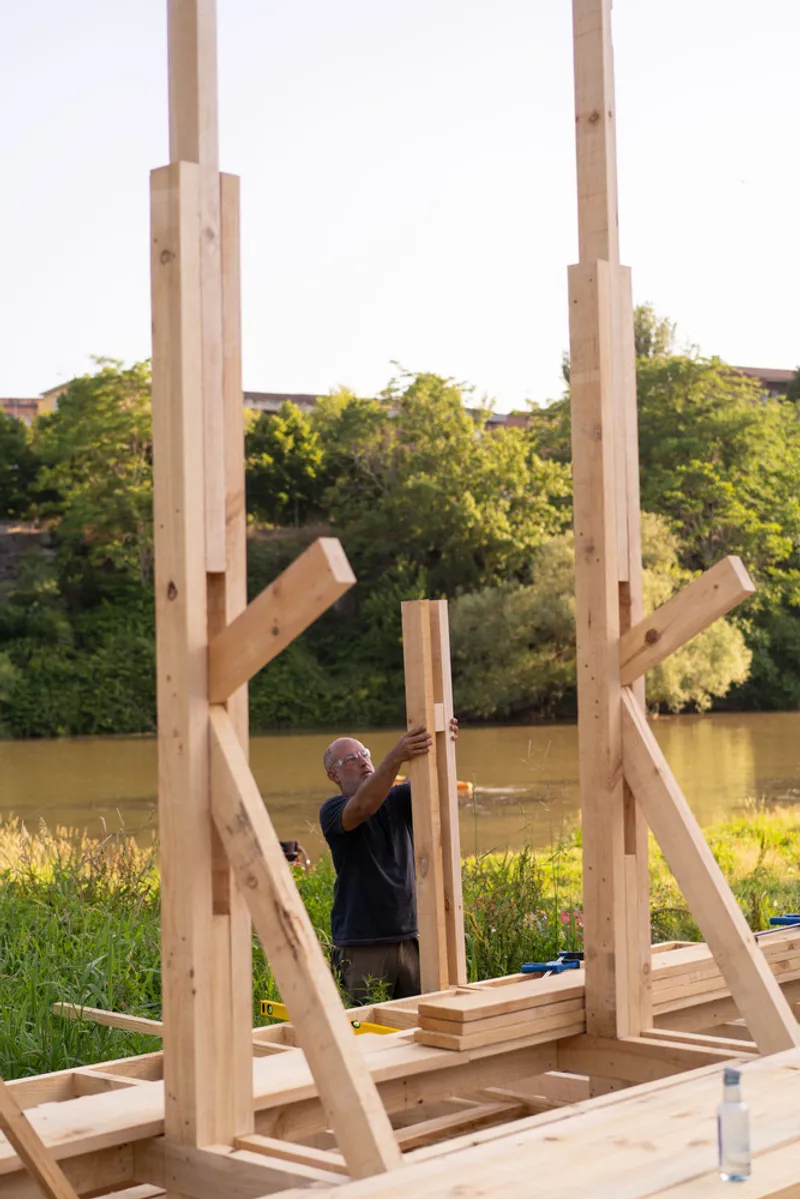
The structure was co-constructed with students from the Faculty of Architecture at CESUGA (Centro de Estudios Universitarios de Galicia), combining prefabrication in A Coruña and on-site assembly in Logroño. Project support came from Maderas Besteiro, Bandalux, Xunta de Galicia, and the Spanish Association for Forestry Sustainability (PEFC).
Legacy and Relocation
After Concéntrico 2025 concluded, all installations were removed. Habitar el Río was relocated and reconstructed in Viniegra de Abajo, near the Urbión River, where it will remain permanently as a public, ecological, and social space.
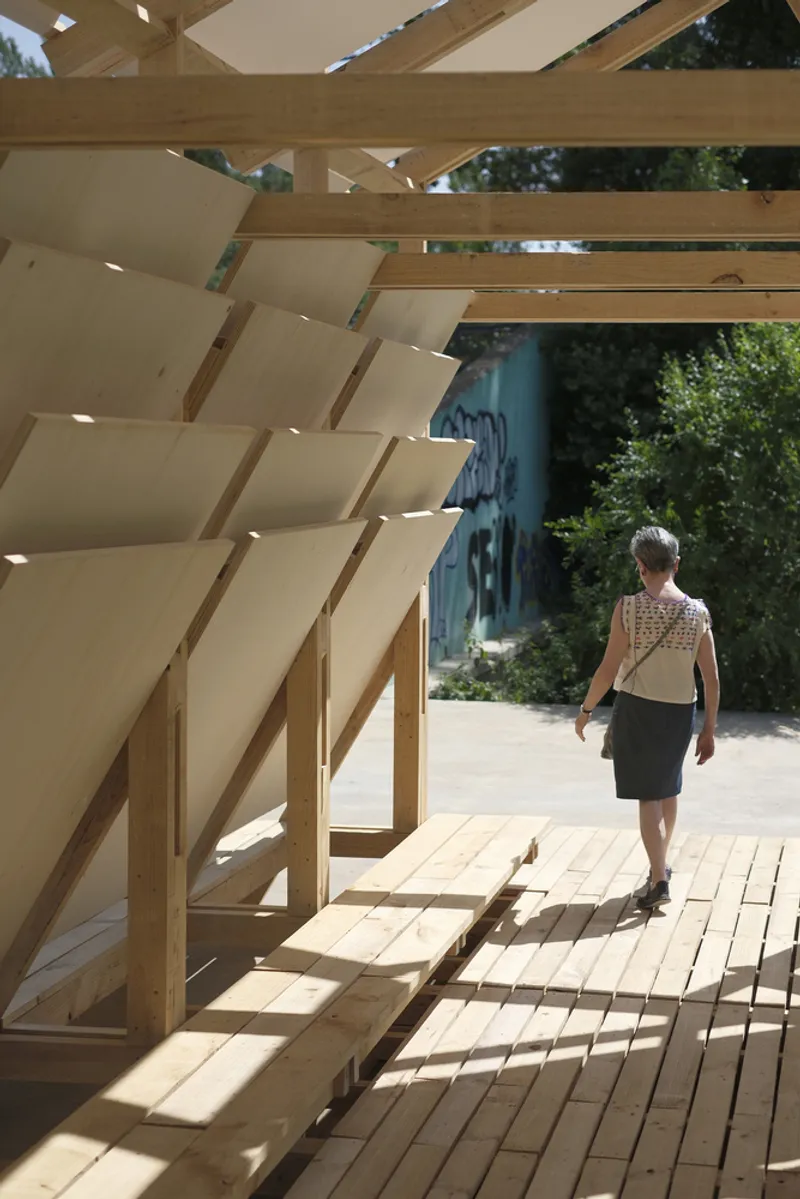
This project exemplifies temporary architecture with lasting impact, demonstrating how design, ecology, and community engagement can transform underutilized urban spaces.
All Photographs are works of Erazo Pugliese


Popular Articles
Popular articles from the community

Extended Shell: Retrofitting Kolkata's Balconies as Living Urban Thresholds
A modular retrofit system recovers the social and environmental intelligence of Kolkata's historic verandas for contemporary Park Street residents.
Temporary Home for Dogs: A Reversed Zoo Rethinks Animal Shelter Architecture
In Bucharest, a sinuous corridor and freed landscape flip the logic of containment, designing a shelter that works to make itself unnecessary.

Singing Woman: An Opera House That Performs Before the Curtain Rises
Ovidiu Cristian Pavel's conceptual opera house translates Estonia's choral identity into a sculpted waterfront landmark facing the Baltic Sea.
Opera by the Sea Estonia: Three Shells Dissolving Architecture into Tallinn's Coastline
A winning opera house proposal replaces monumental form with interconnected shells that blur the boundary between building, park and Baltic Sea.

Similar Reads
You might also enjoy these articles


Hodi-Mandai Geram
Project Function: Preservation and revitalization of the Intangible heritage and socio-spatial identity of the Hodi by Housing, Cultural Memory Center, Sacred Grove, landscape, local tourism economy


Olio Towers: A Mid-Rise for Performers That Fuses Housing, Rehearsal, and Stage
Located blocks from Houston's Theater District, this modular tower stacks living units around a central performance atrium.

Oasis: Modular Green Housing Carved into Dhaka's Urban Fabric
A shortlisted Plugin Housing entry reclaims unauthorized settlements in Dhaka with stepped concrete volumes, green roofs, and ventilation-driven design.

Black Hole: A Floating Megastructure for the Post-Physical Era
Emiliano Mazzarotto envisions a spherical, self-scaling arena where e-sports, digital hotels, and holographic stadiums replace traditional public space.

Explore Urban Intervention Competitions
Discover active competitions in this discipline

Challenge to design a portable theatre

Challenge to design a portable music platform

Challenge to design an open learning module for the elderly

Challenge to reimagine the Iron Throne
Comments (0)
Please login or sign up to add comments
No comments yet. Be the first to comment!