

INN
The building, which was designed to create a landmark in the middle of the vast desert and attracts the attention of people even from afar, consists of accommodation units and social areas.

The building, which was designed to create a landmark in the middle of the vast desert and attracts the attention of people even from afar, consists of accommodation units and social areas. The name of the project is inn because it evokes the inn culture in the past. It is expected that a retreat center will be designed for people escaping from the exhaustion of the city. In the project, it was discussed that seclusion can be done not only individually, but also both individually and as a group. The retreat has been designed from 6 areas of life as spiritual, physical, emotional, professional, intellectual and mental. Those who want to use these 6 wellness units are divided into two as daily and accommodation people. Individual areas where people can return to themselves spiritually, yoga and spa areas where people can reach calmness emotionally, areas where people can physically experience desert activities and experience the desert with camels, workshops and exhibition areas where people from the local community can work professionally are designed.
When the project area in the Libyan desert is examined, there are historical rock paintings and around the camp area 3 km away. The safari routes leading to this camping area and providing access to the rock paintings also pass around the land. The prevailing wind direction of the land is from east to west.
It was based on the traditional residential structure of Libya with a buried courtyard. Taking advantage of the slope of the land, a buried area was created and social spaces were designed around this courtyard. The walls were raised to make the courtyard sheltered. Between the two walls created, we have placed accommodation units that can be secluded facing inwards. At the same time, these walls shade the courtyard during the hottest hours of the day. The overhead skylights were opened to provide sheltered light to the buried spaces. The aims of the skylights are to let the light coming from the north into the space in a controlled way, to prevent the people walking on the roof from seeing inside and to prevent the sand formed in the sandstorm from filling inside the window. The parapets, which are designed to prevent people walking on the roof from falling, also prevent sand from filling the courtyard during a sandstorm. Bladeless wind turbines were installed to help energize the centre. The reason why these wind turbines were preferred was to provide a quiet environment for people who were in seclusion, as they produced more energy, did not harm the surrounding animals, and did not make noise.
Project design was decided with references taken from environmental data. To protect the courtyard from the scorching heat of the desert, a shadow is cast in the morning by the rock in the east. At noon, the walls were created to block the sun's rays and create a shadow in the courtyard. The courtyard is used to have different functions at different times of the day, depending on the temperature and sun angle. In the first light of the morning and in the silence of the desert, people can practice yoga, meditation and exercise in the courtyard; Workshops can be done in the courtyard and exhibitions can be held thanks to the shadow that falls from the wall to the courtyard during the hot hours of the afternoon, they can eat traditionally on the floor tables by opening the awnings designed in the dining areas, they can watch the food cooked in a festive atmosphere with traditional methods; In the evening, people gathered around the fire in the courtyard can tell each other the legends of the desert. Due to the lack of artificial light around the building, it was determined that the stars were seen very bright compared to the city. They can lie on the hammocks hanging from the trees and watch this unique view and study the stars with the telescopes placed in the courtyard.
Social spaces have been placed around the courtyard for daily users and those who come to stay at the 0.00 level of the project. Sand therapy, yoga spa areas, workshop and exhibition areas and dining areas, which are not independent of the desert, where they can feel the desert and the sand, are designed at this floor. Under the walls are the warehouse, preparation areas and the lobby. Dining areas have been designed where local people can watch traditional dishes in cauldrons and make tea and coffee on the hot sand. There are awnings on the dining areas that can be opened and closed according to the time of the day. There are hot sand therapy areas and workshops where traditional carpet weaving and ceramics are made and exhibited. At the +4 level, circular seating areas were designed. Thanks to the shadows coming from the accommodation units and walls above these areas, a cooler environment was provided. There is also a bar serving these seating areas. On the east side, there are preparation areas for desert activities and assembly areas. There are accommodation units at +7 and +10 levels. These accommodation units are designed as single, double and suite. These rooms are also designed in such a way that they can retreat. It is aimed to keep the locality alive by using traditional textures in the accommodation for people who have escaped from the city and retreated into seclusion. This atmosphere is created with the floor bed created in the niche, the seating area designed with traditional motifs, lighting and cushions.
Simple and sustainable materials are used in the earthbag system used on the walls. The filling material consisting of sand, clay and gravel is placed in bags resistant to heat, wind and cold. Thus, it helps to keep the interior cool. There are steel carriers that will both carry the accommodation and support the earthbag system.
To summarize the project, walls that serve as a landmark in the middle of the desert were designed with a different understanding of seclusion. Traditional courtyard concept brought together modernized accommodation units. Thus, while making a sheltered structure against the desert, an interactive structure with the desert was designed at the same time. In this project, in which the traditional courtyard house structure is interpreted, it is aimed to preserve the vitality by keeping the tradition alive. The contribution of this project to the region is to introduce people from the local community to street delicacies and local carpet weaving, thus providing job opportunities to the local people. Today, due to the increase in modern buildings and starting to move away from tradition, traditionalism has been brought together with today's technology understanding in terms of design and structure. The walls made with the Earthbag system were designed by combining local and modern materials using sand, adobe and steel. With this understanding, it was aimed to build a structure in harmony with nature.
Finally, we were very excited to experience the desert environment, to feel and experience the desert breezes and to do a project in the desert.

Popular Articles
Popular articles from the community


Cloaked Colonization: A Mobile Underwater Habitat That Moves Like a Fish
Micah Abaya's shortlisted EHC Pacific entry reimagines ocean settlement as a dispersed network of self-sustaining architectural organisms.

Manzana Morphosis: Stretching Barcelona's Grid into a Living Landscape for 2050
A radical reworking of the Eixample manzana turns density into a tool for generous public space, vertical ecology, and environmental performance.

Opera on the Sea: Driftwood Logic Shapes a Timber Opera House on Estonia's Coast
Trevor Orgill's opera house translates the entangled drift of floating timber into a civic building where wood, water, and music converge.
Tsunami Convergenics: Turning Catastrophic Ocean Forces into Underwater Housing Infrastructure
A speculative underwater settlement off the coast of Onagawa, Japan, treats tsunamis and typhoons as energy sources rather than threats.

Similar Reads
You might also enjoy these articles

The Rhythm of Seasons
A Farmers' Market Connecting Nature and the City

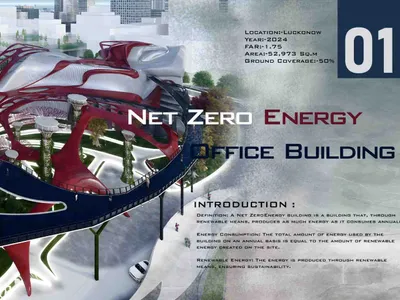
More Than a Building-Designing a Living System
More Than a Building-Designing a Living System
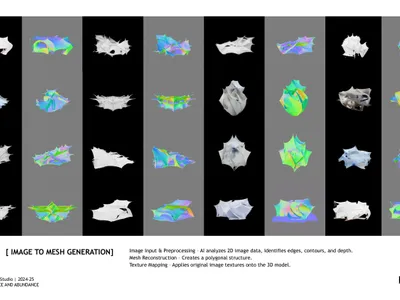
Base Beyond
DESERT COMPOUND ARID: TOURISM OF ABSENCE AND ABUNDANCE

Explore Desert Architecture Competitions
Discover active competitions in this discipline


Challenge to design luxury tourism on rails

Challenge to reimagine the Iron Throne

Photograph architecture without architects

VR headsets Storefront design competition
Comments (0)
Please login or sign up to add comments
No comments yet. Be the first to comment!