

Innovative Kindergarten Design: WD Kindergarten by HIBINOSEKKEI + Youji no Shiro
WD Kindergarten by HIBINOSEKKEI combines innovative design and natural elements to create a playful, engaging, and sustainable learning environment.


Redefining Early Education Spaces in Guangzhou
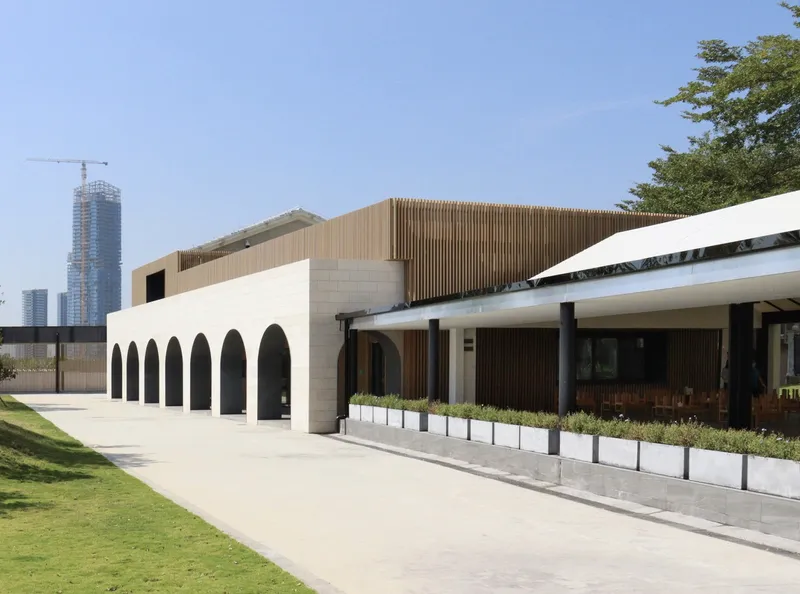
The WD Kindergarten, designed by HIBINOSEKKEI and Youji no Shiro, is a transformative renovation project located in Nansha District, Guangzhou, China. Spanning over 16,000 m², this kindergarten redefines how architecture supports early childhood education by fostering a sense of discovery, play, and growth through innovative design elements that engage children and blend seamlessly with the surrounding environment.
Site and Context: A Harmonious Blend of Urban and Natural
Maximizing the Scenic Setting
Nestled within a residential complex yet offering views of ships navigating a nearby river mouth, WD Kindergarten captures the essence of its unique location. The site is an inspiring intersection of urban density and natural beauty, encouraging exploration and curiosity in young minds.

Leveraging an Existing Structure
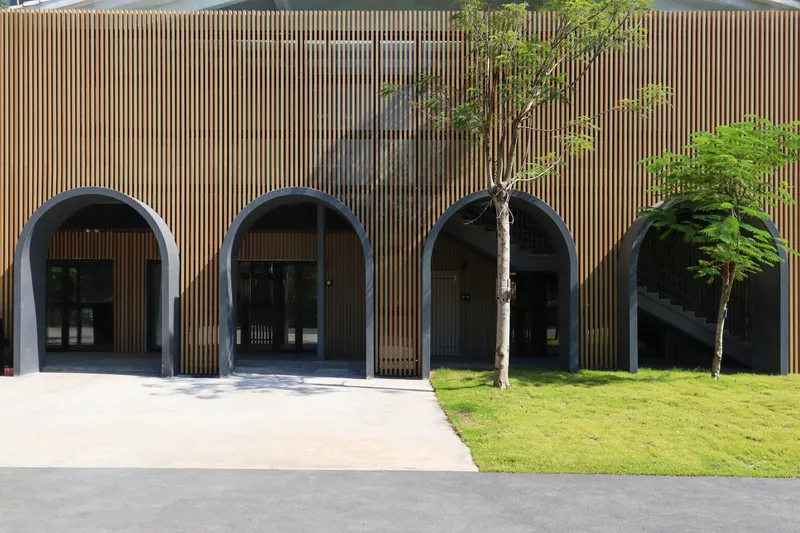
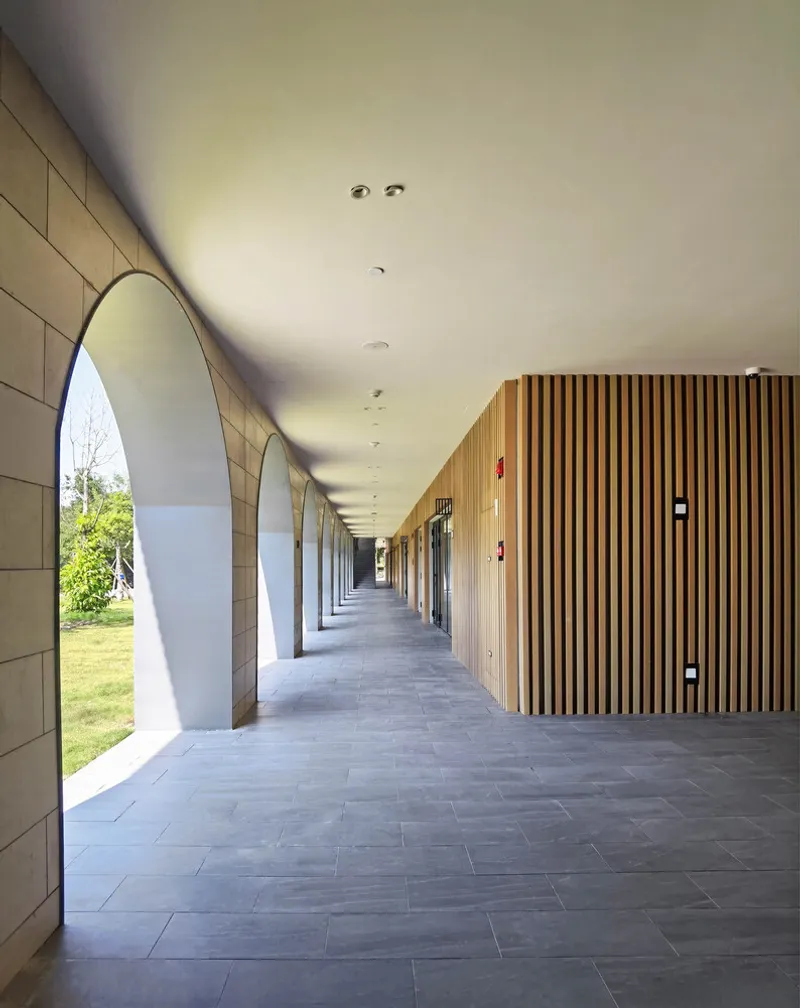
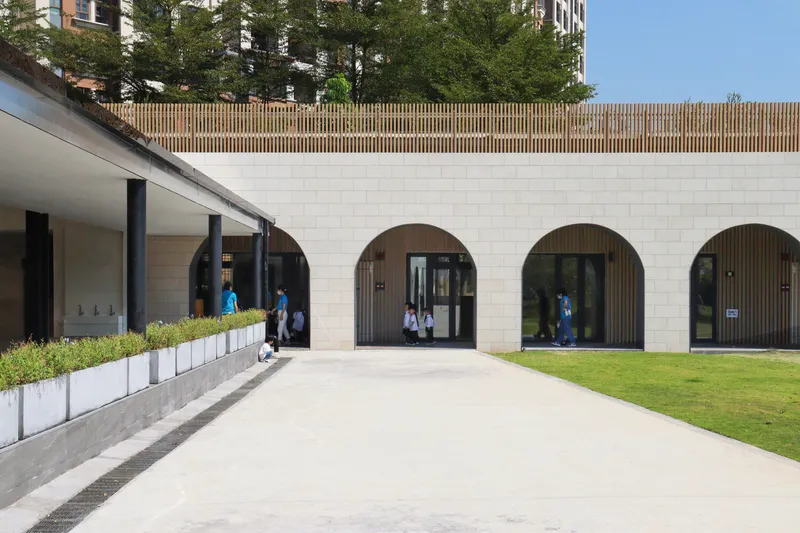
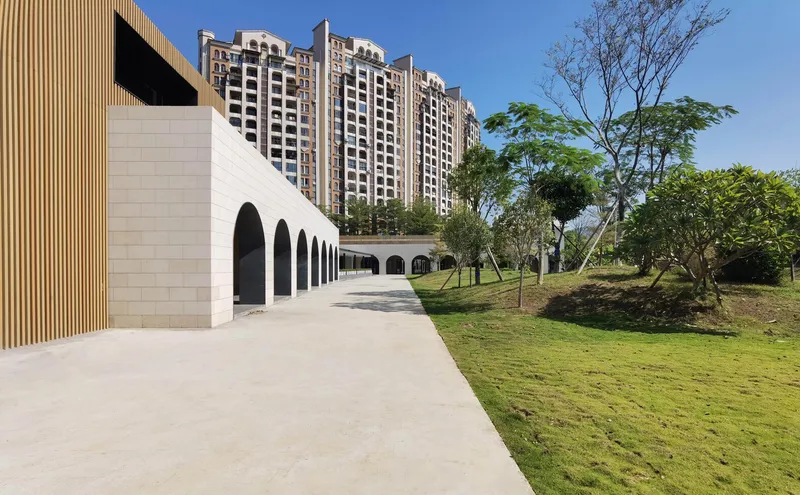
Originally designed as a commercial facility, the single-story building has been repurposed into an educational haven. The design takes full advantage of existing features, including expansive gardens and arched exterior corridors, to create an immersive learning environment.

Architectural Highlights: Engaging Spaces for Learning and Play
Semi-Outdoor Spaces for Tropical Climates
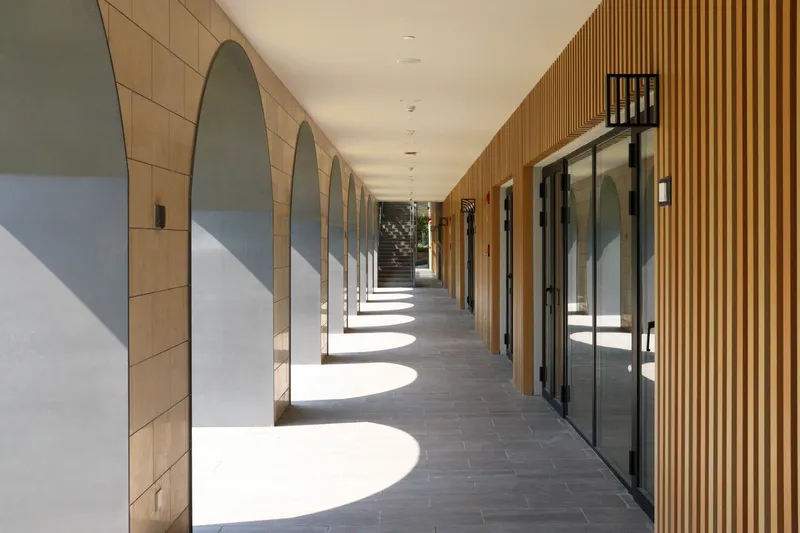
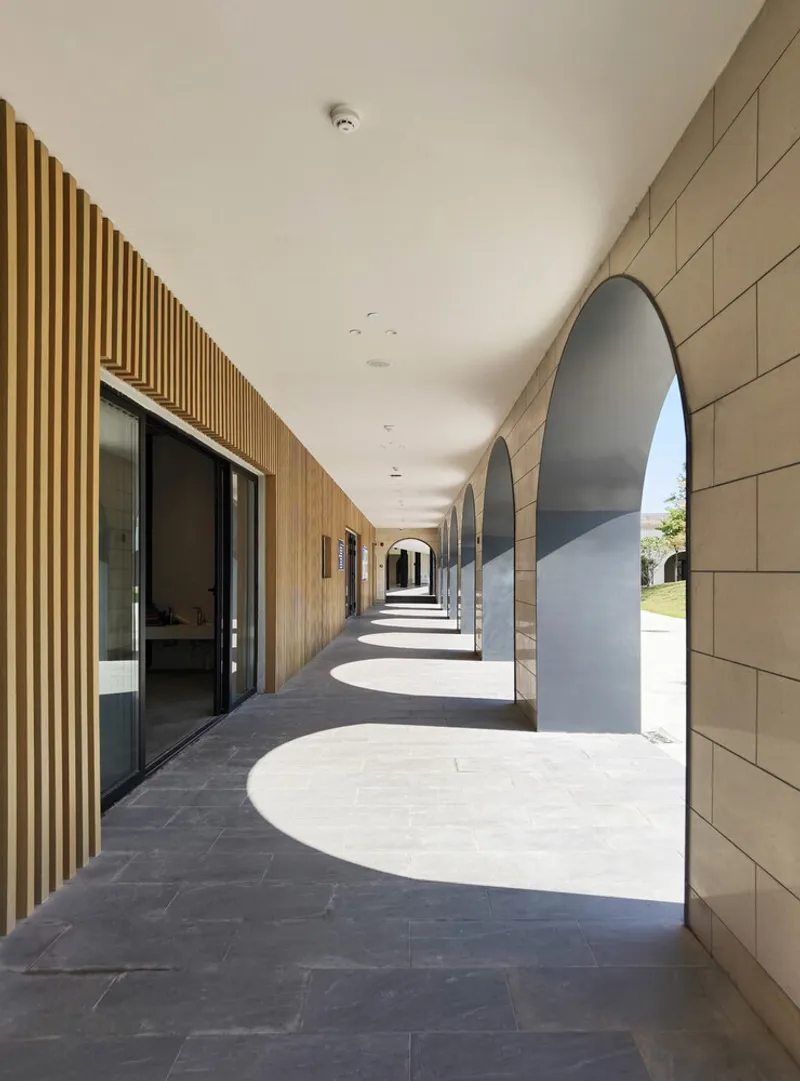
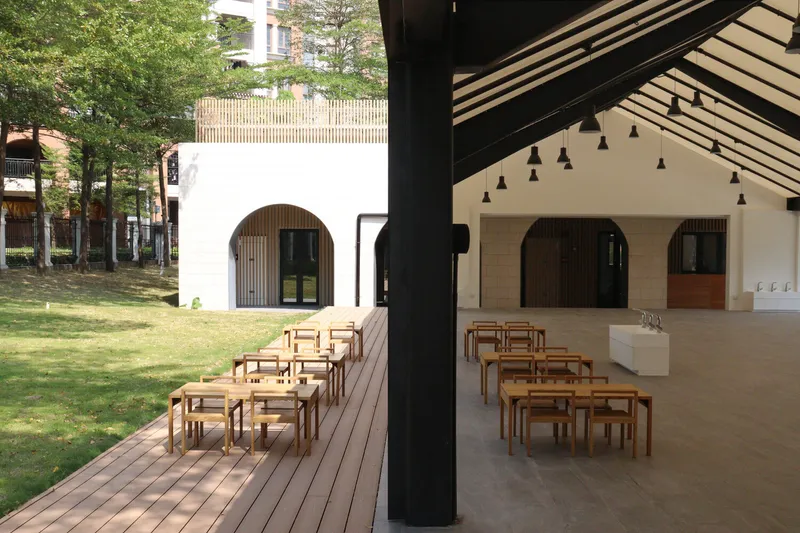
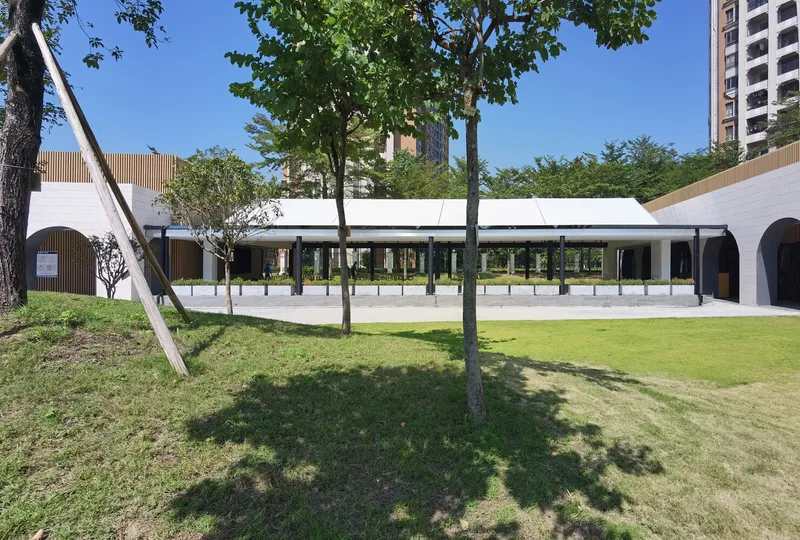
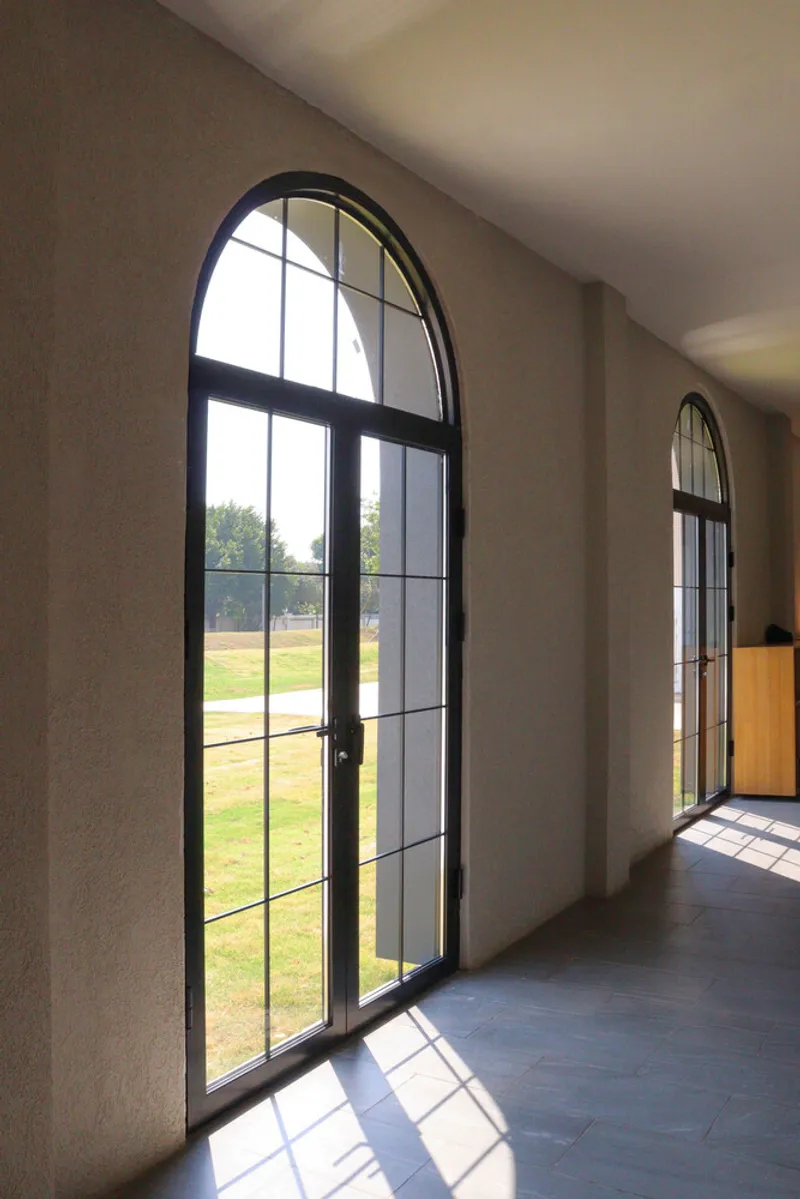
The arched exterior corridors have been reimagined as semi-outdoor spaces, allowing classrooms direct access to the garden while controlling light and shadow. This thoughtful approach ensures the building remains functional during Guangzhou’s frequent rainy seasons.
Dynamic Classrooms with Loft Spaces
Inside the classrooms, high ceilings create opportunities for playful loft spaces above storage and wet areas. These cozy lofts provide children with a sense of adventure and unique vantage points within their learning environments.
Flexible Dining and Social Spaces
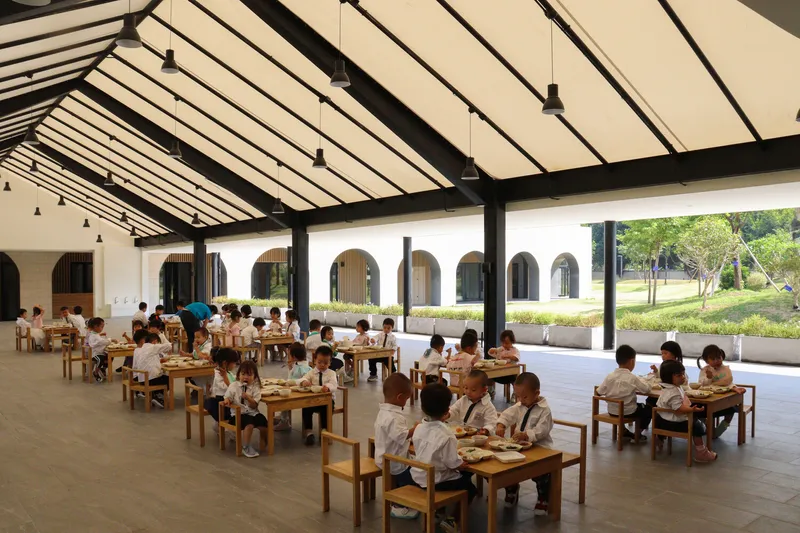
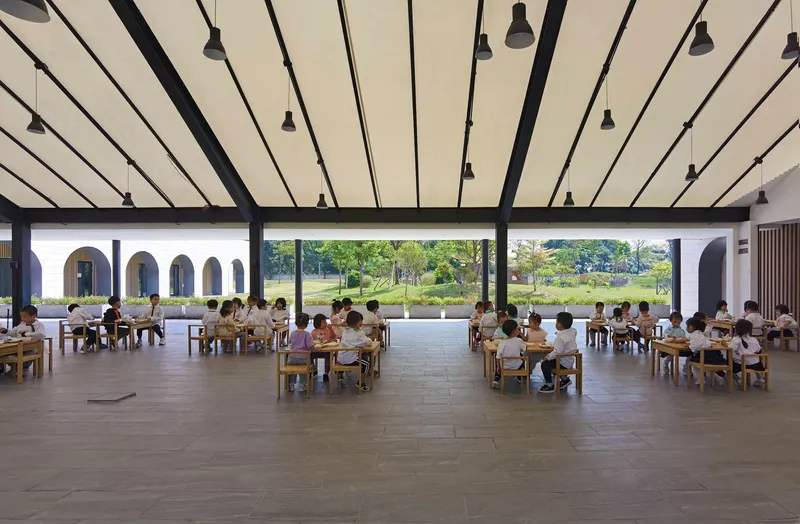
Positioned centrally within the building, the dining area transforms into a semi-outdoor space during spring and autumn. This design fosters an inviting, communal atmosphere that adapts to seasonal changes.
Landscape Design: Encouraging Exploration and Play
A Garden Designed for Discovery
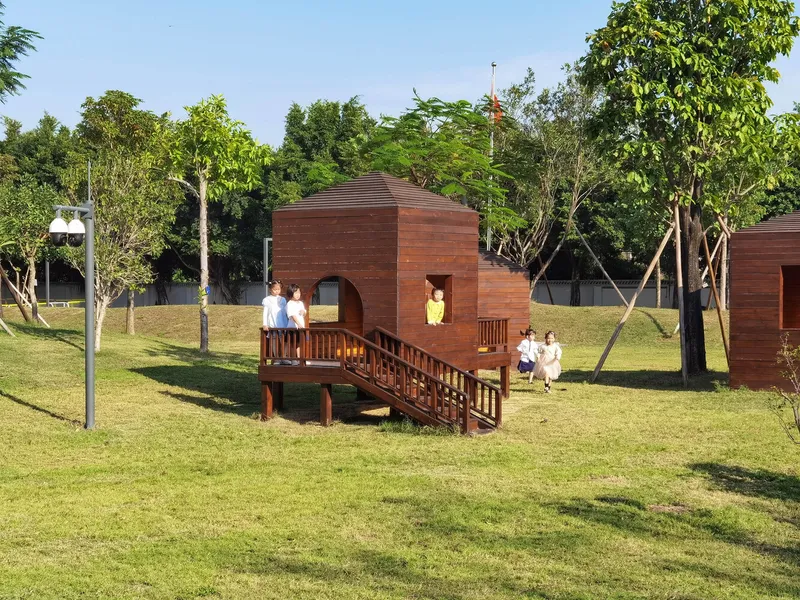
The gently sloped garden features dynamic hills, vibrant trees, and open spaces that inspire children to explore and learn through play. These natural elements encourage physical activity and sensory engagement, aligning with the concept of spontaneous learning.
Integration with Nature
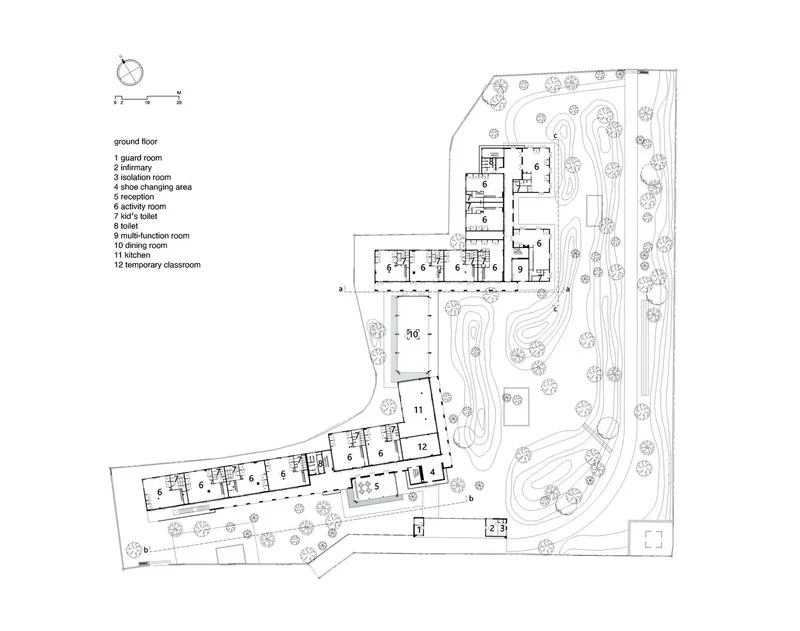
Every classroom opens directly onto the garden, bridging the indoors and outdoors. This seamless connection emphasizes the importance of nature in early education, offering children the freedom to interact with their environment.
Sustainability and Design Adaptation
Adapting to Local Climate
The design thoughtfully incorporates solutions for Guangzhou’s tropical weather. Semi-outdoor spaces, natural ventilation, and rain-protected corridors enhance usability while minimizing environmental impact.

Repurposing Existing Structures
By adapting an existing commercial building, the project demonstrates how sustainable renovation can create vibrant and functional spaces for education.

A Model for Kindergarten Innovation
WD Kindergarten by HIBINOSEKKEI and Youji no Shiro sets a benchmark for innovative kindergarten design. By repurposing an existing structure and focusing on nature-inspired learning spaces, the project not only supports childhood development but also offers a model for integrating sustainability and architecture in educational facilities.




Popular Articles
Popular articles from the community


The Musturak Paradise: Senior Living Architecture for a Connected Future in Temara, Morocco
The Musturak Paradise reimagines senior living architecture in Temara via private homes, social spaces, culture, community, and shared care.
AL-JANNAH: Sustainable Architecture and Permaculture for Afghan Widows
AL-JANNAH uses sustainable architecture and permaculture to create resilient oasis of housing, learning, work and renewal for Afghan widows.

The Earth Pod: 3D Printed Homes for Resilient Refugee Communities
The Earth Pod reimagines refugee housing through 3D printed homes made from clay, combining resilience, self-sufficiency, and rapid shelter.

Co-Life: Senior Housing Design That Reconnects Older Adults With the City
Co-Life reimagines senior housing design through healing gardens, shared streets, workshops, and a sustainable community across generations.

Similar Reads
You might also enjoy these articles


Hodi-Mandai Geram
Project Function: Preservation and revitalization of the Intangible heritage and socio-spatial identity of the Hodi by Housing, Cultural Memory Center, Sacred Grove, landscape, local tourism economy


Olio Towers: A Mid-Rise for Performers That Fuses Housing, Rehearsal, and Stage
Located blocks from Houston's Theater District, this modular tower stacks living units around a central performance atrium.

Oasis: Modular Green Housing Carved into Dhaka's Urban Fabric
A shortlisted Plugin Housing entry reclaims unauthorized settlements in Dhaka with stepped concrete volumes, green roofs, and ventilation-driven design.

Black Hole: A Floating Megastructure for the Post-Physical Era
Emiliano Mazzarotto envisions a spherical, self-scaling arena where e-sports, digital hotels, and holographic stadiums replace traditional public space.


Explore Educational Building Competitions
Discover active competitions in this discipline



Challenge to design public laboratory


Challenge to reimagine the Iron Throne


Photograph architecture without architects


Illustrate the lost glory of Angkor Wat - Render Challenge
Comments (0)
Please login or sign up to add comments
No comments yet. Be the first to comment!