
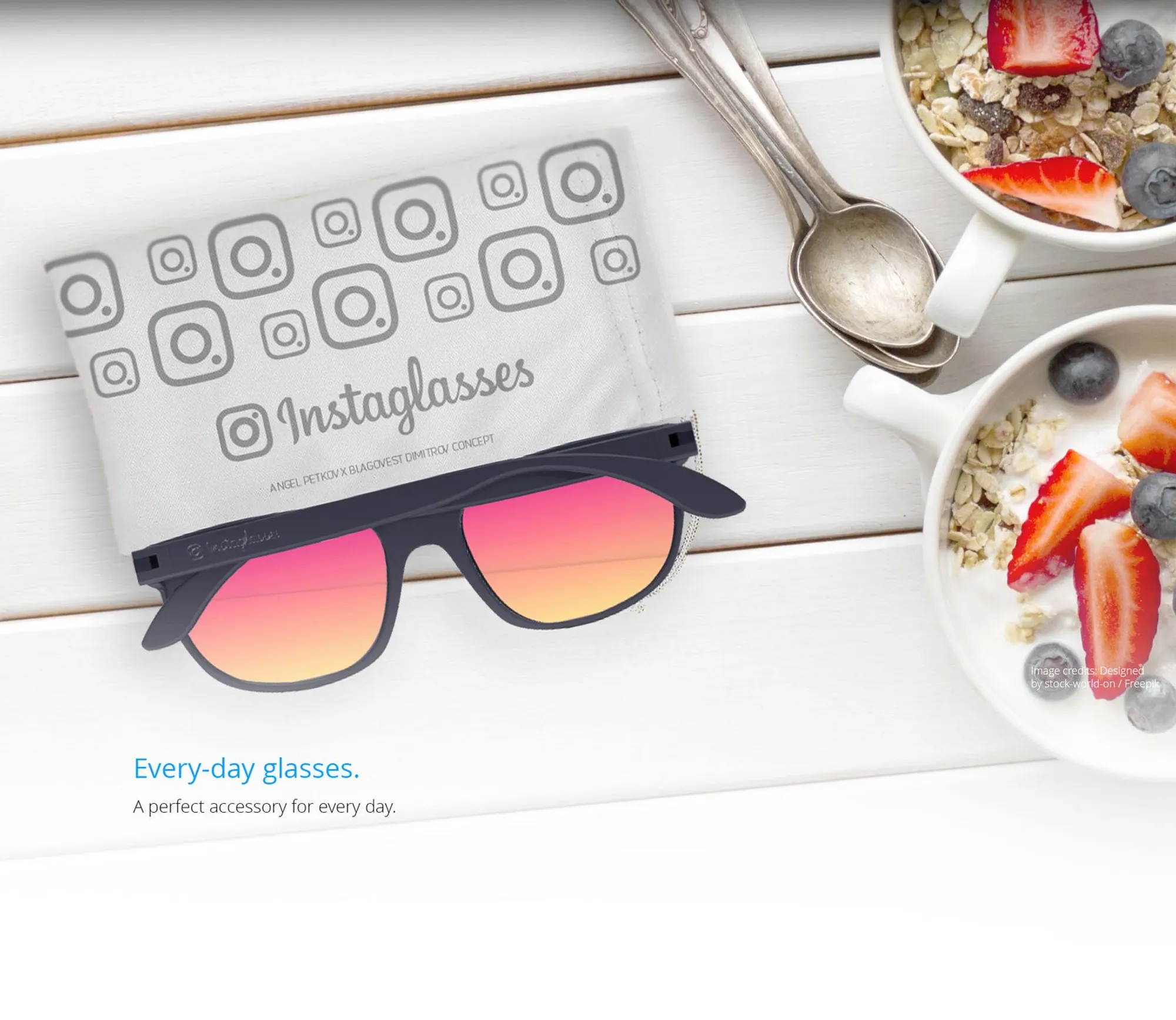
Instaglasses: A Speculative Product Design Concept Bridging Wearable Technology and Digital Storytelling
A speculative concept design imagining wearable technology as architecture for storytelling, where vision, interaction, digital life meet.


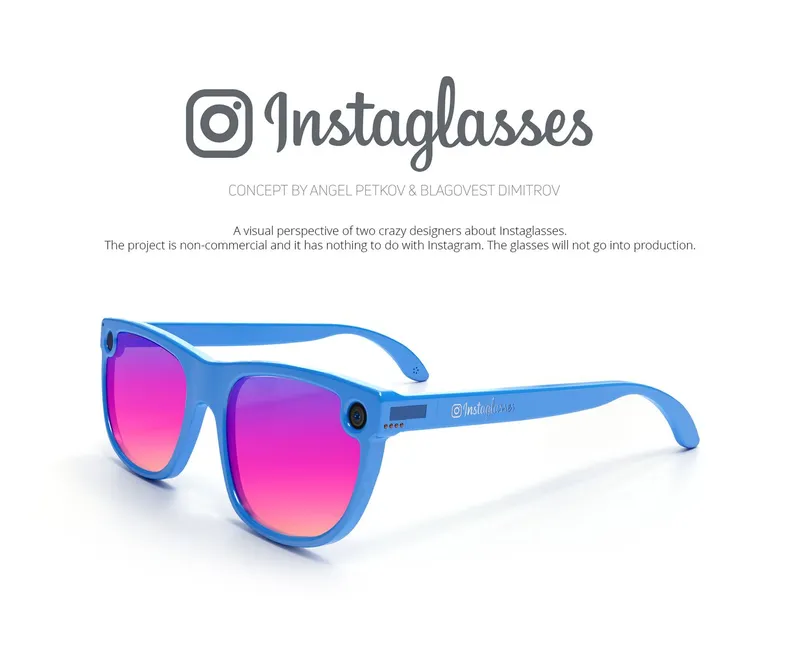
Instaglasses is a bold concept design project that explores the intersection of wearable technology, social media behavior, and contemporary product aesthetics. Conceived as a non-commercial experiment, the project presents a speculative vision of how everyday accessories, such as sunglasses, could evolve into narrative-driven digital tools. Designed purely as a visual and conceptual exploration, Instaglasses does not represent a real product and has no official association with Instagram.
The project received a Special Mention at the International Product Design Awards 2019, highlighting its strength as a forward-looking design concept rather than a market-ready device.

Concept Design as a Narrative Tool
At its core, Instaglasses investigates how design can translate human experiences into seamless digital storytelling. The glasses are imagined as a wearable interface that allows users to capture photos, short videos, and live moments directly from their point of view. This approach reframes eyewear not just as a functional object, but as an extension of perception, turning vision itself into a medium for communication.
This concept design challenges conventional boundaries between physical products and digital platforms. Instead of screens and handheld devices, interaction is embedded into form, gesture, and movement, proposing a future where technology quietly integrates into daily life.
Design Language and Visual Identity
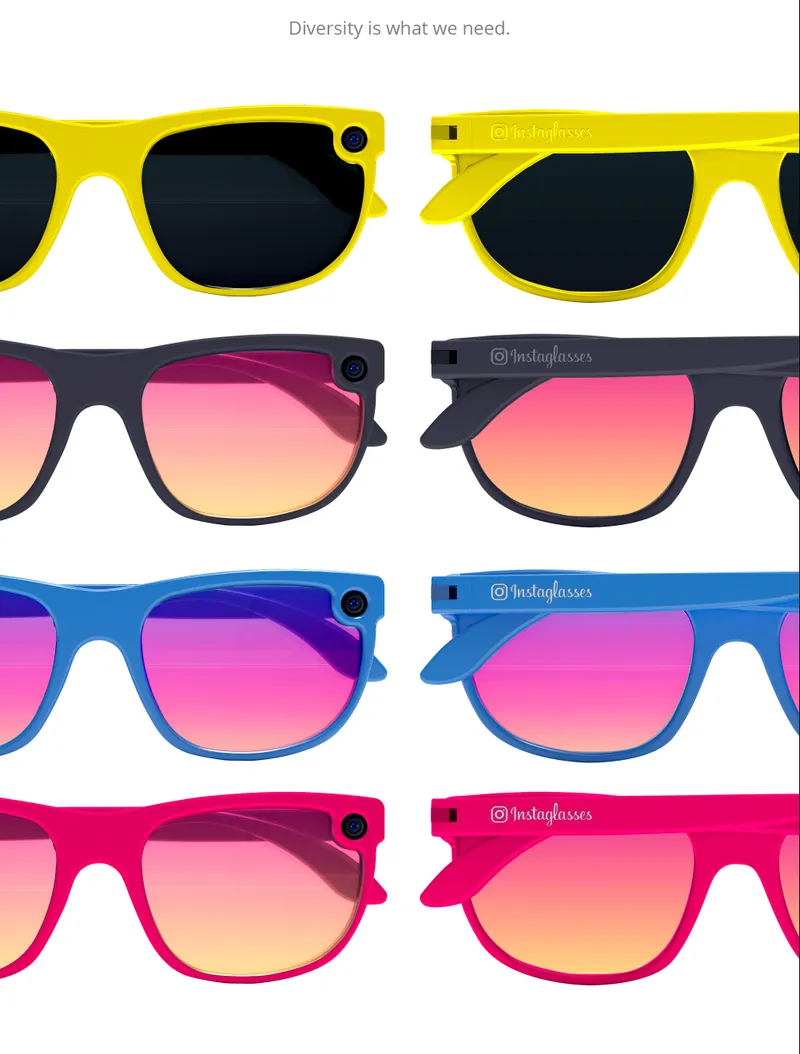
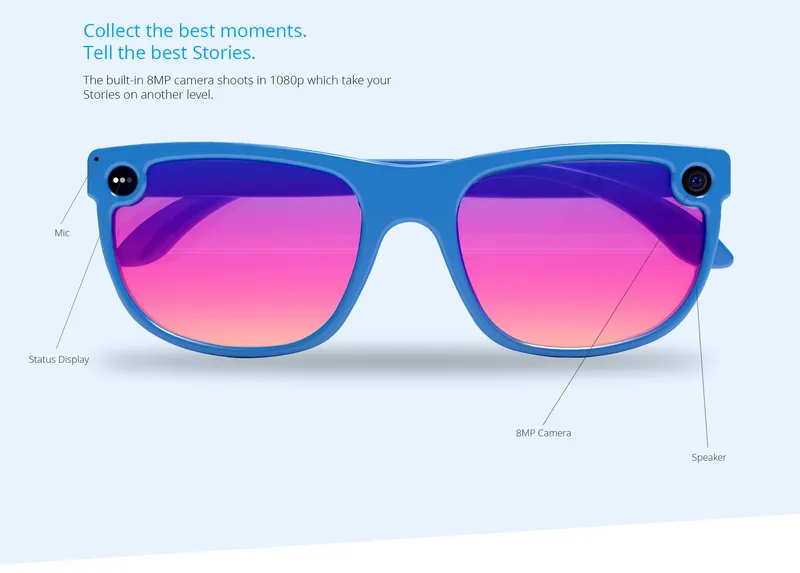
The visual language of Instaglasses is intentionally vibrant, playful, and contemporary. Multiple color variations emphasize diversity and personalization, suggesting that wearable technology should adapt to identity rather than impose uniformity. The frames maintain a familiar sunglasses silhouette, ensuring immediate recognizability, while discreetly integrating cameras, sensors, and touch-based controls.
This balance between familiarity and innovation is a key strength of the project. By avoiding an overtly futuristic appearance, the design remains approachable while still conveying technological sophistication.

Interaction and User Experience
The imagined interaction model relies on simple, intuitive gestures. Touch-sensitive areas on the frame allow users to capture images, record short videos, or initiate live streaming with minimal effort. Audio feedback replaces visual alerts, reducing distraction and reinforcing the hands-free nature of the experience.
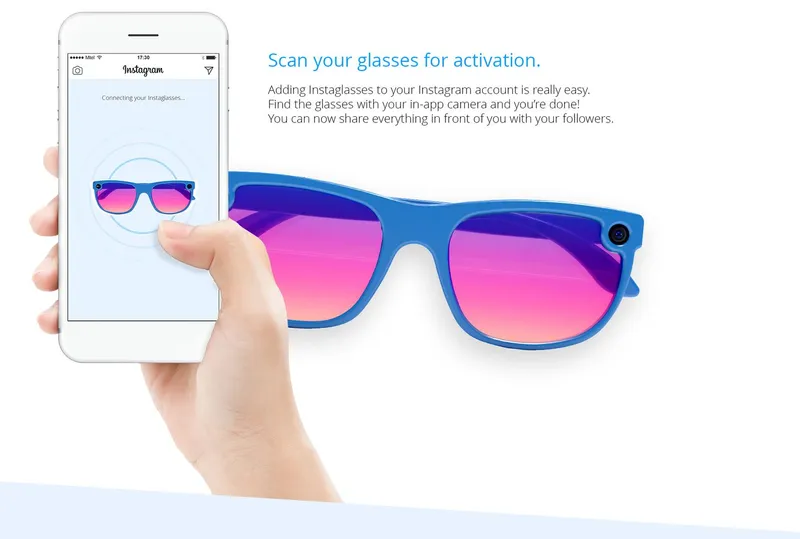
Activation is visualized through smartphone integration, where scanning the glasses connects them to a social media account. This reinforces the idea of the glasses as a peripheral interface rather than a standalone device, keeping the digital ecosystem lightweight and unobtrusive.
Charging and Object Ecology
Even the accessories surrounding Instaglasses are treated as part of the overall concept design. A wireless charging case transforms a purely technical requirement into a display object, allowing the glasses to be stored, charged, and showcased simultaneously. This approach reflects contemporary design thinking, where supporting objects contribute to the identity and ritual of use.
Speculation, Not Production
It is important to emphasize that Instaglasses is a speculative design project. The concept was never intended for manufacturing or commercial release. Instead, it functions as a design narrative: an exploration of how future products might respond to evolving habits of content creation, self-expression, and digital presence.
By existing outside commercial constraints, the project freely questions privacy, visibility, and the social implications of constant sharing, making it as much a cultural commentary as a design exercise.
Recognition and Credits
Instaglasses was conceptualized as a visual exploration by Blagovest Dimitrov, showcasing how product design concepts can act as critical tools for imagining future lifestyles. Its Special Mention at the International Product Design Awards 2019 underscores its relevance within contemporary design discourse.
As a concept design, Instaglasses succeeds not by offering a finished solution, but by provoking conversation. It demonstrates how wearable objects can become narrative instruments, blending form, technology, and social behavior into a single speculative vision. In doing so, it highlights the power of design to question, imagine, and redefine the relationship between humans and the digital worlds they inhabit.



Popular Articles
Popular articles from the community


The Musturak Paradise: Senior Living Architecture for a Connected Future in Temara, Morocco
The Musturak Paradise reimagines senior living architecture in Temara via private homes, social spaces, culture, community, and shared care.

The Ocean Hive: Sustainable Architecture for a Self-Sufficient Civilization at Sea
The Ocean Hive imagines sustainable architecture at sea, where modular habitats, algae, wave power and ocean waste sustain a growing colony.

Hill & Cross Opera: Sculptural Opera House Architecture Shaped by Tallinn’s Landscape and Identity
Hill & Cross Opera reimagines opera house architecture in Tallinn through its sculptural hill, civic plaza, glass wave and a luminous cross.

Co-Life: Senior Housing Design That Reconnects Older Adults With the City
Co-Life reimagines senior housing design through healing gardens, shared streets, workshops, and a sustainable community across generations.


Similar Reads
You might also enjoy these articles


Maya Harvest: A Cacao Resort Village Rooted in Mayan Tradition and Local Craft
Situated within a Tabasco cacao plantation, this shortlisted resort proposal merges vernacular materials with hands-on cultural immersion.
Harmonia: A River-Shaped Community That Grows Over Decades in Boa Vista
Curved pathways and modular grid structures along the Branco River create a phased settlement designed to evolve from 2030 to 2050.

The Architecture of Bathing: A Mughal Hammam Reimagined Across the Yamuna
Charlotte May's honorable mention entry for The Black Taj reinterprets Agra's bathing rituals through red sandstone, water, and framed views of the Taj Mah
Om-1: A Wall-Hung System That Moves Your Workspace Off the Desk
Modular plywood boards, magnetic pegs, and utility elements migrate clutter from the horizontal surface to the vertical plane.


Explore Industrial Design Competitions
Discover active competitions in this discipline


Design challenge to equip cities with modern furniture


Design challenge to reuse E-waste

Packaging challenge - Design meets sustainability
Comments (0)
Please login or sign up to add comments
No comments yet. Be the first to comment!