
Iron Creek Bay Farm Stay by Misho and Associates: A Sustainable Rural Hospitality Experience in Tasmania
Sustainable farm stay in Tasmania blending eco-tourism, CLT architecture, and agricultural living with solar power, native landscaping, and local materials.


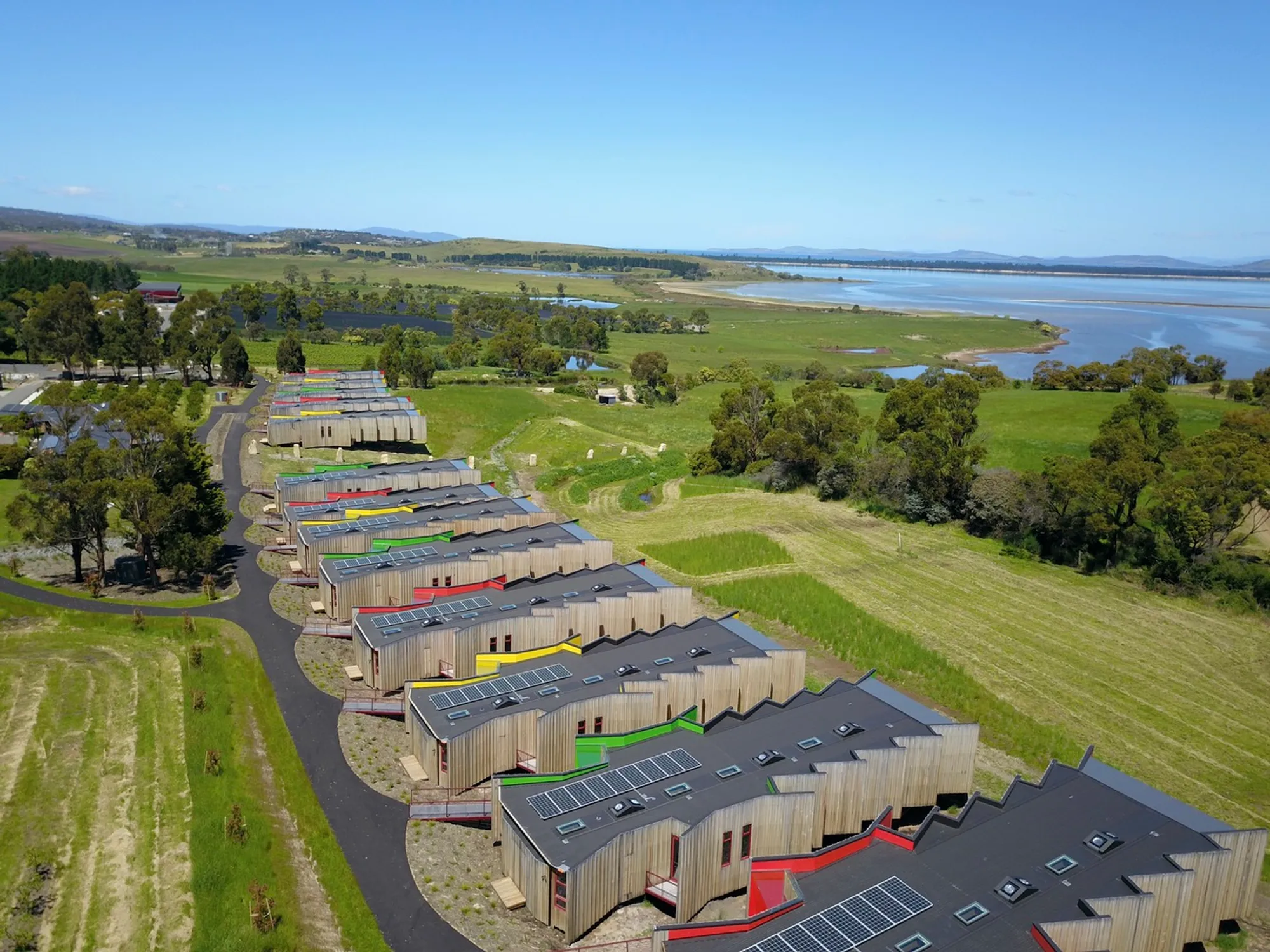
Iron Creek Bay Farm Stay, designed by Misho and Associates, reimagines a working agricultural property in Sorell, Tasmania, into an immersive and eco-conscious rural hospitality experience. Bridging architecture, sustainable tourism, and modern agrarian life, this visionary project harmonizes farm stay accommodation with operational agriculture and culinary experiences to create a multifunctional, self-sustaining rural destination.
A Regenerative Vision for Agriculture and Tourism
At its core, Iron Creek Bay Farm Stay is a model for integrated agricultural tourism. The design revitalizes an existing farm, supporting its next stage of development while preserving its agricultural significance. The masterplan integrates hospitality with sustainable farming, featuring accommodation pavilions, a farm-to-table restaurant, farm store, and essential farm operation facilities.
The design embraces Tasmania’s scenic beauty while implementing environmentally responsible architecture, targeting both local and international eco-tourism markets. Five strategic zones define the site, including adaptive reuse of existing buildings and the addition of new sustainable structures:
- Reception & Office: Transformed from the original farmhouse
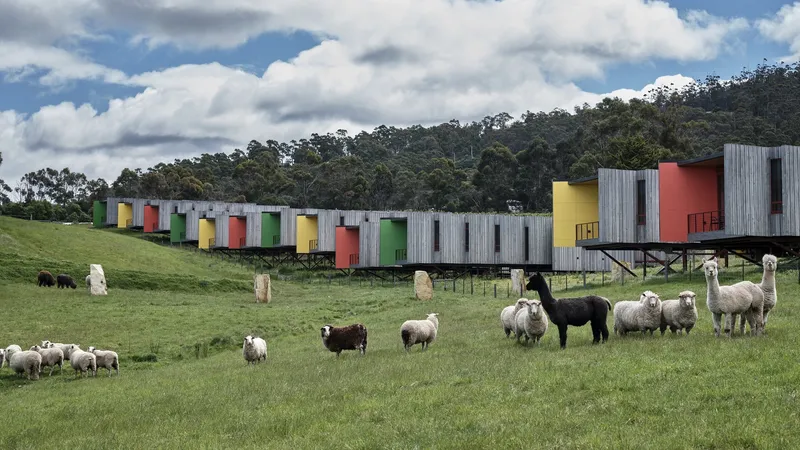
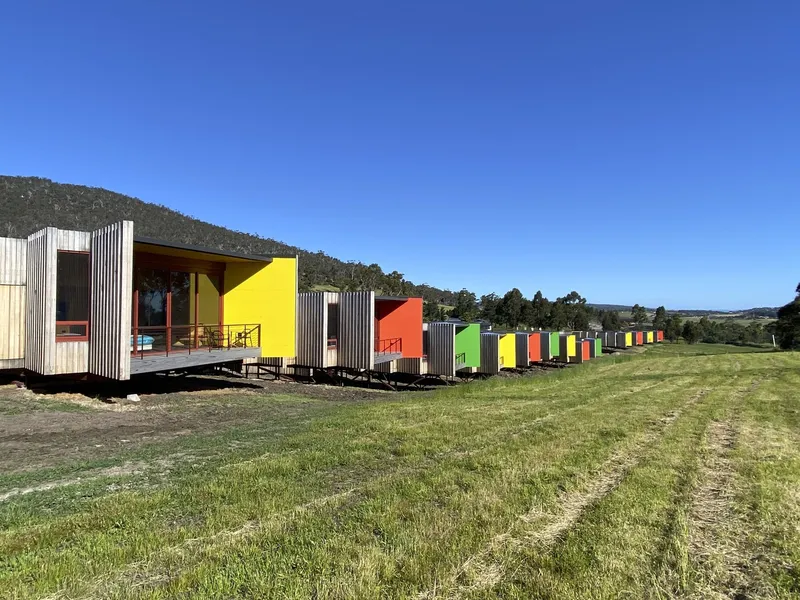
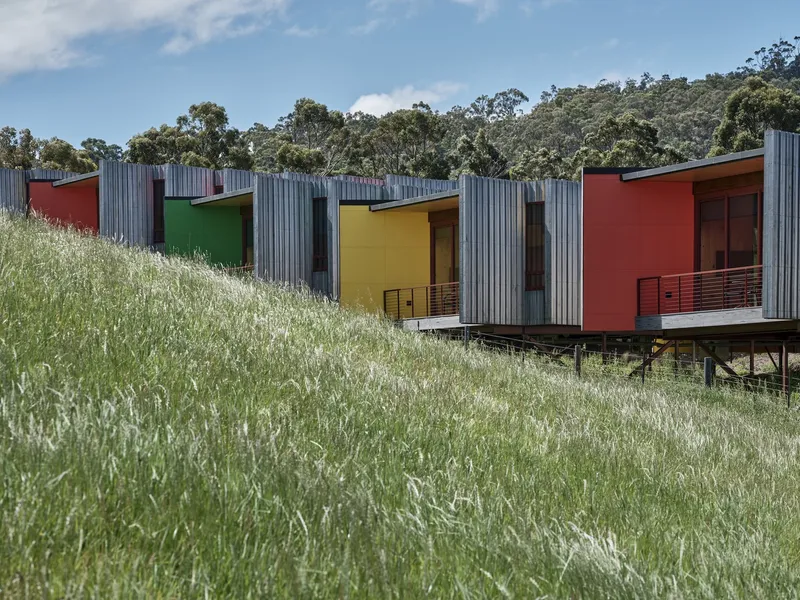
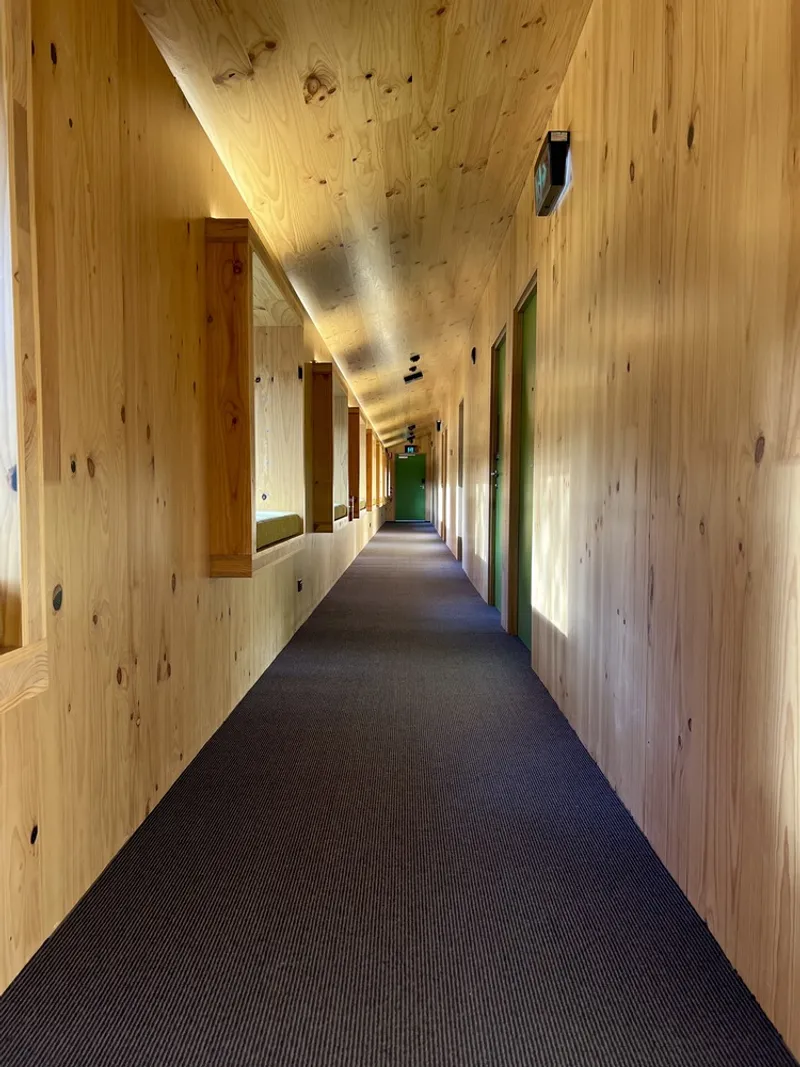
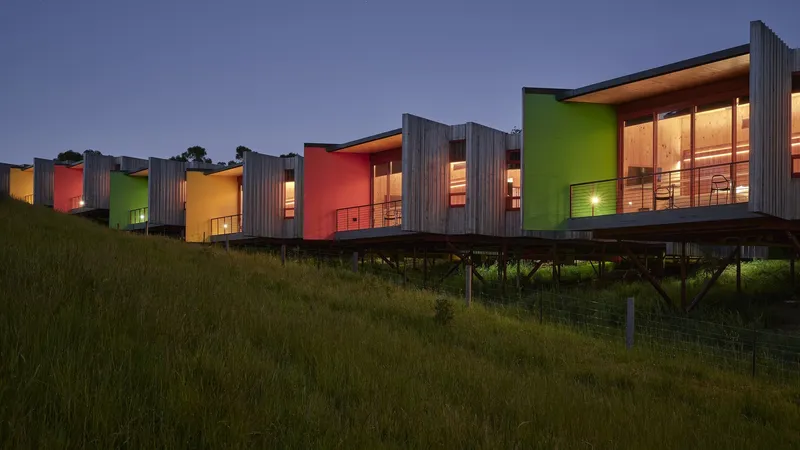
- 15 Farm Stay Pavilions: 135 m² each, designed for families and budget-conscious travelers
- 3 Backpacker/Picker Pavilions: 230 m² each, supporting seasonal workers
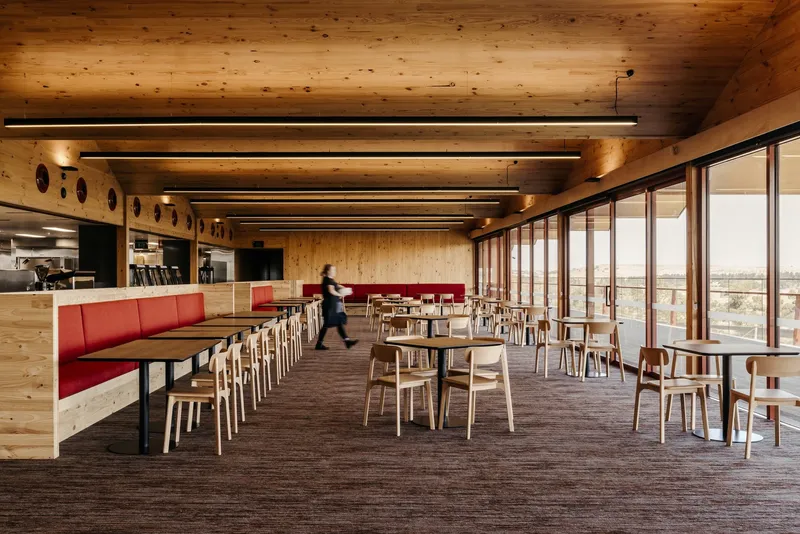
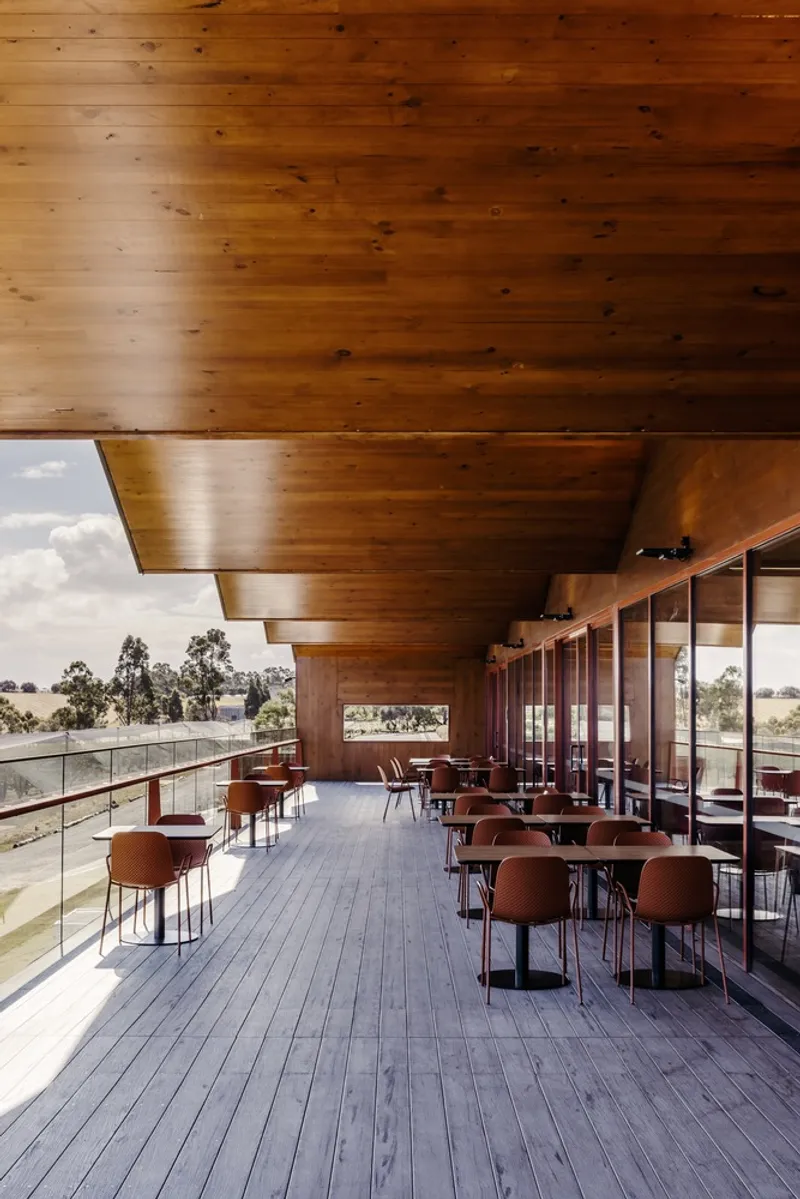
- Farm Restaurant & Store: A two-story 2,200 m² hub for dining and retail
- Farm Operations & Staff Amenities: 400 m² of dedicated support spaces
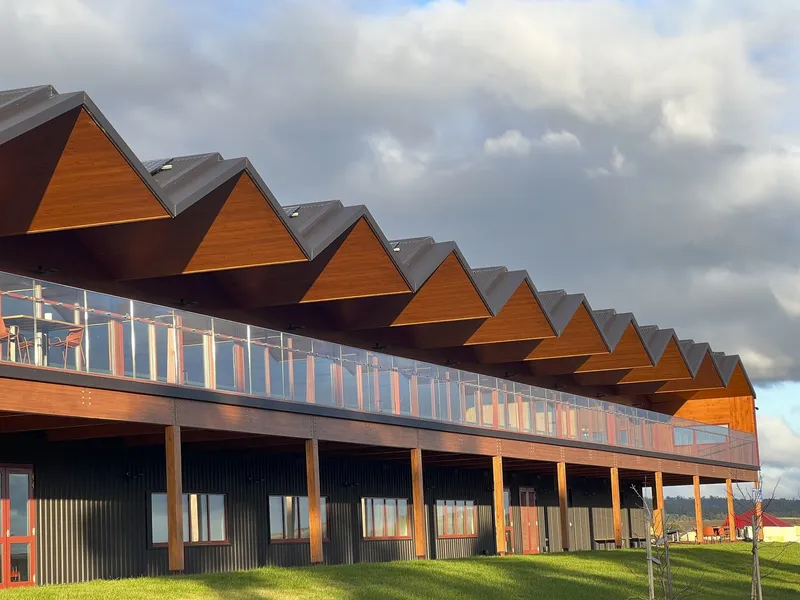
Sustainable Design: Carbon Capture and Local Materials
Sustainability is not a feature—it's the foundation. Iron Creek Bay Farm Stay is engineered with a strong environmental ethos:
- Mass Timber Construction: 5,500 m³ of cross-laminated timber (CLT) sequesters carbon within the building structures
- Locally Sourced Cladding: 3,250 m³ of Tasmanian plantation-grown hardwood, used untreated to naturally weather into the landscape
- Microgrid Energy System: 640 solar panels integrated with Alpha ESS battery systems, generating 195.2 kW of solar energy distributed across 24 buildings
- Hydronic Heating: Efficient floor heating powered by solar, battery, and mains, essential for Tasmania’s climate
- Water Independence: Onsite treatment of black and grey water via bio-filtration, irrigation from dam-stored runoff, and potable water sourced through a filtered irrigation scheme license
- Offsite Bathroom Pods: Prefabricated modular bathrooms by Hickory Sync reduce onsite construction time and waste
- Thermal Efficiency: All buildings use double-glazed, thermally broken aluminum windows for optimal insulation
Architecture Inspired by the Australian Landscape
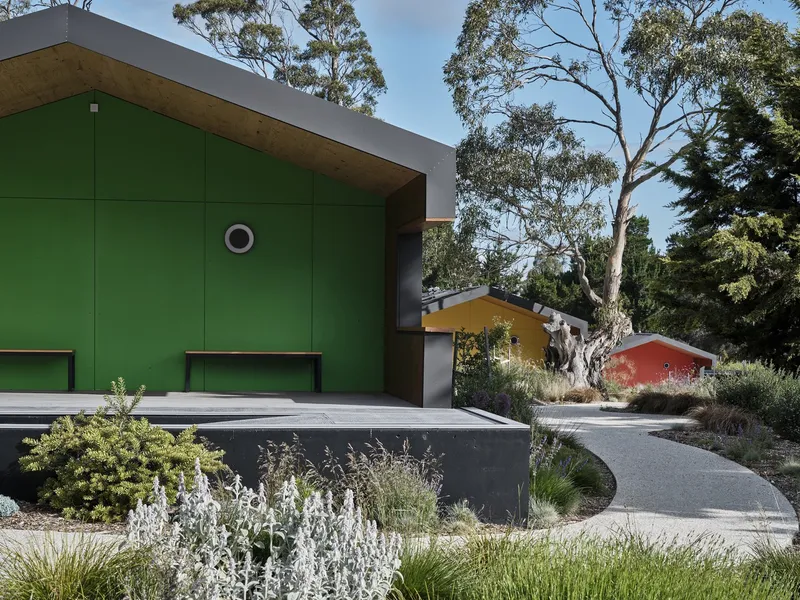
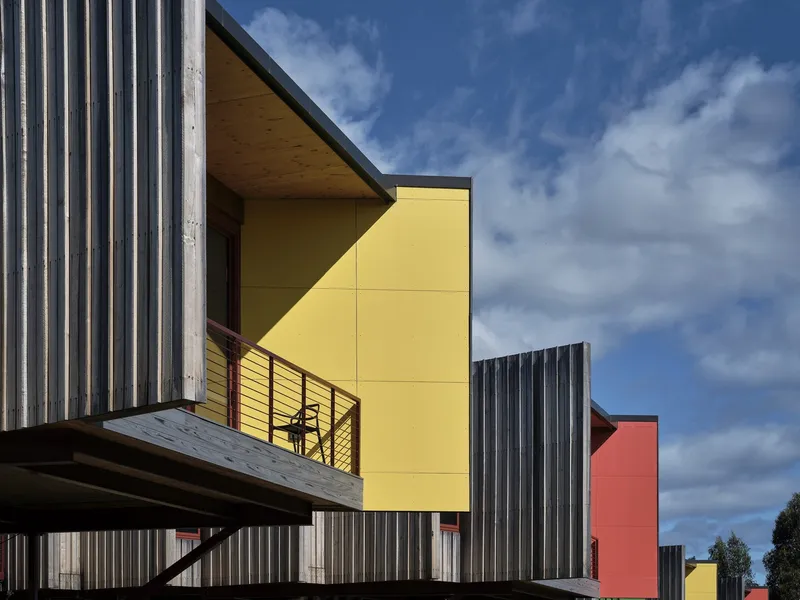
The architecture draws deeply from the character of rural Tasmania, using an earthy color palette of charcoal, untreated timber, and native landscaping to blend into the natural terrain. The pavilions are positioned to maximize privacy and views, creating intimate, nature-connected stays while supporting large-scale sustainability goals.
The project is a prototype for low-impact, high-experience hospitality design—avoiding typical star-rating constraints to instead focus on delivering authentic, agrarian-inspired accommodation with wide appeal. It's a destination for exploration, community, and ecological stewardsh
All Photographs are works of Peter Whyte




Popular Articles
Popular articles from the community


The Ocean Hive: Sustainable Architecture for a Self-Sufficient Civilization at Sea
The Ocean Hive imagines sustainable architecture at sea, where modular habitats, algae, wave power and ocean waste sustain a growing colony.

Conexión: Biophilic Design Reimagines High-Rise Living in Hong Kong
Conexión reimagines high-rise living in Hong Kong through biophilic design, green facades, shared spaces, daylight, water and nature within.

Lunar Spiral: Space Architecture Shaped by the Mathematics of the Universe
Lunar Spiral reimagines space architecture through Fibonacci geometry, lunar regolith, levitating habitats, and self-sustaining Moon living.

Co-Life: Senior Housing Design That Reconnects Older Adults With the City
Co-Life reimagines senior housing design through healing gardens, shared streets, workshops, and a sustainable community across generations.


Similar Reads
You might also enjoy these articles


Hodi-Mandai Geram
Project Function: Preservation and revitalization of the Intangible heritage and socio-spatial identity of the Hodi by Housing, Cultural Memory Center, Sacred Grove, landscape, local tourism economy


Olio Towers: A Mid-Rise for Performers That Fuses Housing, Rehearsal, and Stage
Located blocks from Houston's Theater District, this modular tower stacks living units around a central performance atrium.

Oasis: Modular Green Housing Carved into Dhaka's Urban Fabric
A shortlisted Plugin Housing entry reclaims unauthorized settlements in Dhaka with stepped concrete volumes, green roofs, and ventilation-driven design.

Black Hole: A Floating Megastructure for the Post-Physical Era
Emiliano Mazzarotto envisions a spherical, self-scaling arena where e-sports, digital hotels, and holographic stadiums replace traditional public space.


Explore Hospitality Building Competitions
Discover active competitions in this discipline



Challenge to reimagine the Iron Throne


Photograph architecture without architects


Illustrate the lost glory of Angkor Wat - Render Challenge


Design challenge to reuse E-waste
Comments (0)
Please login or sign up to add comments
No comments yet. Be the first to comment!