
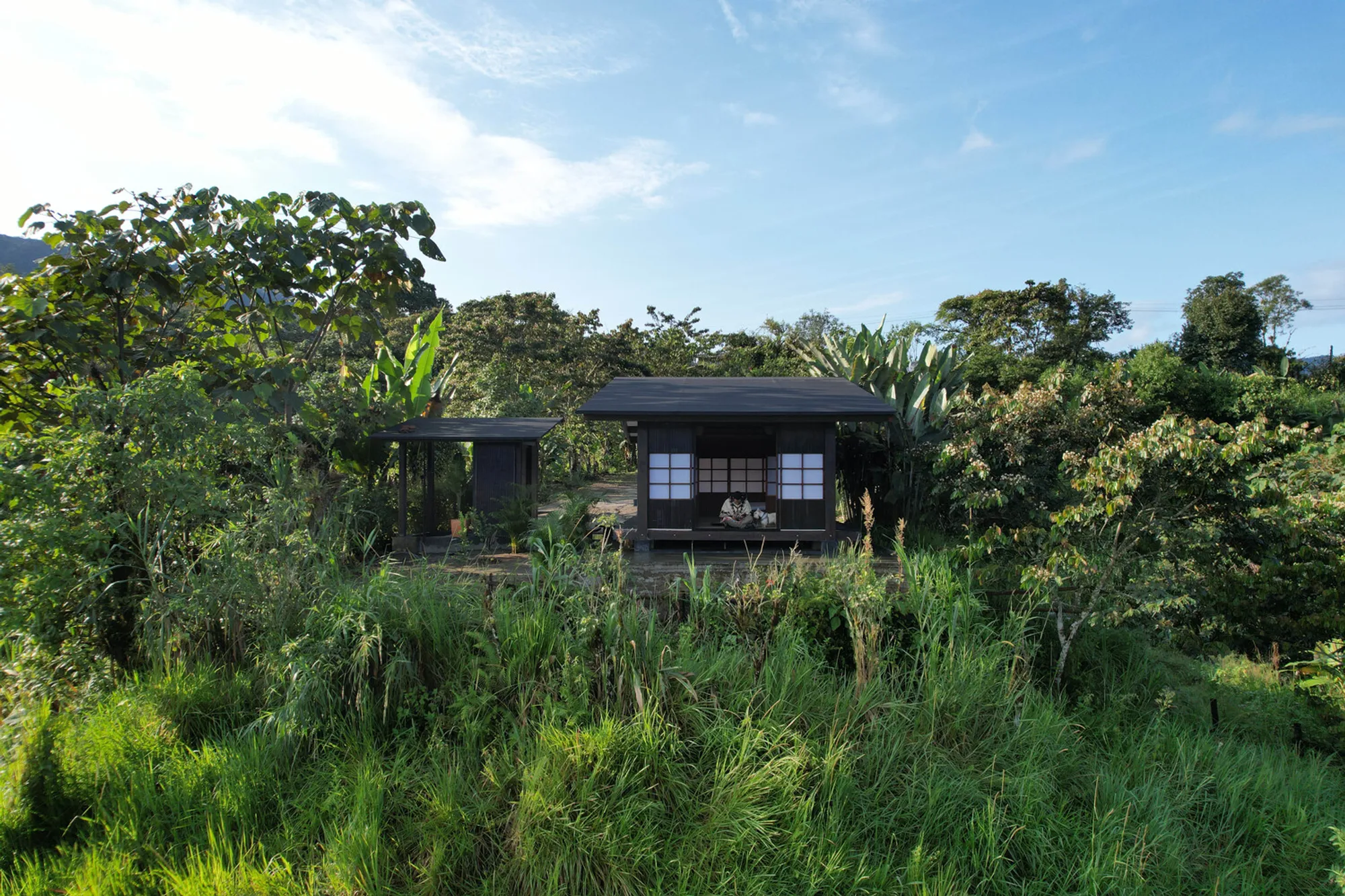
Irori Refuge by Baquio Arquitectura: A Sensory Forest Retreat in Nanegalito, Ecuador
Irori Refuge by Baquio Arquitectura transforms a former warehouse into a sensory forest retreat, blending Japanese hearth concepts with sustainable design.


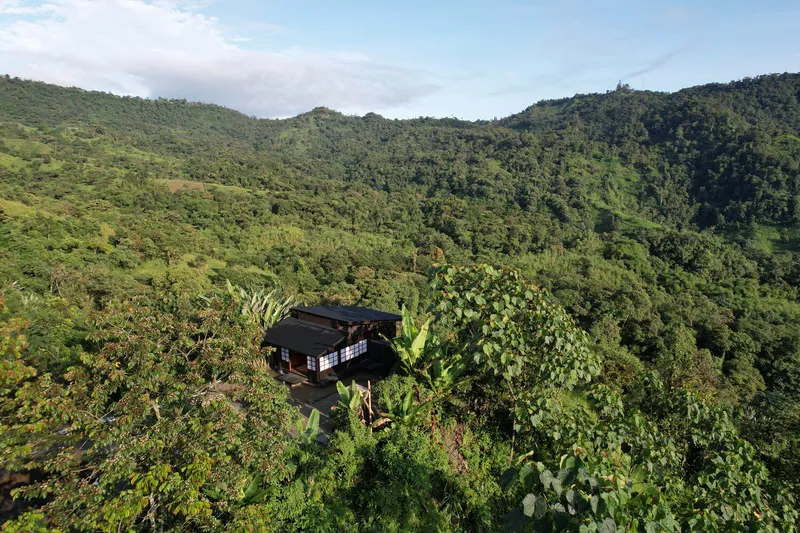
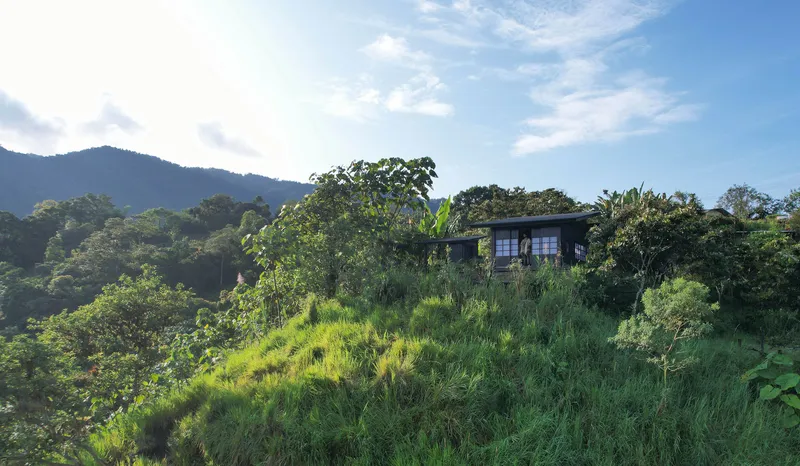
Nestled in the heart of Ecuador’s lush Chocó forest, the Irori Refuge by Baquio Arquitectura transforms a former warehouse and clandestine cockfighting site into a serene retreat that reconnects visitors with nature. Completed in 2024 and spanning 36 m², this innovative project reimagines the space as a refuge for reflection, ecological awareness, and immersive engagement with the endemic forest. Photography by Punto Dos Studio beautifully captures the harmony between architecture and the surrounding landscape.
Embracing Phenomenology in Architecture
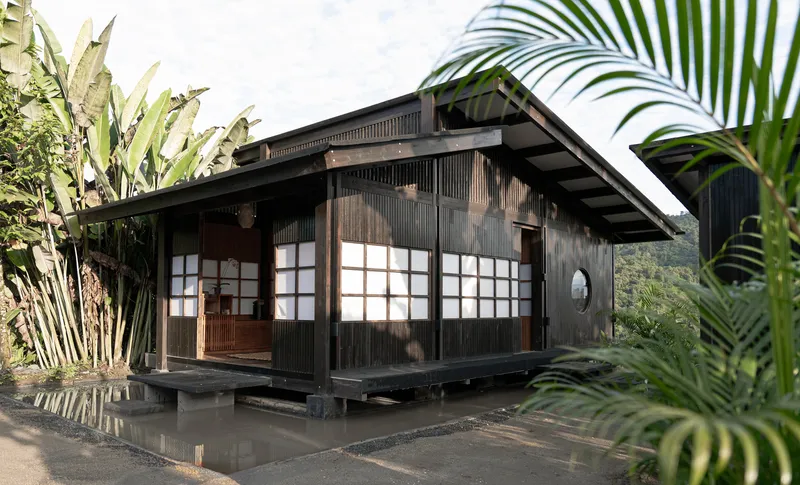
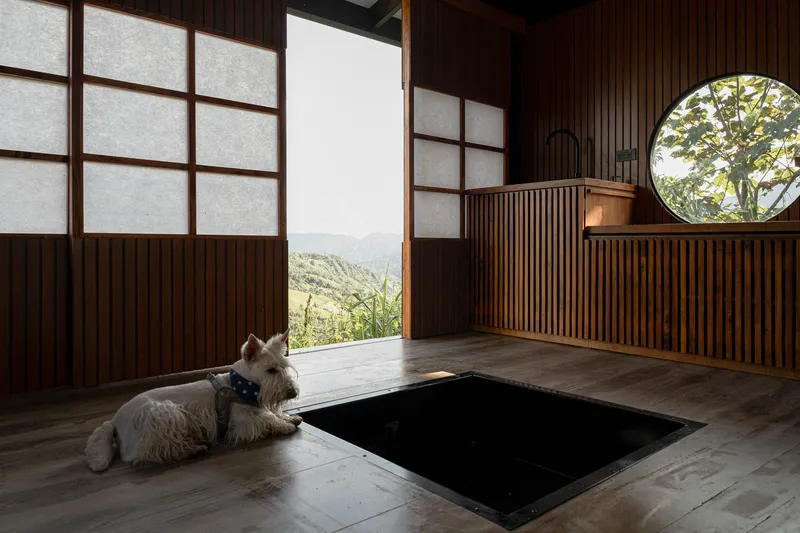
Led by Jose Granda, the design team approached Irori Refuge through the lens of phenomenology in architecture, prioritizing human experiences and sensory perception. The concept of Irori, a traditional Japanese hearth, served as the guiding principle. In Japanese culture, the Irori is more than a fire pit: it is a cultural gathering space that fosters intimacy, shared meals, and relaxation among family and close friends. By integrating this philosophy, the refuge encourages occupants to inhabit the space with heightened awareness and mindfulness.
A Journey Through the Senses
Irori Refuge is structured as a sensory journey, leading visitors toward the central hearth. The design is divided into three key zones, each stimulating a different sense: smell, hearing, and sight, through carefully curated spatial arrangements and natural materials.
Smell: Aromatic Forest Connection
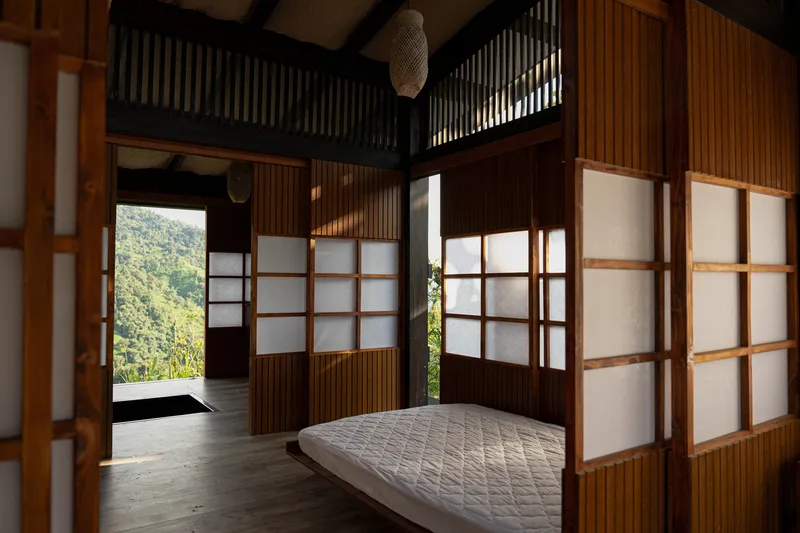
The entry zone is a sensory introduction where visitors are invited to remove their shoes and engage with local aromatic elements embedded in wooden furniture. This tactile and olfactory interaction deepens the connection to the forest’s native flora, setting the tone for a mindful retreat experience.
Hearing: Silence and Nature
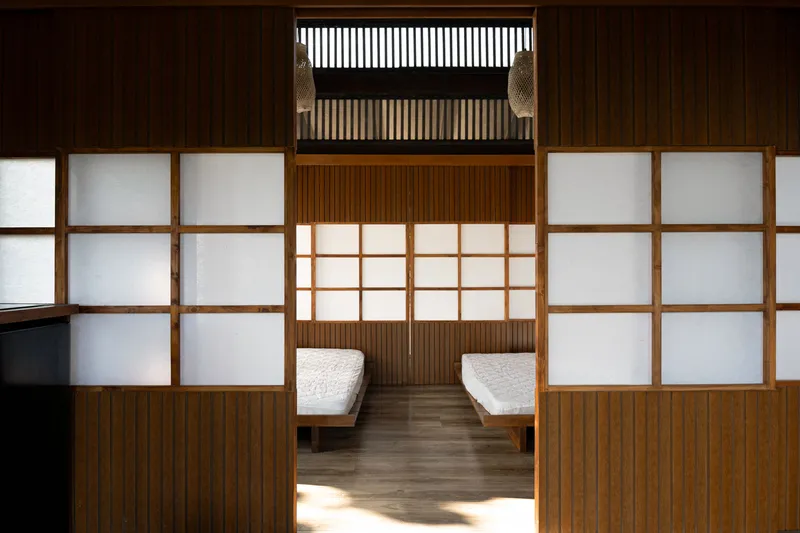
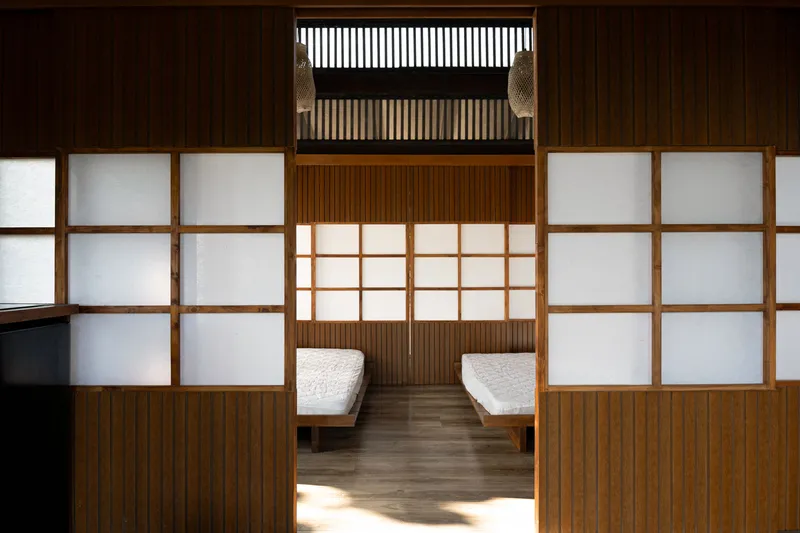
The second area focuses on hearing. Two folding beds are positioned within a space isolated from visual distractions, allowing only soft silhouettes to be perceived through shoji panels. Here, the only sounds are those of the surrounding forest, creating a meditative environment where the forest itself becomes the soundtrack.
Sight: Framing Nature
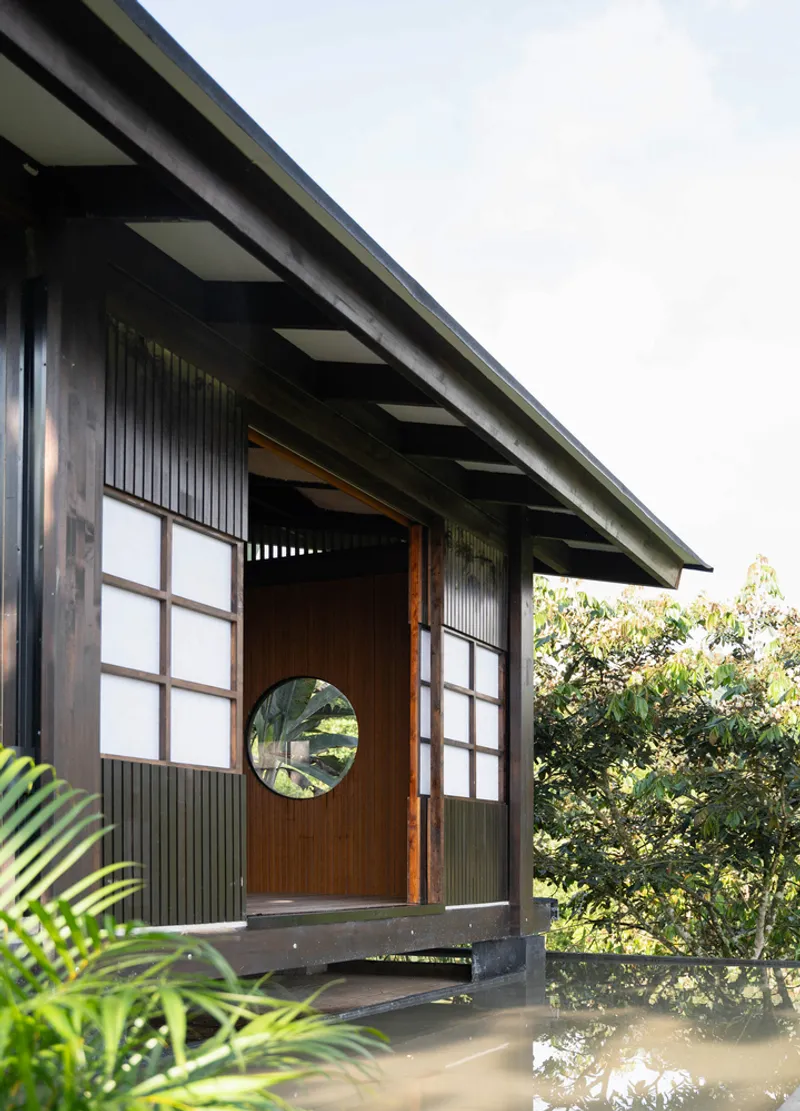
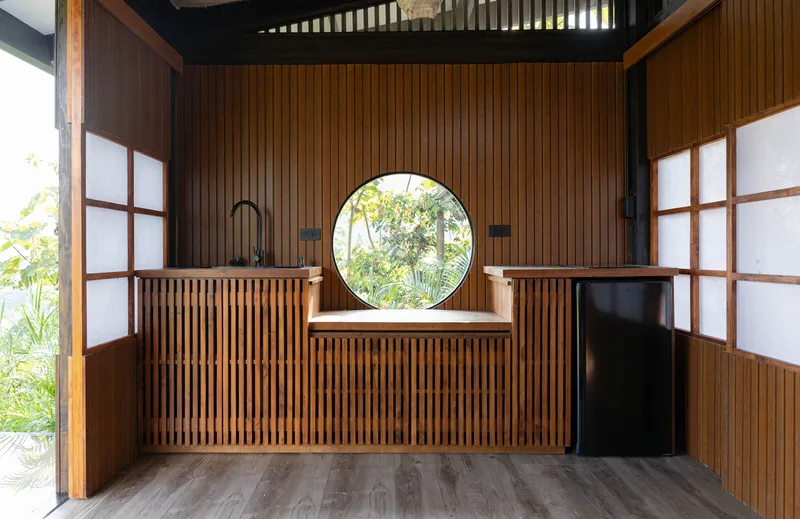
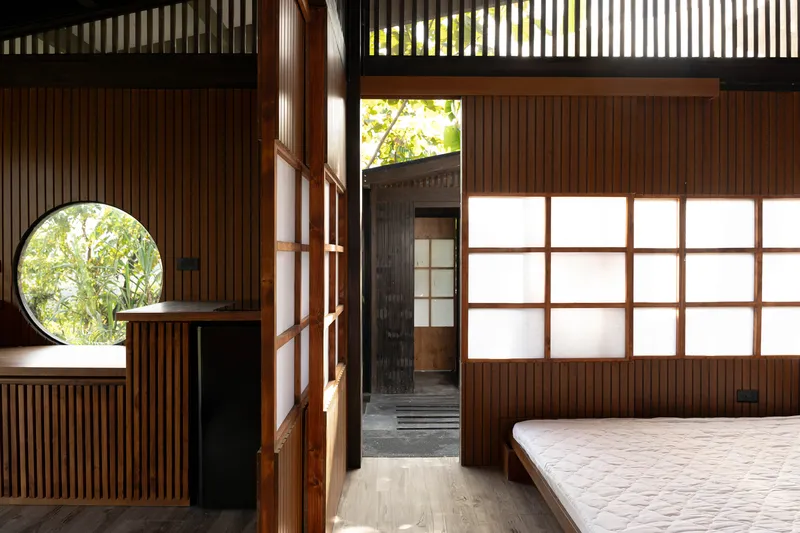
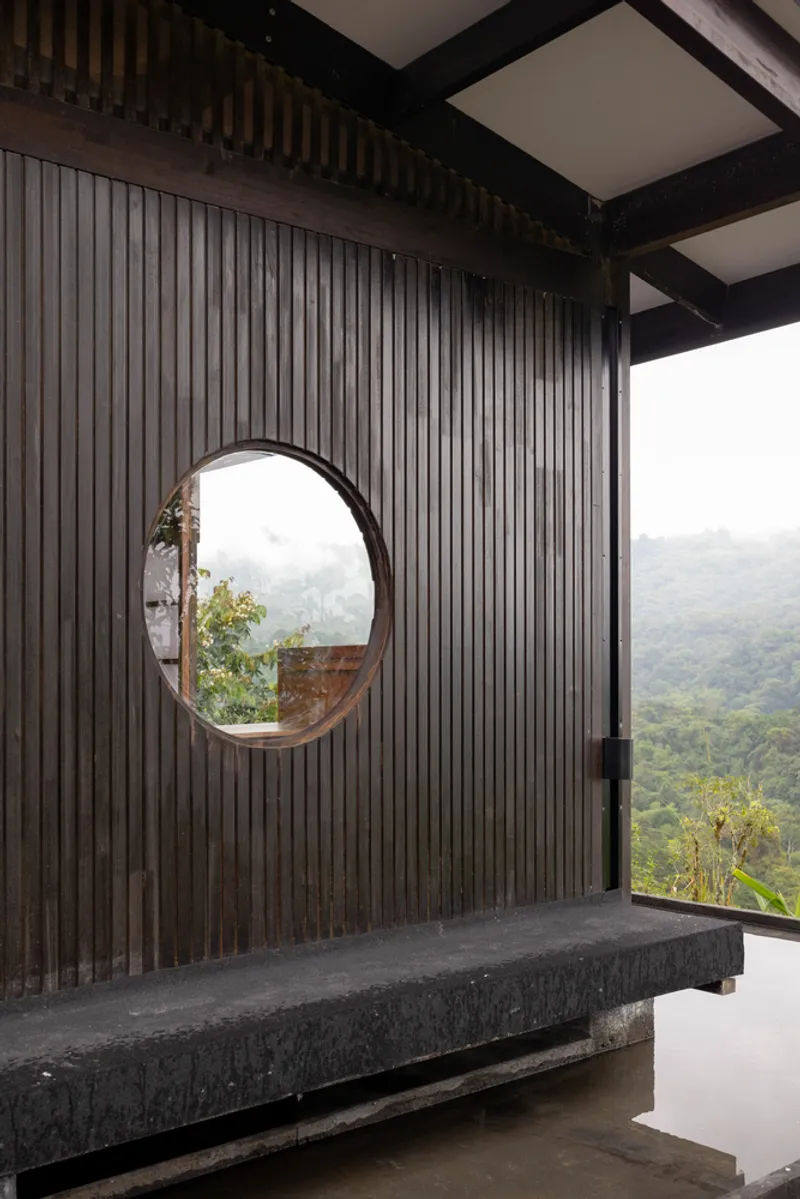
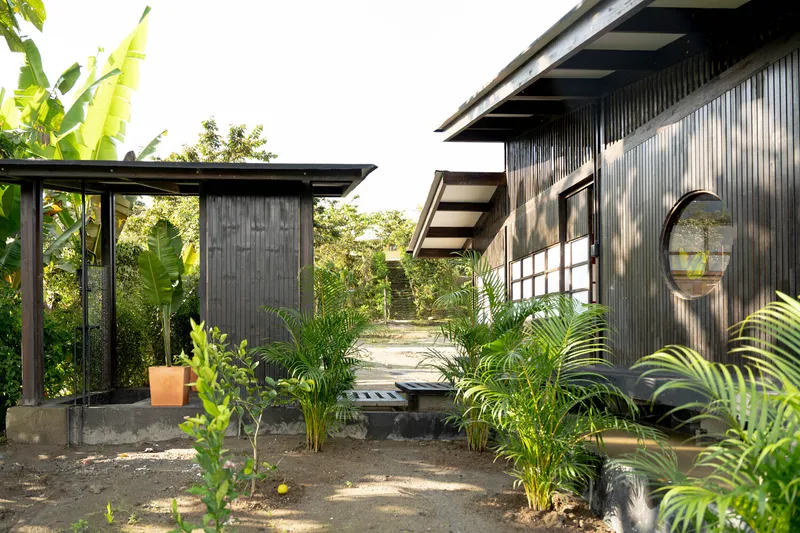
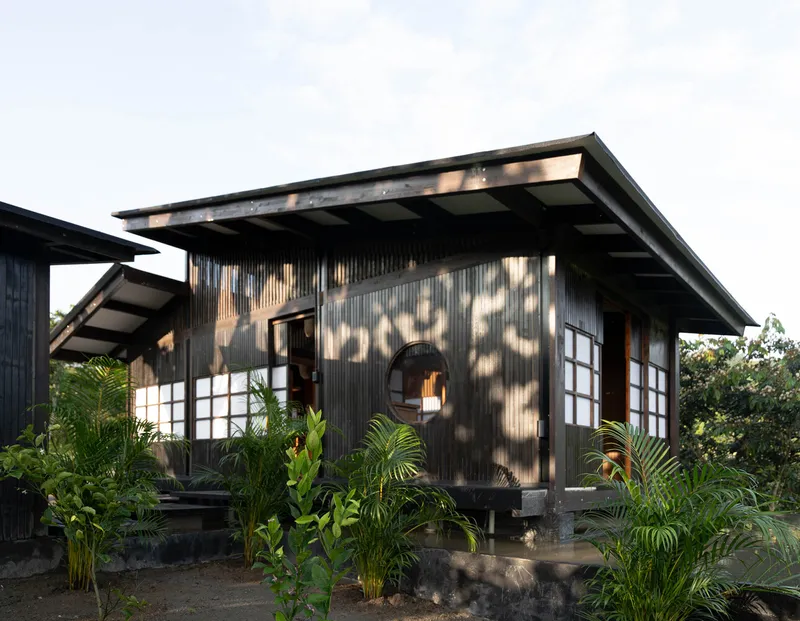
Finally, the zone of sight frames the natural beauty of the Chocó valley. Circular windows offer intimate glimpses of the forest, while panels open to panoramic views, encouraging occupants to engage visually with their surroundings. This deliberate orchestration of views cultivates a more sensitive, immersive interaction with the landscape.
Harmonious Integration with Water and Nature
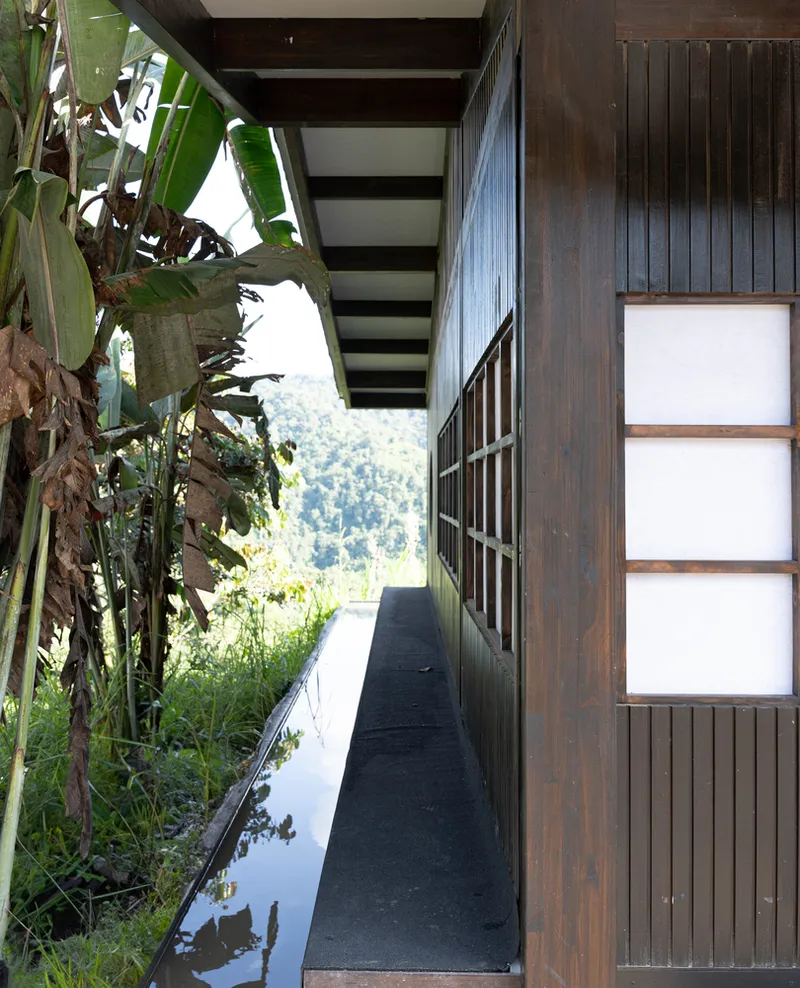
The Irori Refuge is organized around a reflective water mirror, enhancing the sense of intimacy and connection with rainfall and natural elements. An outdoor sunken bath, enclosed by bamboo, provides a private space to fully immerse in the forest, combining comfort with a tactile experience of nature. The careful integration of wood, water, and natural light reinforces the project’s sustainable and contemplative ethos.

Architectural Materials and Sustainability
The refuge emphasizes local materials, including aromatic woods and bamboo, in line with eco-friendly architectural practices. Translucent and transparent shoji panels regulate light and privacy, while the minimalist design encourages a reduced ecological footprint, highlighting Baquio Arquitectura’s commitment to sustainable forest architecture.


Irori Refuge: A Space for Mindfulness and Connection
Through its sensitive design, Irori Refuge redefines how architecture can mediate human interaction with nature. By prioritizing the senses, the project creates an intimate, contemplative environment that encourages reflection, reconnection, and sustainable living. This small yet profoundly impactful forest retreat demonstrates how thoughtful architecture can transform a space, even in previously overlooked or misused sites.
All photographs are works of
Punto Dos Studio



Popular Articles
Popular articles from the community


The Ocean Hive: Sustainable Architecture for a Self-Sufficient Civilization at Sea
The Ocean Hive imagines sustainable architecture at sea, where modular habitats, algae, wave power and ocean waste sustain a growing colony.

Co-Life: Senior Housing Design That Reconnects Older Adults With the City
Co-Life reimagines senior housing design through healing gardens, shared streets, workshops, and a sustainable community across generations.

Co-life: Sustainable Architecture for Age-Friendly Community Living
Co-life reimagines sustainable architecture for seniors through courtyards, rammed earth, shared gardens, and spaces designed for belonging.

Hill & Cross Opera: Sculptural Opera House Architecture Shaped by Tallinn’s Landscape and Identity
Hill & Cross Opera reimagines opera house architecture in Tallinn through its sculptural hill, civic plaza, glass wave and a luminous cross.

Similar Reads
You might also enjoy these articles

FAMM Arquitectura Organizes Ten Villas Around Courtyards and Jungle in Nosara, Costa Rica
El Molino pairs two elongated volumes with deep overhangs and timber louvers to build a compact coastal community five minutes from the beach.
Oscar Niemeyer's Ibirapuera Park Pavilions Define São Paulo's Cultural Identity in Concrete and Curve
A constellation of modernist volumes set within São Paulo's most important urban park, conceived for the city's 400th anniversary in 1954.
How Henri Picq's 1889 Paris Pavilion Traveled 11,000 Kilometers to Become Santiago's Artequín Museum
A prefabricated iron and glass pavilion built for the Paris Universal Exposition found a second life as a children's art museum in Chile.
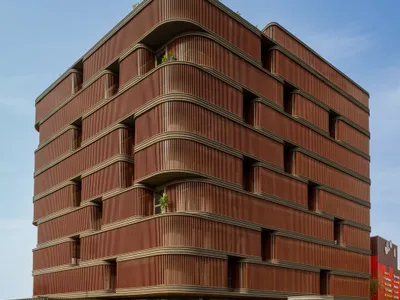
Sanjay Puri Architects Wraps a Jaipur Office Tower in Capsule-Shaped Green Buffers
A nine-level climate-responsive workplace near Jaipur Airport uses stacked planter terraces and aluminium screens to fight 40°C heat.

Explore Nio Architects Competitions
Discover active competitions in this discipline



Challenge to reimagine the Iron Throne


Photograph architecture without architects


Illustrate the lost glory of Angkor Wat - Render Challenge


Design challenge to reuse E-waste
Comments (0)
Please login or sign up to add comments
No comments yet. Be the first to comment!