
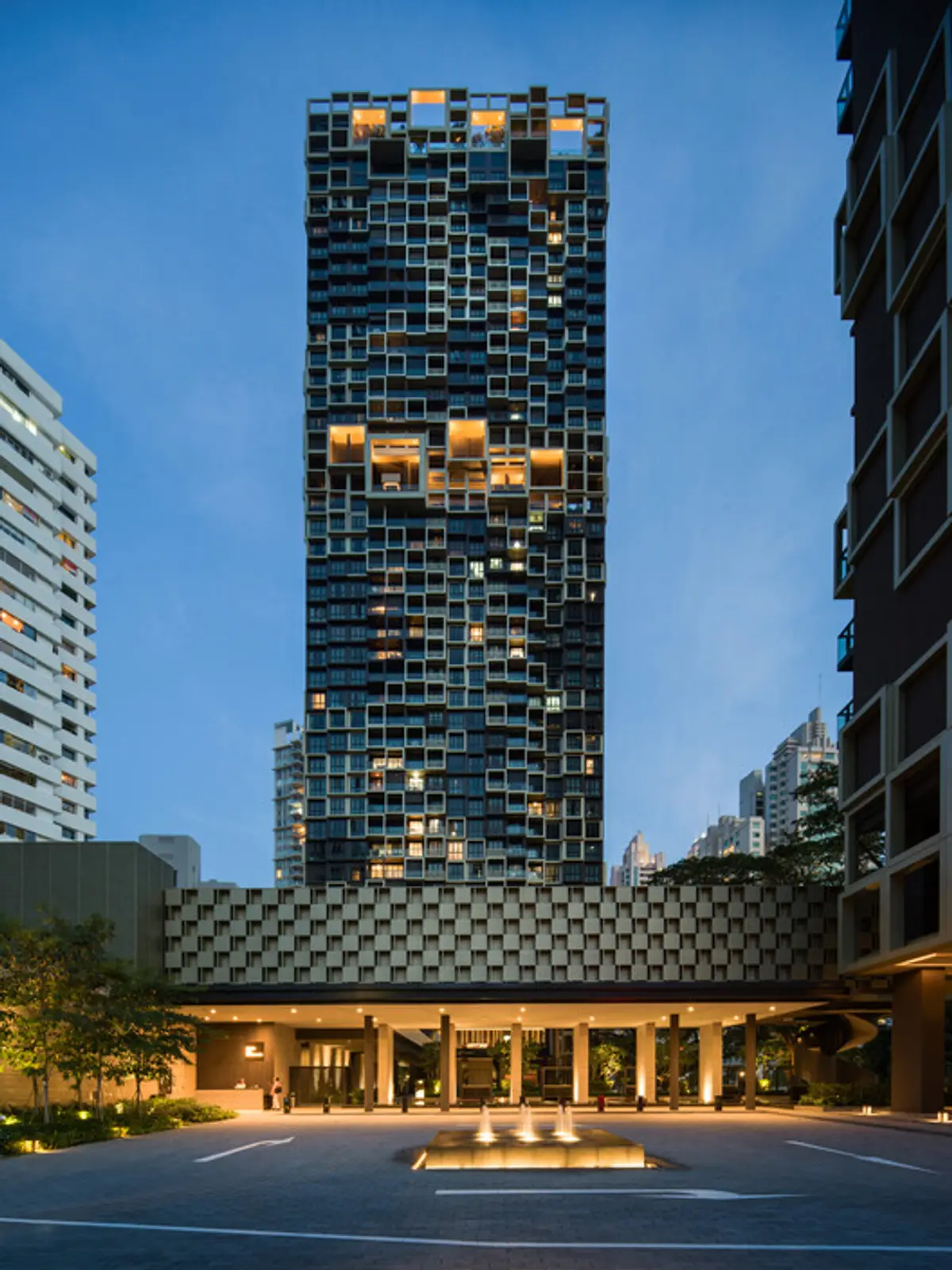
Irwell Hill Residences: Pixelated Architecture Redefining Modular Living in Singapore
Irwell Hill Residences reimagines modular housing in Singapore through a pixelated façade that blends efficiency, greenery, and architectural identity.


Completed in 2025, Irwell Hill Residences marks a significant moment in Singapore’s residential architecture, demonstrating how efficiency-driven modular construction can coexist with architectural character and urban identity. Designed by ADDP Architects using Singapore’s widely adopted prefabricated prefinished volumetric construction (PPVC) system, the twin 36-storey residential towers are animated by a distinctive pixelated façade developed by MVRDV, led by founding partner Nathalie de Vries.
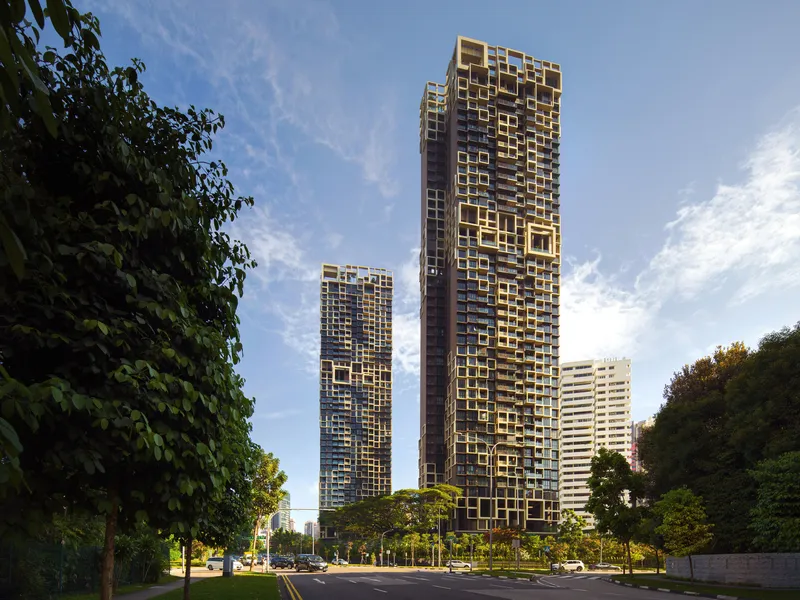
Located on Irwell Bank Road in Singapore’s dense urban core, the project was developed by City Developments Limited (CDL), one of the country’s leading real estate companies. The collaboration reflects a shared ambition: to push the boundaries of modular housing by transforming repetition into variation, and efficiency into visual richness.
Modular Construction as Urban Strategy
Singapore has long positioned itself at the forefront of architectural and construction innovation, particularly in response to limited land, high density, and environmental responsibility. PPVC construction has become a cornerstone of this approach, enabling entire residential units—including finishes and façades—to be fabricated off-site and assembled rapidly on location.

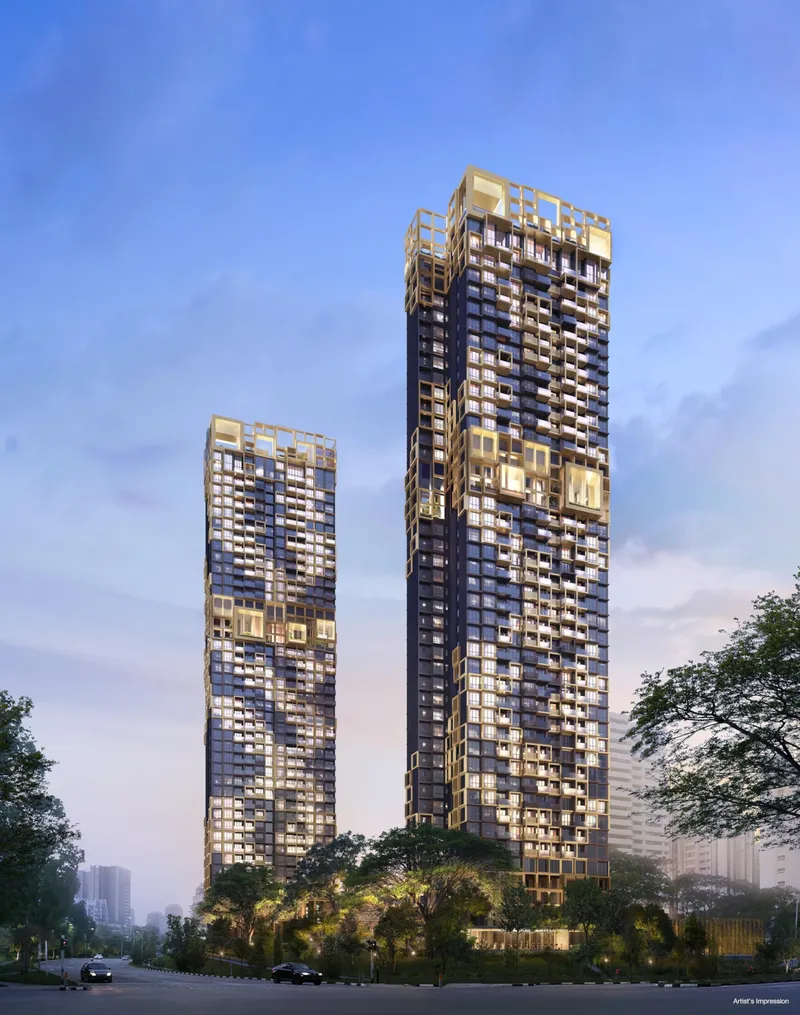
The advantages are substantial. PPVC significantly reduces construction time, minimizes on-site labor, and lowers disruption in busy urban environments. It also decreases material waste and carbon emissions by streamlining transport, reducing equipment usage, and optimizing factory-controlled processes.
Recognizing these benefits, Singapore’s Building and Construction Authority (BCA) has actively promoted PPVC through regulations, frameworks, and accreditation schemes aligned with the nation’s Green Plan 2030. Irwell Hill Residences stands as a flagship example of this policy in action.
The Challenge of Repetition
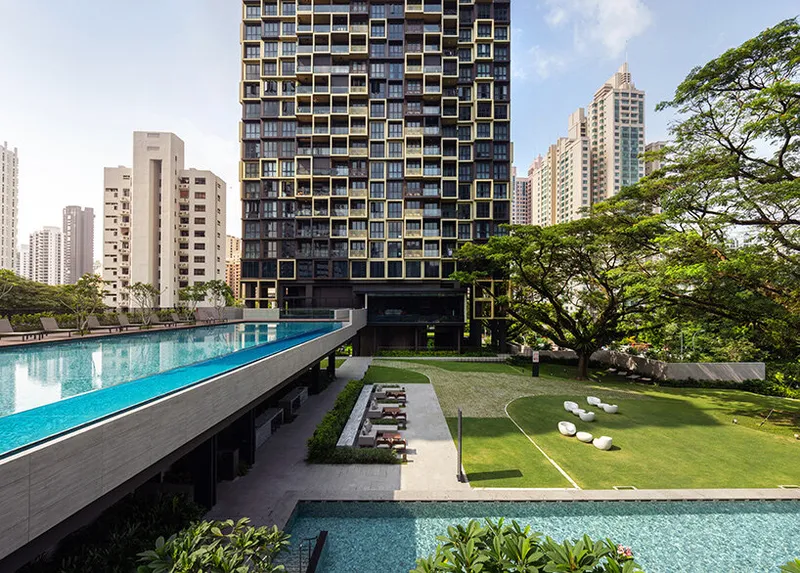
Despite its efficiencies, PPVC construction often results in uniform and monotonous building forms. Standardized modules stacked repeatedly can lead to façades that feel flat, repetitive, and disconnected from the richness of urban life.
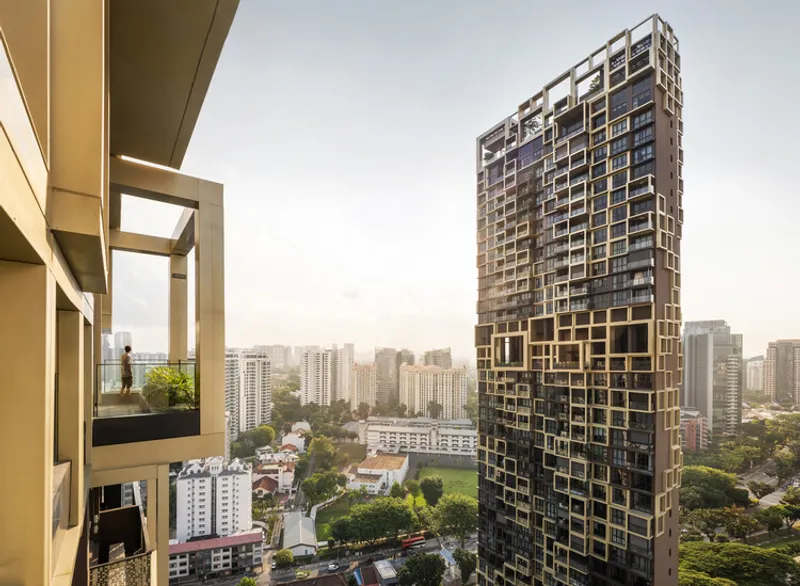
To address this challenge, MVRDV was invited to contribute a façade concept that would inject variety, identity, and livability into the modular structure designed by ADDP Architects. Rather than disguising the modular nature of the building, MVRDV embraced it—turning each prefabricated unit into a compositional element.
The result is a façade that celebrates repetition while subverting monotony through variation, depth, and pattern.
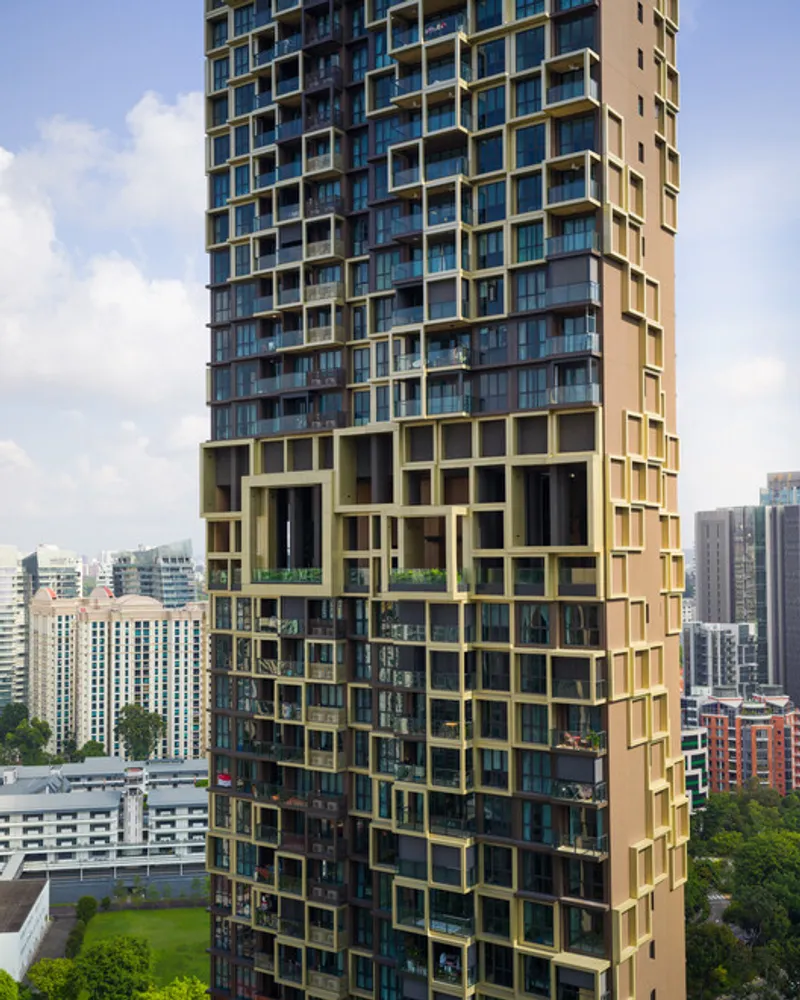
Pixelation as Architectural Language
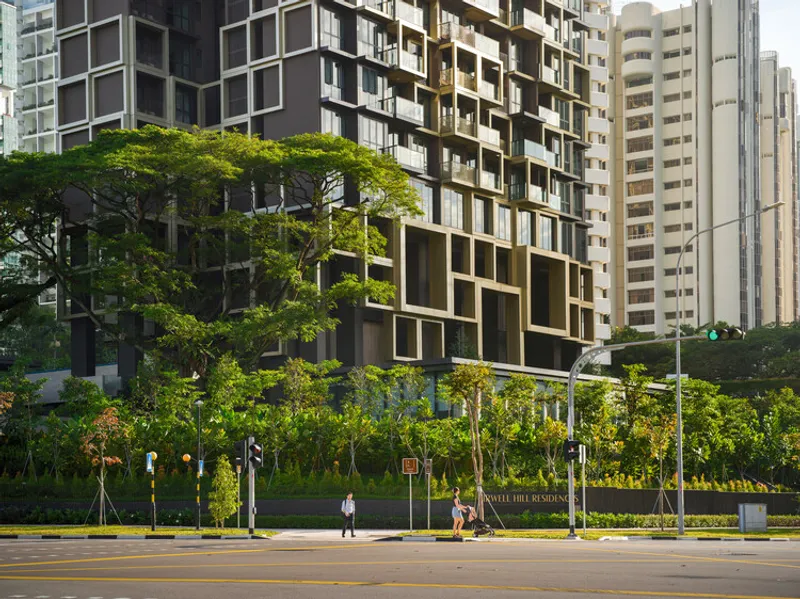
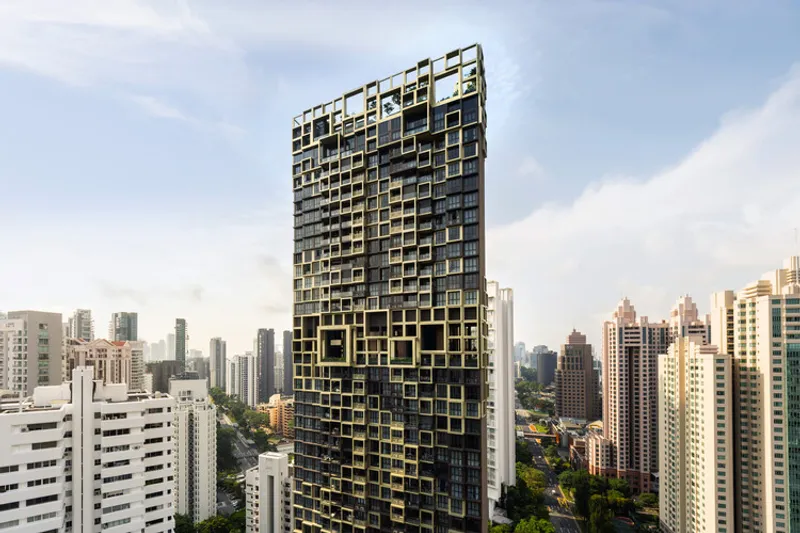
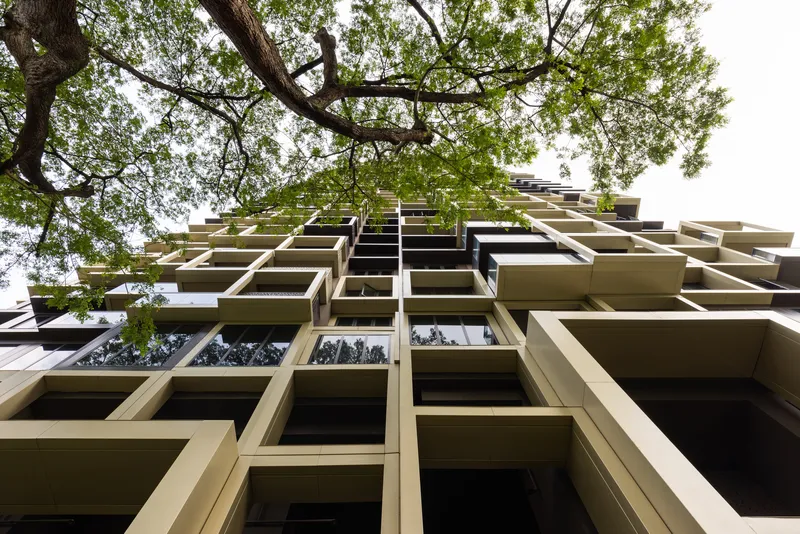
MVRDV’s design conceptualizes each PPVC module as a “pixel” within a larger architectural image. These pixels are subtly manipulated—some recessed, others extended—using metal framing systems that generate a diverse array of balcony types and façade depths.
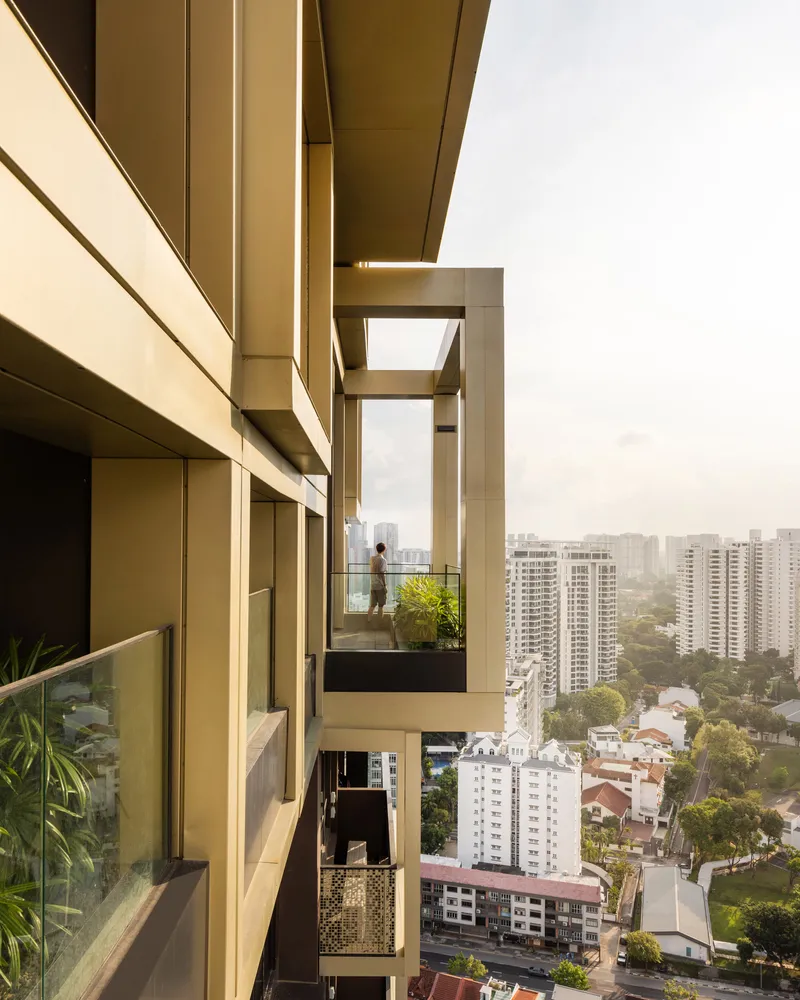
This three-dimensional relief creates shadow, texture, and visual rhythm across the towers. A carefully curated colour palette of gold and deep brown enhances the effect, forming an abstract pattern inspired by the organic growth of climbing plants. From a distance, the façade reads as a cohesive whole; up close, it reveals a rich tapestry of individual variations.
Through this strategy, MVRDV demonstrates how modular construction can support architectural expression rather than suppress it.
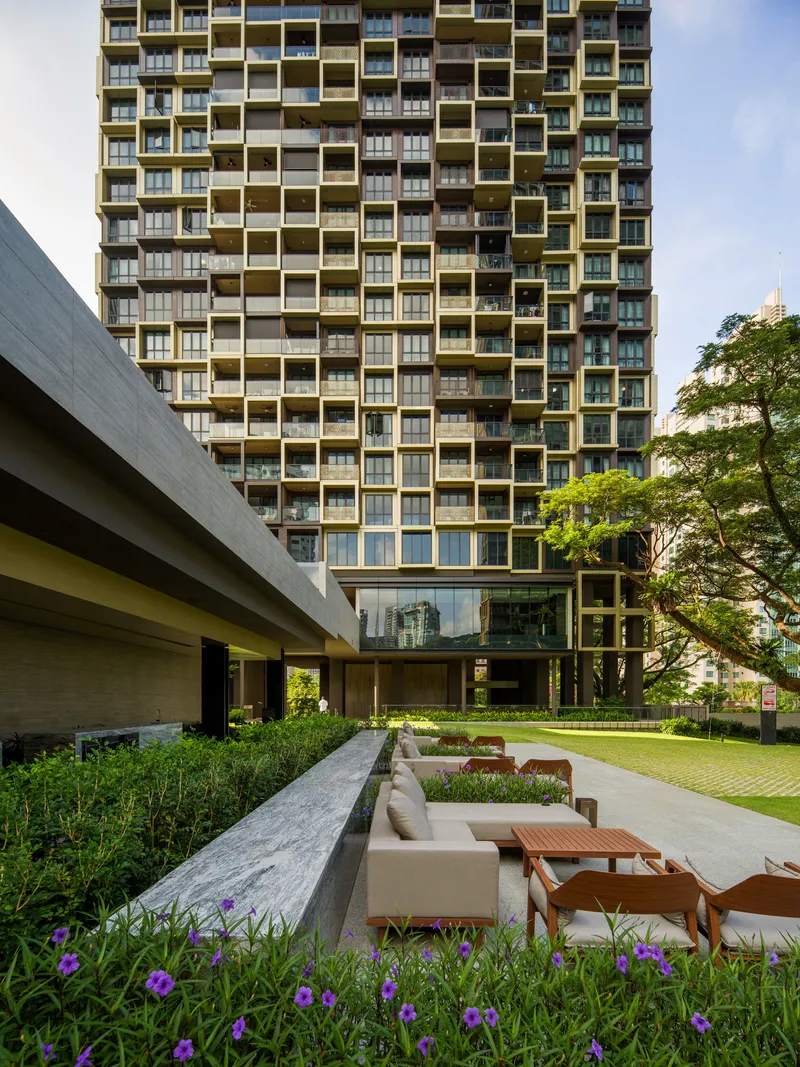

Liveability Through Design
Beyond visual identity, the pixelated façade plays a crucial role in liveability. The varied balconies provide residents with different outdoor experiences—some more sheltered, others more open—responding to Singapore’s tropical climate and lifestyle.
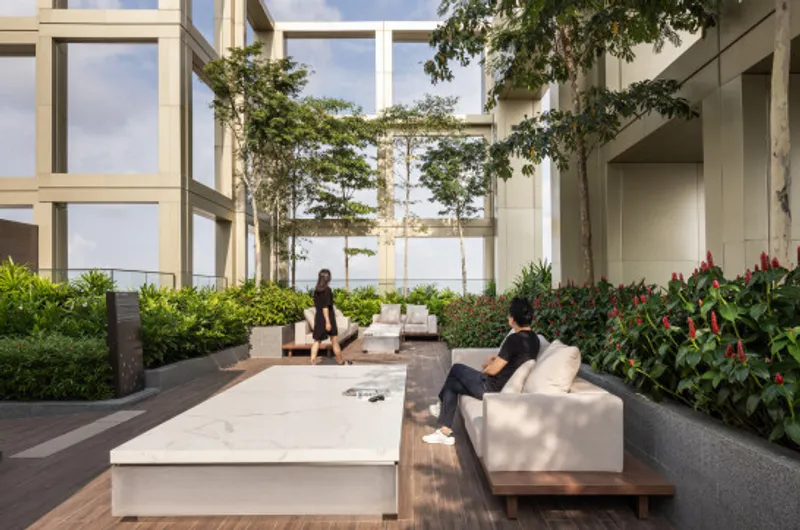
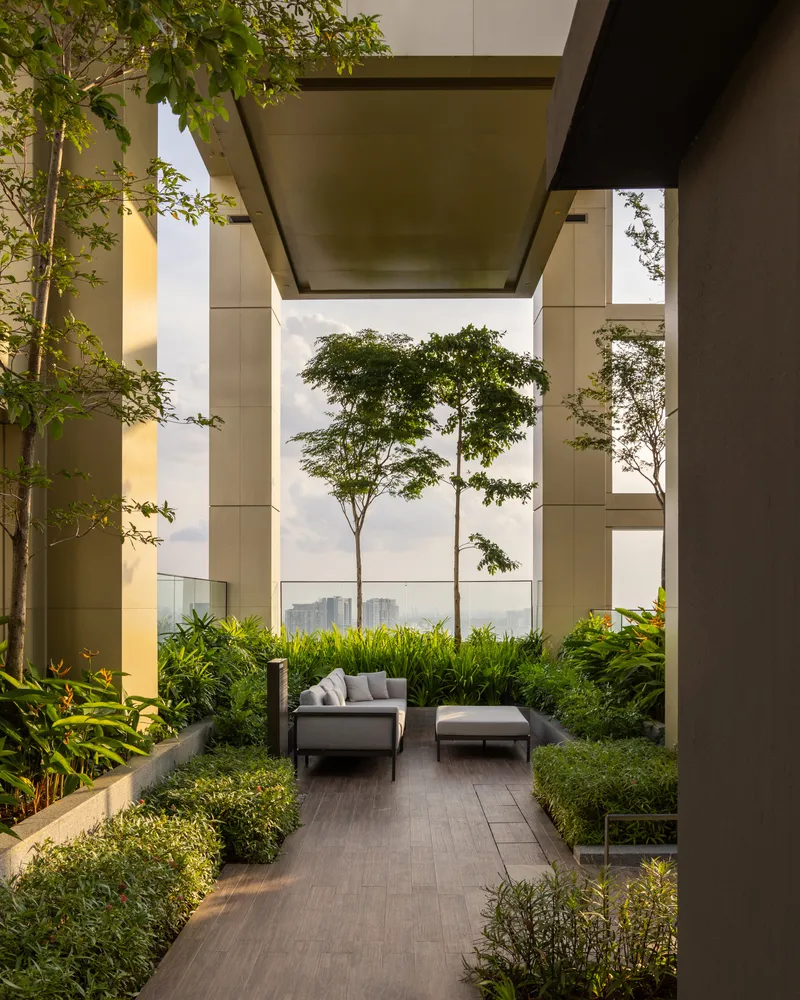
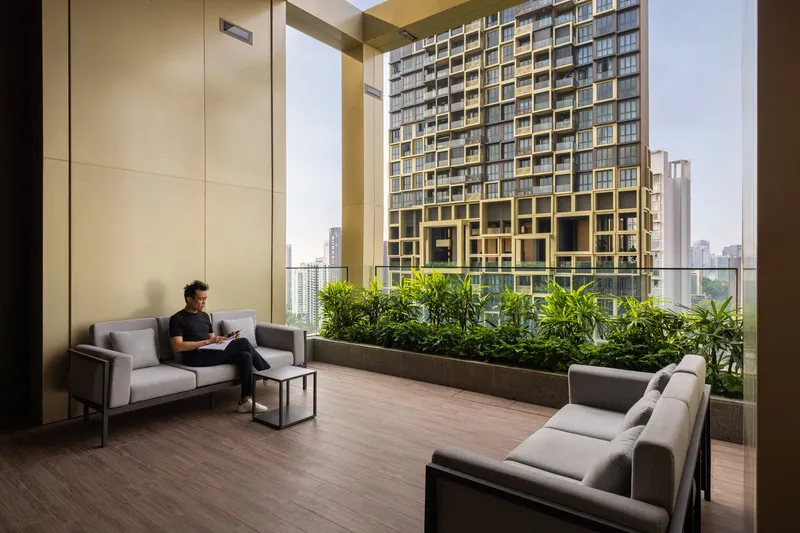
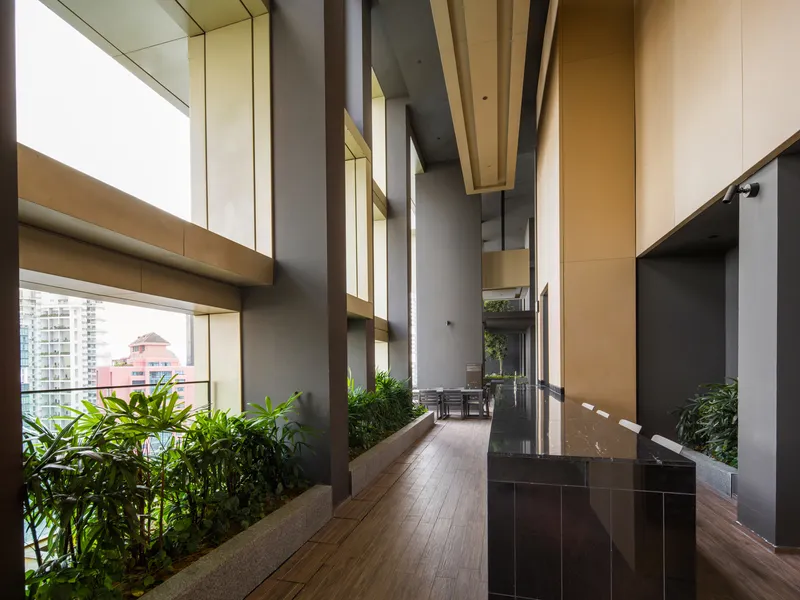
The façade design also highlights and celebrates the building’s communal green spaces, which are integral to the project’s social and environmental performance. On the 24th floor, a dramatic four-storey sky garden introduces lush planting into the vertical community, offering residents a shared retreat in the sky.
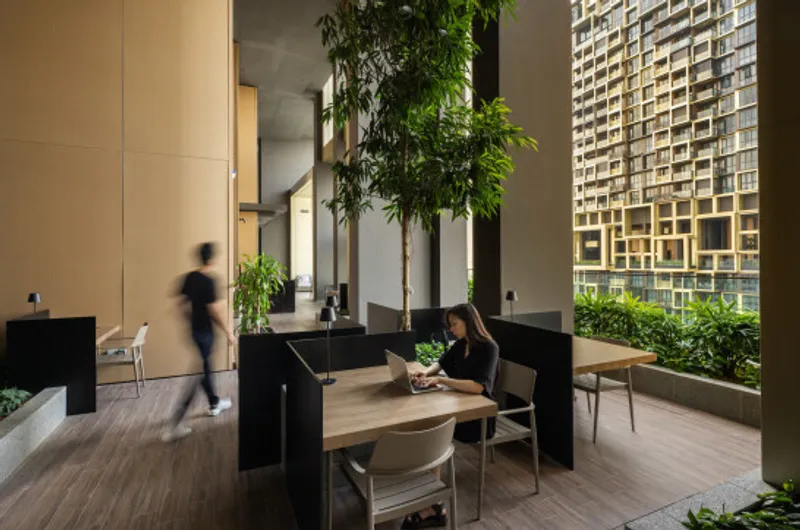
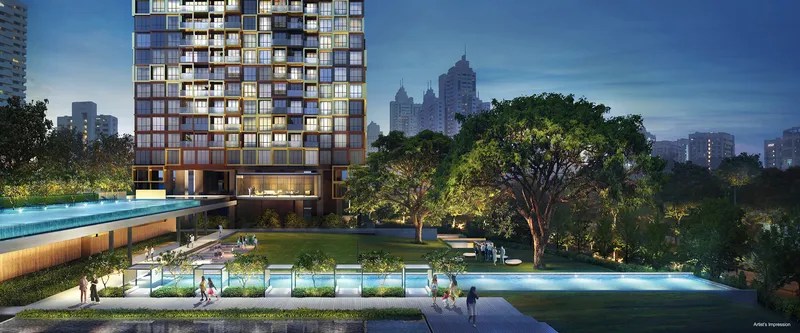
At the top of the towers, Irwell Sky provides a more intimate social space for gatherings, relaxation, and panoramic views of the city. In these areas, the strict grid of single-unit pixels loosens, giving way to double- and triple-sized frames that reveal trees and greenery, visually connecting the façade to the life within.
Architecture Rooted in Singapore’s Green Identity
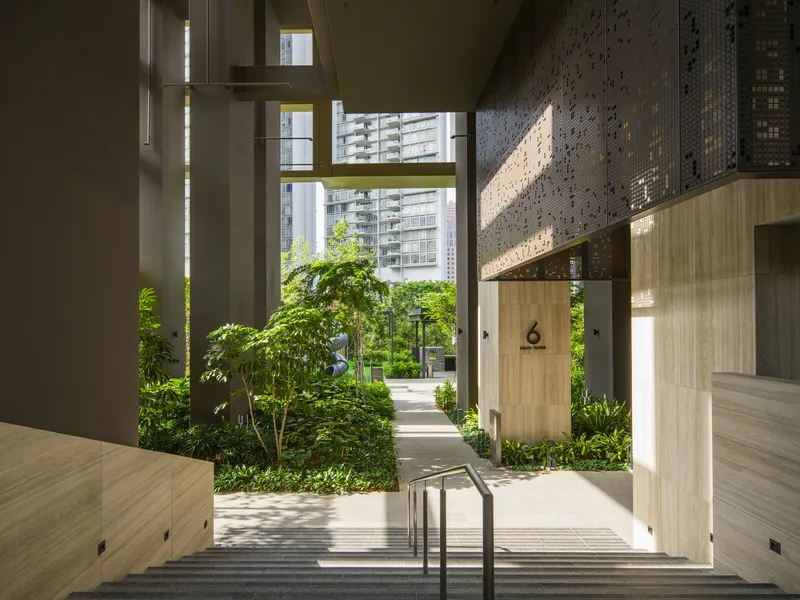
Greenery is a defining characteristic of Singapore’s urban identity, and Irwell Hill Residences continues this tradition through its integration of landscape and architecture. Designed in collaboration with Ecoplan, the project’s landscape strategy reinforces the city’s vision of a “City in a Garden.”
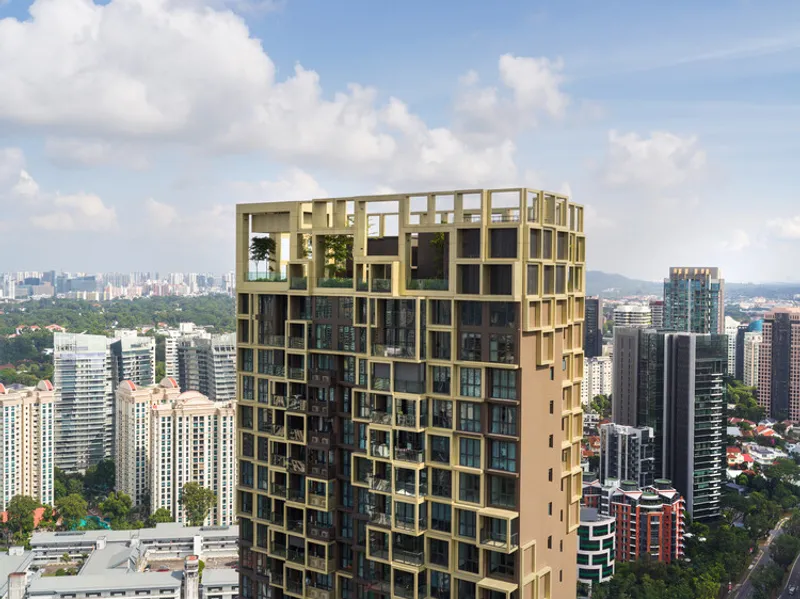
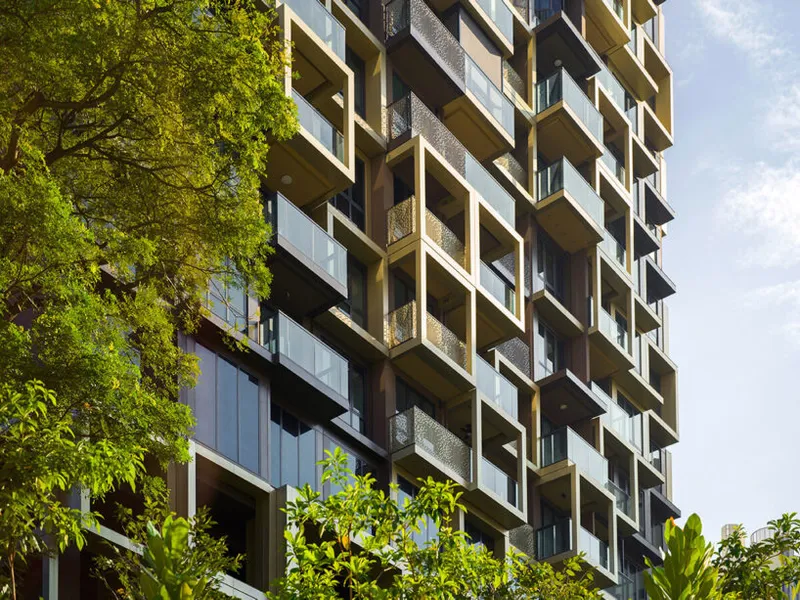
The pixelated façade not only frames planted terraces and sky gardens but also visually reinforces the presence of nature at multiple scales—from individual balconies to communal spaces. This layered greenery enhances biodiversity, improves microclimates, and supports residents’ well-being in a high-density environment.
Sustainability Beyond Construction Efficiency
While PPVC construction inherently reduces waste and emissions, sustainability in architecture extends beyond the construction phase. A truly sustainable building must also possess longevity, adaptability, and social value.
MVRDV’s façade design ensures that Irwell Hill Residences contributes meaningfully to its neighborhood over time. By creating a visually engaging and distinctive presence, the project avoids the anonymity that often leads to premature redevelopment. Its architectural identity fosters pride, attachment, and long-term relevance—key components of sustainable urban living.
As Nathalie de Vries notes, the project represents “the next step” in Singapore’s modular construction story: a building that demonstrates how pragmatic efficiency and architectural delight can reinforce one another.
A Model for Future Residential Architecture
Irwell Hill Residences offers a compelling blueprint for the future of high-density housing—not only in Singapore, but globally. It shows that industrialized construction methods do not have to result in bland architecture, and that repetition can be transformed into variation through thoughtful design.
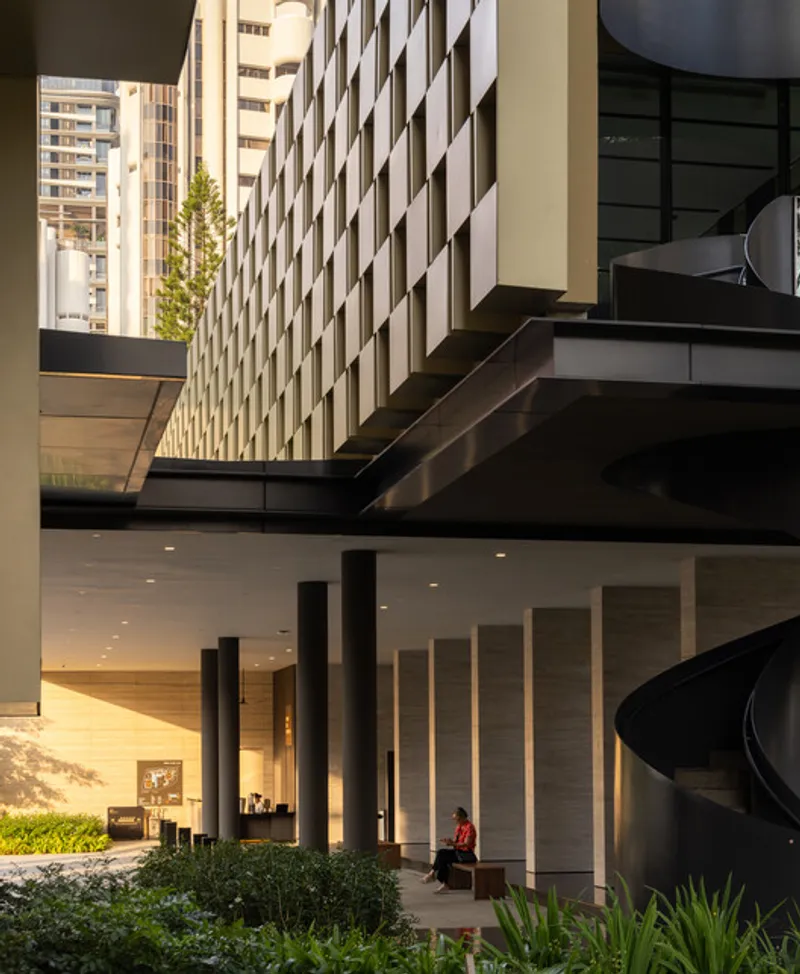
By aligning advanced construction technology with strong architectural vision, the project sets a new benchmark for modular residential architecture—one that is efficient, sustainable, and deeply humane.
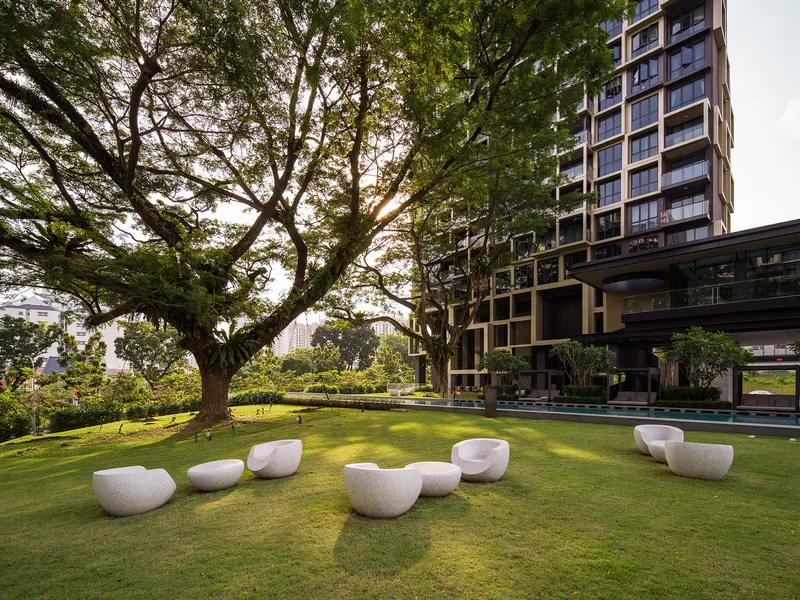
All the Photographs are works of Finbarr Fallon


Popular Articles
Popular articles from the community


Juan García Correa, John González and Claudia Rueda Sink a Circular Amphitheater into a Manizales Engineering Building
On the La Nubia campus in Manizales, Colombia, the S1 Building folds labs and offices into a hillside of ramped lawns that double as a campus route.

Architekt Andreas Gruber Scatters 23 Dark Timber Chalets Across a South Tyrolean Forest Edge
In Molini di Tures, Amonti Chalets breaks a resort into a hamlet of gabled timber houses, with parking, storage and services pushed into the slope.

LT2A and OPEN Architectes Thread a Brick and Glass High School Through a Wooded Belgian Campus
In Braine-l'Alleud, a 3,000 m² wing for Collège Cardinal Mercier pairs pale brick with a glazed colonnade, deferring to a small chapel and a dense wood.

Jaramillo Van Sluys Arquitectura and Urbanismo Turn a Demolished Registry Lot in Quito into an Orchard Plaza
In Quito's Centro Histórico, a 2,800 m² plaza exposes the San Agustín convent wall and redraws its lost Augustinian orchard in volcanic stone.

Similar Reads
You might also enjoy these articles


Hodi-Mandai Geram
Project Function: Preservation and revitalization of the Intangible heritage and socio-spatial identity of the Hodi by Housing, Cultural Memory Center, Sacred Grove, landscape, local tourism economy


Olio Towers: A Mid-Rise for Performers That Fuses Housing, Rehearsal, and Stage
Located blocks from Houston's Theater District, this modular tower stacks living units around a central performance atrium.

Oasis: Modular Green Housing Carved into Dhaka's Urban Fabric
A shortlisted Plugin Housing entry reclaims unauthorized settlements in Dhaka with stepped concrete volumes, green roofs, and ventilation-driven design.

Black Hole: A Floating Megastructure for the Post-Physical Era
Emiliano Mazzarotto envisions a spherical, self-scaling arena where e-sports, digital hotels, and holographic stadiums replace traditional public space.

Explore Futuristic Floating Residents Competitions
Discover active competitions in this discipline

Challenge to design mud housing for contemporary communities

Challenge to reimagine the Iron Throne

Photograph architecture without architects

Illustrate the lost glory of Angkor Wat - Render Challenge
Comments (0)
Please login or sign up to add comments
No comments yet. Be the first to comment!