
Isabu Dokdo Museum Grounds Itself in Stone and Water
Simplex Architecture's new museum in Samcheok steps quietly into the Korean hillside, trading monumental gestures for geological patience.

Museums that address territorial identity often default to bombast: soaring halls, symbolic forms, declarations cast in steel and glass. The Isabu Dokdo Museum in Samcheok does something rarer. Designed by Simplex Architecture, the 3,275 square meter complex spreads across sloping terrain in a series of low, horizontal pavilions that seem to have been there long enough for moss to grow over their foundations. The subject is Dokdo, a cluster of volcanic islets freighted with geopolitical meaning, but the architecture refuses to shout about it. Instead, it borrows from the geology of its own site, from the stone and water and hillside vegetation that surround it, and lets the exhibitions speak for themselves.
What makes the project genuinely interesting is its commitment to ground contact. Rather than elevating the museum above its context, Simplex Architecture pushed significant portions of the program into the hillside, allowing roof planes to sit barely above grade. The result is a building you discover gradually, through courtyards and reflecting pools, through narrow passages between parallel stone walls, through moments where landscape and architecture trade places. It is a project about restraint, and in a discipline that rewards spectacle, restraint is the harder argument to make.
A Landscape of Pavilions
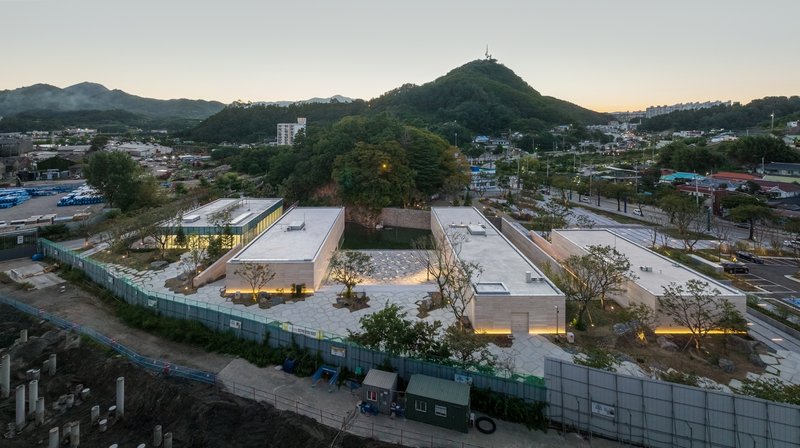
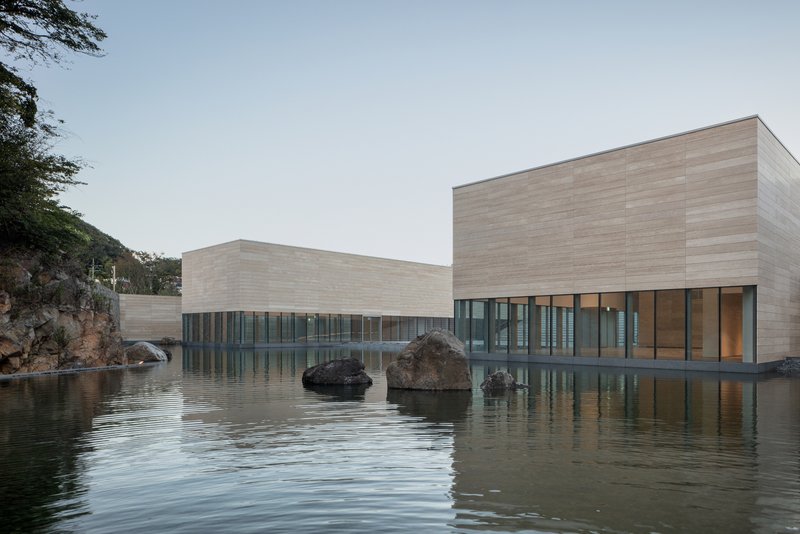
From the air, the Isabu Dokdo Museum reads not as a single building but as a small settlement. Four discrete volumes, flat roofed and horizontally proportioned, step down the hillside in a loose configuration that preserves existing trees and respects the topographic fall. The aerial view at dusk reveals the logic most clearly: buildings are pushed apart just enough to create outdoor rooms, while a central reflecting pool gathers the composition into something unified.
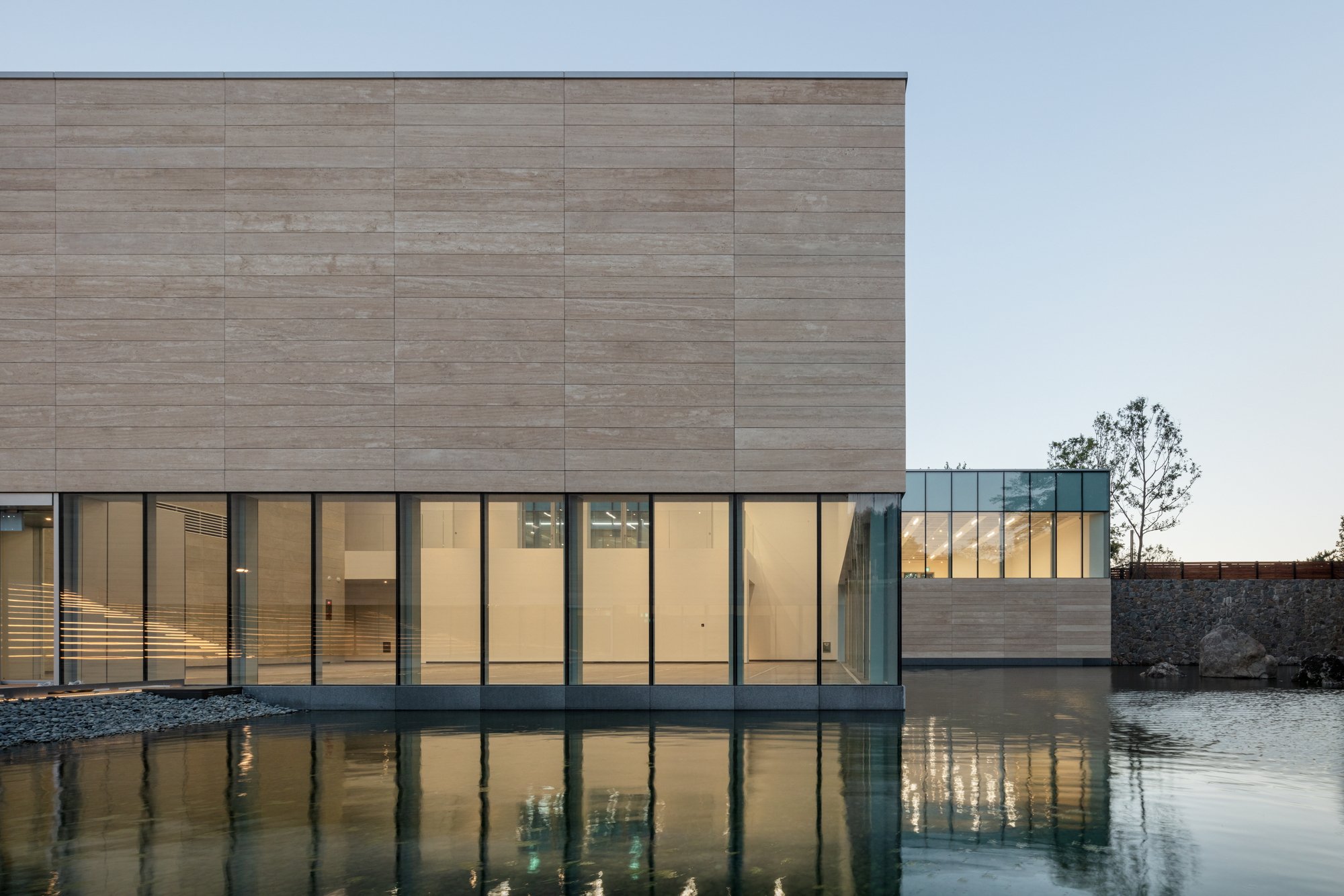
The reflecting pools are critical. At dusk, the still water doubles the travertine and timber facades, extending the architecture into a liquid mirror that softens its edges and connects it to the boulders and moss at the water's margin. These are not decorative water features. They are spatial devices that blur the boundary between built form and terrain, making it difficult to say exactly where the museum begins.
Stone, Timber, and Material Honesty
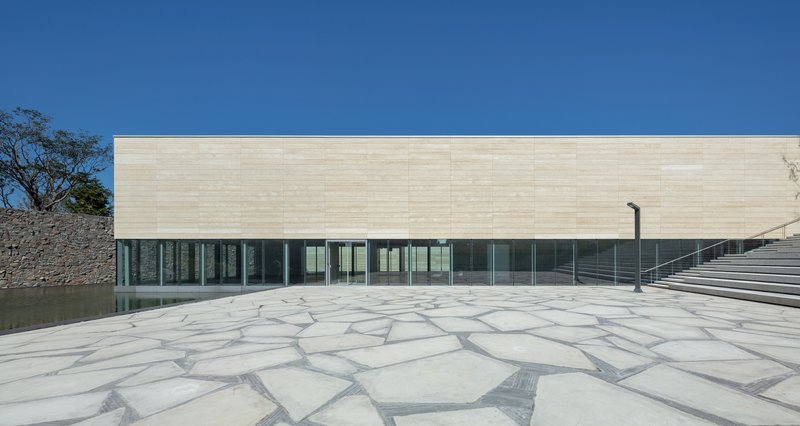
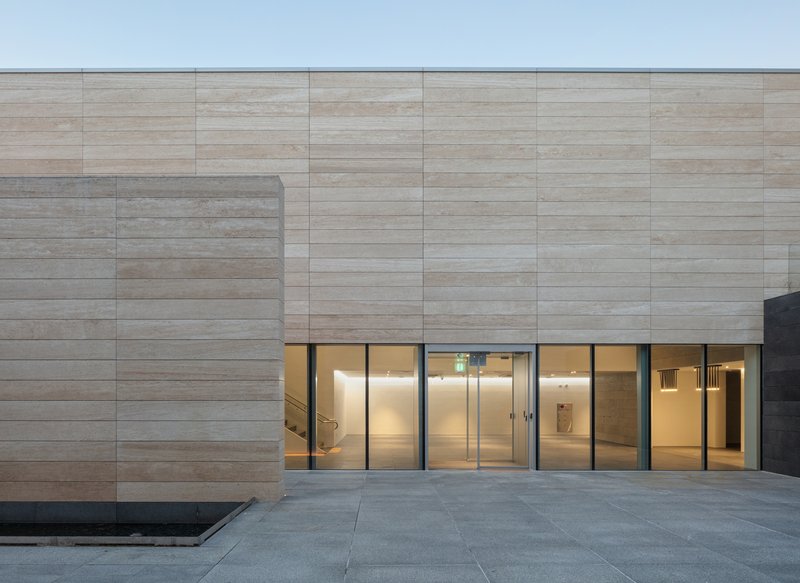
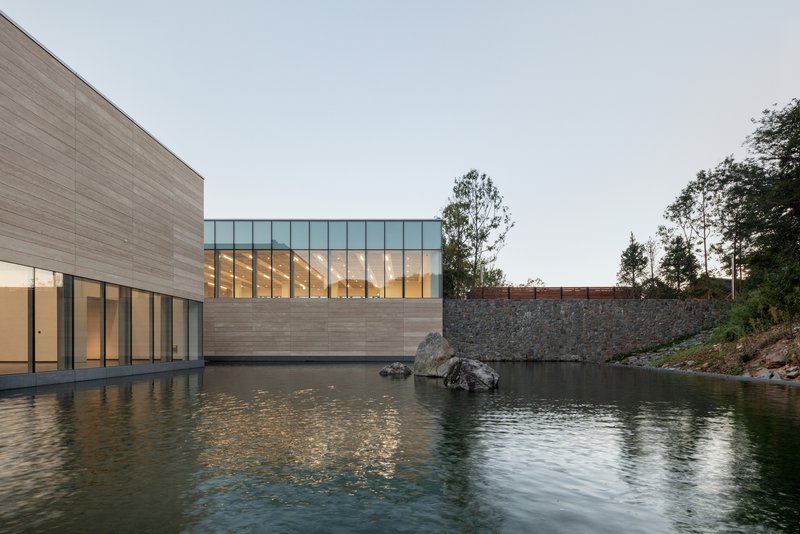
The material palette is remarkably disciplined. Travertine stone cladding wraps the primary volumes in warm, buff-toned bands that sit above continuous glass strips at ground level. The stone is not polished to a sheen; it retains a honed, tactile surface that registers light changes throughout the day. At dusk, the recessed glass entrance glows with interior warmth, turning the stone facade into a lantern frame.
Timber cladding appears on secondary volumes facing the water, introducing a grain and color that rhymes with the surrounding vegetation. Meanwhile, gabion retaining walls filled with local stone handle the grade changes between pavilions and hillside, bridging the material gap between architecture and geology. Nothing here is arbitrary. Each material carries structural or contextual logic, and the transitions between them are handled with a precision that rewards close looking.
Courtyards and Thresholds
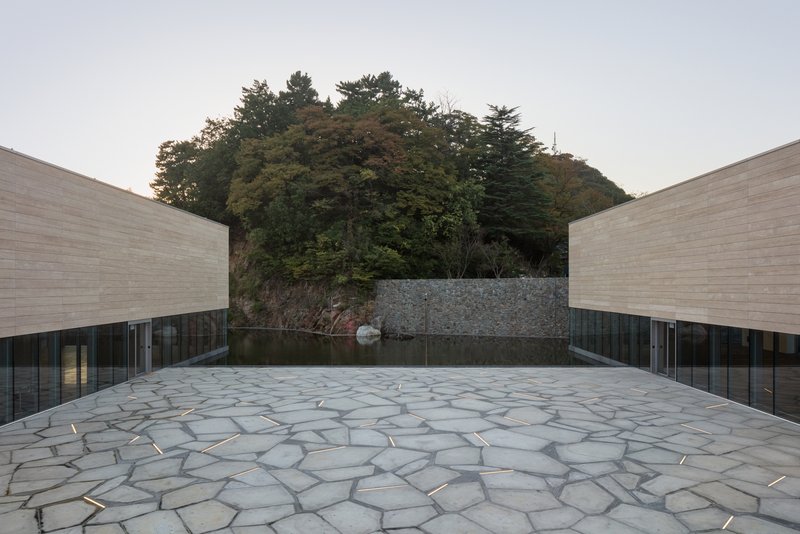
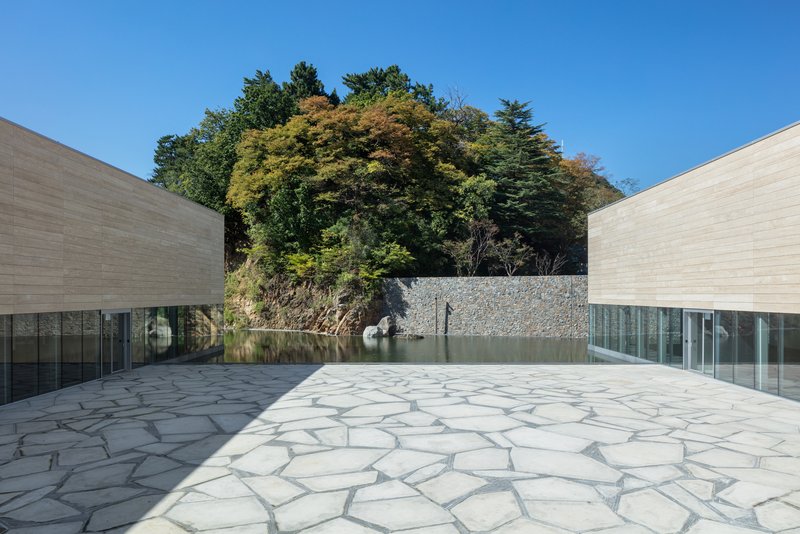
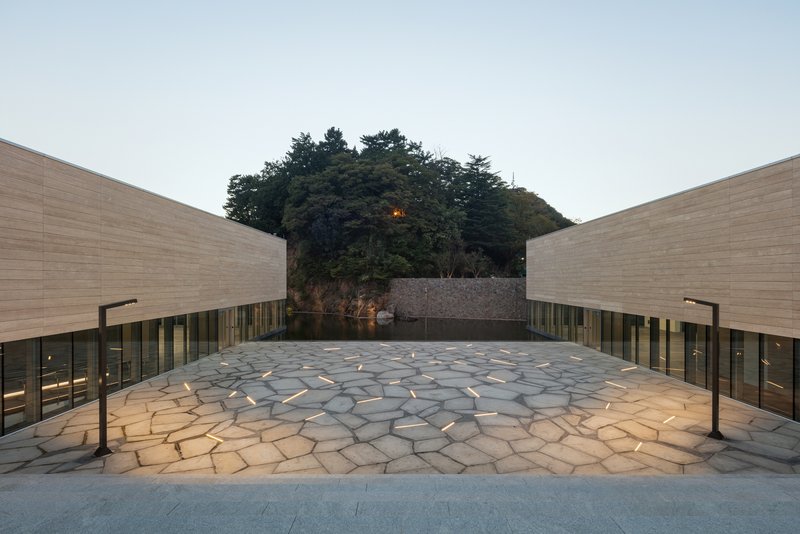
The spaces between the pavilions are as carefully designed as the rooms within them. A stone-paved courtyard, laid in irregular polygonal slabs, opens toward the reflecting pool and the forested hill beyond. The paving pattern is deliberate: it recalls natural rock fracture lines, reinforcing the geological metaphor without being literal about it. Flanked by horizontal timber-clad volumes and backed by gabion walls, the courtyard functions as an outdoor gallery, a decompression zone between thematic exhibitions.
At twilight, with the tree-covered hill rising behind, these courtyards take on a contemplative stillness that shifts the museum's register entirely. You are no longer inside a cultural institution. You are standing in a landscaped precinct that happens to contain one.
Narrow Passages and Directed Light
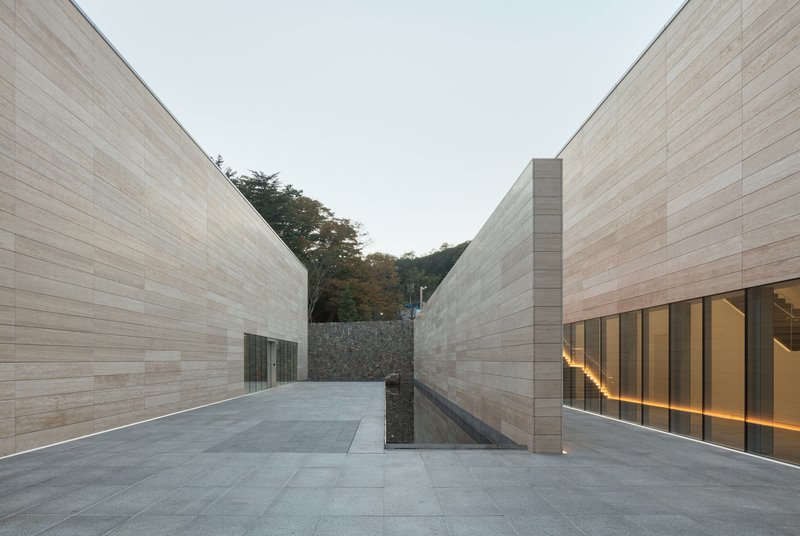
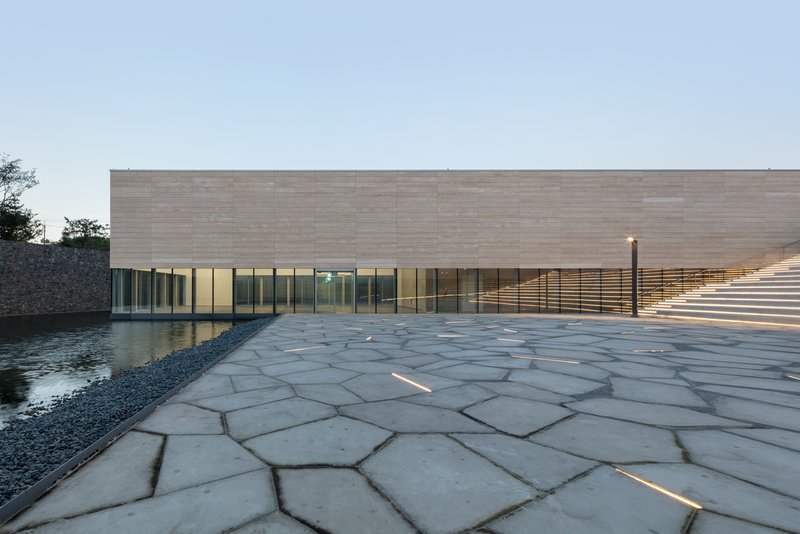
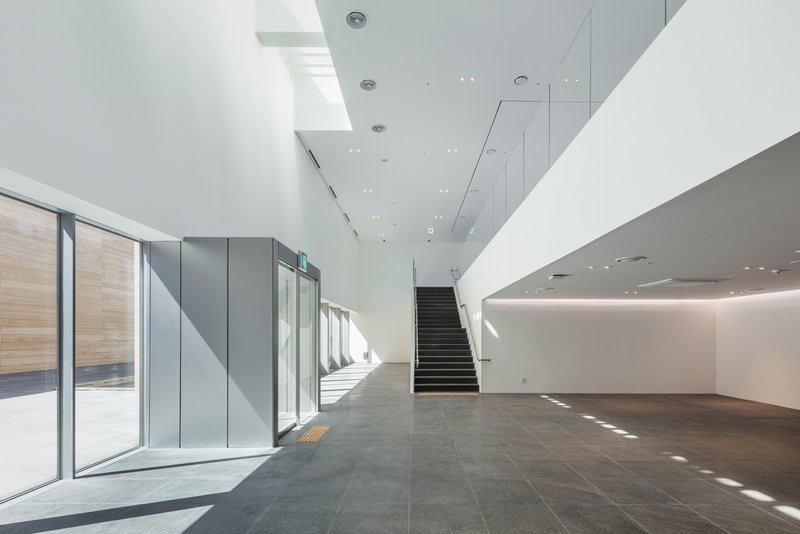
Between the pavilions, narrow passages channel movement and frame views with cinematic precision. The gap between parallel stone walls that leads toward the gabion-faced hillside compresses the visitor's field of vision before releasing it into open sky. These are old spatial techniques, borrowed from garden design and sacred architecture, deployed here without irony.
Inside, the double-height entrance lobby continues the theme of controlled light. A black steel staircase cuts diagonally across the space while skylights cast sharp shadows onto the stone floor, creating a pattern that shifts by the hour. The architecture doesn't just house exhibitions; it choreographs the visitor's experience of time and orientation, preparing them for what they will encounter in the galleries.
Gallery Spaces: Perforated Light and Immersive Dark
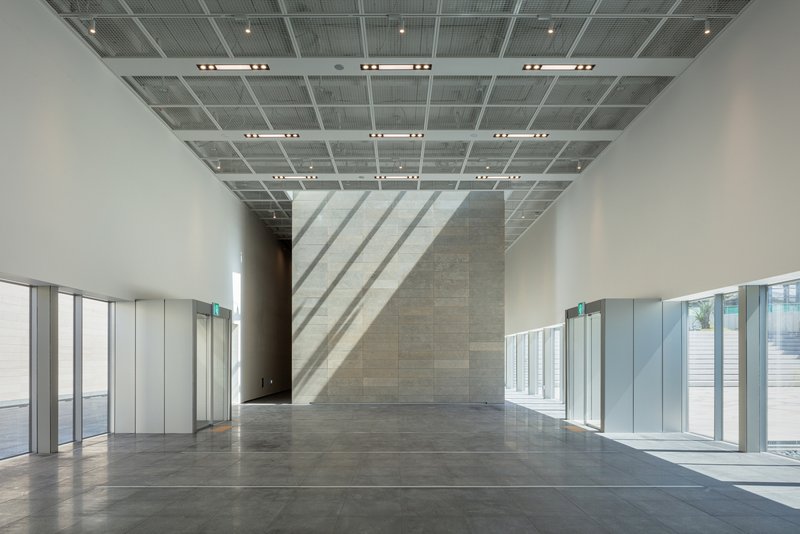
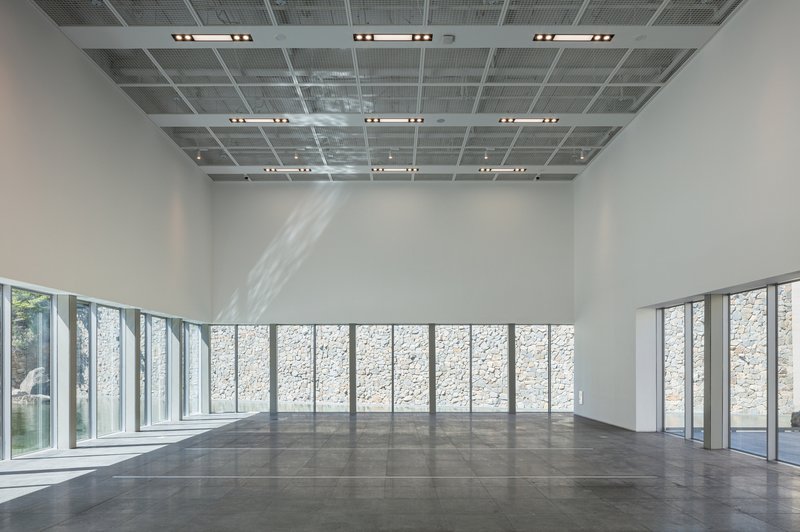
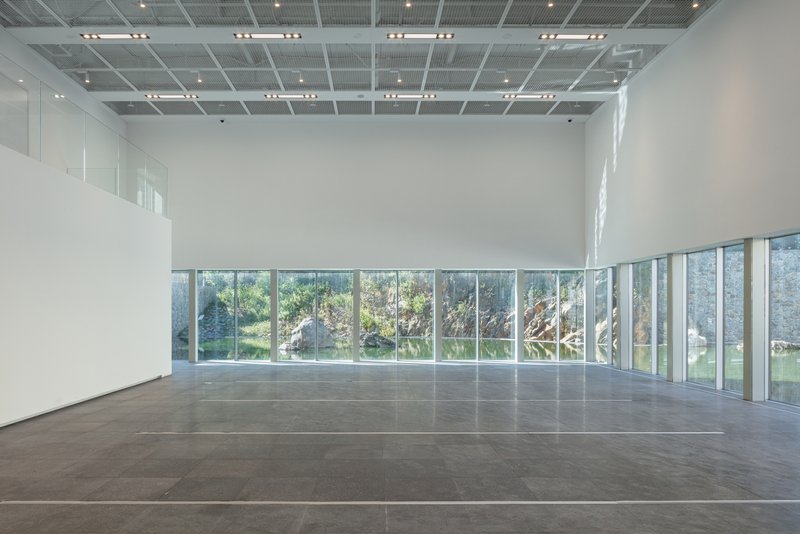
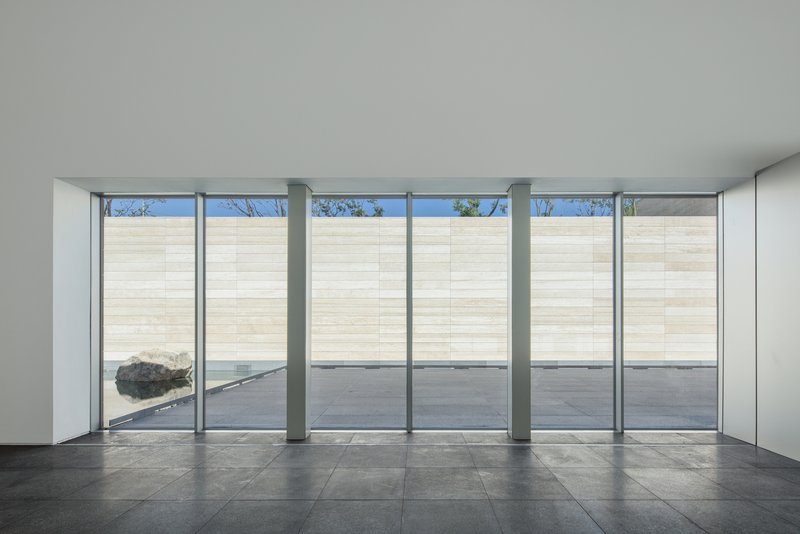
The exhibition halls operate in two registers. The primary galleries are tall, luminous rooms defined by perforated metal ceiling panels that filter and scatter daylight across the walls. Continuous glazing on one side looks out toward stone courtyard walls, establishing a visual connection to the exterior while maintaining the controlled atmosphere needed for museum display. The effect is one of calm abundance: light is everywhere, but it is never harsh.
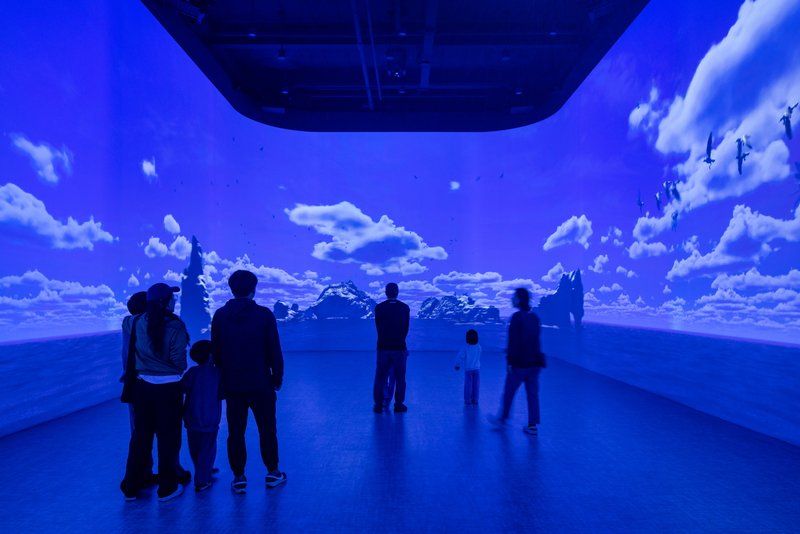
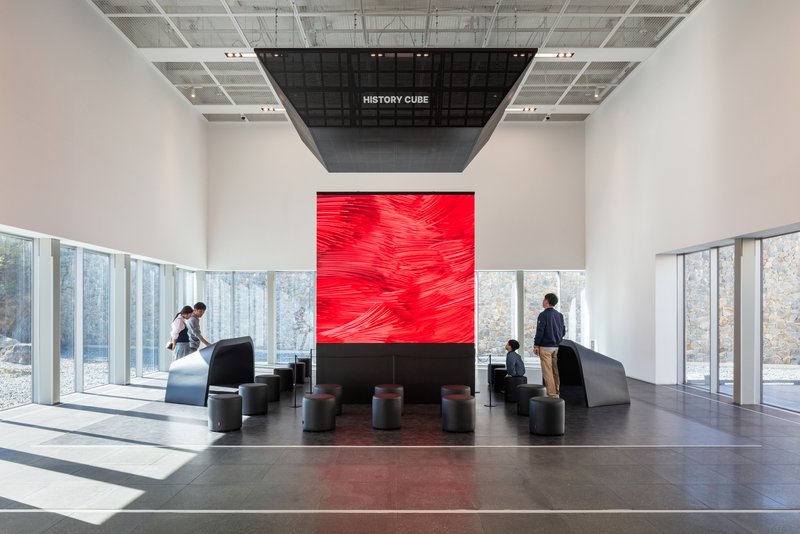
Then there are the immersive rooms. One projection space, bathed in deep blue light, wraps visitors in mountain and cloud imagery that references Dokdo's volcanic landscape. Silhouetted figures stand within the glow, dwarfed by the scale of the image. In the central lobby, a red digital display wall and a ceiling-mounted cube introduce a layer of media infrastructure that feels deliberately different from the stone and timber outside, signaling a shift from contemplation to information.
The contrast between these two modes, the filtered daylit gallery and the dark media room, is what gives the museum its experiential range. Simplex Architecture understood that a museum about a contested landscape needed more than one emotional register.
Plans and Drawings
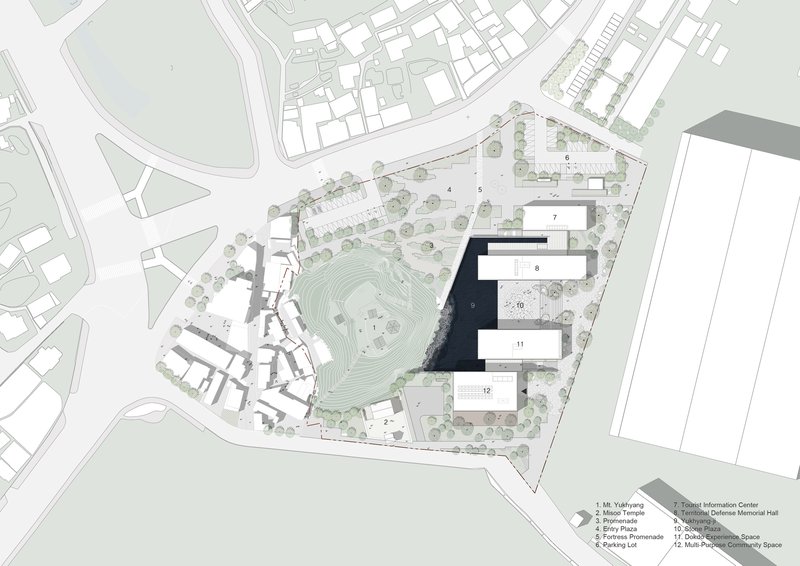
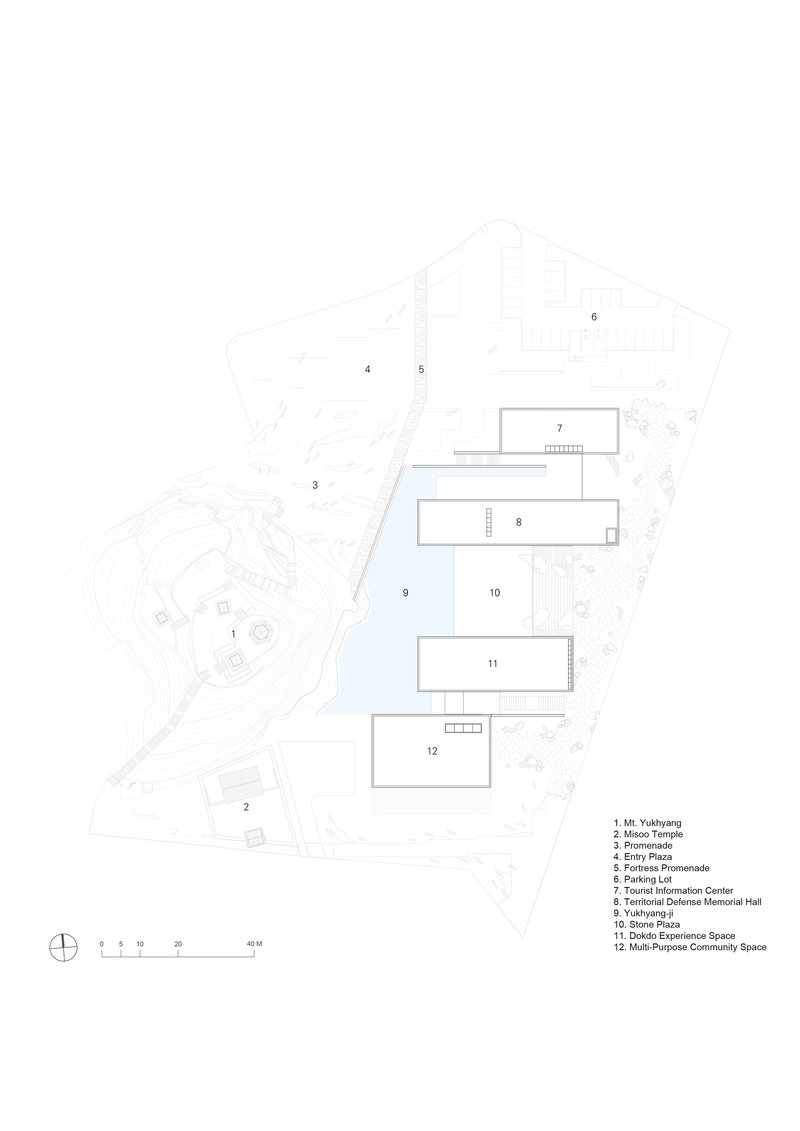
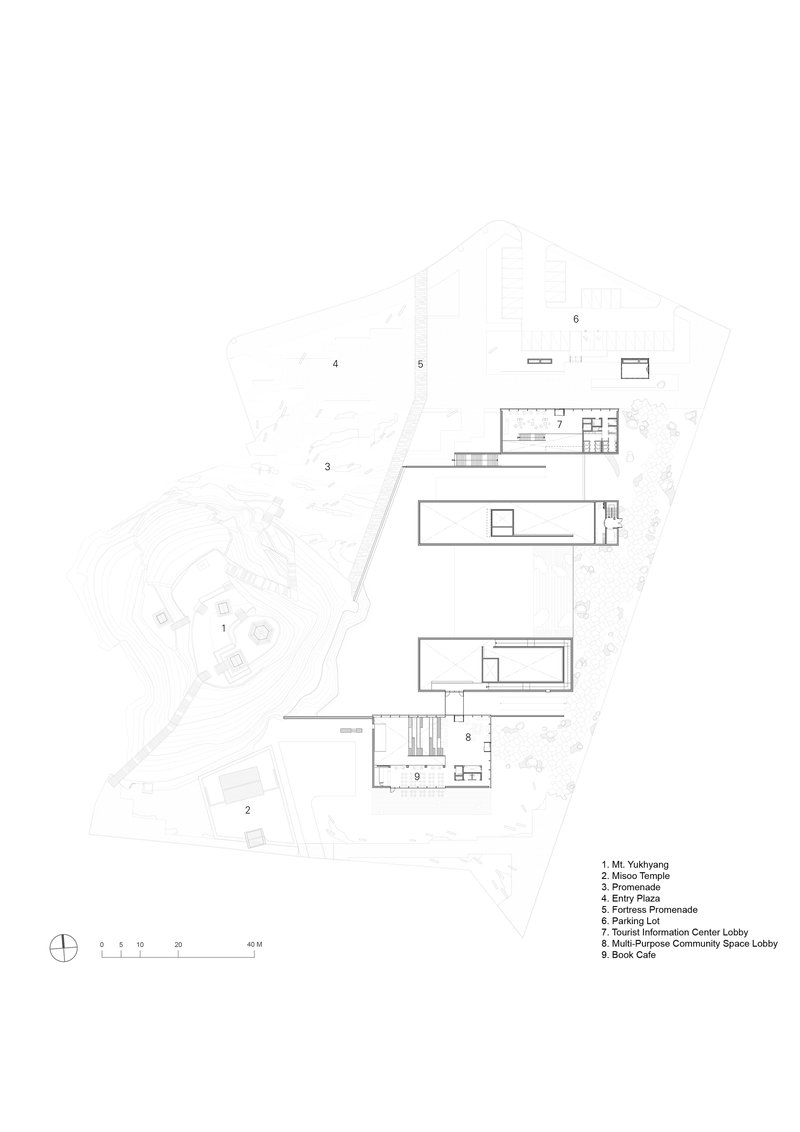
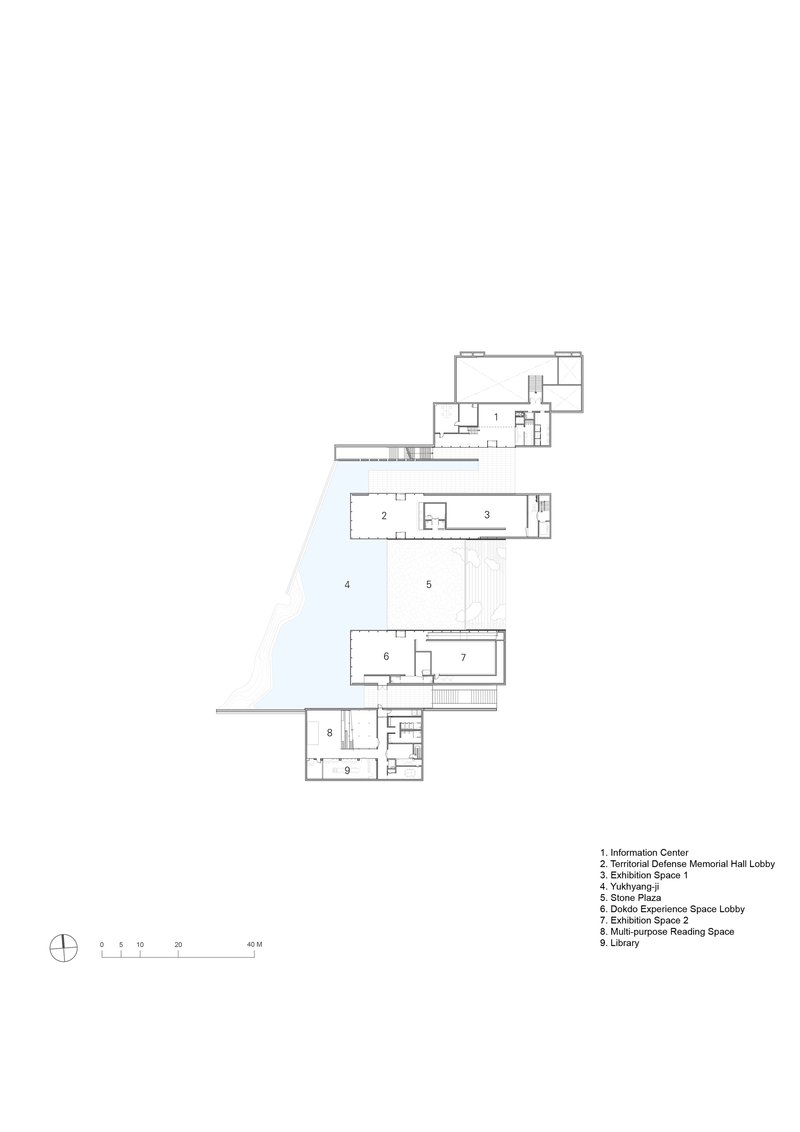
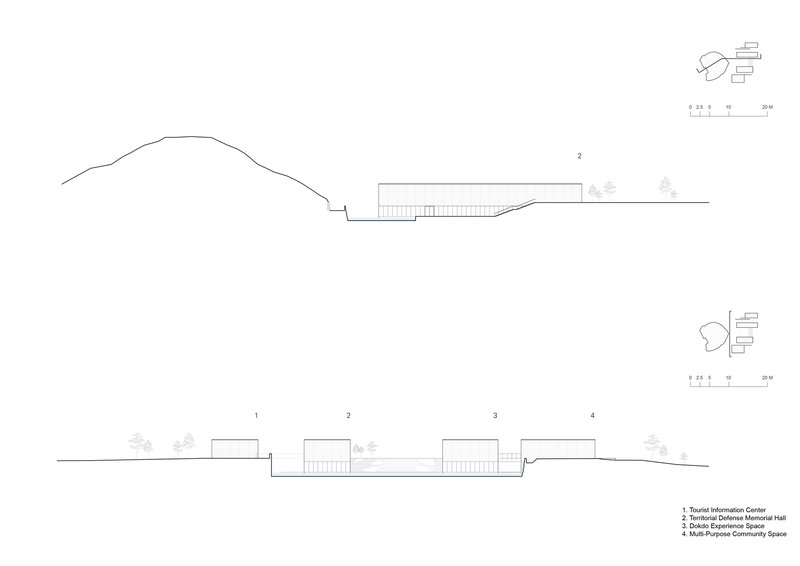
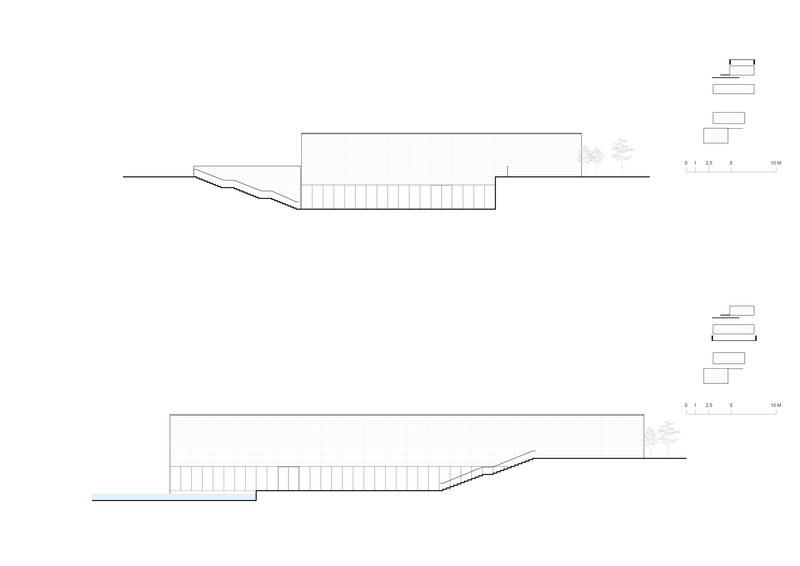
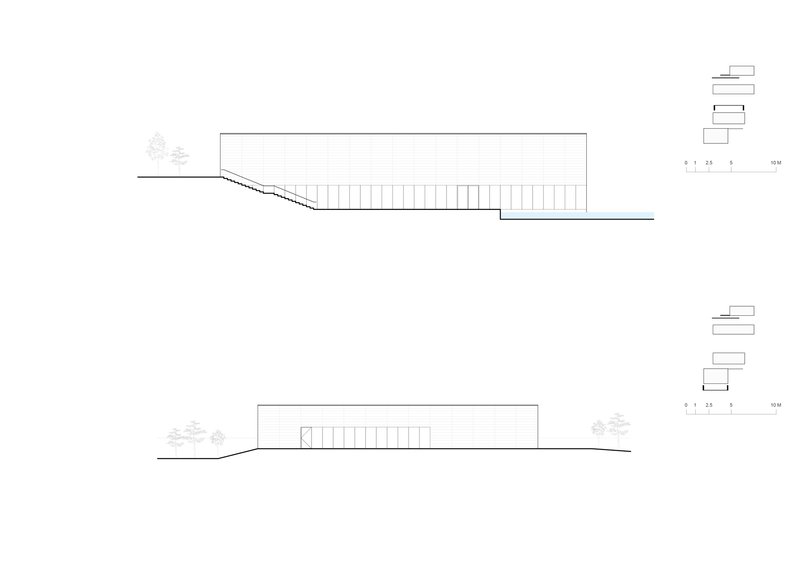
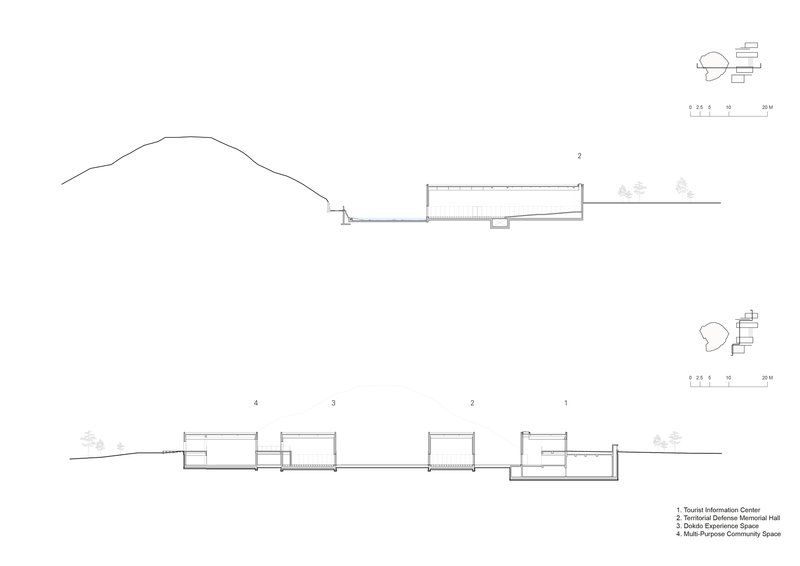
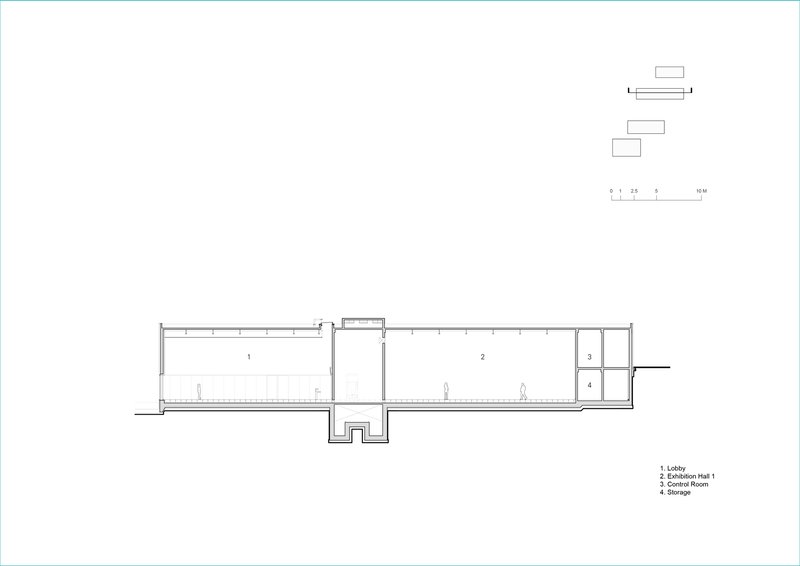
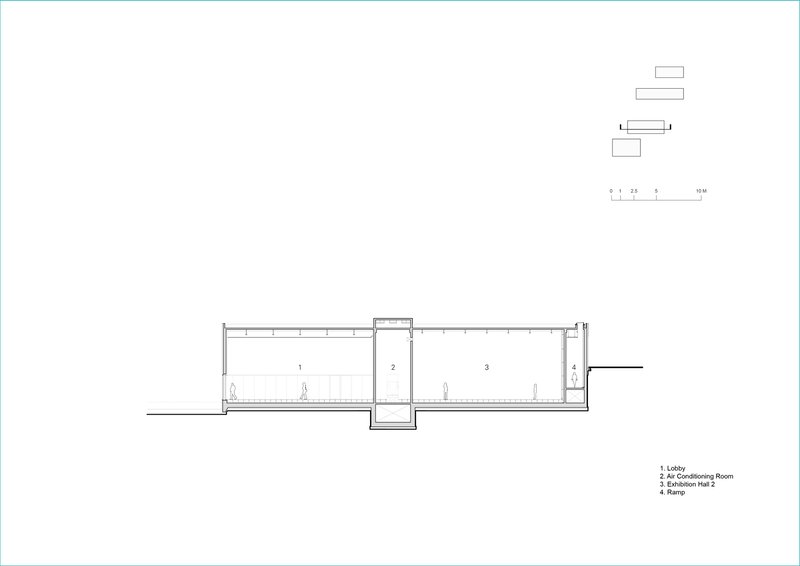
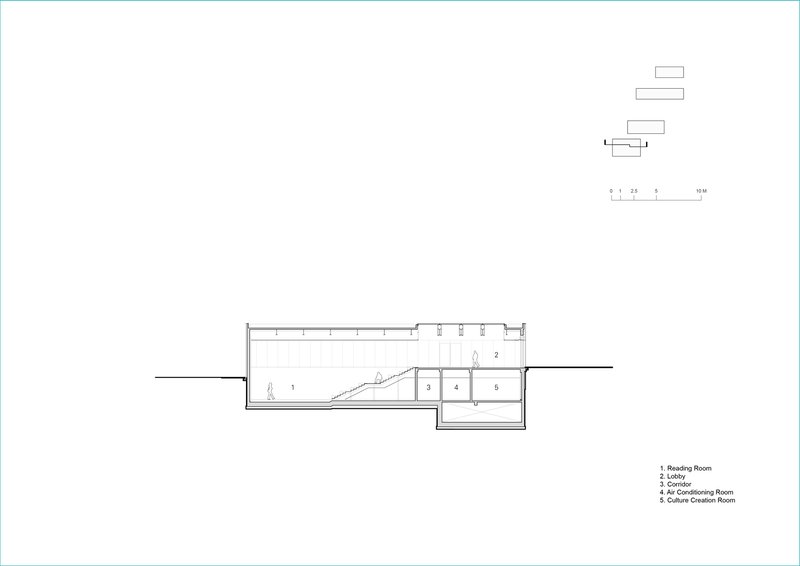
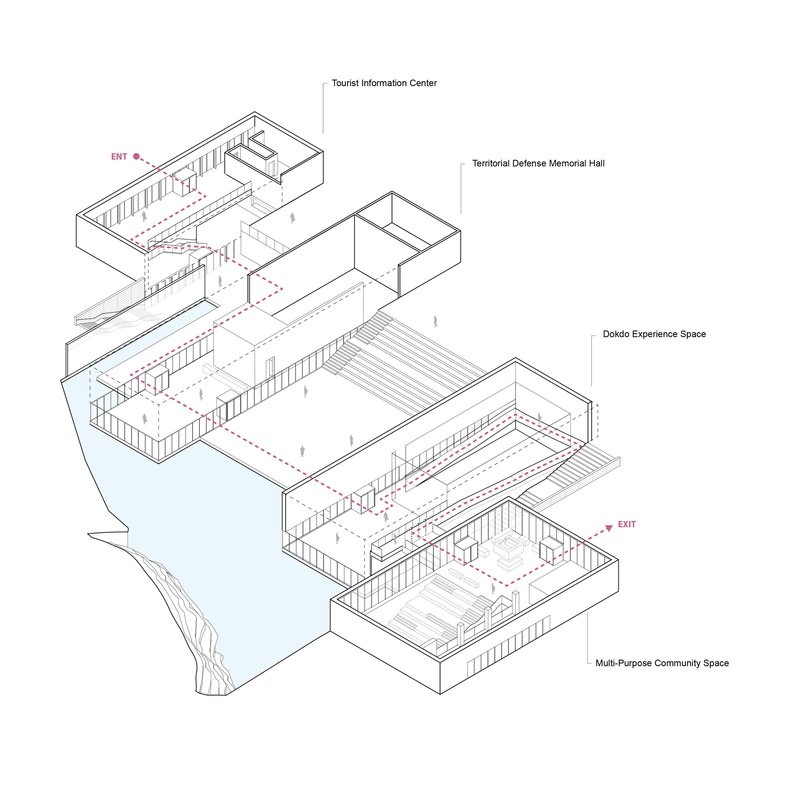
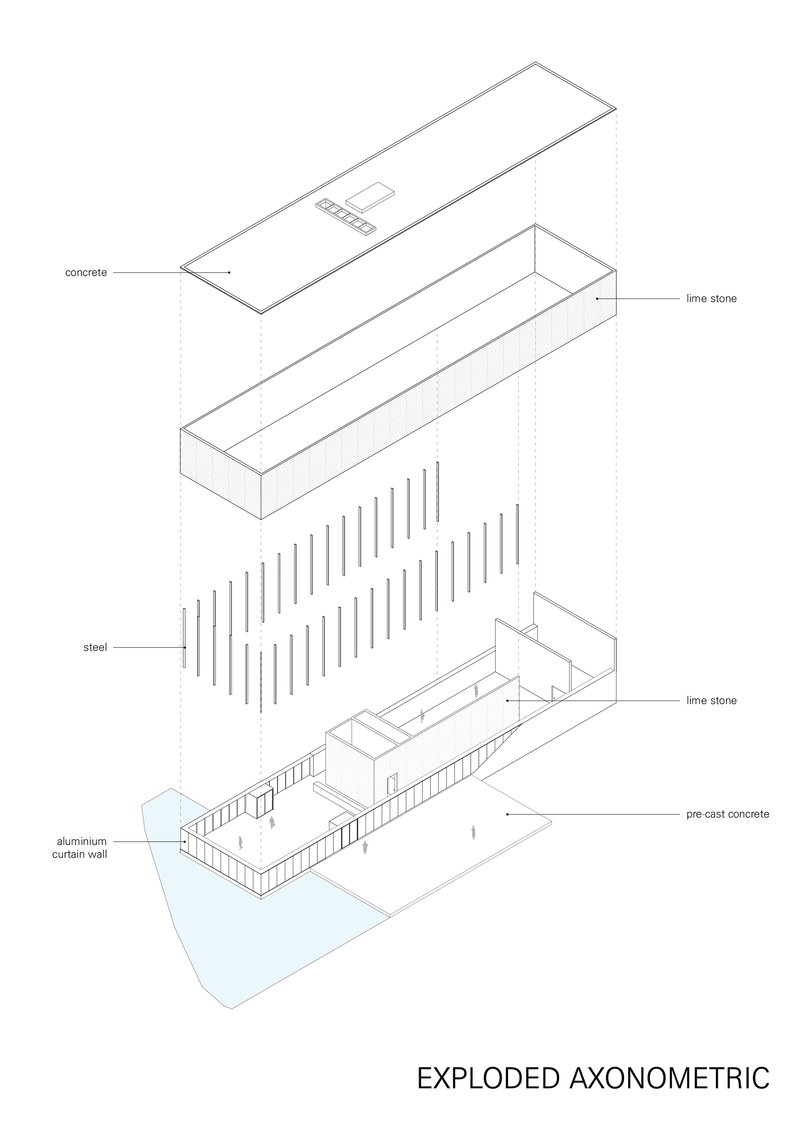
The drawings reveal the full extent of the hillside strategy. Site plans show how the rectangular volumes are arranged around the central pond, staggered to follow the topographic contours rather than imposing a grid. Floor plans confirm a linear organization within each pavilion, with a diagonal staircase and multiple skylights punctuating the plan to bring light deep into the interior.
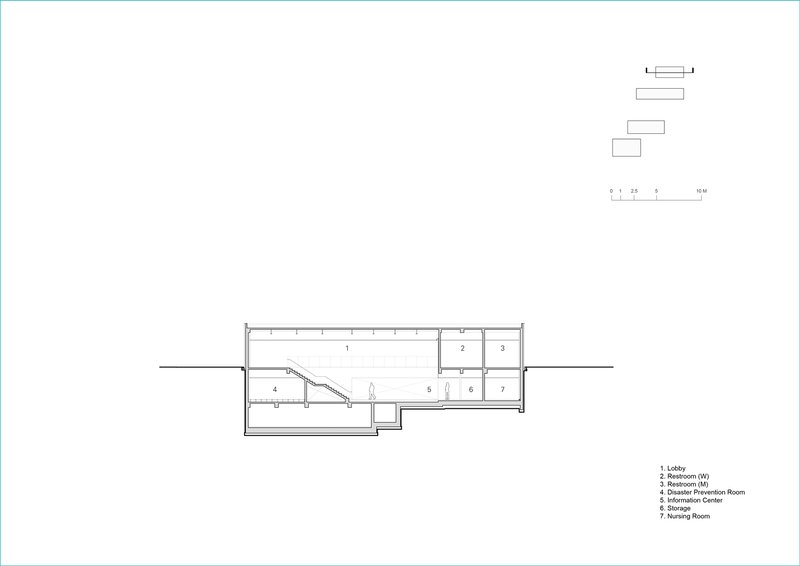
The sections are especially telling. They show pavilions stepping down the slope, partially submerged in the terrain, with two large exhibition halls flanking a sunken entry court. Twin galleries are separated by a central conditioned room topped with clerestory lighting. The exploded axonometric breaks down the layered material assembly: concrete structure, limestone cladding, steel framing, aluminum curtain wall. It is a clear, rational construction logic that the finished building deliberately conceals beneath its quiet exterior.
Why This Project Matters
The Isabu Dokdo Museum matters because it demonstrates that civic architecture in sensitive contexts does not need to compete with its subject. Dokdo carries enough symbolic weight on its own. What the building provides is a framework for understanding: a sequence of spaces that move from open landscape to enclosed gallery, from natural light to projected imagery, from geological material to digital media. That sequence is the architecture's true achievement, not the stone cladding or the reflecting pools, but the way those elements are organized into an experience that teaches the body before the mind catches up.
Simplex Architecture, led by Chung Whan Park and Sanhun Song, has produced a building that will age well. The travertine will weather. The moss on the reflecting pool boulders will spread. The gabion walls will settle further into the hillside. In a decade, the museum will look less like an intervention and more like something the landscape always intended. That is not a failure of architectural ambition. It is its highest expression.
Isabu Dokdo Museum by Simplex Architecture (Chung Whan Park, Sanhun Song). Samcheok, South Korea. 3,275 m². Completed 2025. Photography by Kyungsub Shin.
About the Studio
Share Your Own Work on uni.xyz
If projects like this are the kind of work you want to make, uni.xyz is a place to publish your own, find collaborators, and enter design competitions.




Popular Articles
Popular articles from the community

The Heart of Milano: Slow Fashion Architecture for a New Circular Culture
The Heart of Milano turns slow fashion architecture into a civic landmark where learning, making, sharing, and circular culture meets daily.

Noue Studio Organizes a Swiss Restaurant Around a Single Concrete Wall
In Granges-Paccot, Switzerland, a 216-square-meter renovation turns raw materials and a central spine into a legible dining experience.
GGR Architectes Anchors a New Neighborhood in Frouzins with a Brick and Timber School Complex
A cruciform plan of terracotta brick and exposed wood frames four courtyards for 140 students outside Toulouse, France.
Pablo Senmartin Suspends a Steel-and-Timber Refuge Above a River Forest in Córdoba
An 80-square-meter dwelling on pilotis camouflages itself among the trees of Mayu Sumaj, designed to be dismantled without waste.


Similar Reads
You might also enjoy these articles
Freebird Residence by Alexis Dornier: A Tropical Modernist Sanctuary in Bali
Floating living pavilion above pool anchors H-shaped tropical villa, blending Japanese minimalism, sustainable strategies, lush landscape, and sculptural interiors.
127af Flips a Tiny Bagnolet Rowhouse Upside Down with a Handcrafted Roof Extension
A 55-square-meter terraced house on the edge of Paris gains a luminous upper living floor through lightweight timber and steel.
1.61 Design Workshop Wraps a 600-Square-Meter Café in Vietnam in Sculptural Burgundy Drama
Reden Café & Bistro pairs a helical staircase, mosaic floors, and deep red interiors to rethink Vietnamese hospitality space.

The Unbound Brain: A School Shaped by Cognitive Architecture
Cylindrical learning pods radiate like neurons from a central cortex, turning the floor plan into a spatial model of human thought.


Explore Cultural Architecture Competitions
Discover active competitions in this discipline




The Global Benchmark for Architecture Dissertation Awards


The Global Benchmark for Graduation Excellence


Bring back Drive In's
Comments (0)
Please login or sign up to add comments
No comments yet. Be the first to comment!