
Isla Intersections Supportive Housing and Paseo by Lorcan O’Herlihy Architects: Transforming LA’s Challenging Urban Parcels into Sustainable Community Housing
Isla Intersections transforms a challenging urban site into sustainable modular housing, integrating green spaces, community services, and pedestrian-friendly paseo design.

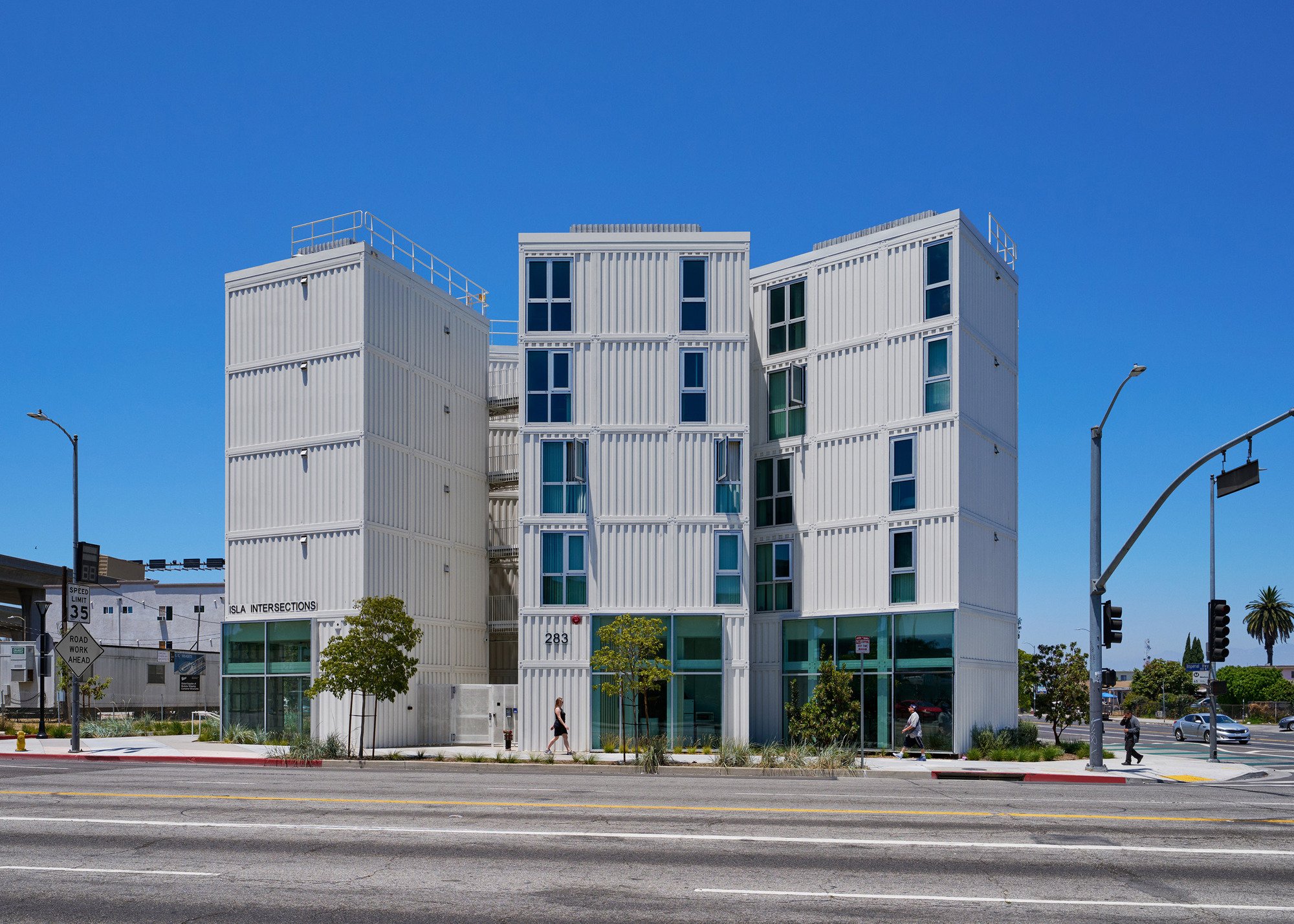
The Isla Intersections Supportive Housing and Paseo project by Lorcan O’Herlihy Architects (LOHA) stands as a breakthrough model for sustainable, community-centered living in Los Angeles. Completed in 2025 and spanning 35,000 square feet, this 54-unit modular housing development reimagines how the city’s most challenging parcels can be transformed into resilient, people-focused spaces.
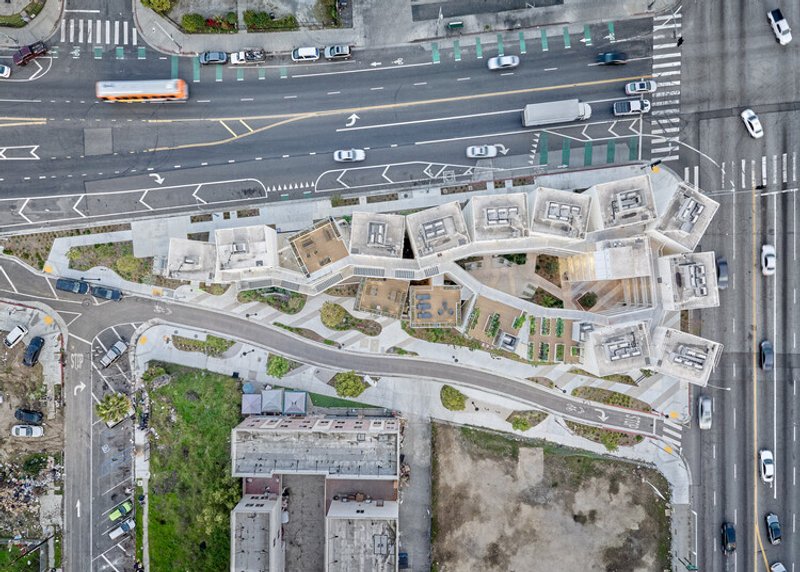
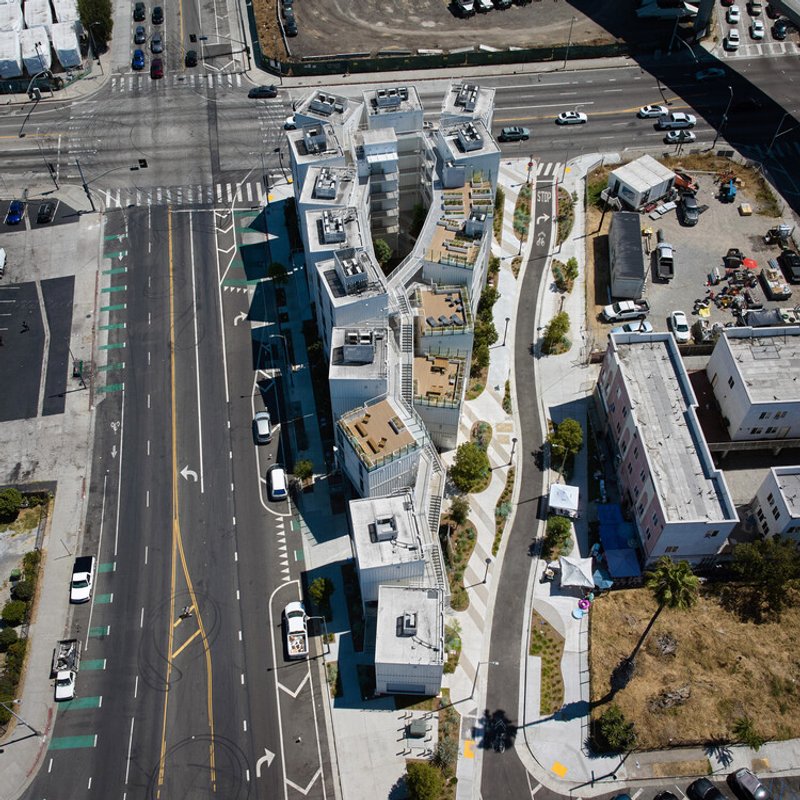
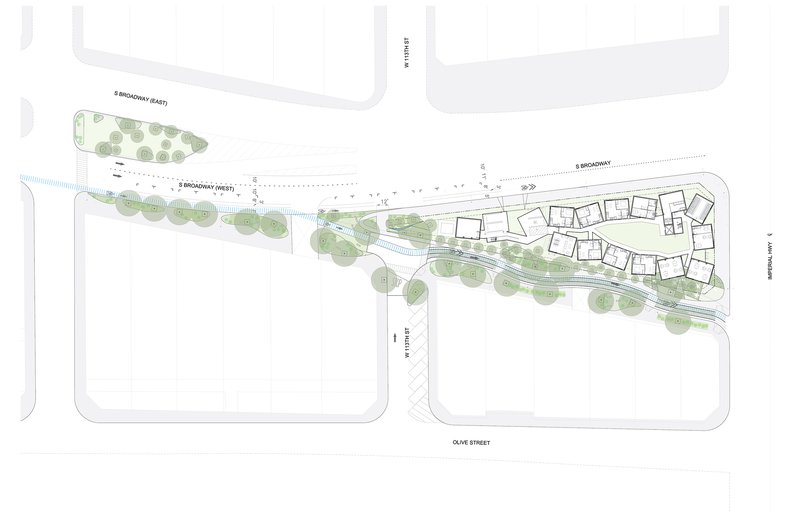
Situated on a 19,814-square-foot triangular site, the development sits near one of the busiest freeway interchanges in the world—where the 110 and 105 intersect. Despite the noise, pollution, and spatial limitations, LOHA successfully converts the difficult lot into a vibrant living environment that integrates affordable housing, wellness infrastructure, and ecological restoration.
Reclaiming Neglected Urban Land for Affordable Housing
In 2018, Los Angeles opened more than 1,700 city-owned parcels to developers addressing the affordable housing crisis. Many of these lots were awkwardly shaped, polluted, or hidden along busy corridors. Isla Intersections creatively repurposes two such parcels—a traffic island and an abandoned railroad right-of-way—into a unified architectural landmark.
Working alongside non-profit developer Holos Communities, LOHA’s design demonstrates how modular construction and landscape-focused planning can turn neglected infrastructure land into thriving neighborhoods.
Modular Architecture for Faster, Sustainable Construction
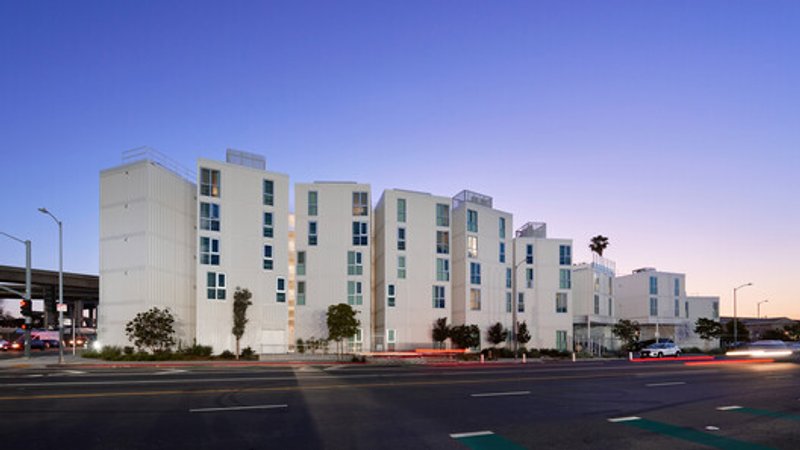
The housing complex is built from recyclable steel modular containers—each unit composed of three 20-foot by 8-foot modules welded into a 480-square-foot home. These compact, efficient residences include:
- ADA-compliant kitchen
- Bathroom
- Living area
- Bedroom
- Open-plan layout maximizing natural light
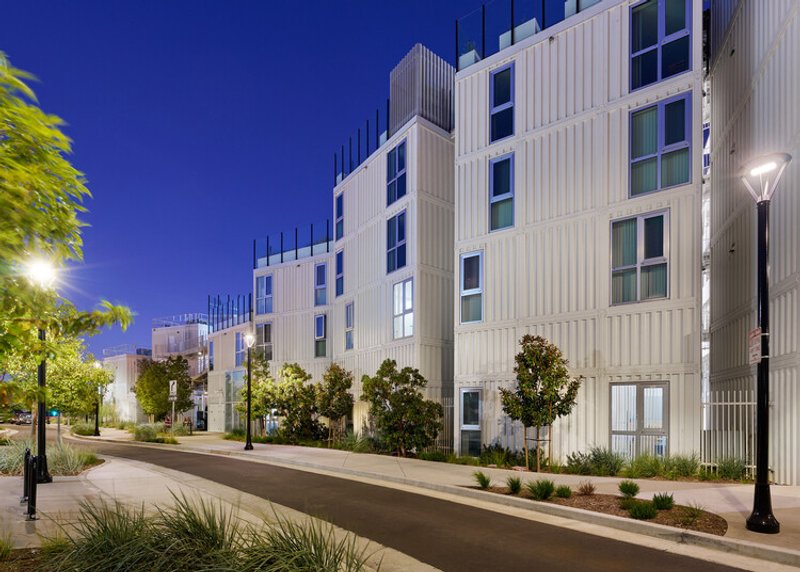
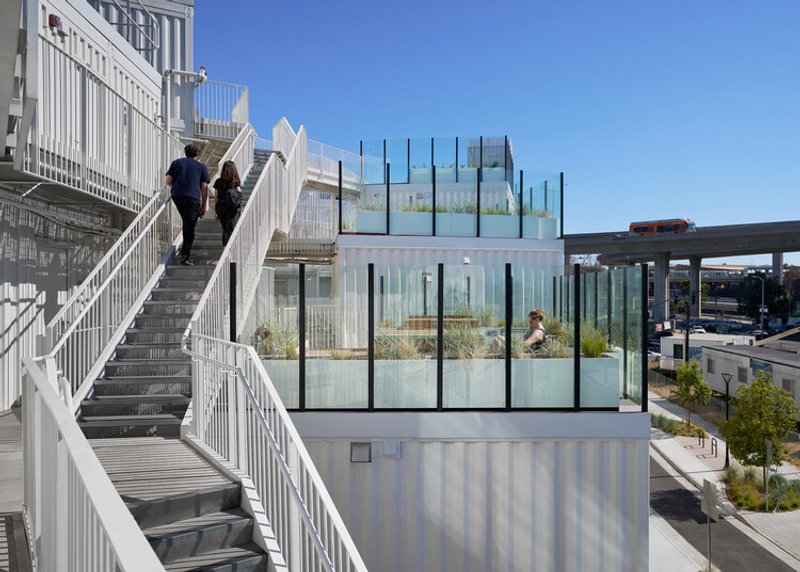
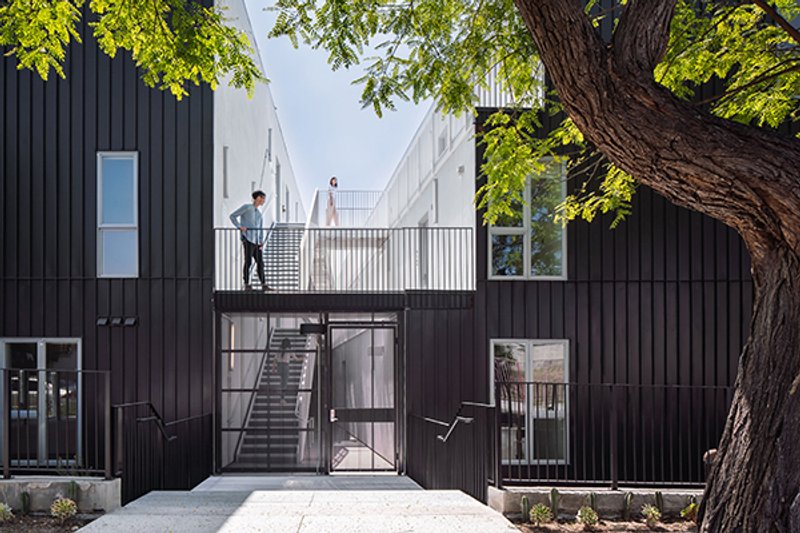
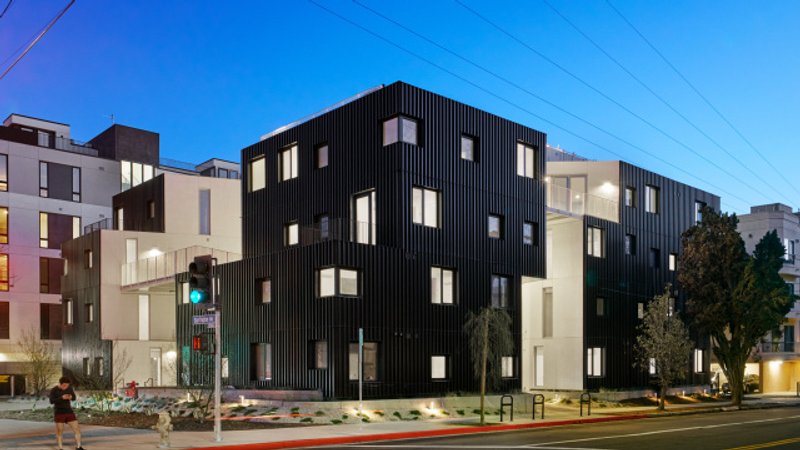
Sixteen staggered container “boxes” line the spine of Broadway Street, forming towers connected by external walkways. This creates both visual rhythm along the street and functional circulation across the site.
Designing Community Spaces Through Staggered Towers
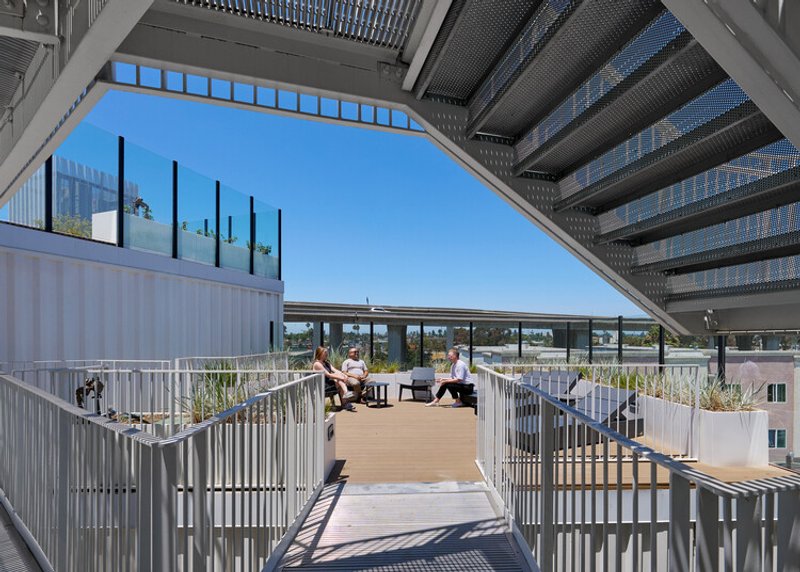
The pie-shaped geometry of the site becomes an asset. LOHA strategically arranges the residential towers along the perimeter to carve out pocket parks and a central communal courtyard. These shared landscaped spaces:
- Bring nature into daily urban living
- Encourage interaction among residents
- Offer quiet green environments despite the adjacent freeways
This integration of private living units with communal outdoor areas delivers a strong sense of belonging and wellness.
A Gradual Urban Transition and Human-Centered Paseo
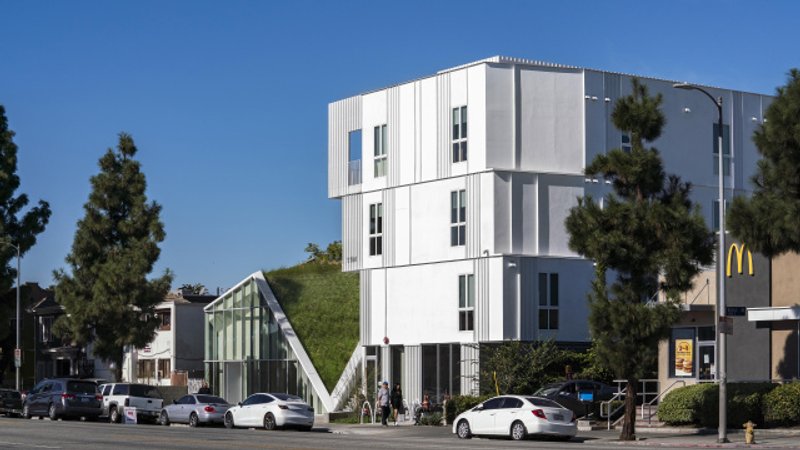
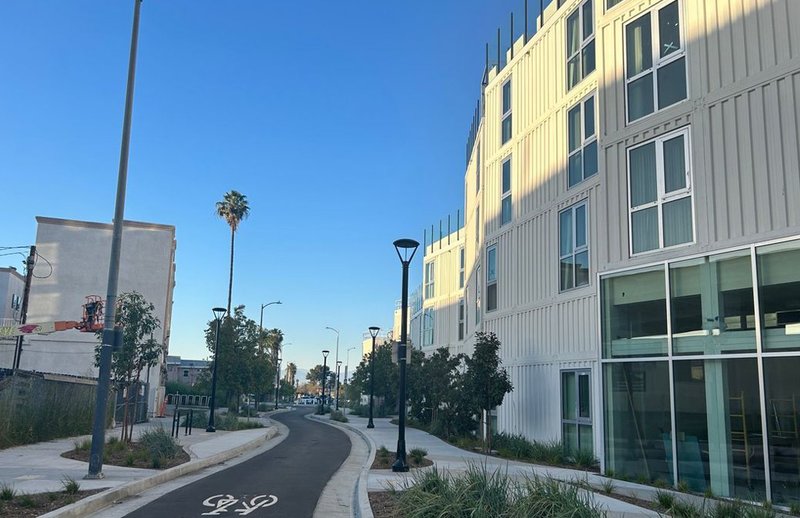
Moving north along Broadway, the building gradually steps down from five stories to two, blending sensitively into nearby single-family neighborhoods. This transition strengthens the connection to the Annenberg Paseo, a newly designed pedestrian-friendly corridor adjacent to the project.
The Paseo functions as a “slow space” prioritizing walkers and cyclists. At ground level, the building opens toward the paseo with:
- Retail spaces
- Incubation and job training centers
- Support service offices
- Administrative workspaces
This not only activates the public edge but provides residents with easy access to resources that support long-term stability.
A Living Lung: Filtering Air, Growing Food, Supporting Community Health
Given the site’s proximity to freeways, LOHA’s landscape strategy doubles as environmental infrastructure. The paseo and pocket parks are planted with air-purifying vegetation that traps particulates and reduces pollution exposure.
Additional sustainability features include:
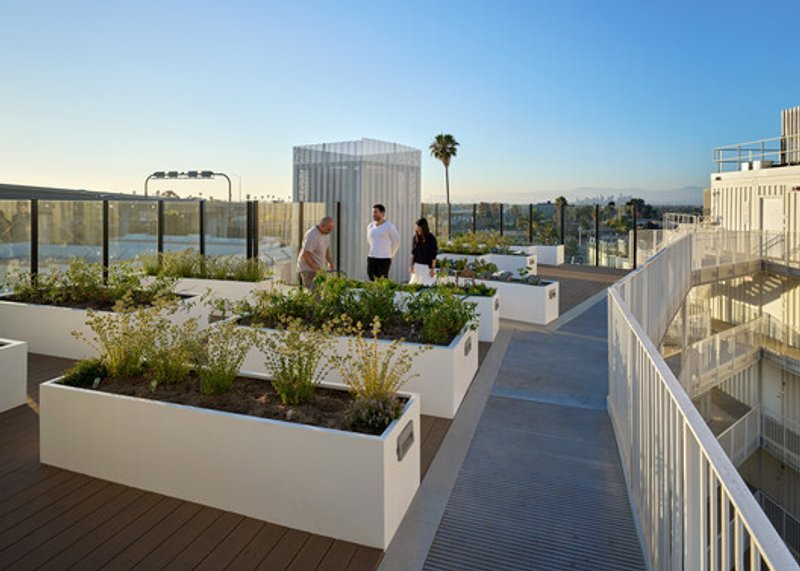
- Rooftop farms
- Edible gardens
- Weekly farmers' markets with fresh produce
- Partnerships with local urban farms
These agricultural elements support food security and reconnect residents with South Los Angeles’s cultural history of farming.
Just one mile away, the Stanford Avalon Community Garden—a cherished 9-acre urban farm—acts as a regional partner. Isla Intersections aims to extend this legacy by becoming part of a larger network of urban agricultural zones throughout Los Angeles.
A Model for Future Modular Housing in Urban Centers
Isla Intersections demonstrates how architecture can address homelessness, environmental pollution, and food access simultaneously. By blending modular construction, sustainable landscaping, community programs, and urban farming, LOHA sets a new standard for affordable housing in dense cities.
This project proves that even the most difficult parcels of urban land can become healthy, dignified living environments when design, ecology, and community needs align.
All the photographs are works of Eric Staudenmaier




Popular Articles
Popular articles from the community

LIQE arquitectura Wraps a Vigo Old Town Housing Reform in Folding Pine Screens
Perched between castle walls and the historic center, a timber-clad renovation filters estuary light through autoclave-treated slats.
HEIMA Architects Scatters Four Oak-Shingled Pavilions Among the Pines of Northern Lithuania
A 150-square-meter guest house on a Lithuanian hilltop splits into four volumes to preserve every tree on the site.
a2o architecten Builds a Concrete and Brick Wunderkammer in the Belgian Countryside
House Be in Flanders treats dwelling as a Romantic act, threading rooms along a central axis that opens gradually toward a restored landscape.
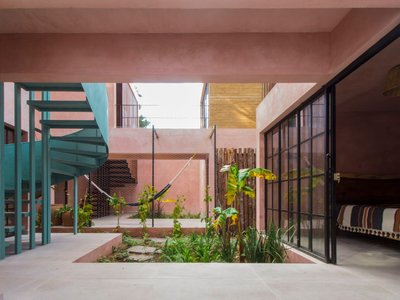
Apaloosa Builds a Forest-Edge Retreat from Compacted Earth and Pink Stucco in Chiapas
Villa Luciérnagas in San Cristóbal de las Casas pairs local earth block construction with rainwater systems and solar energy for Airbnb-ready living.


Similar Reads
You might also enjoy these articles

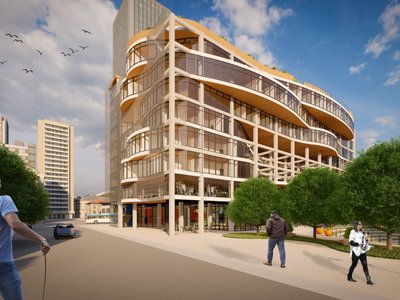
Olio Towers: A Mid-Rise for Performers That Fuses Housing, Rehearsal, and Stage
Located blocks from Houston's Theater District, this modular tower stacks living units around a central performance atrium.

Oasis: Modular Green Housing Carved into Dhaka's Urban Fabric
A shortlisted Plugin Housing entry reclaims unauthorized settlements in Dhaka with stepped concrete volumes, green roofs, and ventilation-driven design.

Black Hole: A Floating Megastructure for the Post-Physical Era
Emiliano Mazzarotto envisions a spherical, self-scaling arena where e-sports, digital hotels, and holographic stadiums replace traditional public space.
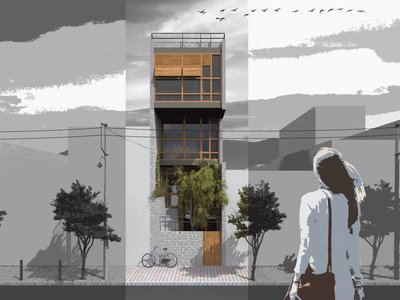
Compact & Sustainable Living in Piraeus: A Four-Level Family Home Built Around Light and Air
A narrow townhouse in one of Greece's densest port cities uses a central atrium and passive strategies to house three generations under one roof.


Explore Architecture Competitions
Discover active competitions in this discipline




The International Standard for Design Portfolios


The Global Benchmark for Architecture Dissertation Awards


The Global Benchmark for Graduation Excellence


Challenge to reimagine the Iron Throne
Comments (0)
Please login or sign up to add comments
No comments yet. Be the first to comment!