

Istituto Marangoni Design School: A Landmark of Paris Design School Architecture by Clément Blanchet Architecture
A bold fusion of heritage and innovation, this Paris design school redefines architectural space for creative learning and collaboration.


Transforming Heritage: A New Chapter in Paris Design School Architecture
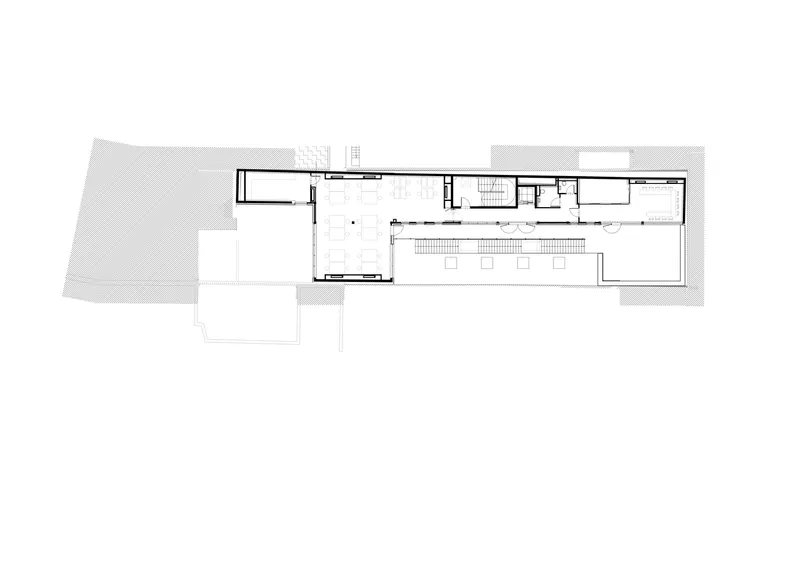
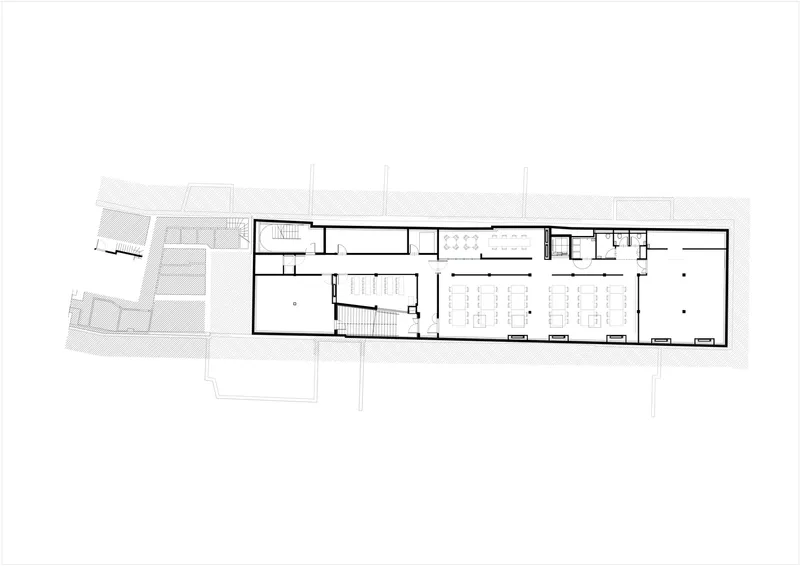
In the 16th arrondissement of Paris, where rue de Lubeck meets rue Boissière, Clément Blanchet Architecture has reshaped an emblematic 19th-century structure into a contemporary beacon of educational design: the new campus of the Istituto Marangoni Design School. Encompassing 1500 square meters, the intervention transforms the historic into the modern, anchoring the project in a narrative of spatial innovation that speaks directly to the future of Paris design school architecture.
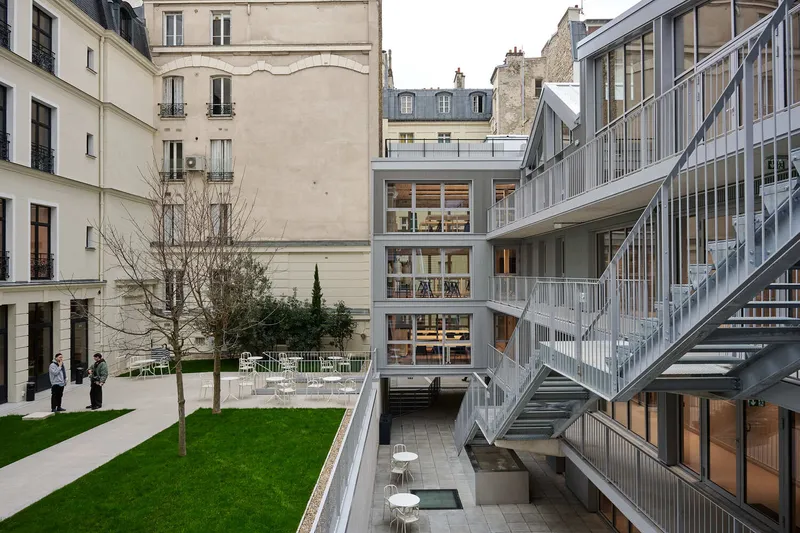
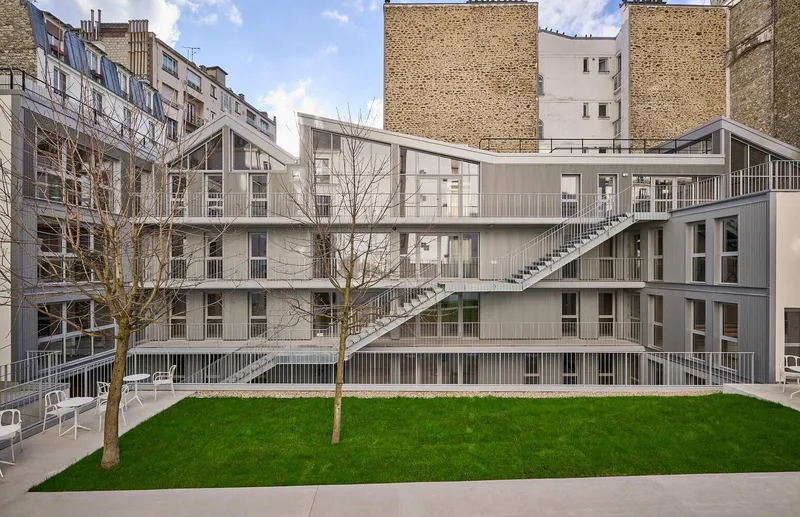
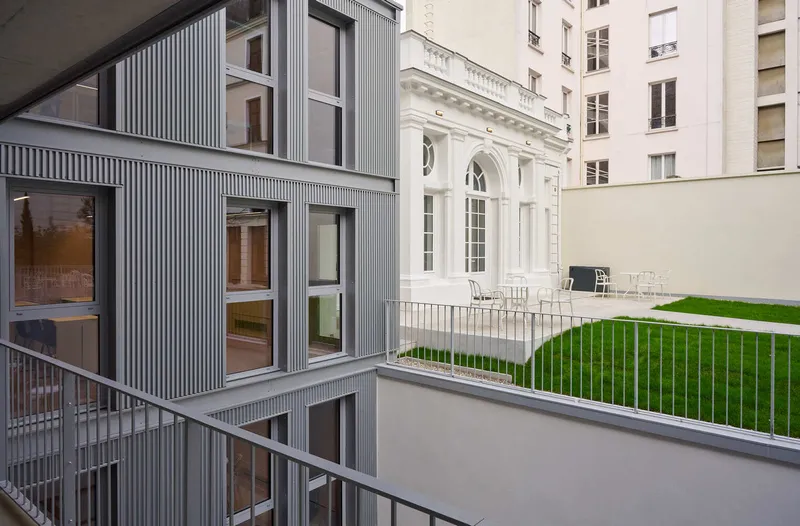
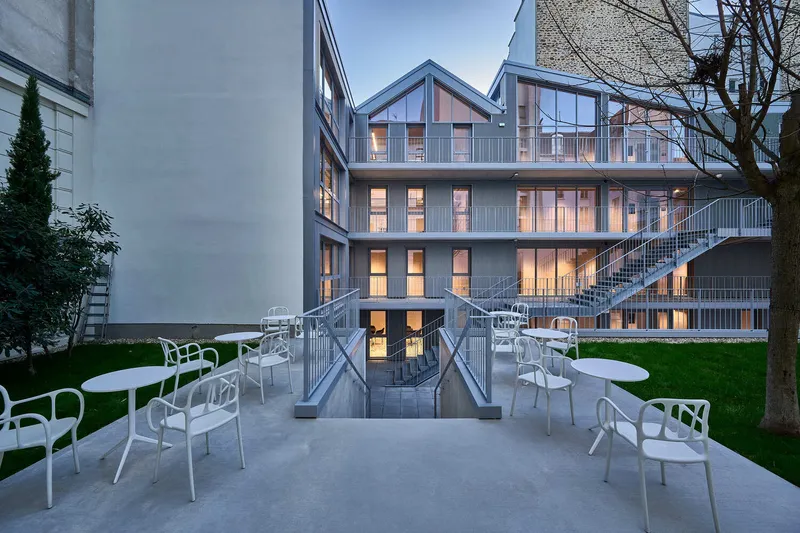
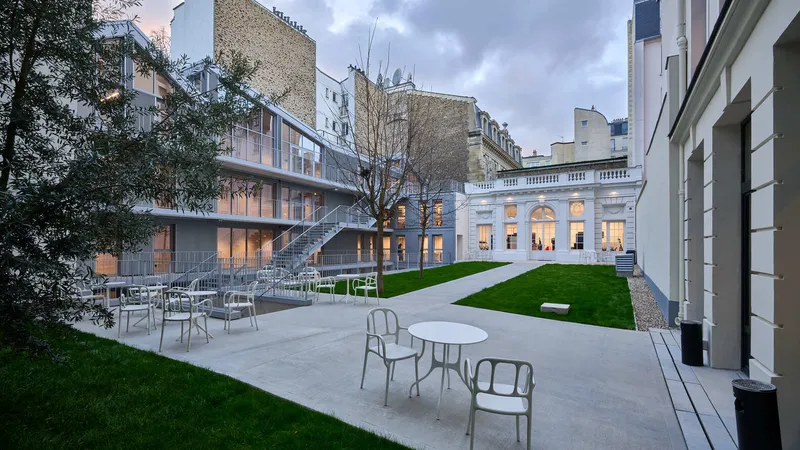
The architectural gesture respects legal parameters for open space and sightlines by introducing a U-shaped extension that frames a newly crafted courtyard. This strategic configuration creates dialogue between old and new, placing the school in a setting that invites both introspection and expression. The courtyard, once a secondary urban void, is now a landscaped heart of the campus—an arena for interaction, connection, and creative display.
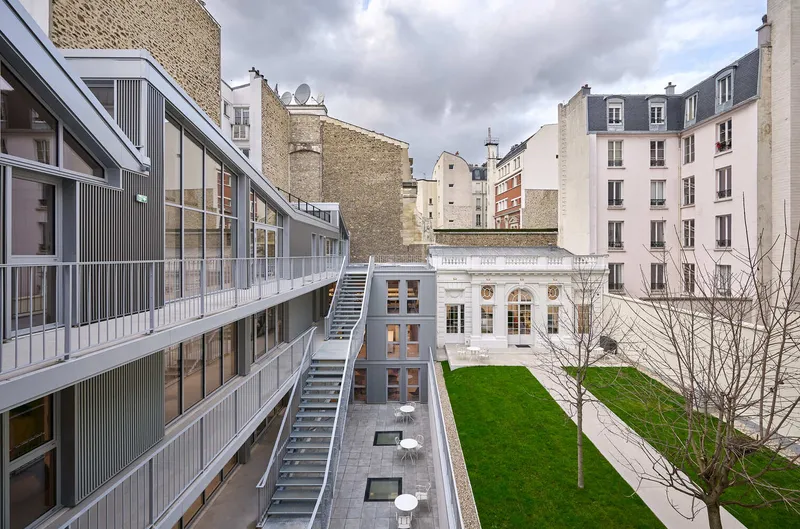
Architectural Dialogue Between Old and New
What distinguishes this project within the landscape of Parisian educational architecture is its sensitivity to urban context. The design doesn’t impose; it converses. Concrete volumes and a rhythm of full-height glass and textured corrugated steel panels shape the façade. Varying shades of grey and tactile textures provide subtle sophistication, creating a visual cadence that echoes both the surrounding urban grain and the academic rigor within.
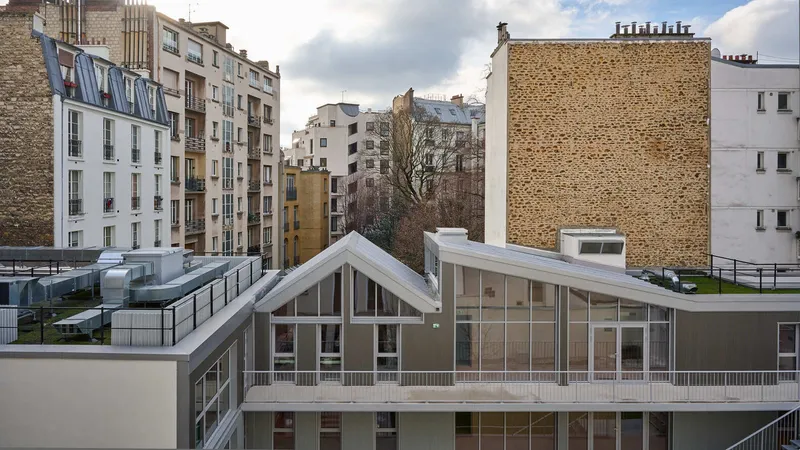
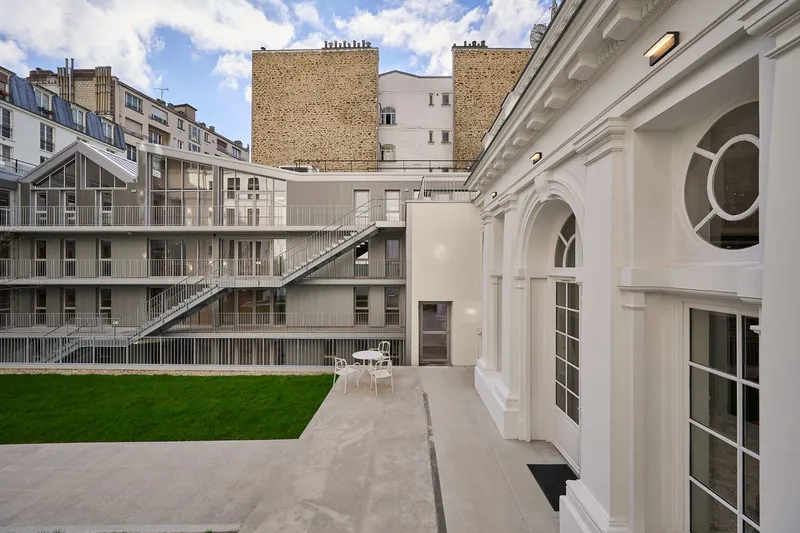
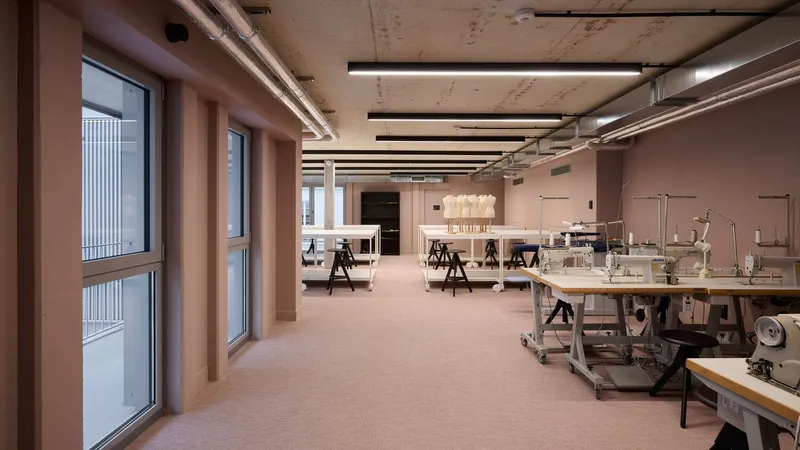
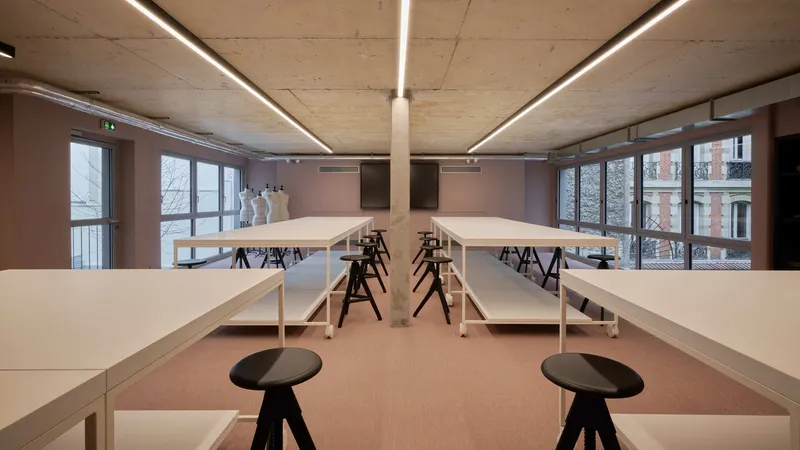
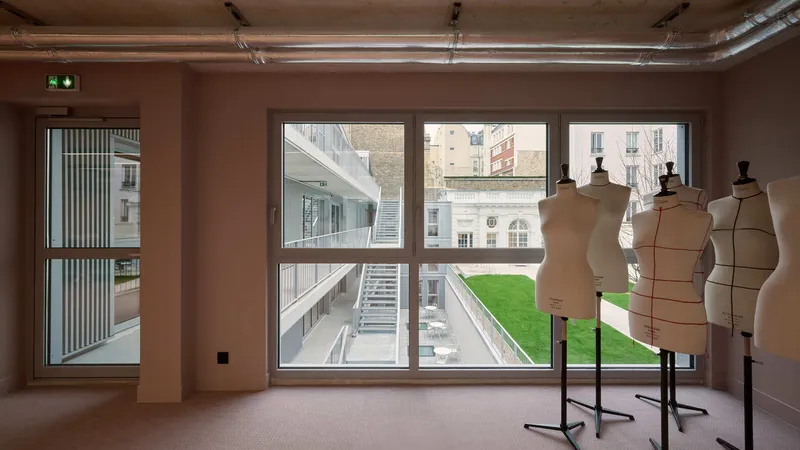
Natural light flows generously into the interiors through expansive glass panels, ensuring ventilation and transparency, essential qualities in both educational and architectural environments. The interplay of opacity and translucency, heaviness and lightness, builds a sense of architectural narrative that supports the school's identity as a crucible for creativity.
A Campus as an Ecosystem of Creativity
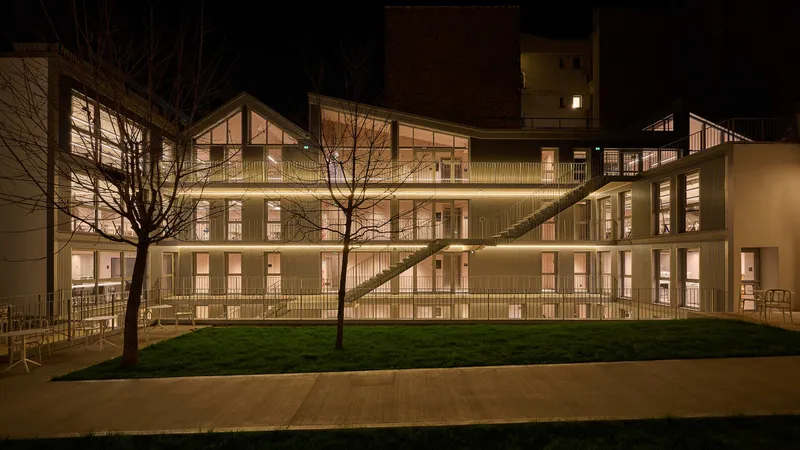
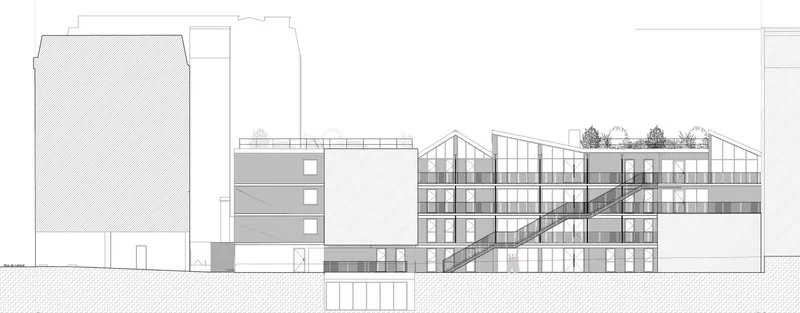
More than a collection of classrooms, the Istituto Marangoni campus is conceived as a dynamic and multi-layered environment where design, art, and fashion converge. A sculptural staircase—projected toward the garden—becomes the vertical spine of the project, binding the levels into a fluid sequence. This gesture is more than circulation; it is a spatial experience of transition and transformation. It fosters movement, visual connections, and encounters—key to a design school’s creative ethos.
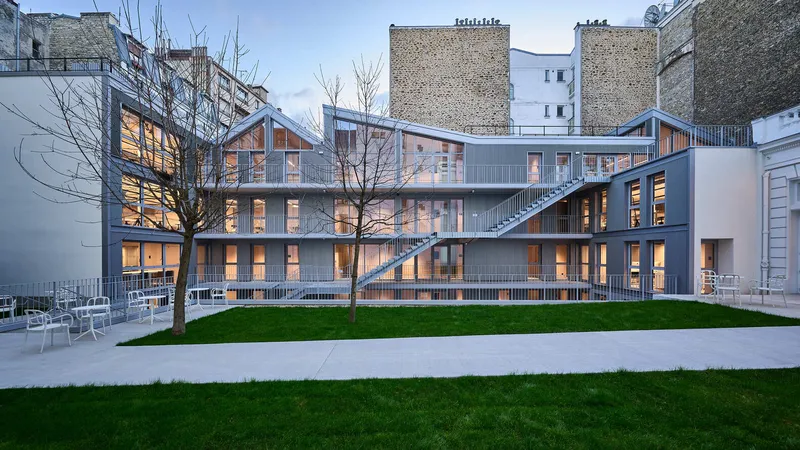
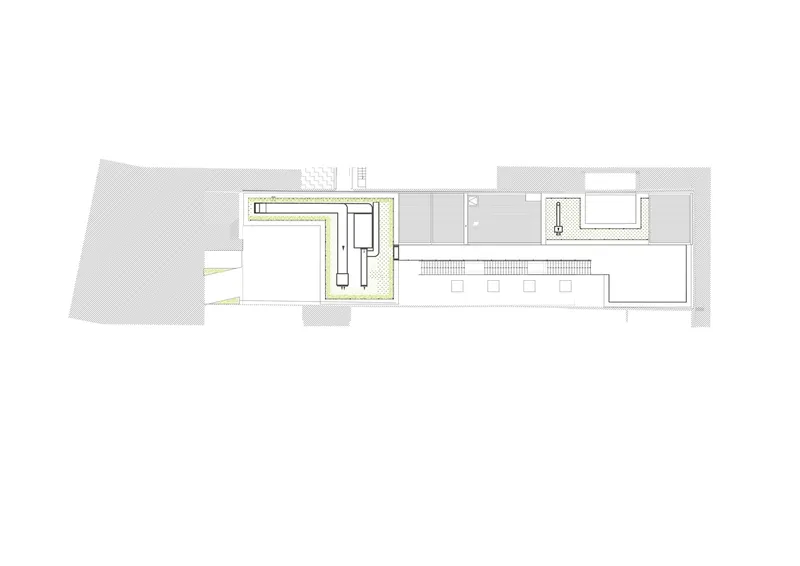
The rooftop design continues this spatial choreography, offering a blend of green roof, terraces, and sloped roofs that provide diverse experiential zones. Each level of the building is therefore in conversation with the city, the garden, and the users—students, professors, and visiting artists alike.
A Living Framework for Expression
The project doesn’t treat architecture as static. Rather, it frames it as a living infrastructure, adaptable to the evolving dynamics of creative education. External walkways serve as curated exhibition spaces. The central courtyard becomes an open-air gallery. The staircase doubles as an informal amphitheater for presentations, performance, or pause.
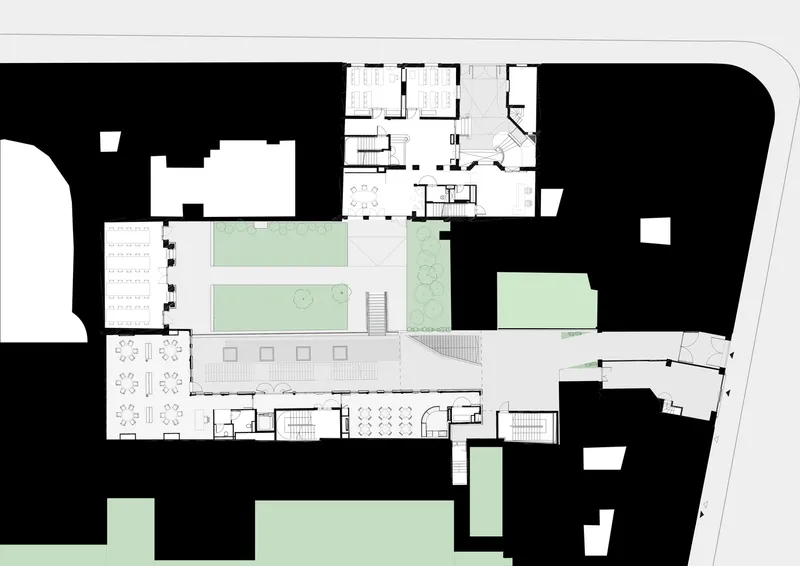
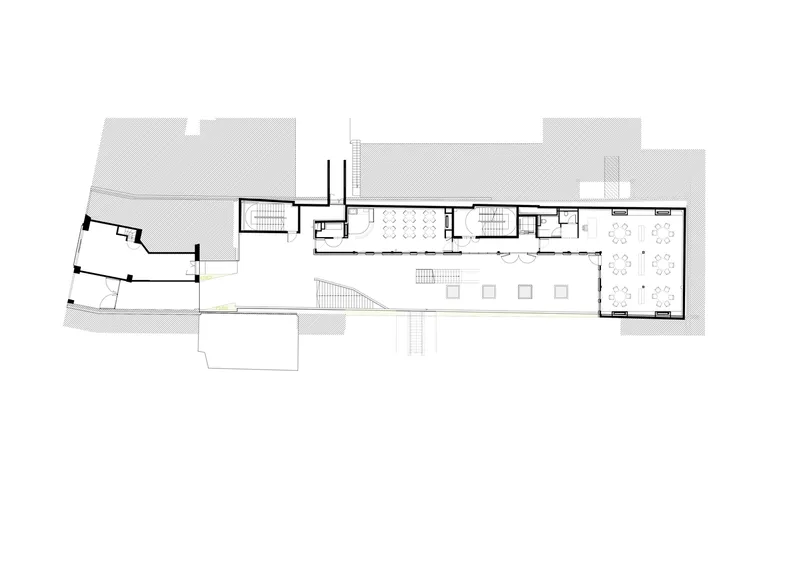
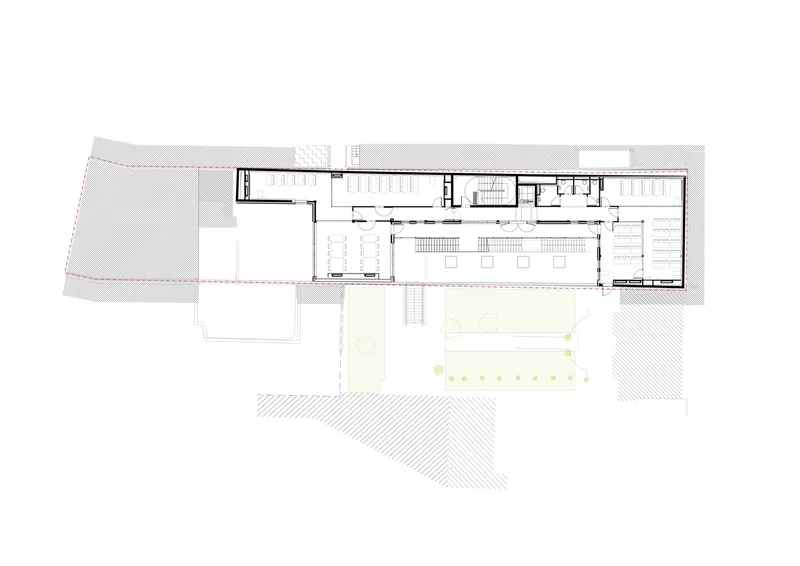
This synergy between movement and stillness, structure and spontaneity, allows the school to serve not only as a learning environment but also as a cultural platform. Fashion shows, installations, and design critiques are seamlessly embedded into the very fabric of the architecture. Every corridor, corner, and threshold becomes an opportunity for showcasing student work, stimulating dialogue, and fostering a strong sense of community.
Reimagining Educational Architecture in Paris
The Istituto Marangoni Design School is a bold statement in the evolution of Paris design school architecture. It brings together historical respect and contemporary experimentation, providing a framework that is both rooted and visionary. The project reveals how adaptive reuse—when approached with clarity and creativity—can generate new possibilities for learning, making, and being.
As Paris continues to affirm its global role as a hub of fashion and design, this campus stands not merely as a backdrop, but as an active participant. With its layered spatial logic and artistic sensibility, it invites exploration and provokes imagination—qualities that define not just the school, but the city it inhabits.
All photographs are works of Frans Parthesius


Popular Articles
Popular articles from the community

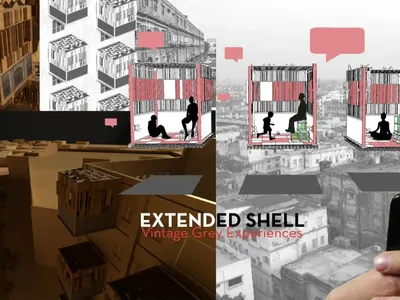
Extended Shell: Retrofitting Kolkata's Balconies as Living Urban Thresholds
A modular retrofit system recovers the social and environmental intelligence of Kolkata's historic verandas for contemporary Park Street residents.

Manzana Morphosis: Stretching Barcelona's Grid into a Living Landscape for 2050
A radical reworking of the Eixample manzana turns density into a tool for generous public space, vertical ecology, and environmental performance.

Cloaked Colonization: A Mobile Underwater Habitat That Moves Like a Fish
Micah Abaya's shortlisted EHC Pacific entry reimagines ocean settlement as a dispersed network of self-sustaining architectural organisms.

The Amber Palace Opera: A Geological Fiction Surfaces on Tallinn's Baltic Waterfront
Pierre Brillard reimagines a Baltic legend as a public landscape, opera house, and waterfront promenade rooted in Tallinn's coastal identity.

Similar Reads
You might also enjoy these articles

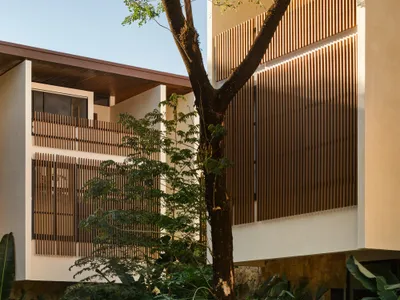
FAMM Arquitectura Organizes Ten Villas Around Courtyards and Jungle in Nosara, Costa Rica
El Molino pairs two elongated volumes with deep overhangs and timber louvers to build a compact coastal community five minutes from the beach.
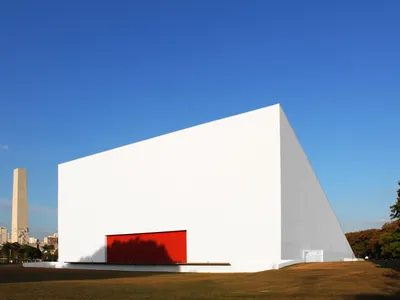
Oscar Niemeyer's Ibirapuera Park Pavilions Define São Paulo's Cultural Identity in Concrete and Curve
A constellation of modernist volumes set within São Paulo's most important urban park, conceived for the city's 400th anniversary in 1954.
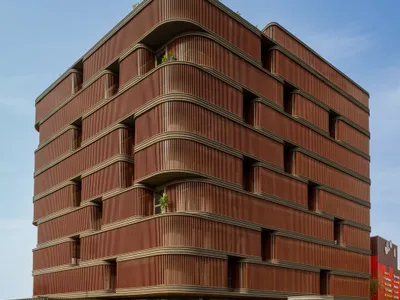
Sanjay Puri Architects Wraps a Jaipur Office Tower in Capsule-Shaped Green Buffers
A nine-level climate-responsive workplace near Jaipur Airport uses stacked planter terraces and aluminium screens to fight 40°C heat.
RHO Converts a Berlin Spree-Side Industrial Courtyard into Enkime's 1,000 m² Agency Headquarters
A social media agency's new home in Charlottenburg trades glossy branding for concrete waffle ceilings, glazed tile, and sheer curtains.

Explore NY School Of Interior Design Competitions
Discover active competitions in this discipline

Challenge to reimagine the Iron Throne

Photograph architecture without architects

Illustrate the lost glory of Angkor Wat - Render Challenge

Design challenge to reuse E-waste
Comments (0)
Please login or sign up to add comments
No comments yet. Be the first to comment!