

Iván Bravo Arquitectos Wraps Three Lifetimes of Renovation into One Metal-Clad House in the Andes Foothills
In El Arrayán on the outskirts of Santiago, a twice-expanded house gets a third rewriting that unifies its contradictions under a single seamed skin.


Most renovation projects promise a clean break. Tam House, designed by Iván Bravo Arquitectos with associate architect Martín Rojas Ortiz, refuses that convenience. Sitting on a generous 1,850 square meter plot in El Arrayán, the foothills neighborhood where Santiago starts climbing into the Andes, this 174 square meter house had already been expanded and altered twice before the current intervention. Rather than strip the building back to an imagined original or demolish it altogether, the team treated each prior layer as raw material, pulling fragments of old layouts into new spatial continuities while letting the seams show on the inside.
What makes the project genuinely interesting is the tension between exterior and interior readings. From the street, Tam House presents a monolithic, single-material volume: standing seam metal wrapping walls and roof into one continuous surface. Step inside, and the archaeology of three construction campaigns is everywhere. Shifts in wall thickness, exposed brick openings, concrete beams bridging incompatible structural systems. White paint is the only concession to unity, and it does just enough to keep the collage from feeling chaotic. The result is a house that looks settled from the outside and restless from within.
The Metal Skin and Its Street Face

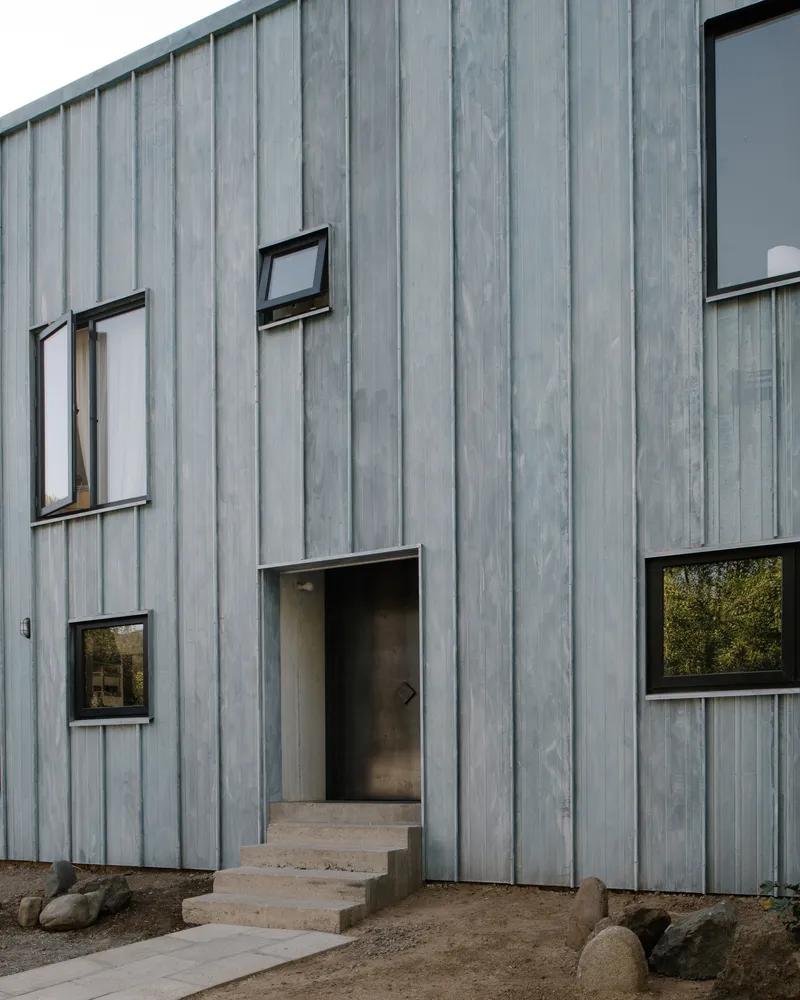
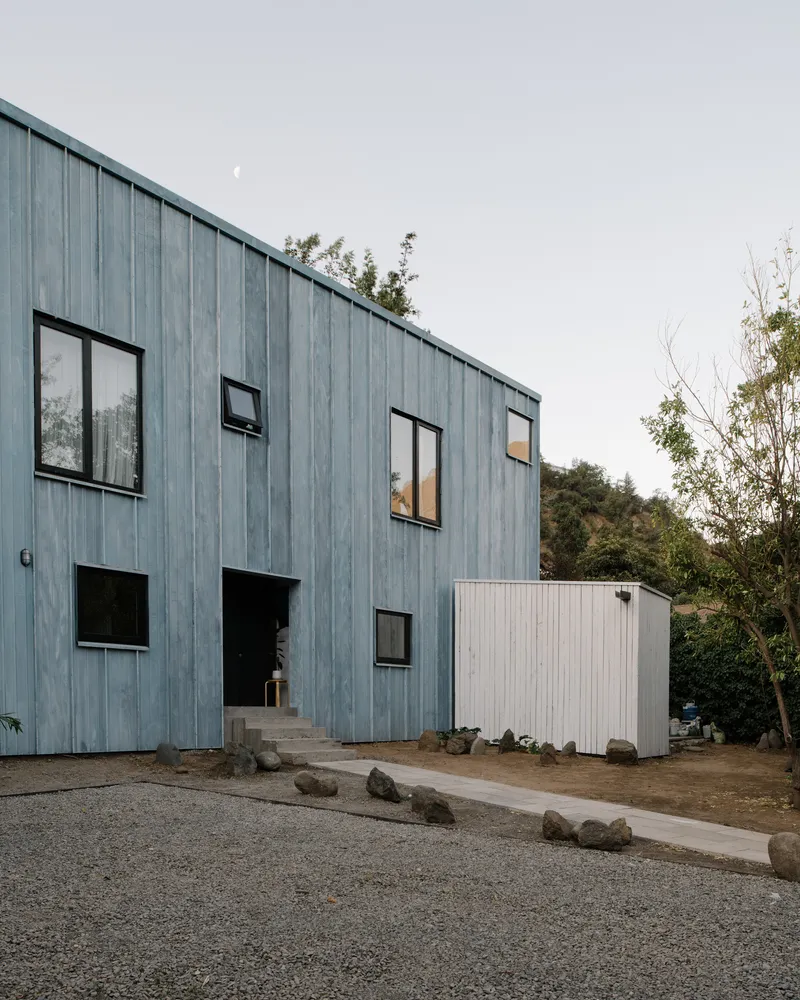
The front facade is the house's most deliberate urban gesture. Vertical timber cladding, painted white on the kiln room volume and left to weather on the main body, rises to meet the standing seam metal roof with almost no eave to soften the transition. Scattered window openings of various sizes puncture the surface without establishing a regular rhythm, each one a pragmatic response to the room behind it rather than an exercise in compositional order. Concrete pavers and entry steps anchor the base, grounding the lightweight cladding in something heavier.
The decision to raise the front facade while the roof descends steeply at the rear creates a notable asymmetry. From the street, the house has stature. From the garden side, it nearly disappears into the slope, its rear elevation reduced to a thin, semi-buried strip. That slope-mirroring roof is doing real climatic and perceptual work, not just posing.
A Roofline That Buries Itself
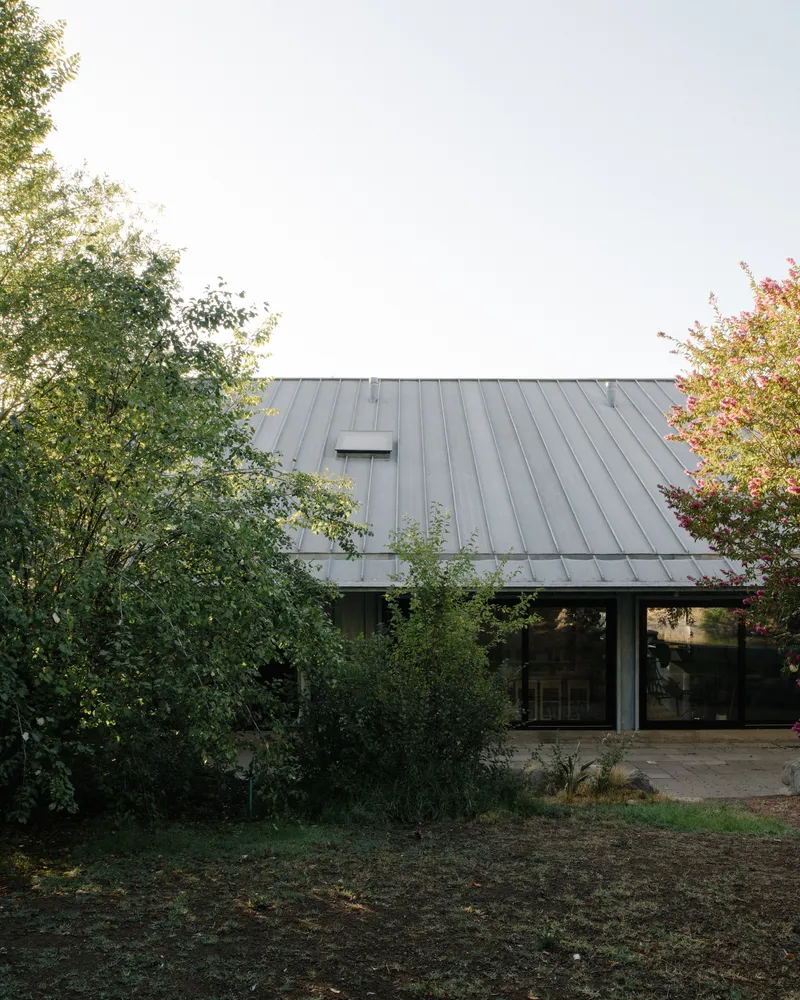
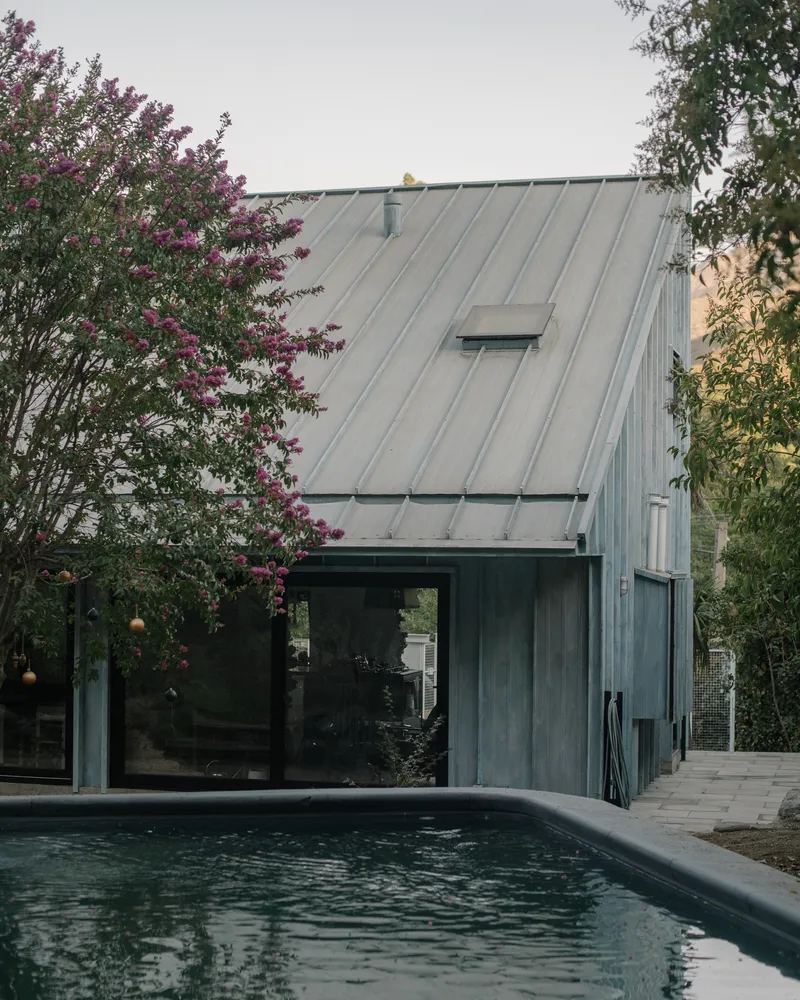

Seen from above or at a distance, the standing seam metal roof reads as the dominant formal element. It slopes from the raised street facade down toward the garden, where it meets the ground at a shallow angle. The skylight cuts and pool reflection at dusk make the roof appear to hover rather than land, a visual trick reinforced by the way surrounding trees crowd the metal surface. The junction between the blue-grey weathered cladding of the main volume and the white-painted kiln room addition is handled cleanly: two distinct masses touching at a shared edge, differentiated by color but unified by material logic.
The Double-Height Living Space
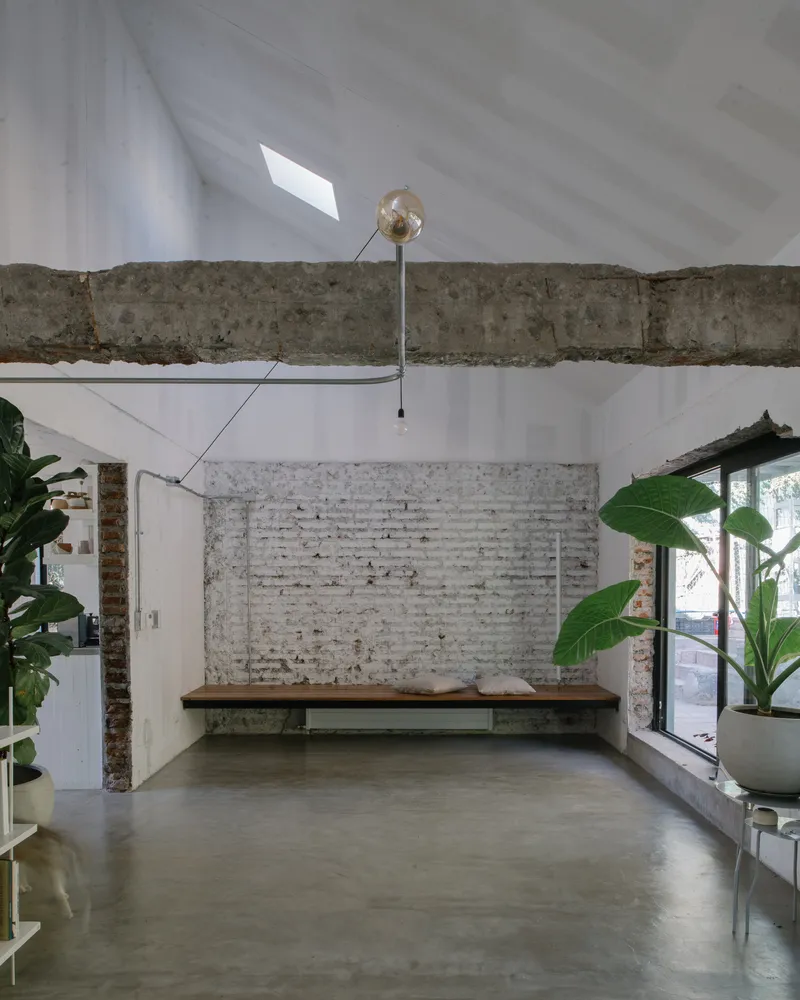
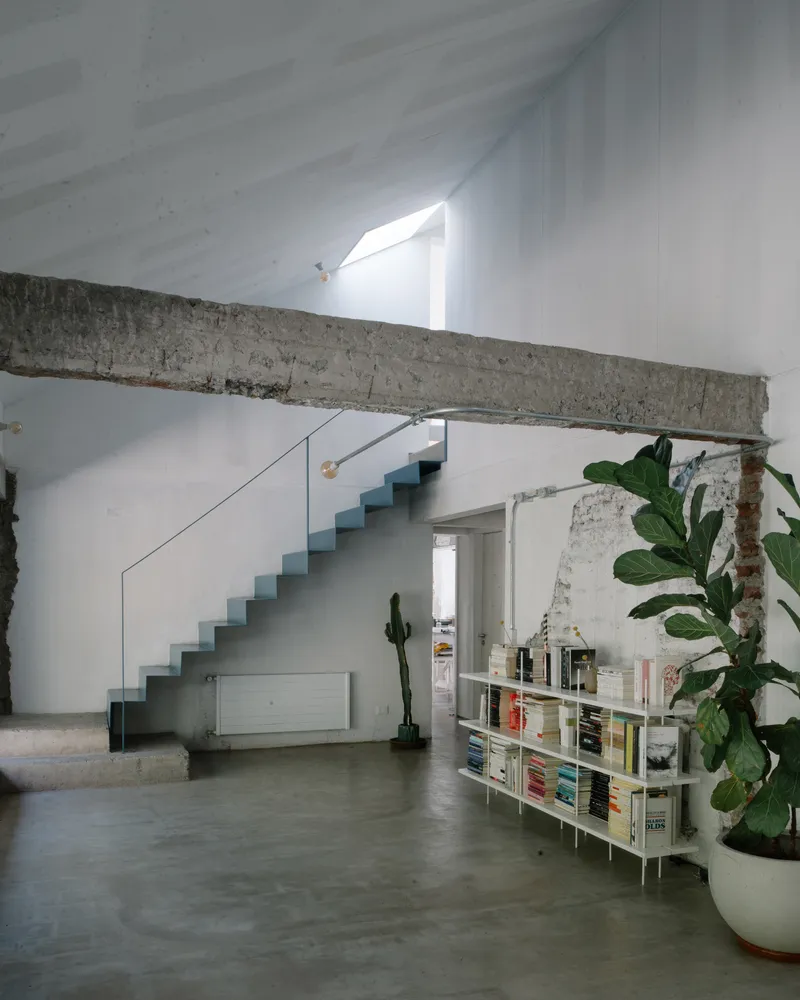
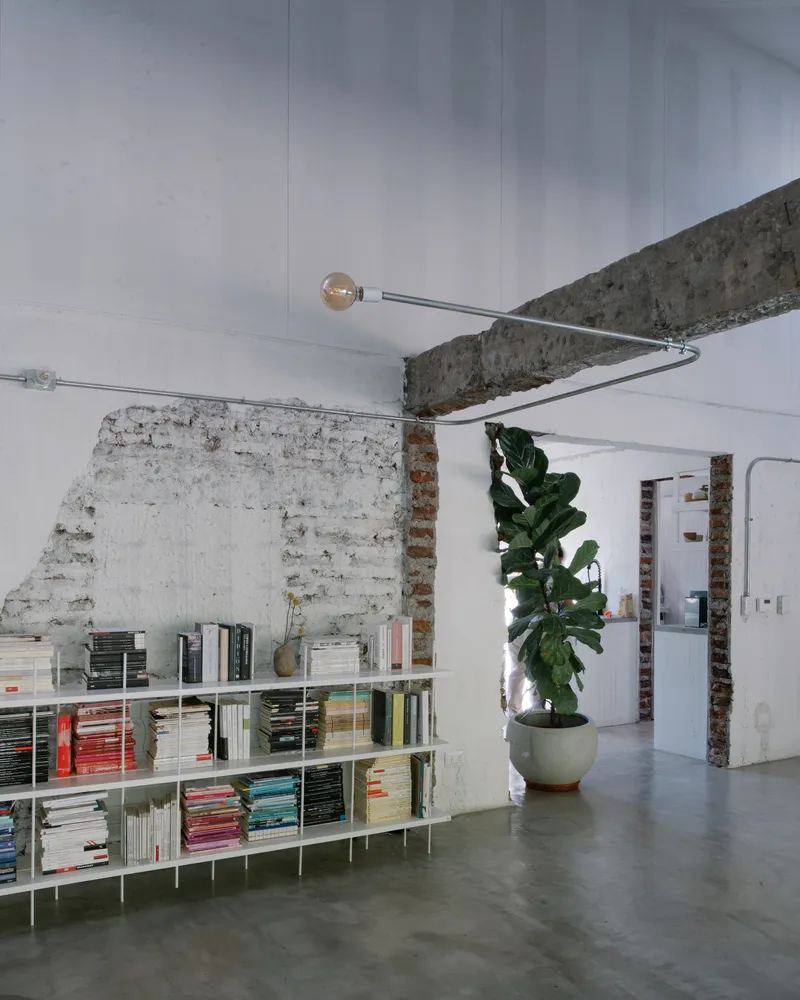
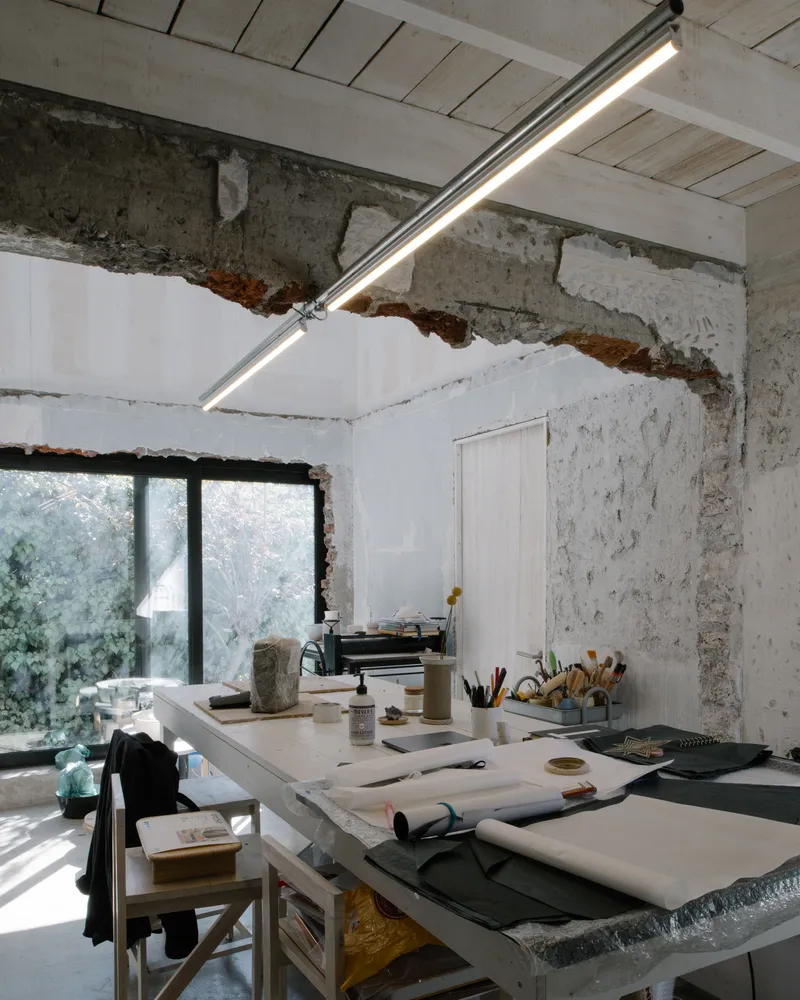
The living and dining room occupies the double-height core of the house, oriented toward the interior garden. A massive exposed concrete beam runs across the space at mezzanine level, simultaneously structural and archaeological: it is one of the reinforced concrete elements tying together the various construction systems inherited from previous versions of the house. The whitewashed brick walls retain their original thickness, visible where new openings have been cut, exposing the depth of the masonry in a way that registers as both rough and deliberate.
A blue metal staircase rises through this volume, connecting the ground floor to the two children's bedrooms and their shared central studio above. The slanted skylight above the stair floods the section with light from a narrow slot, making the stairwell the brightest zone in the house. The upper floor is lightweight construction, a conscious choice to avoid overburdening the foundations of what was originally a single-story building. Structure here is not just engineering; it is a legible record of the building's limits.
The Kitchen as Hinge
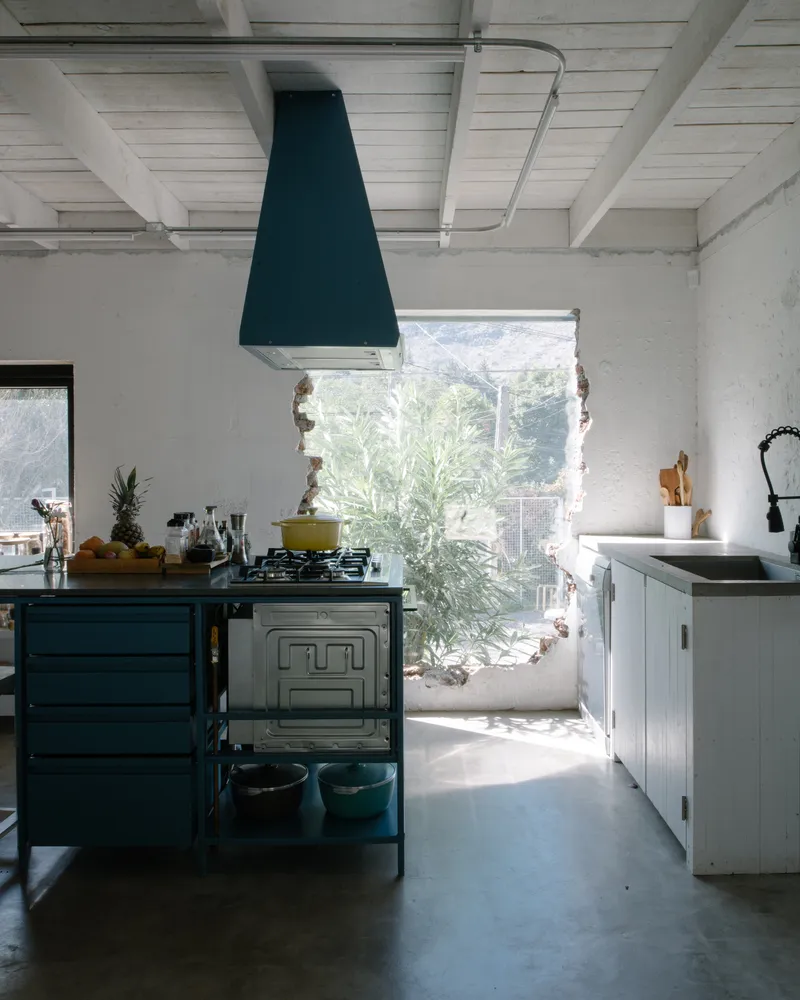

The kitchen occupies the half of the ground floor facing the street, paired with the owner's ceramics workshop. A wide window opening frames the view out, while inside, a blue island and matching hood provide the room's only strong color against otherwise white cabinetry and raw concrete ceilings. An exposed brick column and skylights overhead connect the kitchen to the material language of the rest of the house, refusing to let this room become a separate, polished insert.
There is a practical intelligence to placing the workshop and kitchen on the same side: both are working rooms with similar needs for ventilation, durable surfaces, and direct access. The ceramics kiln room, an entirely new addition projecting from the main facade, extends this service zone outward, giving it its own volume and identity.
The Ceramics Workshop
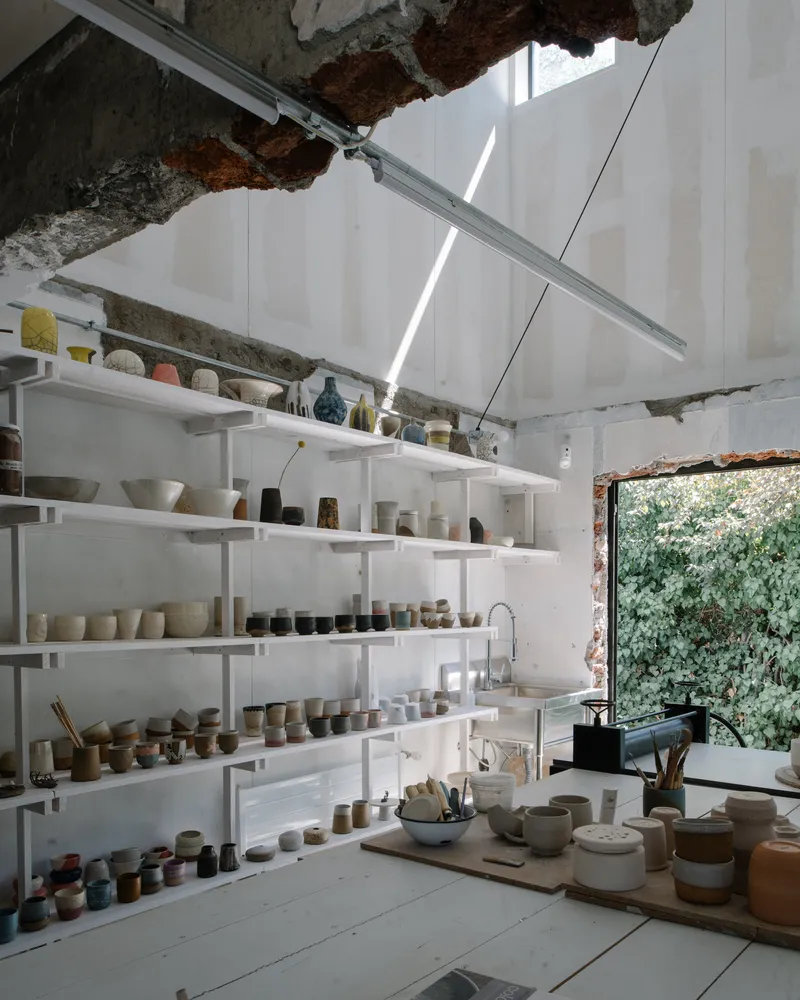
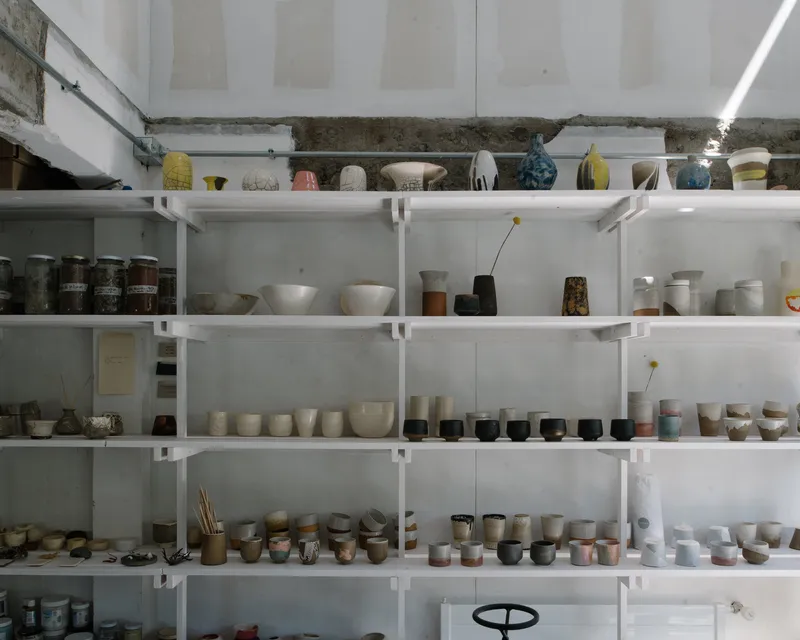
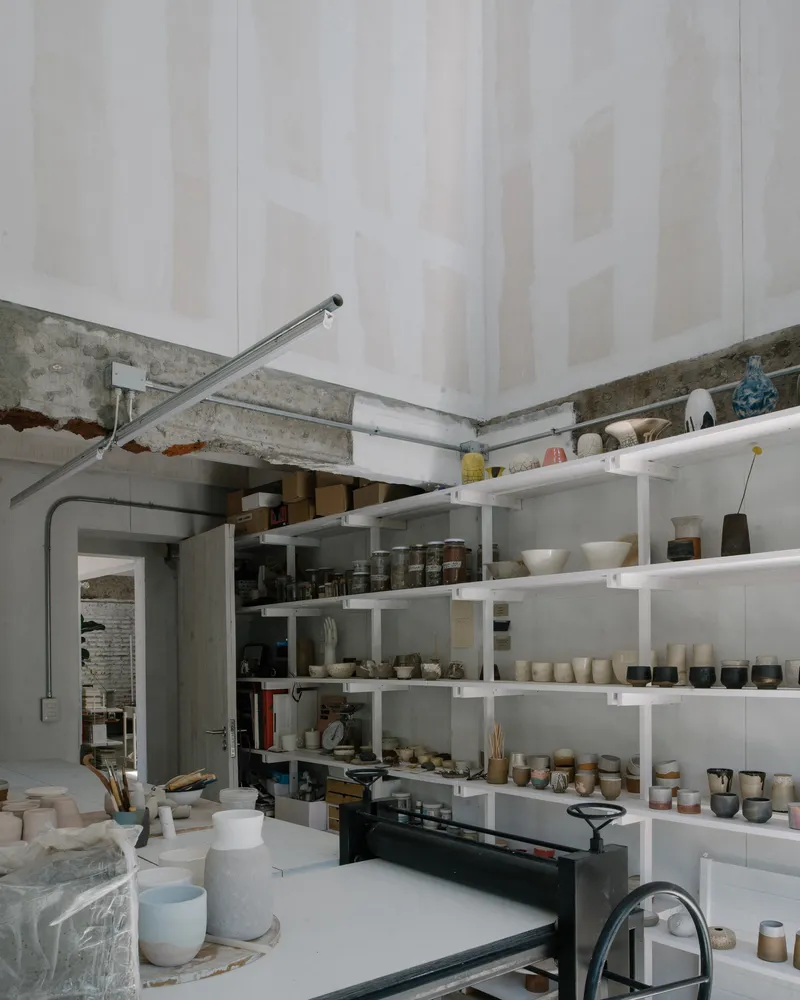
The workshop is arguably the most characterful room in the house. White metal shelving lines the walls, loaded with ceramic vessels in various states of completion. The ceiling is draped fabric over a skylit structure, diffusing light evenly across the worktable. Exposed brick openings and raw concrete beams frame the space with a roughness that suits its function: this is a room for making, not displaying. The kiln sits in its own timber-clad annex out front, keeping the heat and fumes separate from the rest of the living space.
What lifts the workshop above mere utility is the way it participates in the house's larger narrative of accumulation. The brick, the concrete, the white paint: every surface carries evidence of a previous construction campaign. The shelves of pots become part of that layering, objects in progress arranged against walls that are themselves in progress. The room makes the house's concept literal.
Garden Side at Dusk

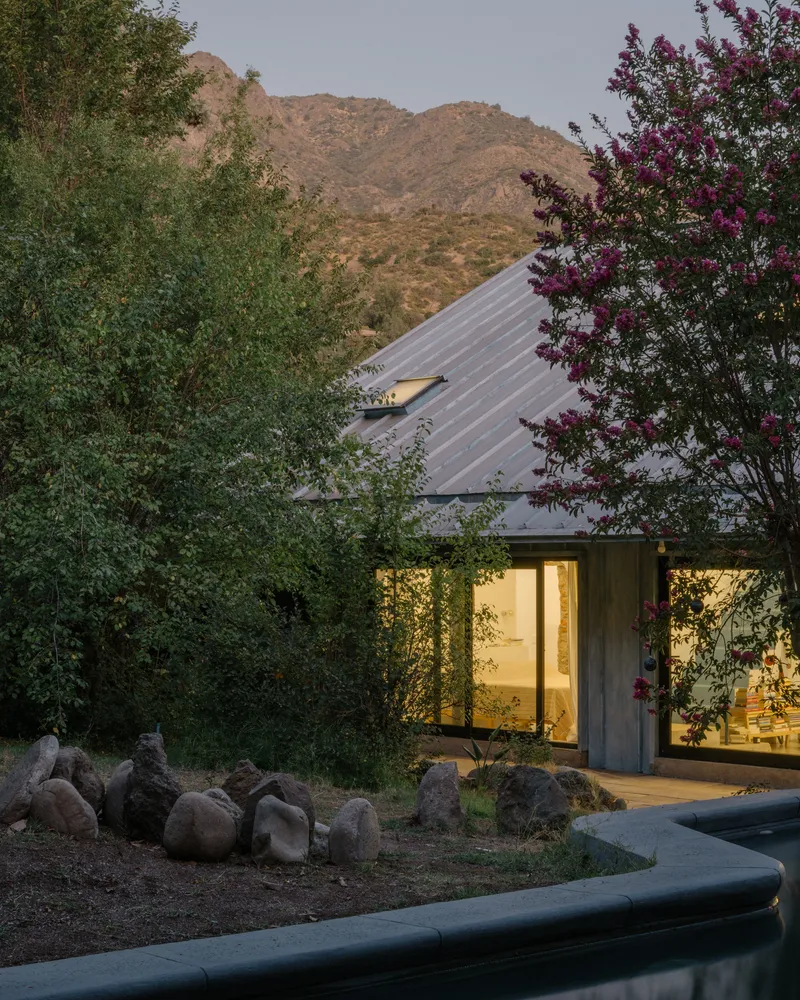
The garden elevation is the house's quiet side: a gabled metal roof with fully glazed walls framing a tree, its reflection caught in a dark pool. At dusk, the interior glows through the glass, collapsing the boundary between garden and living room. The illuminated studio entrance on the opposite end of the building, framed by corrugated metal and flowering trees, reads as a second lantern against the hillside. These two lit volumes, the domestic and the productive, bookend the house and define its double life.
Plans and Drawings


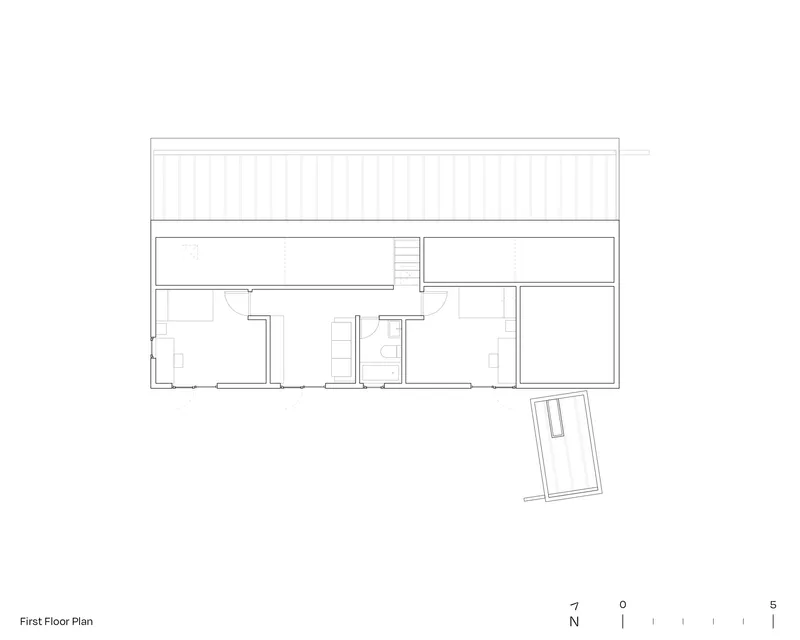
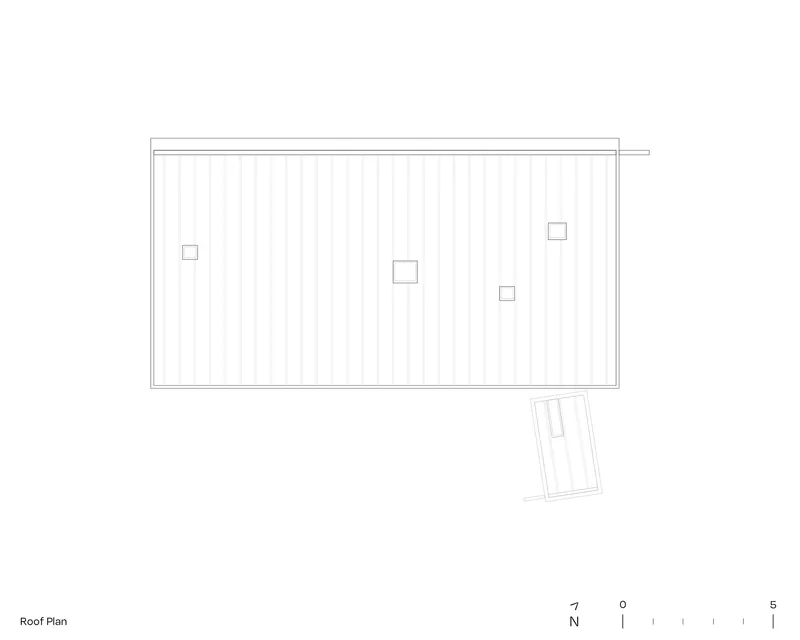


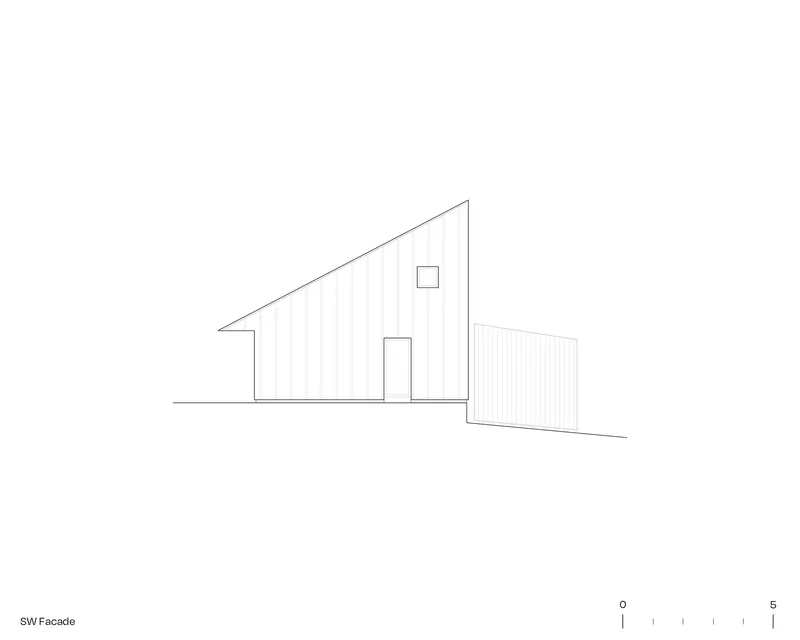
The site plan reveals the plot's generosity: the 174 square meter footprint sits within 1,850 square meters of land, with pool, deck, and landscaped zones wrapping the building. The ground floor plan shows how the living and dining spaces open toward the garden while the kitchen and workshop face the street, with the kiln room projecting at an angle as a distinct volume. Upstairs, two bedrooms flank a shared central studio, an arrangement that treats the children's floor as a small school rather than a dormitory.
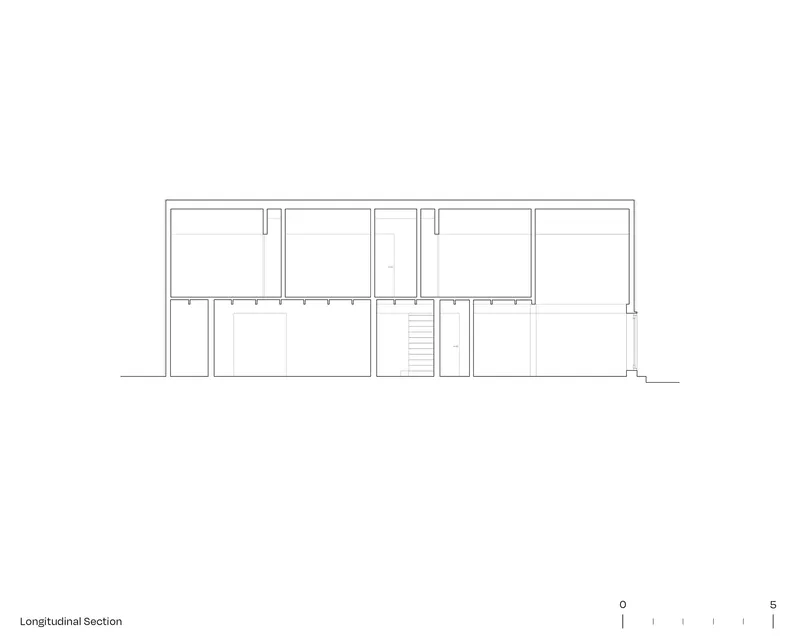
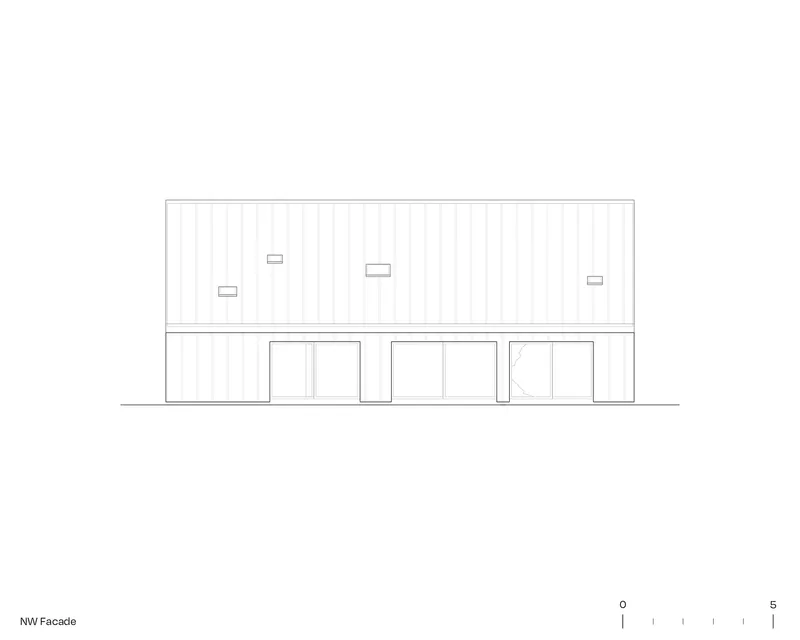
The longitudinal section is the most revealing drawing. It exposes the full drama of the double-height living space, the staircase threading through the concrete beam, and the roof's descent from street to garden. The transversal section confirms the asymmetry: a pitched roof on one side, a low adjacent volume on the other. The four elevations document the facade's restrained irregularity, with each face responding to its orientation and the program behind it rather than adhering to a single compositional rule.
Why This Project Matters
Tam House is a counterargument to the prevailing renovation logic that treats existing buildings as blank canvases to be stripped and reimagined from scratch. By keeping the archaeological layers visible inside while wrapping the exterior in a single continuous skin, Iván Bravo and Martín Rojas Ortiz produce a house that is both coherent and honestly complicated. The standing seam metal gives the street a resolved object. The interiors give the inhabitants a space that remembers its own past, with wall thicknesses and material shifts that reward attention over time.
The integration of the ceramics workshop is the project's most specific and generous move. It takes the owner's practice seriously enough to give it its own volume, its own materiality, and its own relationship to the street. Too many houses treat the lives that happen inside them as an afterthought. Tam House builds outward from a particular life, and the architecture is better for it.
Tam House by Iván Bravo Arquitectos (lead architect: Ivan Bravo) with Martín Rojas Ortiz (associate architect). Located in El Arrayán, Chile. 174 m². Completed 2024. Photography by Ivan Bravo Architects.
About the Studio
Share Your Own Work on uni.xyz
If projects like this are the kind of work you want to make, uni.xyz is a place to publish your own, find collaborators, and enter design competitions.


Popular Articles
Popular articles from the community


U.GA Architects Wraps an Oval Rooftop Pool in Curved Board-Formed Concrete on Busan's Jeollidan-gil
In Busan's Jeonpo-dong, a 454 m² mixed-use block stacks a neighborhood facility, guest rooms and an oval rooftop pool inside spiraling concrete walls.

Architekt Andreas Gruber Scatters 23 Dark Timber Chalets Across a South Tyrolean Forest Edge
In Molini di Tures, Amonti Chalets breaks a resort into a hamlet of gabled timber houses, with parking, storage and services pushed into the slope.

Cube Design Draws an Ecological Corridor Between Two Shenzhen Hills with the Nankai Building
Beside Shenzhen's container docks, the Nankai Building pairs stacked balconies with a climbing green screen to connect two hillsides across its height.

longwave studio Reorganizes a 112 m² Tainan Apartment Around the Daily Routines of a Family and Two Cats
In Tainan, Taiwan, birch plywood, rust-red furniture and a freestanding plaster wall link arrival, storage, work and family life in one apartment.

Similar Reads
You might also enjoy these articles


LAVA Architecten Gives Vocational Education a Sawtooth-Roofed Face on a Mechelen School Campus
In Mechelen, Belgium, a 2,053 m² STEM school on a 6×6 m grid turns workshops and classrooms into rooms that can be rearranged as teaching changes.

KEMA Studio Turns a Derelict Marvila Attic into a 60 m² Lighthouse Apartment Above Lisbon
In Lisbon's Marvila district, a rebuilt roof, four skylights and two plywood volumes turn an unlivable attic into a bright home facing the Tagus.

Pixel Gardens: One Repeated Module Stacked Into a Terraced Social Housing Tower for Famagusta
Salem Bader's shortlisted housing tower builds a vertical neighbourhood from one repeated module, offsetting units to carve terraces, light and air.

Bao Huynh Watercolor Atelier: A Serene Art Retreat in Hội An
Bao Huynh Watercolor Atelier in Hội An blends multifunctional art spaces, sustainable design, local materials, and family-friendly living in a serene environment.

Explore Shophouse Competitions
Discover active competitions in this discipline

Challenge to design mud housing for contemporary communities

Challenge to design luxury tourism on rails

VR headsets Storefront design competition

Designing a staircase for a client
Comments (0)
Please login or sign up to add comments
No comments yet. Be the first to comment!