
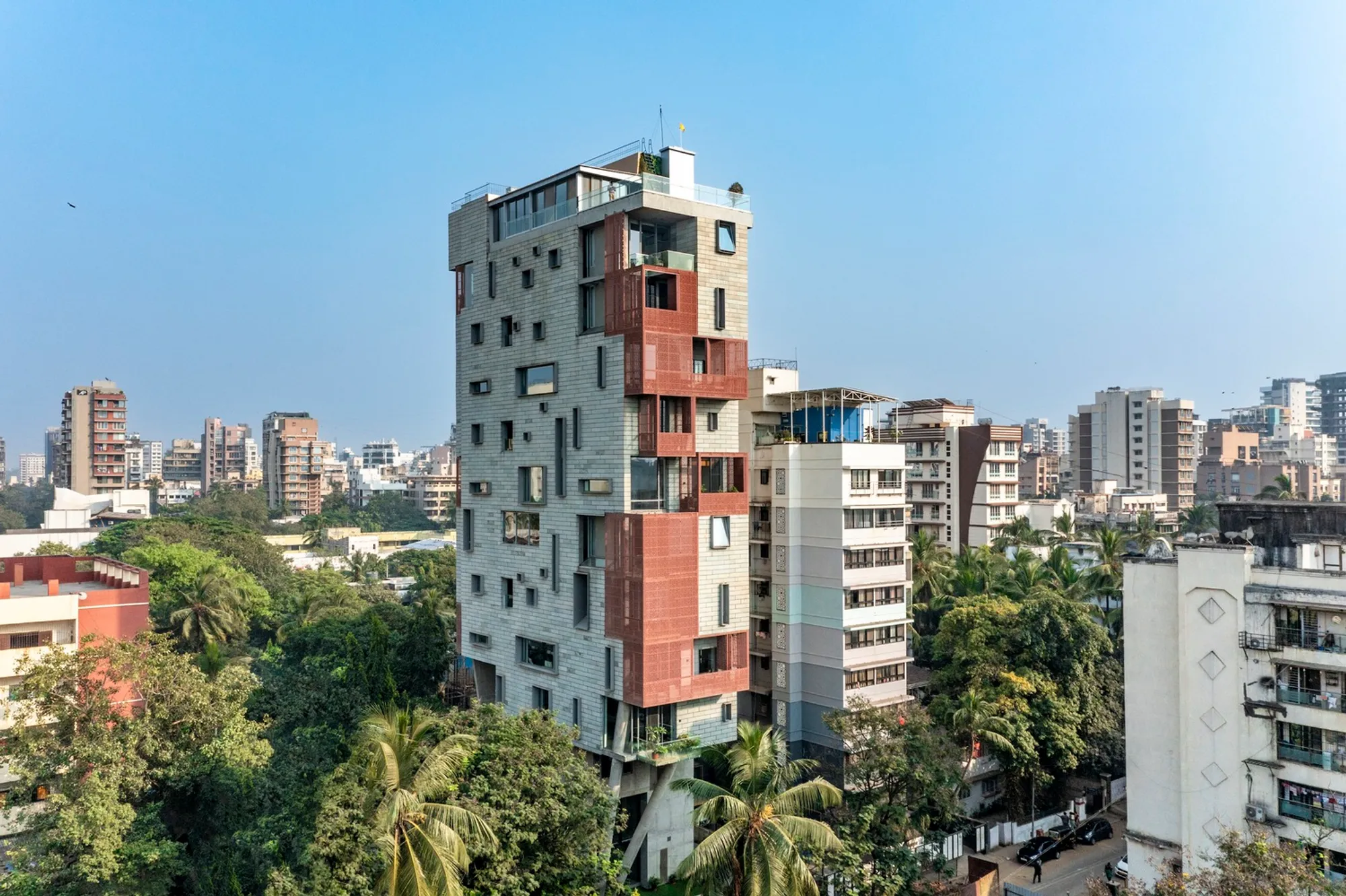
J-House by Malik Architecture: Reimagining Urban Living in Mumbai
J-House by Malik Architecture redefines urban Mumbai living with courtyards, verandahs, and jaali screens, balancing light, privacy, and climate-responsive design.


Located in the vibrant streets of Khar, Mumbai, J-House by Malik Architecture (2024) is a 642 m² residential project that challenges the typical urban high-rise typology while fostering a deep connection with its surroundings. Photographed by Bharath Ramamrutham, this project reflects a sensitive response to densification, climate, and family-oriented living.
Context and Urban Challenges
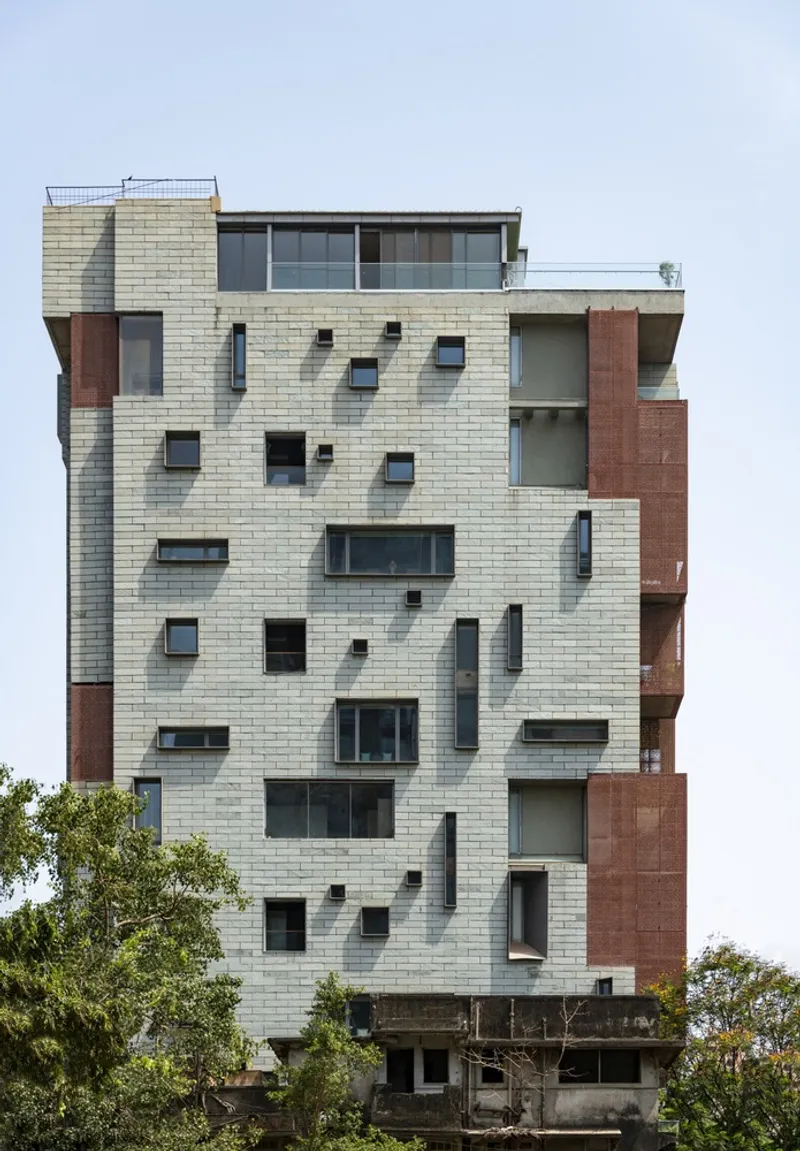
Historically, Khar’s streets were lined with low-rise homes, tucked behind trees and shallow gardens. Over time, urban densification and increasing demand for floor space have transformed the neighborhood into rows of towering structures, often compromising light, air, and street-level interaction. Decorative multi-storey parking blocks further disconnect buildings from the urban fabric. Situated to the east of the Arabian Sea, the site faces harsh western sun and rain, necessitating a design that mediates climate while ensuring privacy.
Design Philosophy
J-House seeks to restore a meaningful dialogue with the street while addressing urban density and family living requirements. Key design parameters include:
- Street engagement: Re-establishing a human-scale relationship by keeping residential volumes elevated and set back from the street.
- Climate mediation: Creating semi-covered, sun-protected spaces to allow year-round usability without constant reliance on internal shading.
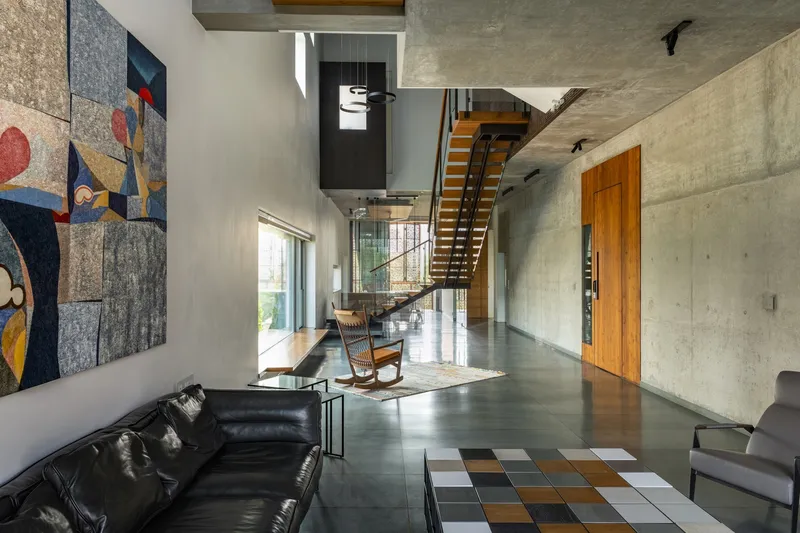
- Family cohesion: Connecting the building’s core to counteract the separation effects of vertical high-rise living, translating into a thoughtful public/private spatial hierarchy for a joint family.
Vernacular Inspirations: Courtyard, Verandah, Jaali
Malik Architecture drew inspiration from indigenous Indian design strategies:
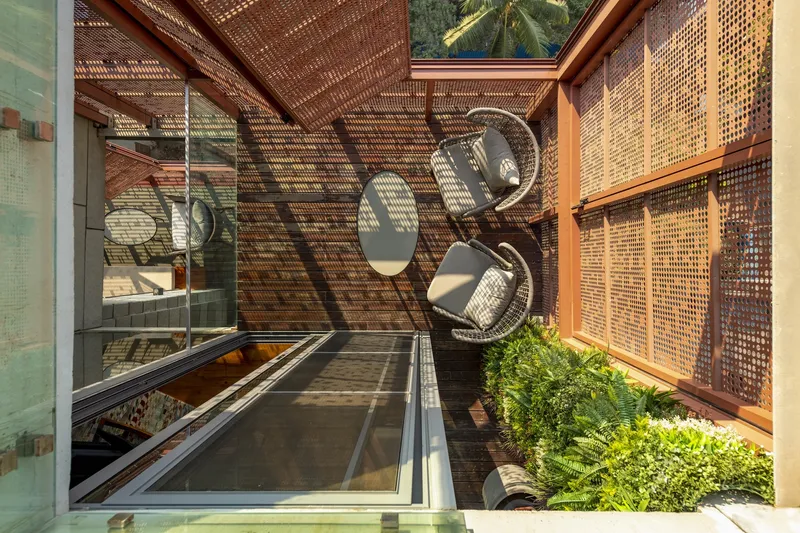
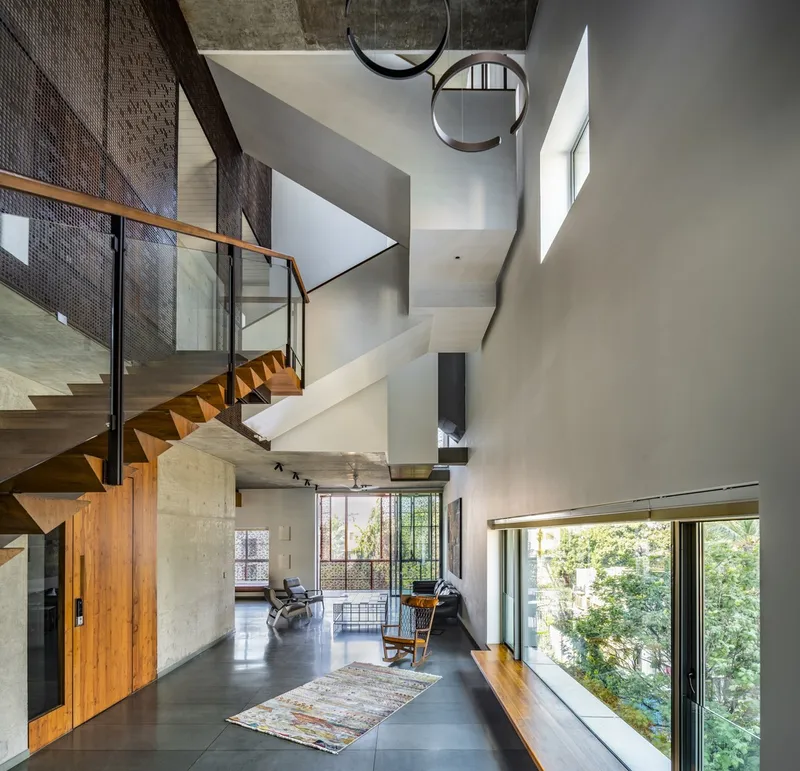
- Courtyards: Central north-facing courtyards anchor individual “bungalows,” allowing natural light and ventilation, while promoting thermal comfort.
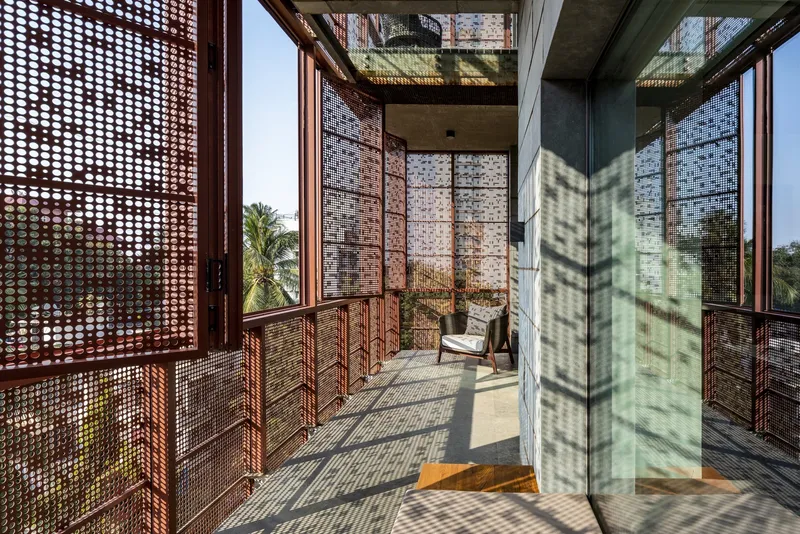
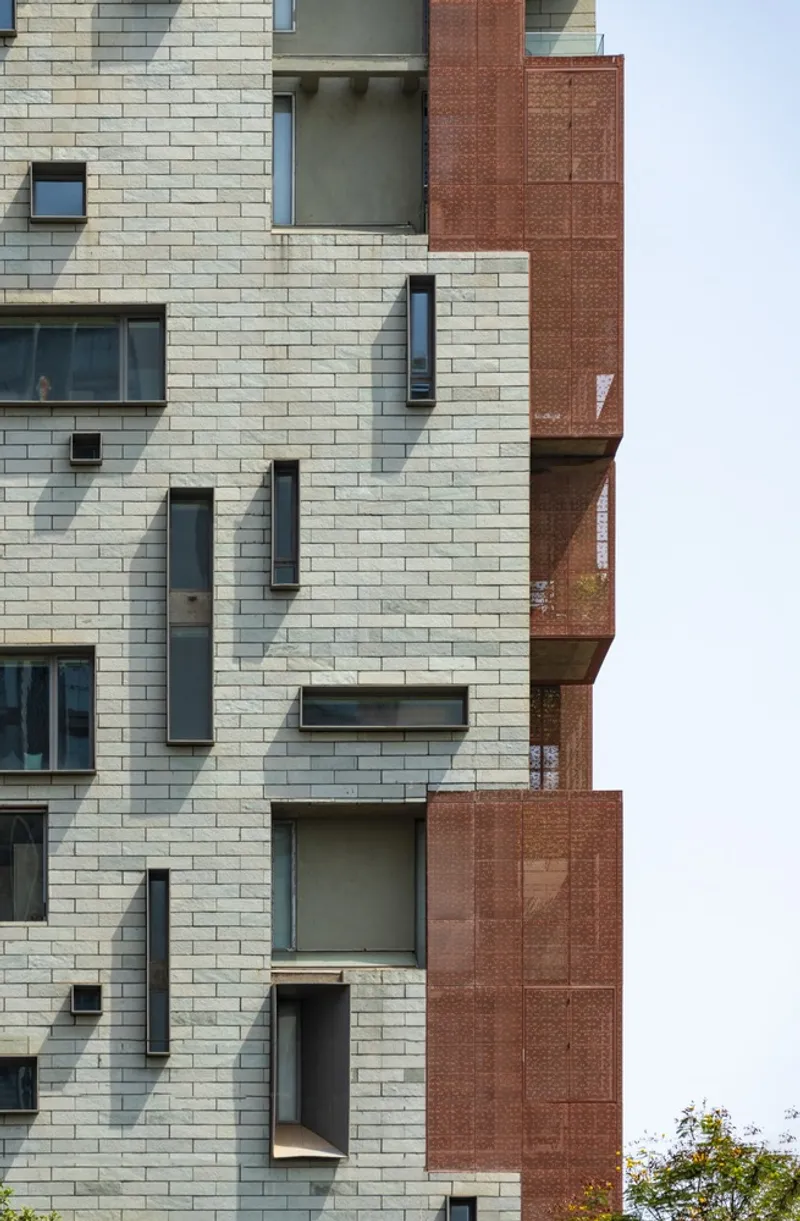
- Verandahs: Deep, shaded verandahs along the western edge mediate climate exposure and provide continuous views of the sea.
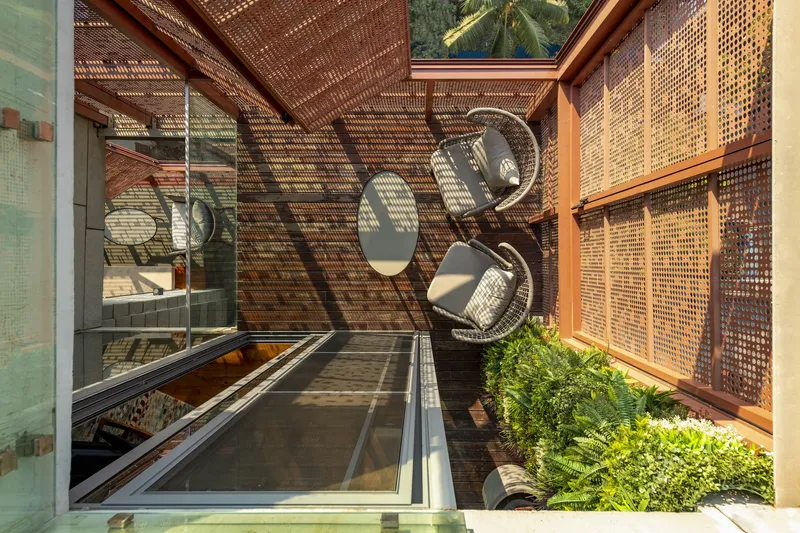
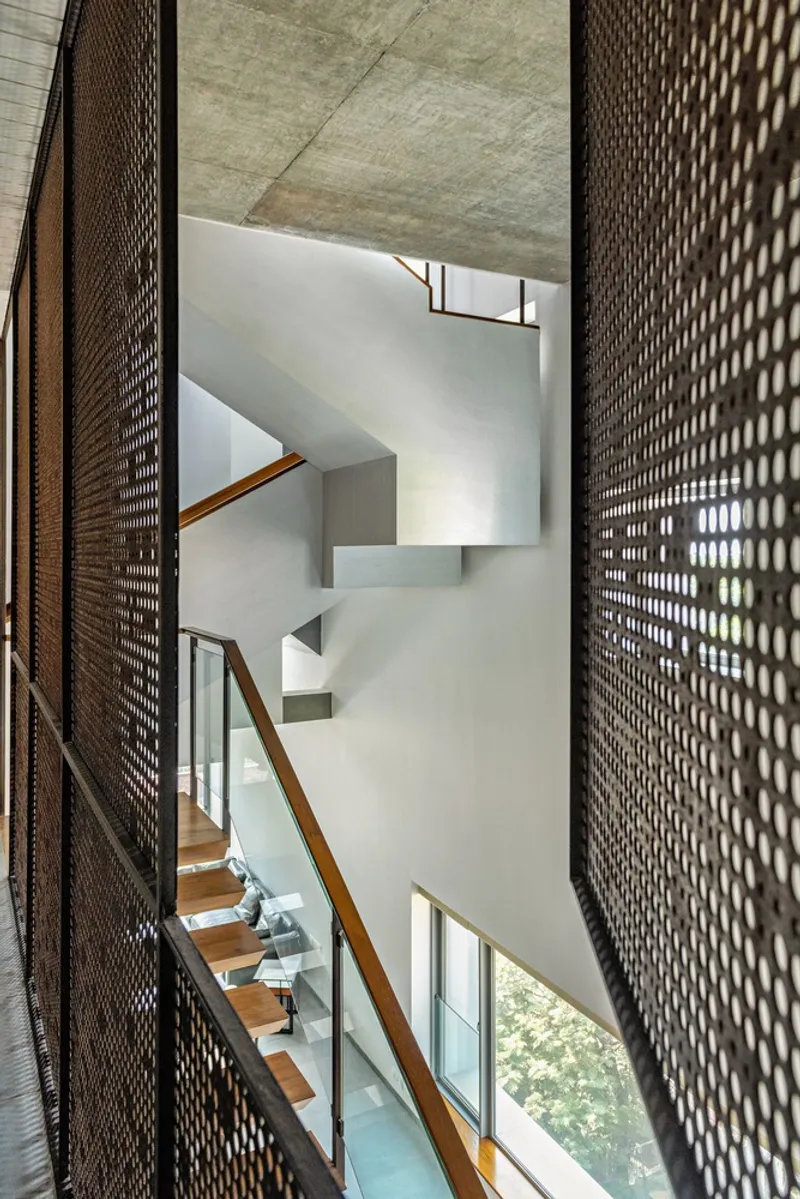
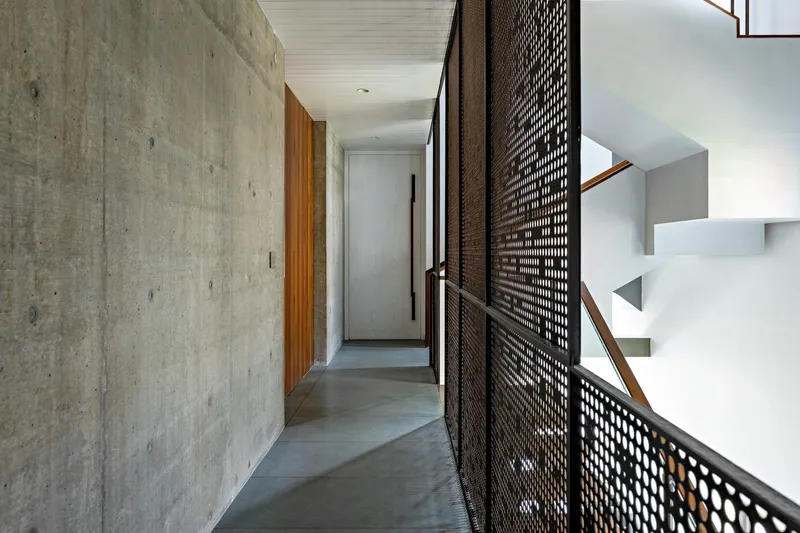
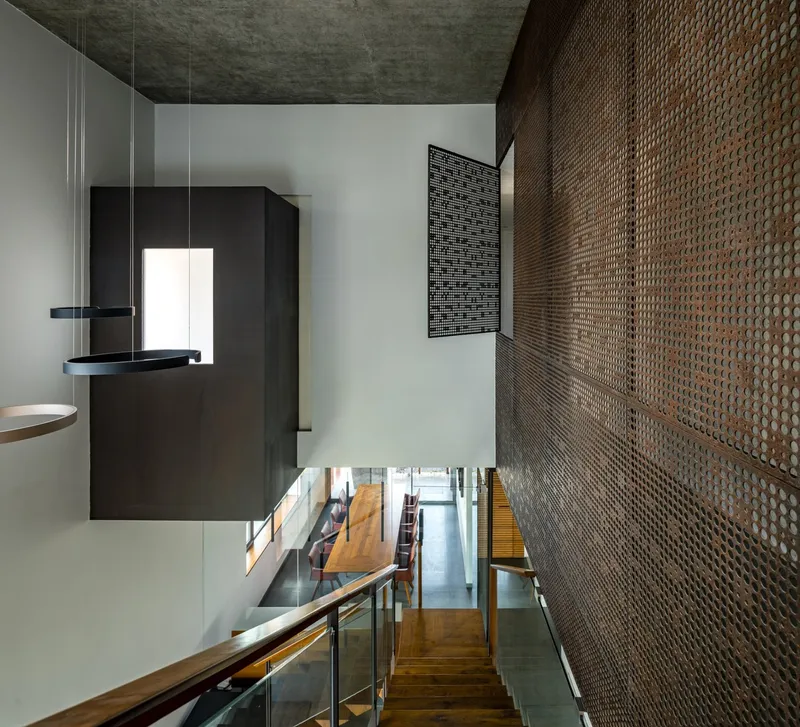
- Jaali / Screens: Operable and fixed screens create privacy, filter sunlight, and enable year-round usability of semi-open spaces.
Spatial Planning and Innovation
The design integrates basement parking, leaving the first 11 meters of street frontage free of residential spaces. This creates a garden buffer shaded by the cantilevered residential volumes above. Street-level design emphasizes water features, greenery, and low-rise set-back elements, softening the interface between the urban context and private living.
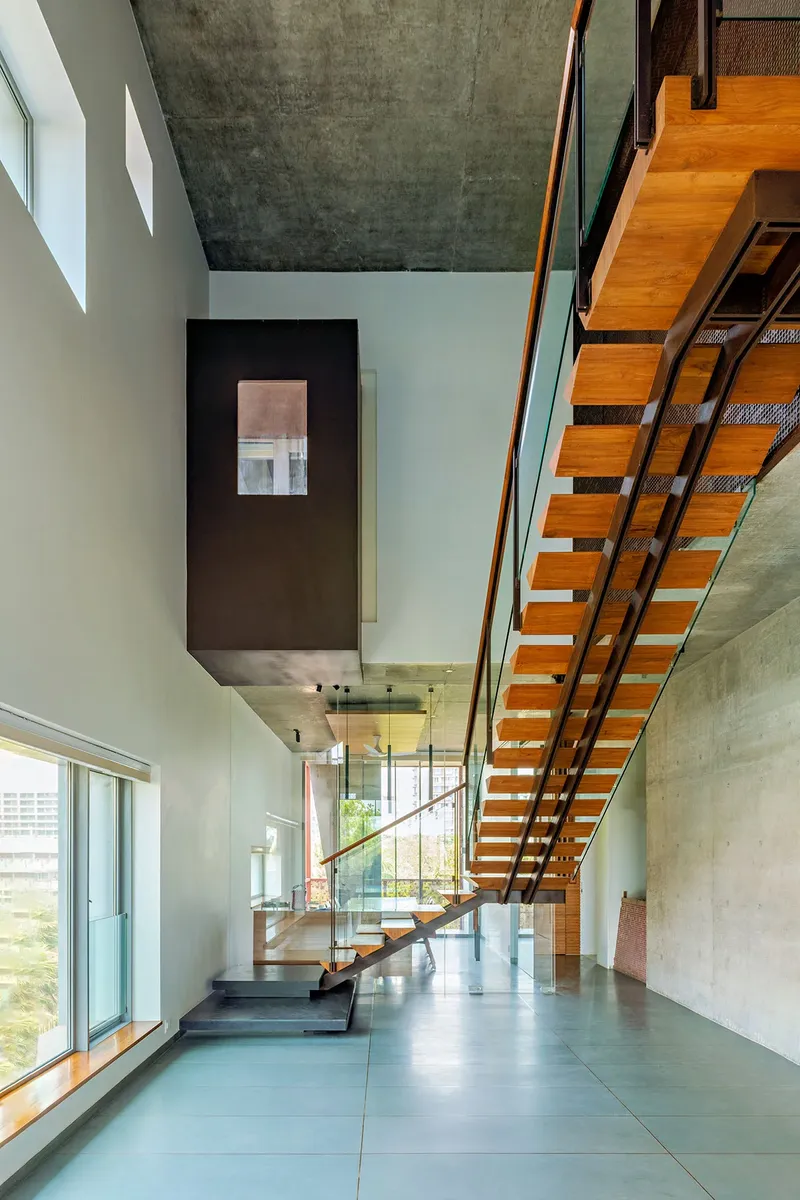
Each bungalow is organized around its courtyard, with public and private zones thoughtfully positioned to capitalize on views through the urban funnels created by neighboring structures. The courtyards extend into private interiors through deep voids and skylights, allowing a seamless indoor-outdoor living experience. The house fosters a sense of living under the sky, enhancing both visual and spatial experience.
On the western façade, verandahs and screens are carefully calibrated for privacy, shading, and climate resilience, allowing occupants to enjoy outdoor living despite Mumbai’s intense sun and monsoon rains. Each bungalow adapts verandah proportions to its programmatic needs, creating a dynamic interplay between interior and exterior spaces.
By reinterpreting traditional architectural devices—courtyards, verandahs, and jaalis—J-House presents a sophisticated, climate-responsive solution to the challenges of contemporary urban living in Mumbai. The project illustrates that high-density development can coexist with human-scale interaction, family-oriented spaces, and environmental sensitivity.
Project Details:
- Location: Khar, Mumbai, India
- Architects: Malik Architecture
- Lead Architect: Jay Jani
- Area: 642 m²
- Year: 2024
- Photography: Bharath Ramamrutham
Contractors:
- Electrical: Imperial Electricals
- Engineering: SEMAC, Global Engg. Services, Mr. Vivek Garg
- Facade: Destal India
- HVAC: Clinton
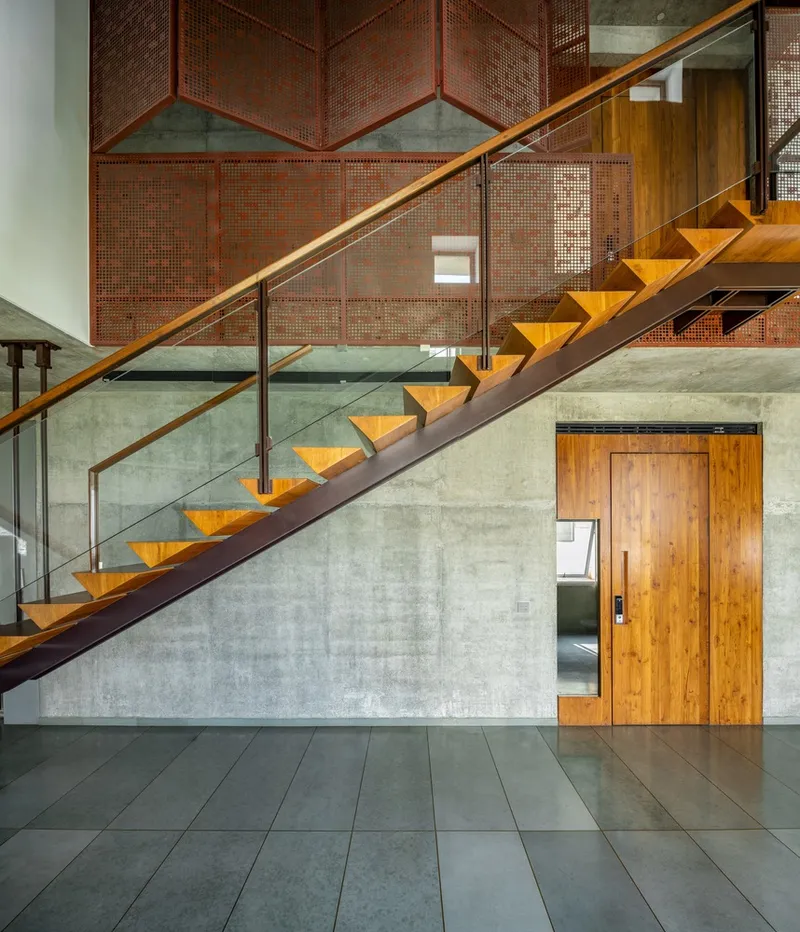
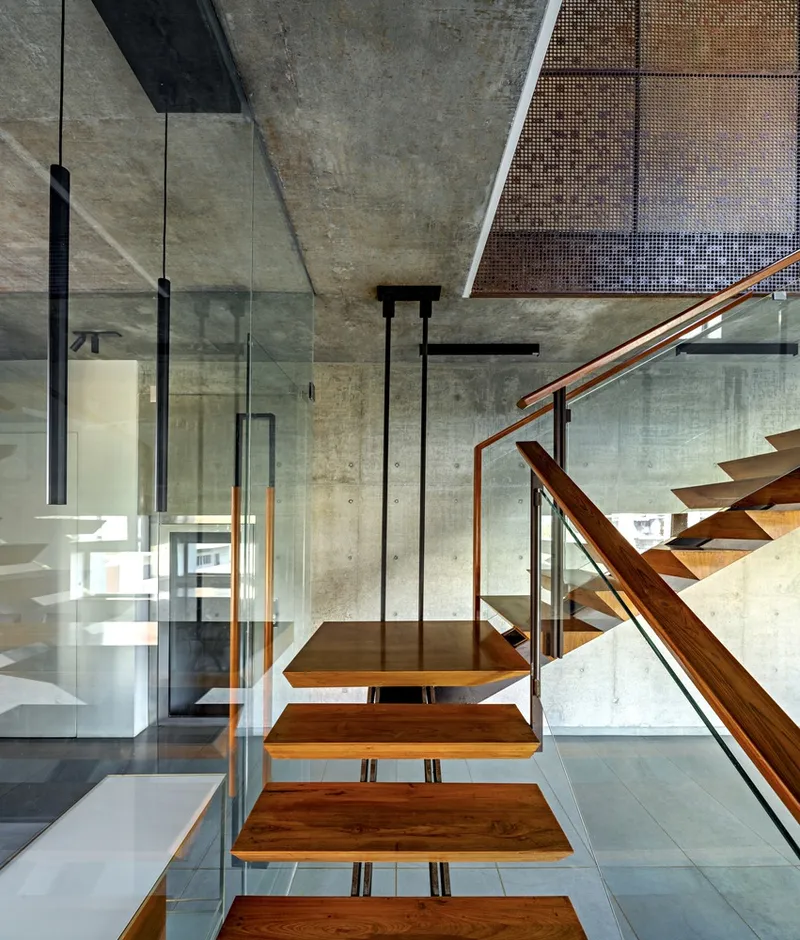
All photographs are works of Bharath Ramamrutham



Popular Articles
Popular articles from the community


Lunar Spiral: Space Architecture Shaped by the Mathematics of the Universe
Lunar Spiral reimagines space architecture through Fibonacci geometry, lunar regolith, levitating habitats, and self-sustaining Moon living.

The Musturak Paradise: Senior Living Architecture for a Connected Future in Temara, Morocco
The Musturak Paradise reimagines senior living architecture in Temara via private homes, social spaces, culture, community, and shared care.

Co-life: Sustainable Architecture for Age-Friendly Community Living
Co-life reimagines sustainable architecture for seniors through courtyards, rammed earth, shared gardens, and spaces designed for belonging.

Play: Fragments of Their World
Familiar architecture becomes modular playground design, creating safe spaces where displaced children can learn, connect, imagine and play.


Similar Reads
You might also enjoy these articles


Hodi-Mandai Geram
Project Function: Preservation and revitalization of the Intangible heritage and socio-spatial identity of the Hodi by Housing, Cultural Memory Center, Sacred Grove, landscape, local tourism economy


Olio Towers: A Mid-Rise for Performers That Fuses Housing, Rehearsal, and Stage
Located blocks from Houston's Theater District, this modular tower stacks living units around a central performance atrium.

Oasis: Modular Green Housing Carved into Dhaka's Urban Fabric
A shortlisted Plugin Housing entry reclaims unauthorized settlements in Dhaka with stepped concrete volumes, green roofs, and ventilation-driven design.

Black Hole: A Floating Megastructure for the Post-Physical Era
Emiliano Mazzarotto envisions a spherical, self-scaling arena where e-sports, digital hotels, and holographic stadiums replace traditional public space.

Explore Residential Design Competitions
Discover active competitions in this discipline



Challenge to reimagine the Iron Throne


Photograph architecture without architects


Illustrate the lost glory of Angkor Wat - Render Challenge


Design challenge to reuse E-waste
Comments (0)
Please login or sign up to add comments
No comments yet. Be the first to comment!