

Jazz York
Improvising modernity

Founded by African-Americans in the late 1800s, jazz quickly spread out of its hometown in New Orleans to encapsulate all of western culture. Within years the genre was a staple in music, branching from rhythmic blues and folk. It became so popular during the 1920s and 1930s that it started infecting other genres of music with its grooves and playfulness. While racial oppression was still visible in the evolving days of African-American folk music, jazz being thrown into pop culture did wonders for removing racial segregation, and barriers between races. While it took some time to get to the equality the 21st century brings, black music and art were at the forefront of this subconscious revolution. The word ‘jazz’ is most commonly related to ‘jasm’, a slang term used in the 1800s to describe something energetic. ‘Jazz’ was first used in an article in a 1912’s issue of the Los Angeles Times where a minor league baseball player described a pitch as a "jazz ball" "because it wobbles and you simply can't do anything with it". This word quickly associated itself with the music genre because of its ‘wobbles’ and perfect imperfections.
Jazz York is designed using these founding principles of jazz music; improvisation, and change. Without either of these, jazz becomes conservative, and can it really be called jazz if it's conservative. While only trying to complement the performance space, the form is built around how the interior wants to look; pointing the viewer's eyes towards the stage and claiming the balance between improvisation and cohesion. It is constructed with bricks in response to 1900s Louisianan and New York Architecture to symbolize where the genre of music originated from. The brick creates an interior scene that breeds a comforting yet energetic and exquisite surroundings for socializing and listening to live music. This took many many tries to get right, but at the end of the day, design is never finished, just like jazz is never done evolving. Call-and-response is a typical trend found in jazz music where one portion of the music is written in response to another, creating a conversation of instruments. This technique is shown in the winding copper-stained music bars that flow through the structure in response to the forms the interior creates.
The path is winding, never perfect, just like how the genre is created. While the performance space upstairs is defined by those inside, the main level creates a transition from the streets of the Bronx, into the world of jazz, throwing incomers into the history and impact the genre has had on our culture. It is incredibly hard to define the genre of music as it is truly a part of everything including progressive rock, metal, classical, hip-hop, and more. There is no clear line drawn where something can be considered jazz, just how the genre intended itself to be. A vinyl store is also present where local bands and artists can share their work with the public during shows. A winding vinyl rack captures the attention of onlookers who notice the classic jazz records that started it all flow into the modern jazz records pushing the boundaries of current music. Between these is the grey, the area that is jazz, but isn't jazz, the area that helped shape contemporary music.
The classic-inspired form of Jazz York is completed with a modern touch as well, showing that music isn't done evolving, nor will it ever be. The spontaneity of jazz inspired the windows and entryway, cohesively bringing the interior and the street together, allowing pedestrians to be unafraid to take just one little peek. The mood can be changed with a flick of a button, dropping down curtains to make the interior an intimate experience, cut off from the outside world, and fully immersed in the world of jazz. Through time, Jazz York will be a haven for the jazz community to listen and be immersed in their passion as well as artists being able to share their work with the world.
Life-changing jazz artist


Popular Articles
Popular articles from the community


Temporary Home for Dogs: A Reversed Zoo Rethinks Animal Shelter Architecture
In Bucharest, a sinuous corridor and freed landscape flip the logic of containment, designing a shelter that works to make itself unnecessary.

Extended Shell: Retrofitting Kolkata's Balconies as Living Urban Thresholds
A modular retrofit system recovers the social and environmental intelligence of Kolkata's historic verandas for contemporary Park Street residents.
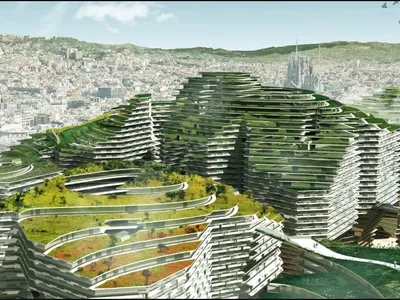
Manzana Morphosis: Stretching Barcelona's Grid into a Living Landscape for 2050
A radical reworking of the Eixample manzana turns density into a tool for generous public space, vertical ecology, and environmental performance.

Singing Woman: Contemporary Architecture Inspired by Estonia’s Voice and the Sea
Singing Woman turns Estonia’s song culture into flowing opera house architecture, blending public life, landscape, sea, and national memory.

Similar Reads
You might also enjoy these articles

Day and Night Park: A Time-Based Urban Newsstand in Beijing
A temporary urban newsstand in Beijing blending travel, light, and reading through poetic colors, compact form, and community-focused design.

Modernist Patio Renovation in El Masnou, Barcelona by Oliver Segura Arquitectura + Cebrià Arquitectura
Modernist patio renovation blending tradition and innovation with a movable pool, leveled floors, and Catalan materials in El Masnou.

Alto Residencial Coop: Cooperative Housing Development in Santiago de Compostela by Carbajo Barrios Arquitectos
A linear cooperative housing complex blending white volumes and perforated metal façades, enhancing community living, natural light, privacy, and urban integration.

Vil Genis School by BPA ARCHITECTURE – Massy, France
Vil Genis School in Massy, France, features sustainable design, south-facing classrooms, community integration, accessible spaces, and modern educational architecture.
Explore Modern Architecture Competitions
Discover active competitions in this discipline


Challenge to reimagine the Iron Throne

Photograph architecture without architects

Illustrate the lost glory of Angkor Wat - Render Challenge

Bring back Drive In's
Comments (0)
Please login or sign up to add comments
No comments yet. Be the first to comment!