

Jean Macé School Renovation: A Sustainable and Inclusive Transformation by SOL Architecture
Jean Macé School renovation by SOL Architecture enhances sustainability, energy efficiency, and user-centered design, creating a dynamic, eco-friendly learning environment.


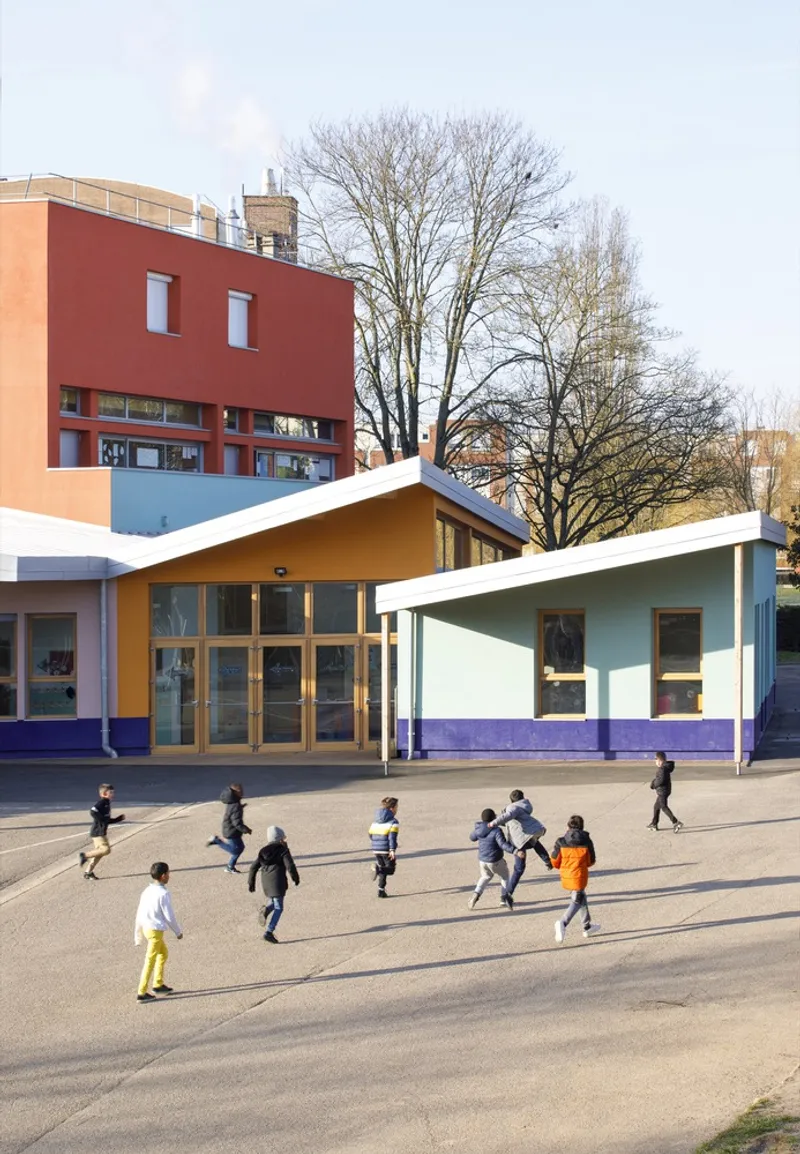
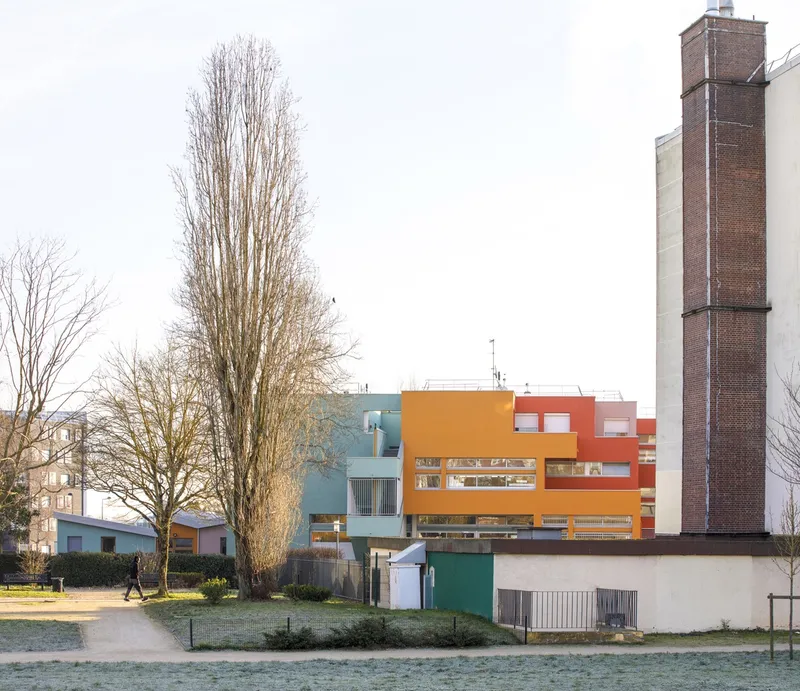
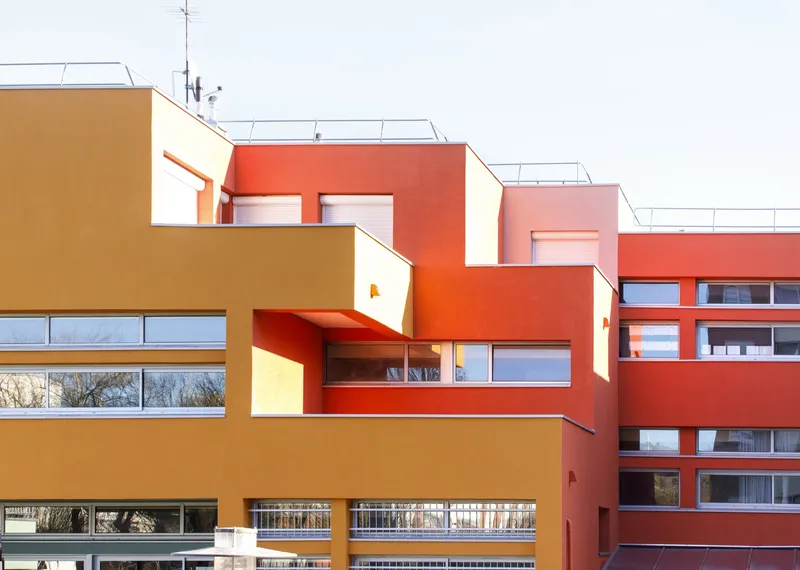
The Jean Macé School in Trappes, France, stands as a prime example of sustainable school architecture and urban renewal. Designed by SOL Architecture and Urbanism, this project revitalizes a 1960s educational complex to better serve its growing community. With a focus on energy efficiency, biophilic design, and user-centered architecture, the renovation enhances both functionality and aesthetic appeal.
A Community-Centered Approach to School Design
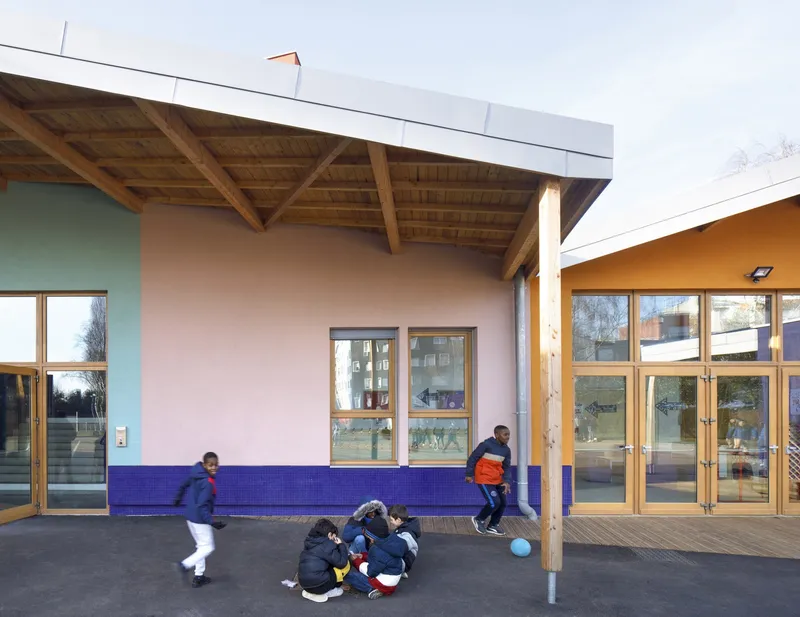
Trappes, a suburban city near Paris, faces socio-economic challenges and ongoing urban transformation. To accommodate its increasing population, the city initiated an extensive upgrade of public facilities, including educational infrastructure. The Jean Macé School renovation included:
- Thermal rehabilitation of facades for enhanced energy efficiency
- Reorganization of spatial flow to improve usability
- New extensions for additional classrooms and a leisure center
This project prioritizes safety, sustainability, and sensory engagement, creating a dynamic learning environment for students.
Designing for Learning: Space as the Third Teacher
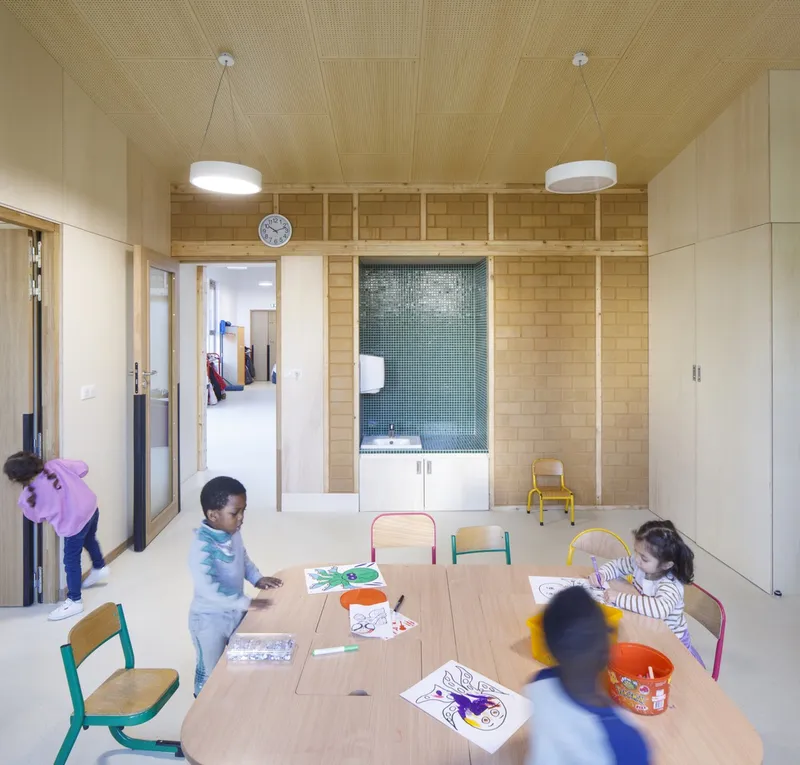
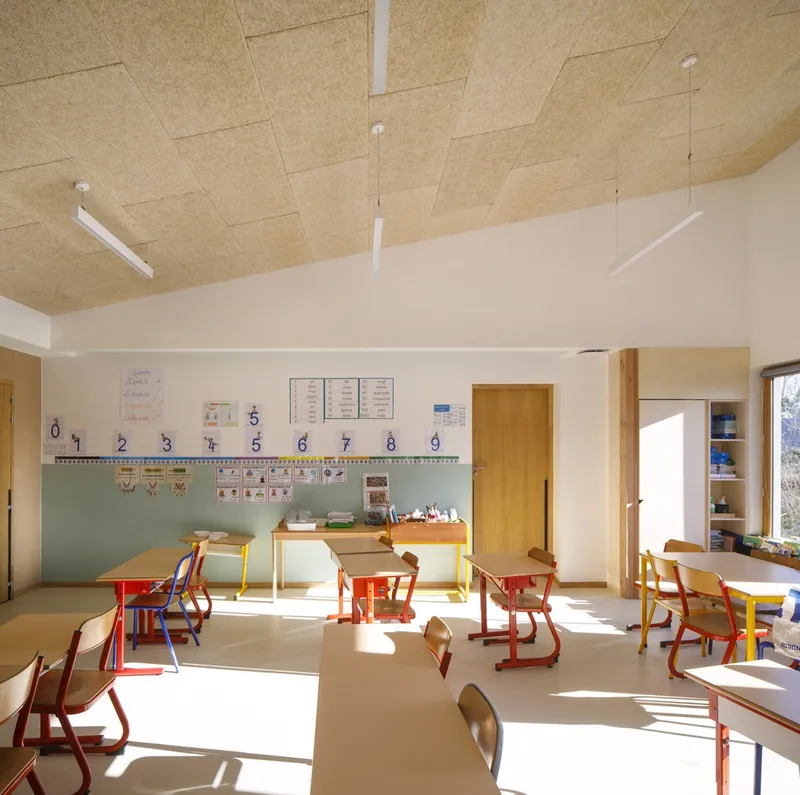
SOL Architecture applied a participatory design process, working closely with students and teachers to align the project with their needs. The goal was to create stimulating and inclusive spaces, tailored to different age groups. Key elements include:
- Scaled environments that support childhood development
- Flexible learning spaces, including alcoves for quiet activities
- Multi-purpose furniture integrating storage and seating
- A staircase designed as an interactive element, blending function with creativity
Sustainability and Eco-Friendly Construction
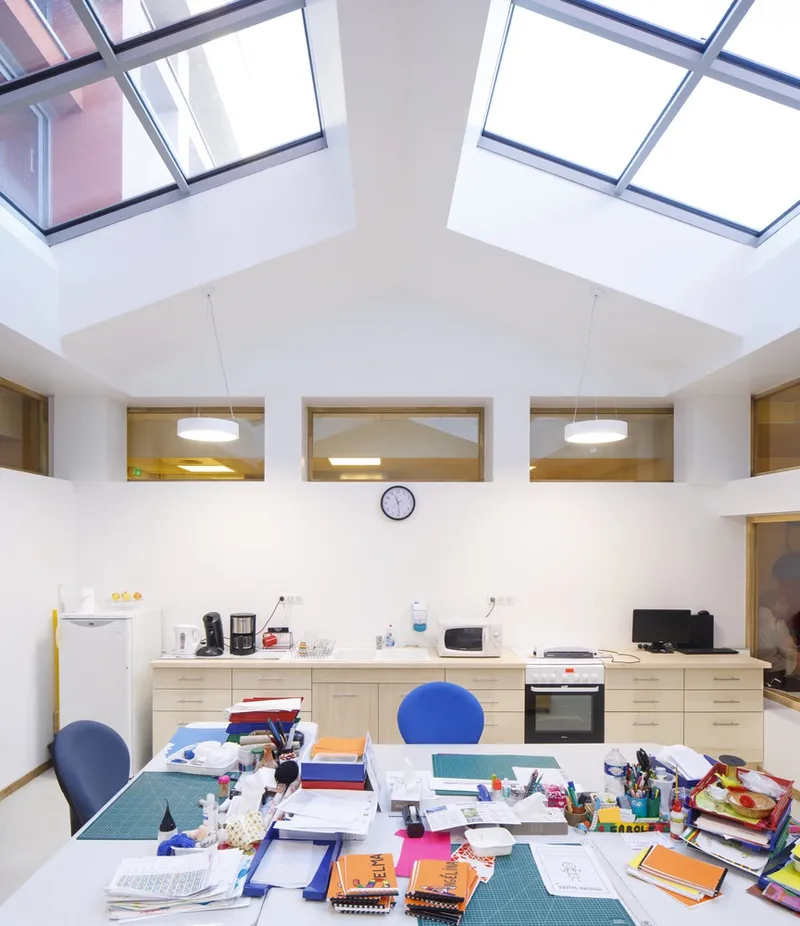
The eco-conscious school renovation adopts a low-impact, frugal approach by maximizing the use of existing structures. Sustainable features include:
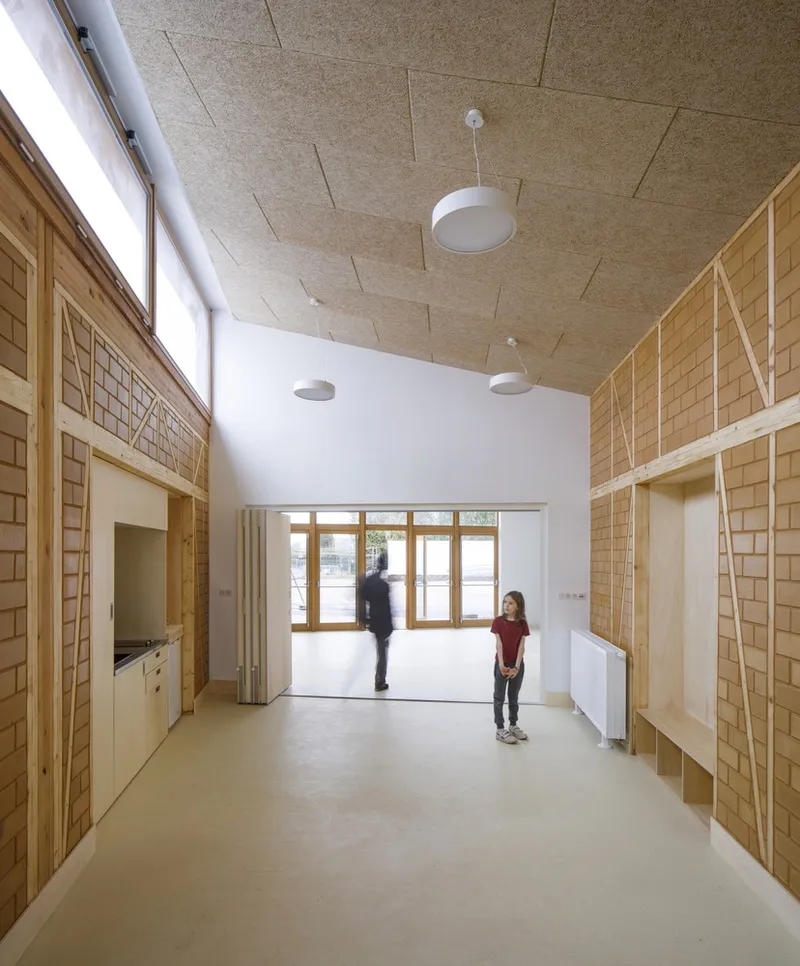
- Timber-framed extensions, incorporating bio-sourced materials
- Wood wool insulation for thermal performance
- Natural ventilation systems in the leisure center
- Sunscreens to regulate indoor temperature
- Fun walls with timber framing and mud brick, fostering interactive learning
With a strong emphasis on environmental responsibility and craftsmanship, the project integrates low-toxicity, locally sourced materials that ensure durability and worker-friendly construction methods.
Redefining Educational Architecture for a Sustainable Future
The Jean Macé School renovation exemplifies how architecture can shape learning experiences, offering students an inspiring and comfortable environment. By integrating sustainable materials, innovative design strategies, and user-driven insights, SOL Architecture has created a model for future-ready school buildings.
All Photographs are works of Clément Guillaume


Popular Articles
Popular articles from the community


U.GA Architects Wraps an Oval Rooftop Pool in Curved Board-Formed Concrete on Busan's Jeollidan-gil
In Busan's Jeonpo-dong, a 454 m² mixed-use block stacks a neighborhood facility, guest rooms and an oval rooftop pool inside spiraling concrete walls.

Jaramillo Van Sluys Arquitectura and Urbanismo Turn a Demolished Registry Lot in Quito into an Orchard Plaza
In Quito's Centro Histórico, a 2,800 m² plaza exposes the San Agustín convent wall and redraws its lost Augustinian orchard in volcanic stone.

David Ortega Stacks a Two-Story Mexico City Penthouse Around a Steel Stair and a Pergola-Shaded Roof Terrace
In Colonia Roma, a 300 m² penthouse uses oak joinery, a planted steel stair and a slatted roof pergola to make a new-build apartment feel like a house.

David Macias Steps a Doorless Stone and Plaster House Down a Tropical Colombian Hillside
In the humid hills of Colombia, Threshold House replaces the front door with an open void and terraces its 850 m² down the slope instead of fighting it.

Similar Reads
You might also enjoy these articles


Hodi-Mandai Geram
Project Function: Preservation and revitalization of the Intangible heritage and socio-spatial identity of the Hodi by Housing, Cultural Memory Center, Sacred Grove, landscape, local tourism economy


Olio Towers: A Mid-Rise for Performers That Fuses Housing, Rehearsal, and Stage
Located blocks from Houston's Theater District, this modular tower stacks living units around a central performance atrium.

Oasis: Modular Green Housing Carved into Dhaka's Urban Fabric
A shortlisted Plugin Housing entry reclaims unauthorized settlements in Dhaka with stepped concrete volumes, green roofs, and ventilation-driven design.

Black Hole: A Floating Megastructure for the Post-Physical Era
Emiliano Mazzarotto envisions a spherical, self-scaling arena where e-sports, digital hotels, and holographic stadiums replace traditional public space.

Explore Pont-Aven School Competitions
Discover active competitions in this discipline

Challenge to design public laboratory

Challenge to reimagine the Iron Throne

Photograph architecture without architects

Illustrate the lost glory of Angkor Wat - Render Challenge
Comments (0)
Please login or sign up to add comments
No comments yet. Be the first to comment!