

Jeju Island Luxury Hotels Architecture: A Closer Look at The Cliff Hotel by Soltozibin Architects
Exploring The Cliff Hotel in Jeju: An architectural marvel integrating luxury with nature, designed by Soltozibin Architects, enhancing human interaction with landscape.


Jeju Island, a renowned tourist destination in South Korea, is famous not only for its natural beauty but also for its unique architectural landmarks. Among these, The Cliff Hotel stands out as a prime example of how luxury hotels on the island embrace and enhance the local landscape through innovative design. Designed by Soltozibin Architects and completed in 2015, The Cliff Hotel integrates the essence of Jeju's natural elements with modern architectural brilliance.

The Design Philosophy of The Cliff Hotel
Embracing the Natural Landscape
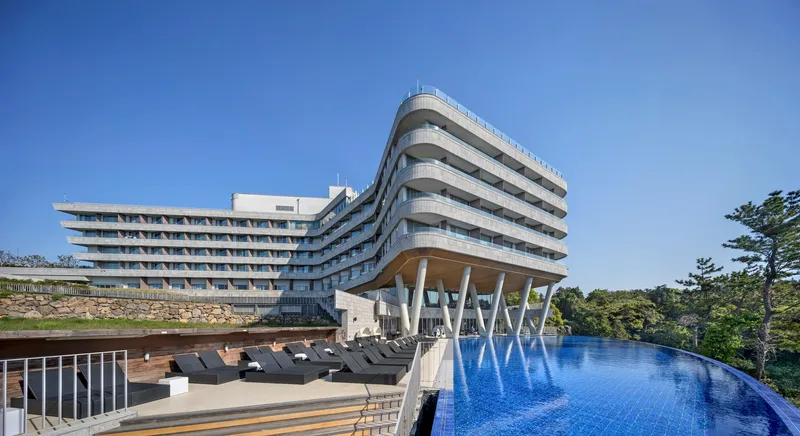
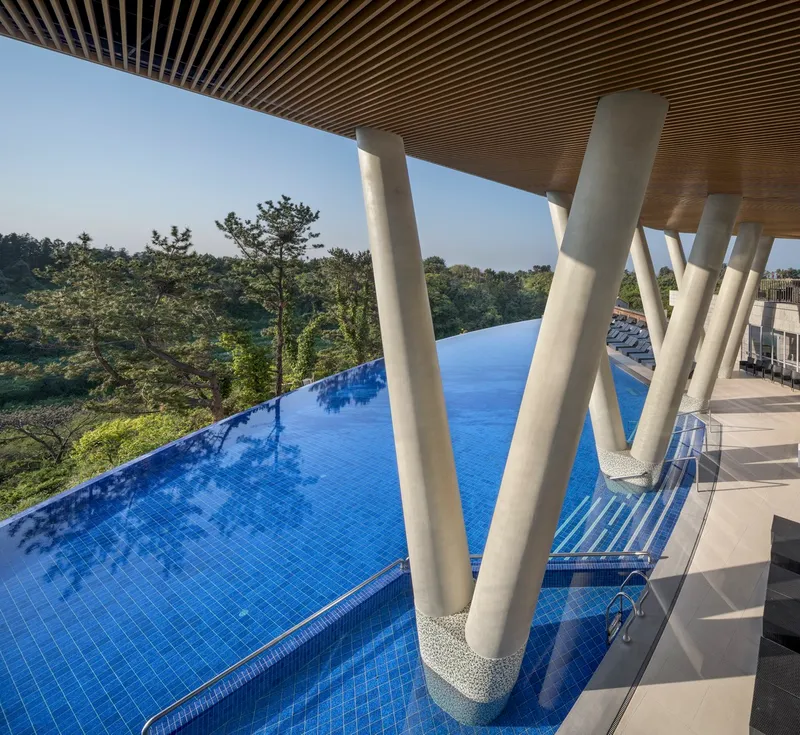
The architectural concept behind The Cliff Hotel is rooted in the "Narrative Landscape" approach. This design philosophy seeks to create a harmonious blend of the environment, facilities, and human activities. By positioning the hotel to face Yeryecheon and its surrounding scenery, the architects have paid homage to the local landscape, including the unnoticed Eongtto Falls, which becomes a vocal point after rainfall. This strategic placement allows guests to experience breathtaking views that extend from Hanlla Mountain to an ocean of greenery, giving the sensation of the hotel floating above this natural tapestry.
Integrating Nature with Human Activity
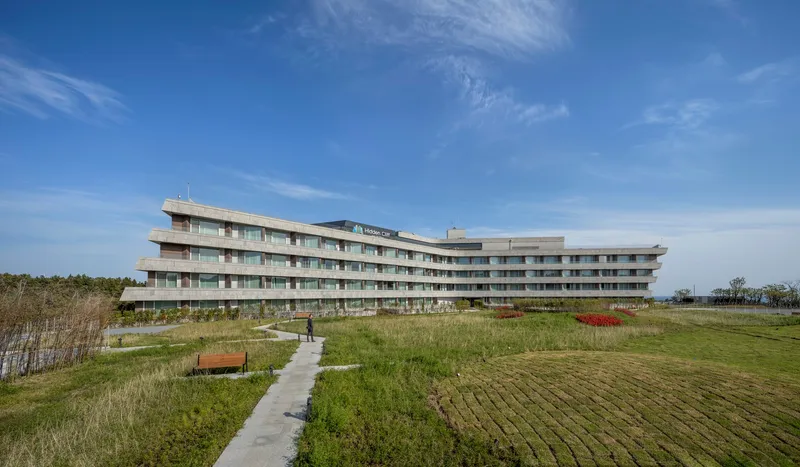
The Cliff Hotel showcases how landscape and architecture can be interwoven to enhance human interaction with nature. The original lobby ground, once 7 meters below the entrance level, has been transformed into a space that connects directly with the Jeju Oreum-inspired grassland garden. This garden acts as a central hub, linking the main building and the courtyard's crater-like formations, thereby fostering a sense of unity between the hotel's architecture and the island's topography.

Architectural Highlights of The Cliff Hotel
The Exterior Limestone Belts
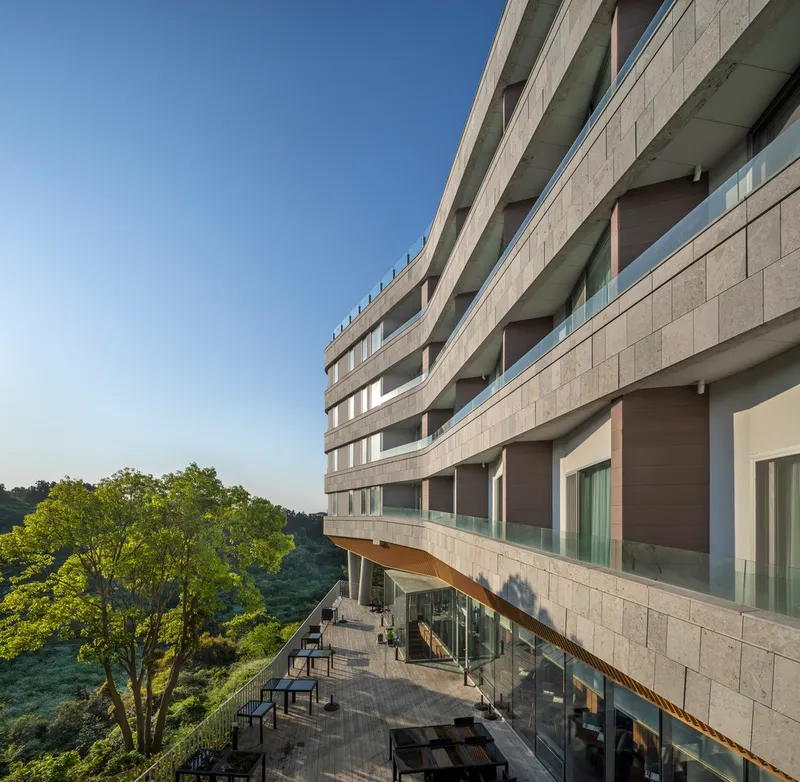
A striking feature of The Cliff Hotel is its horizontally laminated form, constructed with blue limestone belts that mimic Jeju's natural cliffs. These horizontal features not only merge seamlessly with the landscape but also serve as a backdrop for human activity. Extending to the ground, these belts integrate with the garden, enhancing the overall aesthetic and functional appeal of the hotel's outdoor spaces.


Innovative Structural Design
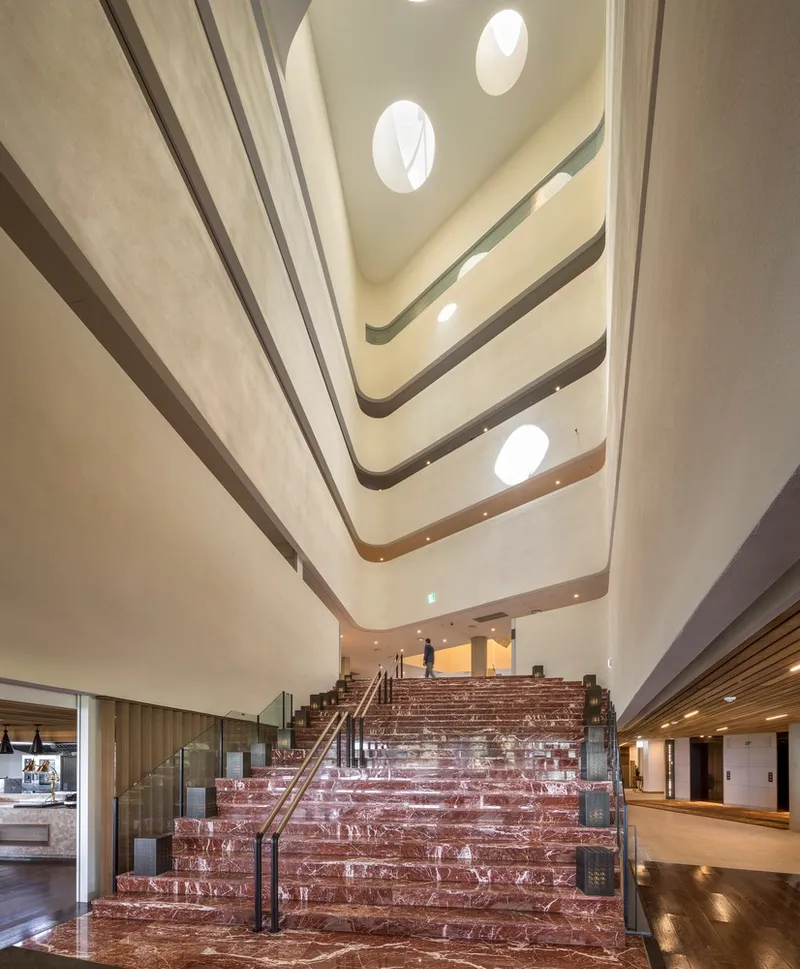
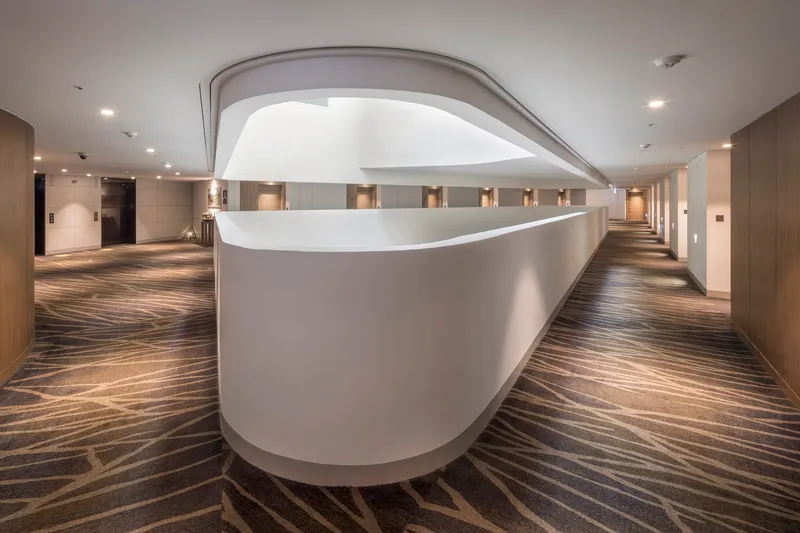
The hotel's parking lot and atrium are examples of innovative architectural space utilization. The parking lot's top structure, comprising triangular structures of various lengths, creates a visually appealing entrance and efficient circulation space. This design choice not only adds identity to the parking area but also harmonizes with the hotel's overarching design theme. Inside, the minimalist use of interior design elements accentuates the structural forms, with restrained lighting in the Cliff wing atrium creating a deep, immersive atmosphere.
The Cliff Hotel as a Benchmark for Jeju Island Luxury Hotels Architecture
The Cliff Hotel by Soltozibin Architects sets a benchmark for luxury hotel architecture in Jeju Island. Through its thoughtful integration with the natural landscape, innovative use of materials, and architectural ingenuity, it exemplifies how modern design can enhance the intrinsic beauty of a location while providing a unique experience for visitors. This project stands as a testament to the evolving landscape of Jeju Island luxury hotels architecture, where nature and architecture coalesce to create spaces of unparalleled beauty and serenity.


All the photographs are work of Yoon, Joonhwan




Popular Articles
Popular articles from the community


The Earth Pod: 3D Printed Homes for Resilient Refugee Communities
The Earth Pod reimagines refugee housing through 3D printed homes made from clay, combining resilience, self-sufficiency, and rapid shelter.
AL-JANNAH: Sustainable Architecture and Permaculture for Afghan Widows
AL-JANNAH uses sustainable architecture and permaculture to create resilient oasis of housing, learning, work and renewal for Afghan widows.

Conexión: Biophilic Design Reimagines High-Rise Living in Hong Kong
Conexión reimagines high-rise living in Hong Kong through biophilic design, green facades, shared spaces, daylight, water and nature within.

Riyadh For All: Intergenerational Urban Design for Active Aging in Rabat
Riyadh For All reimagines urban design in Rabat with intergenerational co-living, adaptive courtyards, and Moroccan cultural exchange today.


Similar Reads
You might also enjoy these articles


Hodi-Mandai Geram
Project Function: Preservation and revitalization of the Intangible heritage and socio-spatial identity of the Hodi by Housing, Cultural Memory Center, Sacred Grove, landscape, local tourism economy


Olio Towers: A Mid-Rise for Performers That Fuses Housing, Rehearsal, and Stage
Located blocks from Houston's Theater District, this modular tower stacks living units around a central performance atrium.

Oasis: Modular Green Housing Carved into Dhaka's Urban Fabric
A shortlisted Plugin Housing entry reclaims unauthorized settlements in Dhaka with stepped concrete volumes, green roofs, and ventilation-driven design.

Black Hole: A Floating Megastructure for the Post-Physical Era
Emiliano Mazzarotto envisions a spherical, self-scaling arena where e-sports, digital hotels, and holographic stadiums replace traditional public space.

Explore Hospitality Building Competitions
Discover active competitions in this discipline



Challenge to reimagine the Iron Throne


Photograph architecture without architects


Illustrate the lost glory of Angkor Wat - Render Challenge


Design challenge to reuse E-waste
Comments (0)
Please login or sign up to add comments
No comments yet. Be the first to comment!