

Jeju Island Wedding Studio by Todot Architects and Partners – A Forest-Inspired Sanctuary for Photography and Intimate Celebrations
A minimalist wedding studio in Jeju blending mirror façades with cedar and camellia forests, creating serene photography spaces rooted in landscape heritage.


The Jeju Island Wedding Studio by Todot Architects and Partners redefines hospitality and photography architecture on South Korea’s iconic Jeju Island. Designed as a serene retreat immersed in a historic cedar and camellia forest, the project honors the cultural landscape of Kyungheung Farm while creating a contemporary, nature-responsive studio for weddings, portrait sessions, and small-scale events. Completed in 2024, the 299-square-meter studio blends architectural minimalism with landscape preservation, transforming the site into a poetic space that celebrates memory, heritage, and the island’s natural beauty.
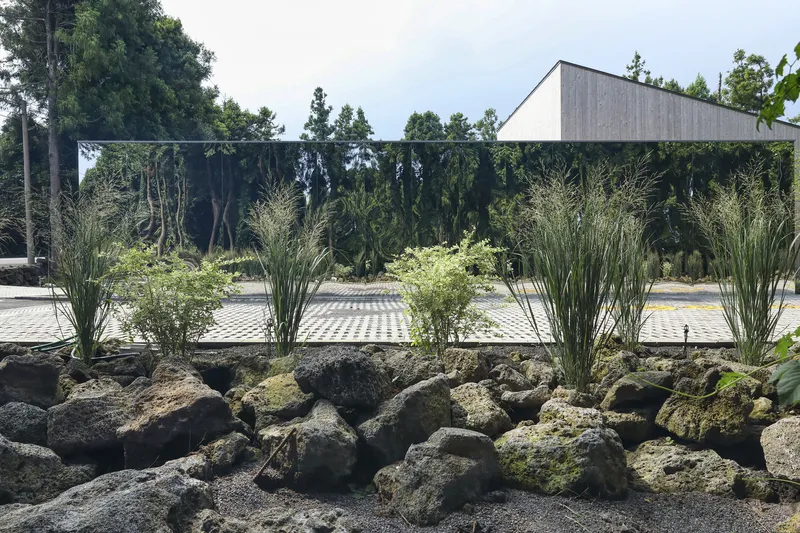
Jeju Island has long been shaped by its winds and volcanic terrain, with cedar forests becoming a defining feature of the landscape. The cedar groves surrounding the project site carry a layered history. During the Japanese occupation, extensive logging led to the widespread planting of Japanese cedar as compensation, a legacy that still shapes Jeju’s ecological identity today. Despite this difficult past, the cedars enriched the once barren fields and served as natural windbreaks that protected the region’s famed tangerine orchards.
The studio sits at Kyungheung Farm, located between Shinheung-ri and Sumang-ri in Seogwipo. Known as a pioneering site for tangerine cultivation, the farm has nurtured its cedar and camellia forests for over fifty years. The land designated for Studio Zera, once a kiwi farm bordered by cedar trees, holds deep personal meaning for the client. Inheriting the farm from his late father, he considers the forest an irreplaceable living memory. Preserving and expanding its presence became the foundation of the architectural concept. The studio is therefore envisioned as a respectful guest within the forest rather than an object calling attention to itself.
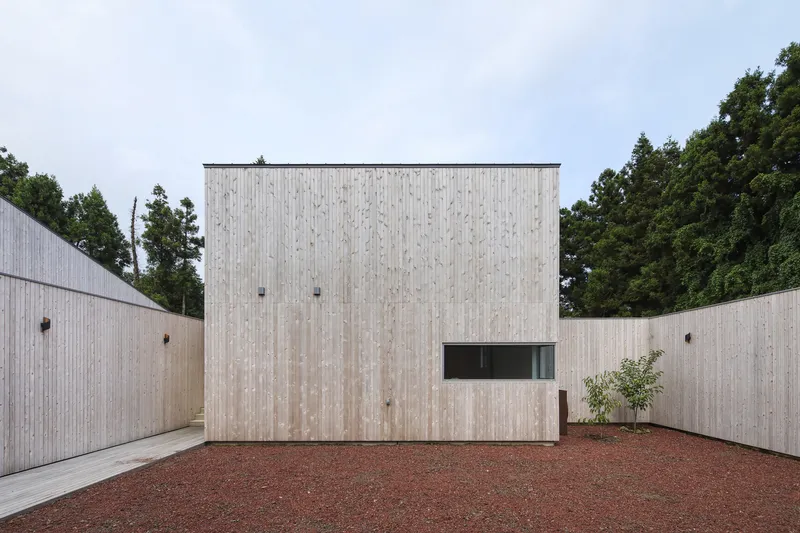
The program for the nearly 2,310-square-meter site includes an indoor photography studio with a horizon backdrop, individual powder rooms, dedicated fitting rooms, a standalone office and reception building, and a concealed 14-by-14-meter courtyard designed for intimate weddings and outdoor shoots. Parking areas occupy the rear of the site, while the front garden acts as a natural photography landscape that blends seamlessly with the existing cedar and camellia grove.
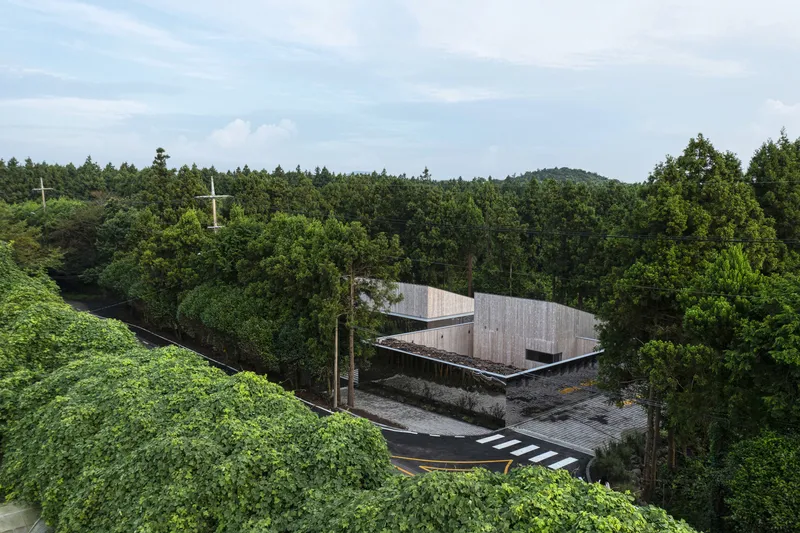
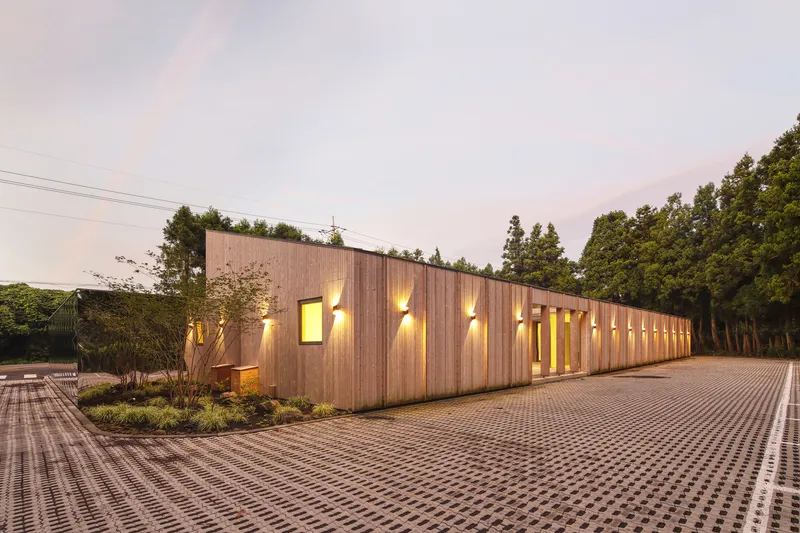
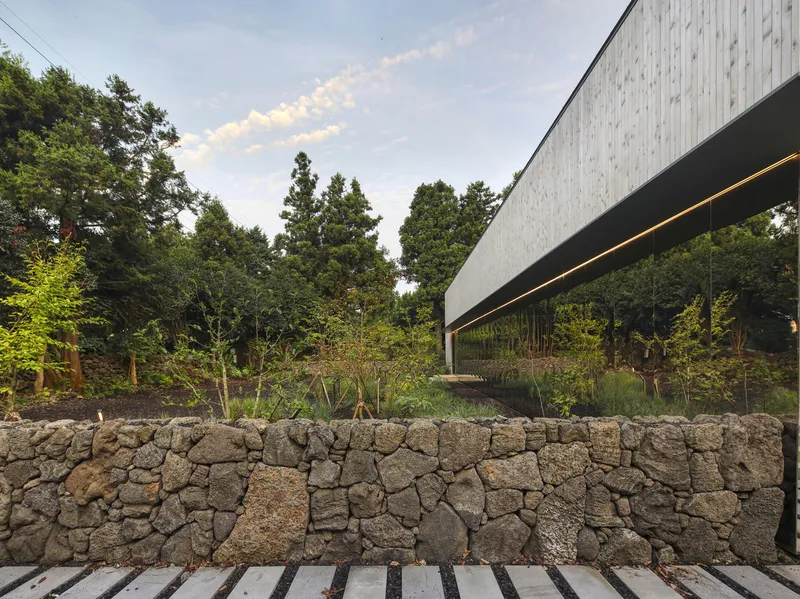
Todot Architects and Partners designed the single-story structure just under 300 square meters to be visually quiet and humble. The architecture deliberately avoids becoming a photographic subject. Instead, it provides a neutral, contemplative environment where the surrounding forest remains the true protagonist. To achieve this, the minimalist building form is partially clad in mirror-finished stainless steel at eye level, making the mass appear to dissolve into the cedar forest. The mirrored surfaces reflect infinite layers of trees and sky, allowing visitors to witness their own presence merging with the landscape. This sensory experience reinforces the idea that the forest—not the building—creates the moment worth capturing.
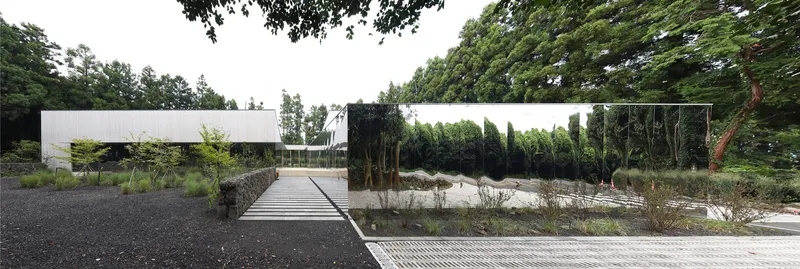
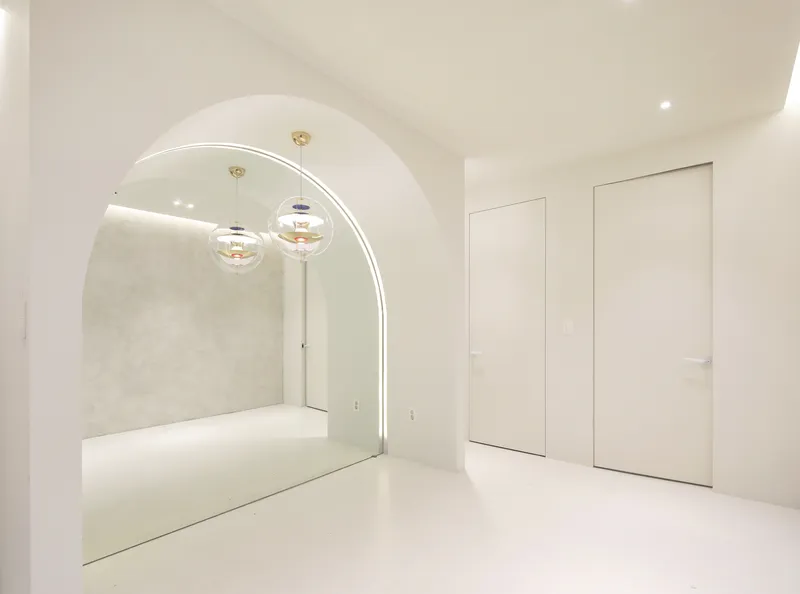
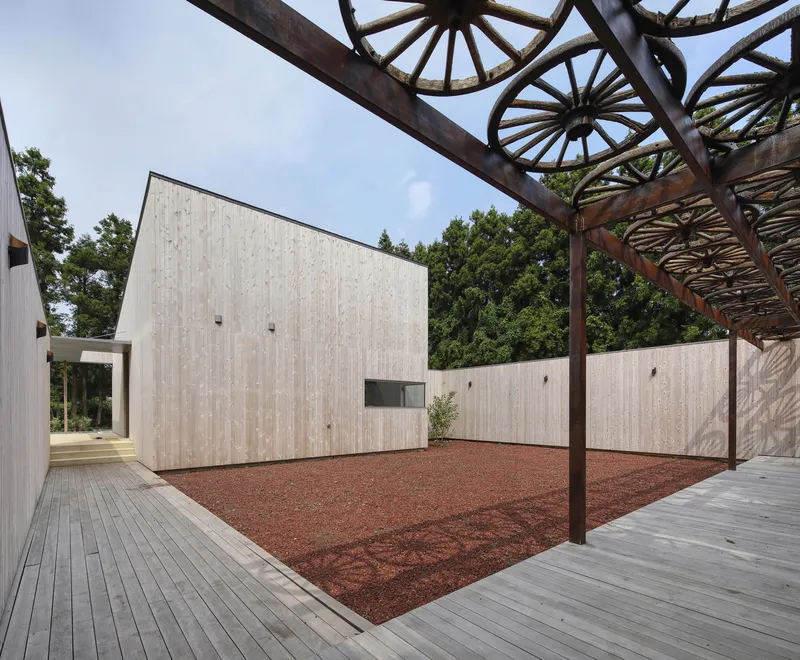
The hidden courtyard exemplifies this concept of concealment and revelation. Invisible from the exterior due to the reflective façade, the courtyard becomes an abstract forest within a real one. Its volcanic red tuff walls contrast with the open sky above, creating a sculptural, contemplative void. The inner walls are finished with red cedar, symbolizing the island’s vertical forest and linking the earth to the heavens. A circular wagon-wheel canopy hovers above a raised deck, casting intricate shifting shadows that animate the courtyard as the sunlight changes throughout the day.
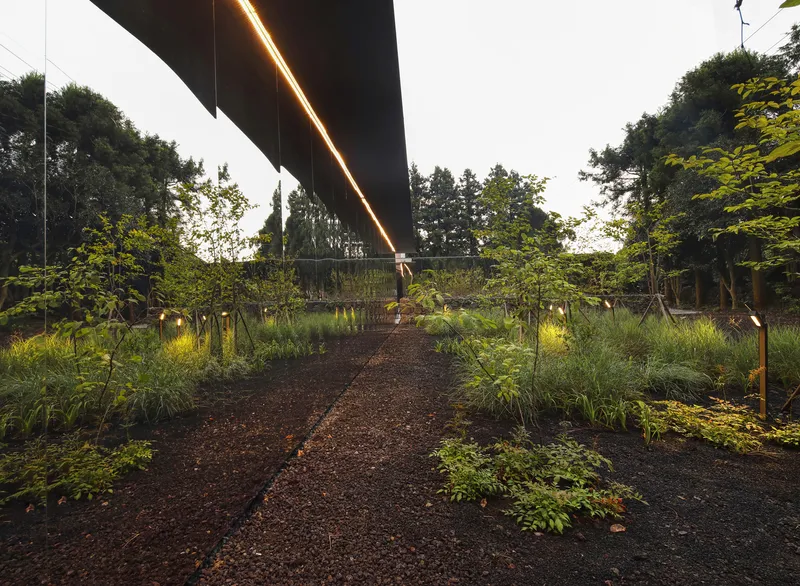
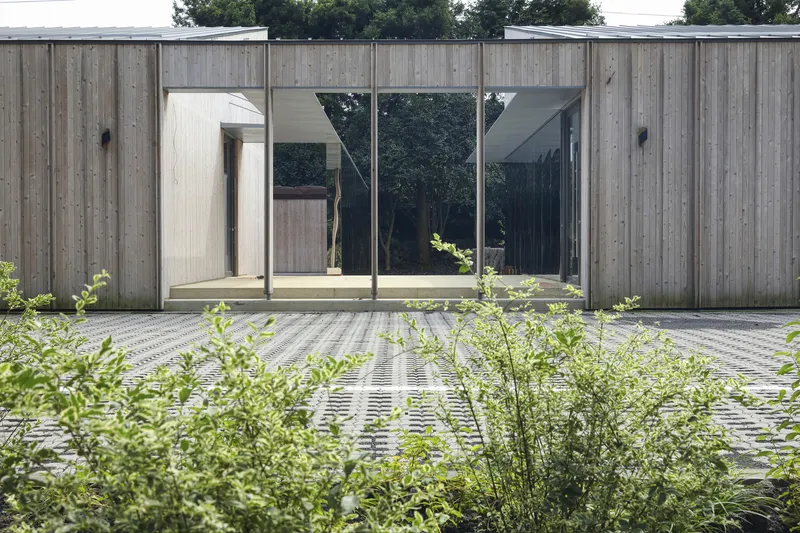
Inside the complex, the landscape design honors both the existing ecology and the seasonal rhythms of Jeju. New plantings were carefully selected to harmonize with the established cedar and camellia clusters. The main garden highlights a Japanese snowbell tree—also known as the summer camellia—as the central feature. Magnolia and viburnum signal the arrival of spring, while perennials like panicum and daylilies bring texture and movement during the summer months. Basalt fieldstone walls, echoing the historic boundaries of Jeju’s agricultural plots, define the courtyard and reinforce the site’s sense of place. Reflected in the mirror cladding, these walls create layered visual depth that extends the experience of the forest into the architecture itself.
All photographs are works of Byun Jongseok


Popular Articles
Popular articles from the community


David Ortega Stacks a Two-Story Mexico City Penthouse Around a Steel Stair and a Pergola-Shaded Roof Terrace
In Colonia Roma, a 300 m² penthouse uses oak joinery, a planted steel stair and a slatted roof pergola to make a new-build apartment feel like a house.

GROUP A Strips a 1969 Rotterdam Harbor Headquarters to Its Frame and Wraps It in Timber Louvers
In Rotterdam's M4H harbor district, Ferro Offices reuses a 1969 frame, adds one timber storey and reaches BREEAM-NL Outstanding.

Jaramillo Van Sluys Arquitectura and Urbanismo Turn a Demolished Registry Lot in Quito into an Orchard Plaza
In Quito's Centro Histórico, a 2,800 m² plaza exposes the San Agustín convent wall and redraws its lost Augustinian orchard in volcanic stone.

David Macias Steps a Doorless Stone and Plaster House Down a Tropical Colombian Hillside
In the humid hills of Colombia, Threshold House replaces the front door with an open void and terraces its 850 m² down the slope instead of fighting it.

Similar Reads
You might also enjoy these articles


Hodi-Mandai Geram
Project Function: Preservation and revitalization of the Intangible heritage and socio-spatial identity of the Hodi by Housing, Cultural Memory Center, Sacred Grove, landscape, local tourism economy


Olio Towers: A Mid-Rise for Performers That Fuses Housing, Rehearsal, and Stage
Located blocks from Houston's Theater District, this modular tower stacks living units around a central performance atrium.

Oasis: Modular Green Housing Carved into Dhaka's Urban Fabric
A shortlisted Plugin Housing entry reclaims unauthorized settlements in Dhaka with stepped concrete volumes, green roofs, and ventilation-driven design.

Black Hole: A Floating Megastructure for the Post-Physical Era
Emiliano Mazzarotto envisions a spherical, self-scaling arena where e-sports, digital hotels, and holographic stadiums replace traditional public space.
Explore Hospitality Building Competitions
Discover active competitions in this discipline

Challenge to reimagine the Iron Throne

Photograph architecture without architects

Illustrate the lost glory of Angkor Wat - Render Challenge

Design challenge to reuse E-waste
Comments (0)
Please login or sign up to add comments
No comments yet. Be the first to comment!