
Jianghuai Little Theater by SEU-ARCH: Reviving Tradition through Adaptive Reuse and Sustainable Design
Jianghuai Little Theater blends Huangmei Opera, tea culture, and adaptive reuse with sustainable design, merging traditional courtyards and contemporary architecture.


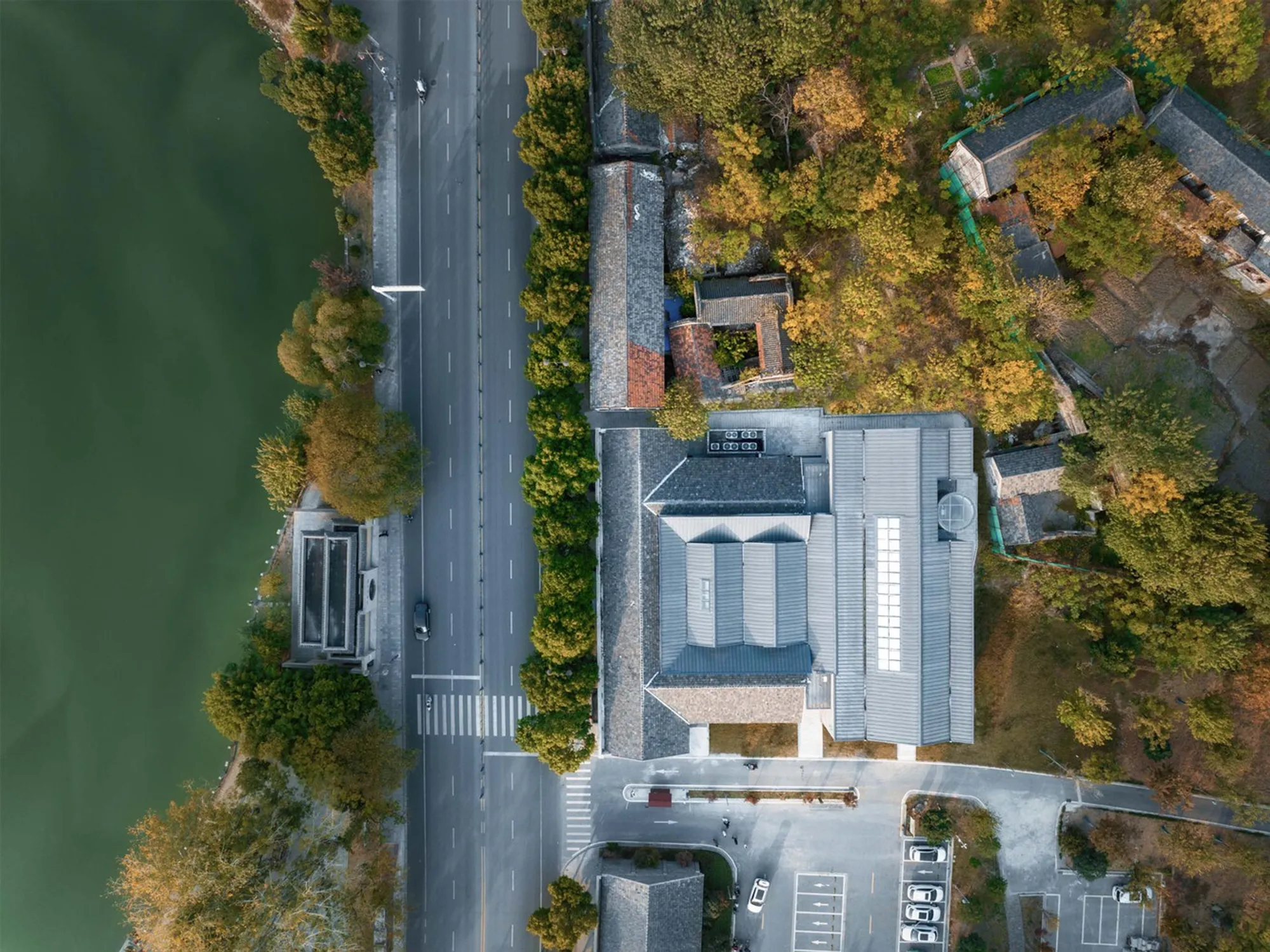
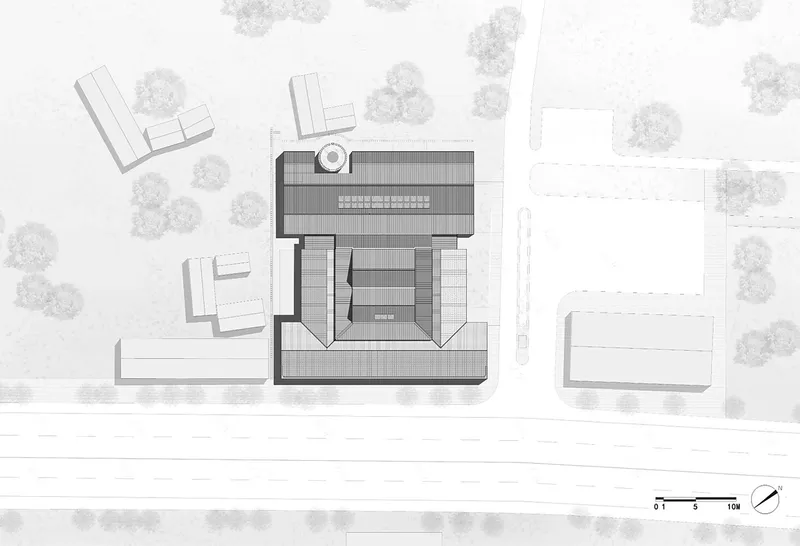
Located in Xuyi, Jiangsu Province, with the Huaihe River to the northwest and First Mountain to the southeast, the Jianghuai Little Theater by SEU-ARCH redefines cultural architecture through adaptive reuse, sustainability, and a deep dialogue with local traditions. Situated adjacent to the First Mountain Historic District, the project transforms a once-vacant three-way courtyard and its abandoned water tower into a vibrant cultural destination.
Reviving Tradition Through Architecture
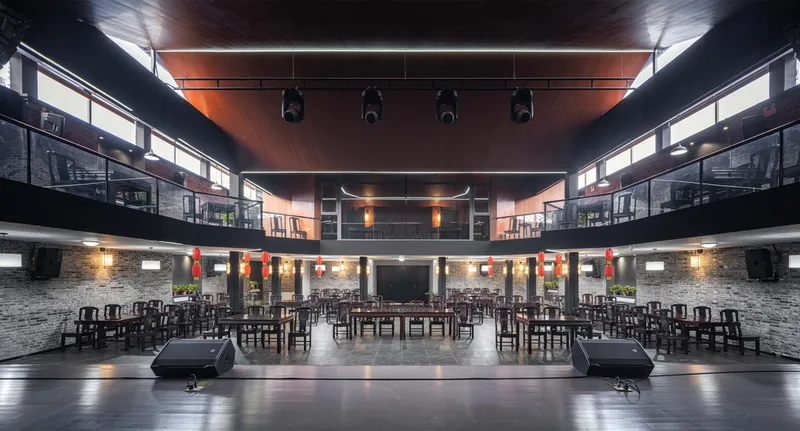
Tea culture and Huangmei Opera hold a special place in local life, where drinking tea and enjoying opera performances are timeless communal practices. The design embraces this cultural heritage by creating a teahouse-style small theater that merges performance with everyday social rituals. Instead of functioning as a conventional theater, the building acts as a “Huangmei Opera+” cultural hub, integrating performance spaces with Yushan Tea experiences, intangible cultural heritage exhibitions, and interactive cultural salons.
A Dialogue Between Architecture and Landscape
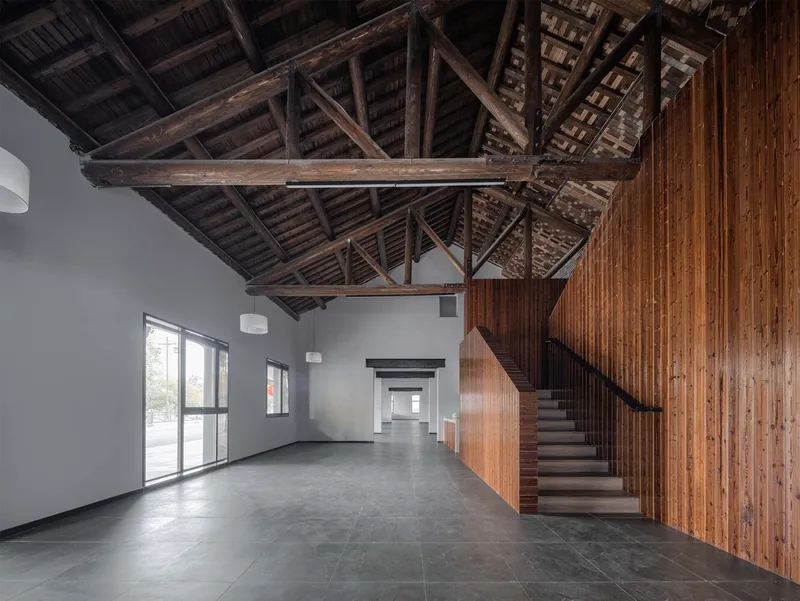
The architectural language draws inspiration from the surrounding natural landscape. The folded, undulating roofline echoes the rolling mountains while softening the large-scale spatial volume of the theater. By blurring the boundaries between built form and natural scenery, the project achieves a balance of intimacy and grandeur, making large spaces feel approachable and connected to the environment.
Blending the Old and the New
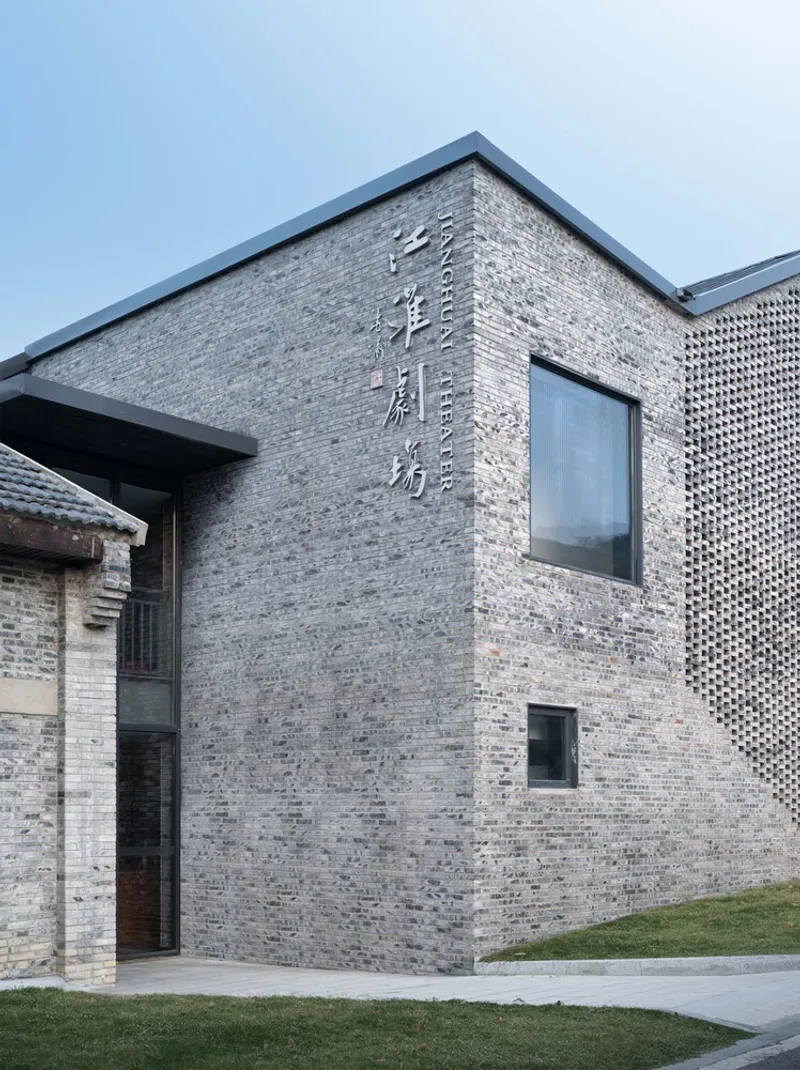
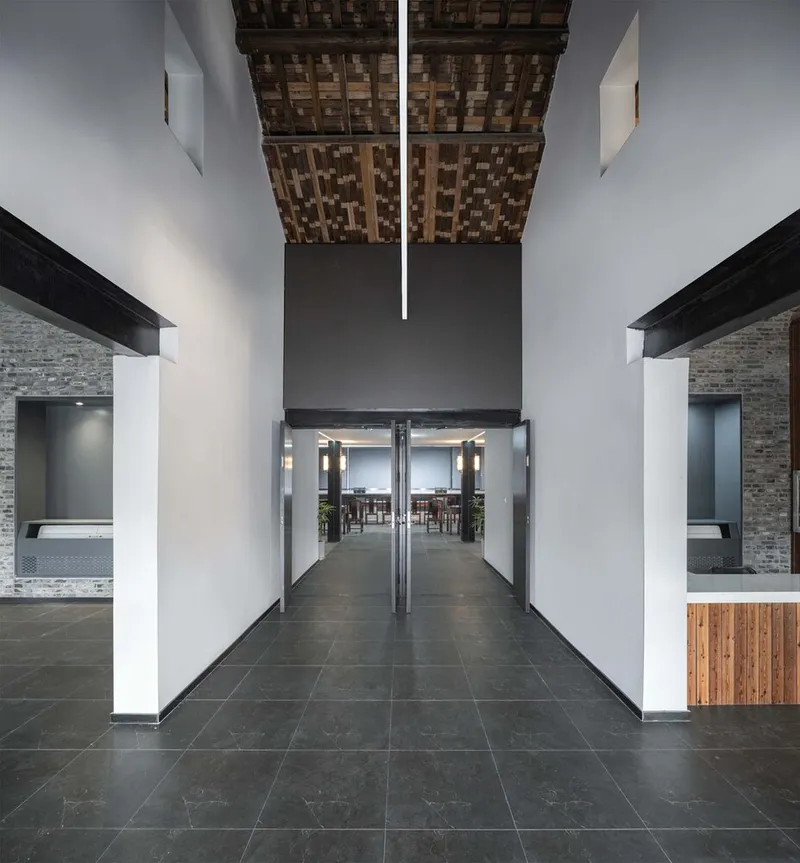
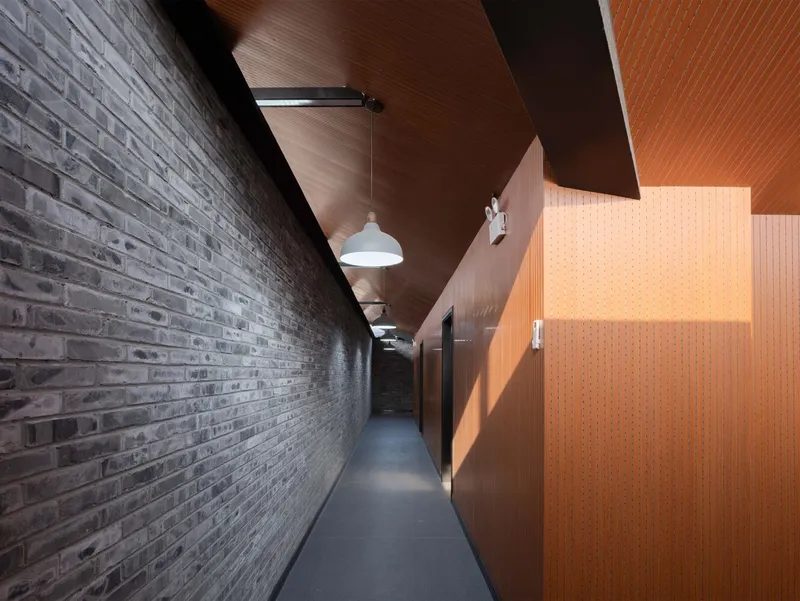
The design respects and revitalizes the original courtyard by transforming it into the auditorium, linking the historic structure with the newly built additions. A strategic opening in the central wall connects previously closed-off spaces, creating a shared spatial sequence that enhances interaction and accessibility. The entrance of the original building is preserved and redefined as the main entry to the performance hall, maintaining continuity in spatial memory.
Materiality and Sensory Experience
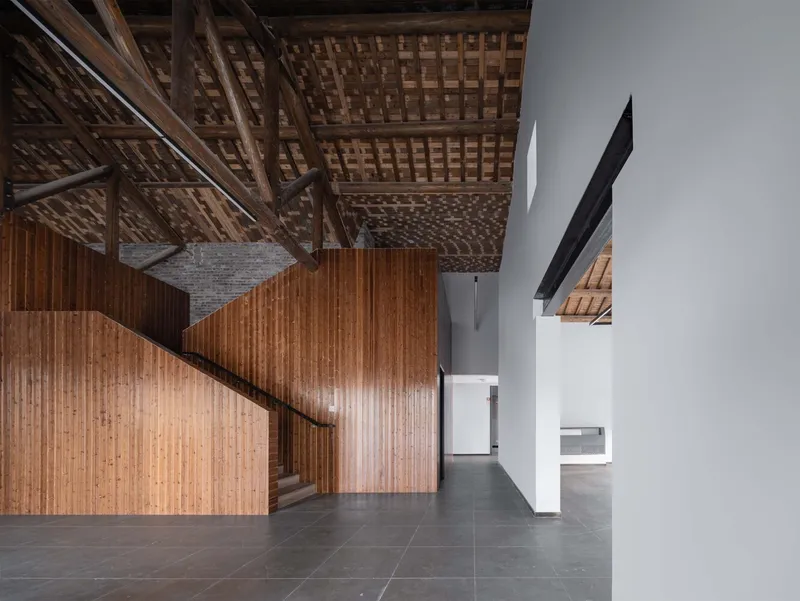
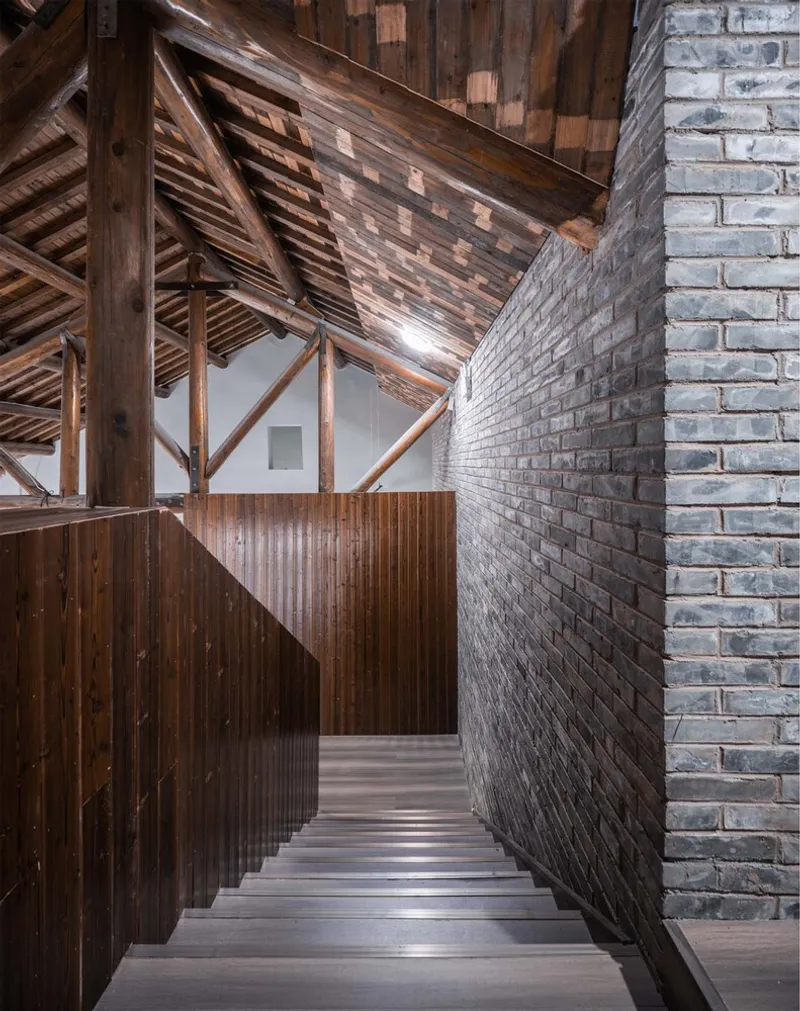
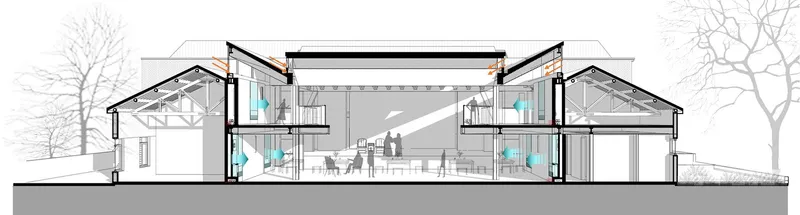
Inside, steel structures support the raised roof, allowing skylights and side-lighting to fill the performance hall. The mix of wood, brick, and steel establishes a tactile environment, giving audiences an immersive sensory experience. The design also introduces multifunctional spaces adaptable for cultural events, exhibitions, and community gatherings.
Sustainable and Low-Car
Innovative Structural Integration
A U-shaped structural wall organizes the theater’s internal layout. Beyond serving as a spatial divider between commercial and performance areas, it cleverly integrates HVAC, water, and electrical systems into its cavity. This space-structure-equipment integration ensures efficiency while maintaining clean, uncluttered interiors.
A Contemporary Cultural Landmark
The Jianghuai Little Theater stands as a model of how cultural architecture, renovation, and sustainable design can honor history while addressing contemporary needs. It is not just a performance space but a living cultural museum, celebrating opera, tea, and heritage in a setting that harmonizes tradition with modern innovation.



Popular Articles
Popular articles from the community


The Ocean Hive: Sustainable Architecture for a Self-Sufficient Civilization at Sea
The Ocean Hive imagines sustainable architecture at sea, where modular habitats, algae, wave power and ocean waste sustain a growing colony.

The Musturak Paradise: Senior Living Architecture for a Connected Future in Temara, Morocco
The Musturak Paradise reimagines senior living architecture in Temara via private homes, social spaces, culture, community, and shared care.

Conexión: Biophilic Design Reimagines High-Rise Living in Hong Kong
Conexión reimagines high-rise living in Hong Kong through biophilic design, green facades, shared spaces, daylight, water and nature within.

Riyadh For All: Intergenerational Urban Design for Active Aging in Rabat
Riyadh For All reimagines urban design in Rabat with intergenerational co-living, adaptive courtyards, and Moroccan cultural exchange today.

Similar Reads
You might also enjoy these articles


Hodi-Mandai Geram
Project Function: Preservation and revitalization of the Intangible heritage and socio-spatial identity of the Hodi by Housing, Cultural Memory Center, Sacred Grove, landscape, local tourism economy


Olio Towers: A Mid-Rise for Performers That Fuses Housing, Rehearsal, and Stage
Located blocks from Houston's Theater District, this modular tower stacks living units around a central performance atrium.

Oasis: Modular Green Housing Carved into Dhaka's Urban Fabric
A shortlisted Plugin Housing entry reclaims unauthorized settlements in Dhaka with stepped concrete volumes, green roofs, and ventilation-driven design.

Black Hole: A Floating Megastructure for the Post-Physical Era
Emiliano Mazzarotto envisions a spherical, self-scaling arena where e-sports, digital hotels, and holographic stadiums replace traditional public space.
Explore Urban Design Competitions
Discover active competitions in this discipline



Challenge to reimagine the Iron Throne


Photograph architecture without architects


Illustrate the lost glory of Angkor Wat - Render Challenge


Design challenge to reuse E-waste
Comments (0)
Please login or sign up to add comments
No comments yet. Be the first to comment!