
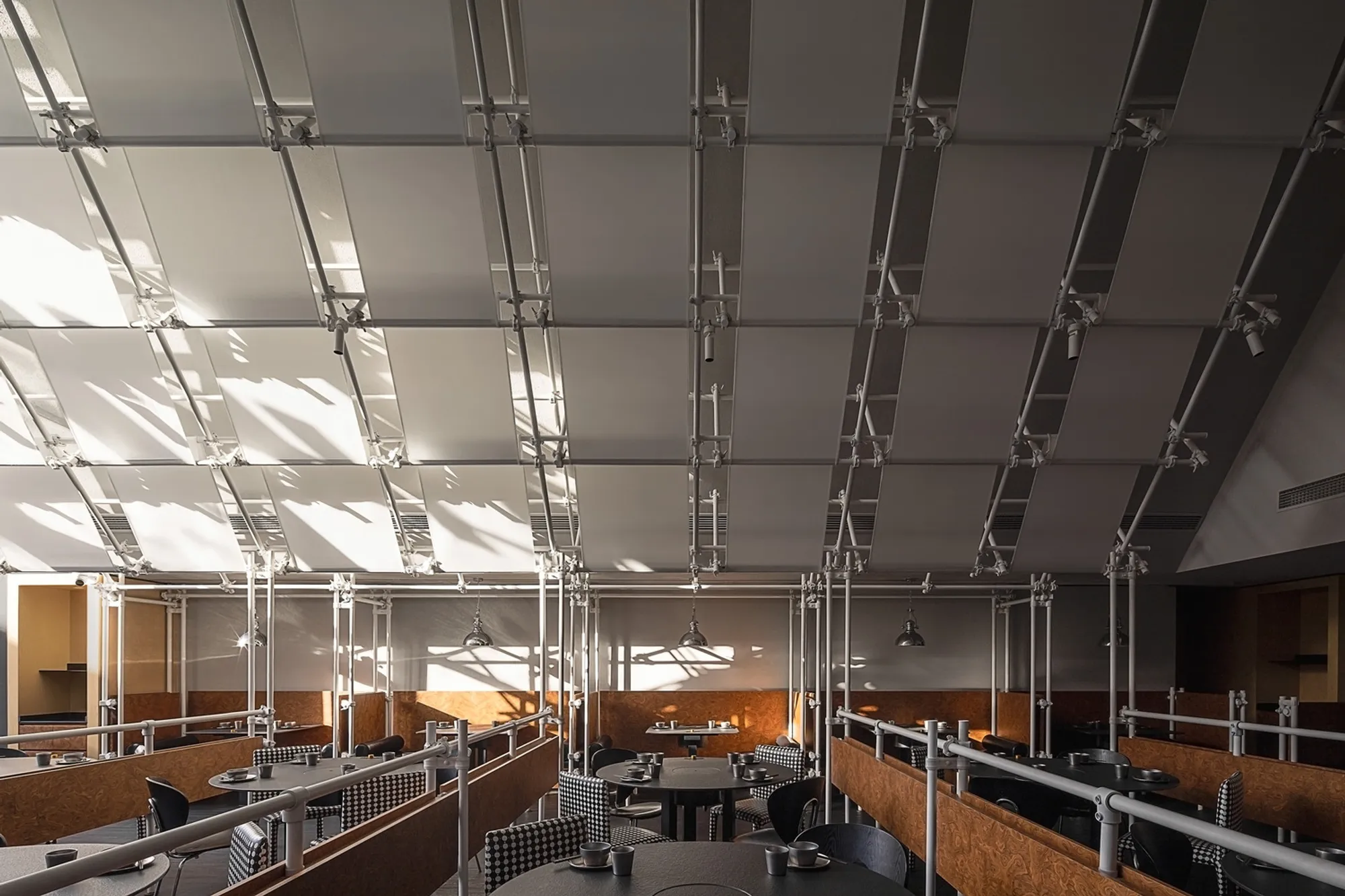
Jinhui Restaurant at Livat Shanghai by Atelier Alittle — A Youthful Fusion Dining Space Inspired by Urban Street Culture
A youthful street-inspired restaurant featuring scaffolding structures, slanted ceilings, warm lighting, and a dynamic dining hall designed for vibrant urban dining.


Jinhui Restaurant, a well-known Chinese fusion dining brand, unveils its latest location at Livat Shanghai with a fresh design by Atelier Alittle. The 288 m² space reimagines the vibrancy of street-food culture through a contemporary architectural lens, aligning perfectly with the restaurant’s innovative culinary identity. Designed under a controlled budget, the project focuses on creating a youthful, energetic, and immersive dining experience while preserving a sense of authenticity at its core.
A Strategic Urban Placement within Livat Shanghai
Located in an open-air commercial plaza atop Livat Shanghai, the restaurant occupies a unique trapezoidal site positioned at the end of the mall’s main commercial axis. The plot draws most pedestrian flow from the south, while a distinct gabled façade faces west, making the space highly visible to visitors.
To optimize circulation and maximize experiential quality, the Atelier Alittle team divided the layout into two functional zones:
1. The Triangular Service Zone
- Positioned on the southwest side, where foot traffic is heaviest
- Houses the main entrance, cashier, and water bar
- Designed for operational efficiency, allowing staff to manage service flow seamlessly
2. The West-Aligned Rectangular Dining Hall
- Faces the scenic commercial axis
- Reserved entirely for the open dining area
- Creates a welcoming, dynamic atmosphere for guests
This spatial strategy forms a clear progression from entry to dining, enhancing both customer flow and spatial legibility.


Transforming Constraints Into Character
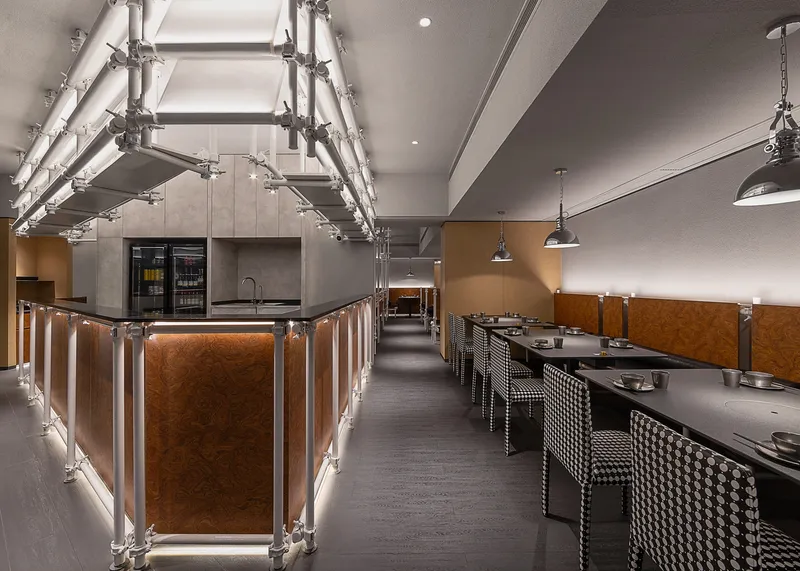
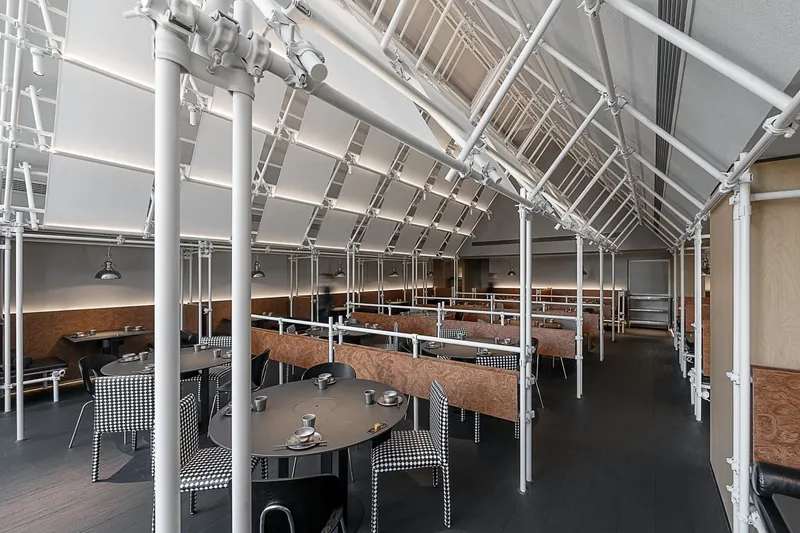
The main dining hall, despite its generous size, presented several challenges: multiple structural columns and visually intrusive overhead mechanical systems. Instead of concealing these elements conventionally, Atelier Alittle turned them into defining features.
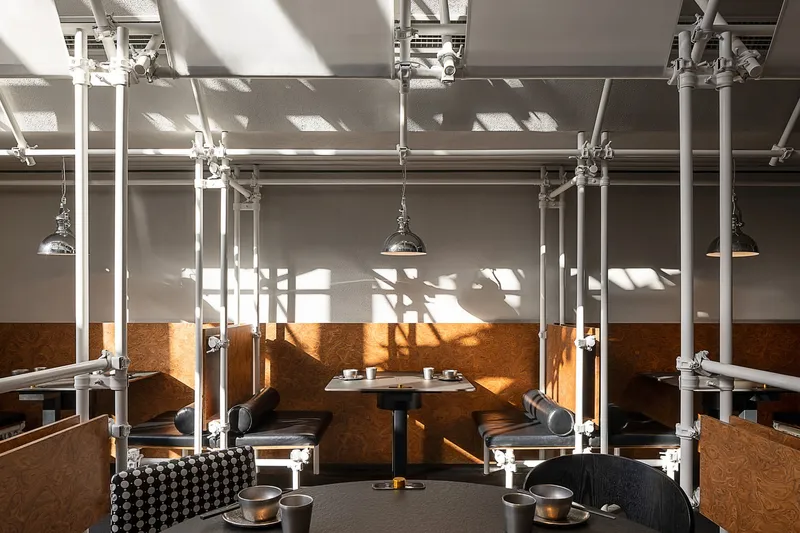
Structural columns were wrapped with custom-designed “piers” that serve dual roles:
- Acting as spatial anchors that organize the dining hall
- Functioning as integrated service counters
- Concealing structural and mechanical components within a cohesive architectural language
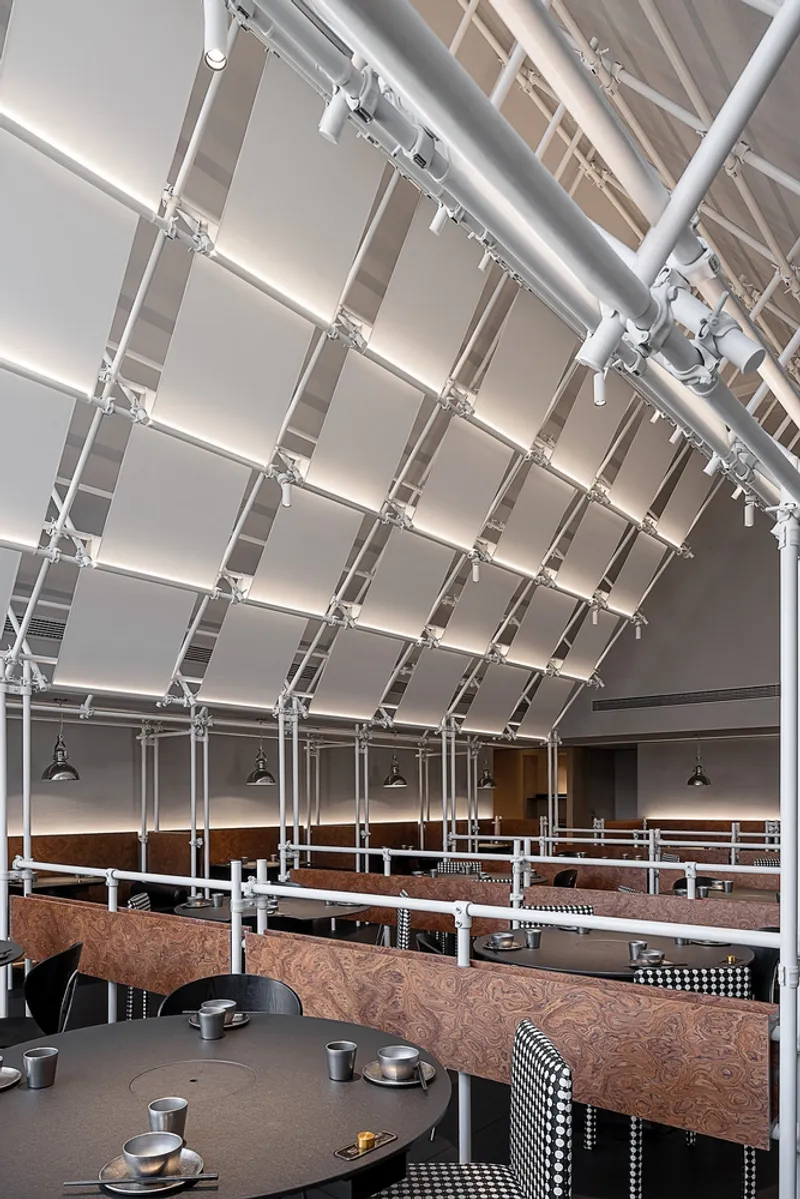
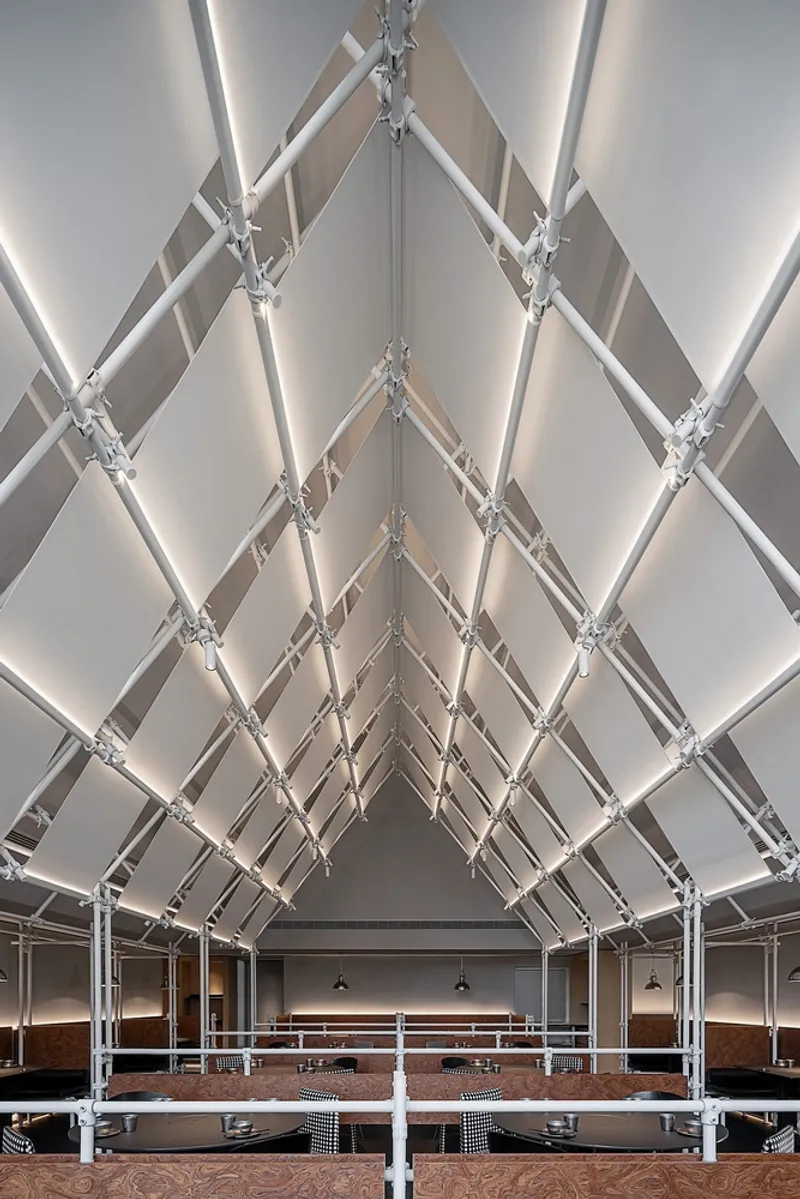
These vertical piers visually support the restaurant’s dramatic slanted ceiling, reinforcing the feeling of being under a sweeping, unified roofscape.
A Dynamic Ceiling That Shapes Atmosphere
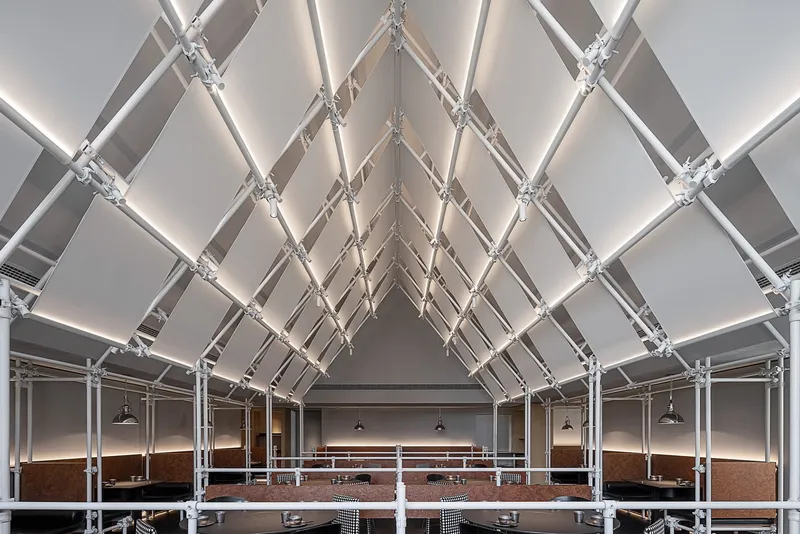
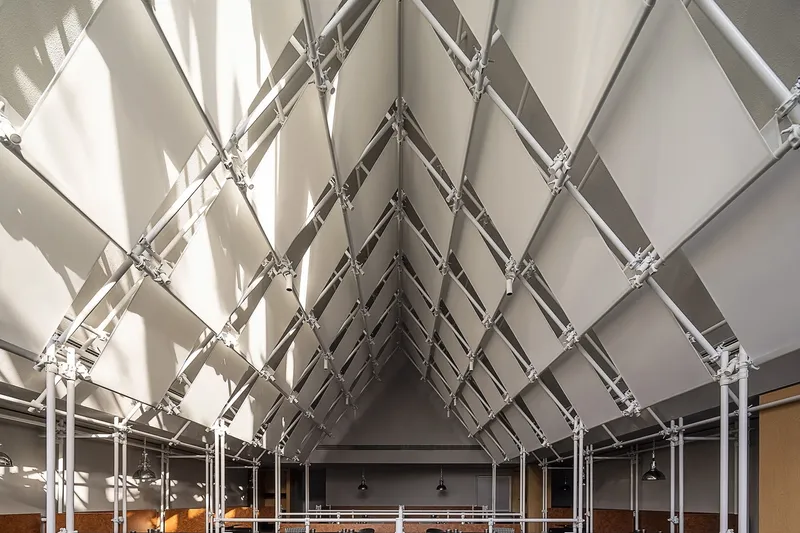
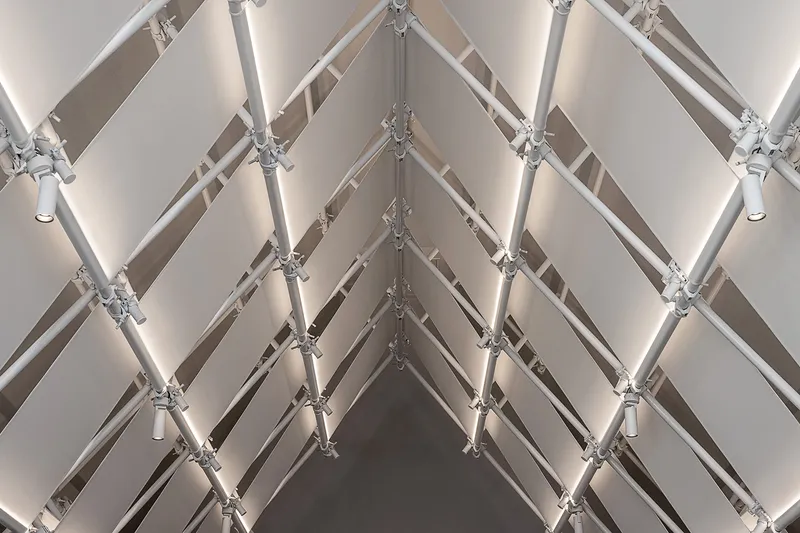
The ceiling design plays a crucial role in shaping the restaurant’s distinctive ambience. After numerous design iterations, the team crafted a bold, sloping roofline that descends gracefully to a height of 2.25 meters at the edges. This move achieves several effects:
- Enhances perceived spaciousness in the central hall
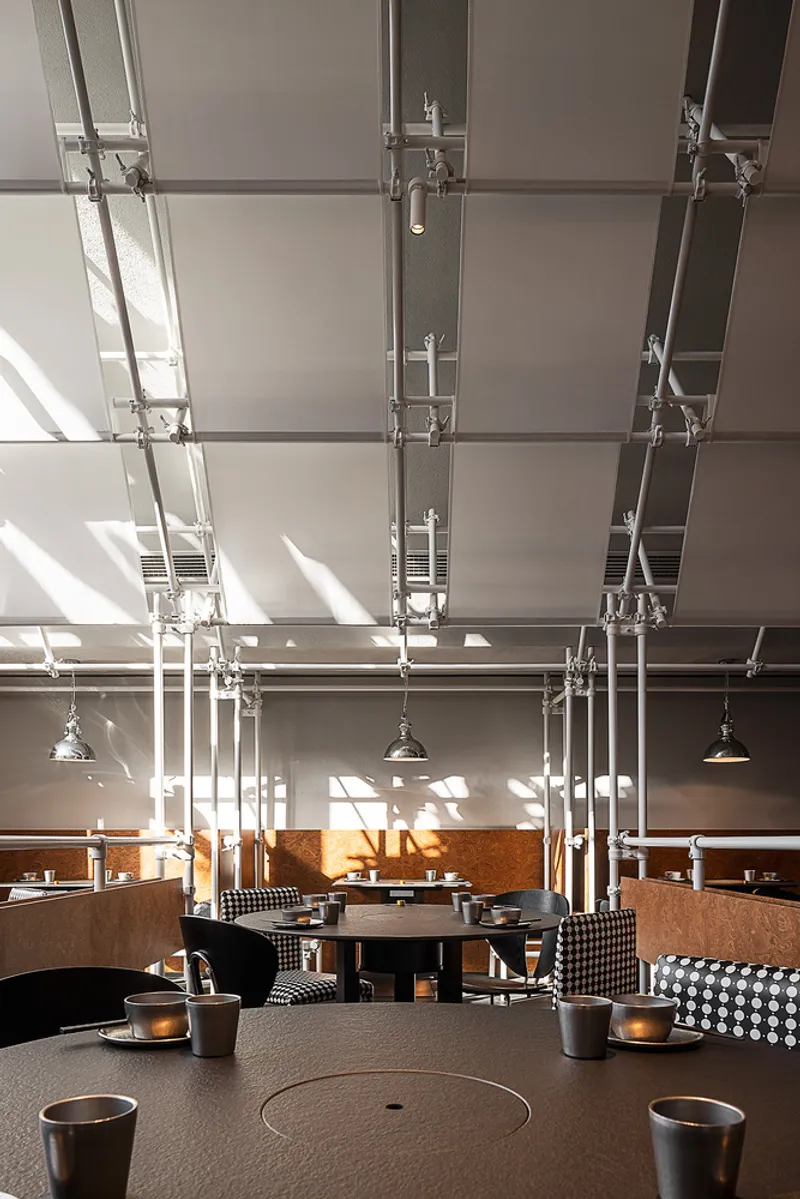
- Creates intimate pockets along the sides, ideal for booths and semi-private seating
- Maintains visual continuity despite the building’s mechanical obstructions
The result is a spatial experience that feels both grand and cozy, open yet human-scaled.
Street-Style Materials Rooted in Raw Authenticity
The material palette draws from familiar elements of Chinese street-food culture, reinterpreted with precision and refinement.
Key Materials Include:
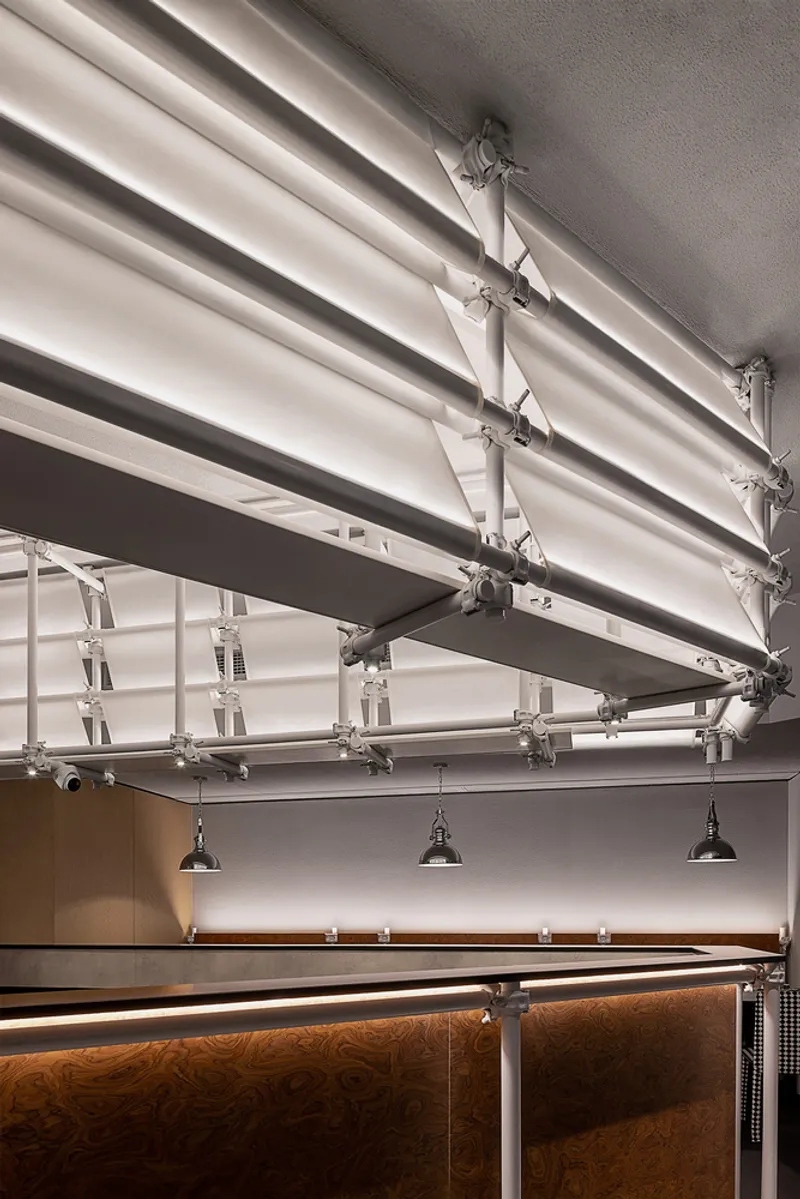
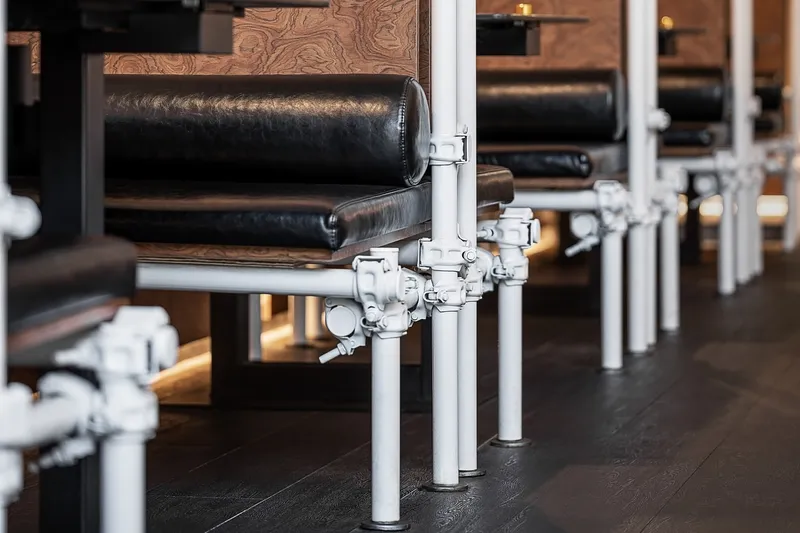
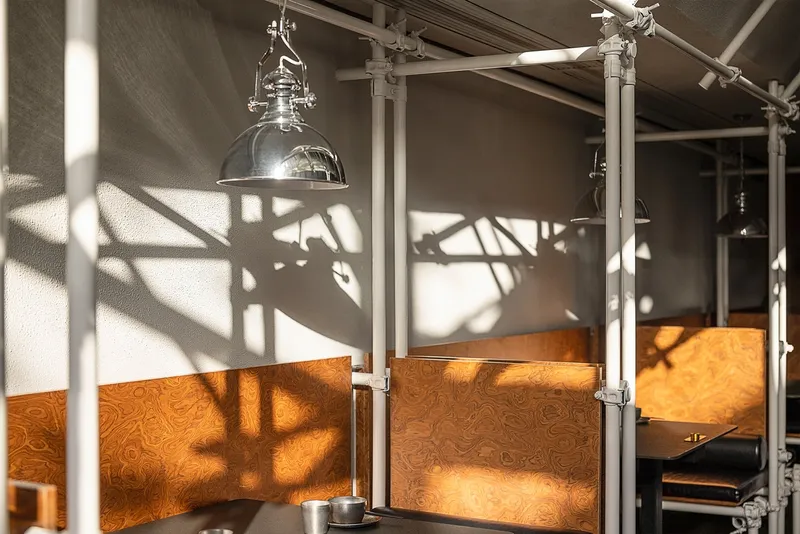
- Scaffolding components as the primary structural-expression element
- Plywood and burl wood veneer for warmth and texture
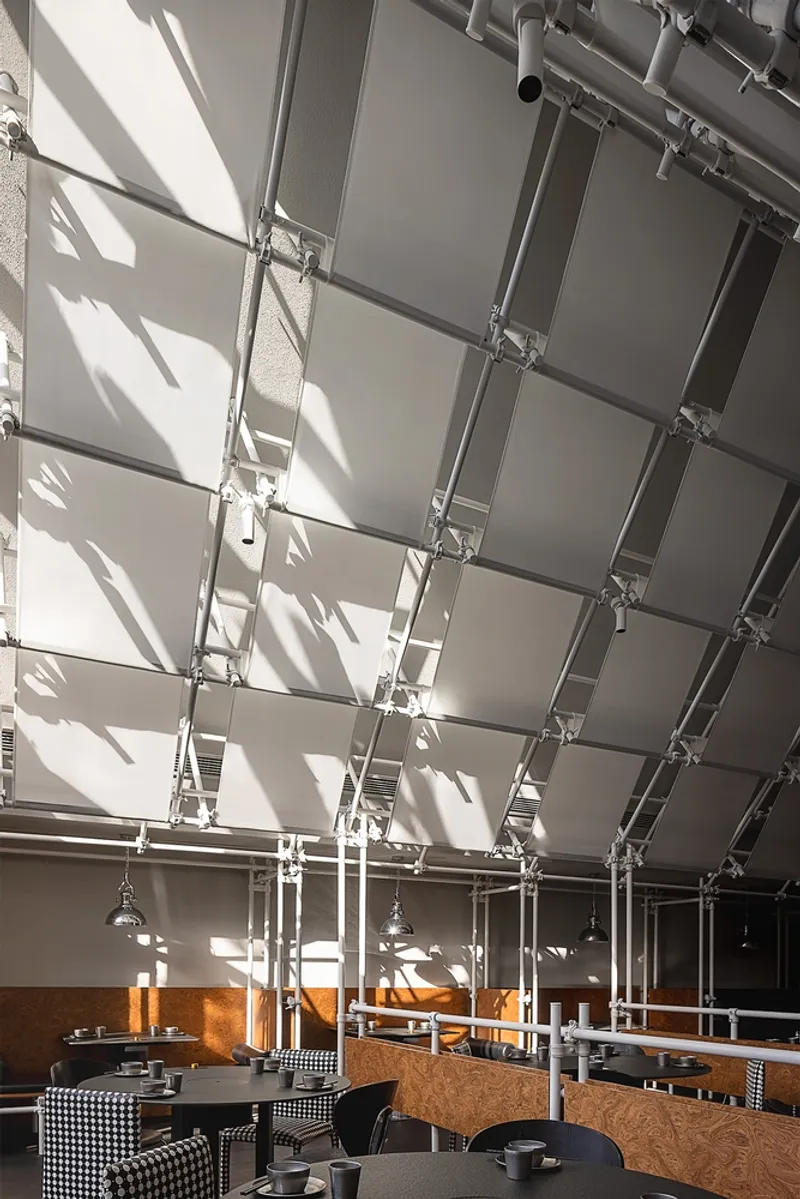
- White light diffuser membranes that soften and warm the overall lighting
The diffuser membranes are suspended within the scaffolding frames, creating a “room within a room” that gently filters light and enriches the spatial depth. Their slight separation from the actual ceiling allows glimpses of the exposed framework, reinforcing an atmosphere of openness, craft, and urban informality. This subtle transparency enhances ventilation and visual permeability while maintaining a cohesive aesthetic.
A Vibrant Fusion Environment for a New Generation of Diners
Through thoughtful spatial distribution, inventive problem-solving, and an honest yet playful material strategy, Atelier Alittle successfully delivers a restaurant environment that aligns with Jinhui’s brand spirit—creative, youthful, and rooted in the culture of everyday street dining. The space balances bold architectural moves with functional pragmatism, creating a memorable dining experience that resonates with Shanghai’s energetic urban character.
All photographs are works of Xiang Cheng



Popular Articles
Popular articles from the community


Conexión: Biophilic Design Reimagines High-Rise Living in Hong Kong
Conexión reimagines high-rise living in Hong Kong through biophilic design, green facades, shared spaces, daylight, water and nature within.

The Ocean Hive: Sustainable Architecture for a Self-Sufficient Civilization at Sea
The Ocean Hive imagines sustainable architecture at sea, where modular habitats, algae, wave power and ocean waste sustain a growing colony.

Lunar Spiral: Space Architecture Shaped by the Mathematics of the Universe
Lunar Spiral reimagines space architecture through Fibonacci geometry, lunar regolith, levitating habitats, and self-sustaining Moon living.

Co-Life: Senior Housing Design That Reconnects Older Adults With the City
Co-Life reimagines senior housing design through healing gardens, shared streets, workshops, and a sustainable community across generations.


Similar Reads
You might also enjoy these articles


Hodi-Mandai Geram
Project Function: Preservation and revitalization of the Intangible heritage and socio-spatial identity of the Hodi by Housing, Cultural Memory Center, Sacred Grove, landscape, local tourism economy


Olio Towers: A Mid-Rise for Performers That Fuses Housing, Rehearsal, and Stage
Located blocks from Houston's Theater District, this modular tower stacks living units around a central performance atrium.

Oasis: Modular Green Housing Carved into Dhaka's Urban Fabric
A shortlisted Plugin Housing entry reclaims unauthorized settlements in Dhaka with stepped concrete volumes, green roofs, and ventilation-driven design.

Black Hole: A Floating Megastructure for the Post-Physical Era
Emiliano Mazzarotto envisions a spherical, self-scaling arena where e-sports, digital hotels, and holographic stadiums replace traditional public space.


Explore Interior Design Competitions
Discover active competitions in this discipline


Challenge to design luxury tourism on rails


Challenge to reimagine the Iron Throne


Photograph architecture without architects


VR headsets Storefront design competition
Comments (0)
Please login or sign up to add comments
No comments yet. Be the first to comment!