

Jinyu Xingfa Science Park by HPP Architects + BIAD: Transforming Industrial Heritage into a Cutting-Edge Research Campus
Jinyu Xingfa Science Park in Beijing transforms a former cement factory into a sustainable, multifunctional research campus blending heritage and innovation.


Located in Huairou Science City, Beijing, the Jinyu Xingfa Science Park is a remarkable example of sustainable industrial revitalization. Designed by HPP Architects in collaboration with BIAD, the project transforms a former cement factory into a dynamic hub for international research and development. Spanning approximately 36 hectares and preserving 54 historic buildings, this multifunctional science park seamlessly blends heritage with innovation.
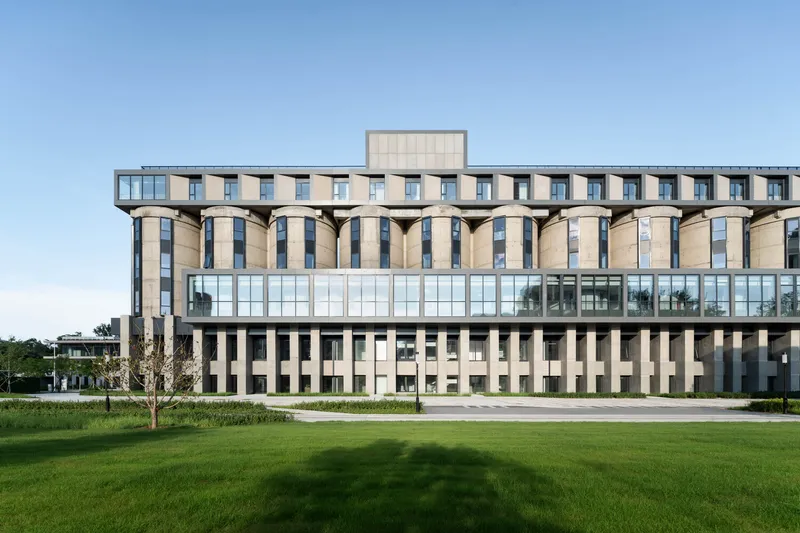
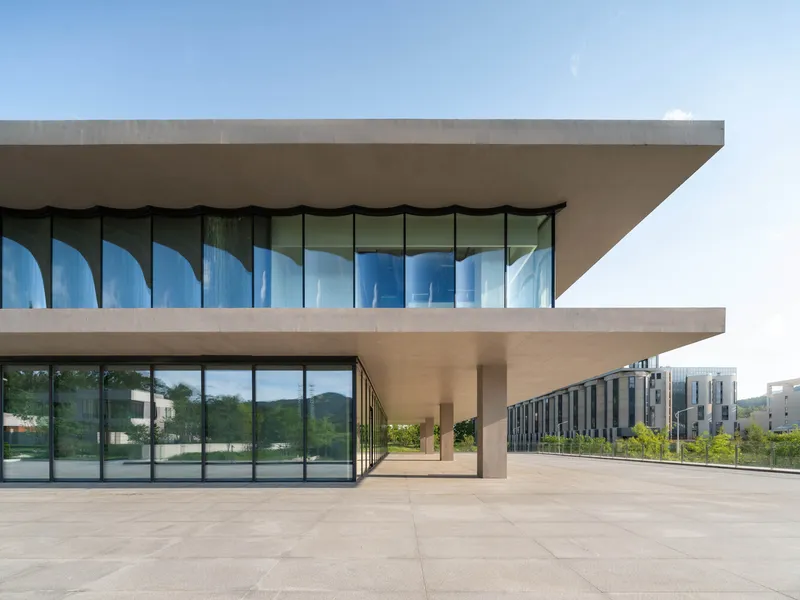
Adaptive Reuse & Architectural Transformation
The design carefully revitalizes the original industrial structures, integrating new constructions to create the Beijing Institute for Mathematical Sciences. The park now houses state-of-the-art laboratories, research facilities, and residential units for researchers and students, while maintaining the site’s unique industrial character.
Tailor-made solutions were implemented for each building: the conical tent warehouse became a multifunctional exhibition hall, the limestone homogenization silo transformed into a large laboratory, the belt corridor and storage building turned into a teaching facility, and the cement bagging platform was converted into a scientific archive museum.
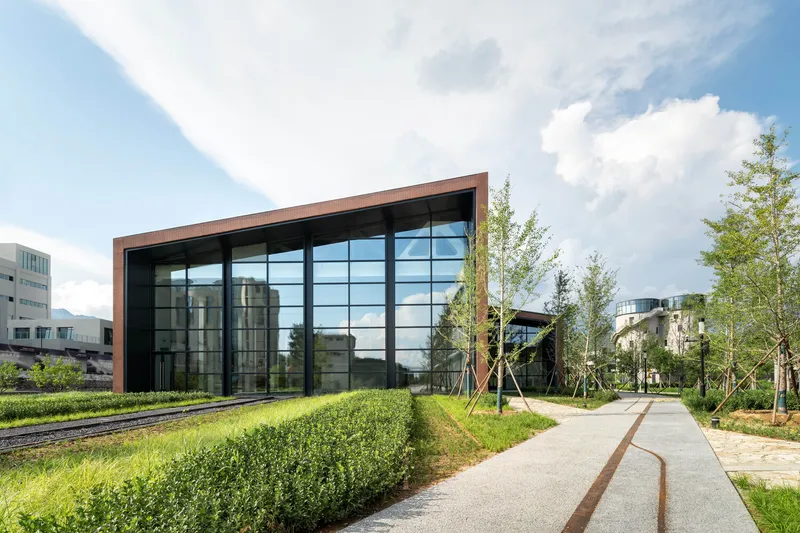
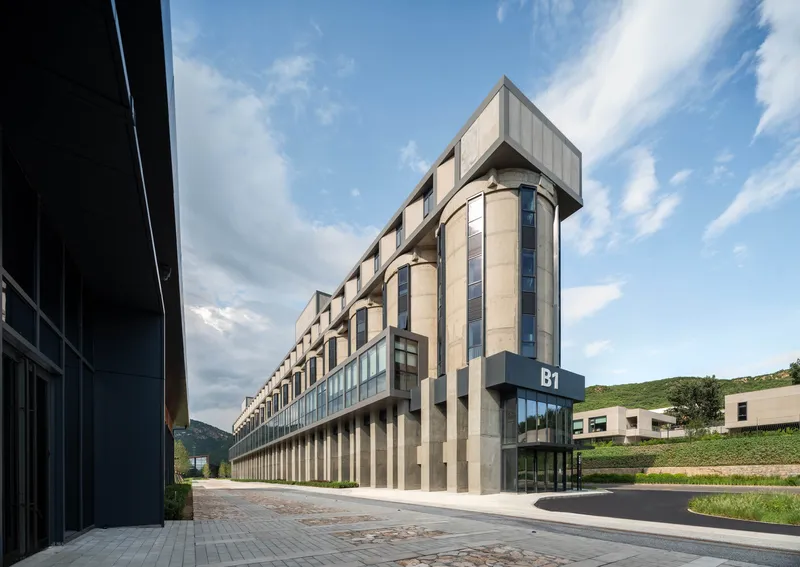
Functional Integration & Sustainable Design
The park’s layout highlights the freight railway running north to south, repurposed as a cultural and landscape spine connecting multiple zones, including the Yanqi Lake Institute of Applied Mathematics, management areas, research institutes, expert studios, and office incubators.
Incorporating residential, leisure, and community facilities within the historic silo structures presented one of the most challenging aspects of the project. Now, the park includes lounges, convenience shops, restaurants, conference areas, and recreational facilities, offering a vibrant environment for daily life.
Facilities for Learning, Research, and Recreation
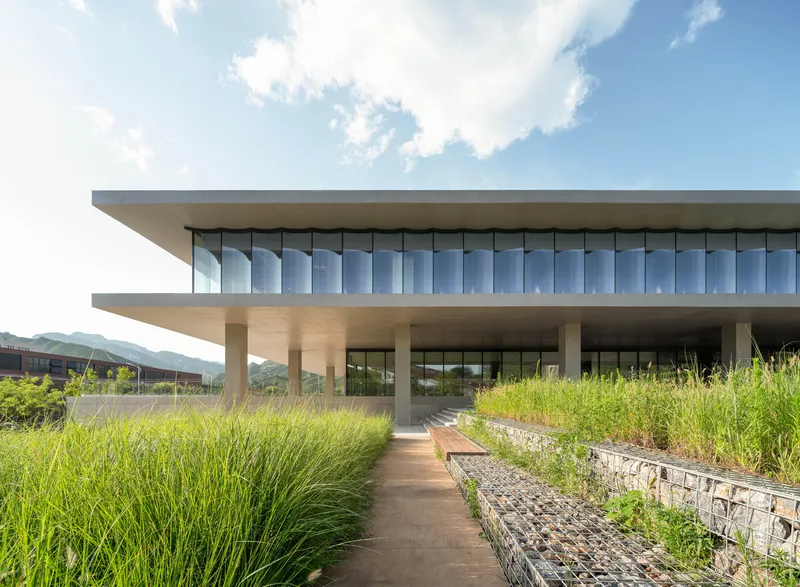
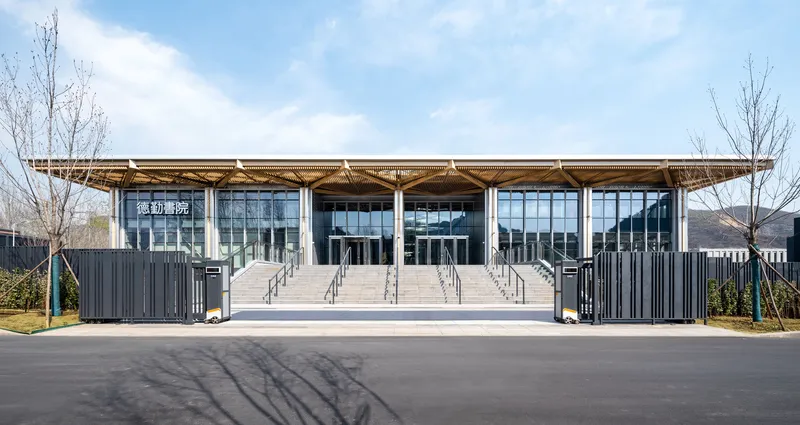
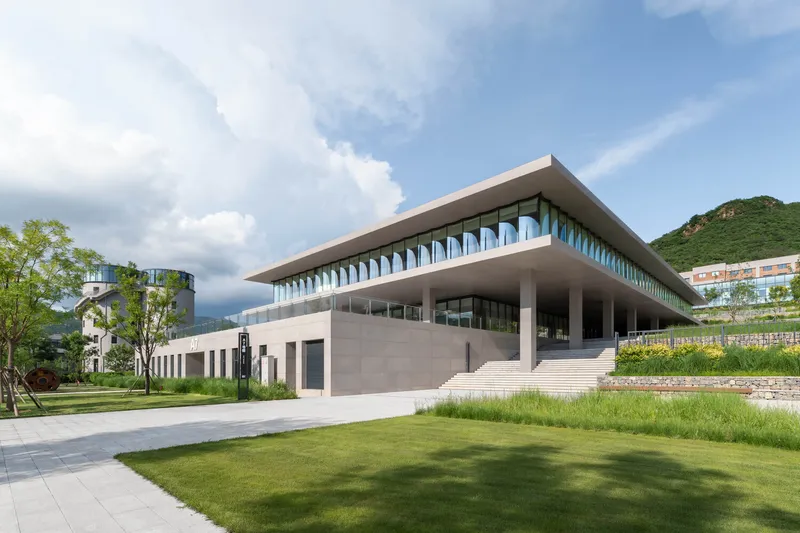
Key new facilities include a library with a stepped design, linking three levels to create diverse activity platforms, a large lecture hall following the mountain’s natural contours, a gymnasium for researchers, a mathematician’s studio, an exhibition hall, and a staff cafeteria. These additions foster collaboration, learning, and social interaction within a sustainable, nature-oriented setting.
Preserving Industrial Legacy with Modern Innovation
The Jinyu Xingfa Science Park embodies the principles of maximum preservation, adaptive reuse, and cultural storytelling. By transforming a once rugged, inaccessible industrial site into a modern, multifunctional science park, it offers a thriving ecosystem for living, working, and learning while honoring its industrial heritage.
All Photographs are works of AST Studio


Popular Articles
Popular articles from the community


Faces of the Soviet Avant-Garde: Turning Moscow's Street Names into an Open-Air Museum
A network of sculptural installations across a Moscow residential district transforms forgotten architect names into spatial encounters with cultural memor

Opera by the Sea Estonia: Three Shells Dissolving Architecture into Tallinn's Coastline
A winning opera house proposal replaces monumental form with interconnected shells that blur the boundary between building, park and Baltic Sea.

Temporary Home for Dogs: A Reversed Zoo Rethinks Animal Shelter Architecture
In Bucharest, a sinuous corridor and freed landscape flip the logic of containment, designing a shelter that works to make itself unnecessary.

Tsunami Convergenics: Turning Catastrophic Ocean Forces into Underwater Housing Infrastructure
A speculative underwater settlement off the coast of Onagawa, Japan, treats tsunamis and typhoons as energy sources rather than threats.

Similar Reads
You might also enjoy these articles


Hodi-Mandai Geram
Project Function: Preservation and revitalization of the Intangible heritage and socio-spatial identity of the Hodi by Housing, Cultural Memory Center, Sacred Grove, landscape, local tourism economy


Olio Towers: A Mid-Rise for Performers That Fuses Housing, Rehearsal, and Stage
Located blocks from Houston's Theater District, this modular tower stacks living units around a central performance atrium.

Oasis: Modular Green Housing Carved into Dhaka's Urban Fabric
A shortlisted Plugin Housing entry reclaims unauthorized settlements in Dhaka with stepped concrete volumes, green roofs, and ventilation-driven design.

Black Hole: A Floating Megastructure for the Post-Physical Era
Emiliano Mazzarotto envisions a spherical, self-scaling arena where e-sports, digital hotels, and holographic stadiums replace traditional public space.

Explore Architecture Competitions
Discover active competitions in this discipline

Challenge to reimagine the Iron Throne

Photograph architecture without architects

Illustrate the lost glory of Angkor Wat - Render Challenge

Design challenge to reuse E-waste
Comments (0)
Please login or sign up to add comments
No comments yet. Be the first to comment!