
Joanópolis House by Vão — A Binuclear Concrete Retreat Framing Brazil’s Mountain Landscape
A concrete binuclear house framing mountain views, balancing openness and privacy with suspended living spaces, stone pathways, and a rooftop pool.

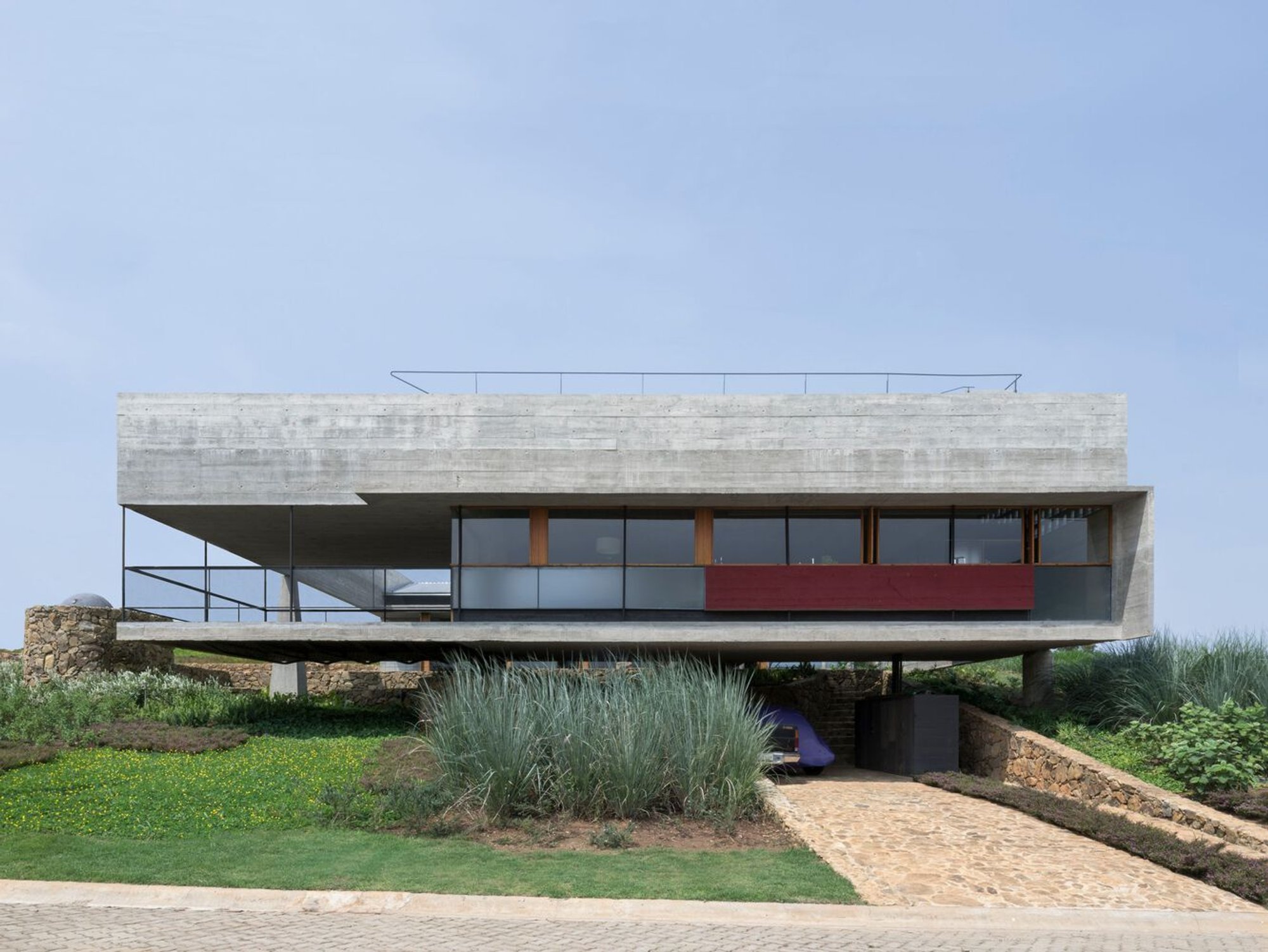
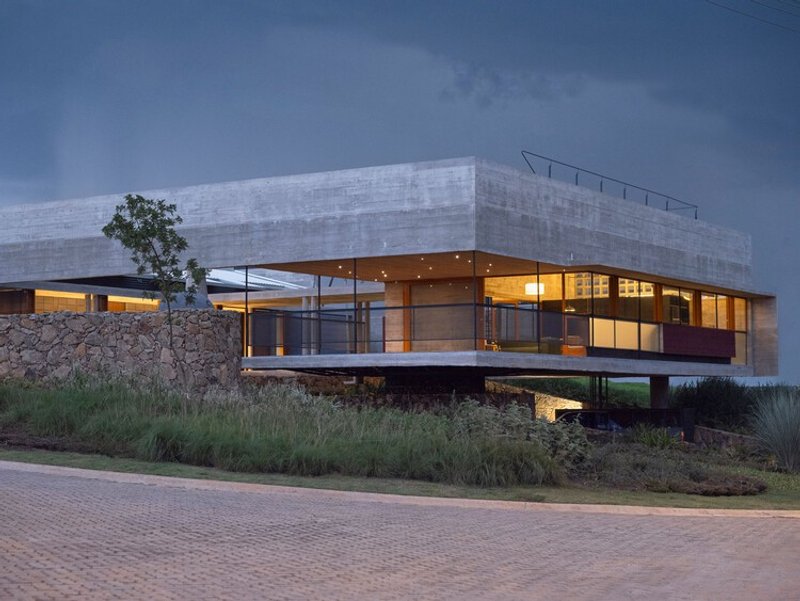
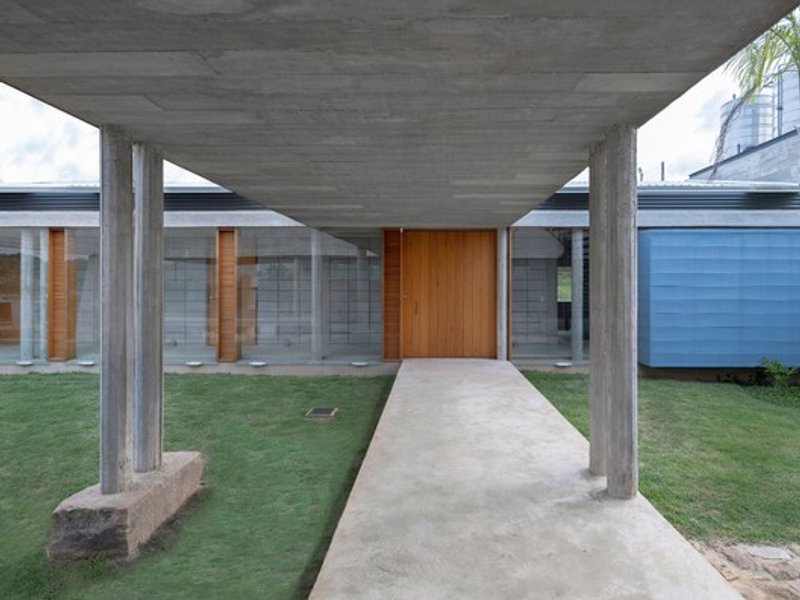
Joanópolis House is a sculptural concrete residence designed by Vão, positioned on the edge of the Jaguari Dam in Joanópolis, Brazil. Completed in 2023 and spanning 340 m², the home embraces its dramatic surroundings with a design strategy that balances openness, privacy, and a strong connection to the Serra do Lopo mountain range. The architecture responds to the contrasting conditions of an expansive natural landscape and a dense neighboring context, resulting in a refined binuclear composition organized around a protected internal courtyard.
A Site Defined by Landscape and Intimacy
The site’s prime location—offering panoramic views of Pedra do Cume and the surrounding natural formations—suggested a home fully open to the outdoors. Yet the presence of nearby houses required a more introspective approach. Vão resolved this tension by designing two interconnected nuclei:
- A front, elevated nucleus oriented toward the views and social life.
- A rear, grounded nucleus dedicated to intimate spaces.
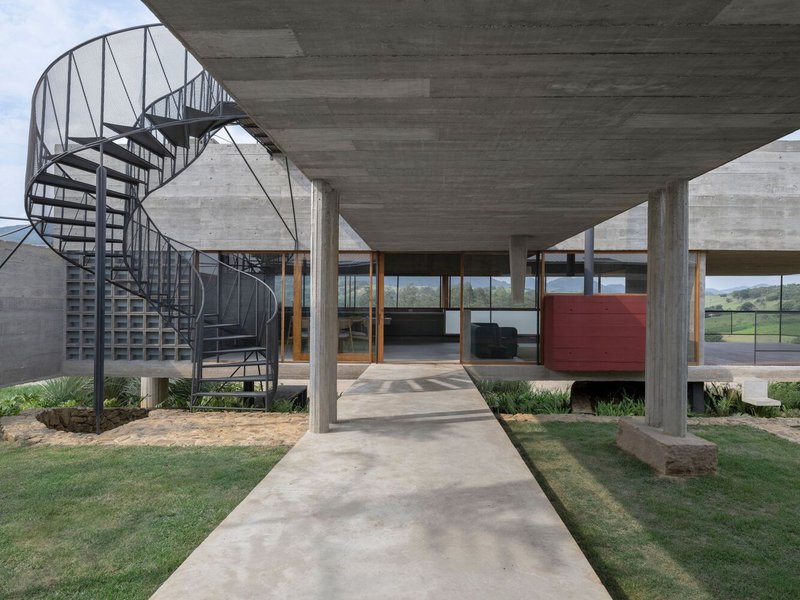
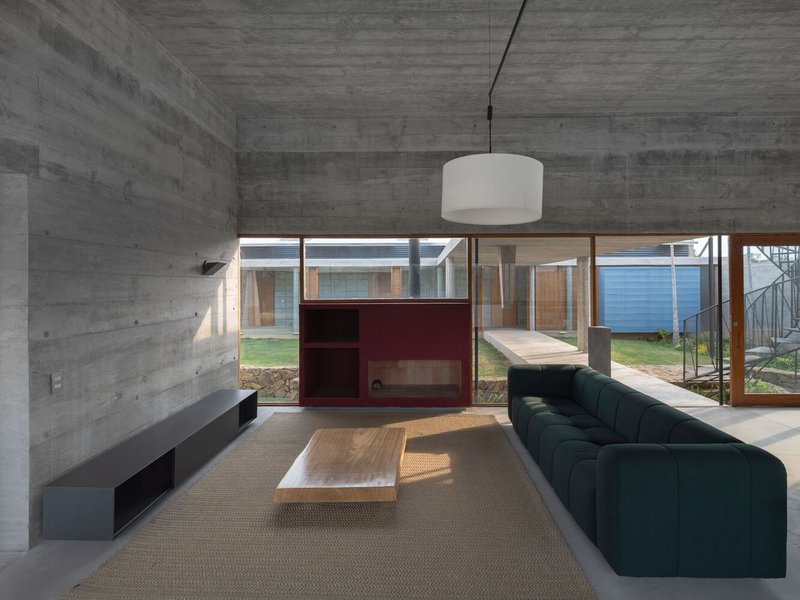
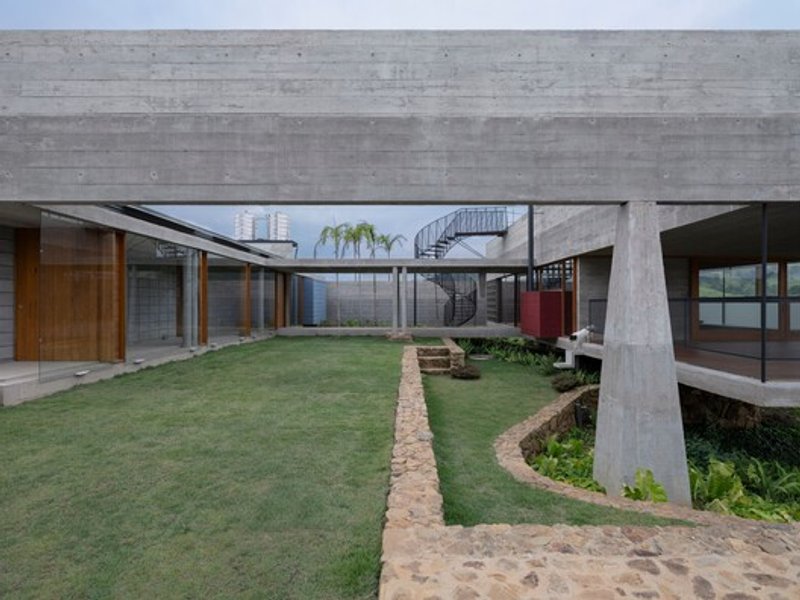
This dual-core strategy creates a carefully orchestrated spatial hierarchy. The central courtyard becomes the heart of the house—a sheltered void that filters light, mediates privacy, and anchors daily life. The architects describe the process as “beginning by defining what would not be built,” allowing the remaining volumes to naturally grow around the protected open space.
Earth, Stone, and Concrete: A Dialogue of Materials
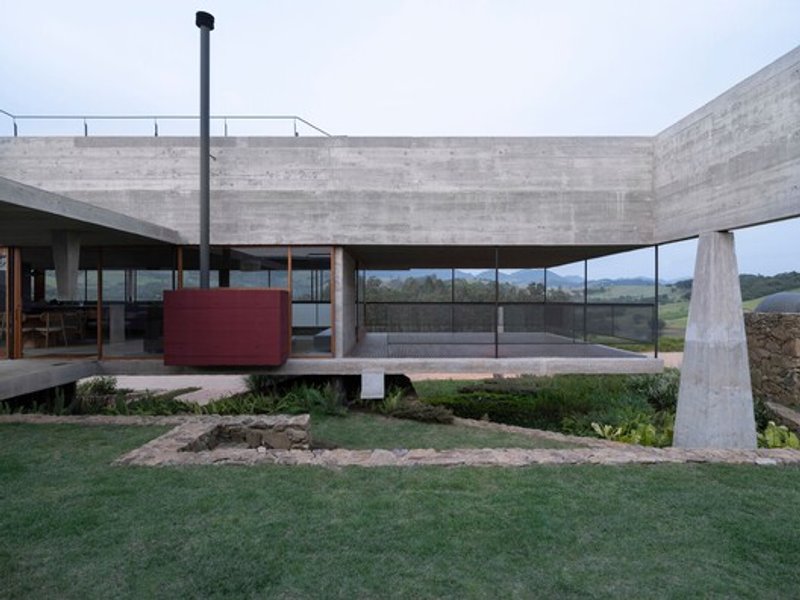
The house’s rear volume is partially embedded into the land, lowered by one meter to level the terrain. In contrast, the front volume is boldly suspended. Vão utilized the natural topography as a construction tool, pouring the lower slab directly onto the soil and removing the earth only after the upper slab cured. This process eliminated the need for temporary supports and created a void that enhances the sense of lightness.
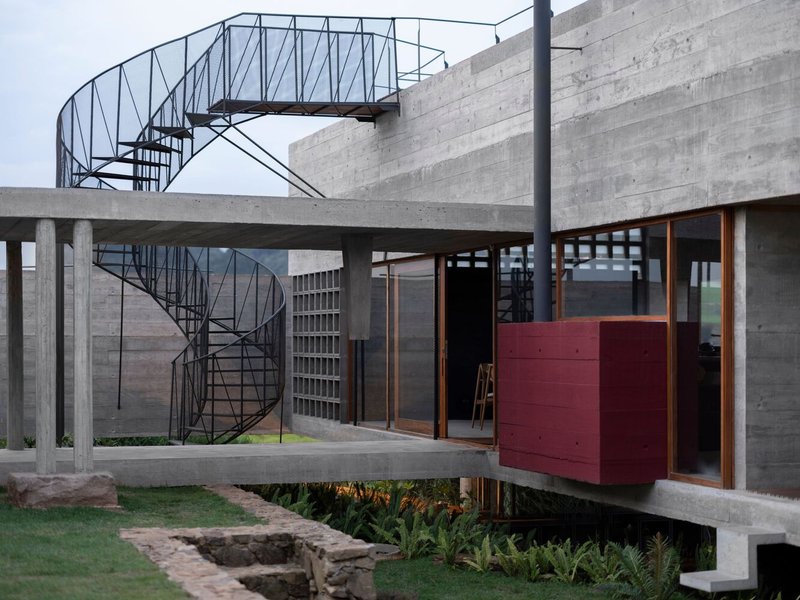
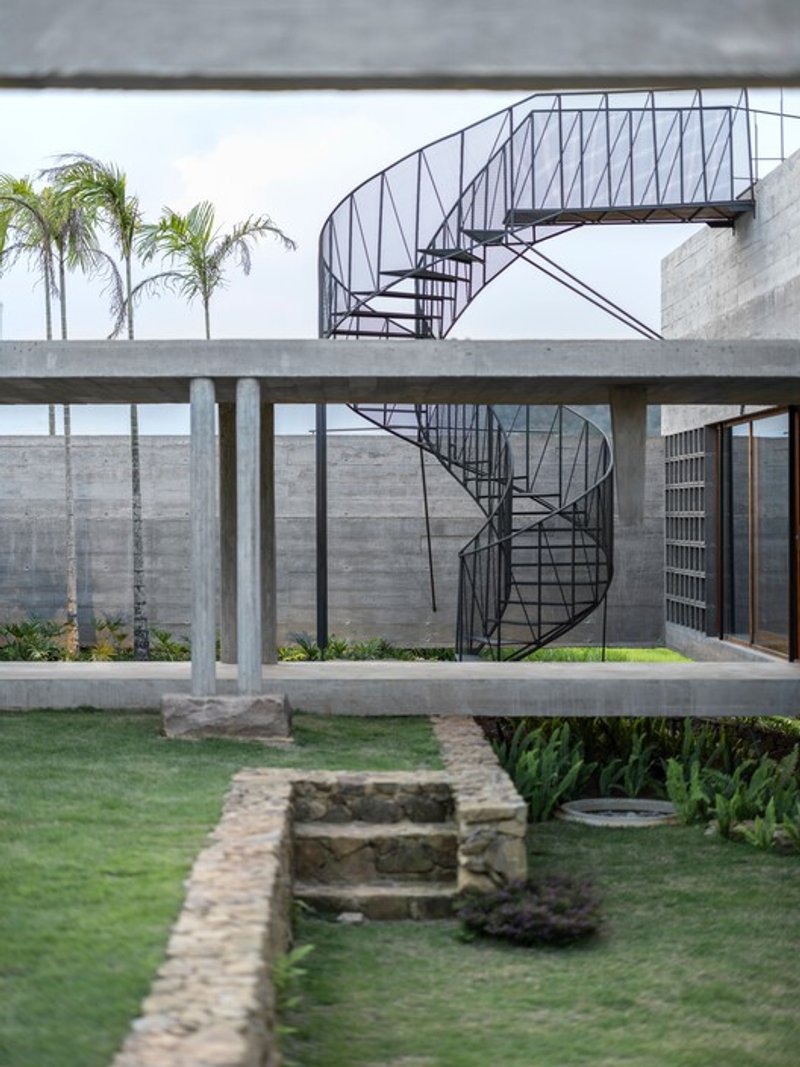
Stone retains a critical role in the project. Organic stone walls weave through the site, forming plateaus, retaining structures, and visual barriers. Their curving lines soften the rigid geometry of the concrete volumes and lead visitors along a sculpted approach that transitions from the street to the elevated patio level.
A Floating Living Space Open to the Horizon
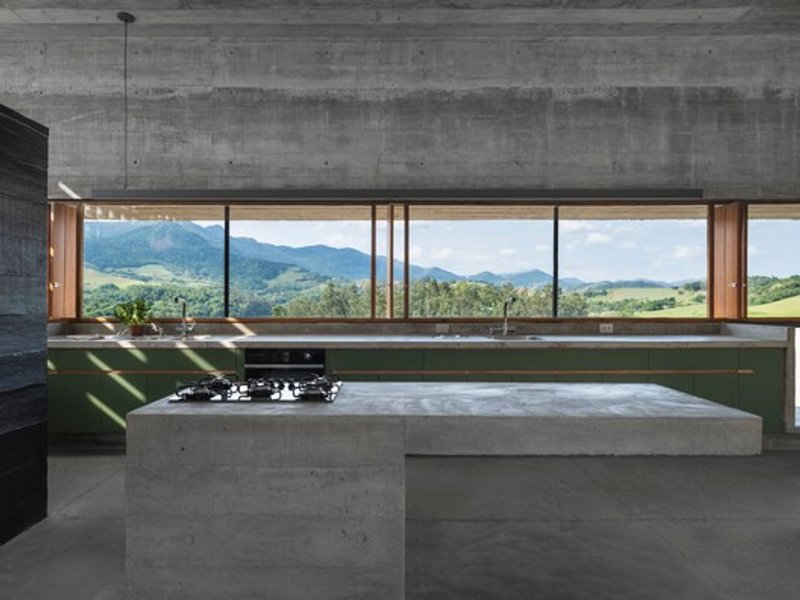
Inside the elevated front nucleus, social programs unfold as an open and continuous living space. A horizontal window band stretches across the façade, inviting natural light and framing expansive views of the dam and mountain peaks. The balcony, positioned at the corner overlooking the site’s edge, enhances the feeling of suspension and creates a moment of engagement with the street below.
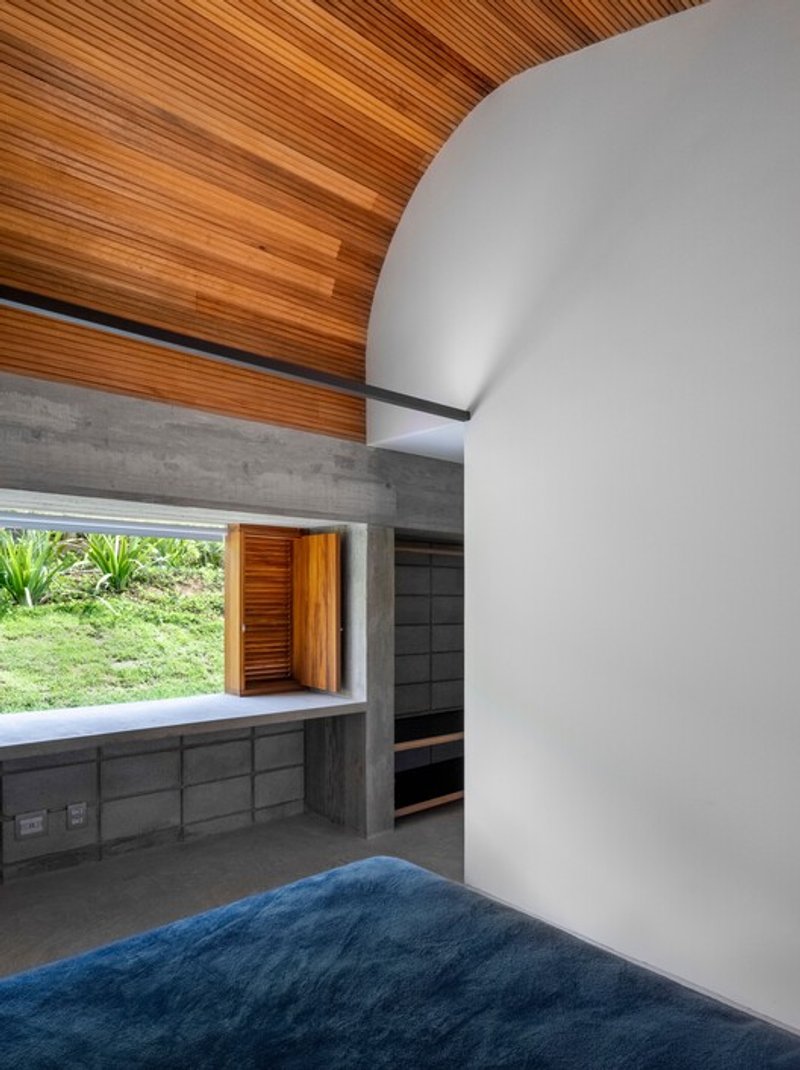
At the back of the site, the bedroom wing remains more introspective yet structurally interdependent with the front volume. Large concrete beams connect both nuclei, enabling the rear grounded block to function as a counterbalance—acting like a structural lever that supports the suspended living areas.
A Solarium Above and a Pool at the Edge
The generous height of the beams in the front nucleus conceals another layer of program. A spiral staircase leads residents upward to a rooftop garden, solarium, and swimming pool. Positioned above the balcony projection, the pool places its water mass at the furthest point of the cantilever, creating an intentional structural asymmetry. This engineering challenge resulted in unique support strategies but rewarded the design with optimal sunlight, privacy, and views.
A Residence that Balances Openness and Shelter
Joanópolis House embodies a thoughtful negotiation between exposure and protection. Its binuclear organization ensures the home feels simultaneously expansive and intimate. Concrete and stone merge with the terrain, framing the Serra do Lopo while creating a calm, inward-looking refuge. Vão’s design transforms natural constraints into architectural opportunities, resulting in a home that is both rooted in its place and elevated above it.
All photographs are works of Marina Lima



Popular Articles
Popular articles from the community

VEIVE Architects Builds a Mountain Hostel That Disappears into a Hangzhou Hillside
On the Huihang Ancient Trail in Xiangjian Village, a shelter of wood, steel, and rammed earth roots itself in the rural landscape.
gru.a Builds a 70 m² Timber Shelter That Opens Like a Farm Door in Brazil's Valley of the Vines
In the mountainous region near Rio de Janeiro, a compact retreat uses plywood panels and deep eaves to blur the line between inside and out.
Johnston Architects Reimagines the Methow Valley Hay Barn as a Small-Town Library in Winthrop
A 7,300-square-foot timber library channels the region's agrarian vernacular to serve a rural Washington community of 400 year-round residents.
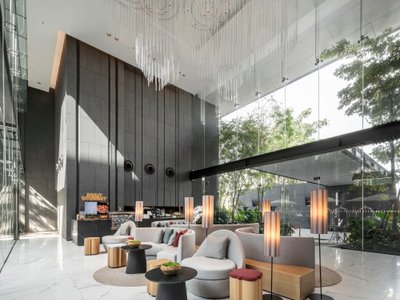
IDIN Architects Wraps a Hua Hin Hotel Around a Private Courtyard to Escape the City
Dusit D2 Hua Hin turns an urban infill site in Thailand's family vacation heartland into a self-contained resort through courtyard planning.

Similar Reads
You might also enjoy these articles

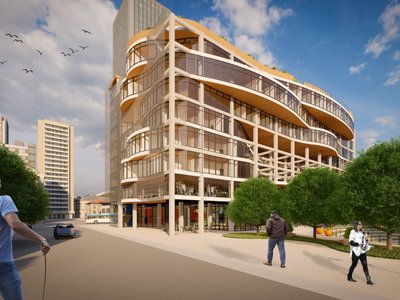
Olio Towers: A Mid-Rise for Performers That Fuses Housing, Rehearsal, and Stage
Located blocks from Houston's Theater District, this modular tower stacks living units around a central performance atrium.
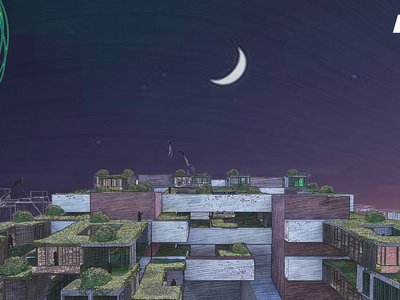
Oasis: Modular Green Housing Carved into Dhaka's Urban Fabric
A shortlisted Plugin Housing entry reclaims unauthorized settlements in Dhaka with stepped concrete volumes, green roofs, and ventilation-driven design.

Black Hole: A Floating Megastructure for the Post-Physical Era
Emiliano Mazzarotto envisions a spherical, self-scaling arena where e-sports, digital hotels, and holographic stadiums replace traditional public space.
Compact & Sustainable Living in Piraeus: A Four-Level Family Home Built Around Light and Air
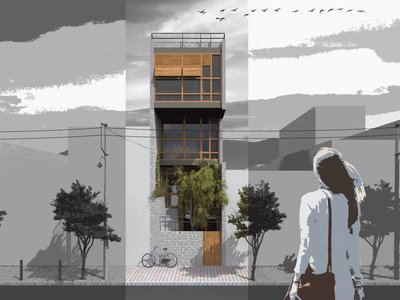
A narrow townhouse in one of Greece's densest port cities uses a central atrium and passive strategies to house three generations under one roof.


Explore Architecture Competitions
Discover active competitions in this discipline




The International Standard for Design Portfolios


The Global Benchmark for Architecture Dissertation Awards


The Global Benchmark for Graduation Excellence


Challenge to reimagine the Iron Throne
Comments (0)
Please login or sign up to add comments
No comments yet. Be the first to comment!