

John Olver Transit Center: America’s First Net-Zero Transit Hub by Charles Rose Architects
First net-zero transit hub in the U.S., blending sustainable design, intermodal connectivity, community space, and high-performance energy systems.


Architect:Charles Rose Architects

A Landmark of Sustainable Transportation Infrastructure
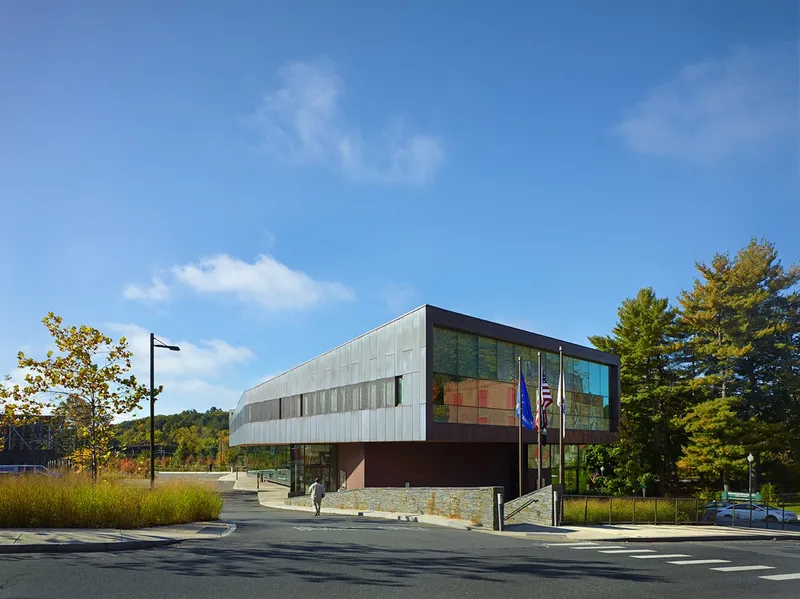
The John W. Olver Transit Center, designed by Charles Rose Architects, stands as a pioneering model in the field of sustainable transportation architecture. Located in Greenfield, Massachusetts, this 24,000-square-foot facility holds the distinction of being the first net-zero energy transit center in the United States, setting a new benchmark in public infrastructure.
Funded by the Federal Transit Administration (FTA) and the American Recovery and Reinvestment Act (ARRA), the center merges intermodal connectivity, community service, and net-zero energy performance into a single civic facility that demonstrates how public architecture can serve both people and the planet.
A Hub for Mobility and Community
The Transit Center is more than just a transportation depot—it is a civic catalyst. It functions as:
- A station for Amtrak’s Vermonter and Valley Flyer lines
- A depot for regional and interstate bus lines
- Headquarters for the Franklin Regional Council of Governments (FRCOG)
The interior also hosts community meeting spaces and government offices, with flexible layouts and adaptable furnishings to support changing community needs over time. This multi-use functionality addresses both the mobility needs and social equity goals of Franklin County, offering accessible public transportation and shared civic space in one cohesive facility.
Integrated Sustainable Design and Engineering
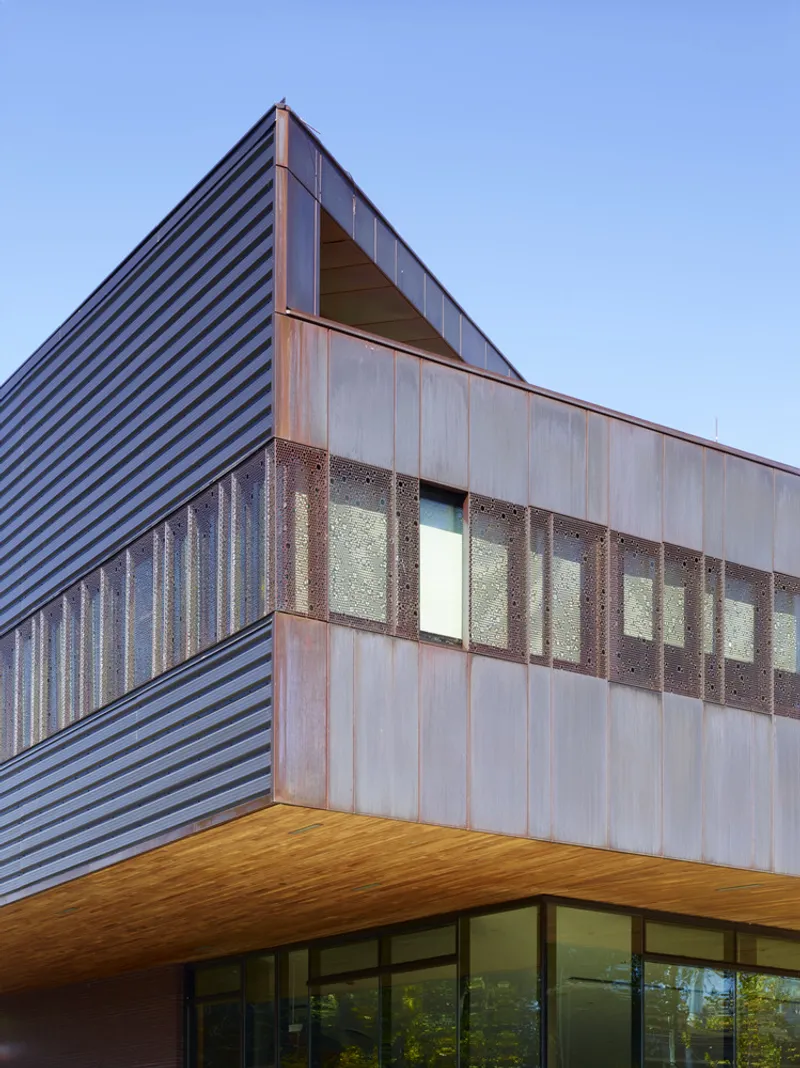
The building is a showcase of high-performance architecture. The design process was deeply collaborative, with architects, engineers, and landscape designers working together from the start. Real-time energy modeling played a critical role in shaping the building’s orientation, form, and façade strategies.
Key sustainable strategies include:
- Passive Systems: Daylighting and glare control High thermal mass for temperature stability Exterior and interior shading Solar wall for preheating air during winter Natural cross-ventilation
- Daylighting and glare control
- High thermal mass for temperature stability
- Exterior and interior shading
- Solar wall for preheating air during winter
- Natural cross-ventilation
- Active Systems: 22 geothermal wells Water-source heat pumps Energy recovery systems Chilled beams Real-time energy usage feedback via an occupant dashboard
- 22 geothermal wells
- Water-source heat pumps
- Energy recovery systems
- Chilled beams
- Real-time energy usage feedback via an occupant dashboard
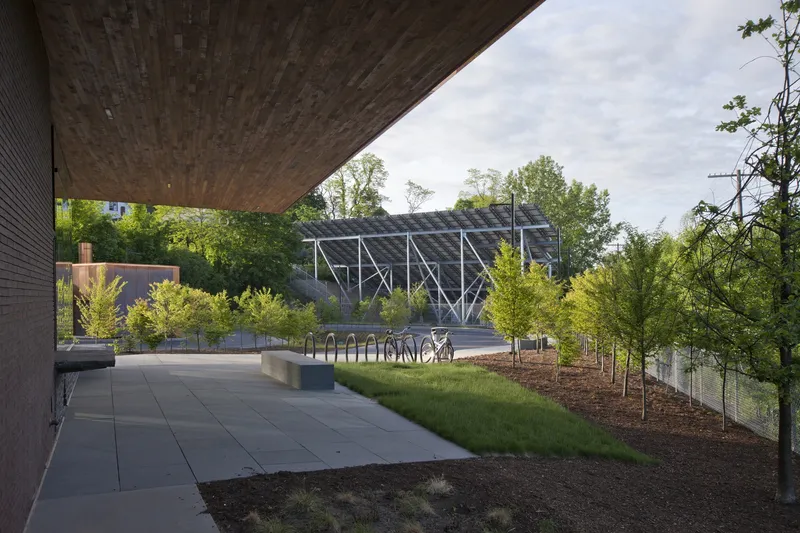
- On-site Renewable Energy: A 98kW photovoltaic solar array
- A 98kW photovoltaic solar array
These strategies contribute to a zero net energy target, demonstrating that green civic infrastructure is not only viable but essential in addressing climate change at the regional level.
Xeriscaping and Landscape Resilience
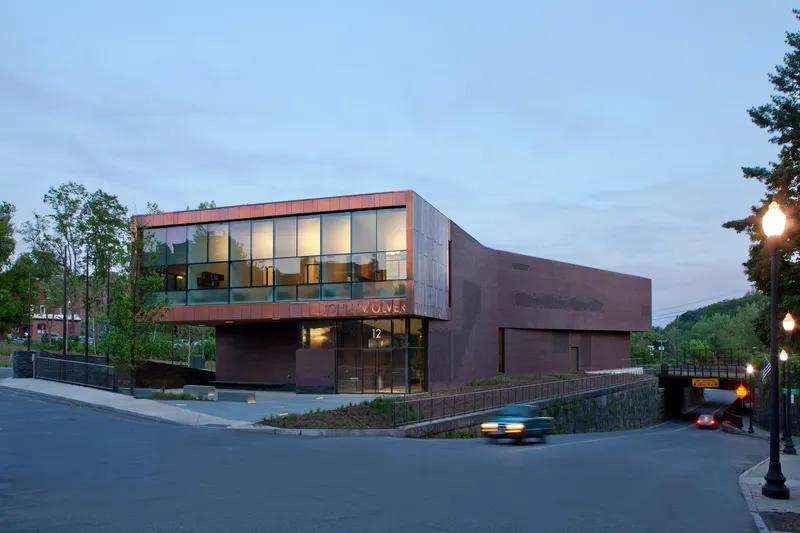
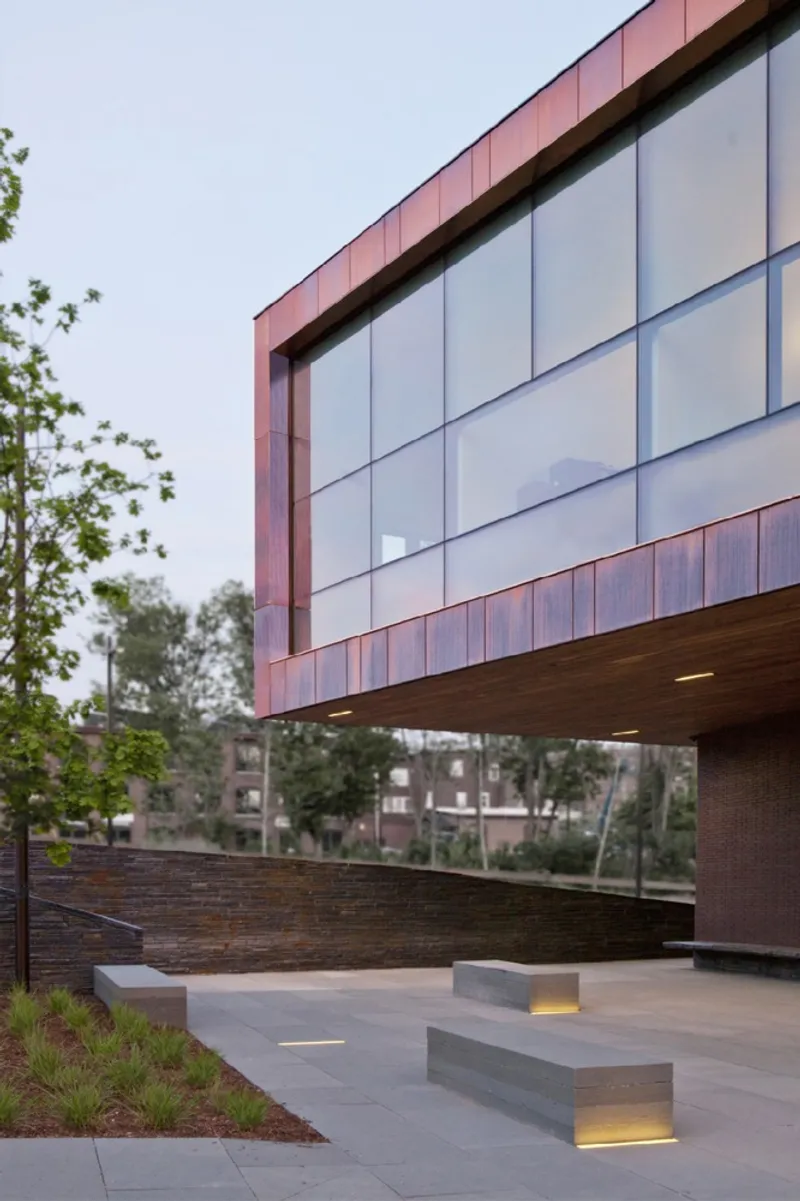
The surrounding landscape, designed by GroundView LLC, features xeriscaping—a water-efficient planting strategy that reduces irrigation demand and supports local ecology. The hardscape and softscape are fully integrated with the building design, supporting stormwater management, biodiversity, and urban cooling.

Architecture that Embodies Ethics and Innovation
The John Olver Transit Center redefines what a government building can be. Beyond meeting ambitious environmental goals, it serves the public with transparency, dignity, and resilience. Its architecture is functional, flexible, and future-ready—a model for how local governments can invest in net-zero civic infrastructure while strengthening community connectivity and regional mobility.
Project Credits
- Lead Architect: Charles Rose
- Structural Engineering: Richmond So Engineers
- Civil Engineering: Nitsch Engineering
- Landscape Architect: GroundView, LLC
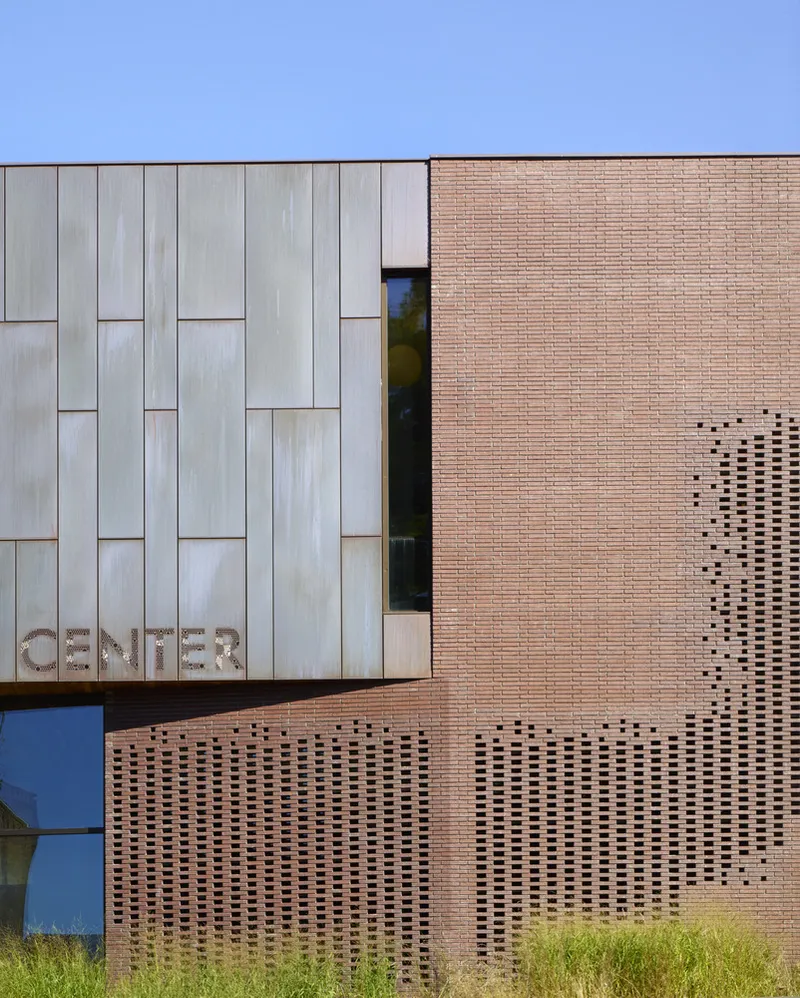
- Products Used: Sika roofing systems, Duratherm windows, Zahner metals, Solar Wall, Price Beams
All photographs are works of
John Linden, Peter Vanderwalker




Popular Articles
Popular articles from the community


The Ocean Hive: Sustainable Architecture for a Self-Sufficient Civilization at Sea
The Ocean Hive imagines sustainable architecture at sea, where modular habitats, algae, wave power and ocean waste sustain a growing colony.

Conexión: Biophilic Design Reimagines High-Rise Living in Hong Kong
Conexión reimagines high-rise living in Hong Kong through biophilic design, green facades, shared spaces, daylight, water and nature within.

Co-Life: Senior Housing Design That Reconnects Older Adults With the City
Co-Life reimagines senior housing design through healing gardens, shared streets, workshops, and a sustainable community across generations.

Hill & Cross Opera: Sculptural Opera House Architecture Shaped by Tallinn’s Landscape and Identity
Hill & Cross Opera reimagines opera house architecture in Tallinn through its sculptural hill, civic plaza, glass wave and a luminous cross.


Similar Reads
You might also enjoy these articles


Hodi-Mandai Geram
Project Function: Preservation and revitalization of the Intangible heritage and socio-spatial identity of the Hodi by Housing, Cultural Memory Center, Sacred Grove, landscape, local tourism economy


Olio Towers: A Mid-Rise for Performers That Fuses Housing, Rehearsal, and Stage
Located blocks from Houston's Theater District, this modular tower stacks living units around a central performance atrium.

Oasis: Modular Green Housing Carved into Dhaka's Urban Fabric
A shortlisted Plugin Housing entry reclaims unauthorized settlements in Dhaka with stepped concrete volumes, green roofs, and ventilation-driven design.

Black Hole: A Floating Megastructure for the Post-Physical Era
Emiliano Mazzarotto envisions a spherical, self-scaling arena where e-sports, digital hotels, and holographic stadiums replace traditional public space.
Explore Transit Hub Competitions
Discover active competitions in this discipline



Challenge to reimagine the Iron Throne


Photograph architecture without architects


Illustrate the lost glory of Angkor Wat - Render Challenge


Design challenge to reuse E-waste
Comments (0)
Please login or sign up to add comments
No comments yet. Be the first to comment!