

JYA Home by JYA-RCHITECTS: A Thoughtful Office Renovation Rooted in Community and Context
JYA Home transforms a 40-year-old building into a serene, light-filled architectural office harmonizing with its Seoul neighborhood.


A Personal Journey Toward a Permanent Home
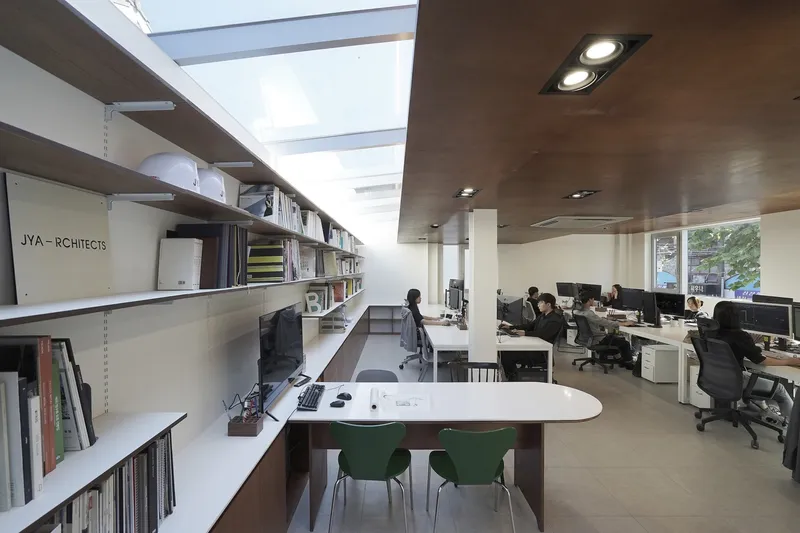
JYA Home, designed by Seoul-based JYA-RCHITECTS, is more than an architectural renovation—it’s a deeply personal project shaped by the studio’s years of transience and a desire to find a lasting, meaningful base. Following multiple relocations due to affordability and space constraints, the team set out to create a stable workspace in Seoul that also felt like home.
Inspired by serene work environments abroad, particularly a former office in Amsterdam overlooking the canal, the architects envisioned a similarly nature-connected, community-rooted office space in Korea. After much exploration along Seoul’s rivers—Bulgwang-cheon and Hongje-cheon—a site was found just minutes from the latter. While the site didn’t offer direct water views, it sat within a short walk from the riverbank, maintaining the project's connection to nature.
Renovation Over Demolition: A Sustainable Architectural Choice
The existing building was over 40 years old and in disrepair, but instead of opting for demolition and new construction, JYA-RCHITECTS embraced the principles of adaptive reuse. Their decision was driven by two key considerations: cost-effectiveness and urban regulations. By maintaining the original structure, they avoided the need for new parking provisions and achieved a more sustainable and budget-conscious renovation.
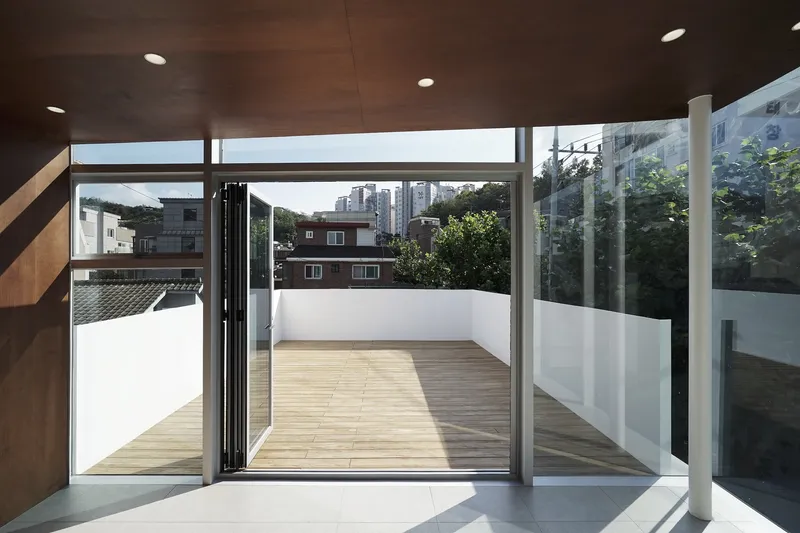
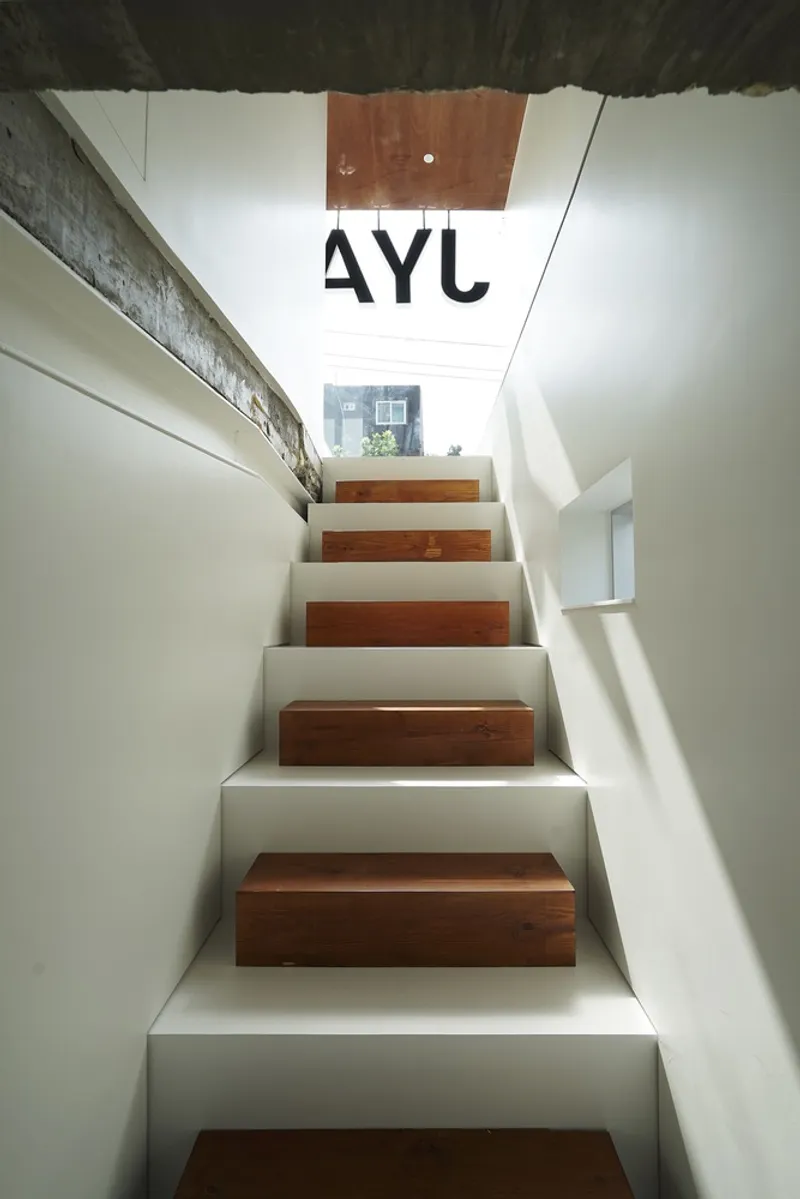
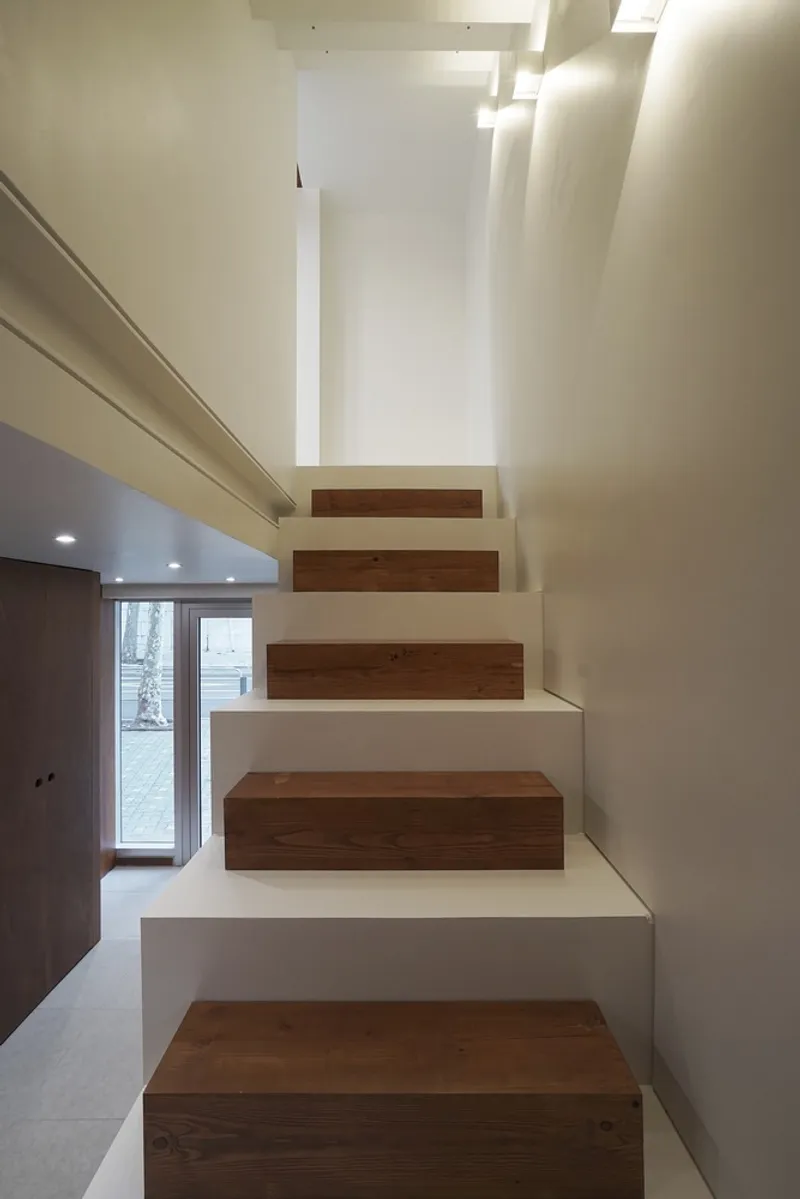
The redesign included burying the existing basement, adding a new third floor, and creating a rooftop terrace, transforming the building into a three-story mixed-use workspace.
Spatial Organization: Open, Functional, and Nature-Responsive
Each floor of JYA Home is carefully programmed to support different functions, optimizing both workflow and wellbeing:
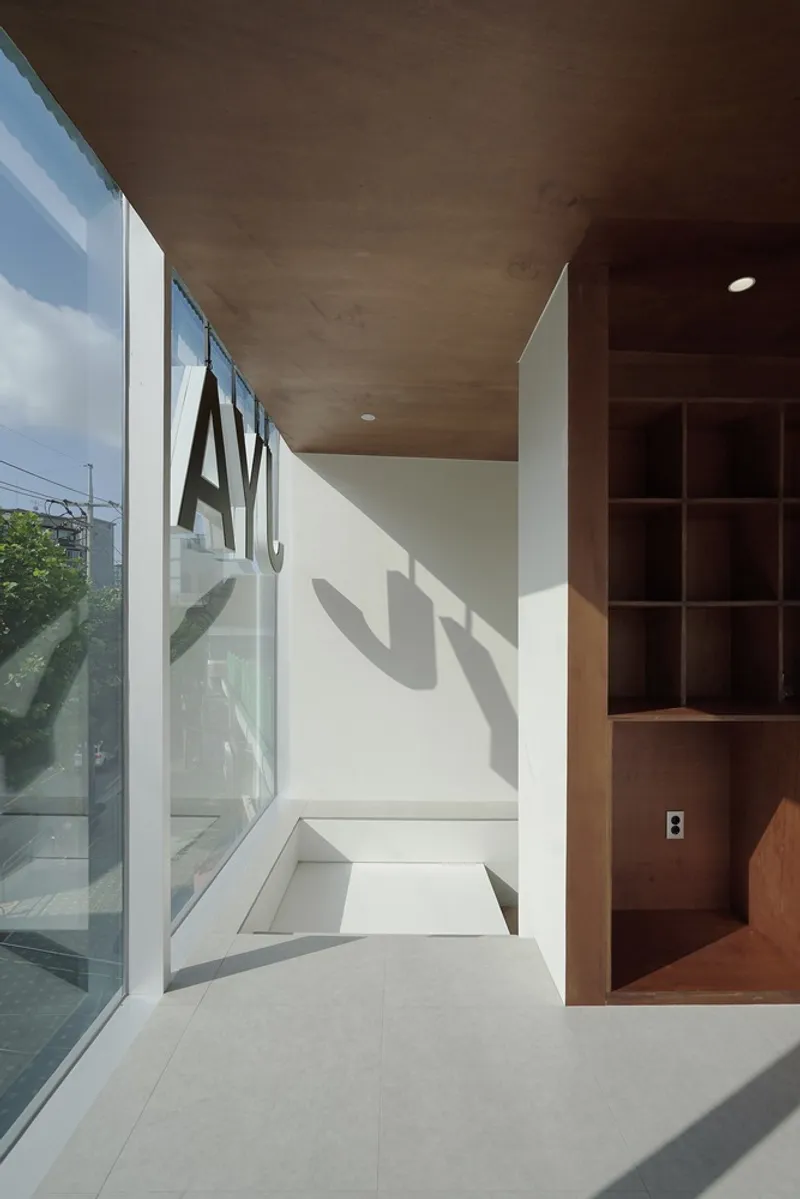
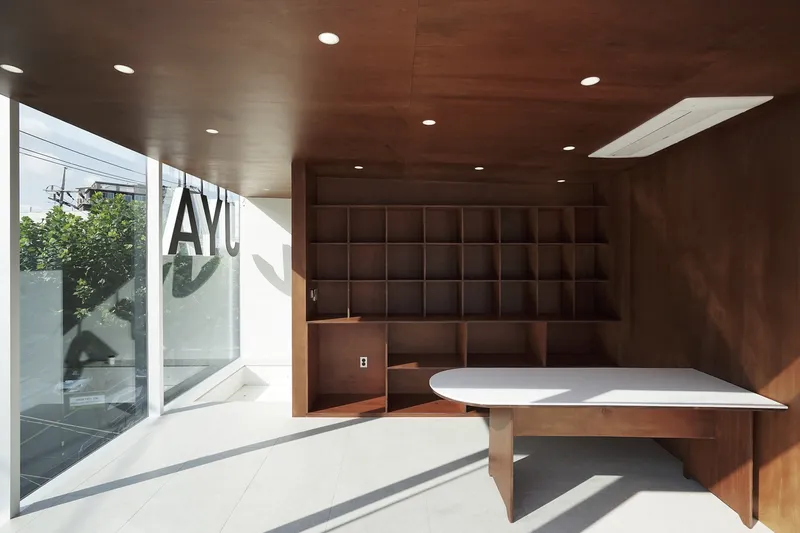
- First Floor: Designed for office directors and support areas (pantry, restroom, storage), this level features full-height glazing that visually connects the interior with the street, fostering openness, transparency, and community engagement.
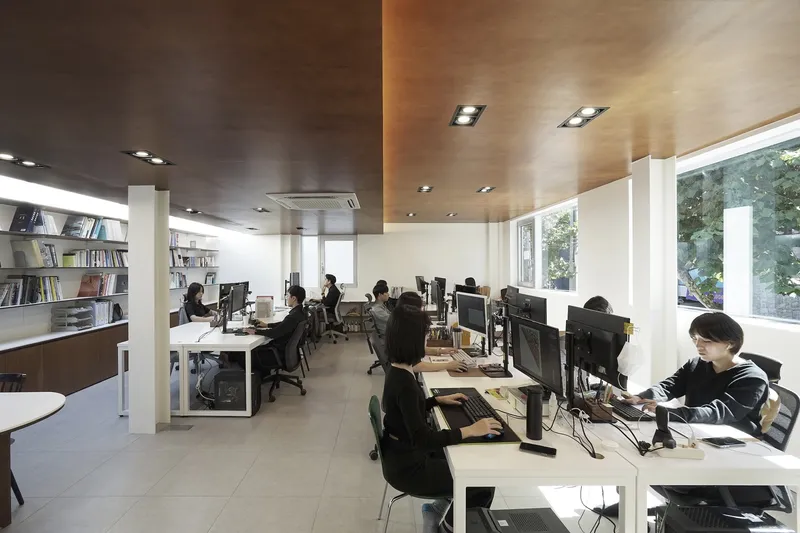
- Second Floor: The main office zone houses 14 employees and is designed for comfort and efficiency. Ample spacing between desks enhances focus, while a north-facing skylight introduces abundant natural light. The tactile experiences of rainfall, snowfall, and seasonal foliage falling onto the skylight create a sensory connection with the outdoors.
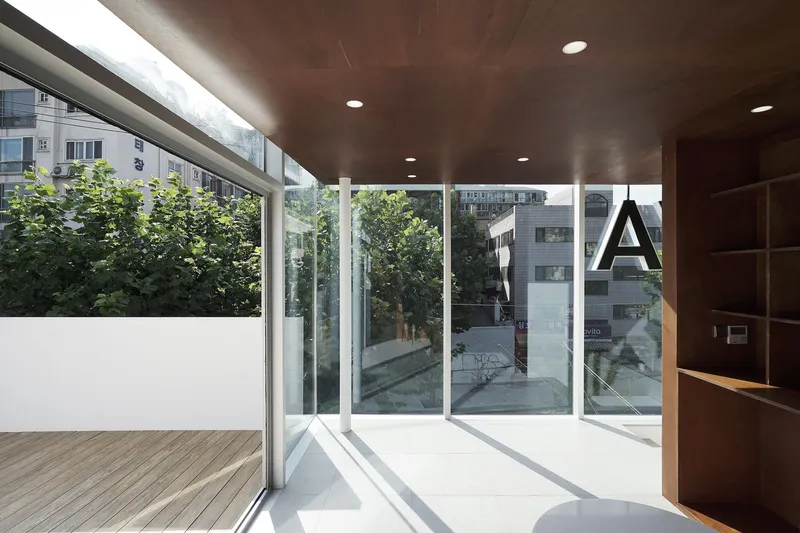
- Third Floor: A curtain-wall glass structure serves as a meeting and rest area, seamlessly blending with the plane trees along the street. Views extend toward Seoul’s surrounding mountain ranges, including Baengnyeon-san and Goeun-san, reinforcing a strong biophilic design narrative.
Local Integration and Social Connectivity
The neighborhood, though relatively underdeveloped by Seoul standards, offers a human-scaled environment filled with long-time residents and small businesses. The building nestles among barbershops, local restaurants, and hardware stores, where neighbors exchange greetings and collectively maintain the streetscape.
This setting complements the studio’s desire for a space that functions not only as an office but as a shared home—a place where the team can retreat from the pressures of architectural work and reconnect with their surroundings.
A Philosophy of Architecture as Livable Infrastructure
For JYA-RCHITECTS, the office is more than a workplace—it is a livable infrastructure that embodies comfort, community, and long-term resilience. Through adaptive reuse, sustainable construction, and contextual integration, JYA Home sets an example for how architecture can respond to both personal aspirations and urban conditions.


Popular Articles
Popular articles from the community


Opera on the Sea: Driftwood Logic Shapes a Timber Opera House on Estonia's Coast
Trevor Orgill's opera house translates the entangled drift of floating timber into a civic building where wood, water, and music converge.
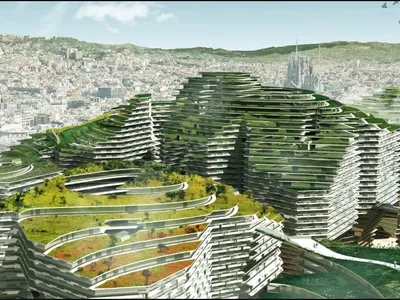
Manzana Morphosis: Stretching Barcelona's Grid into a Living Landscape for 2050
A radical reworking of the Eixample manzana turns density into a tool for generous public space, vertical ecology, and environmental performance.


FCC Arquitectura Expands a Portuguese Granite House with a Board-Marked Concrete Wing
In Portugal, JV House pairs a cleaned-up whitewashed and granite dwelling with a timber-shuttered concrete extension, courtyards and a garden pool.

Singing Woman: An Opera House That Performs Before the Curtain Rises
Ovidiu Cristian Pavel's conceptual opera house translates Estonia's choral identity into a sculpted waterfront landmark facing the Baltic Sea.

Similar Reads
You might also enjoy these articles


Hodi-Mandai Geram
Project Function: Preservation and revitalization of the Intangible heritage and socio-spatial identity of the Hodi by Housing, Cultural Memory Center, Sacred Grove, landscape, local tourism economy


Olio Towers: A Mid-Rise for Performers That Fuses Housing, Rehearsal, and Stage
Located blocks from Houston's Theater District, this modular tower stacks living units around a central performance atrium.

Oasis: Modular Green Housing Carved into Dhaka's Urban Fabric
A shortlisted Plugin Housing entry reclaims unauthorized settlements in Dhaka with stepped concrete volumes, green roofs, and ventilation-driven design.

Black Hole: A Floating Megastructure for the Post-Physical Era
Emiliano Mazzarotto envisions a spherical, self-scaling arena where e-sports, digital hotels, and holographic stadiums replace traditional public space.

Explore OCI Architects Competitions
Discover active competitions in this discipline

Challenge to reimagine the Iron Throne

Photograph architecture without architects

Illustrate the lost glory of Angkor Wat - Render Challenge

Design challenge to reuse E-waste
Comments (0)
Please login or sign up to add comments
No comments yet. Be the first to comment!