

KABINA Prototype by NODO Arquitectura + Naturaleza: A Sustainable Modular Cabin Designed for the Nomadic Generation
A modular 20 m² cabin prototype featuring CNC-crafted joinery, tool-free assembly, curved roof design, and sustainable flexible living for nomadic lifestyles.


The KABINA Prototype, designed by NODO Arquitectura + Naturaleza, represents a new approach to sustainable architecture, modular living, and flexible construction systems. Located in Sydney, Australia, this innovative 20 m² cabin prototype reimagines how small-scale architecture can respond to the needs of modern lifestyles, particularly the growing nomadic workforce, remote workers, and eco-tourism industry.
Led by architect Facundo Ochoa and documented through the photography of Javier Miguens, the project explores the potential of detachable, tool-free construction systems inspired by traditional craftsmanship and contemporary digital fabrication technologies.
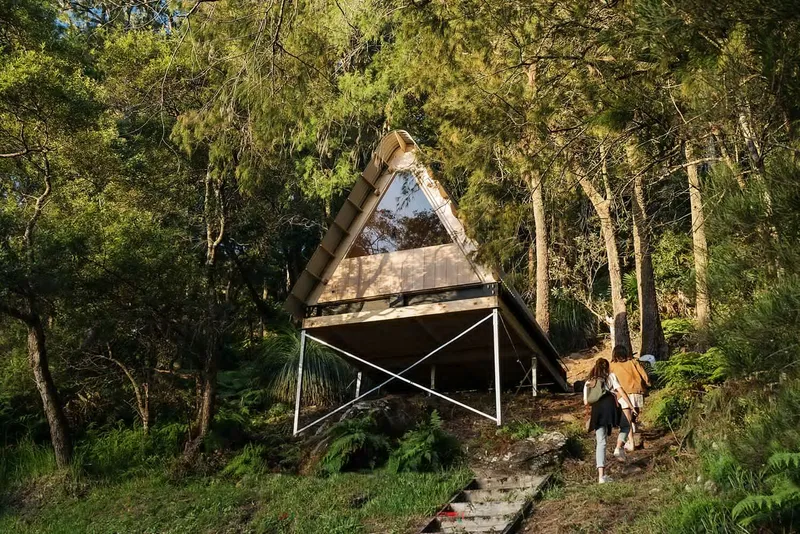
Rethinking Construction: A Detachable and Tool-Free Building System
From the beginning of his architectural studies, Facundo Ochoa sought to challenge conventional construction methods. Traditional “wet construction” techniques, which rely heavily on concrete, mortar, and permanent structural systems, often limit flexibility and adaptability. In contrast, the KABINA concept focuses on a dry construction system that can be easily assembled, dismantled, relocated, or even resold.
The idea was to develop a mechanical assembly system where structural components connect without the use of power tools, screws, or nails. This concept redefines architecture as something closer to furniture design, where buildings become movable, adaptable objects rather than fixed infrastructure.
Such flexibility responds perfectly to the demands of today's mobile and nomadic lifestyle, where people increasingly seek adaptable living environments for remote work, eco-tourism, and temporary housing solutions.
From Concept to Prototype: Challenges and Pandemic Innovation
The development of the KABINA Prototype was not without its challenges. The design process extended over several years, as the architect faced limitations related to technical knowledge, financial resources, and manufacturing technology.
However, during the 2020 global pandemic, a turning point emerged. While in Australia, Ochoa collaborated with carpenter Nicolás Urien, experimenting with CNC (Computer Numerical Control) machining to explore precision-cut wooden components.
This collaboration allowed them to rethink the construction system and refine the structure using digitally fabricated joinery, significantly improving accuracy and efficiency.
Japanese Joinery as a Structural Inspiration
One of the most distinctive aspects of the KABINA system is its inspiration from traditional Japanese joinery techniques. These historic woodworking methods rely on carefully crafted connections between wooden elements, eliminating the need for metal fasteners.
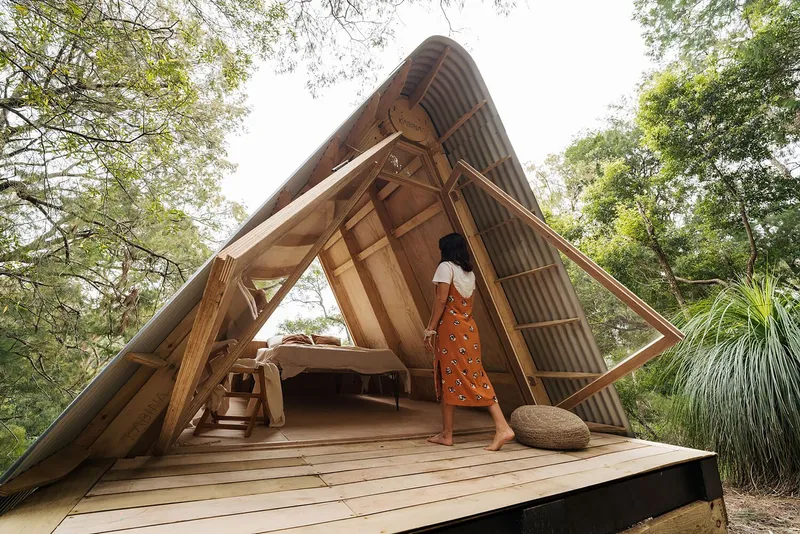
Adapting this philosophy to modern fabrication tools, the KABINA structure features a precisely engineered joint system combined with a main mechanical frame that unfolds like a compass. This mechanism enables the entire cabin structure to open, expand, and lock into place, making assembly remarkably fast and intuitive.
The advantages of this system include:
- Tool-free assembly
- No screws, nails, or adhesives
- Reduced material waste
- Increased structural longevity
- Easy transport and relocation
This approach not only enhances construction efficiency but also contributes to long-term sustainability by allowing components to be reused, repaired, or repurposed.
Architectural Form: Blending into Nature
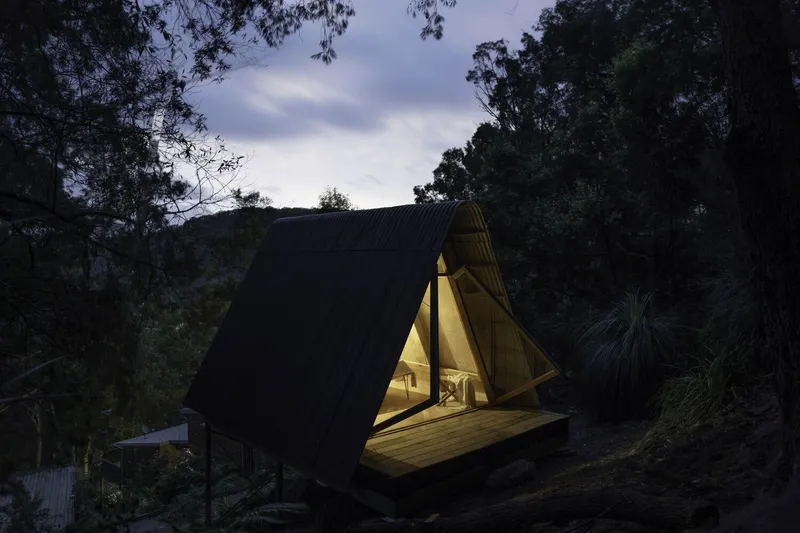
Beyond its innovative structural system, the architectural form of the KABINA cabin plays a crucial role in its integration with natural landscapes.
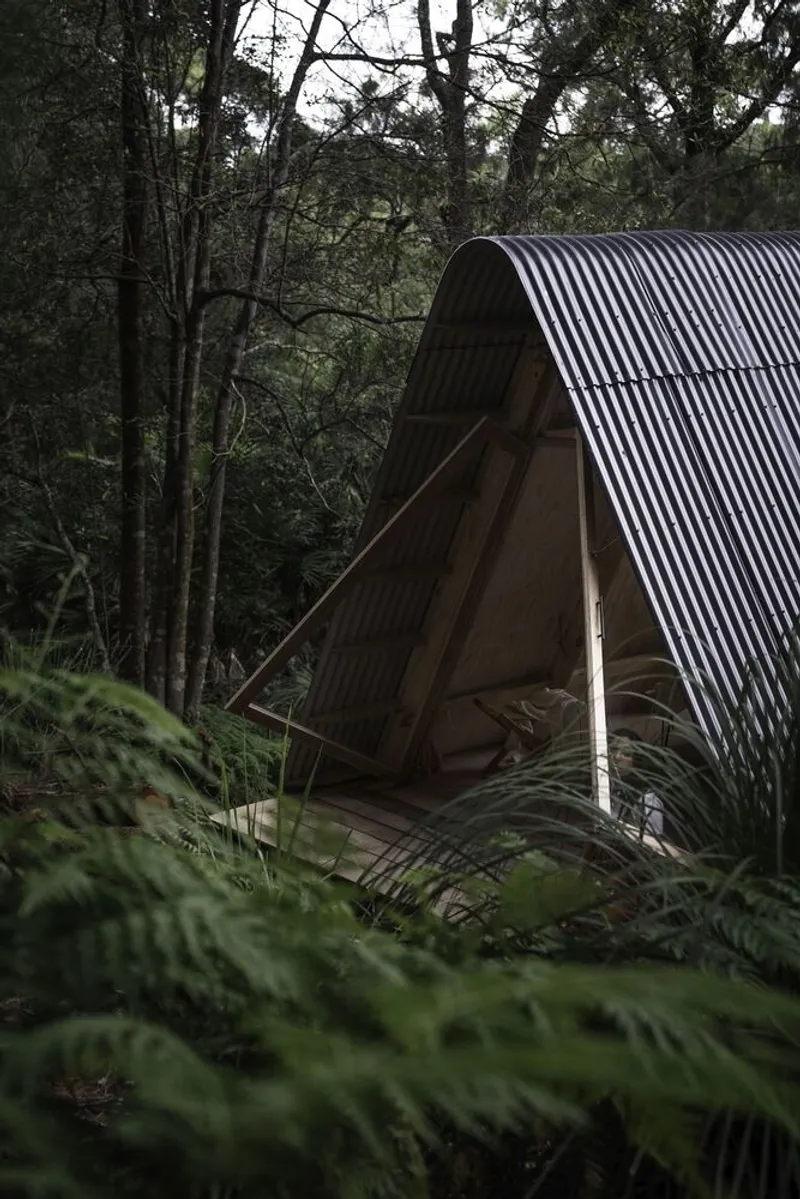
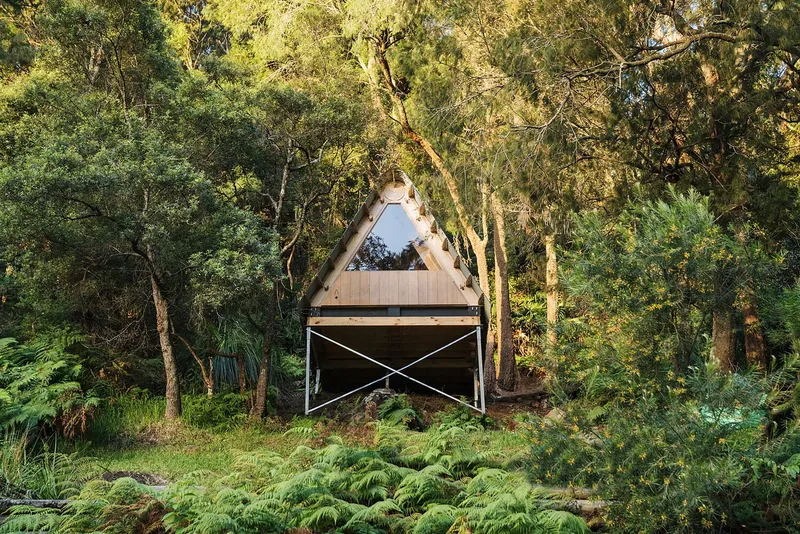
The cabin features a distinctive curved roof, which serves both aesthetic and functional purposes. Visually, the curved geometry softens the building’s presence, allowing it to blend more naturally into forested or rural environments. Functionally, the curve acts as the ridge of the roof, helping with rainwater drainage while maintaining structural simplicity.
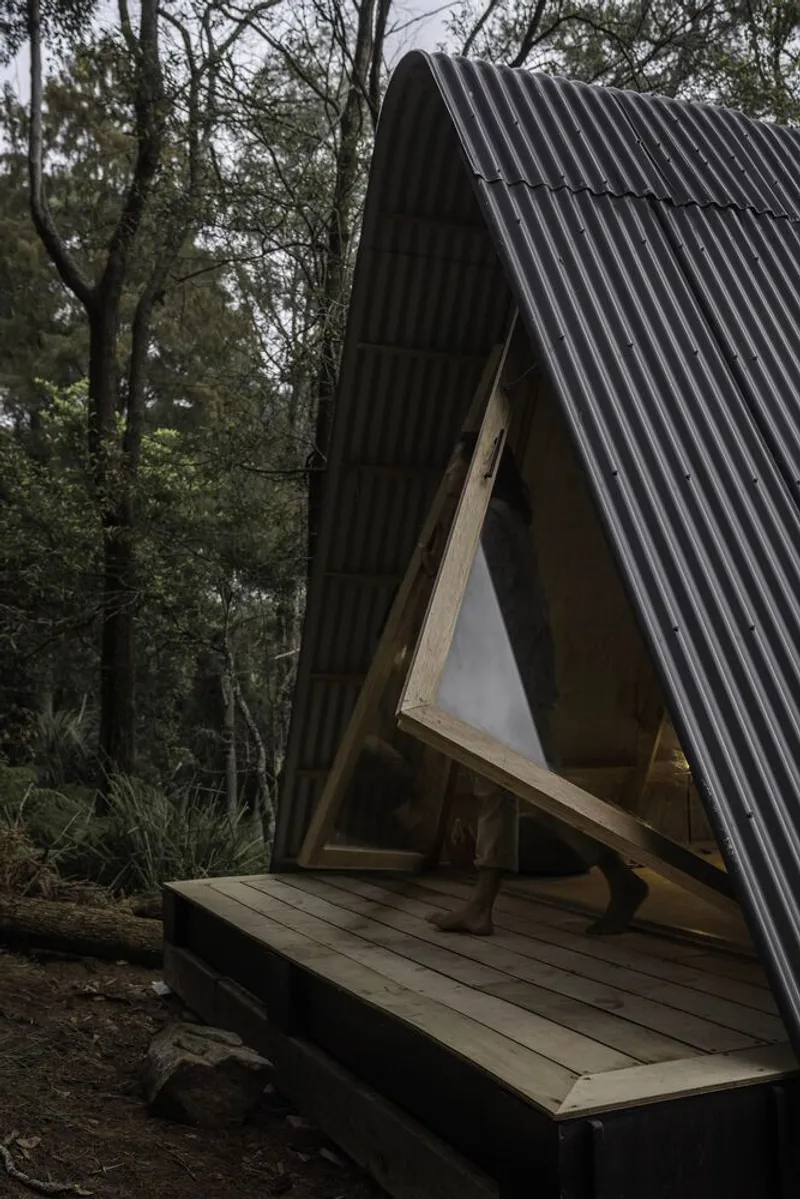
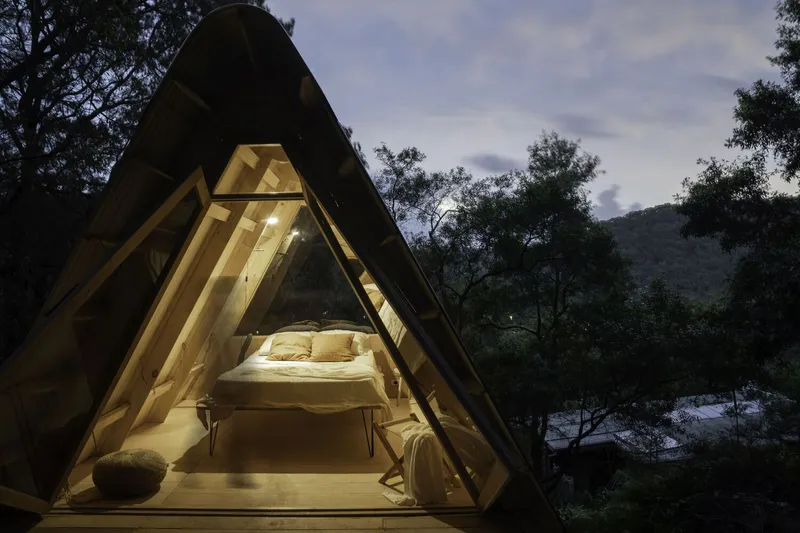
Another key design feature is the large door-window system. These openings are carefully positioned and angled so that when fully open, the doors become almost invisible from the interior. This clever detail enhances the indoor-outdoor connection, making occupants feel fully immersed in the surrounding environment.
The result is a small yet powerful architectural experience where nature, light, and space interact seamlessly.
Flexible Living for Tourism and Remote Work
The KABINA concept was designed with flexibility in mind. Its compact footprint and modular system make it suitable for various applications, including:
- Eco-tourism cabins
- Remote work retreats
- Backyard studios
- Temporary housing
- Off-grid micro living
Because the structure can be quickly assembled, disassembled, and transported, it offers a practical solution for locations where traditional construction may be difficult, expensive, or environmentally disruptive.
This aligns with the growing demand for sustainable small architecture, prefabricated cabins, and modular housing systems that support flexible lifestyles.
Expanding the System: Future Developments
While the initial KABINA Prototype is a compact experimental structure, the design team continues to expand the concept. New versions of the system are currently being explored, featuring different shapes, sizes, and spatial configurations.
Recent developments include integrated kitchen and bathroom modules, allowing the cabin to function as a fully independent living unit.
Looking ahead, the project aims to scale production and explore new markets. By 2024, the KABINA system is expected to expand operations in Uruguay and other Latin American countries, where the team will further test the versatility and adaptability of this innovative construction approach.
A New Vision for Sustainable Modular Architecture
The KABINA Prototype demonstrates how architecture can evolve by combining traditional craftsmanship, digital fabrication, and sustainable design principles. By reimagining buildings as movable, modular systems, the project offers a glimpse into a future where architecture is more flexible, adaptable, and environmentally responsible.
In an era defined by mobility, remote work, and ecological awareness, the KABINA system presents an innovative model for lightweight architecture, modular living, and sustainable construction technologies.
All photographs are works of
Javier Miguens


Popular Articles
Popular articles from the community


Tsunami Convergenics: Turning Catastrophic Ocean Forces into Underwater Housing Infrastructure
A speculative underwater settlement off the coast of Onagawa, Japan, treats tsunamis and typhoons as energy sources rather than threats.

The Amber Palace Opera: A Geological Fiction Surfaces on Tallinn's Baltic Waterfront
Pierre Brillard reimagines a Baltic legend as a public landscape, opera house, and waterfront promenade rooted in Tallinn's coastal identity.

Opera on the Sea: Driftwood Logic Shapes a Timber Opera House on Estonia's Coast
Trevor Orgill's opera house translates the entangled drift of floating timber into a civic building where wood, water, and music converge.

Opera by the Sea Estonia: Three Shells Dissolving Architecture into Tallinn's Coastline
A winning opera house proposal replaces monumental form with interconnected shells that blur the boundary between building, park and Baltic Sea.

Similar Reads
You might also enjoy these articles

FAMM Arquitectura Organizes Ten Villas Around Courtyards and Jungle in Nosara, Costa Rica
El Molino pairs two elongated volumes with deep overhangs and timber louvers to build a compact coastal community five minutes from the beach.
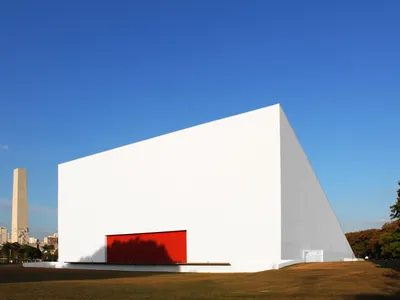
Oscar Niemeyer's Ibirapuera Park Pavilions Define São Paulo's Cultural Identity in Concrete and Curve
A constellation of modernist volumes set within São Paulo's most important urban park, conceived for the city's 400th anniversary in 1954.
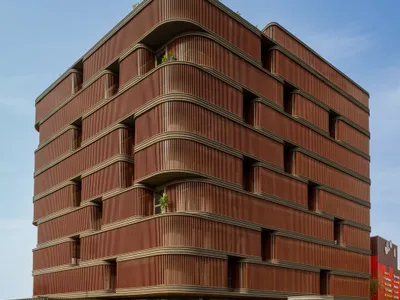
Sanjay Puri Architects Wraps a Jaipur Office Tower in Capsule-Shaped Green Buffers
A nine-level climate-responsive workplace near Jaipur Airport uses stacked planter terraces and aluminium screens to fight 40°C heat.
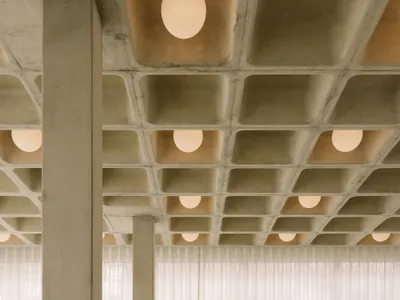
RHO Converts a Berlin Spree-Side Industrial Courtyard into Enkime's 1,000 m² Agency Headquarters
A social media agency's new home in Charlottenburg trades glossy branding for concrete waffle ceilings, glazed tile, and sheer curtains.

Explore Prefabricated Architecture Competitions
Discover active competitions in this discipline

Challenge to reimagine the Iron Throne

Photograph architecture without architects

Illustrate the lost glory of Angkor Wat - Render Challenge

Design challenge to reuse E-waste
Comments (0)
Please login or sign up to add comments
No comments yet. Be the first to comment!