
KALHA Hotel · “Unico” Village Renewal by CPLUS — Revitalizing Rural Living Through Contemporary Design
KALHA Hotel at Unico Village, Zhangjiakou, revitalizes abandoned courtyards into terraces, boutique hotel rooms, and vibrant community spaces. #SustainableArchitecture


The KALHA Hotel, part of the “Unico” Village Renewal Project by CPLUS Architects, reimagines rural revitalization in Zhangjiakou, China. Through the adaptive reuse of abandoned village courtyards, the project introduces a new model that blends rural living, sustainable development, cultural continuity, and experiential tourism.
A New Rural Living Model for Urban Residents
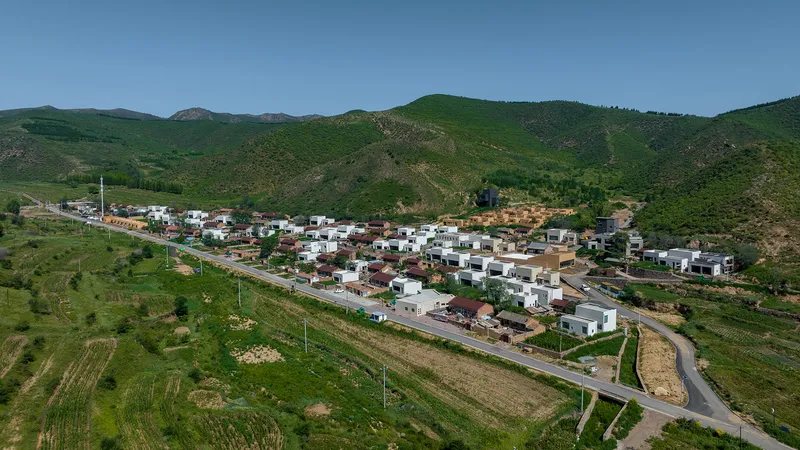
Unico is envisioned as a co-development rural community designed to offer alternative living possibilities for city dwellers seeking long-term or short-term stays. Phase 1 of the project transforms over 60 vacant village courtyards—each ranging from 200 to 400 sqm—into a vibrant, multifunctional community.
- 45 courtyards are revitalized for long-term residential use
- 10 courtyards are transformed into boutique-style hotel spaces
- Essential community facilities include a village hall, workshops, dining spaces, gymnasiums, public restrooms, the Dragon King Temple (reception), and staff quarters
The KALHA Hotel serves as the gateway for visitors to experience this evolving rural settlement and to foster exchange between newcomers, villagers, and short-term guests.
A Settlement Shaped by Terrain and Tradition
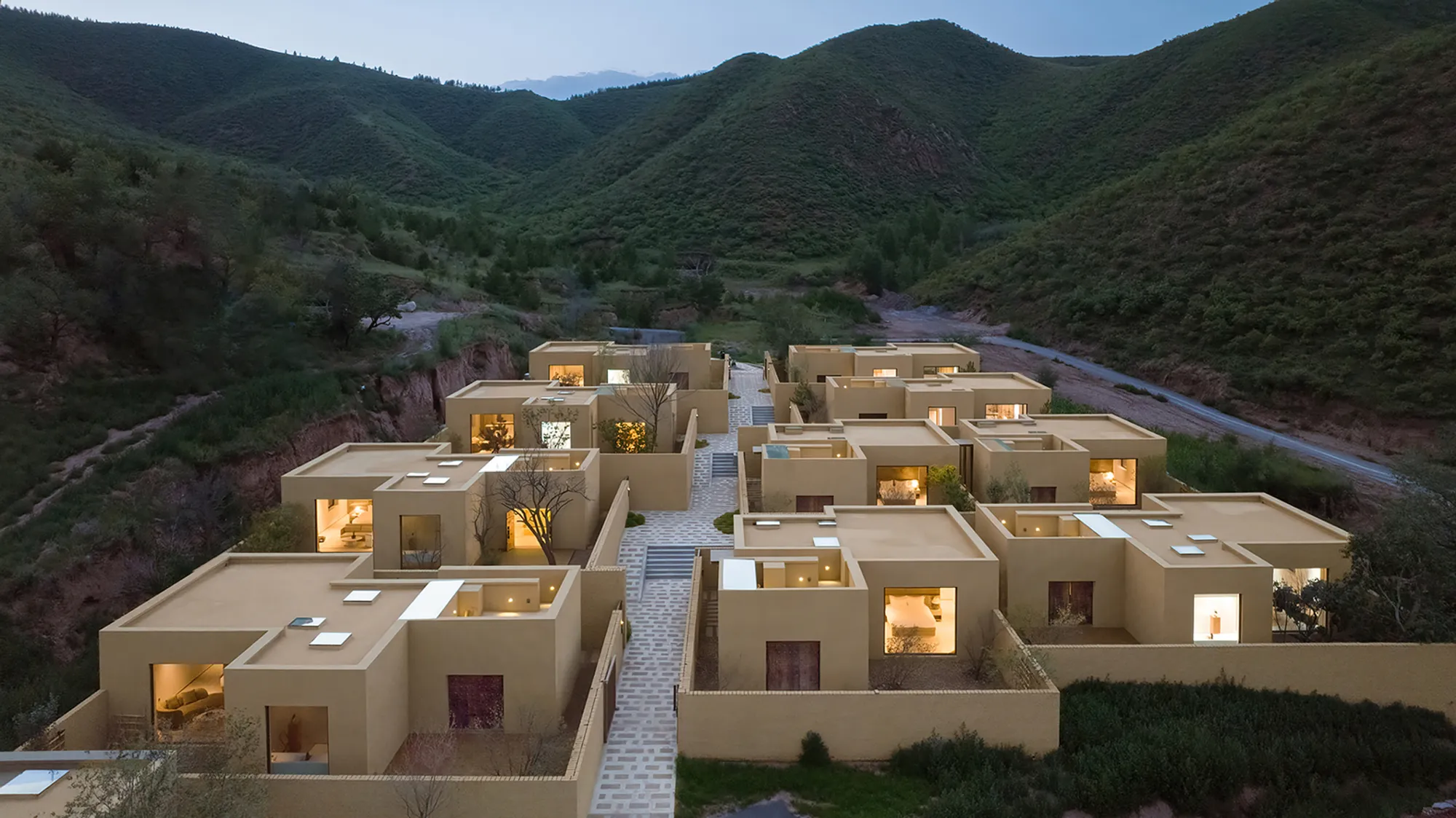
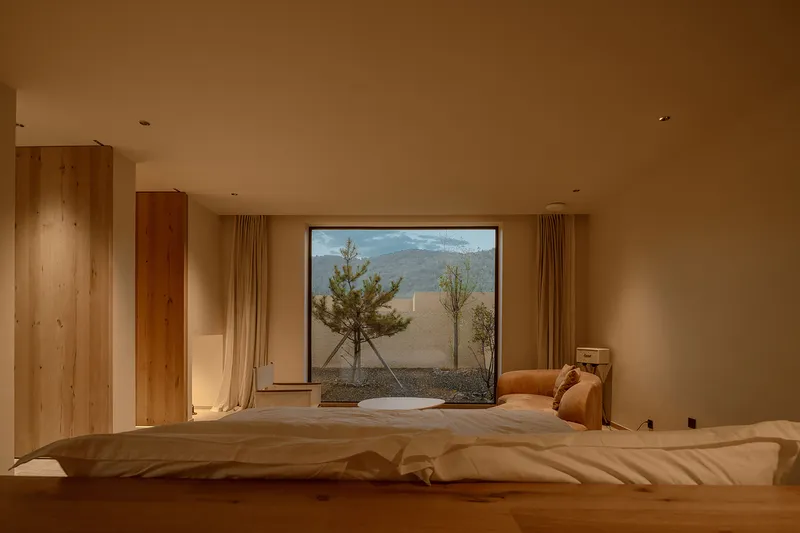
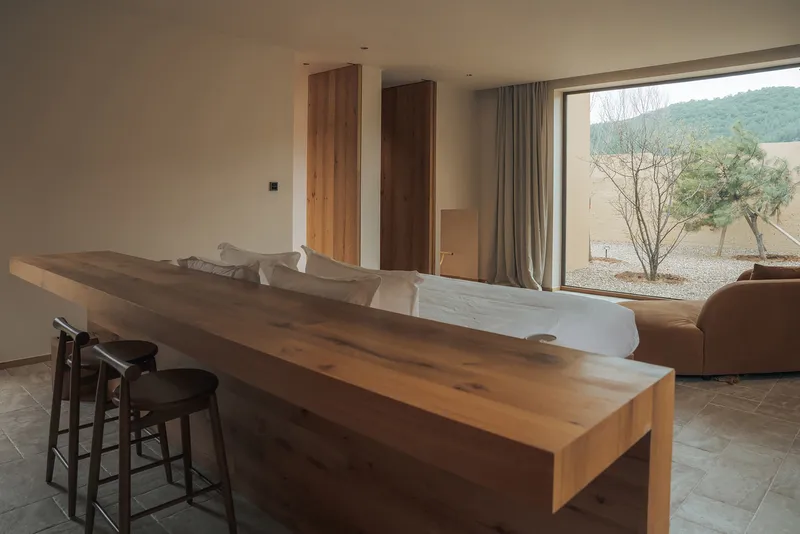
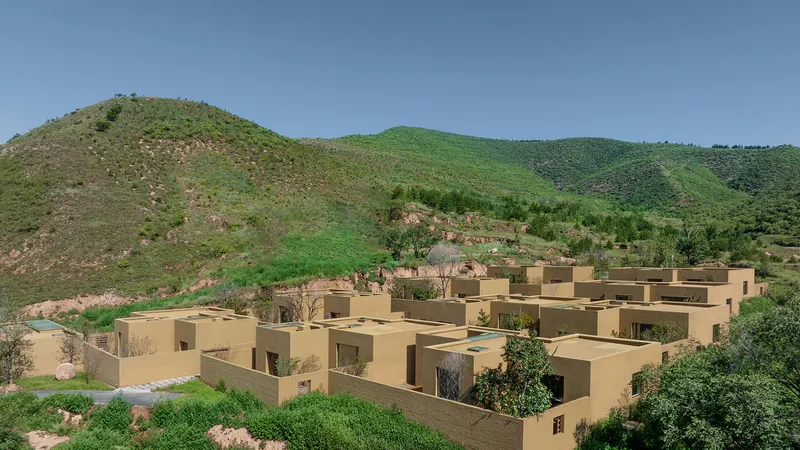
Unlike the scattered courtyard houses in the village, the KALHA Hotel forms a continuous spatial system, enclosed by textured walls that shape a unified architectural ensemble. Built along the natural slope that rises from south to north, the layout embraces the terrain, offering wide panoramic views of the surrounding mountains and the Unico village.
The hotel’s form mirrors the organic growth patterns of traditional mountain villages. Avoiding a strict central axis, the irregular composition maintains the spontaneity and charm of vernacular settlement patterns.
Terraced Architecture and Diverse Elevations
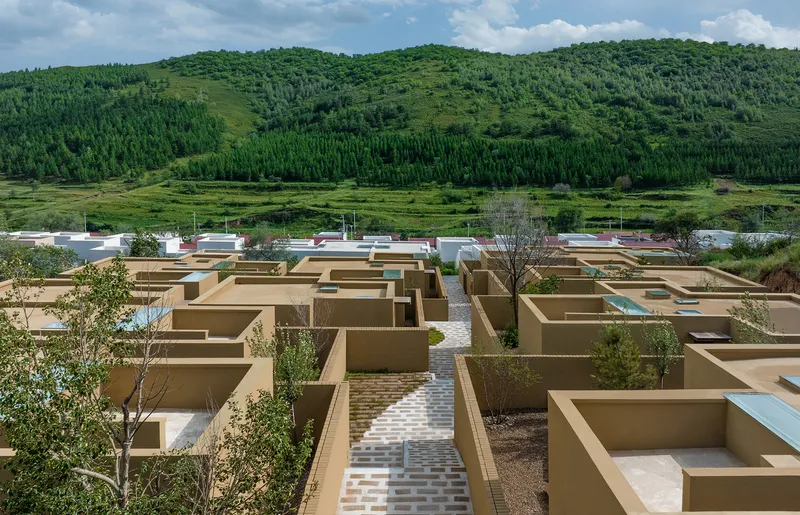
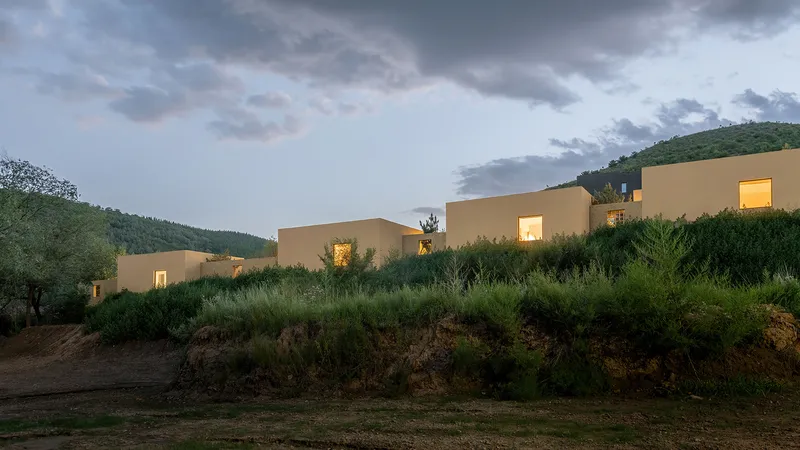
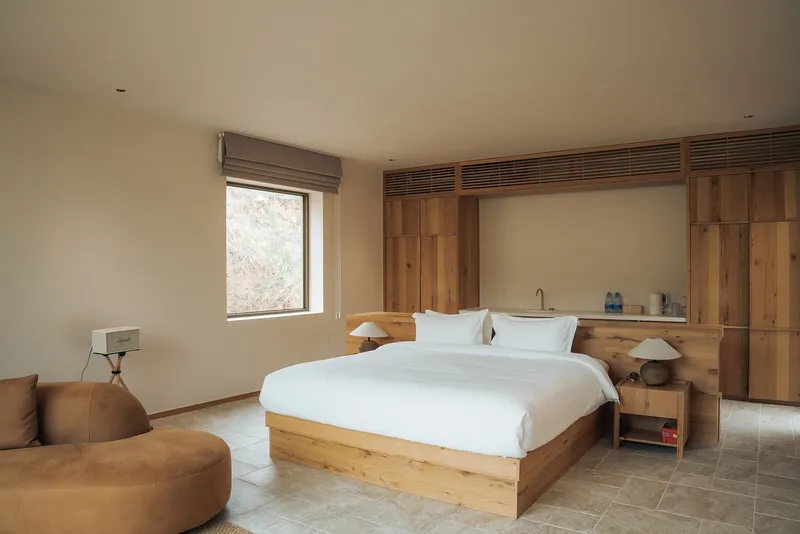
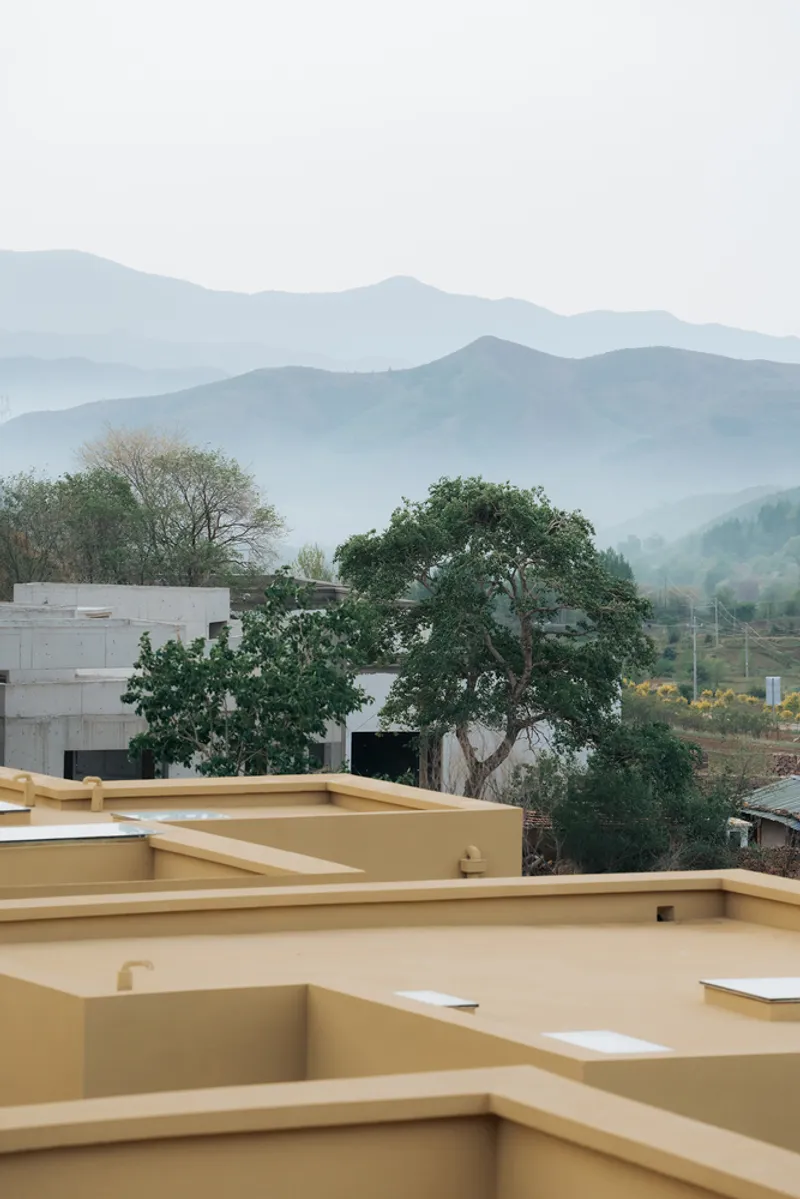
The site’s uneven topography becomes a guiding design element. The 10 guest rooms are arranged across four different height levels, resulting in a visually diverse, multi-layered composition. Each unit feels independent yet unified, much like a compact micro-village.
From any vantage point, the KALHA Hotel refuses a singular main façade. Instead, it presents a free, dynamic architectural silhouette, defined by shifting forms, stepped roofs, and varied courtyard relationships.
Earth-Toned Architecture Blending into Landscape
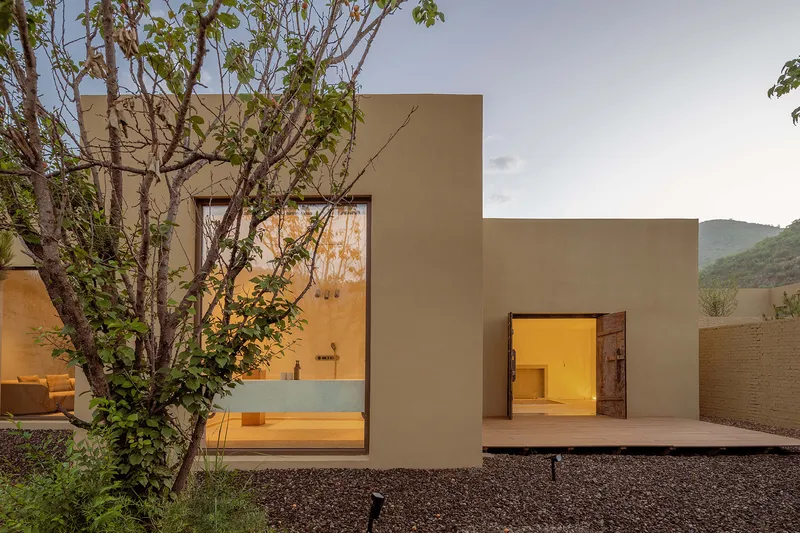
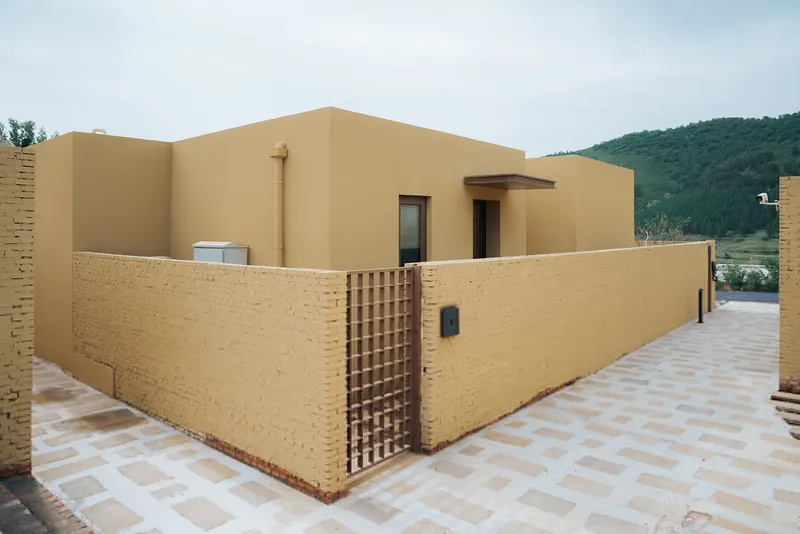
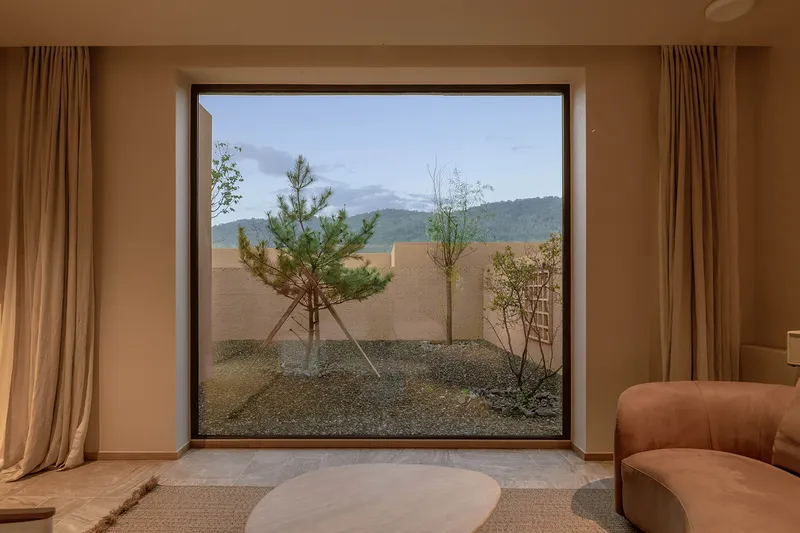
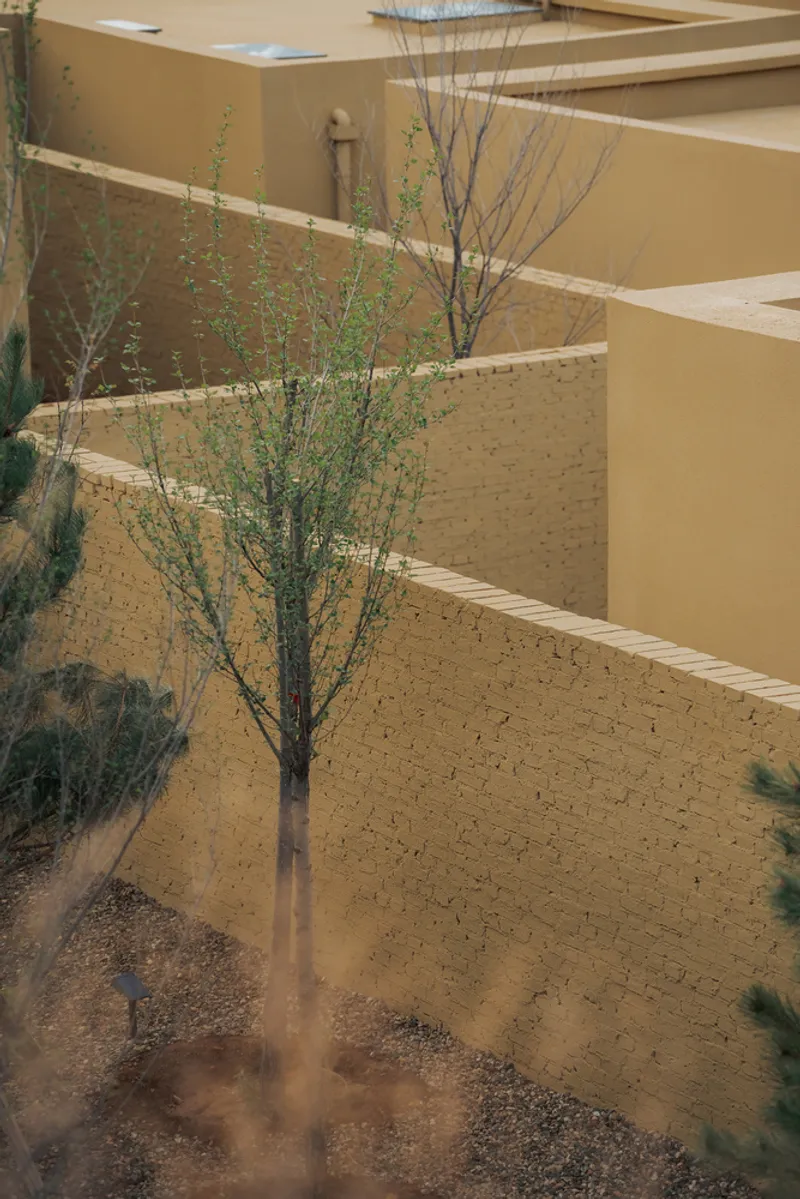
Both the courtyard walls and the guest room façades are coated in a shade closely matching the region’s natural soil. This allows the architecture to read as sculptures emerging organically from the earth, reinforcing its connection to the mountain terrain.
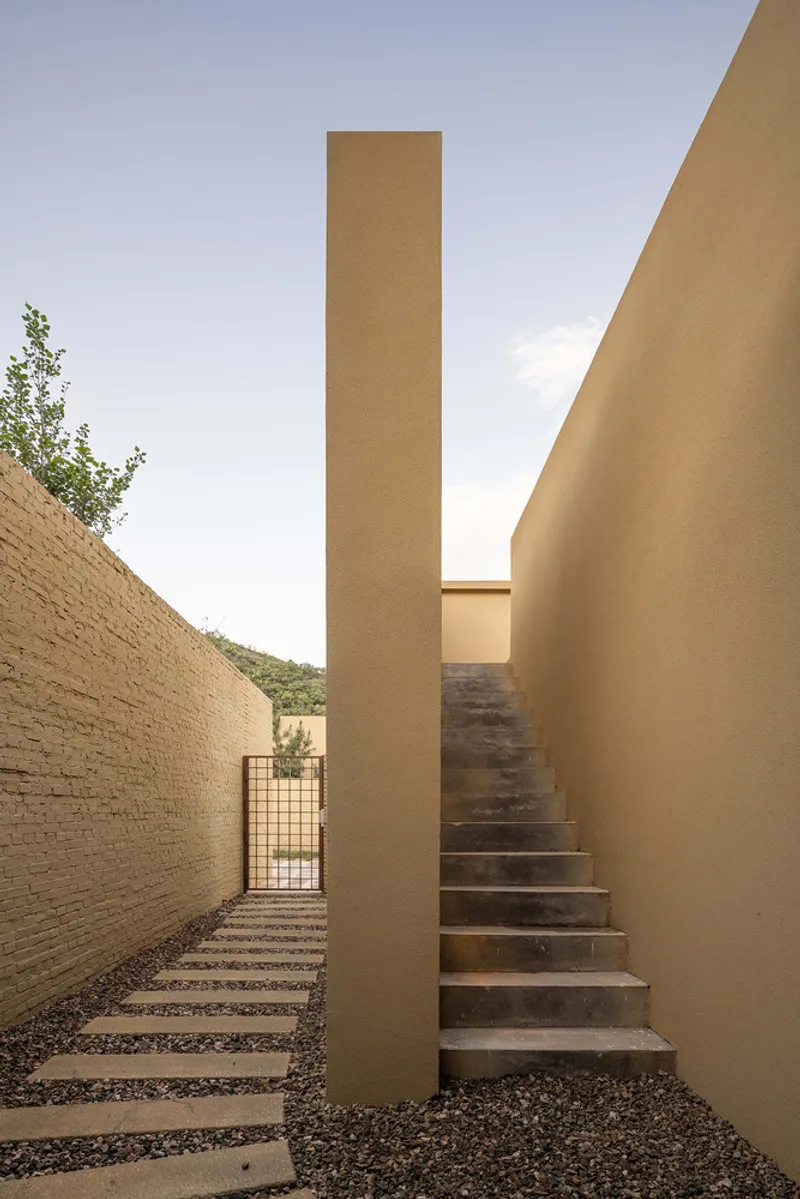
A zigzagging boundary wall subtly blends into the existing village pathways, allowing the new construction to integrate seamlessly with the historic rural fabric.
Reinterpreting Village Streets as Social Space
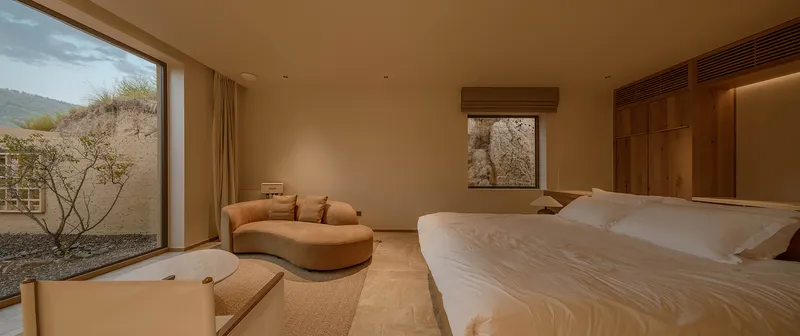
One of the project’s most transformative gestures is the reinterpretation of old village paths into public interior streets. These pure, minimalist corridors open into flexible spaces capable of hosting:
- Art exhibitions
- Community lectures
- Cultural events
- Intimate performances
Over time, these interconnected spaces are expected to become the social core of the hotel, encouraging interaction among residents, guests, and the local community.
A Harmonious Village Renewal Rooted in Culture
Through thoughtful design and sensitive intervention, CPLUS creates a living environment that respects rural heritage while embracing contemporary lifestyles. The KALHA Hotel stands as a pivotal structure within the “Unico” Village Renewal—an architectural bridge reconnecting people to nature, culture, and community.
All photographs are works of Jing Liu, Captain




Popular Articles
Popular articles from the community


Co-Life: Senior Housing Design That Reconnects Older Adults With the City
Co-Life reimagines senior housing design through healing gardens, shared streets, workshops, and a sustainable community across generations.

The Ocean Hive: Sustainable Architecture for a Self-Sufficient Civilization at Sea
The Ocean Hive imagines sustainable architecture at sea, where modular habitats, algae, wave power and ocean waste sustain a growing colony.

The Earth Pod: 3D Printed Homes for Resilient Refugee Communities
The Earth Pod reimagines refugee housing through 3D printed homes made from clay, combining resilience, self-sufficiency, and rapid shelter.

Conexión: Biophilic Design Reimagines High-Rise Living in Hong Kong
Conexión reimagines high-rise living in Hong Kong through biophilic design, green facades, shared spaces, daylight, water and nature within.
Similar Reads
You might also enjoy these articles


Hodi-Mandai Geram
Project Function: Preservation and revitalization of the Intangible heritage and socio-spatial identity of the Hodi by Housing, Cultural Memory Center, Sacred Grove, landscape, local tourism economy


Olio Towers: A Mid-Rise for Performers That Fuses Housing, Rehearsal, and Stage
Located blocks from Houston's Theater District, this modular tower stacks living units around a central performance atrium.

Oasis: Modular Green Housing Carved into Dhaka's Urban Fabric
A shortlisted Plugin Housing entry reclaims unauthorized settlements in Dhaka with stepped concrete volumes, green roofs, and ventilation-driven design.

Black Hole: A Floating Megastructure for the Post-Physical Era
Emiliano Mazzarotto envisions a spherical, self-scaling arena where e-sports, digital hotels, and holographic stadiums replace traditional public space.

Explore Sustainable Design Competitions
Discover active competitions in this discipline



Challenge to reimagine the Iron Throne


Photograph architecture without architects


Illustrate the lost glory of Angkor Wat - Render Challenge


Design challenge to reuse E-waste
Comments (0)
Please login or sign up to add comments
No comments yet. Be the first to comment!