

Kalsholmen Safe House by Rintala Eggertsson Architects and Studio NN: A Remote Timber Retreat in Northern Norway
Remote timber retreat on Kalsholmen island offering off-grid shelter, sustainable design, and protection against harsh Norwegian coastal weather conditions.


Set against the raw and windswept coastline of northern Norway, the Kalsholmen Safe House stands as a minimal and resilient architectural response to one of the country’s most remote and unforgiving landscapes. Designed and built by Rintala Eggertsson Architects in collaboration with Studio NN, this timber structure redefines small-scale architecture through environmental sensitivity, material authenticity, and elemental design thinking.

A Shelter Shaped by Nature and Necessity
Located on the barren island of Kalsholmen, the project emerges in a setting rich with maritime history and natural drama. The island itself hosts a historic lighthouse built in 1919, which replaced a previous one destroyed by a storm two years earlier. Since its automation and depopulation in 1993, the island has seen few human interventions, offering a pristine, untouched view over the open sea.


The Safe House is a cluster of five modest wooden structures—four sleeping cabins and one sauna—connected around a wind-protected communal courtyard. This central void creates a safe microclimate on an island frequently battered by icy winds and high tides. The design balances protection from the elements with openness to the stark beauty of the surrounding seascape.

Sustainable Timber Architecture with Minimal Impact
Built entirely from solid wood, the structure uses basic 2x3 and 2x8 timber members, a conscious decision to reduce environmental impact and simplify future maintenance. The untreated wood will gradually weather to grey, allowing the building to visually recede into the rocky terrain over time.

Designed to leave a minimal ecological footprint, the Safe House avoids any non-sustainable materials and is elevated just enough to resist rising tides while maintaining a low profile to withstand storm winds. The project's form and material palette merge with the natural geology of the island, exemplifying site-specific and context-driven architecture.

Hands-On Construction and Experiential Design
The Kalsholmen Safe House was realized during a 2+2-week design-build workshop in early summer 2021. The architects and participants embraced a fully on-site design approach—no sketches were produced. Instead, all dimensions and spatial configurations were resolved at 1:1 scale, responding directly to the physical and atmospheric conditions of the site.


With no access to electricity or running water, the structure provides only what is essential: a warm place to sleep, cook, and gather around a fire. The result is a retreat that reconnects its occupants to the rhythms of the sea, the weather, and the raw simplicity of survival.

A Place of Solitude and Reflection
With the nearest mainland over 20 kilometers away and no visual traces of civilization in sight, the Safe House offers profound solitude and an immersive experience of the natural world. It's not just an architectural object—it’s a spatial narrative of resilience, humility, and poetic connection to place.

All Photographs are works of Sami Rintala, Navid Navid, Harald Seljesæter


Popular Articles
Popular articles from the community

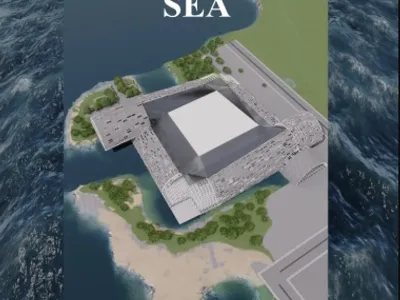
Opera on the Sea: Driftwood Logic Shapes a Timber Opera House on Estonia's Coast
Trevor Orgill's opera house translates the entangled drift of floating timber into a civic building where wood, water, and music converge.
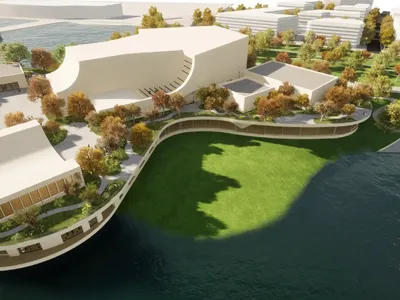
The Amber Palace Opera: A Geological Fiction Surfaces on Tallinn's Baltic Waterfront
Pierre Brillard reimagines a Baltic legend as a public landscape, opera house, and waterfront promenade rooted in Tallinn's coastal identity.
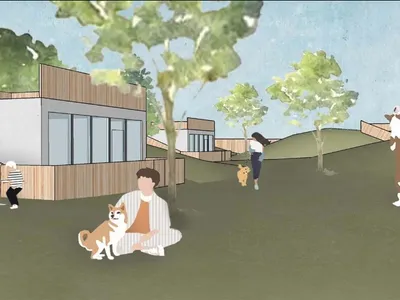
Temporary Home for Dogs: A Reversed Zoo Rethinks Animal Shelter Architecture
In Bucharest, a sinuous corridor and freed landscape flip the logic of containment, designing a shelter that works to make itself unnecessary.
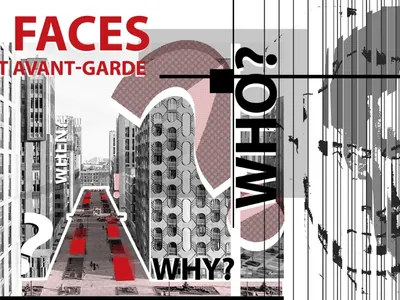
Faces of the Soviet Avant-Garde: Turning Moscow's Street Names into an Open-Air Museum
A network of sculptural installations across a Moscow residential district transforms forgotten architect names into spatial encounters with cultural memor

Similar Reads
You might also enjoy these articles

Hodi-Mandai Geram
Project Function: Preservation and revitalization of the Intangible heritage and socio-spatial identity of the Hodi by Housing, Cultural Memory Center, Sacred Grove, landscape, local tourism economy

Olio Towers: A Mid-Rise for Performers That Fuses Housing, Rehearsal, and Stage
Located blocks from Houston's Theater District, this modular tower stacks living units around a central performance atrium.
Oasis: Modular Green Housing Carved into Dhaka's Urban Fabric
A shortlisted Plugin Housing entry reclaims unauthorized settlements in Dhaka with stepped concrete volumes, green roofs, and ventilation-driven design.

Black Hole: A Floating Megastructure for the Post-Physical Era
Emiliano Mazzarotto envisions a spherical, self-scaling arena where e-sports, digital hotels, and holographic stadiums replace traditional public space.

Explore Nordic Sustainable Architecture Competitions
Discover active competitions in this discipline

Challenge to design a portable theatre

Challenge to design a portable music platform

Challenge to design an open learning module for the elderly

Challenge to reimagine the Iron Throne
Comments (0)
Please login or sign up to add comments
No comments yet. Be the first to comment!