
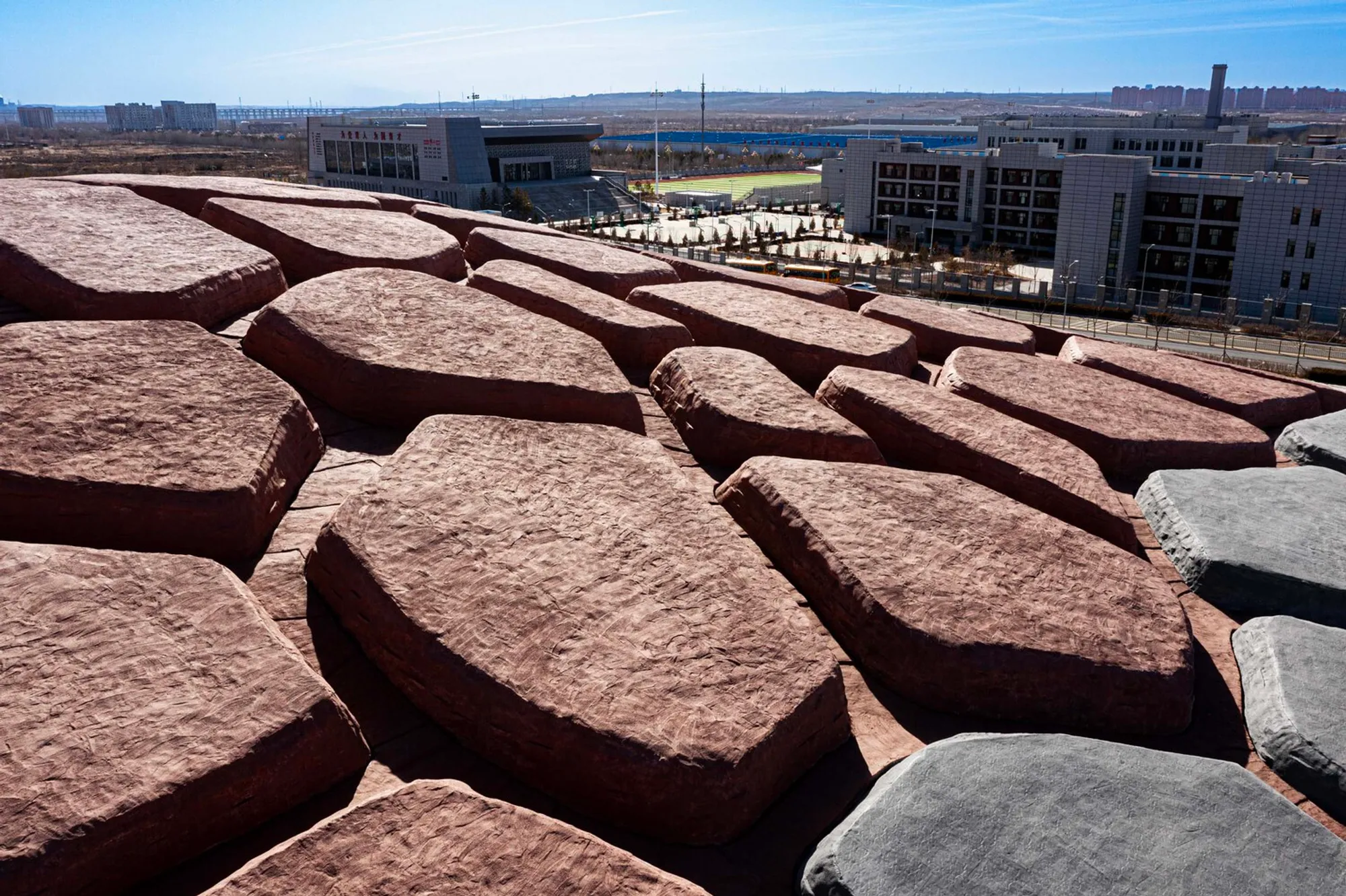
Kangbashi Trail: A Harmonious Blend of Nature, Fitness, and Urban Design in Ordos, China
Kangbashi Trail in Ordos blends red sandstone landscapes, interactive pathways, and leisure spaces, promoting urban wellness, national fitness, and community engagement.


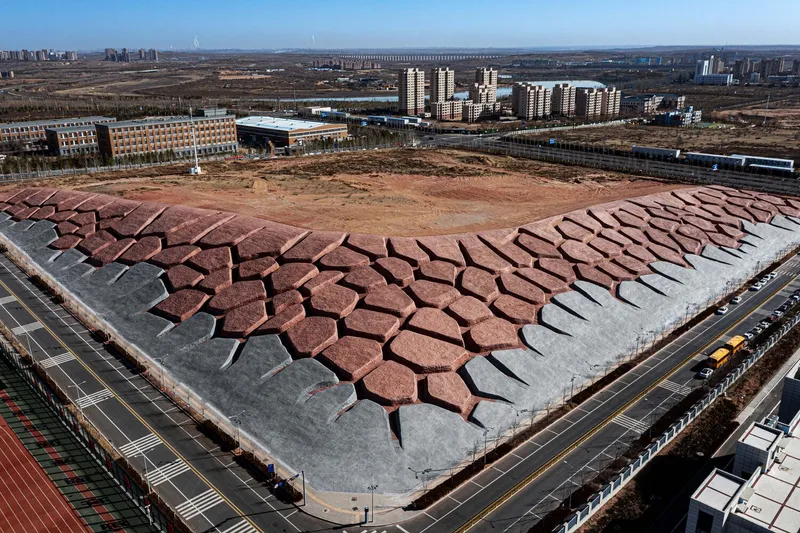
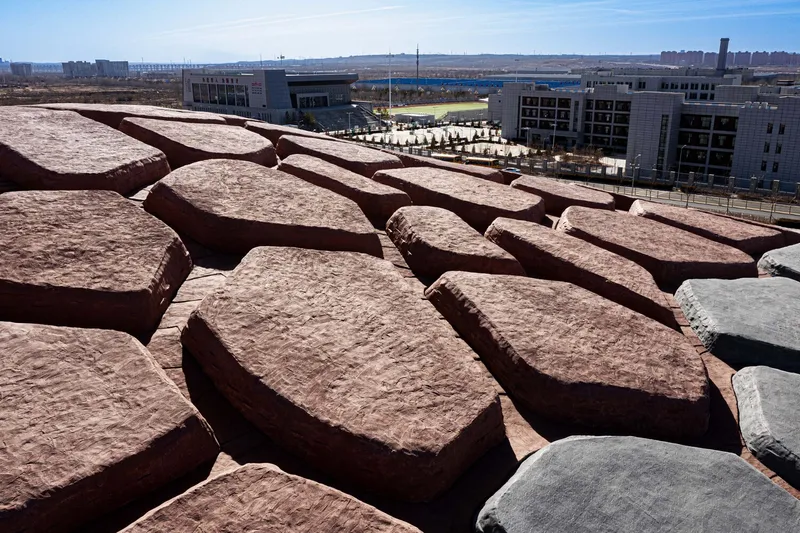
Nestled north of Kangbashi No. 9 Primary School, adjacent to Ordos Applied Technology College and a natural red sandstone slope, the Kangbashi Trail is a landmark urban landscape project designed by DAIKOSHA Architectural Design. Set within a dense residential and educational context, the site previously lacked recreational and leisure spaces for the community. The design team reimagined this urban landscape, integrating nature, sustainability, and national fitness as the core principles, while creating a participatory, dynamic, and visually compelling urban trail.
Project Context
The 30,000 m² site features irregular terrain with significant elevation changes, little flat land, and complex soil conditions, primarily composed of red sandstone and red clay. The area benefits from proximity to urban trunk roads, offering excellent accessibility for residents, students, and visitors. With schools, residential blocks, and natural slopes surrounding the site, the project sought to fill a gap in public leisure facilities while enhancing the local urban environment.
Design Concept
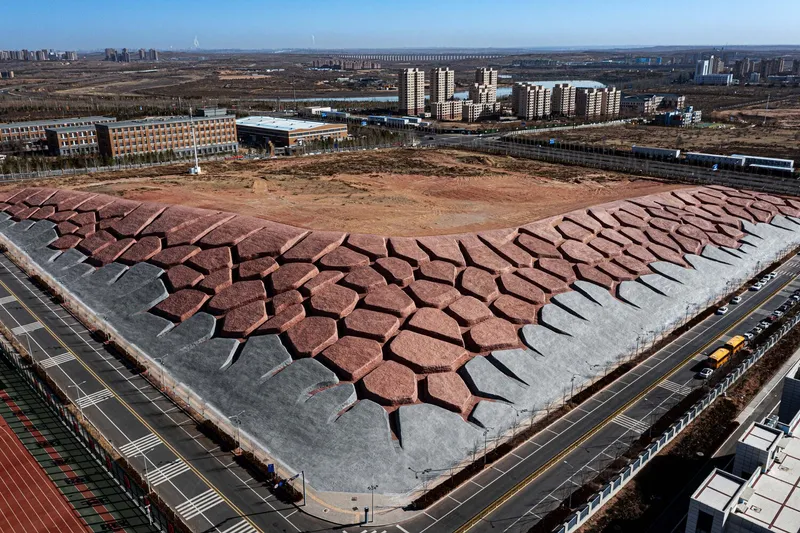
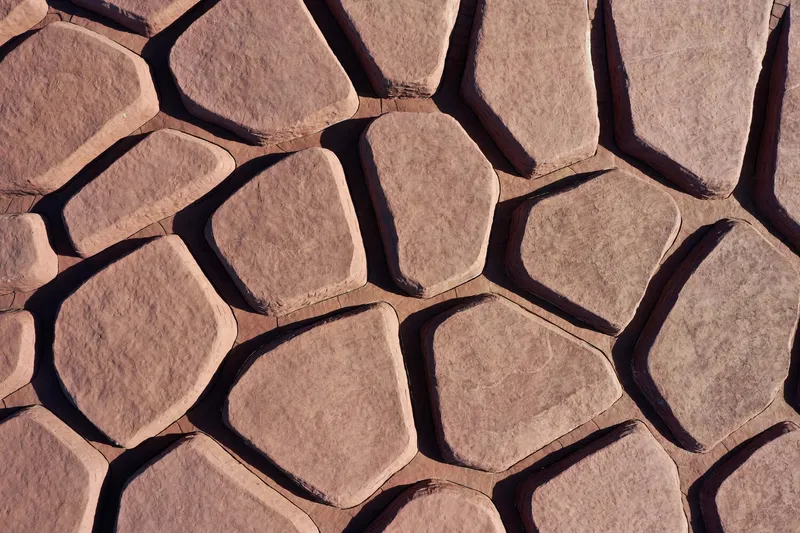
Inspired by magma flows and the fiery hues of red sandstone, the design captures the dynamic energy of natural geological formations. Using parameterized design methods, the architects organized the red sandstone surfaces to reflect the natural characteristics of the terrain.
Key design goals include:
- Creating open, engaging landscapes for gatherings, social interaction, and recreational activities.
- Enhancing urban aesthetics through controlled earthwork, visual layering, and harmonious integration with the surrounding city.
- Fostering health, wellness, and national fitness through interactive and physically engaging pathways.
The design emphasizes a human-scale experience, with pathways, slopes, and pavilions that encourage exploration and movement, blending natural landscape with urban functionality.
Technical Measures
Slope Protection and Landscape Reinforcement:
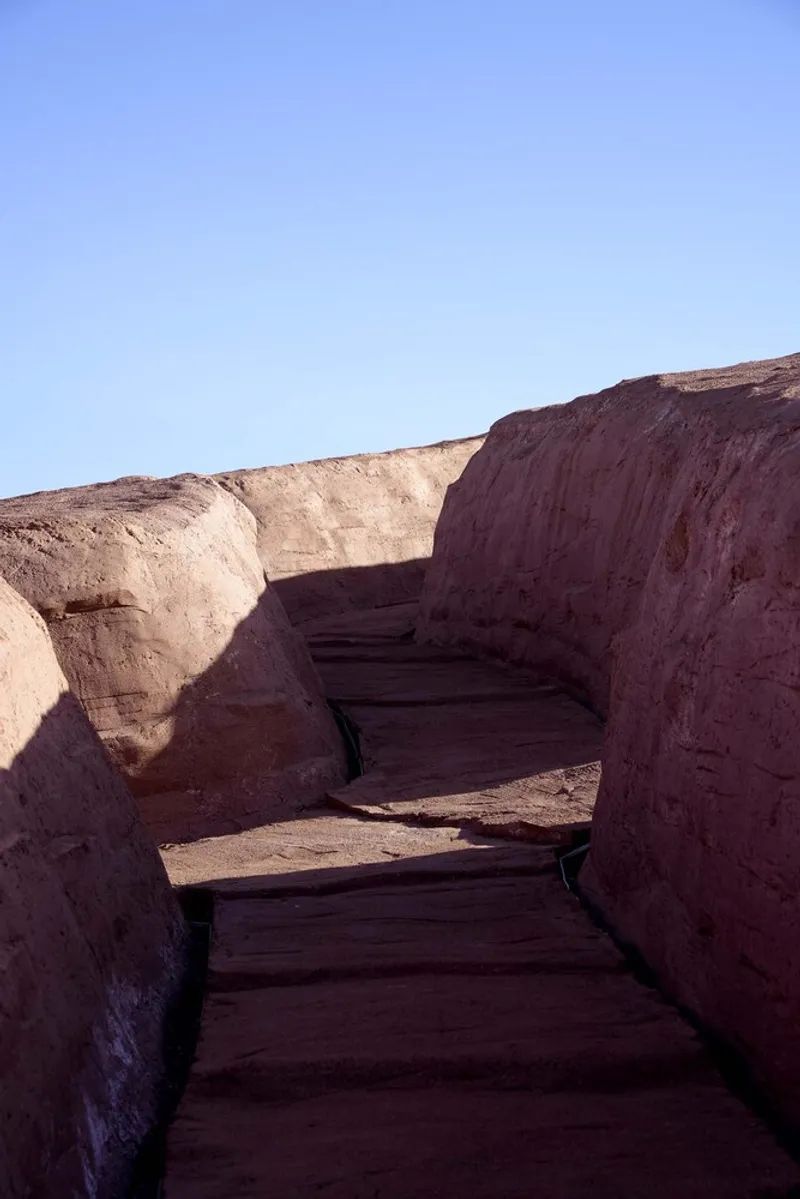
- Surface Cleaning: Exposing natural red sandstone by removing the overlying red clay layer.
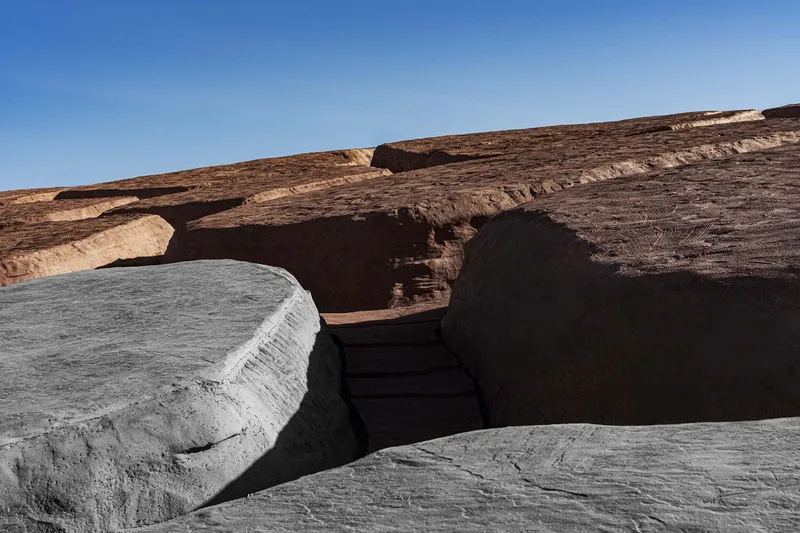
- Trench Excavation: Using small excavators and manual labor to form pedestrian pathways and small channels.
- Red Sandstone Reinforcement: Applying magnesium fluorosilicate solution and WD-W02 organic silicon penetration agent to strengthen sandstone without altering its natural appearance.
- Urban Integration: Color-mixed concrete hardening at intersections with municipal roads to blend urban infrastructure with natural terrain.
- Illumination: Low-voltage waterproof LED lighting enhances safety and ambiance along paths and small squares.
Experience and Interaction
Kangbashi Trail is designed as a participatory public space, offering an immersive landscape experience. The site features:
- Pavilions and resting areas at key points along slopes for relaxation and social interaction.
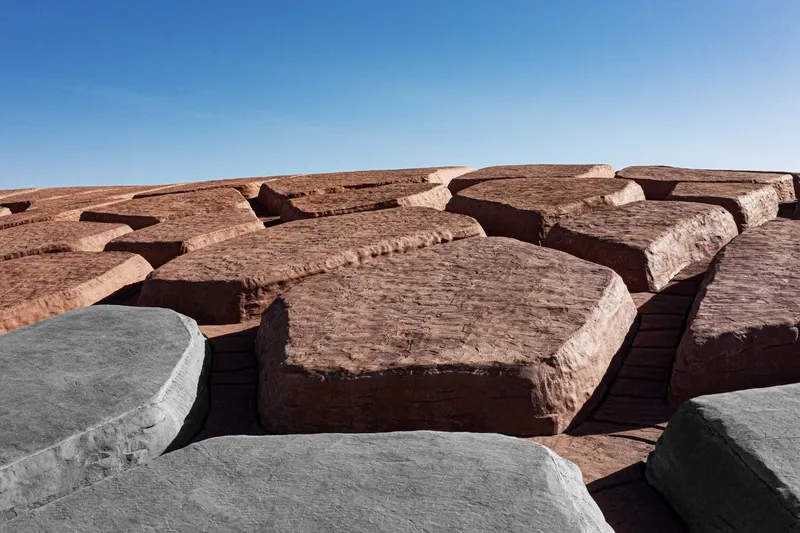
- Multi-directional, layered pathways that create a playful “jumping garden” effect, encouraging exploration and discovery.
- Natural height variations that provide security, intrigue, and sensory engagement.
Visitors of all ages—children, students, adults, and the elderly—interact with the landscape, moving through elevated paths, shaded corridors, and open squares. The design encourages physical activity, playful engagement, and social interaction, aligning with the broader goal of promoting community fitness and wellness.
Postscript: Urban Impact
The Kangbashi Trail project exemplifies how thoughtful landscape architecture can enhance urban life, blending natural elements with modern urban infrastructure. By integrating environmental awareness, experiential design, and participatory spaces, DAIKOSHA Architectural Design has created a landmark trail that improves city aesthetics, encourages social interaction, and promotes national fitness. This project highlights the potential of street-side parks and urban trails as catalysts for healthier, more connected communities.
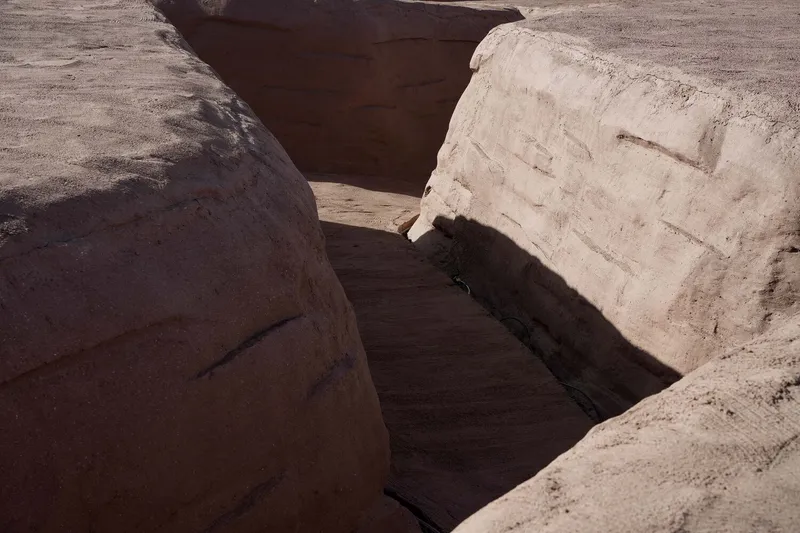
All photographs are works of Hohhot Daliangzao Architectural Design Consulting Co., Ltd



Popular Articles
Popular articles from the community


The Earth Pod: 3D Printed Homes for Resilient Refugee Communities
The Earth Pod reimagines refugee housing through 3D printed homes made from clay, combining resilience, self-sufficiency, and rapid shelter.

Co-Life: Senior Housing Design That Reconnects Older Adults With the City
Co-Life reimagines senior housing design through healing gardens, shared streets, workshops, and a sustainable community across generations.

Co-life: Sustainable Architecture for Age-Friendly Community Living
Co-life reimagines sustainable architecture for seniors through courtyards, rammed earth, shared gardens, and spaces designed for belonging.

Hill & Cross Opera: Sculptural Opera House Architecture Shaped by Tallinn’s Landscape and Identity
Hill & Cross Opera reimagines opera house architecture in Tallinn through its sculptural hill, civic plaza, glass wave and a luminous cross.


Similar Reads
You might also enjoy these articles


Hodi-Mandai Geram
Project Function: Preservation and revitalization of the Intangible heritage and socio-spatial identity of the Hodi by Housing, Cultural Memory Center, Sacred Grove, landscape, local tourism economy


Olio Towers: A Mid-Rise for Performers That Fuses Housing, Rehearsal, and Stage
Located blocks from Houston's Theater District, this modular tower stacks living units around a central performance atrium.

Oasis: Modular Green Housing Carved into Dhaka's Urban Fabric
A shortlisted Plugin Housing entry reclaims unauthorized settlements in Dhaka with stepped concrete volumes, green roofs, and ventilation-driven design.

Black Hole: A Floating Megastructure for the Post-Physical Era
Emiliano Mazzarotto envisions a spherical, self-scaling arena where e-sports, digital hotels, and holographic stadiums replace traditional public space.

Explore Landscape Design Competitions
Discover active competitions in this discipline



Challenge to reimagine the Iron Throne


Photograph architecture without architects


Illustrate the lost glory of Angkor Wat - Render Challenge


Design challenge to reuse E-waste
Comments (0)
Please login or sign up to add comments
No comments yet. Be the first to comment!