

Karai Farmhouse by RAIN Studio of Design – A Coastal Retreat in Kuvathur, India
Karai Farmhouse blends coastal serenity, reclaimed materials, and traditional South Indian design, creating a sustainable, nature-integrated weekend retreat.


Experience Living in the Lap of Nature
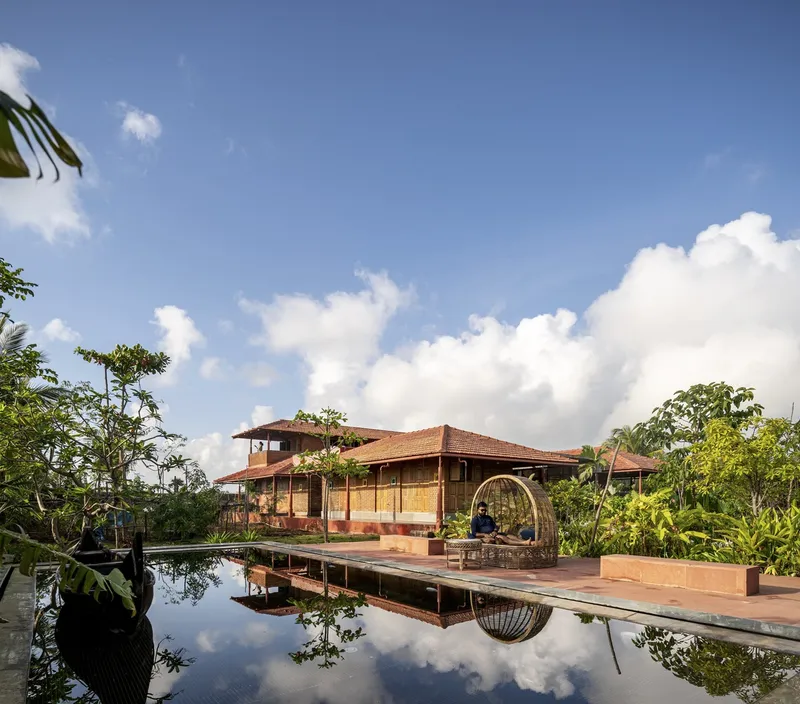
Karai Farmhouse is a weekend retreat thoughtfully crafted to harmonize with the serene coastal environment of Kuvathur, approximately eighty kilometers from Chennai. Conceived as a blend of traditional vernacular techniques and contemporary design, the farmhouse allows residents to fully experience the elements—the rhythmic waves, the stillness of the coast, and the lush greenery surrounding the site.

Design Concept and Architectural Approach
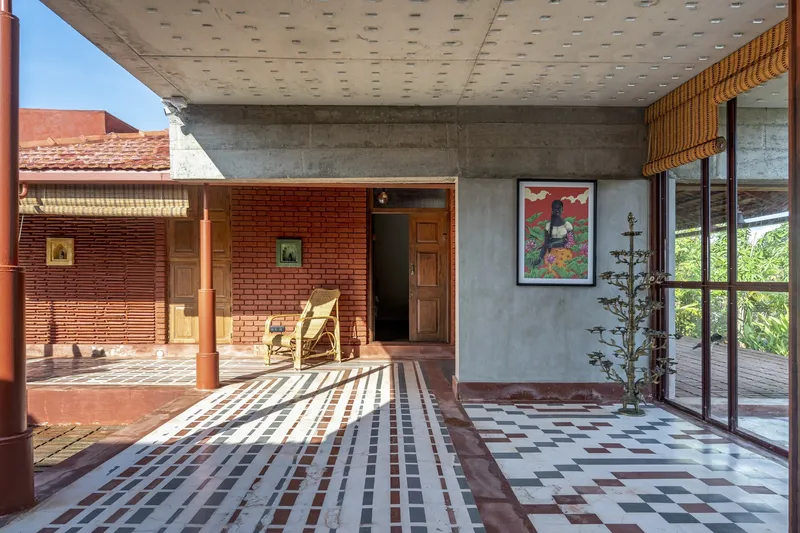
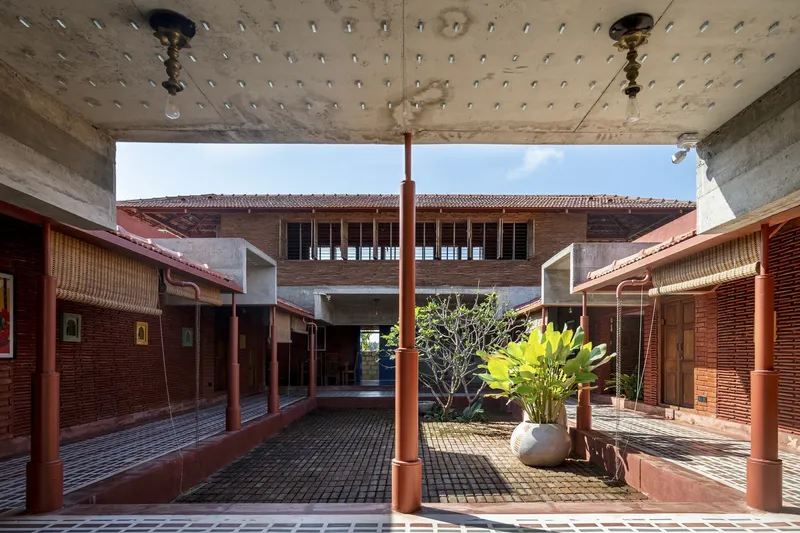
Drawing inspiration from the traditional South Indian ‘naalukettu’ house, Karai Farmhouse centers around a linear brick-laid courtyard, or mutram, which acts as a multifunctional heart for the home. Four bedrooms with attached baths, a lounge, dining, and kitchen spaces are organized around this central courtyard. Each room offers unobstructed views of the sea, while the upper-level lounge frames the horizon beautifully, allowing residents to engage with the landscape at every glance.

Materiality and Sustainability
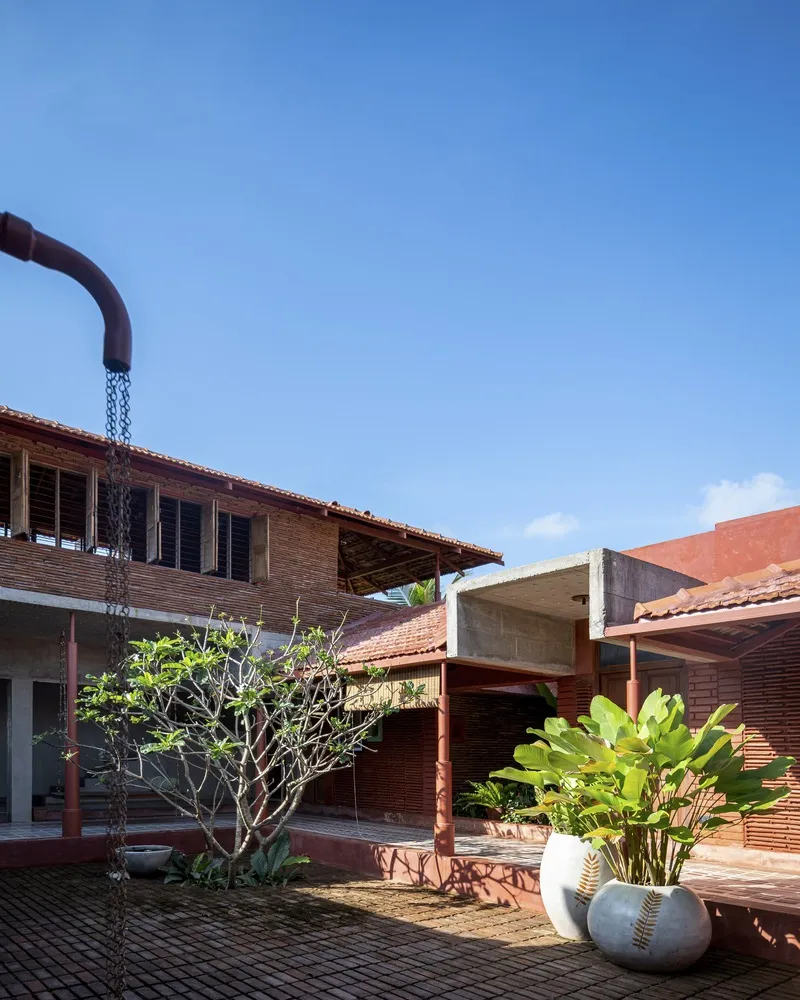
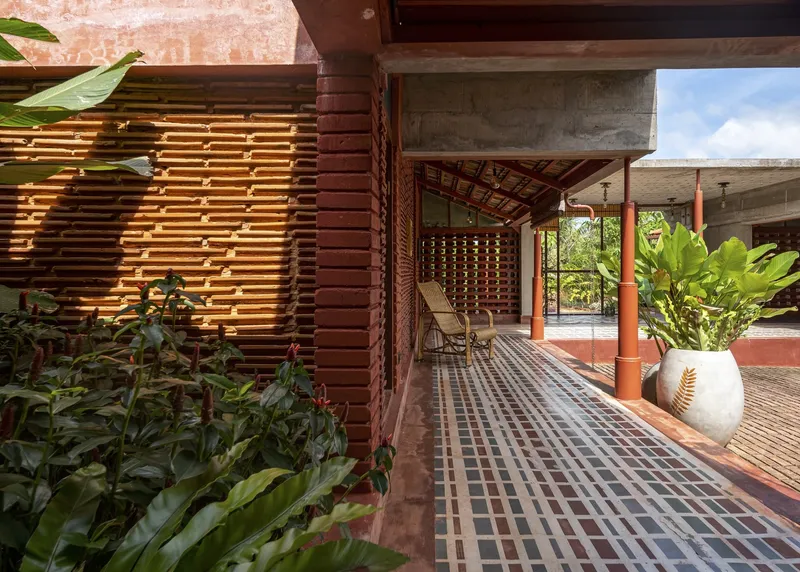
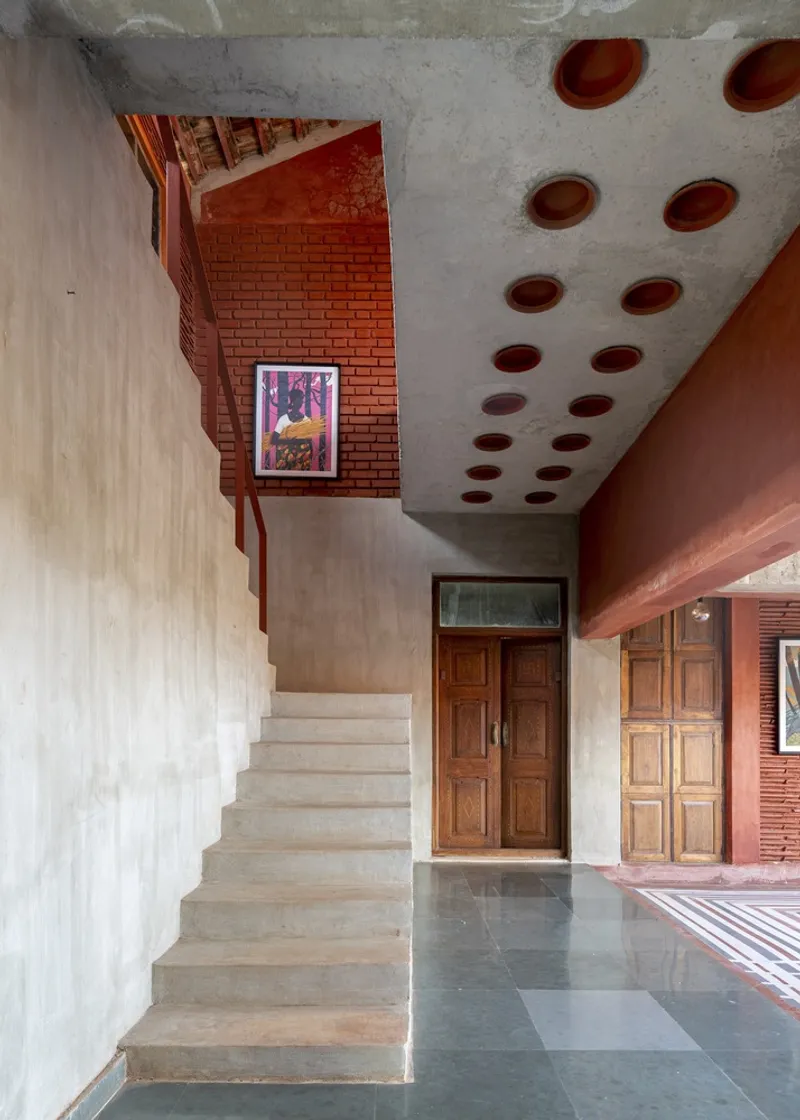
A key focus of the project is the use of reclaimed and locally sourced materials. Pre-used Mangalore tiles, CSEB (Compressed Stabilized Earth Blocks) from Auroville, and repurposed wooden shutters from demolished houses give the farmhouse its distinct earthy aesthetic. Each room features colored oxides in red, blue, green, and yellow, reminiscent of a Ludo board, creating playful yet intentional spatial organization.
Passive Design and Microclimate Control
The farmhouse integrates multiple passive cooling strategies. Four-directional sloped roofs with interlocking Mangalore tiles, inverted U-shaped flat roof junctions with glass strips, and earthen pot-filled filler slabs allow natural light and breezes to permeate throughout the home. Painted mild steel columns support the roof and double as gutters to collect rainwater, highlighting an innovative approach to sustainability.
Craftsmanship and Local Collaboration
The design process involved close collaboration with local laborers, allowing knowledge transfer in traditional techniques like mud mortar, oxide finishes, and Mangalore tile roofing. Customized details, such as brass knobs on repurposed shutters, a kitchen counter crafted from colored oxide, and patina-exposed brass faucets, further elevate the tactile experience.

Cultural Integration and Playful Detailing
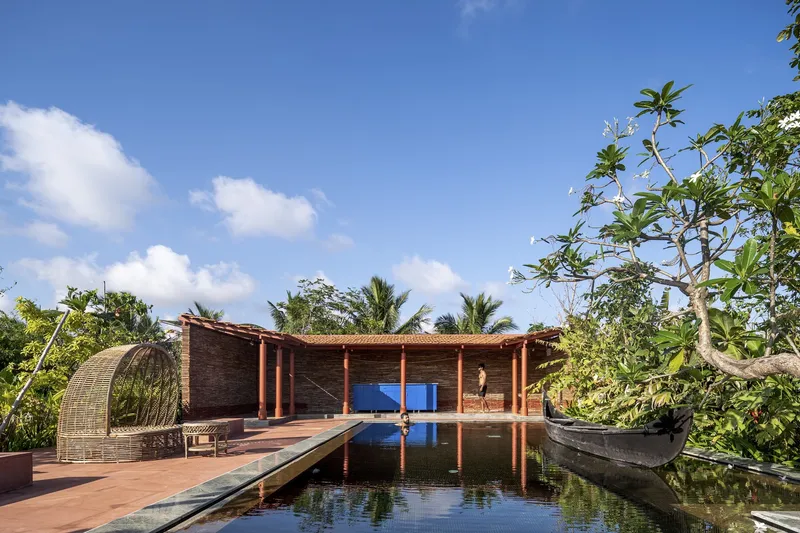
South Indian cultural elements are reinterpreted creatively. Traditional oil lamps (kuthhuvilakku) are transformed into contemporary light fixtures, water pots (kudam) serve as spouts for lotus ponds, and abstract mild steel columns reinterpret classical wooden supports. These playful adaptations maintain cultural authenticity while enhancing the farmhouse’s narrative and charm.
A Coastal Home That Breathes Karai Farmhouse embodies a design philosophy that celebrates local materials, traditional craftsmanship, and a seamless connection with nature. It stands as a testament to sustainable architecture, regional identity, and the timeless allure of coastal living.

All Photographs are works of Yash R Jain, Ekansh Goel




Popular Articles
Popular articles from the community


The Ocean Hive: Sustainable Architecture for a Self-Sufficient Civilization at Sea
The Ocean Hive imagines sustainable architecture at sea, where modular habitats, algae, wave power and ocean waste sustain a growing colony.

Co-Life: Senior Housing Design That Reconnects Older Adults With the City
Co-Life reimagines senior housing design through healing gardens, shared streets, workshops, and a sustainable community across generations.

Co-life: Sustainable Architecture for Age-Friendly Community Living
Co-life reimagines sustainable architecture for seniors through courtyards, rammed earth, shared gardens, and spaces designed for belonging.

AL-JANNAH: Sustainable Architecture and Permaculture for Afghan Widows
AL-JANNAH uses sustainable architecture and permaculture to create resilient oasis of housing, learning, work and renewal for Afghan widows.


Similar Reads
You might also enjoy these articles


Hodi-Mandai Geram
Project Function: Preservation and revitalization of the Intangible heritage and socio-spatial identity of the Hodi by Housing, Cultural Memory Center, Sacred Grove, landscape, local tourism economy


Olio Towers: A Mid-Rise for Performers That Fuses Housing, Rehearsal, and Stage
Located blocks from Houston's Theater District, this modular tower stacks living units around a central performance atrium.

Oasis: Modular Green Housing Carved into Dhaka's Urban Fabric
A shortlisted Plugin Housing entry reclaims unauthorized settlements in Dhaka with stepped concrete volumes, green roofs, and ventilation-driven design.

Black Hole: A Floating Megastructure for the Post-Physical Era
Emiliano Mazzarotto envisions a spherical, self-scaling arena where e-sports, digital hotels, and holographic stadiums replace traditional public space.


Explore Architecture Competitions
Discover active competitions in this discipline



Challenge to reimagine the Iron Throne


Photograph architecture without architects


Illustrate the lost glory of Angkor Wat - Render Challenge


Design challenge to reuse E-waste
Comments (0)
Please login or sign up to add comments
No comments yet. Be the first to comment!