
Keeper of the Island: A Sustainable Airport Design Inspired by Myth and Landscape
A myth-inspired sustainable airport design that elevates infrastructure above nature, preserving landscapes while redefining travel experience.


In contemporary architectural discourse, sustainable airport design has emerged as a critical area of innovation, balancing infrastructural demand with ecological sensitivity. Keeper of the Island, a visionary project by Diana Zinnatshina, redefines the typology of airport architecture by embedding cultural symbolism, environmental responsibility, and spatial efficiency into a single cohesive system.
Shortlisted as part of the First Window competition, the project proposes a radical rethinking of how airports can coexist with fragile landscapes, particularly in ecologically sensitive regions such as Koh Phangan, Thailand.

Concept: Architecture as Narrative and Identity
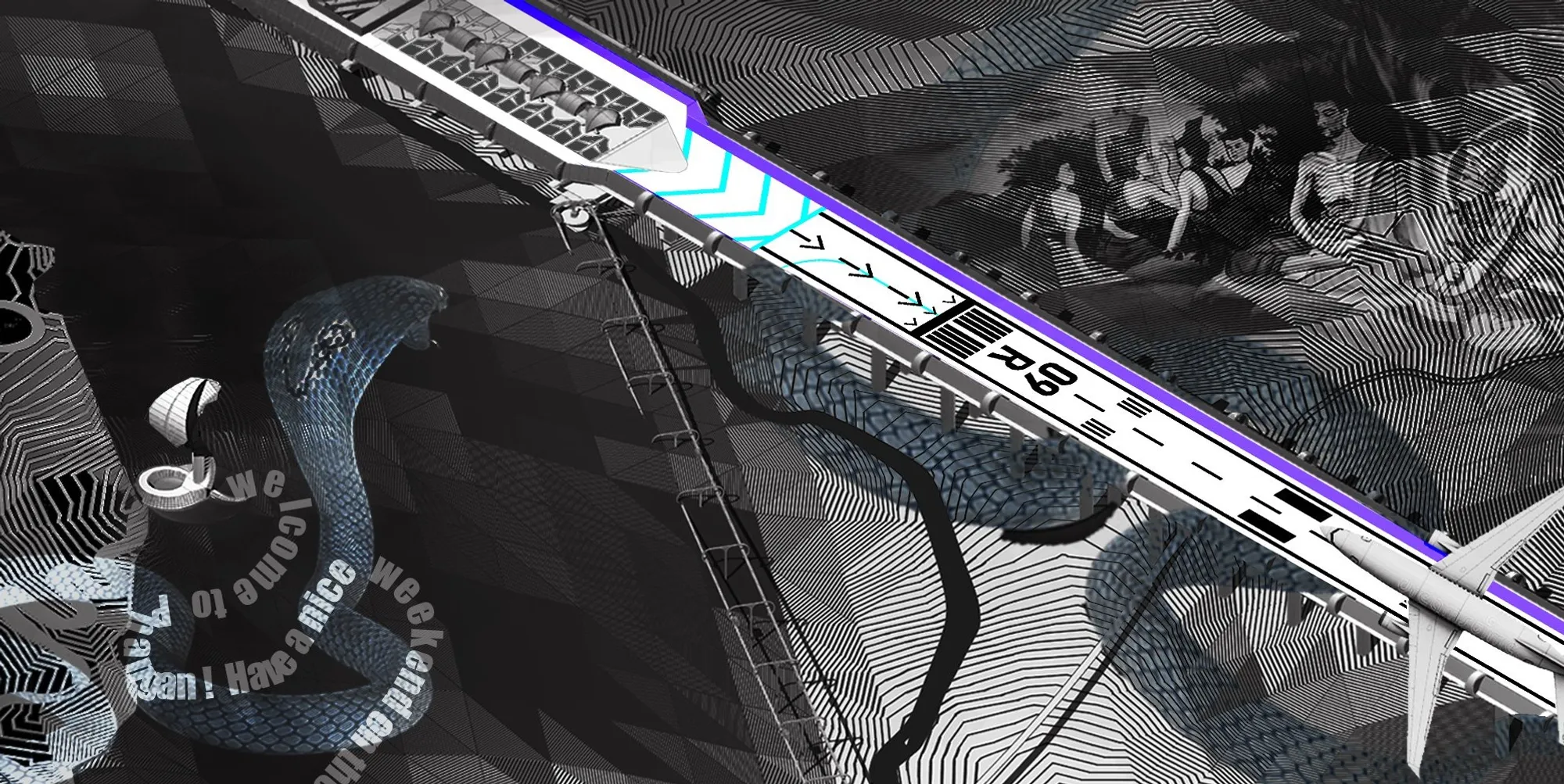
At the core of the project lies a powerful narrative derived from Buddhist mythology. The design takes inspiration from the legendary serpent, Nag, known as a guardian figure in Southeast Asian culture. This symbolic framework transforms the airport into more than a transit hub; it becomes a cultural landmark and a narrative device.
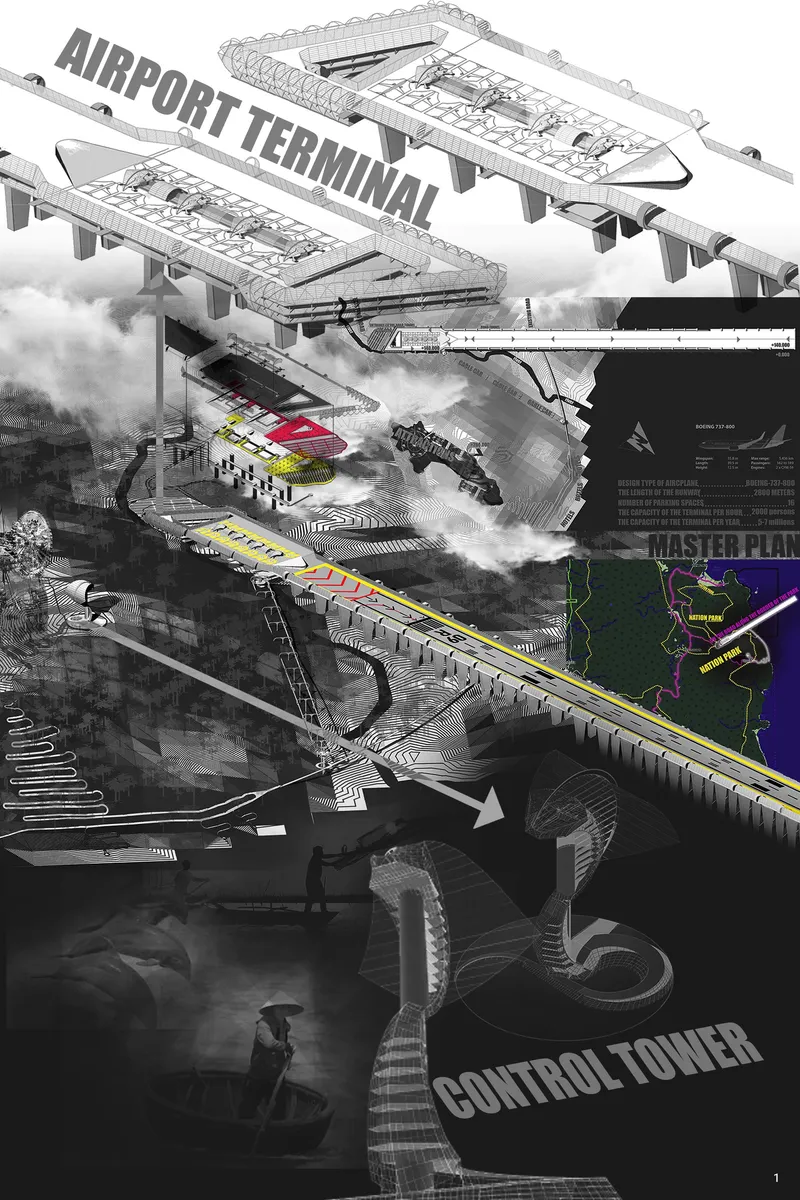
The architectural form translates this myth into spatial organization. The serpent’s tail manifests as an elevated airfield and terminal, while the head becomes the control tower, a sculptural and symbolic marker that welcomes visitors. This transformation of myth into infrastructure positions the airport as both a functional system and a storytelling medium.
Sustainable Airport Design Strategy
A defining feature of this project is its advanced sustainable airport design strategy. Unlike conventional airports that occupy vast horizontal territories, this proposal minimizes land disruption through vertical and elevated planning.
The airfield is raised above the ground on structural supports, functioning as an infrastructural overpass. This allows the natural terrain, including the national park, to remain largely untouched. By lifting the runway and terminal, the design reduces ecological fragmentation and preserves biodiversity.
Additionally, the integration of a road tunnel beneath the elevated airfield ensures that existing circulation networks are maintained without interfering with airport operations. This layered approach demonstrates a sophisticated understanding of multi-level infrastructural planning.
Spatial Organization and Functional Efficiency
The airport is organized into three primary levels: car level, arrival level, and departure level. This stratification enhances operational clarity and user experience while optimizing spatial efficiency.
- Car Level: Located at the base, this level accommodates vehicular movement and service infrastructure, including parking and access tunnels.
- Arrival Level: Positioned above, it facilitates passenger inflow, baggage handling, and seamless transitions to other modes of transport such as cable cars.
- Departure Level: The uppermost layer is dedicated to outbound passengers, with clearly defined circulation paths leading to boarding gates.
This vertical zoning reduces the footprint of the airport while maintaining high capacity and performance standards. The compact arrangement ensures that all functions are efficiently integrated within a limited spatial envelope.


Control Tower as Iconic Landmark
The control tower, representing the head of the serpent, is conceived as a freestanding sculptural element. Its form is both expressive and functional, providing optimal visibility for monitoring the airfield while serving as a visual anchor for the entire complex.
Strategically placed on an already cleared site, the tower avoids additional environmental disturbance. Its iconic geometry reinforces the identity of the airport as a landmark, contributing to the branding of the island as a unique destination.
Cultural Integration and Visitor Experience
The project reimagines the airport as the “first window” into the island’s culture. By embedding local mythology into the architectural language, the design creates an immersive arrival experience that introduces visitors to the cultural and spiritual context of the region.
The narrative of the serpent as a guardian and guide extends into the user journey, transforming the act of travel into a symbolic passage. This approach aligns with contemporary trends in experiential architecture, where infrastructure becomes a medium for cultural expression.
Future-Ready Infrastructure
One of the most compelling aspects of this sustainable airport design is its adaptability. The elevated runway system allows for indefinite extension without occupying additional land. This ensures that the airport can scale in response to future demand while maintaining its ecological integrity.
Furthermore, the space beneath the elevated structure can be repurposed for additional functions without disrupting airport operations. This flexibility enhances the long-term viability of the project.
Challenging Conventional Airport Typologies
Traditional airports are often criticized for their extensive land use, environmental impact, and distance from urban centers. Keeper of the Island challenges these conventions by proposing a compact, integrated model that can be deployed across diverse terrains, including forests, coastal regions, and urban environments.
By rethinking the spatial logic of airport design, the project introduces a new paradigm that prioritizes efficiency, sustainability, and cultural relevance. It demonstrates that airports can be both infrastructural necessities and architectural statements.
Keeper of the Island exemplifies the future of sustainable airport design, where infrastructure is seamlessly integrated with nature and culture. Through its innovative use of elevation, narrative-driven form, and efficient spatial organization, the project offers a compelling alternative to conventional airport models.
Diana Zinnatshina’s proposal is not merely an airport; it is a visionary framework that redefines how architecture can respond to environmental and cultural contexts while meeting the demands of global mobility.




Popular Articles
Popular articles from the community


AL-JANNAH: Sustainable Architecture and Permaculture for Afghan Widows
AL-JANNAH uses sustainable architecture and permaculture to create resilient oasis of housing, learning, work and renewal for Afghan widows.

Co-life: Sustainable Architecture for Age-Friendly Community Living
Co-life reimagines sustainable architecture for seniors through courtyards, rammed earth, shared gardens, and spaces designed for belonging.

Hill & Cross Opera: Sculptural Opera House Architecture Shaped by Tallinn’s Landscape and Identity
Hill & Cross Opera reimagines opera house architecture in Tallinn through its sculptural hill, civic plaza, glass wave and a luminous cross.

The Ocean Hive: Sustainable Architecture for a Self-Sufficient Civilization at Sea
The Ocean Hive imagines sustainable architecture at sea, where modular habitats, algae, wave power and ocean waste sustain a growing colony.


Similar Reads
You might also enjoy these articles

Eco Chapel: A Green Architecture Pavilion Designed in Symbiosis with the Forest
Eco Chapel uses green architecture to weave prayer, learning and reuse into a forest pavilion shaped by modular hexagonal canopies for life.
Kaffeebühnen: Coffee Shop Architecture Designed as a Civic Stage Between Vienna’s City and Park
Kaffeebühnen turns coffee shop architecture into a civic stage, linking Vienna’s park edge, urban life, warm timber yards, and coffee craft.
Healing Façade: Sustainable Architecture for Reforestation, Community, and Sacred Ecology in Ethiopia
Healing Façade reimagines sustainable architecture as a living wall that restores soil, catches water and renews Ethiopia's forest churches.


Urban Forest: A Vertical Ecosystem for 5,000 Workers in Singapore's Changi Business Park
Radially stacked pods and layered green decks turn a 7-acre plot into 47 acres of ecological workspace projected for 2040.


Comments (0)
Please login or sign up to add comments
No comments yet. Be the first to comment!