

Kent House: A Contemporary Queenslander Home Renovation
Kent House exemplifies a Queenslander home renovation that balances heritage preservation, passive design, and modern architecture for contemporary Brisbane living.


Reimagining a Classic Queenslander
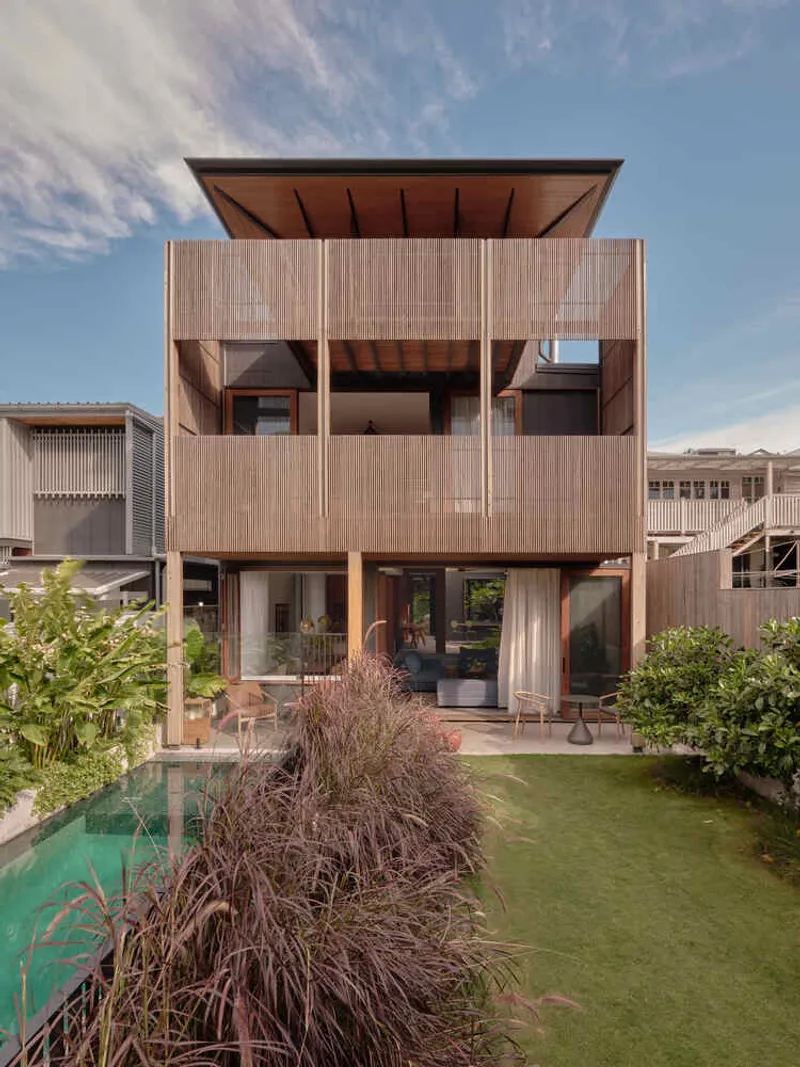
Kent House is a remarkable example of a Queenslander home renovation that seamlessly blends heritage charm with modern architectural innovation. Designed by Alexandra Buchanan Architecture, the project transforms a 1925 Queenslander into a contemporary home that embraces its steeply sloping site on Teneriffe Hill in Brisbane. This renovation showcases a sensitive yet striking approach to adapting traditional architecture to contemporary living while maintaining strong connections to the surrounding landscape.
The Site and Its Challenges
Nestled in a historic riverside precinct, the site presents unique design challenges. The original Queenslander cottage sits on a small lot, closely positioned to neighboring houses, with only 400mm of space on one side and 800mm on the other. The site slopes steeply to the west, descending into a lush, private garden fringed with palms. A stone convict wall marks the southern boundary, while the northwest side borders a private laneway shared with neighboring properties.
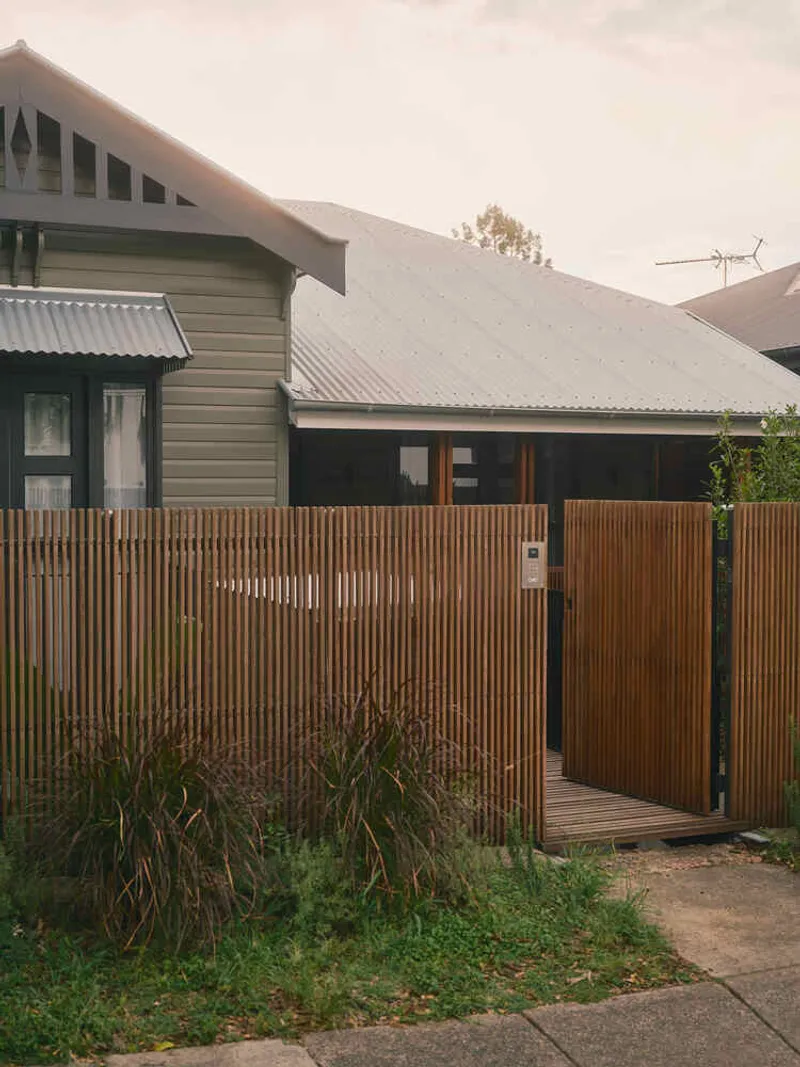
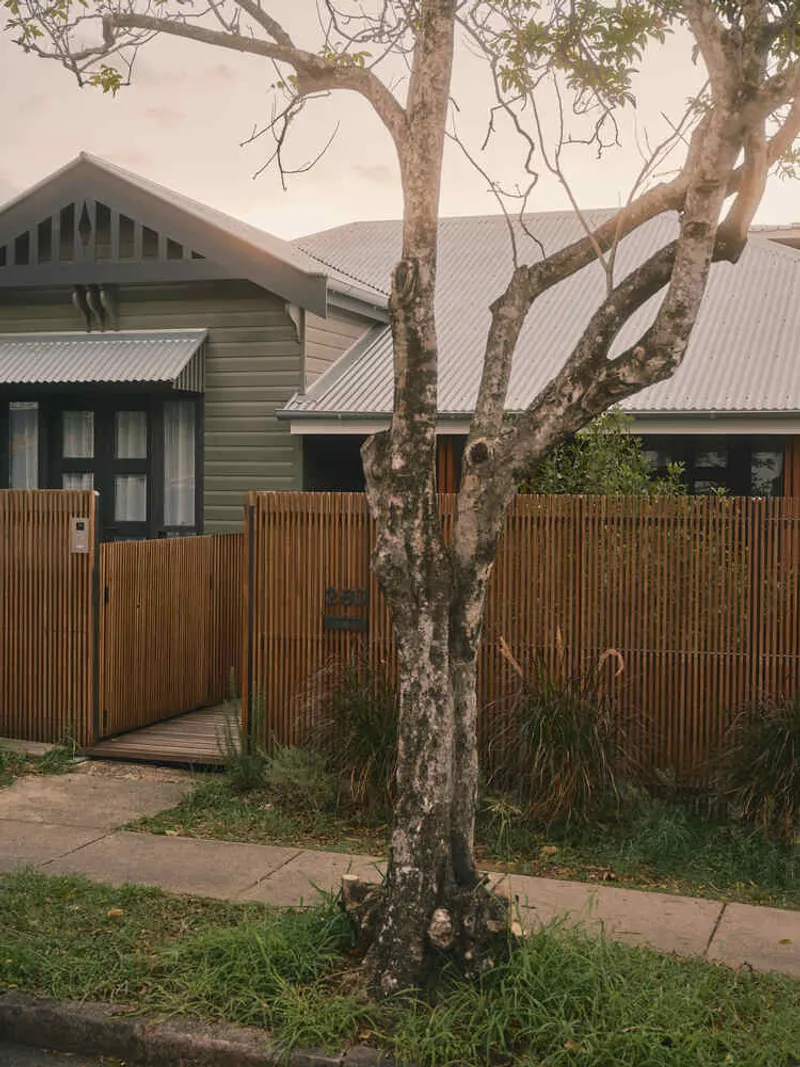
Despite these constraints, the elevation of the site offers significant advantages, including natural cross-ventilation from the north and sweeping views of the surrounding hills to the south. The design takes full advantage of these environmental benefits, crafting a home that feels open, spacious, and intimately connected to nature.
A Modern Extension That Respects Tradition
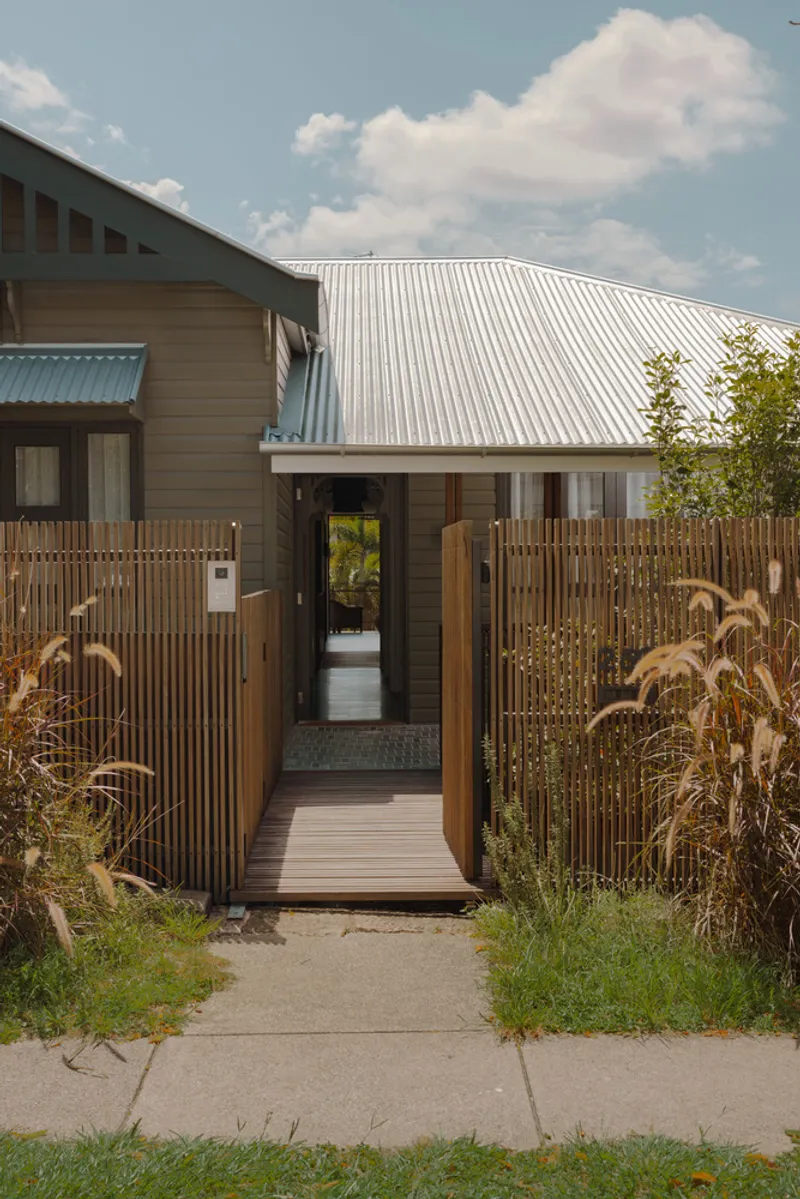
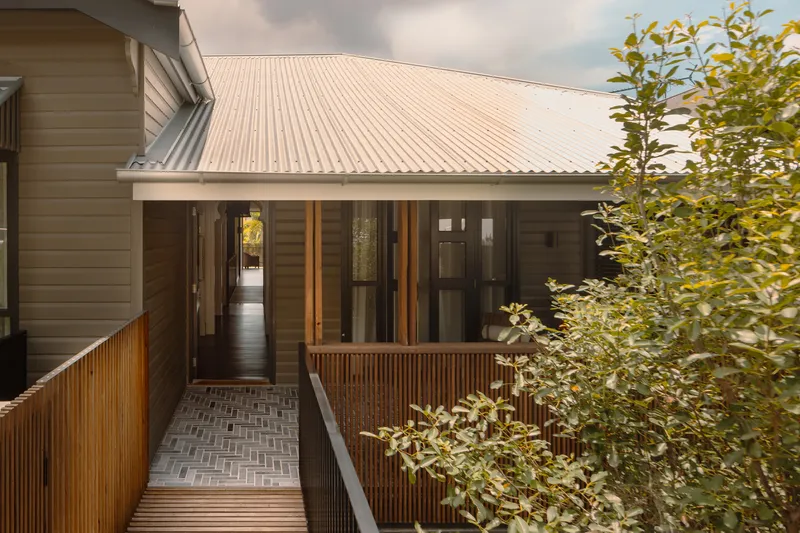
Rather than overpowering the original cottage, the renovation embraces its character while introducing a contemporary extension that responds to the site’s natural contours. The design follows the hill’s natural fall, creating generous height beneath the Queenslander, which is connected to the street by a bridge. This design approach allows for a discreet single-story street-facing facade that transitions into a dynamic multi-level interior space.
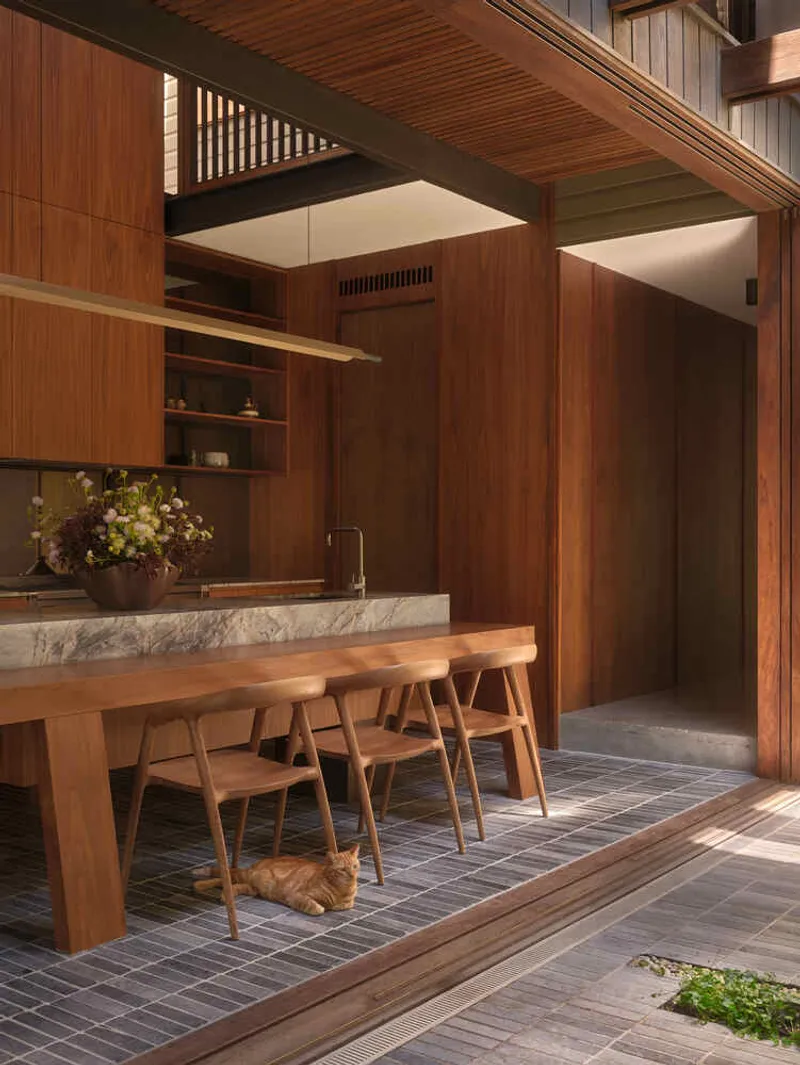
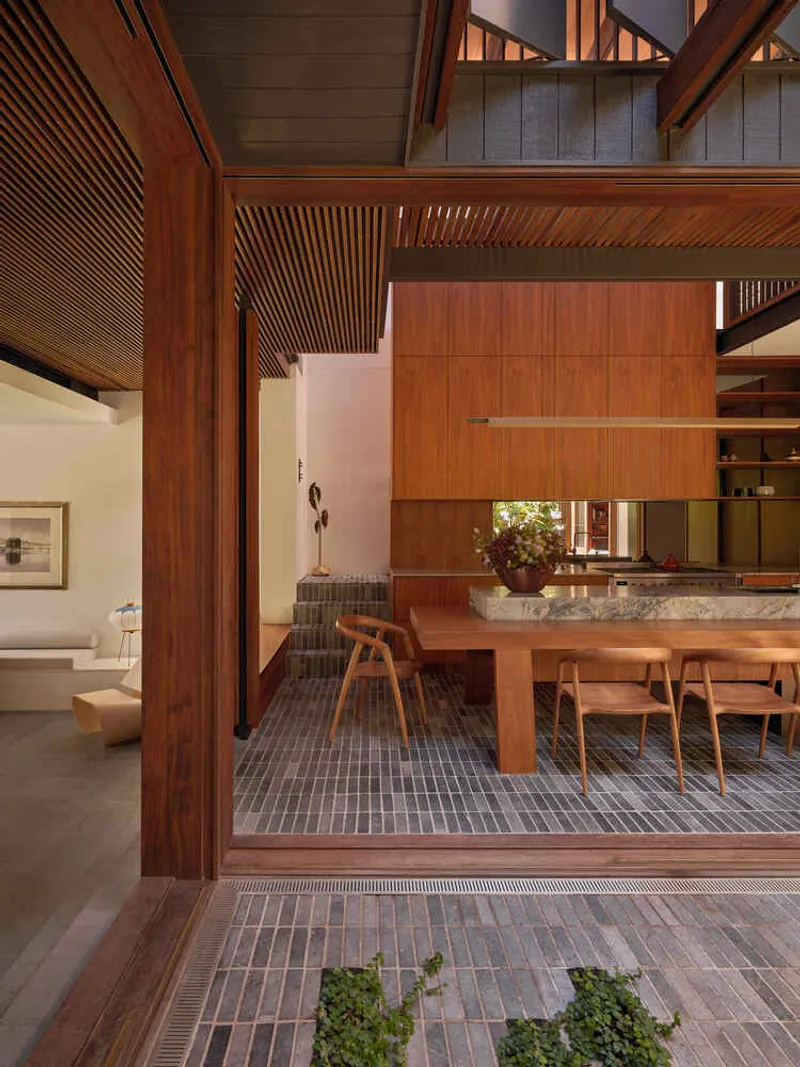
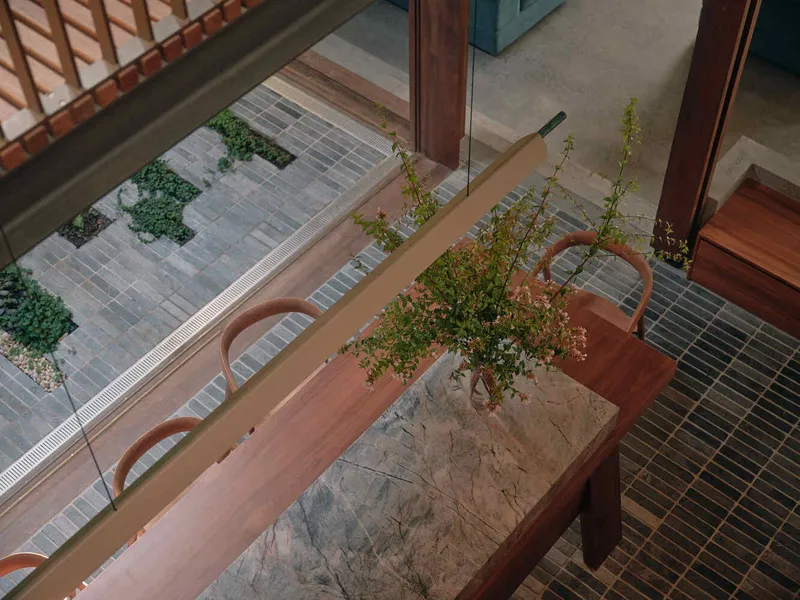
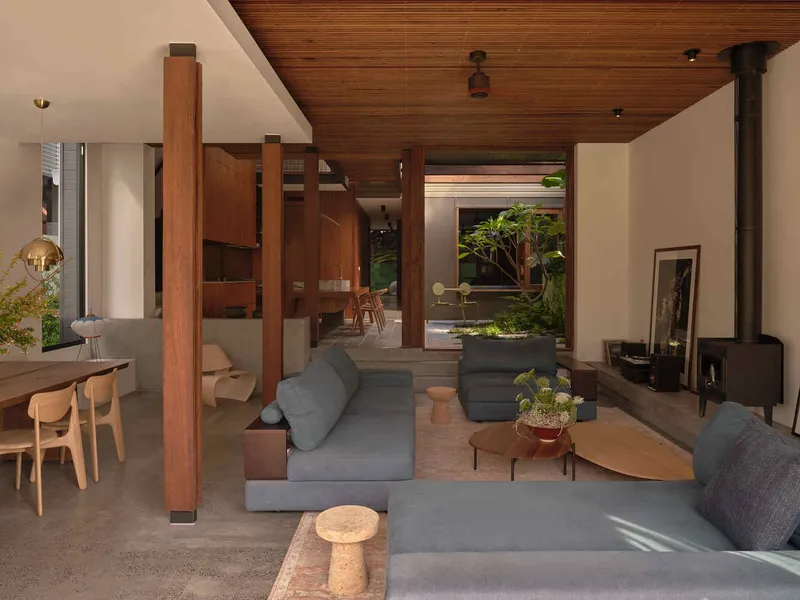
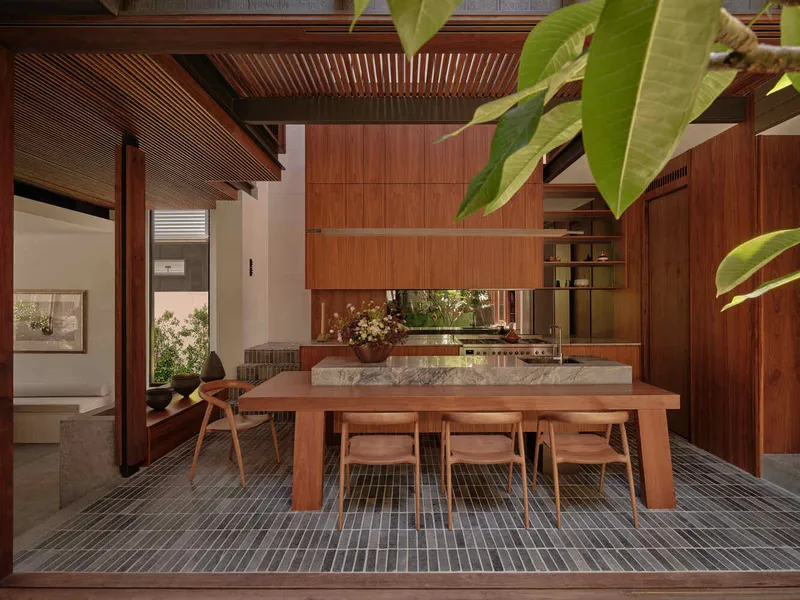
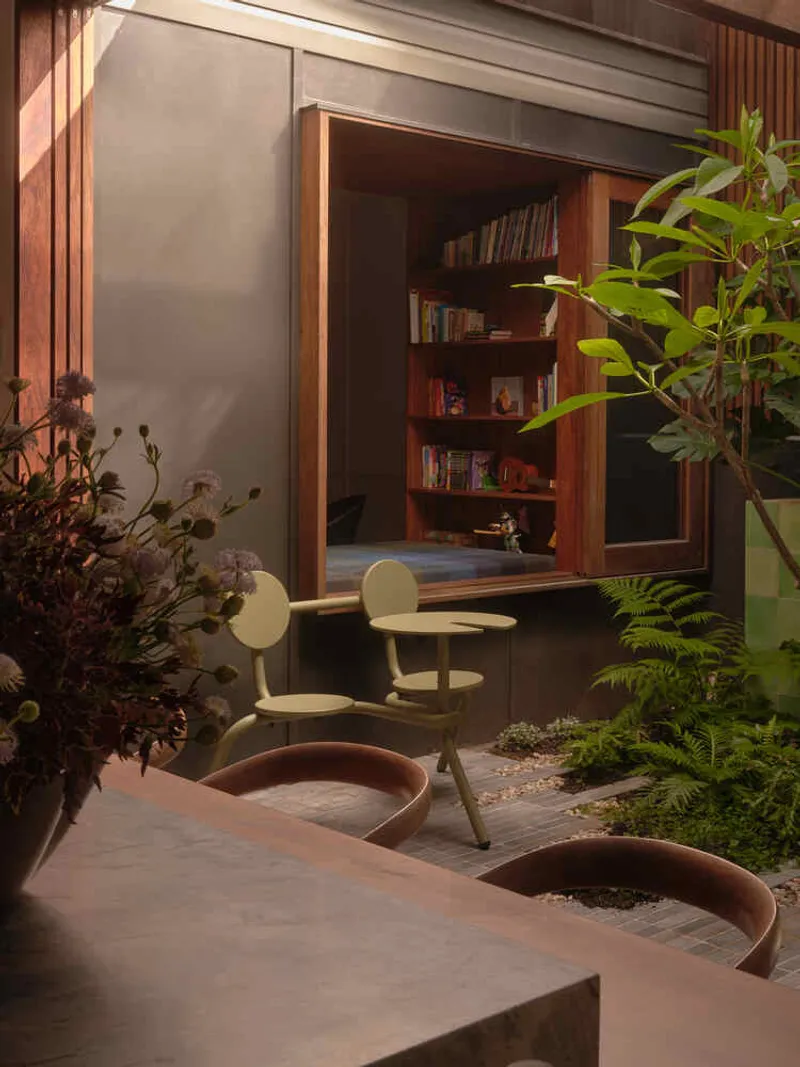
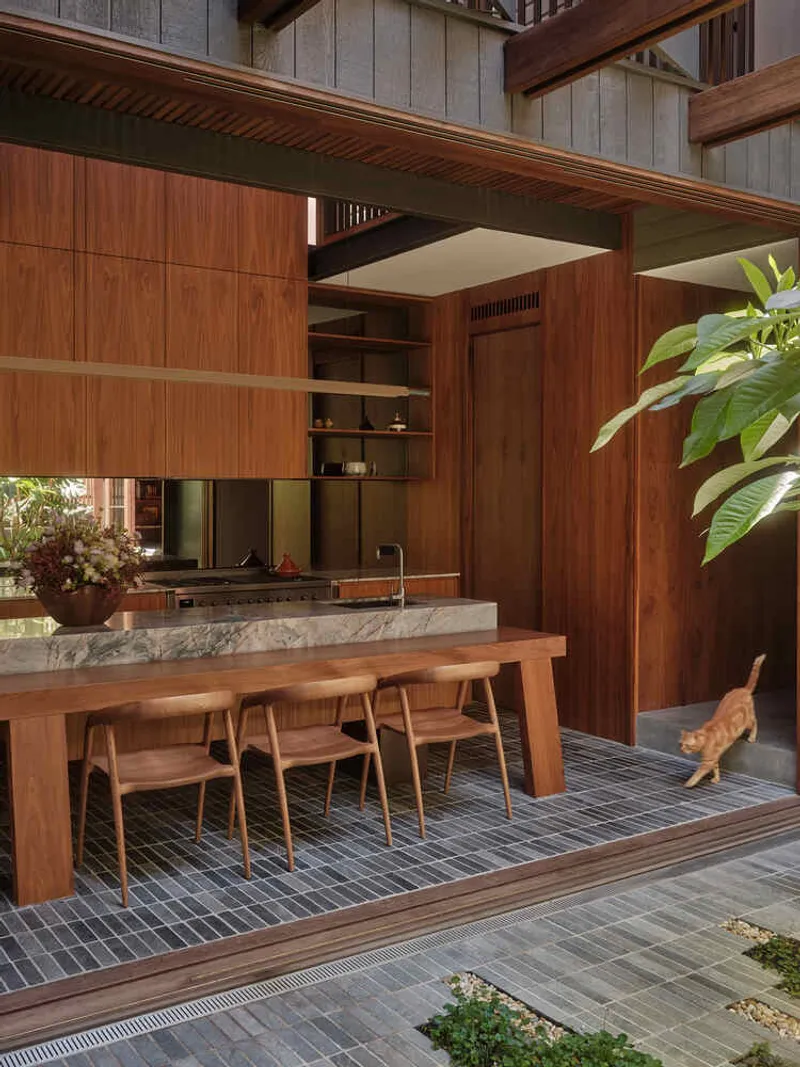
At the core of the renovation is a central courtyard, a feature that enhances daylight penetration, promotes cross-ventilation, and provides a sheltered retreat from the west-facing block. This courtyard serves as a visual and functional separation between the old and the new, maintaining the legibility of the original Queenslander while integrating it with the modern extension.
Passive Design Strategies for Comfort and Sustainability
A key aspect of this Queenslander home renovation is its thoughtful response to Brisbane’s subtropical climate. The west-facing garden, which could pose challenges for heat management, is mitigated by a series of passive design strategies.
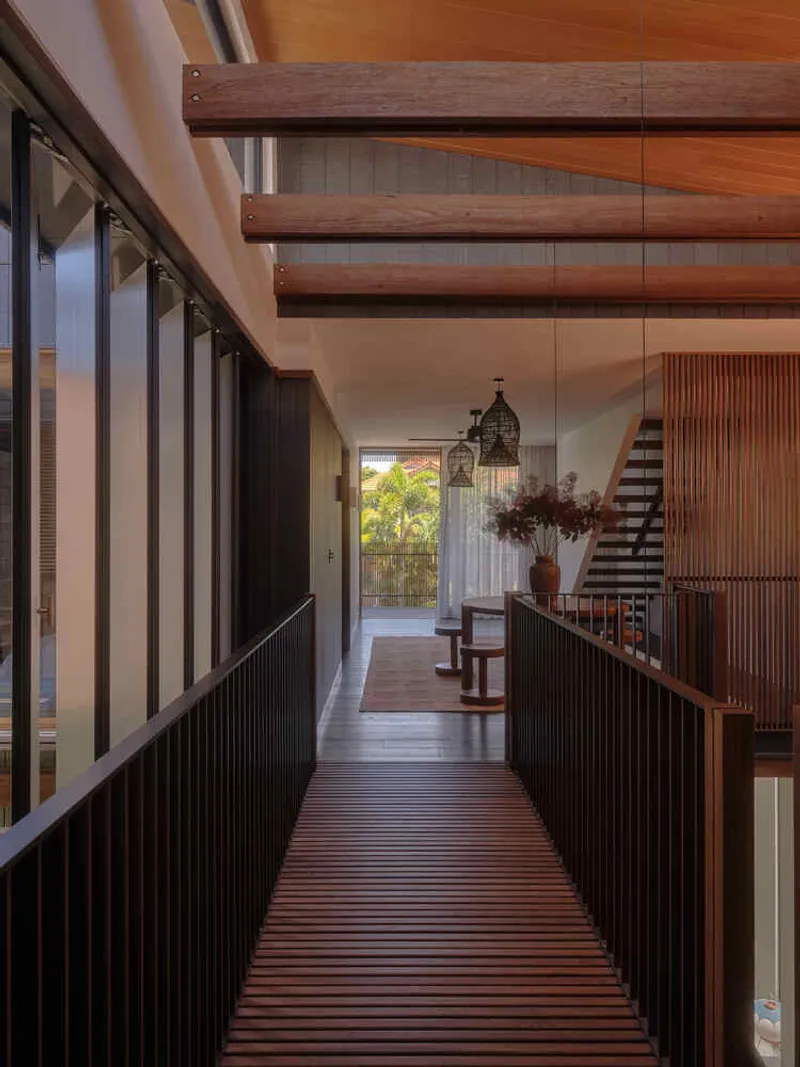
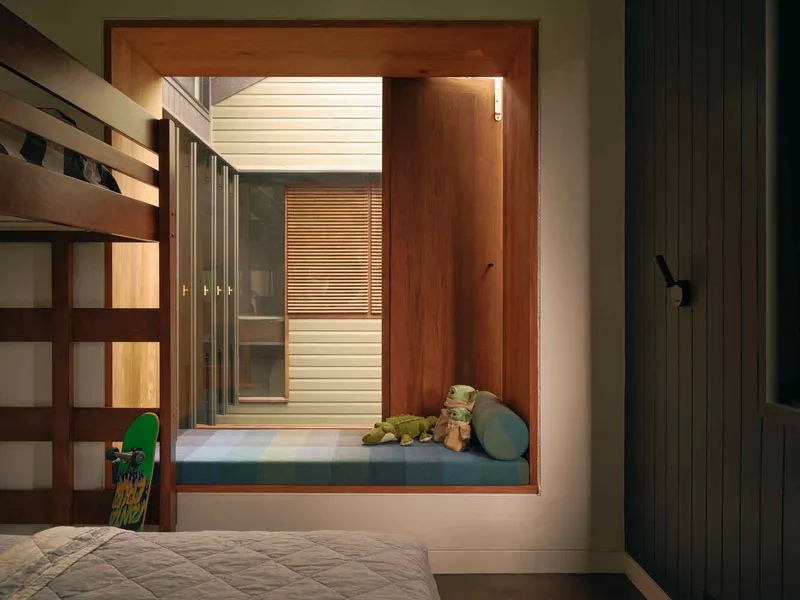
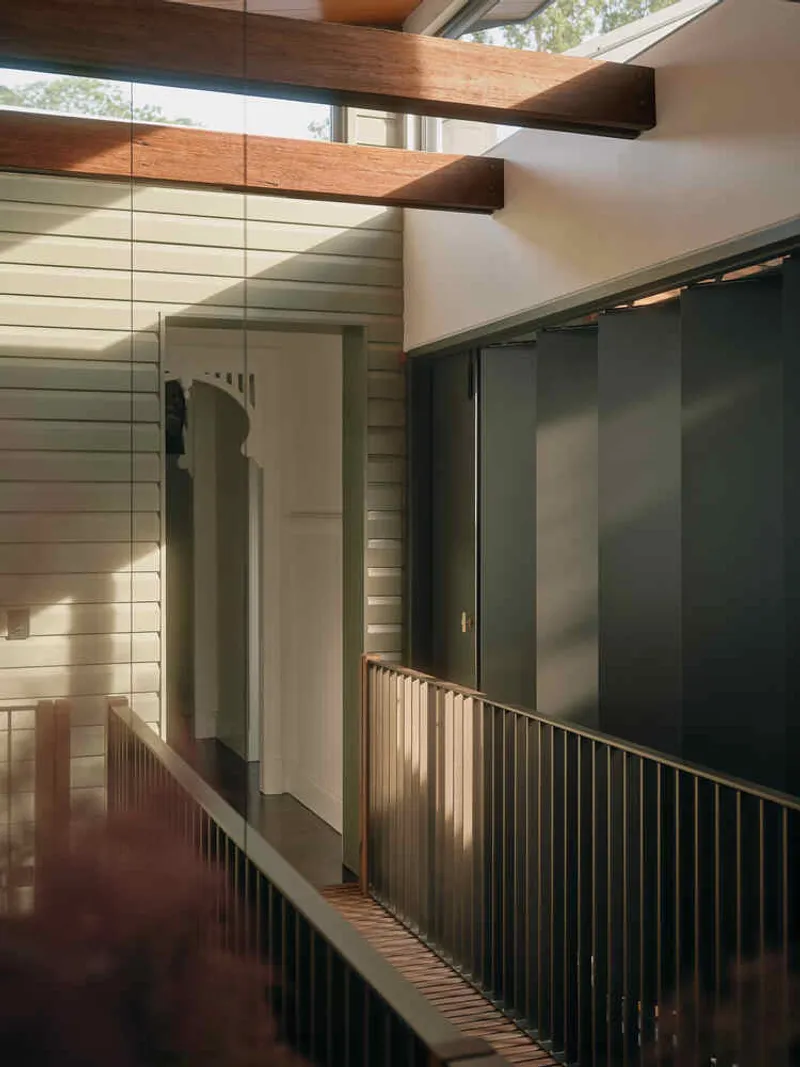
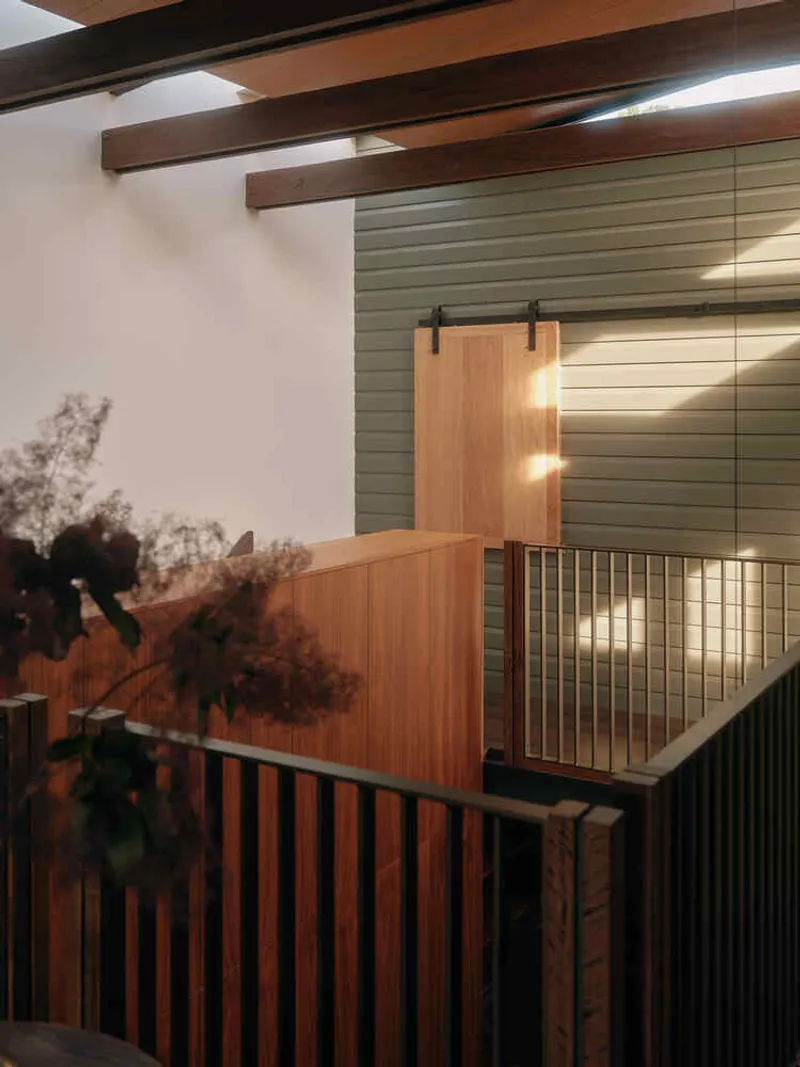
The architectural plan follows the site’s downward slope, allowing for high ceilings, operable walls, and internal voids that facilitate natural ventilation. Breezes funnel up the hill and through the home, keeping the interiors cool during Brisbane’s hot summers while still allowing for warmth and intimacy in the cooler months. The undercroft beneath the existing cottage acts as a shaded, breezy retreat, reinforcing the Queenslander’s traditional climatic adaptations.
Balancing Privacy and Connectivity
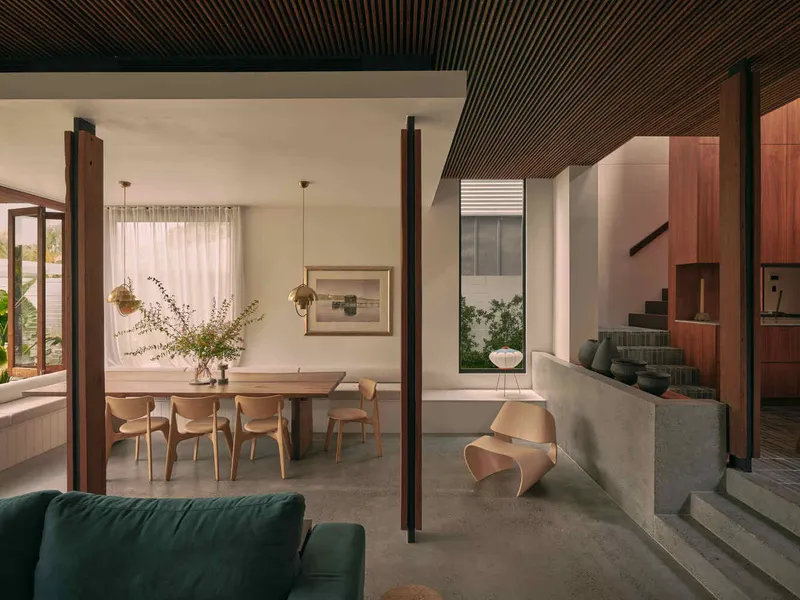
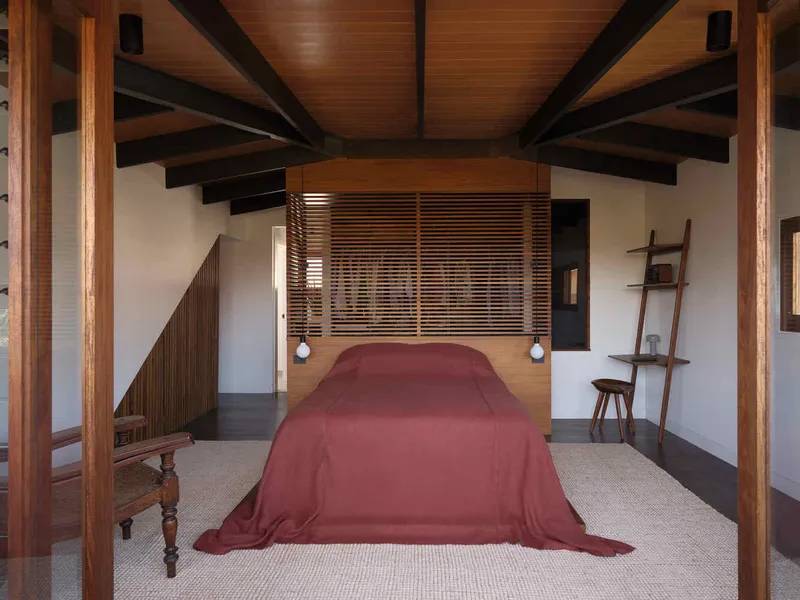
Given the home’s proximity to neighboring properties, privacy was a crucial design consideration. The courtyard plays a significant role in creating an internalized sanctuary that allows for open, light-filled spaces without compromising privacy. Strategic window placements and screened openings further enhance seclusion while maintaining a connection with the surrounding landscape.
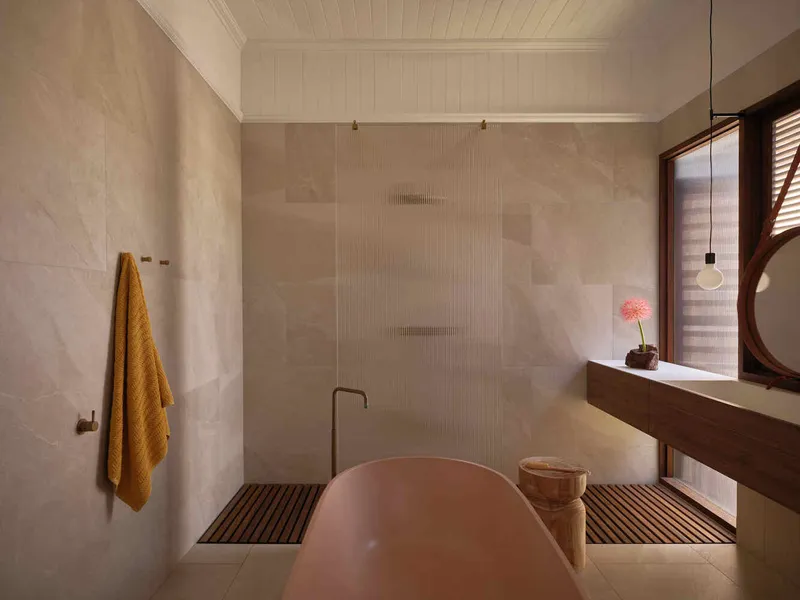
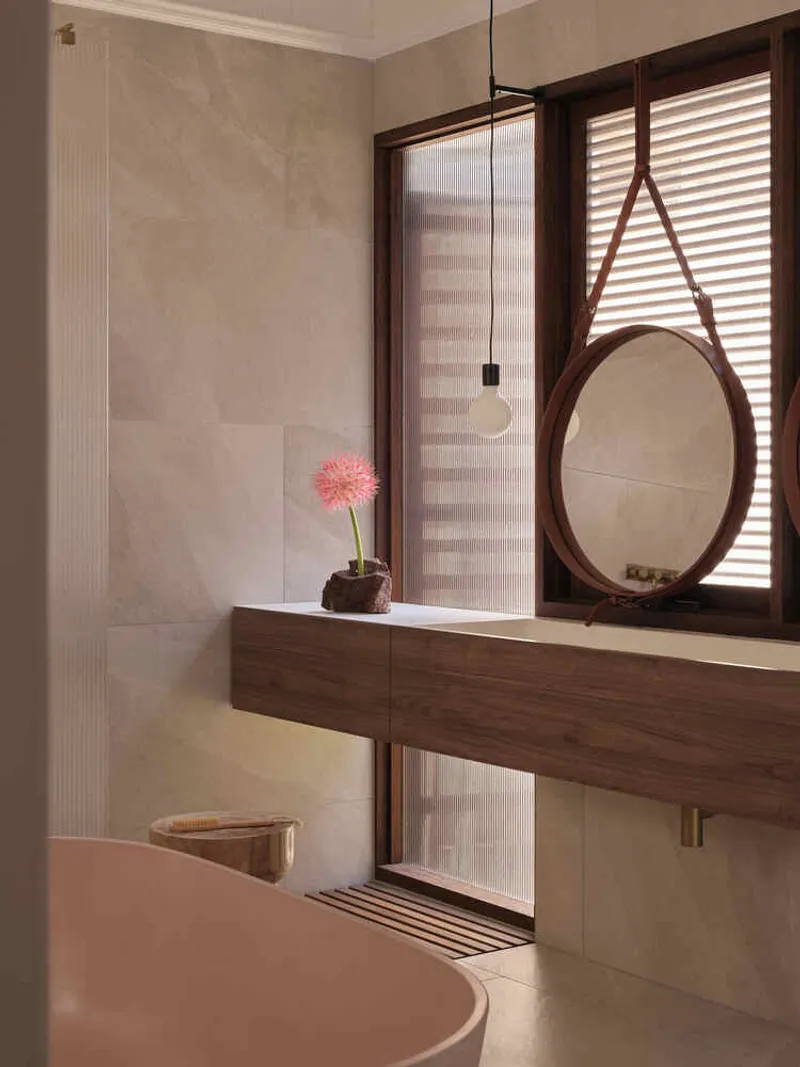
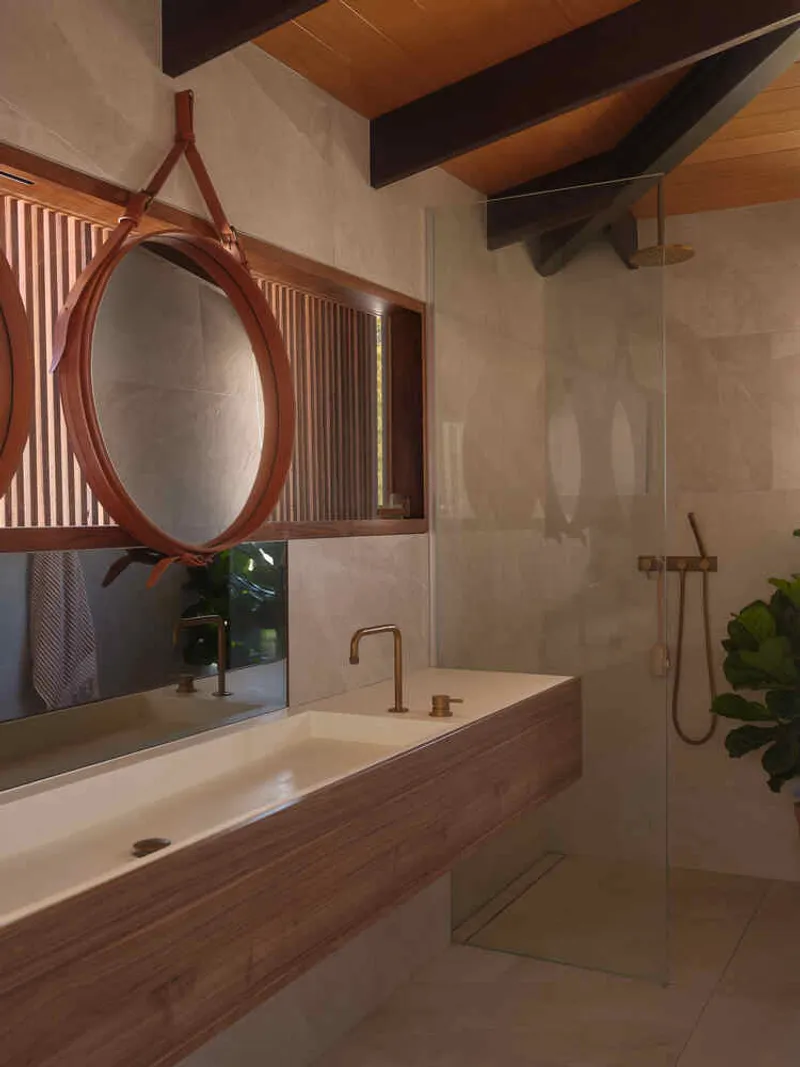
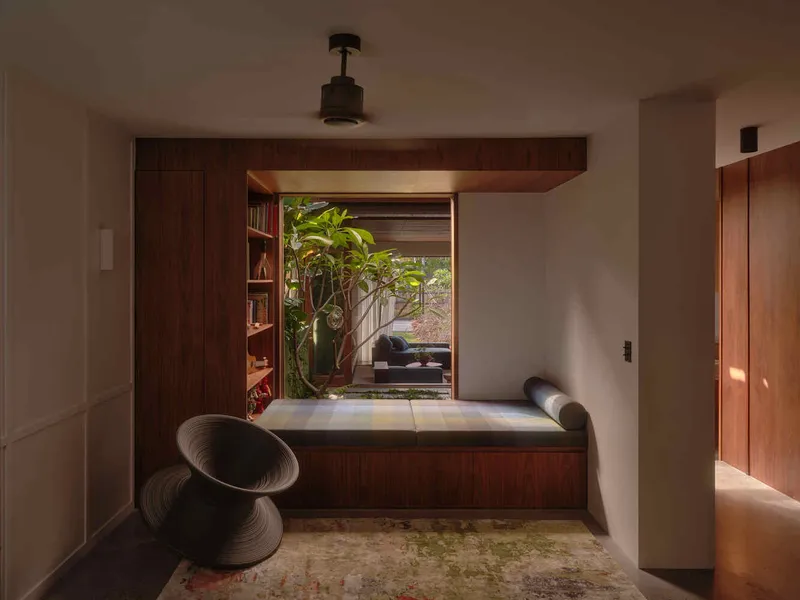
The integration of indoor and outdoor spaces blurs traditional boundaries, creating a home that feels expansive despite its compact footprint. The design ensures that natural light and ventilation are maximized, making the house feel larger and more connected to its environment.
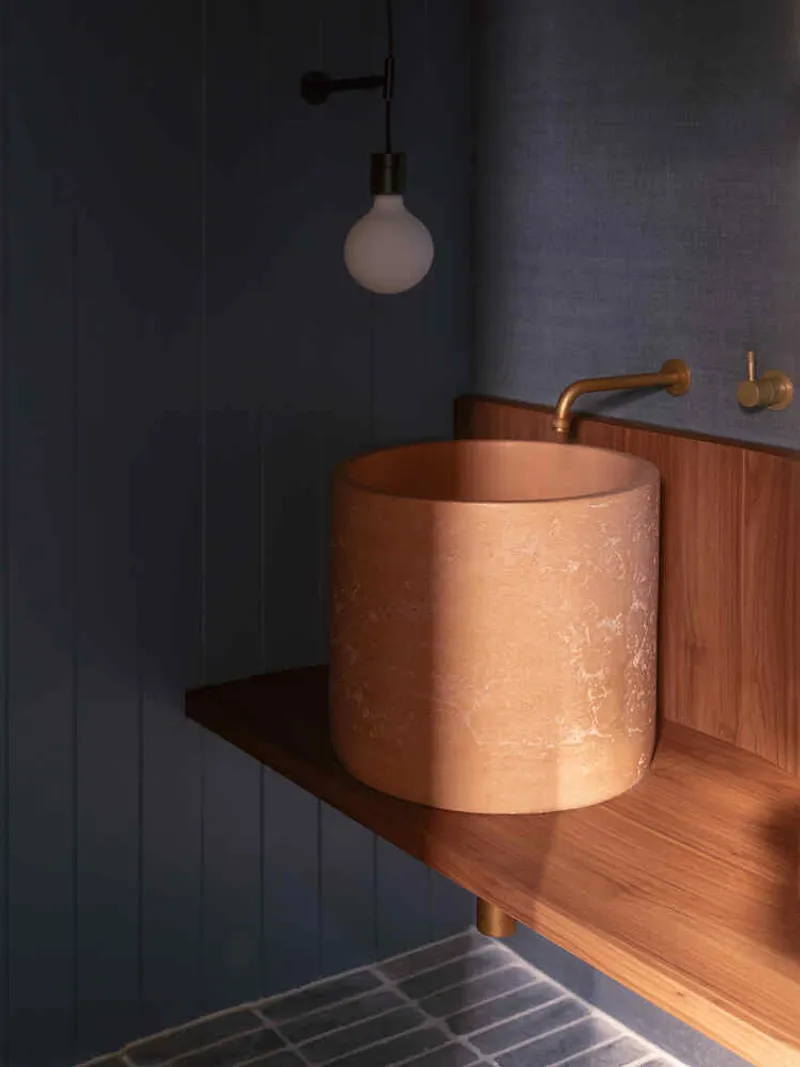
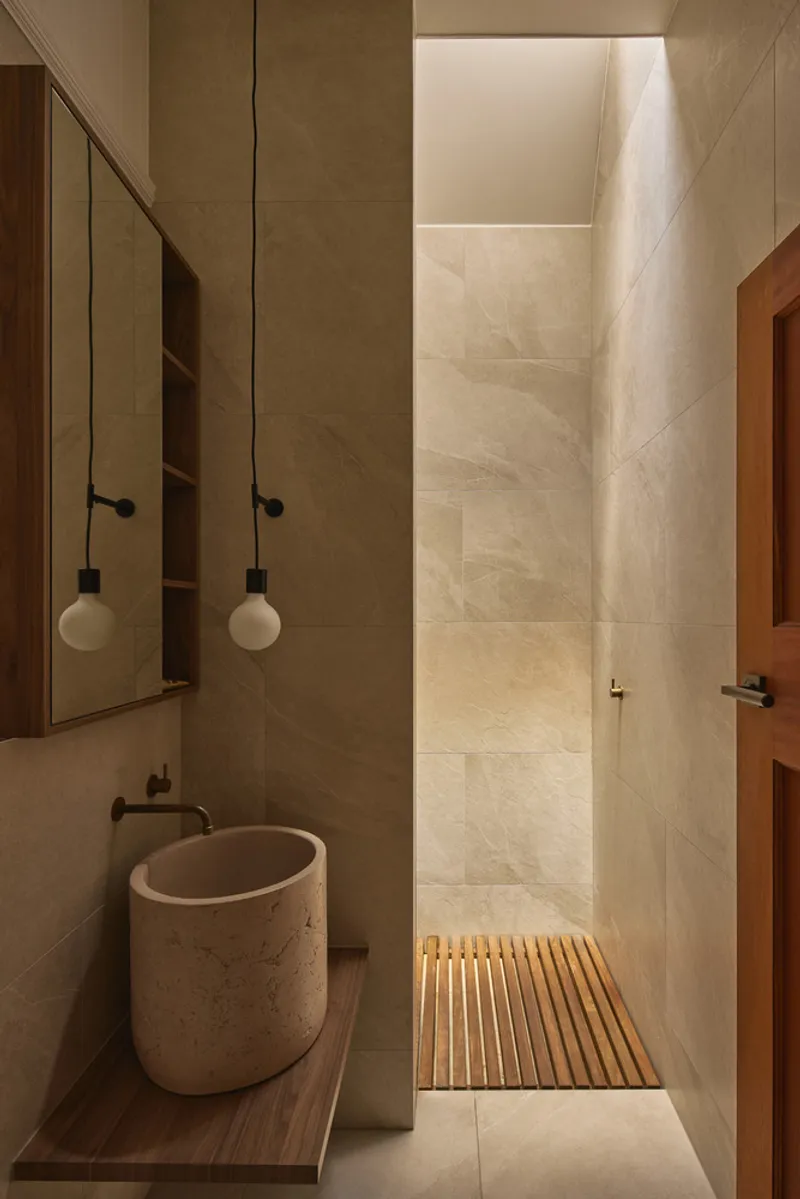
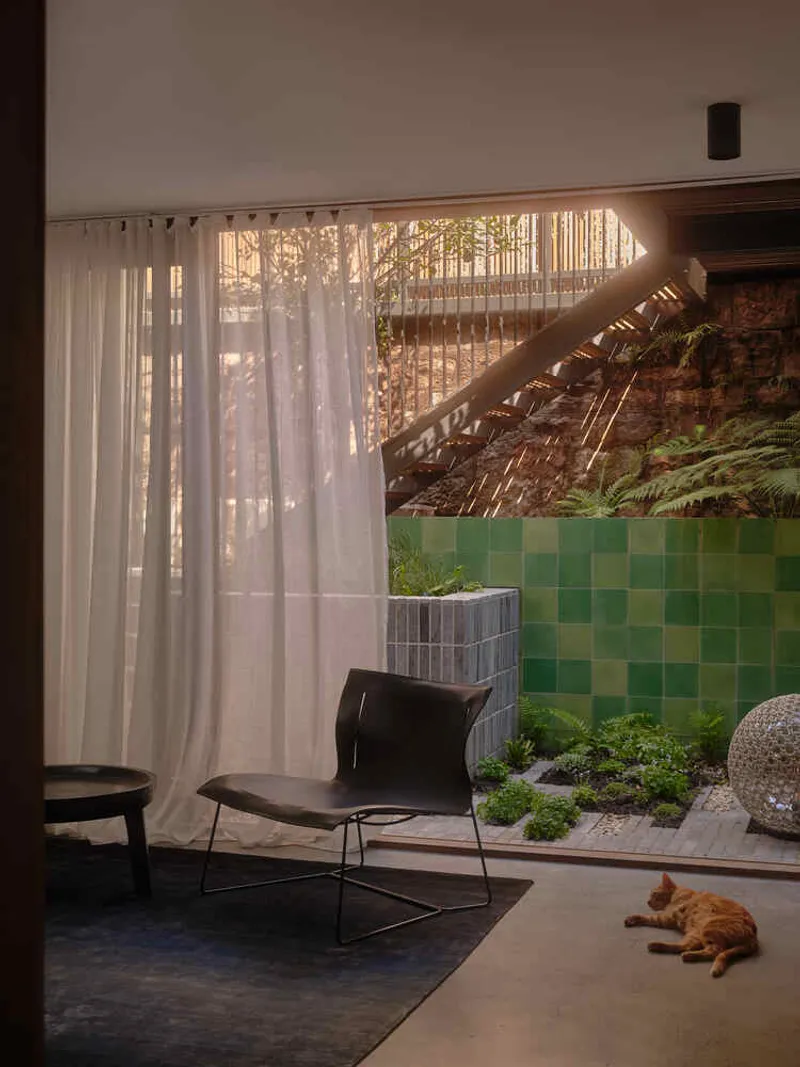
Materiality: A Dialogue Between Old and New
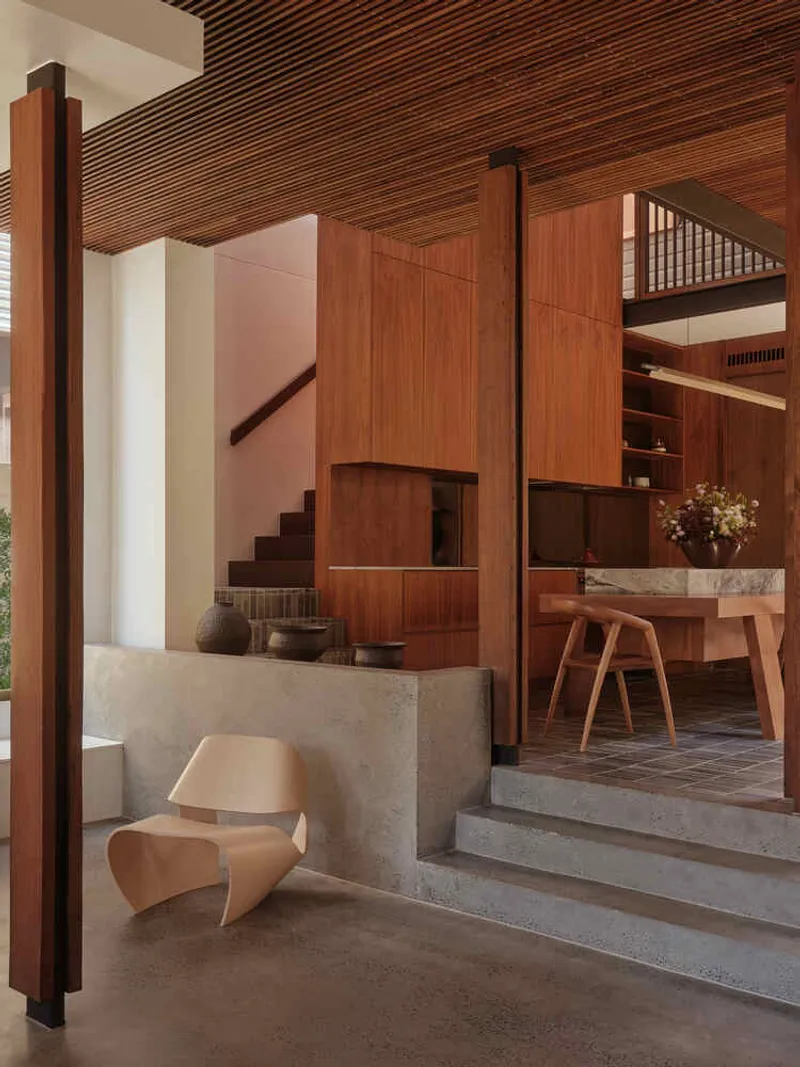
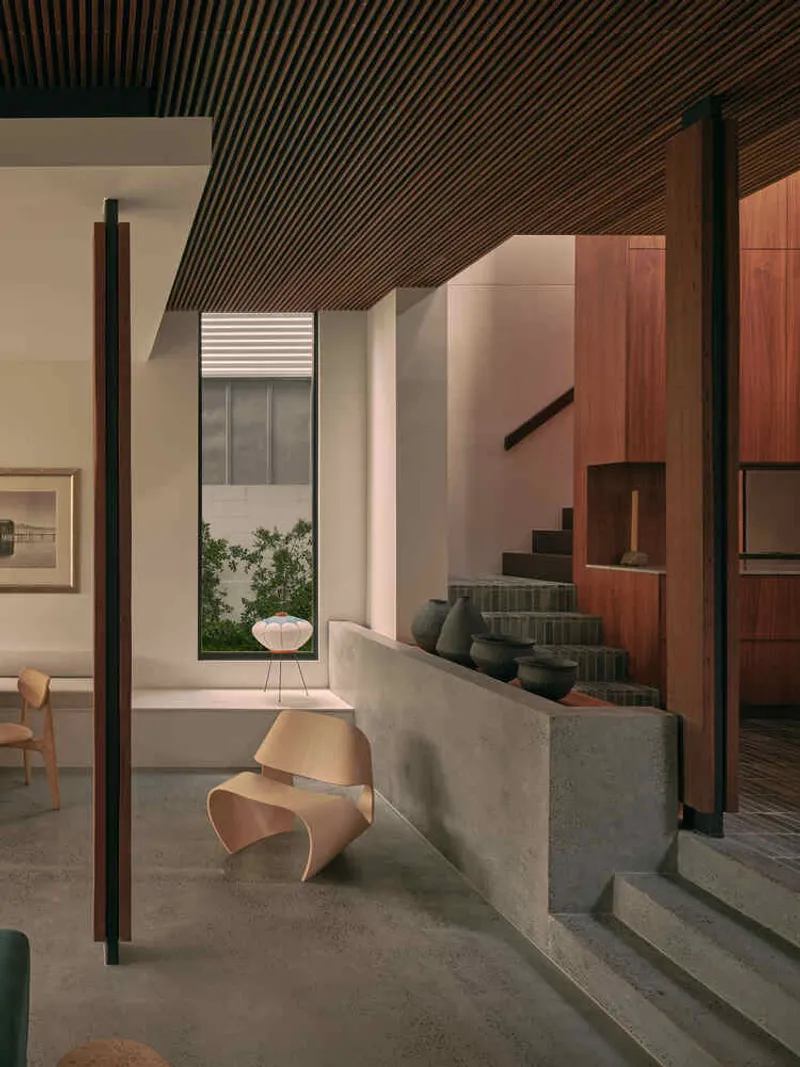
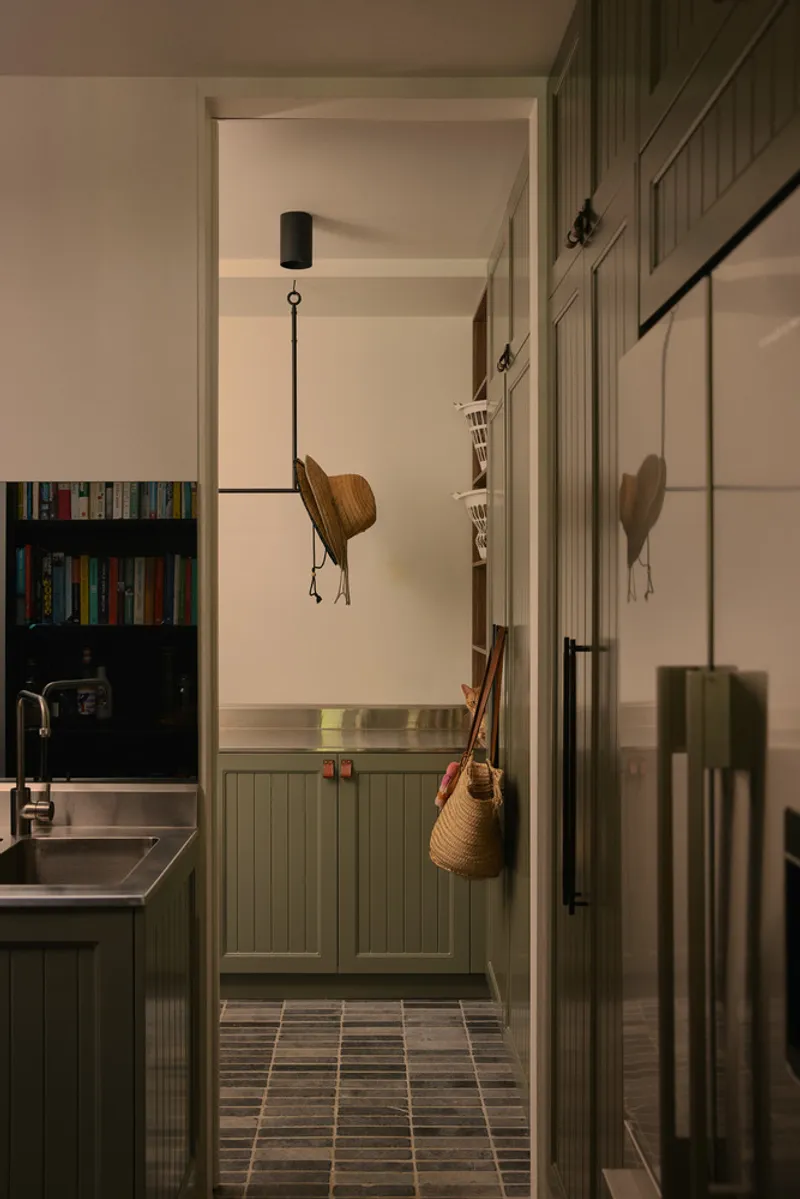
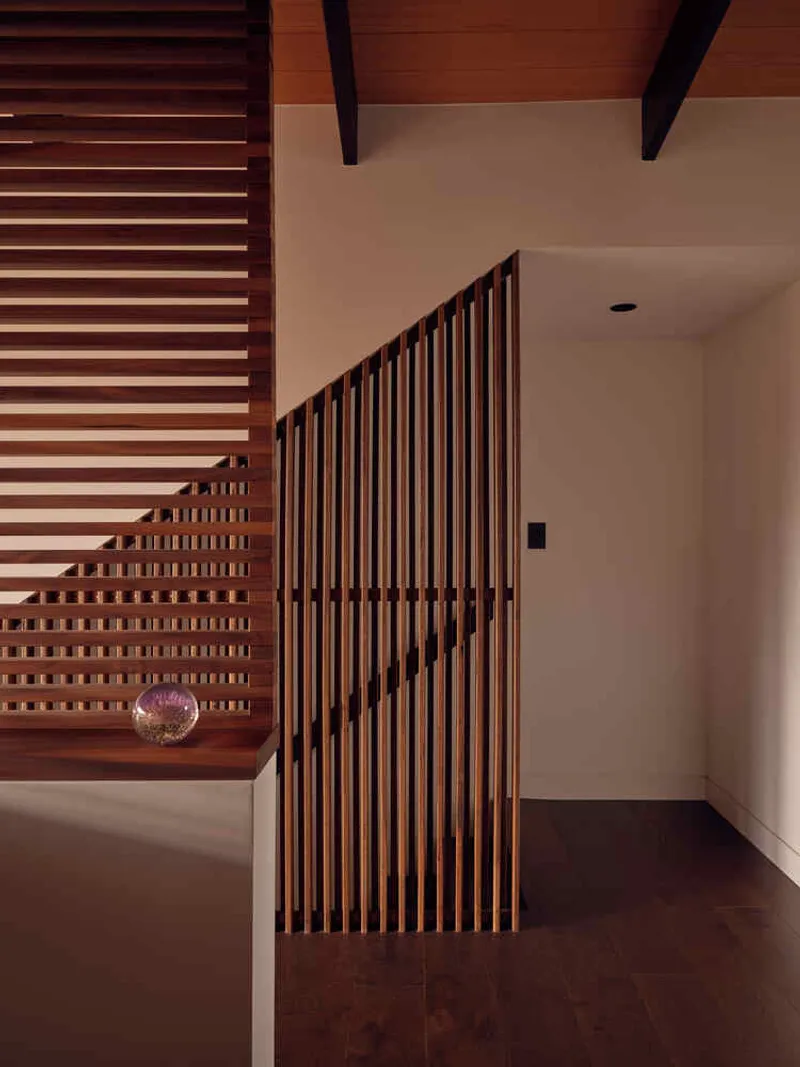
The renovation celebrates material contrast, juxtaposing the original Queenslander’s timber textures with contemporary finishes. Natural materials such as timber, stone, and glass create a tactile, warm, and timeless aesthetic. The undercroft space, a signature element of traditional Queenslander architecture, is reinterpreted with modern detailing, ensuring that the home remains true to its heritage while embracing contemporary living standards.
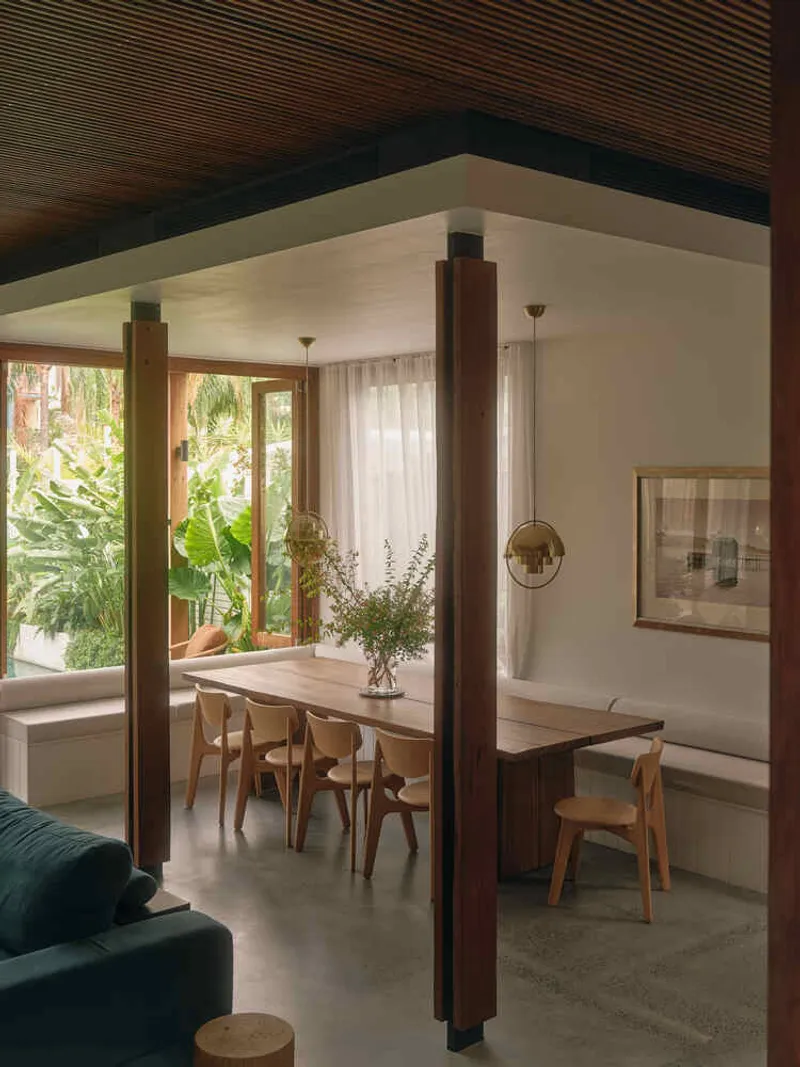
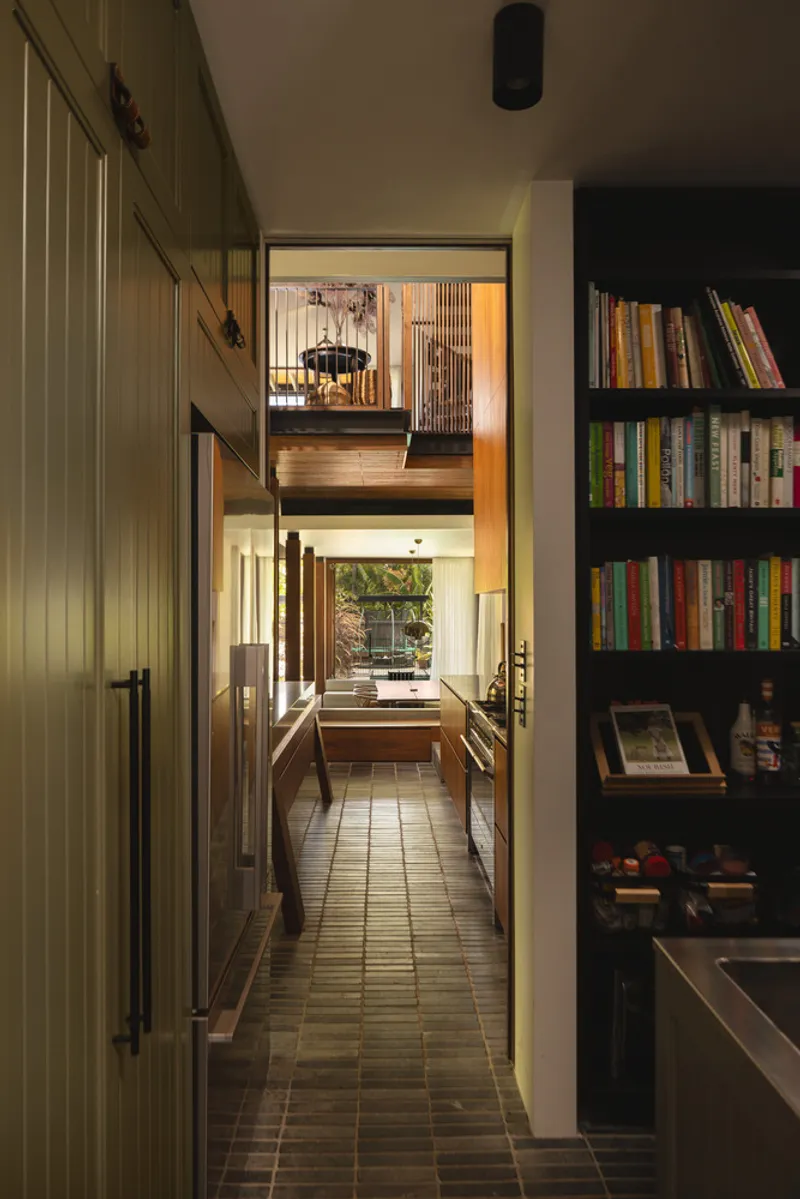
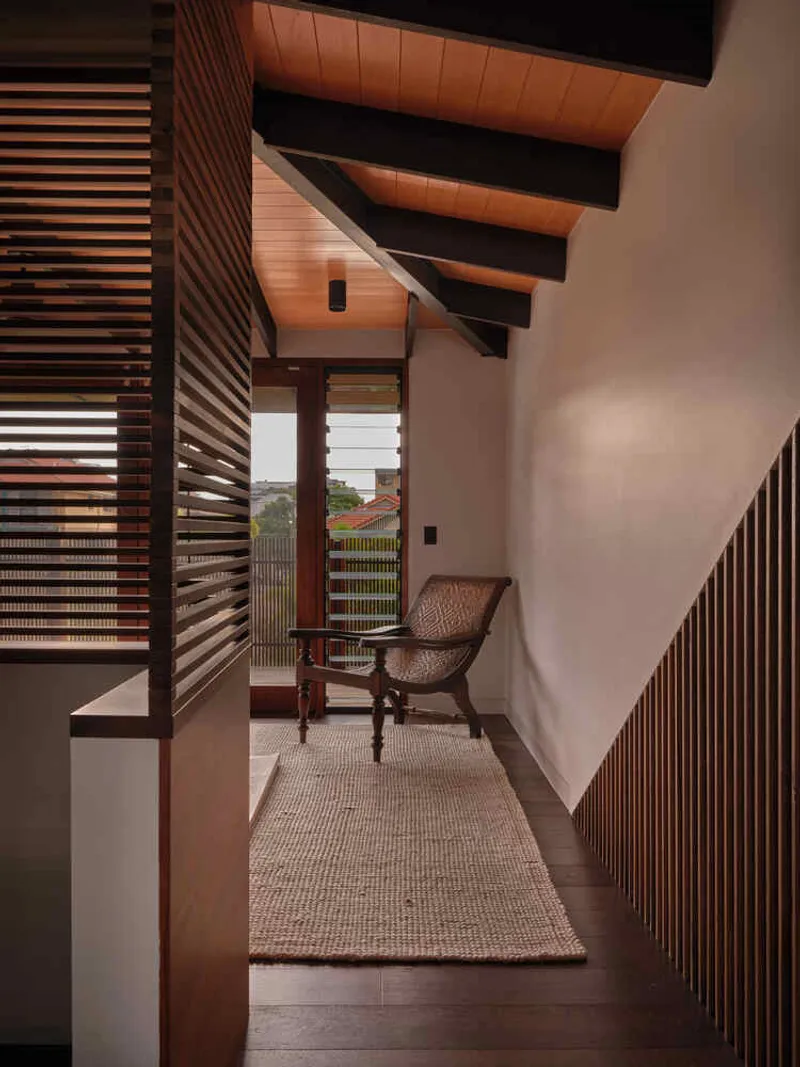
By layering materials and textures, the design fosters a sense of depth and interest, making each space feel carefully curated and deeply connected to the home’s history. The renovation not only preserves the essence of the Queenslander but also elevates it into a sophisticated, modern residence.
A Model for Future Queenslander Renovations
Kent House stands as an exemplary model of how Queenslander home renovations can respect historical integrity while embracing contemporary design principles. The project highlights the importance of adaptive architecture, demonstrating that heritage homes can be reimagined to meet modern needs without sacrificing their character.
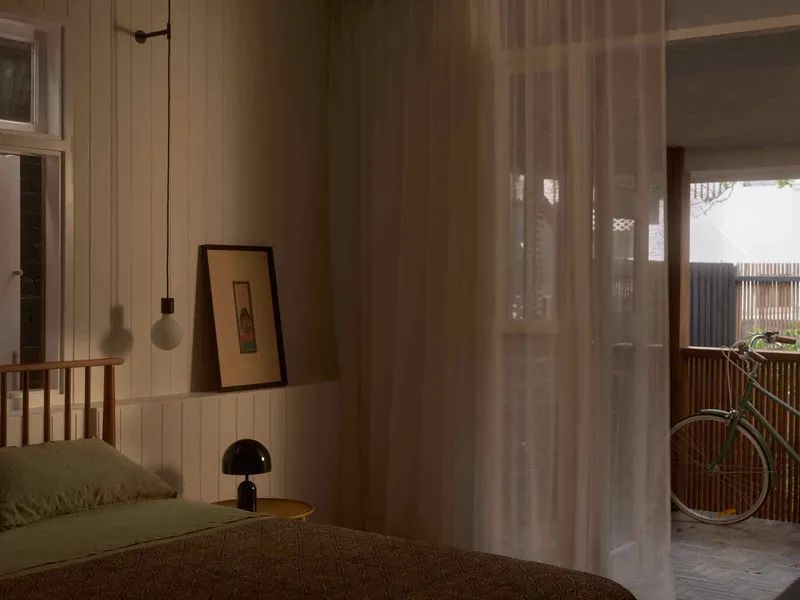
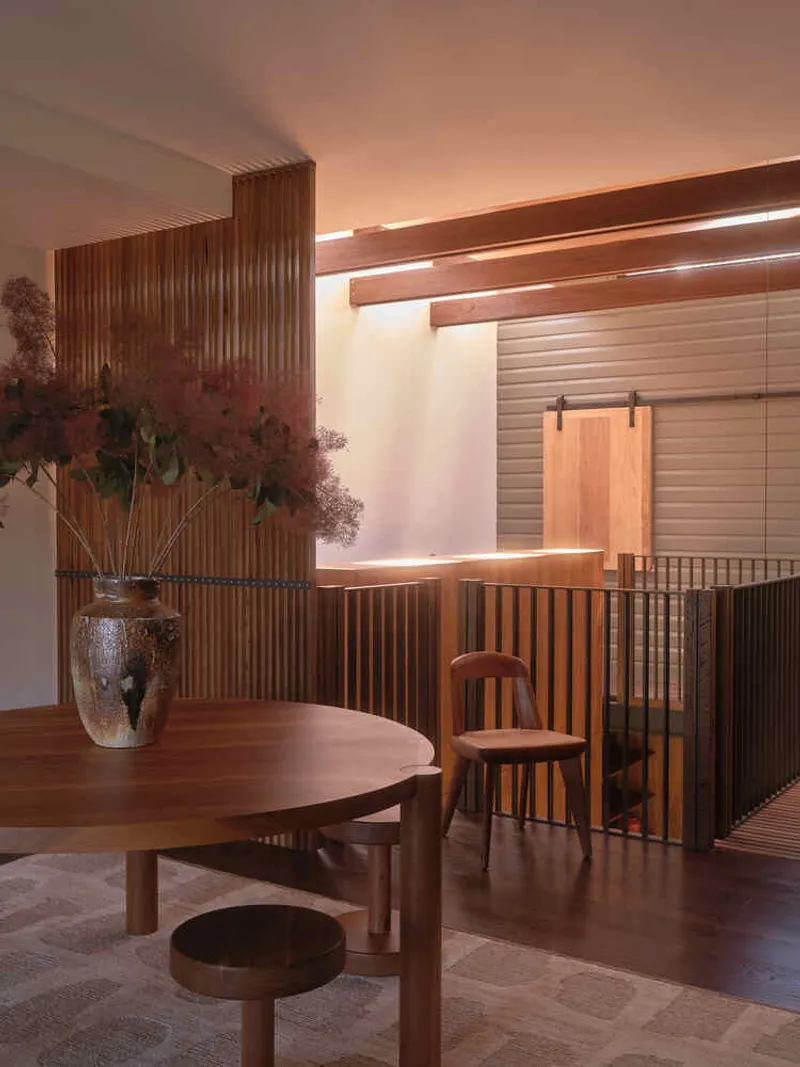
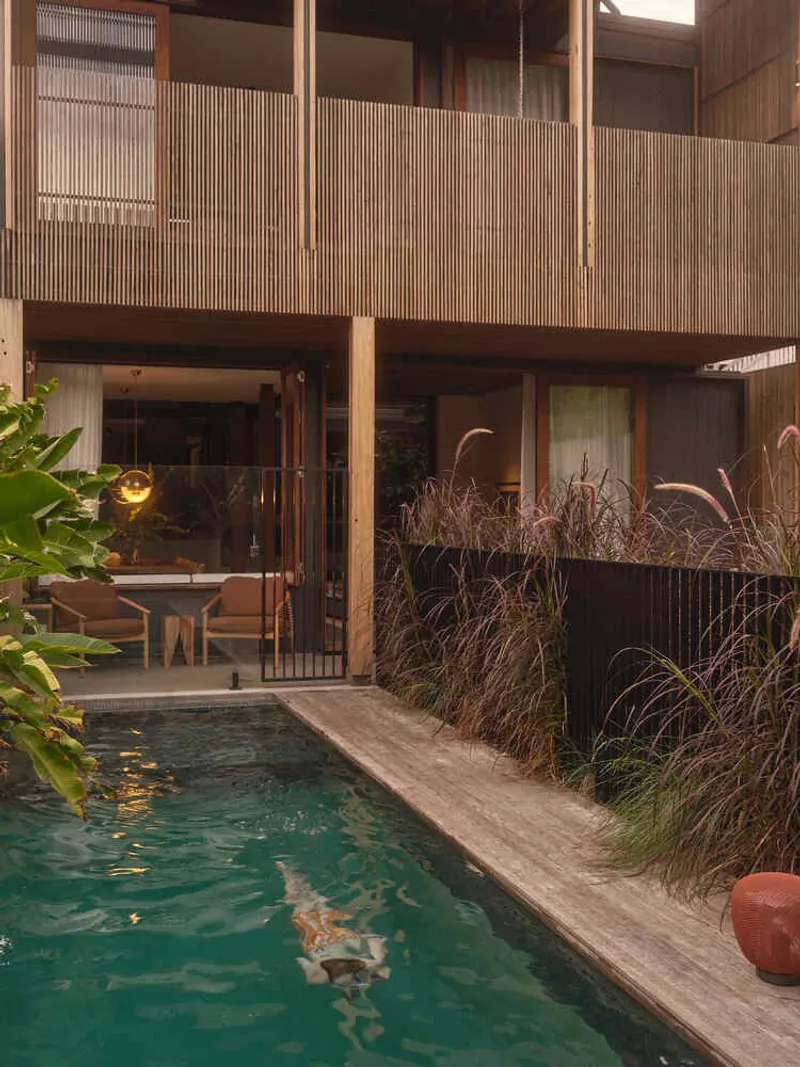
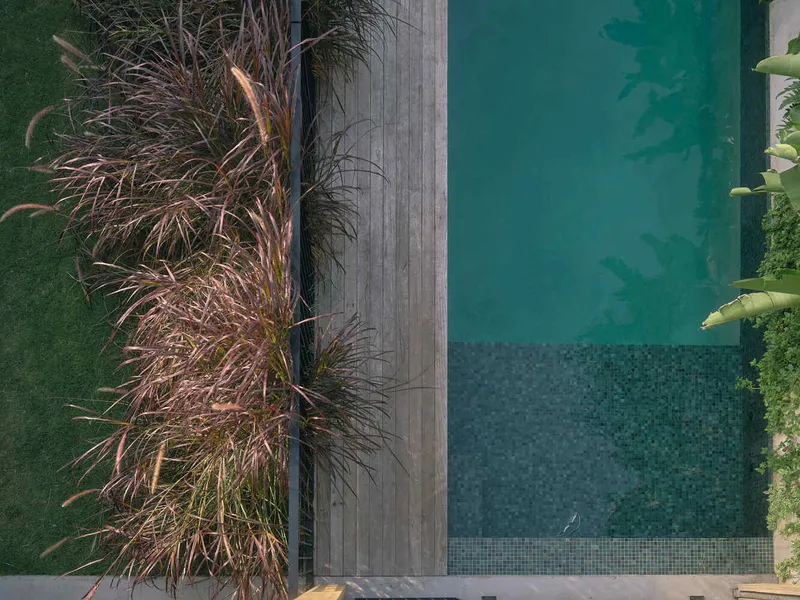
Through passive design, strategic spatial planning, and material sensitivity, Alexandra Buchanan Architecture has created a home that is both functional and deeply atmospheric. This renovation exemplifies how thoughtful architecture can enhance both the lived experience and the surrounding urban fabric, setting a precedent for future heritage home transformations.
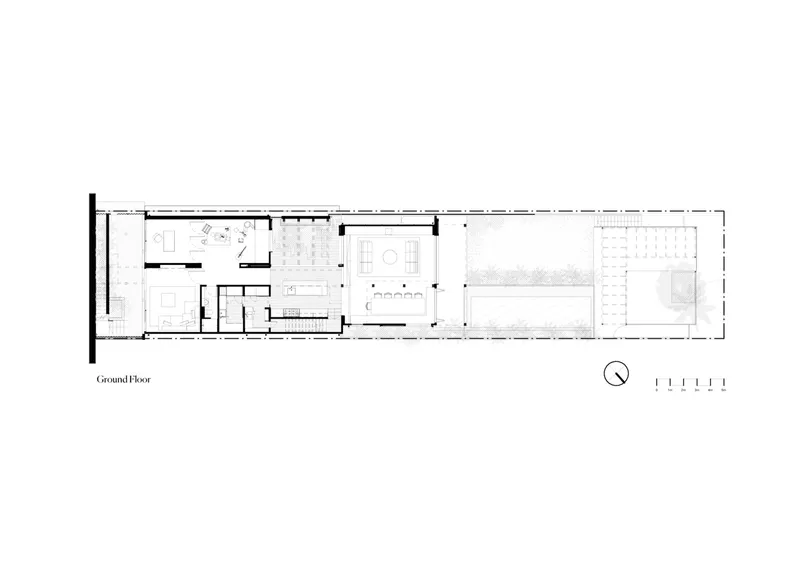
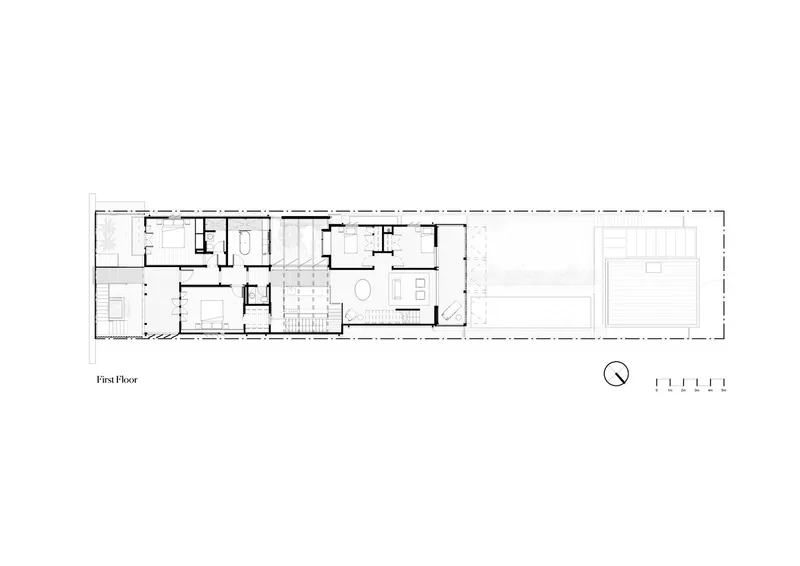
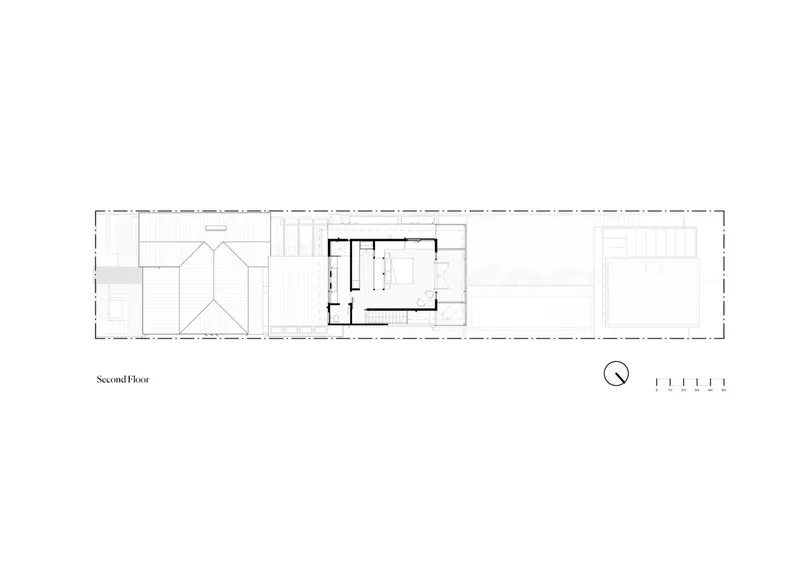
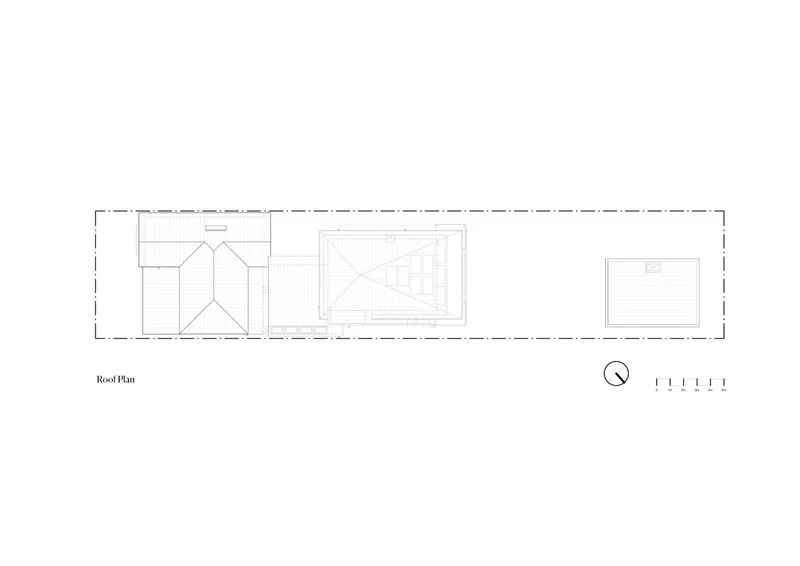
All Photographs are works of Cieran Murphy


Popular Articles
Popular articles from the community


U.GA Architects Wraps an Oval Rooftop Pool in Curved Board-Formed Concrete on Busan's Jeollidan-gil
In Busan's Jeonpo-dong, a 454 m² mixed-use block stacks a neighborhood facility, guest rooms and an oval rooftop pool inside spiraling concrete walls.

David Ortega Stacks a Two-Story Mexico City Penthouse Around a Steel Stair and a Pergola-Shaded Roof Terrace
In Colonia Roma, a 300 m² penthouse uses oak joinery, a planted steel stair and a slatted roof pergola to make a new-build apartment feel like a house.

Juan García Correa, John González and Claudia Rueda Sink a Circular Amphitheater into a Manizales Engineering Building
On the La Nubia campus in Manizales, Colombia, the S1 Building folds labs and offices into a hillside of ramped lawns that double as a campus route.

GROUP A Strips a 1969 Rotterdam Harbor Headquarters to Its Frame and Wraps It in Timber Louvers
In Rotterdam's M4H harbor district, Ferro Offices reuses a 1969 frame, adds one timber storey and reaches BREEAM-NL Outstanding.

Similar Reads
You might also enjoy these articles

Gil Mello Arquitetura Tilts a Single Roof Toward the Waterfalls on a Plateau Above Aiuruoca, Brazil
In Aiuruoca, Minas Gerais, a 200 m² house of local labor and reclaimed poles pairs a low valley veranda with a tall mountain one.
U.GA Architects Wraps an Oval Rooftop Pool in Curved Board-Formed Concrete on Busan's Jeollidan-gil
In Busan's Jeonpo-dong, a 454 m² mixed-use block stacks a neighborhood facility, guest rooms and an oval rooftop pool inside spiraling concrete walls.

Felipe Hess Arquitetos Turns a Blind Stone Wall to the Street and Opens a Brazilian House onto a Courtyard and Canal
A canal-front house in Brazil hides behind painted stone and planting, then opens to an olive-tree courtyard, a reed-ceilinged porch and a curving pool.

David Macias Steps a Doorless Stone and Plaster House Down a Tropical Colombian Hillside
In the humid hills of Colombia, Threshold House replaces the front door with an open void and terraces its 850 m² down the slope instead of fighting it.

Explore Architecture Competitions
Discover active competitions in this discipline

Challenge to reimagine the Iron Throne

Photograph architecture without architects

Illustrate the lost glory of Angkor Wat - Render Challenge

Design challenge to reuse E-waste
Comments (0)
Please login or sign up to add comments
No comments yet. Be the first to comment!