

Kindergarten Architecture in Spain: A Case Study of the Aguas Nuevas Nursery School
The article explores the innovative design of the Kindergarten in Aguas Nuevas, highlighting its functional, community-focused architecture for early childhood education.


In recent years, architectural design for educational buildings, particularly kindergartens, has evolved to emphasize not just function, but also the well-being and development of young minds. One notable example of this is the Kindergarten in Aguas Nuevas designed by Iterare arquitectos. This project, completed in 2023, exemplifies modern trends in kindergarten architecture in Spain, offering an innovative space where children can explore and engage in activities in an environment that is both stimulating and nurturing. Located just a few kilometers from Albacete, in a village built by the Spanish National Institute of Colonization, this kindergarten serves as an annex to the existing nursery school in the area.
Design Concept: A Modern Approach to Kindergarten Architecture
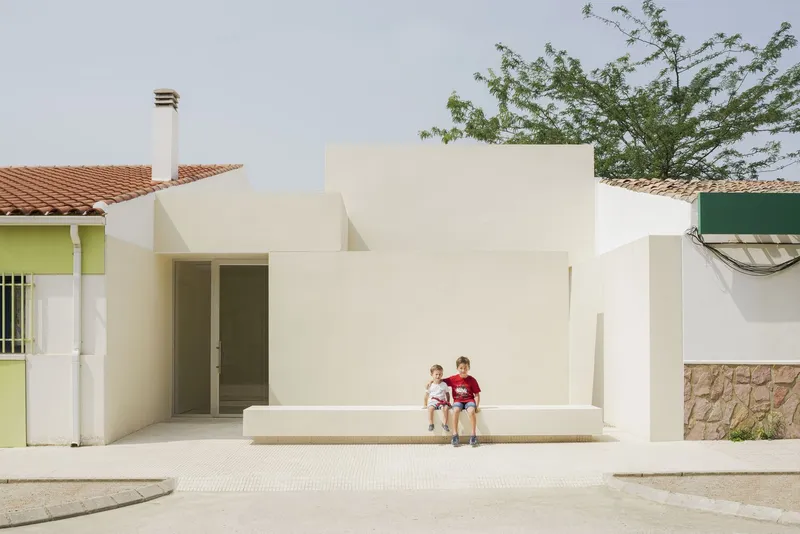
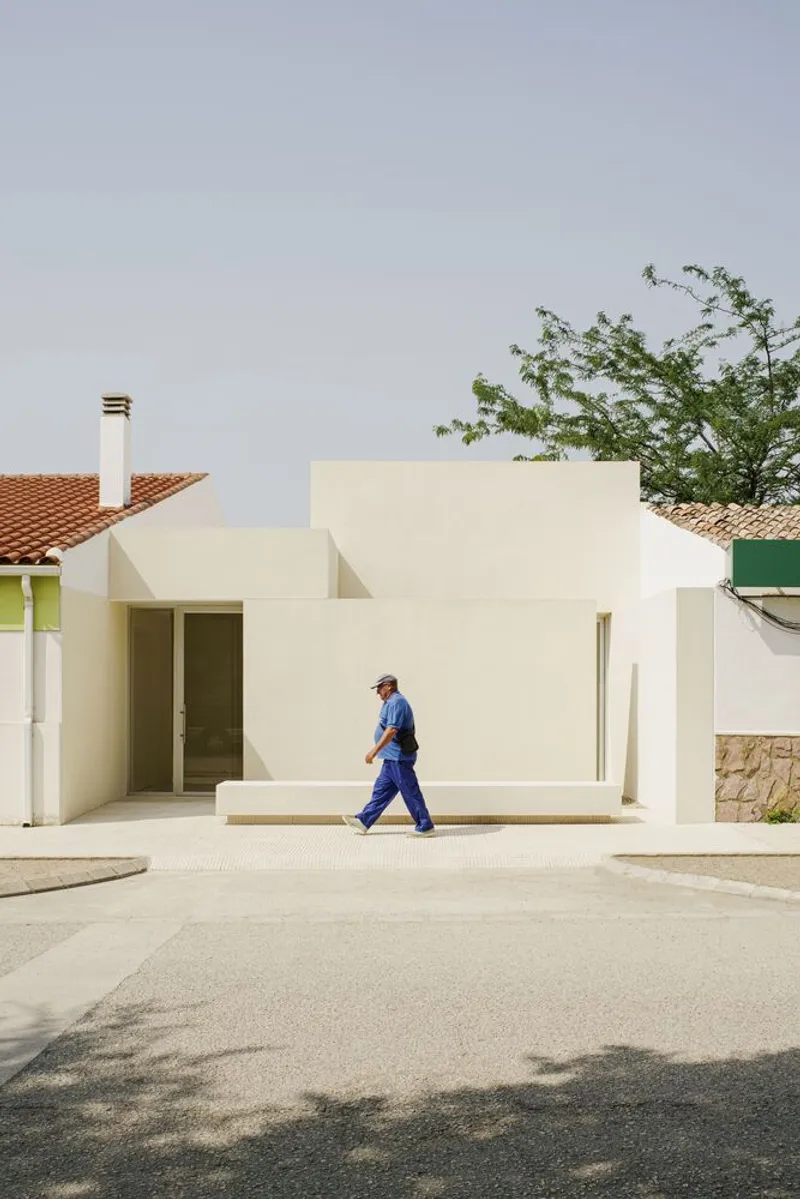
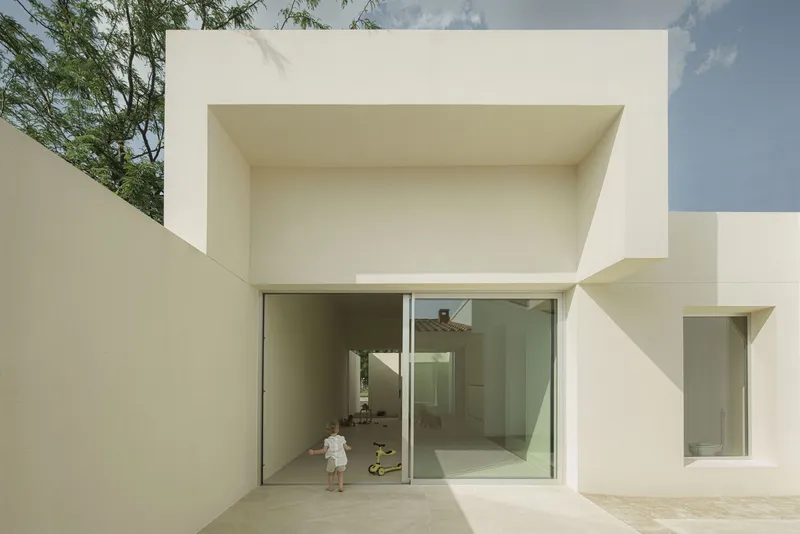
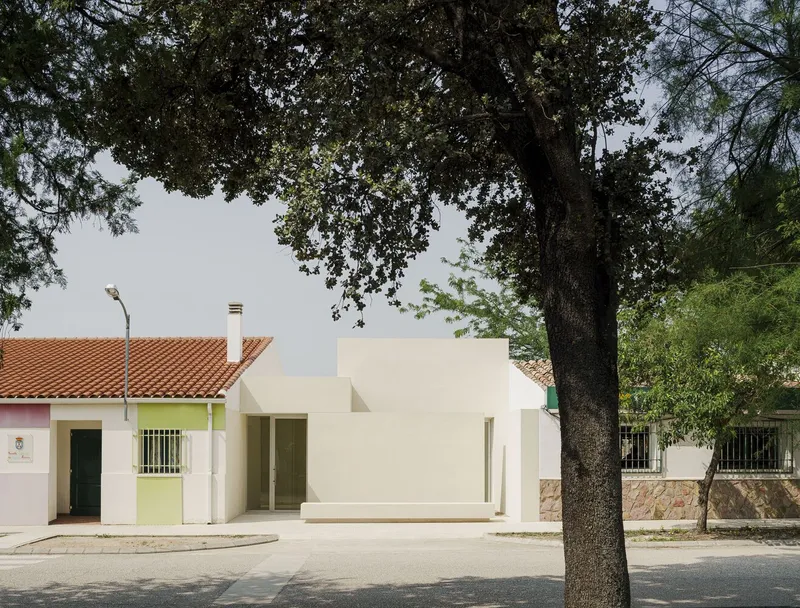
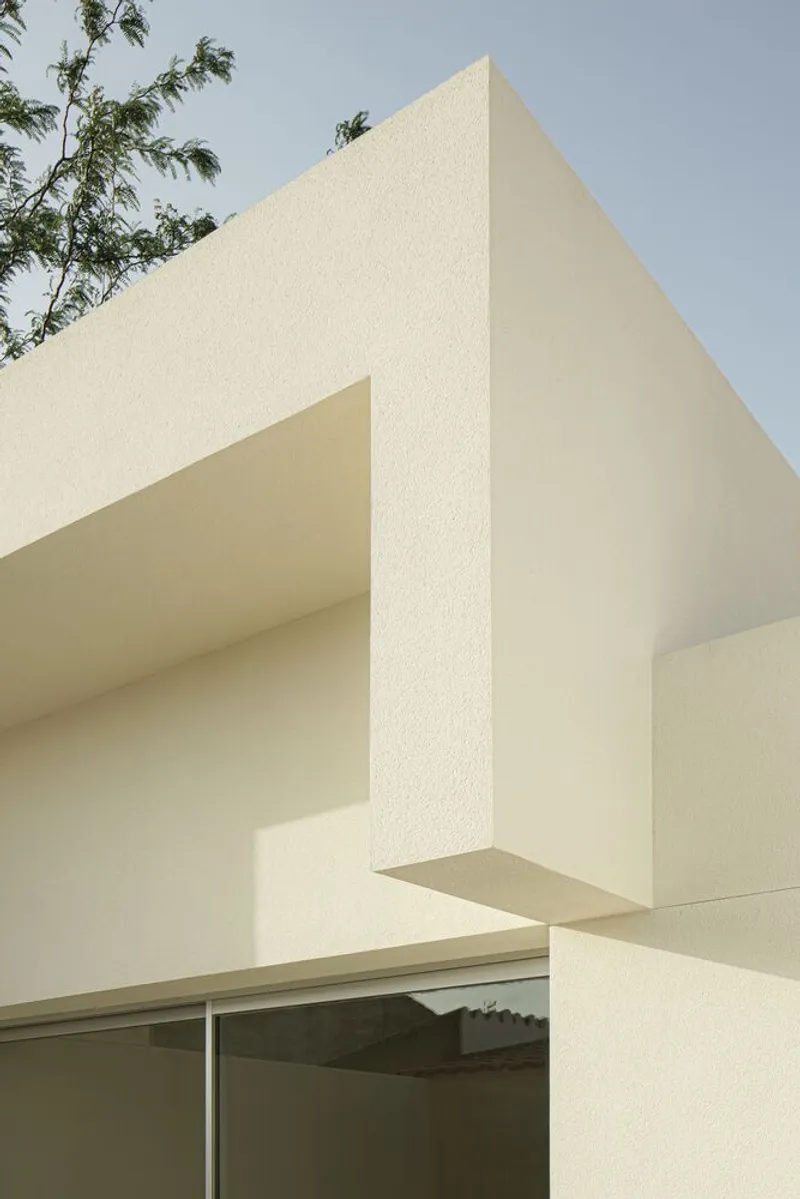
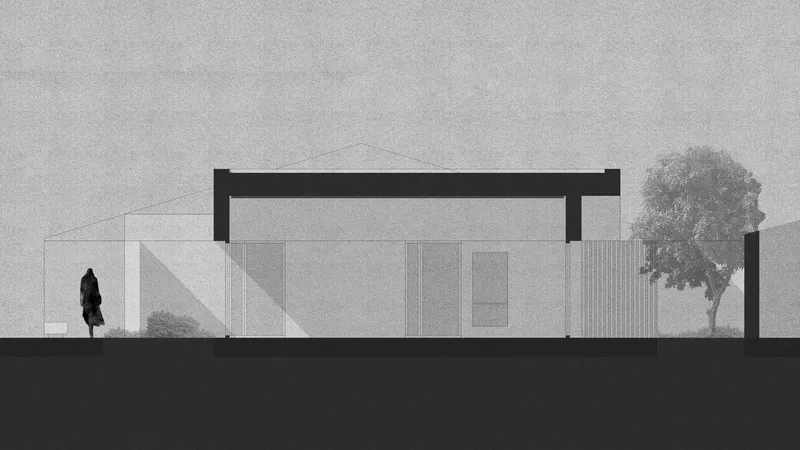
The Kindergarten in Aguas Nuevas is characterized by its simple yet distinctive architectural form. The building’s design is dictated by the few spaces it accommodates, with only two primary volumes in the composition. The first volume is narrow and elongated, connecting to the existing school building and housing the entrance and service areas. The second, more prominent volume houses the main educational spaces, creating a space that is both innovative and inviting for children.
Functionality Driven by Space
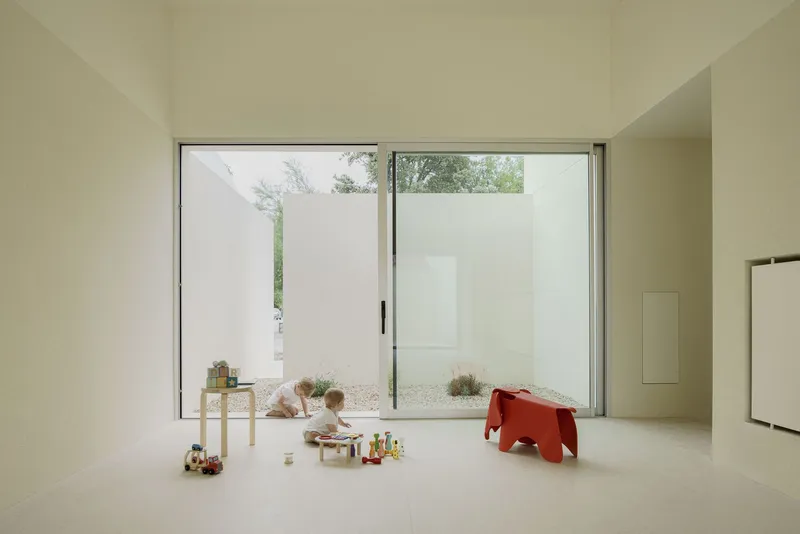
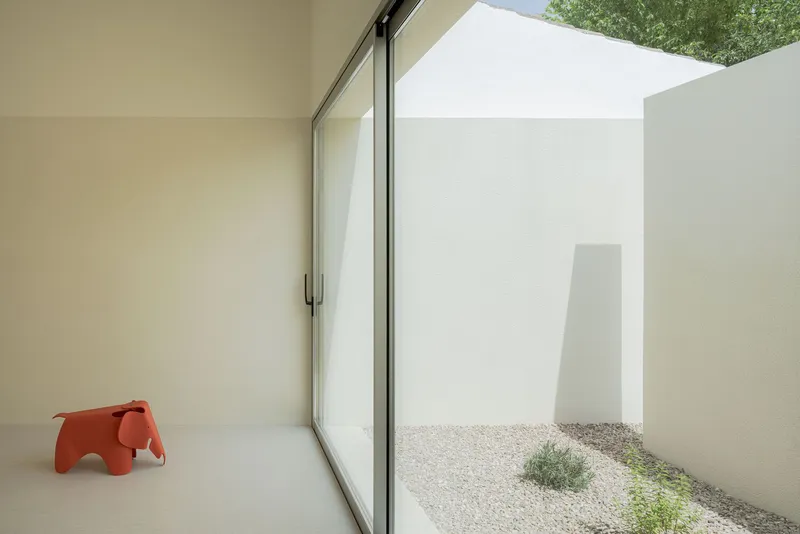
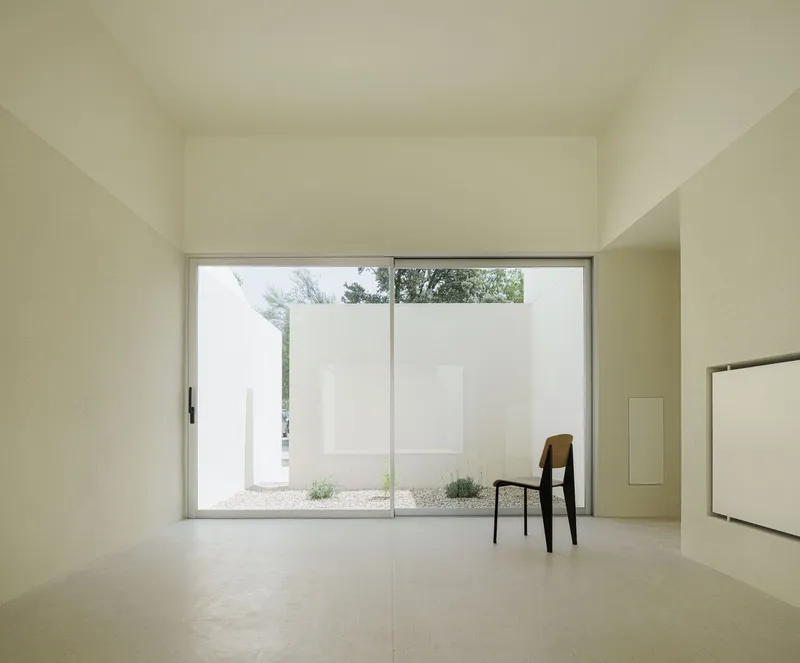
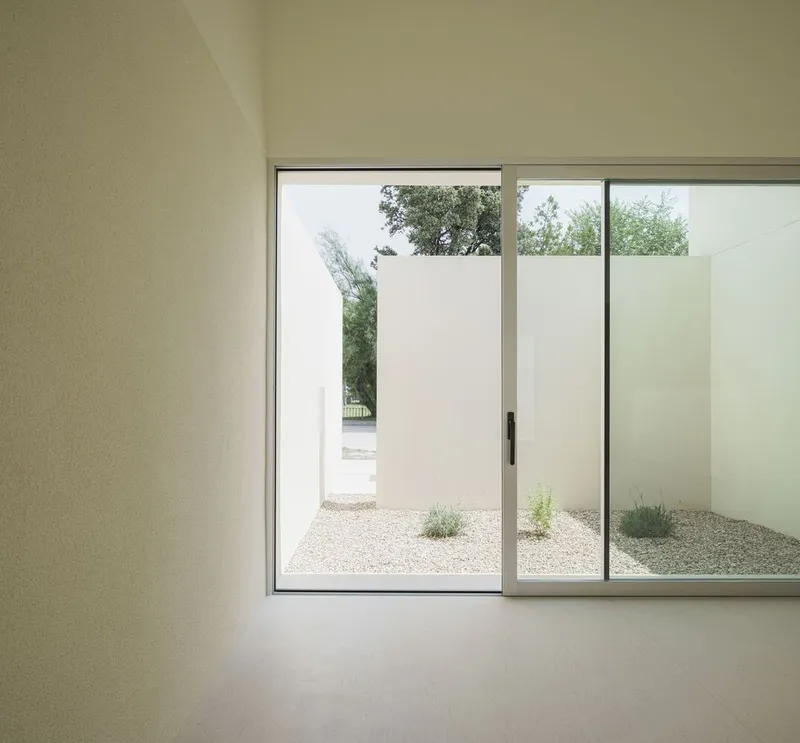
The design of the kindergarten is not just about aesthetics; it’s deeply rooted in functionality. The classroom, the heart of the building, is strategically placed at the center of the floor plan, set back from the facade and positioned between two courtyards. This placement creates a dynamic spatial experience for children as they move between the inside and outside spaces, fostering creativity and a connection with nature. One of the courtyards faces south, allowing children to play in a safe outdoor area, while the other faces the street and is designed to accommodate vegetation.
Prominent Features of the Kindergarten's Interior
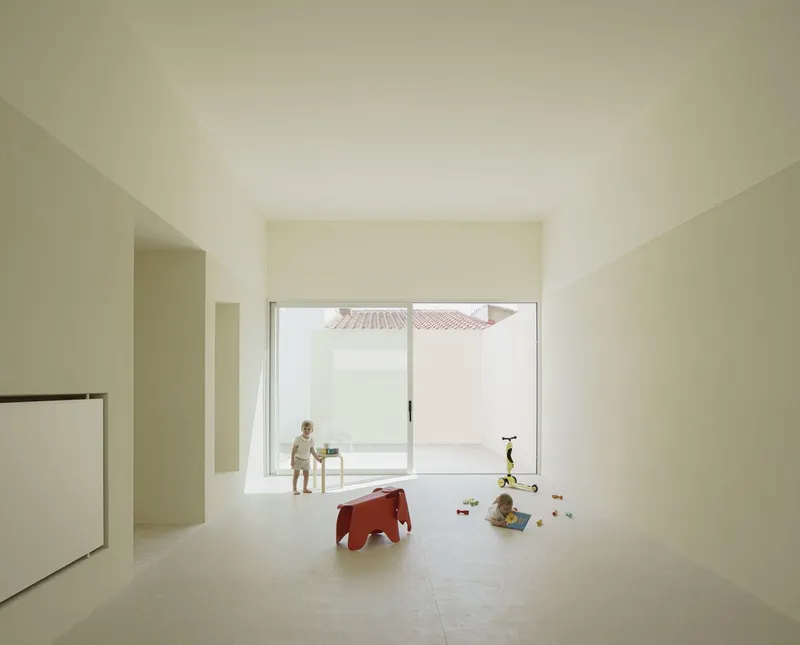
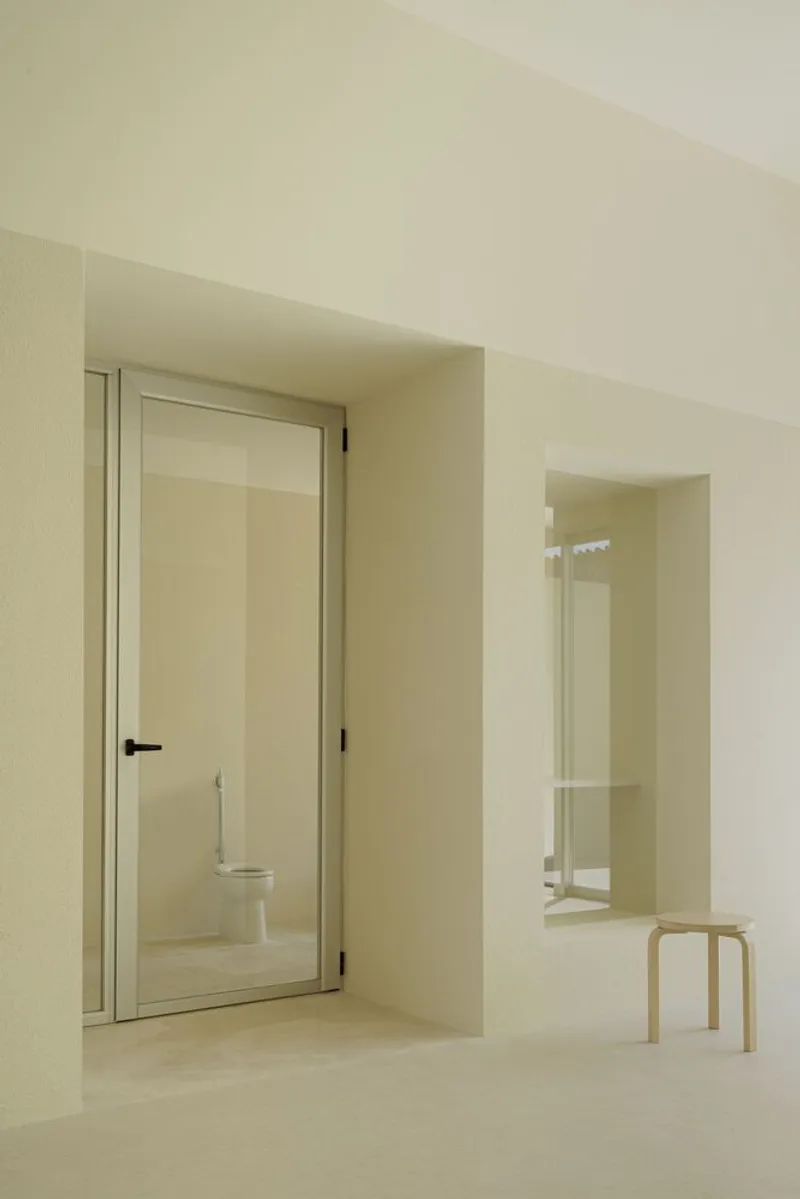
The interior of the Aguas Nuevas Kindergarten is designed to be an engaging and spacious environment for children. The classroom, with its exceptional height, provides a sense of grandeur and openness. Large windows allow for abundant natural light, and children can observe the changing play of shadows cast by the building throughout the day. This interaction with light and shadow enhances the sensory experience, which is crucial in the early stages of childhood development.
A Focus on Sustainability and Community Integration
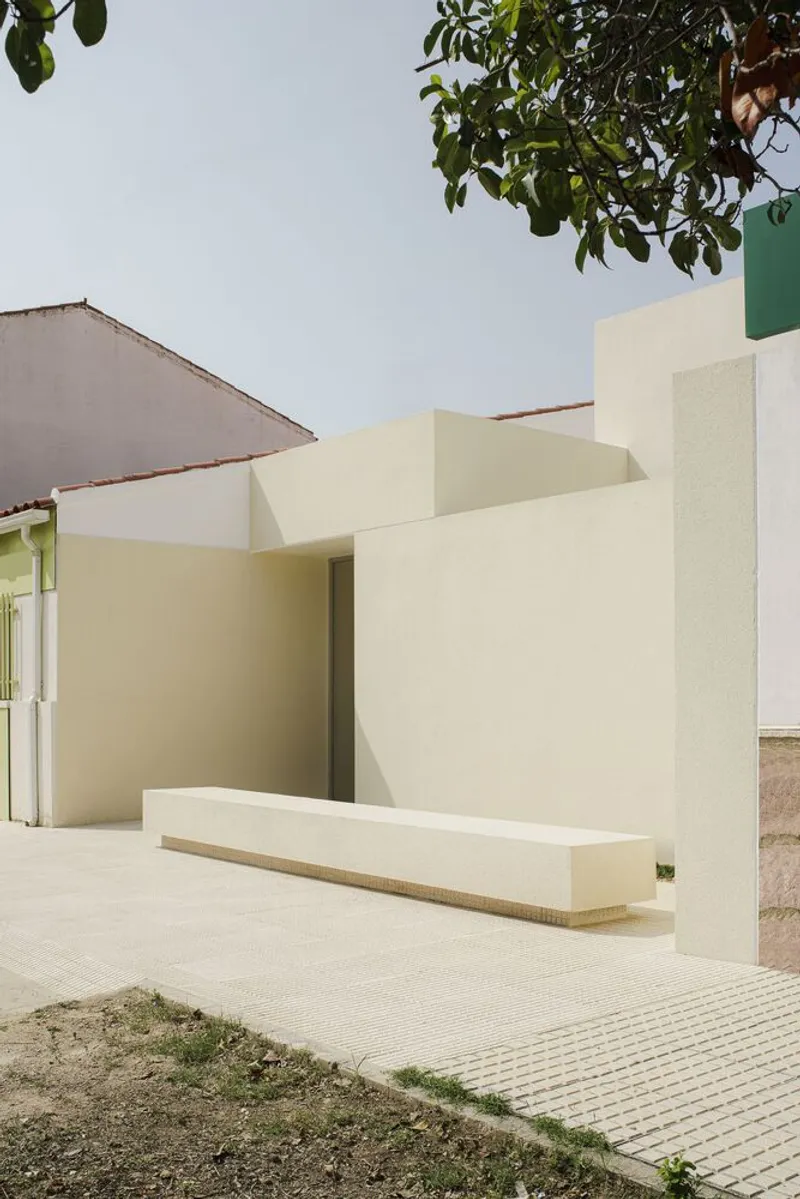
In addition to the internal design, the kindergarten’s architecture is sensitive to its surroundings and the broader community. The setback required by local regulations is used creatively to provide a seating area along the façade, transforming it into a public bench for the village’s residents. This thoughtful design not only benefits the children attending the kindergarten but also serves the larger community, offering a space for parents to wait and for passersby to rest.
A New Kind of Space for Early Childhood Education
The Kindergarten in Aguas Nuevas stands as a prime example of how kindergarten architecture in Spain is evolving. The building does not merely house children; it creates an experience that fosters learning, exploration, and growth. The architectural approach used in this project prioritizes light, space, and a connection to the environment, offering a refreshing departure from traditional classroom settings. The design reflects a progressive vision of how educational spaces can influence and inspire young minds, paving the way for future innovations in kindergarten architecture worldwide.
The Kindergarten in Aguas Nuevas by Iterare arquitectos is a testament to the transformative power of well-thought-out architectural design in early childhood education. By blending modern design elements with functional spaces that cater to children’s needs, it demonstrates the potential of kindergarten architecture in Spain to create spaces that are not only educational but also enriching for the whole community. This project sets a standard for future kindergarten designs, where architecture plays a pivotal role in shaping the early developmental experiences of children.
All the photographs are work of David Zarzoso


Popular Articles
Popular articles from the community


longwave studio Reorganizes a 112 m² Tainan Apartment Around the Daily Routines of a Family and Two Cats
In Tainan, Taiwan, birch plywood, rust-red furniture and a freestanding plaster wall link arrival, storage, work and family life in one apartment.

Juan García Correa, John González and Claudia Rueda Sink a Circular Amphitheater into a Manizales Engineering Building
On the La Nubia campus in Manizales, Colombia, the S1 Building folds labs and offices into a hillside of ramped lawns that double as a campus route.

David Macias Steps a Doorless Stone and Plaster House Down a Tropical Colombian Hillside
In the humid hills of Colombia, Threshold House replaces the front door with an open void and terraces its 850 m² down the slope instead of fighting it.

David Ortega Stacks a Two-Story Mexico City Penthouse Around a Steel Stair and a Pergola-Shaded Roof Terrace
In Colonia Roma, a 300 m² penthouse uses oak joinery, a planted steel stair and a slatted roof pergola to make a new-build apartment feel like a house.

Similar Reads
You might also enjoy these articles


Hodi-Mandai Geram
Project Function: Preservation and revitalization of the Intangible heritage and socio-spatial identity of the Hodi by Housing, Cultural Memory Center, Sacred Grove, landscape, local tourism economy


Olio Towers: A Mid-Rise for Performers That Fuses Housing, Rehearsal, and Stage
Located blocks from Houston's Theater District, this modular tower stacks living units around a central performance atrium.

Oasis: Modular Green Housing Carved into Dhaka's Urban Fabric
A shortlisted Plugin Housing entry reclaims unauthorized settlements in Dhaka with stepped concrete volumes, green roofs, and ventilation-driven design.

Black Hole: A Floating Megastructure for the Post-Physical Era
Emiliano Mazzarotto envisions a spherical, self-scaling arena where e-sports, digital hotels, and holographic stadiums replace traditional public space.

Explore Educational Building Competitions
Discover active competitions in this discipline

Challenge to design public laboratory

Challenge to reimagine the Iron Throne

Photograph architecture without architects

Illustrate the lost glory of Angkor Wat - Render Challenge
Comments (0)
Please login or sign up to add comments
No comments yet. Be the first to comment!