

Kindergarten in Vilnius by NG Architects: A Nature-Inspired Learning Environment
Kindergarten in Vilnius by NG Architects blends nature and architecture, creating a nurturing, sustainable, and inspiring learning environment for children.


The Kindergarten in Vilnius, designed by NG architects, is a private educational facility located within the larger 44-hectare development called Uogu slenis. Completed in 2023, the project spans 557 m² and reflects a modern approach to kindergarten architecture, blending natural surroundings with thoughtful design to nurture children’s creativity, curiosity, and connection to nature.
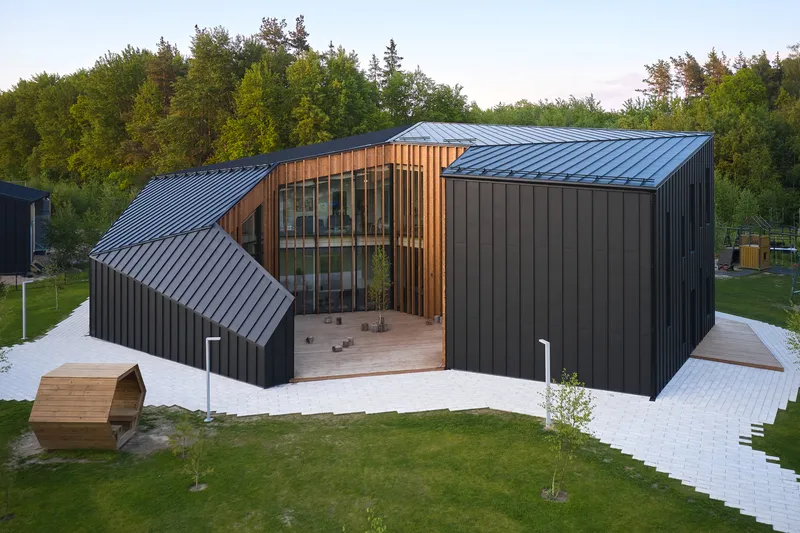
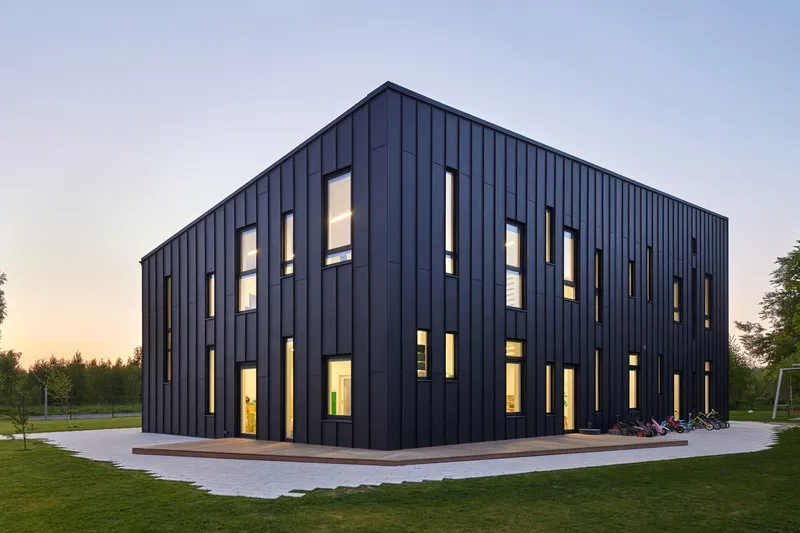
Situated next to a serene Baltic forest of birches and pine trees, the kindergarten embraces its natural context. The architecture establishes a strong dialogue between the built environment and the landscape, offering children a daily experience that connects learning with the outdoors.
Architectural Design and Materiality
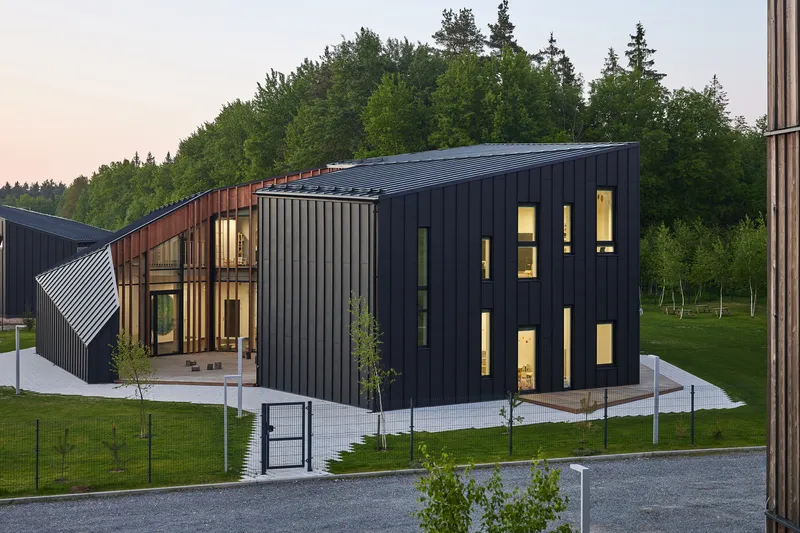
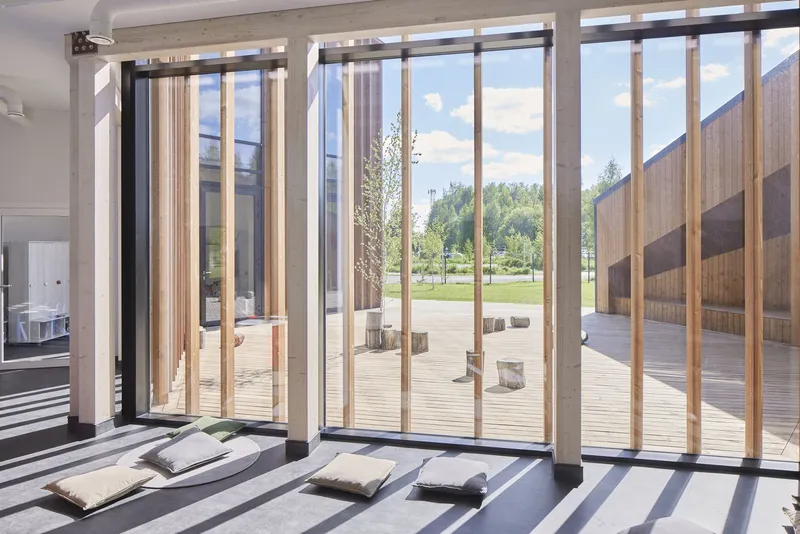
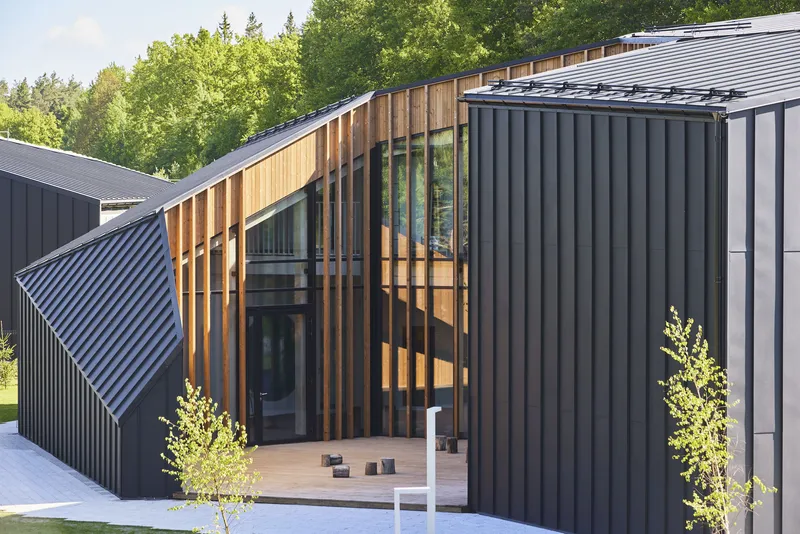
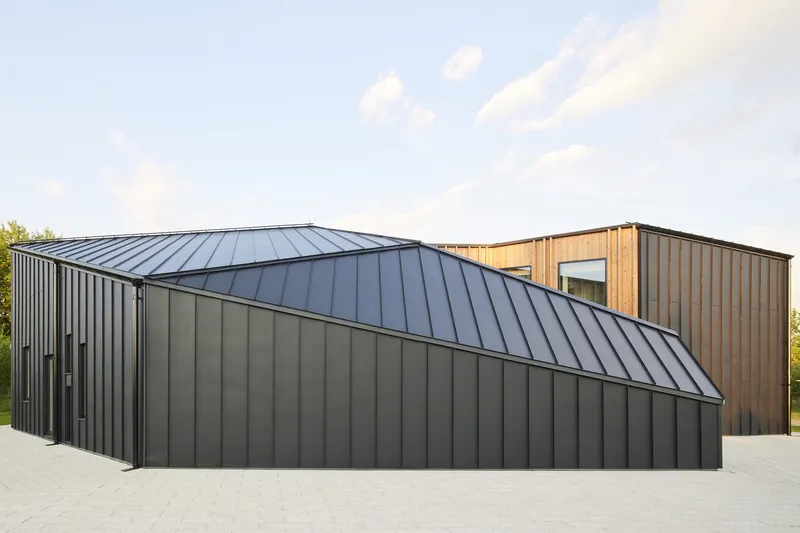
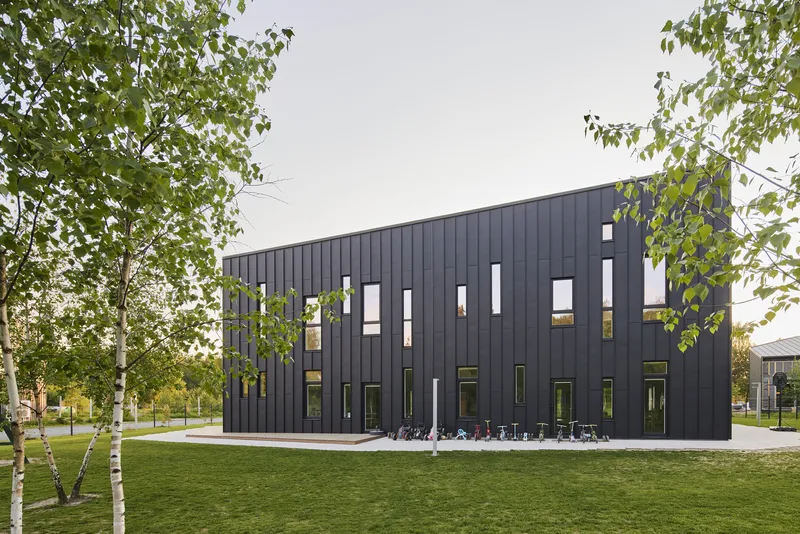
The building’s dynamic volume forms the heart of the development, standing alongside other educational and public spaces. Its dark cladding creates a striking visual contrast against the lush greenery, while tall, narrow windows frame uninterrupted views of the forest. These floor-to-ceiling openings are not just aesthetic; they invite natural light deep into the interiors, fostering a healthy and inspiring environment.
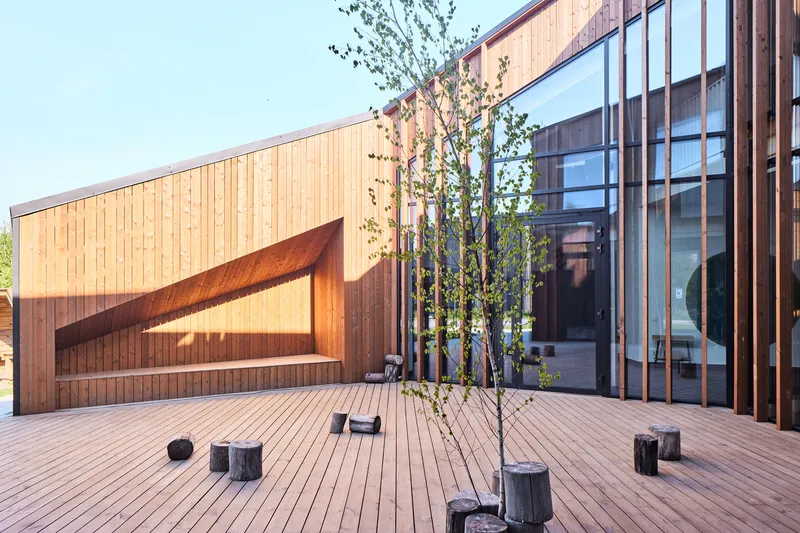
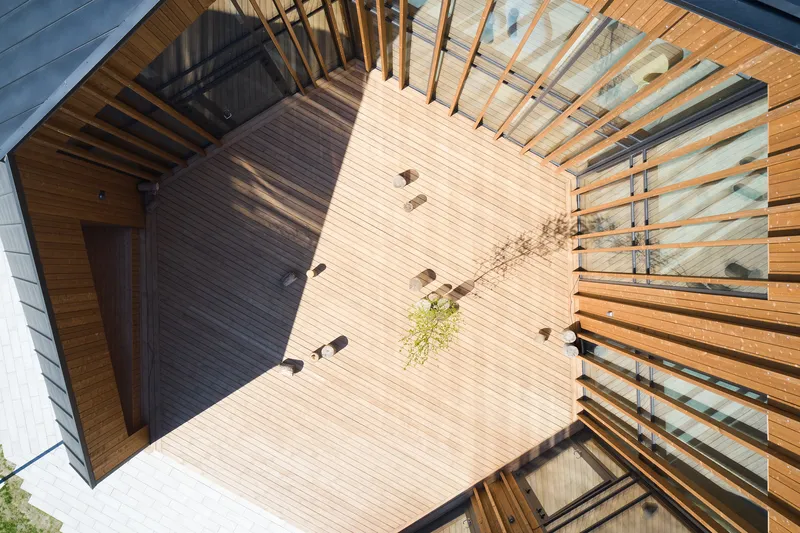
The courtyard is the kindergarten’s central feature—designed as a safe and stimulating play space. With its hexagonal shape, it becomes a place of discovery and joy. From an adult’s perspective, it appears structured and geometric; yet for children, it unfolds as an inviting and secure micro-world. Locally sourced wooden flooring ensures warmth, comfort, and sustainability, while carefully integrated sunshades offer protection from harsh light, encouraging outdoor activities throughout the day.
Spatial Organization and Learning Environments
The interior layout is designed to support different stages of early childhood education. The building houses seven classrooms, two of which are tailored specifically for very young children, ensuring safety, intimacy, and nurturing care. The dual entrances allow certain classrooms to remain independent, supporting flexibility in use and maintaining quiet, focused environments where needed.
The design emphasizes not only functionality but also the emotional experience of space. Every element—from the windows to the textures of natural materials—has been considered to spark imagination and interaction. The kindergarten offers children a foundation for growth, learning, and exploration, encouraging both independence and community connection.
NG Architects’ Kindergarten in Vilnius exemplifies how contemporary educational architecture can integrate nature, sustainability, and play into a holistic learning environment. By creating spaces that are both functional and inspiring, the project contributes to the future of early education in Lithuania, offering children a meaningful place to learn and grow in harmony with nature.
All Photographs are works of Norbert Tukaj


Popular Articles
Popular articles from the community


Cube Design Draws an Ecological Corridor Between Two Shenzhen Hills with the Nankai Building
Beside Shenzhen's container docks, the Nankai Building pairs stacked balconies with a climbing green screen to connect two hillsides across its height.

David Macias Steps a Doorless Stone and Plaster House Down a Tropical Colombian Hillside
In the humid hills of Colombia, Threshold House replaces the front door with an open void and terraces its 850 m² down the slope instead of fighting it.

Jaramillo Van Sluys Arquitectura and Urbanismo Turn a Demolished Registry Lot in Quito into an Orchard Plaza
In Quito's Centro Histórico, a 2,800 m² plaza exposes the San Agustín convent wall and redraws its lost Augustinian orchard in volcanic stone.

GROUP A Strips a 1969 Rotterdam Harbor Headquarters to Its Frame and Wraps It in Timber Louvers
In Rotterdam's M4H harbor district, Ferro Offices reuses a 1969 frame, adds one timber storey and reaches BREEAM-NL Outstanding.

Similar Reads
You might also enjoy these articles


Hodi-Mandai Geram
Project Function: Preservation and revitalization of the Intangible heritage and socio-spatial identity of the Hodi by Housing, Cultural Memory Center, Sacred Grove, landscape, local tourism economy


Olio Towers: A Mid-Rise for Performers That Fuses Housing, Rehearsal, and Stage
Located blocks from Houston's Theater District, this modular tower stacks living units around a central performance atrium.

Oasis: Modular Green Housing Carved into Dhaka's Urban Fabric
A shortlisted Plugin Housing entry reclaims unauthorized settlements in Dhaka with stepped concrete volumes, green roofs, and ventilation-driven design.

Black Hole: A Floating Megastructure for the Post-Physical Era
Emiliano Mazzarotto envisions a spherical, self-scaling arena where e-sports, digital hotels, and holographic stadiums replace traditional public space.

Explore Educational Building Competitions
Discover active competitions in this discipline

Challenge to design public laboratory

Challenge to reimagine the Iron Throne

Photograph architecture without architects

Illustrate the lost glory of Angkor Wat - Render Challenge
Comments (0)
Please login or sign up to add comments
No comments yet. Be the first to comment!