
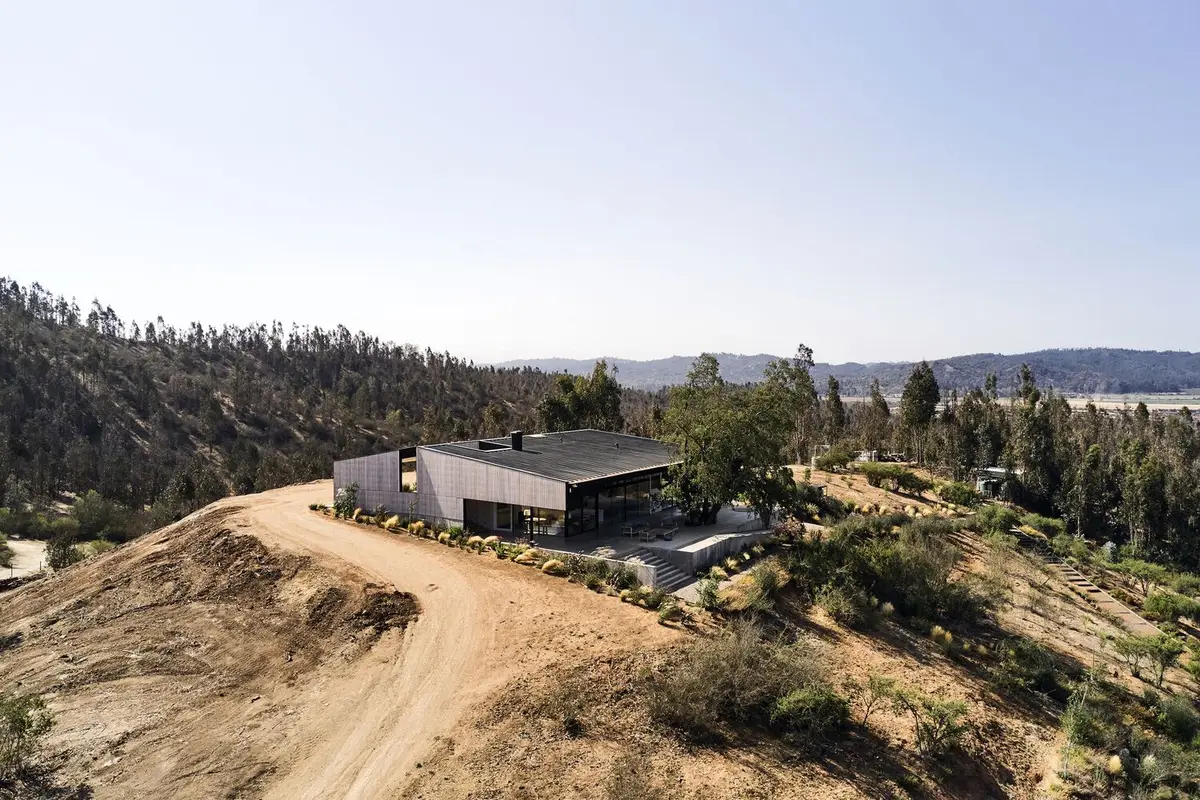
Kingston Guesthouse & Event Hall for a Vineyard | Juan Carlos Sabbagh Arquitectos
Kingston Guesthouse & Event Hall features sculptural volumes, panoramic vineyard views, flexible design, and integrated materials, enhancing wine tourism in Casablanca Valley.


The Kingston Guesthouse & Event Hall was designed to complement a vineyard in the scenic Casablanca Valley, building on a previous winery project completed in 2005. The primary goal was to develop flexible structures that could accommodate future growth, both in winemaking production and tourism-related activities.
The design concept focused on creating a “wine citadel”, where each building functions as a complete unit, avoiding unfinished expansions while allowing future incorporation of modern winemaking technologies.
Master Plan & Strategy
A comprehensive master plan organized the terrain into productive, administrative, and tourist areas. This included:
- Wineries and machinery rooms
- Service facilities
- Guest accommodations
- Event spaces
The strategy proved highly effective as growth primarily occurred in the tourism sector, necessitating guesthouses and event halls to host frequent visitors and events.
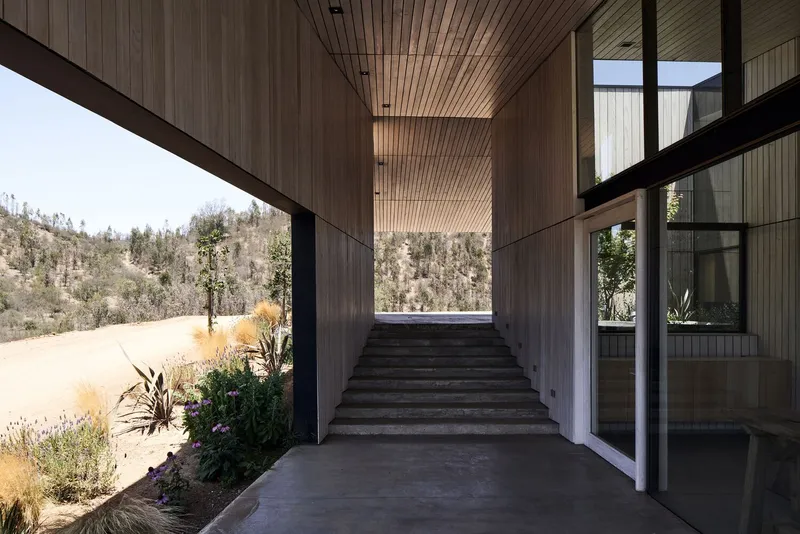
Architectural Concept
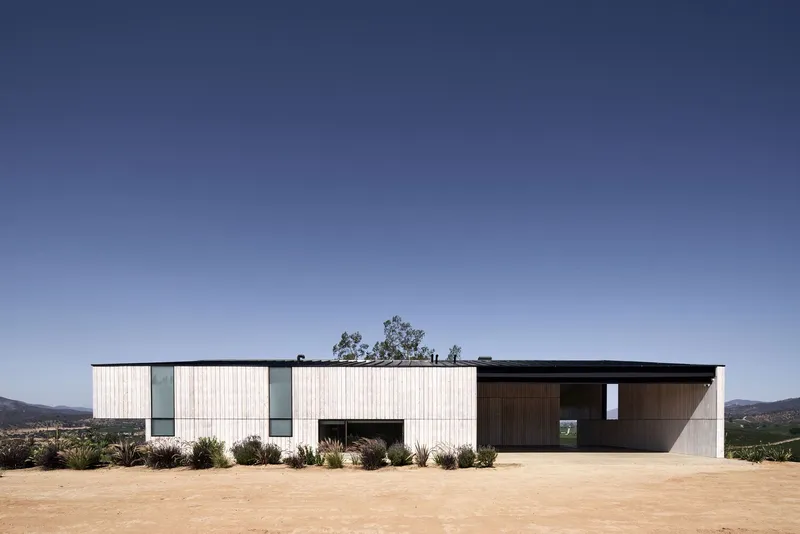
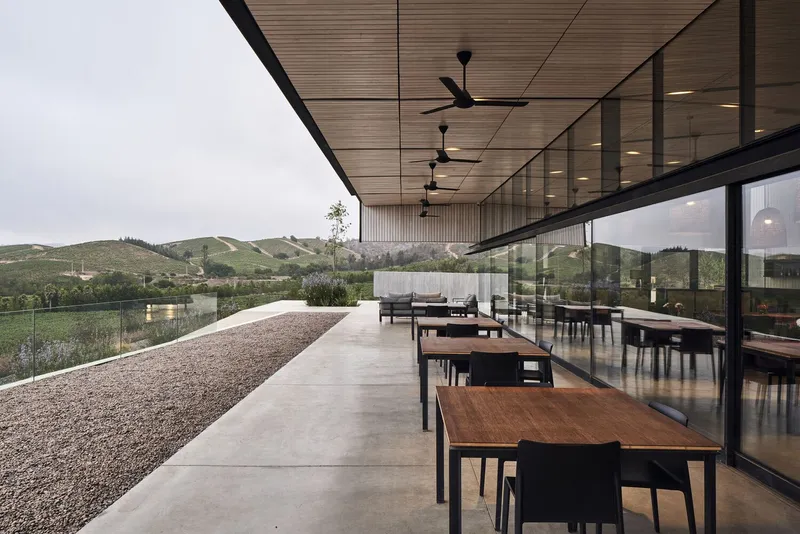
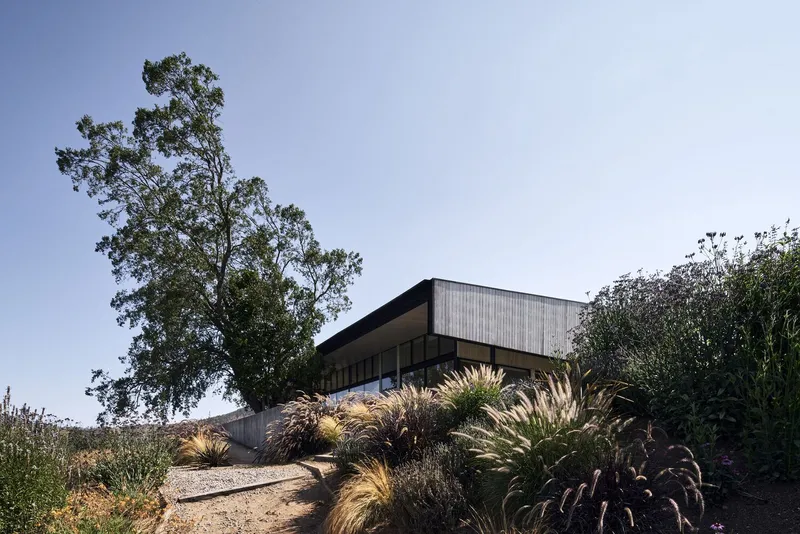
The project introduces two sculptural volumes that complement the original winery structure. Along with the existing building, these three volumes perch at different elevations, offering optimal views of the valley and vineyards.
Described as “three sculpted granite rocks on the hillside,” each volume features:
- A concrete plinth anchoring the structure
- A wooden shell enclosing the interior
- Carefully designed openings to capture natural light and panoramic landscapes
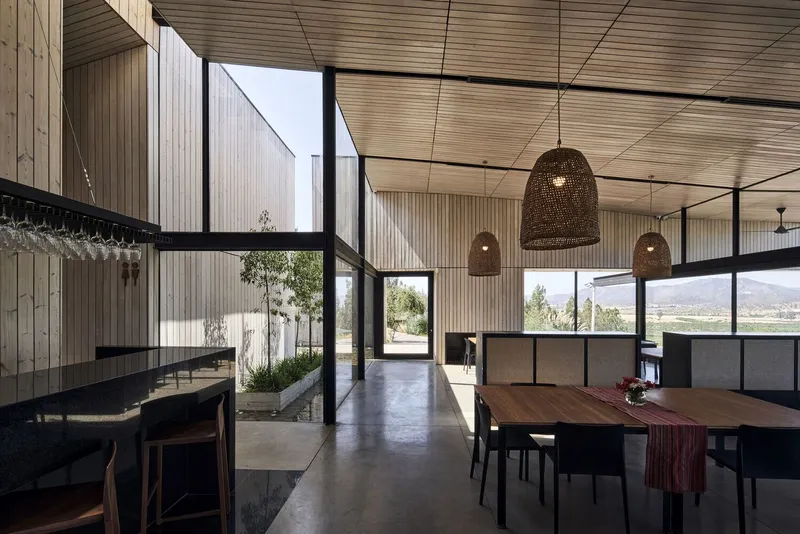
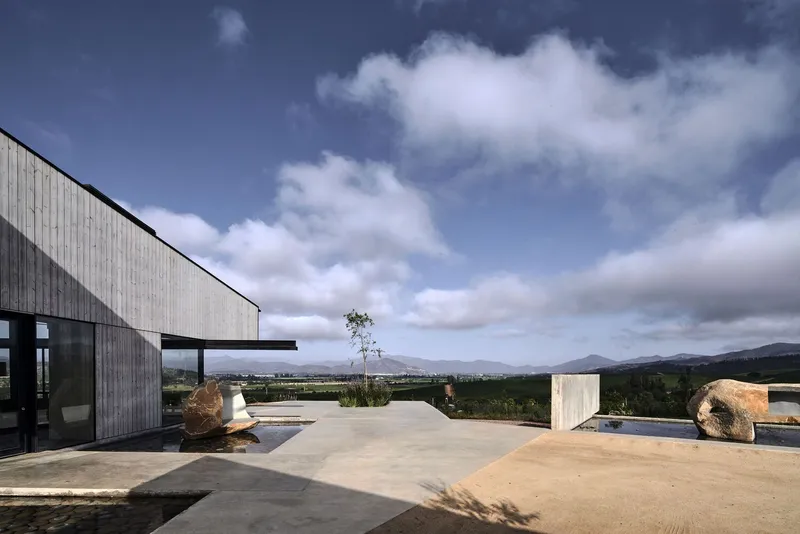
In the cellar, the wooden envelope incorporates light and ventilation. In the Event Hall and Guesthouse, the wooden shell frames horizontal views of the distant landscape, while interior cracks allow overhead lighting to permeate the rooms.
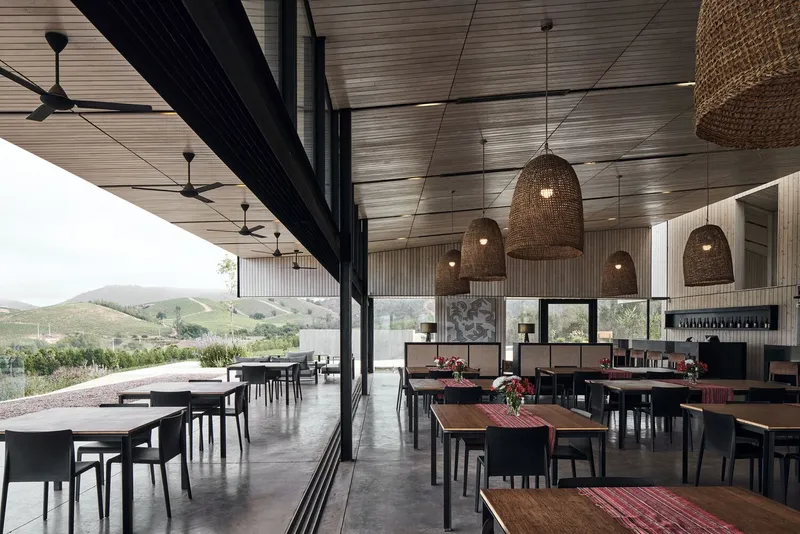
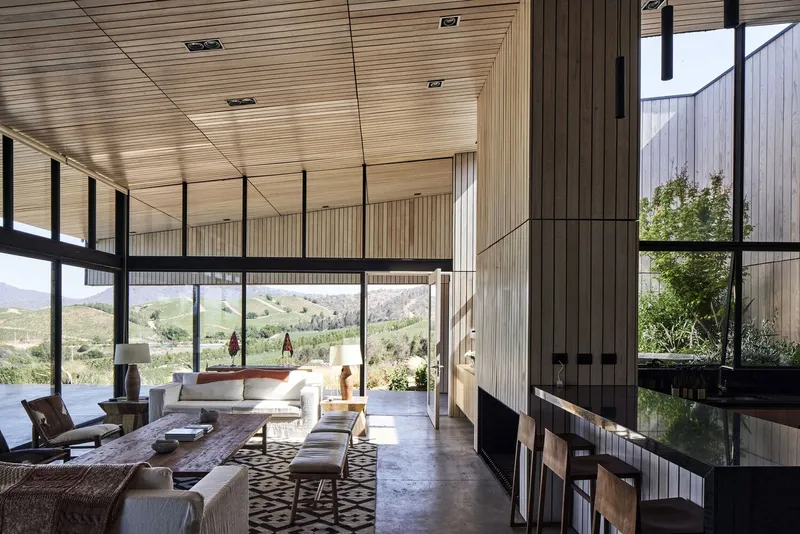
Materials & Features
- Concrete plinths for structural stability
- Wooden shells for warmth and natural integration
- Water mirrors and pools to reflect light and cool the environment
- Granite and earthy textures referencing the mineral-rich soils influencing local wines
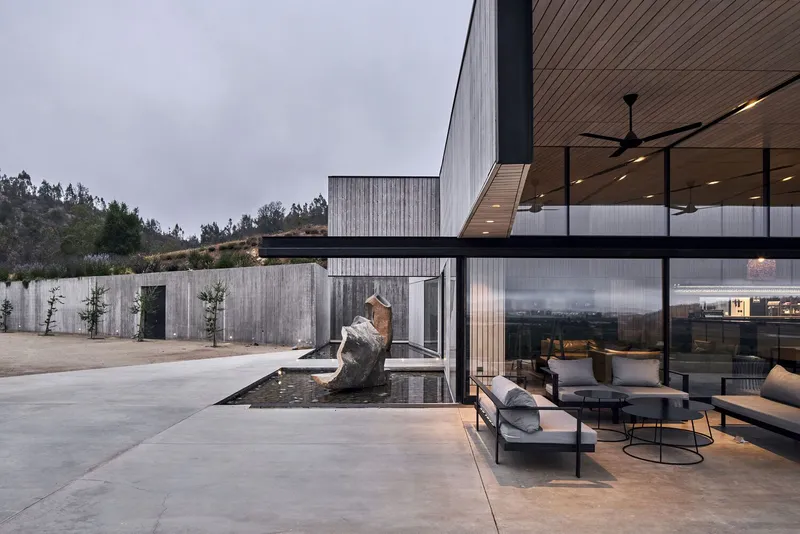
This approach blends sculptural architecture with functional, tourism-driven design, creating an immersive experience that celebrates the vineyard’s natural and cultural landscape.


Popular Articles
Popular articles from the community


Co-life: Sustainable Architecture for Age-Friendly Community Living
Co-life reimagines sustainable architecture for seniors through courtyards, rammed earth, shared gardens, and spaces designed for belonging.

The Musturak Paradise: Senior Living Architecture for a Connected Future in Temara, Morocco
The Musturak Paradise reimagines senior living architecture in Temara via private homes, social spaces, culture, community, and shared care.

The Ocean Hive: Sustainable Architecture for a Self-Sufficient Civilization at Sea
The Ocean Hive imagines sustainable architecture at sea, where modular habitats, algae, wave power and ocean waste sustain a growing colony.

Lunar Spiral: Space Architecture Shaped by the Mathematics of the Universe
Lunar Spiral reimagines space architecture through Fibonacci geometry, lunar regolith, levitating habitats, and self-sustaining Moon living.

Similar Reads
You might also enjoy these articles


Hodi-Mandai Geram
Project Function: Preservation and revitalization of the Intangible heritage and socio-spatial identity of the Hodi by Housing, Cultural Memory Center, Sacred Grove, landscape, local tourism economy


Olio Towers: A Mid-Rise for Performers That Fuses Housing, Rehearsal, and Stage
Located blocks from Houston's Theater District, this modular tower stacks living units around a central performance atrium.

Oasis: Modular Green Housing Carved into Dhaka's Urban Fabric
A shortlisted Plugin Housing entry reclaims unauthorized settlements in Dhaka with stepped concrete volumes, green roofs, and ventilation-driven design.

Black Hole: A Floating Megastructure for the Post-Physical Era
Emiliano Mazzarotto envisions a spherical, self-scaling arena where e-sports, digital hotels, and holographic stadiums replace traditional public space.

Explore Winery & Resort Competitions
Discover active competitions in this discipline

Challenge to reimagine the Iron Throne

Photograph architecture without architects

Illustrate the lost glory of Angkor Wat - Render Challenge

Design challenge to reuse E-waste
Comments (0)
Please login or sign up to add comments
No comments yet. Be the first to comment!