
Koala Haven: Wildlife Rehabilitation Architecture Designed for Koalas and Nature
A wildlife rehabilitation architecture project where koalas, nature, and people coexist through habitat-sensitive and sustainable design.

As biodiversity loss and habitat destruction continue to threaten wildlife populations across the globe, architecture is increasingly being called upon to play a restorative role. Rather than designing solely for human occupation, contemporary designers are exploring how the built environment can support ecological systems and endangered species. Koala Haven, a shortlisted entry of Haven 2020 by 依洋 李, represents this emerging approach through an innovative example of wildlife rehabilitation architecture.
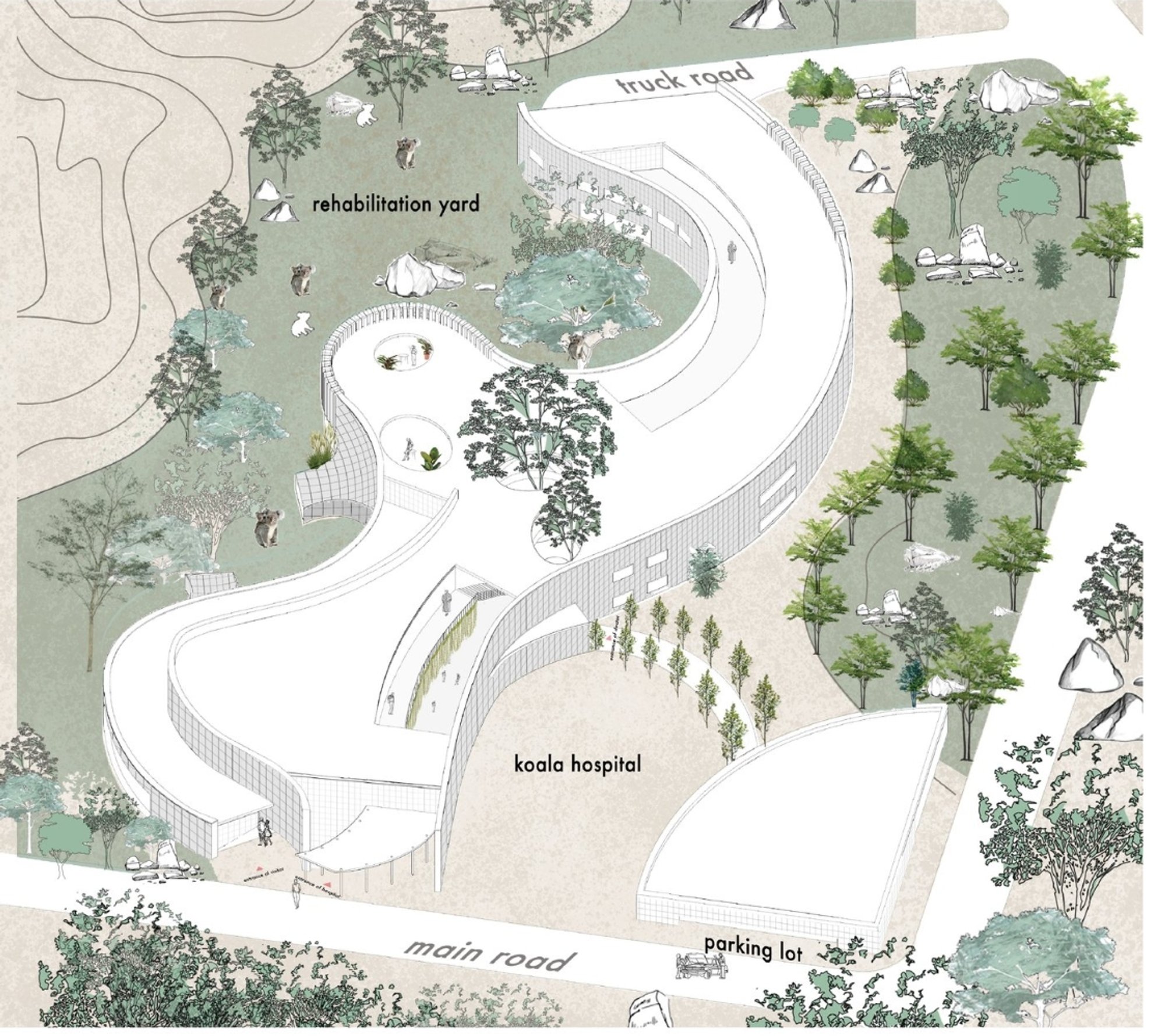
Located within a natural landscape, the project proposes a rehabilitation and treatment center specifically designed around the behavioral, psychological, and environmental needs of koalas. By prioritizing the animals' wellbeing while carefully integrating human interaction, the design establishes a meaningful relationship between architecture, wildlife conservation, and ecological stewardship.
Designing Architecture for Koalas Instead of Humans
The central idea behind Koala Haven is simple yet transformative: architecture should adapt to the needs of wildlife rather than forcing wildlife to adapt to architecture.
Instead of treating the rehabilitation center as a conventional medical facility, the project investigates the unique scales, habitats, movement patterns, and sensory experiences of koalas. Every aspect of the design, from massing and circulation to material selection and spatial organization, is informed by the daily life of these vulnerable animals.
The architecture recognizes that rehabilitation is not only a medical process but also an environmental one. Healing requires familiar surroundings, reduced stress, and opportunities to reconnect with natural behaviors. By creating spaces that mimic and preserve elements of the natural habitat, the design enhances the recovery process while minimizing human interference.
Wildlife Rehabilitation Architecture Integrated with Nature
One of the project's strongest architectural strategies is its commitment to preserving the site's existing ecological conditions.
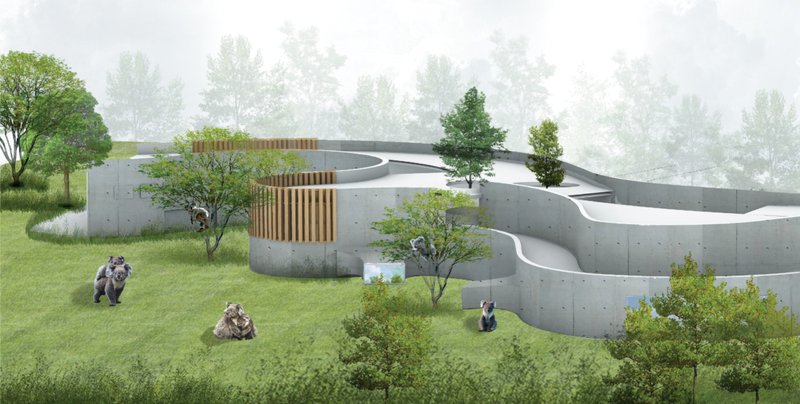
Rather than clearing the landscape for construction, the design carefully responds to existing vegetation and mature tree groups. Curvilinear building forms weave through the site, allowing the original natural environment to remain largely intact.
The building effectively divides the site into two complementary zones:
A Quiet Rehabilitation Zone
The first zone is dedicated to koala recovery and rehabilitation. This area remains secluded, peaceful, and closely connected to the surrounding landscape. Reduced human activity helps minimize stress for injured and recovering animals while preserving the natural habitat they depend on.
A Visitor and Educational Zone
The second zone is positioned closer to public access routes and visitor circulation. Here, guests can learn about koala conservation, wildlife rehabilitation, and environmental stewardship without disrupting the recovery process.
This separation creates a balanced relationship between conservation and education while ensuring the wellbeing of the animals remains the primary focus.
Organic Architecture Inspired by Natural Movement
The building's flowing geometry reflects the irregular patterns found in nature. Instead of rigid corridors and rectangular volumes, Koala Haven adopts a fluid architectural language that blends seamlessly with the landscape.
Curved walls guide movement through the site while creating sheltered spaces, courtyards, observation points, and rehabilitation facilities. The organic form reduces visual dominance within the environment and allows the architecture to appear as an extension of the terrain.
This approach strengthens the connection between the built and natural environments, reinforcing the project's ecological objectives.
Balancing Human Interaction and Animal Welfare
A key challenge in wildlife rehabilitation architecture is determining how humans and animals can coexist without causing stress or disruption.
Koalas are particularly sensitive creatures that often avoid direct interaction with people. Recognizing this behavioral characteristic, the design introduces carefully controlled viewing opportunities.
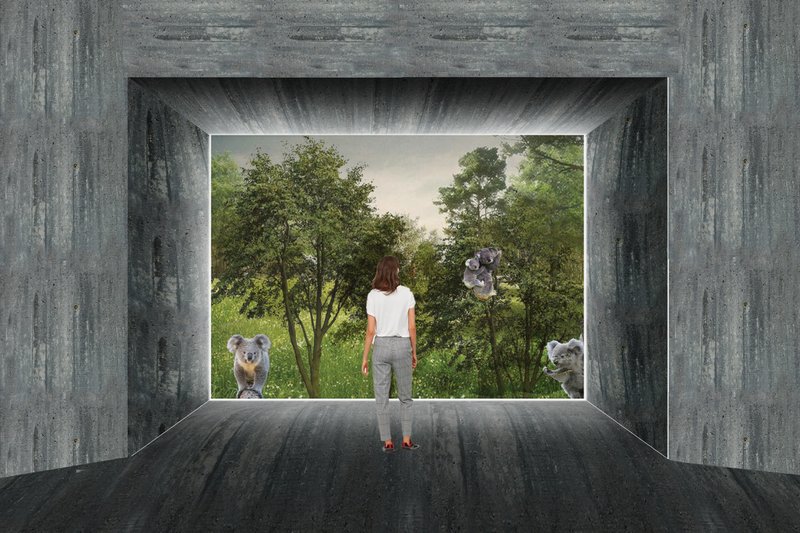
Visitors are invited to observe koalas through dedicated observation passages and framed viewing spaces. These architectural elements allow educational engagement while maintaining safe distances and minimizing disturbance.
The result is an immersive experience that encourages empathy and awareness without compromising animal welfare.
Efficient Healthcare Spaces for Wildlife Treatment
Beyond its environmental qualities, Koala Haven functions as a highly organized medical facility.
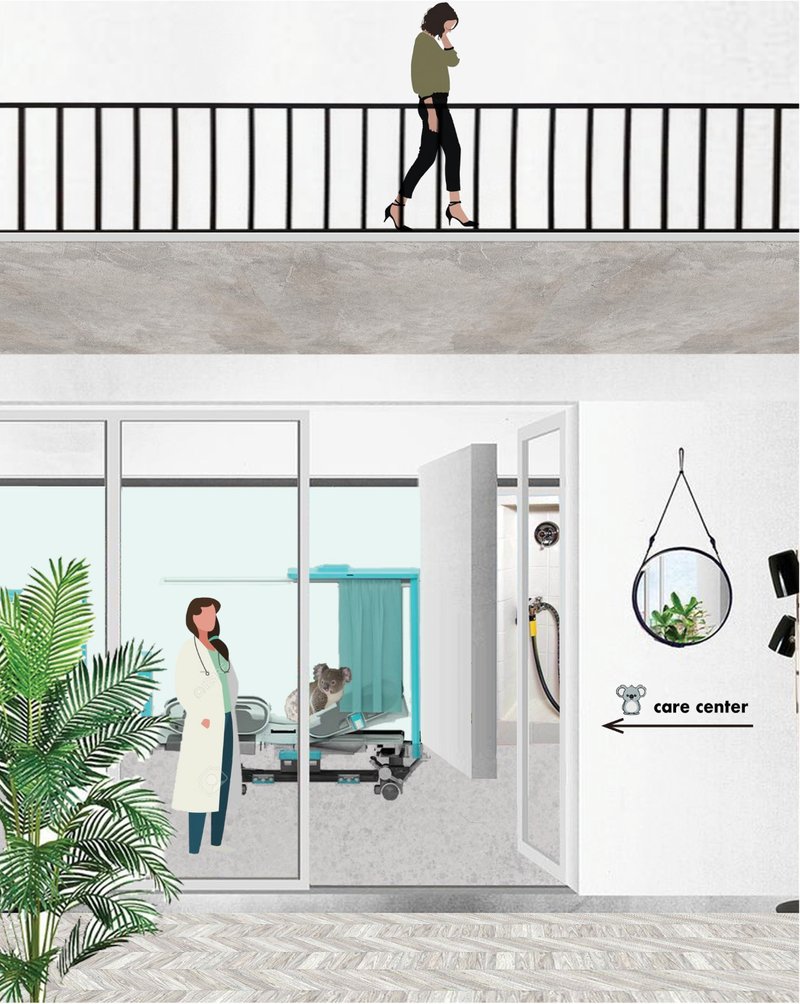
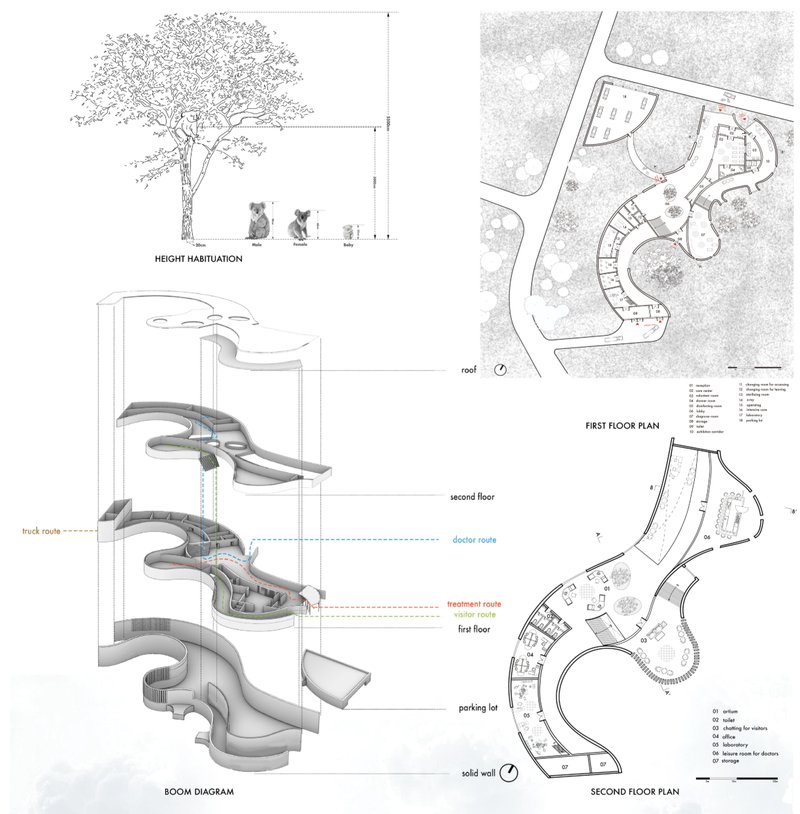
The project carefully studies circulation patterns for doctors, visitors, injured koalas, and medical supplies. Dedicated routes streamline movement throughout the building while preventing unnecessary overlap between public and treatment areas.
This operational clarity supports efficient rehabilitation procedures while maintaining a calm environment for both staff and animals.
Specialized facilities include:
- Reception and visitor orientation areas
- Veterinary treatment rooms
- Surgical facilities
- Recovery spaces
- Observation zones
- Educational and communication areas
- Support and storage facilities
The integration of these functions demonstrates how healthcare architecture can be adapted to serve wildlife conservation efforts.
Material Strategy and Environmental Performance
The project primarily utilizes concrete, wood, and glass, selected for both functional and experiential qualities.
Concrete
Concrete allows the creation of the project's fluid architectural forms while providing durability and thermal stability. Its sculptural flexibility supports the building's organic geometry and landscape integration.
Wood
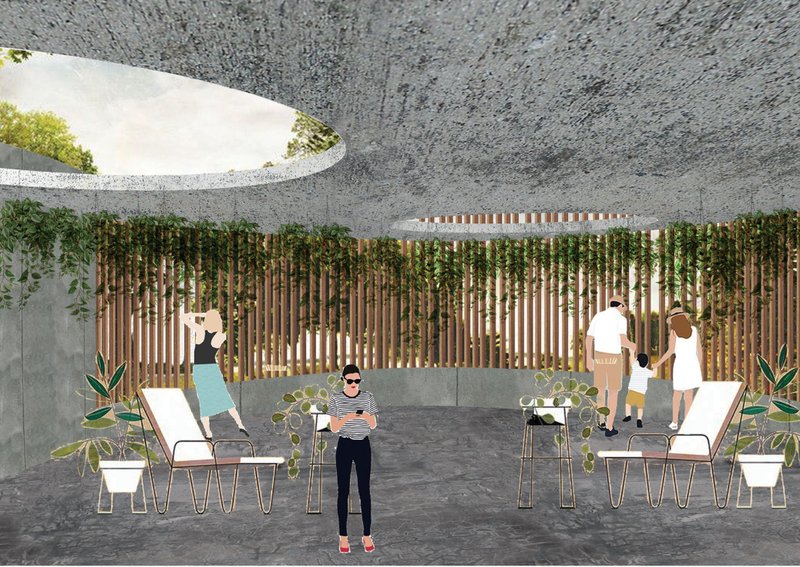
Timber introduces warmth and visual softness, helping create a calming atmosphere for visitors and reinforcing the connection to the surrounding natural environment.
Glass
Strategically placed glazing enhances visibility and educational opportunities while maintaining physical separation between humans and wildlife. Transparency becomes a tool for fostering understanding and appreciation of nature.
The varying density and transparency of the building envelope further strengthen relationships between architecture, landscape, and wildlife.
Architecture as a Tool for Conservation
Koala Haven demonstrates how architecture can actively contribute to environmental protection rather than merely occupying space.
By preserving existing vegetation, minimizing habitat disruption, supporting wildlife recovery, and educating visitors about conservation, the project extends the role of architecture beyond traditional building functions.
The design transforms the rehabilitation center into a living interface between people and nature. Visitors gain insight into the challenges facing koalas while witnessing firsthand the importance of ecological preservation.
A New Direction for Wildlife-Centered Design
As architects increasingly address environmental challenges, projects such as Koala Haven offer valuable lessons for future design practice.
The project illustrates how thoughtful planning, ecological sensitivity, and innovative spatial strategies can create environments that benefit both humans and wildlife. Rather than viewing nature as a backdrop, Koala Haven places it at the center of the architectural experience.
Through its integration of conservation, healthcare, education, and habitat preservation, this visionary proposal establishes a compelling model for the future of wildlife rehabilitation architecture.
Project Credits
Project: Koala HavenDesigner: 依洋 李



Popular Articles
Popular articles from the community

Foster + Partners Wraps a 200-Meter Shanghai Tower in Stainless Steel and Industrial Memory
The Suhe Centre Office Tower anchors a regenerated waterfront district in Shanghai with an all-steel structure that nods to local warehouse heritage.
gru.a Builds a 70 m² Timber Shelter That Opens Like a Farm Door in Brazil's Valley of the Vines
In the mountainous region near Rio de Janeiro, a compact retreat uses plywood panels and deep eaves to blur the line between inside and out.
IDIN Architects Wraps a Hua Hin Hotel Around a Private Courtyard to Escape the City
Dusit D2 Hua Hin turns an urban infill site in Thailand's family vacation heartland into a self-contained resort through courtyard planning.
BAUEN Builds Two Rammed Earth Volumes in Paraguay Inspired by the Ovenbird's Nest
In San Bernardino, a house of compacted earth channels the instinct of a constructive bird to shelter life from the Paraguayan summer.
Similar Reads
You might also enjoy these articles


Urban Forest: A Vertical Ecosystem for 5,000 Workers in Singapore's Changi Business Park
Radially stacked pods and layered green decks turn a 7-acre plot into 47 acres of ecological workspace projected for 2040.
interACT: A Wearable Transit Object That Turns Commuting Into Social Infrastructure
A backpack-mounted foldable device transforms walking, waiting, and riding into moments of shared comfort across Jakarta's transit network.
Lean On Barrier System: Where Traffic Safety Meets Chai Culture in Ahmedabad
A modular steel barrier doubles as informal seating and lean-on furniture at one of Ahmedabad's busiest intersections, keeping vendors in place.

The Black Bagh: A Living Monument Built from Water, Light, and Memory
On the banks of the Yamuna, two designers replace the myth of a marble mausoleum with a regenerative landscape of reflection and ritual.


Explore Educational Building Competitions
Discover active competitions in this discipline




The Global Benchmark for Architecture Dissertation Awards

Challenge to design public laboratory
Comments (0)
Please login or sign up to add comments
No comments yet. Be the first to comment!