

Kolomenskaya: Turning a Moscow Transit Zone into a Living Neighborhood
A 1.9-hectare urban regeneration project near Andropov Avenue weaves transport reform, public space, and graphic identity into one system.


What happens when a neighborhood exists only to be passed through? In the southern reaches of Moscow, the area around Kolomenskaya metro station had long functioned as a transit corridor: buses stacked along Andropov Avenue, pedestrians navigating fragmented paths and abrupt level changes, mature green space going unnoticed between car lanes and residential slabs. Kolomenskaya: New Living Environment takes this 1.9-hectare site and argues that the fix is not a single park or a single building, but an integrated urban system where transport logistics, landscape, architectural identity, and daily programming are redesigned as one continuous organism.
Developed by Софья Пайманова, the project addresses a dense residential district near the Nagatinskaya embankment with strong metropolitan connectivity but poor spatial coherence. Despite proximity to landmarks like the Kolomenskoye park-estate, the Moscow River embankment, the Chekhov Moscow Art Theatre, cinemas, and business centers, the site lacked the public infrastructure to hold people in place. Пайманова's proposal treats that absence as a design opportunity, reorganizing circulation, introducing new functional zones, and establishing a consistent architectural language that turns leftover transit space into a genuine neighborhood center.
White Canopies and a New Civic Ground Plane


The project's public plaza, rendered here at dusk, reveals how a family of curved white canopy structures creates a legible civic threshold next to existing brick residential buildings. The canopies are not decorative: they define gathering points, shelter pedestrian movement, and establish a visual rhythm that carries across the site. In the daytime view, the same structures frame a planted pedestrian pathway running alongside a brick facade, with raised planting beds softening the edge between building and walkway. The consistency of these elements, white steel, curved profiles, integrated greenery, is what gives the proposal its spatial coherence, a quality the area conspicuously lacked.
Red Ground, Vertical Screens, and Functional Zoning
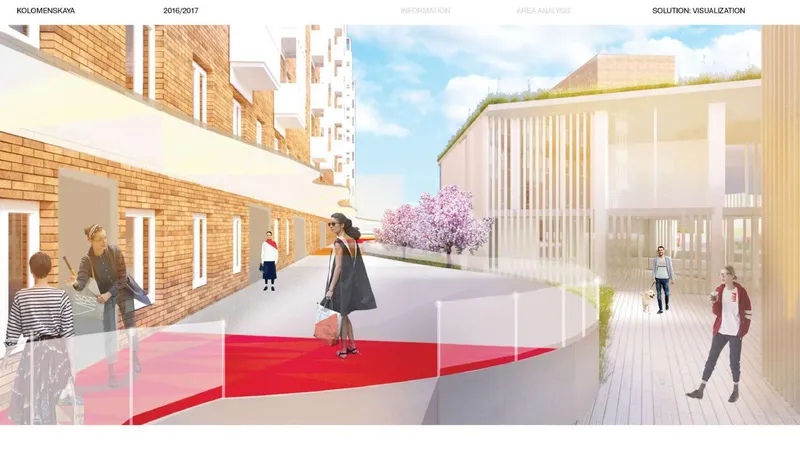
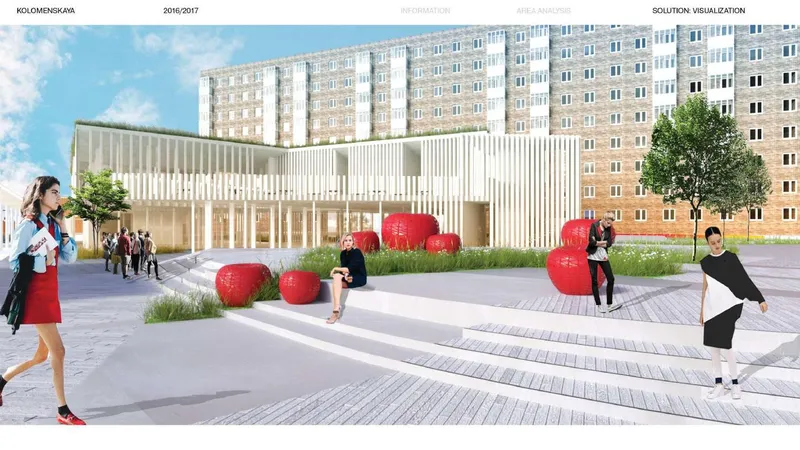
A bold red surface treatment marks the primary pedestrian street, connecting brick residential buildings and signaling that this ground belongs to people, not vehicles. A vertical slatted pavilion punctuates the corridor, its form distinct enough to serve as a local landmark while remaining materially consistent with the broader design vocabulary. In the adjacent plaza view, the same slatted facade language scales up into a building-sized element, with red spherical seating objects scattered among planted beds. These elements, food courts, recreational zones, landscaped lawns, are strategically placed to activate the site and encourage longer stays, transforming what was once a walk-through into a place people choose to occupy.
The functional zoning strategy here is deliberate. An in-depth analysis of the existing site revealed that most of the area served only transit purposes. The proposal layers transport, recreation, commerce, and services into a spatial sequence, so that movement through the site also means encountering reasons to stop. The red ground plane acts as a wayfinding device, guiding pedestrians along a route that unfolds these programmatic layers one after another.
Interior Courtyards as Green Microenvironments


The design does not stop at the street edge. An interior courtyard view shows a patterned tile floor enclosed by vertical white screens and a green roof overhead, with a planted tree anchoring the space. This is architecture working at a quieter register: filtered light, controlled sightlines, a sense of enclosure that rewards entry. The courtyard typology is a smart choice for Moscow's climate, offering sheltered outdoor space that extends the usable seasons of the public realm.
From the exterior, the corner view of the same pavilion shows the vertical slatted facade rising to a green roof terrace, pedestrians passing below at street level. The green roof is not ornamental; it contributes to the project's ambition of preserving the area's existing green character while reorganizing the ground plane. By lifting landscape onto architecture, the proposal recovers planting area that would otherwise be lost to new construction and hardscape.
Sculptural Columns and the Language of Identity
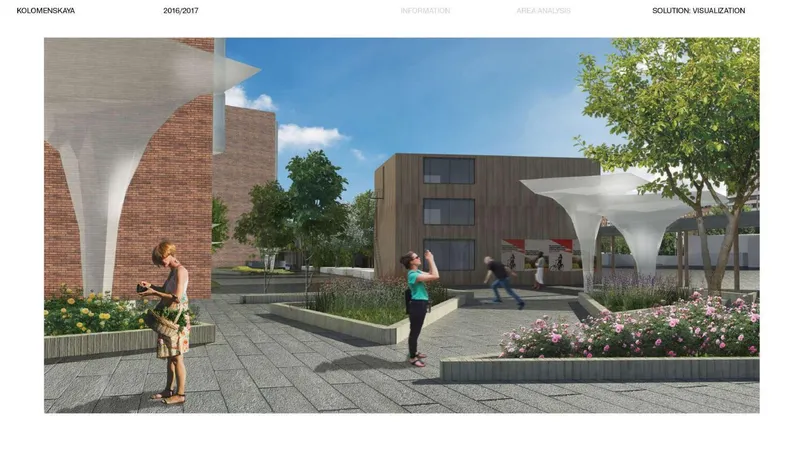
The final rendering pulls together the project's ambition to create a legible visual identity for Kolomenskaya. Sculptural white columns rise from a plaza surrounded by flowering planters, their forms abstract enough to read as art yet structural enough to define spatial zones. People linger, sit, walk between them. The scene captures something the site never previously offered: a reason to stay. The graphic design dimension of the project, mentioned by Пайманова as integral to the architectural system, is visible in the consistent material palette (white, red, green) and the repetition of formal elements across scales, from furniture to canopy to building facade.
Why This Project Matters
Moscow is full of neighborhoods like Kolomenskaya: well-connected, surrounded by cultural and natural assets, yet hostile to the pedestrian. The buses run, the metro is close, and yet the surface-level experience is one of fragmentation, noise, and wasted land. Пайманова's project matters because it refuses the piecemeal approach. Rather than proposing one park or one building, it demonstrates that transport reform, public space design, architectural identity, and functional programming must be solved simultaneously if a transit zone is to become a place worth living in.
The proposal also shows a mature understanding of what urban regeneration actually demands. The dedicated public transport lane along Andropov Avenue, the redistribution of bus stops to reduce congestion, the careful preservation of existing mature trees alongside new planting: these are not glamorous moves, but they are the structural decisions that make the white canopies and red plazas viable. Without the transport fix, the pedestrian realm cannot exist. Without the identity system, the new spaces would feel as anonymous as what they replace. Kolomenskaya: New Living Environment holds these layers together with clarity and conviction.
View the Full Project
About the Designers
Designer: Софья Пайманова
Enter a Design Competition on uni.xyz
uni.xyz runs architecture and design competitions year-round that reward proposals with spatial conviction and real site intelligence.
Project credits: Kolomenskaya: New Living Environment by Софья Пайманова.


Popular Articles
Popular articles from the community


Manzana Morphosis: Stretching Barcelona's Grid into a Living Landscape for 2050
A radical reworking of the Eixample manzana turns density into a tool for generous public space, vertical ecology, and environmental performance.


ETEH Reworks the Shared Spaces of São Domingos School in Brazil Around Timber, Color and Hanging Plants
At São Domingos School in Brazil, 436 m² of hall, refectory and library are recast with timber joinery, a yellow and blue code and trailing greenery.

Opera on the Sea: Driftwood Logic Shapes a Timber Opera House on Estonia's Coast
Trevor Orgill's opera house translates the entangled drift of floating timber into a civic building where wood, water, and music converge.

The Amber Palace Opera: A Geological Fiction Surfaces on Tallinn's Baltic Waterfront
Pierre Brillard reimagines a Baltic legend as a public landscape, opera house, and waterfront promenade rooted in Tallinn's coastal identity.

Similar Reads
You might also enjoy these articles
Yenisei Monitoring Center: A Sun-and-Moon Sphere Anchors a Research Campus on Siberia's Great River
In Krasnoyarsk, shifting square blocks, a glazed central sphere and descending window rhythms turn river science into a public spectacle on the Yenisei.
Andretta Artist's Village: A Node-Based Masterplan That Lets the Hills Write the Plan
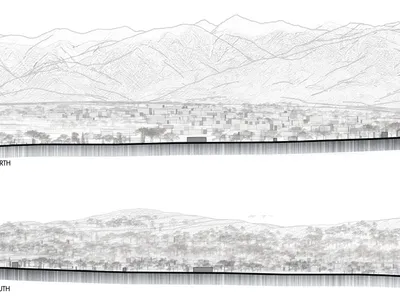
A cultural landscape strategy for Palampur's artist colony threads studios, residences and stages along a porous spine shaped by the Dhauladhar terrain.
Street Children Rehabilitation Center: A Brick Campus That Eases Children From Street to Safety
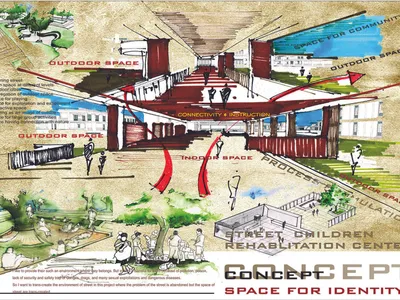
A low-rise courtyard campus where learning streets, uthans and shaded verandahs stage a gradual passage from street into protective, family-scale life.

The NEON Culture: A Field of Pavilions Built for the 24-Hour City
Smaran Alva spreads galleries, stages, clubs and markets across a varied site, treating light, sound and ramped movement as the real building materials.
Explore Infrastructure Design Competitions
Discover active competitions in this discipline

Challenge to reimagine the Iron Throne

Photograph architecture without architects

Illustrate the lost glory of Angkor Wat - Render Challenge

Design challenge to reuse E-waste
Comments (0)
Please login or sign up to add comments
No comments yet. Be the first to comment!