
KOS Mosque Renovation by r.a.f.studio: A Harmonious Blend of Tradition and Modernity in Konya, Türkiye
KOS Mosque renovation by r.a.f.studio blends tradition and modern design, enhancing capacity, circulation, and sustainability in Konya, Türkiye.


Location: Konya Organized Industrial Zone, Türkiye Architects: r.a.f.studio Lead Architect: Hasan Agah Erkan Year Completed: 2020 Area: 4000 m² Photographer: Gürkan Akay Structural Engineering: S Project
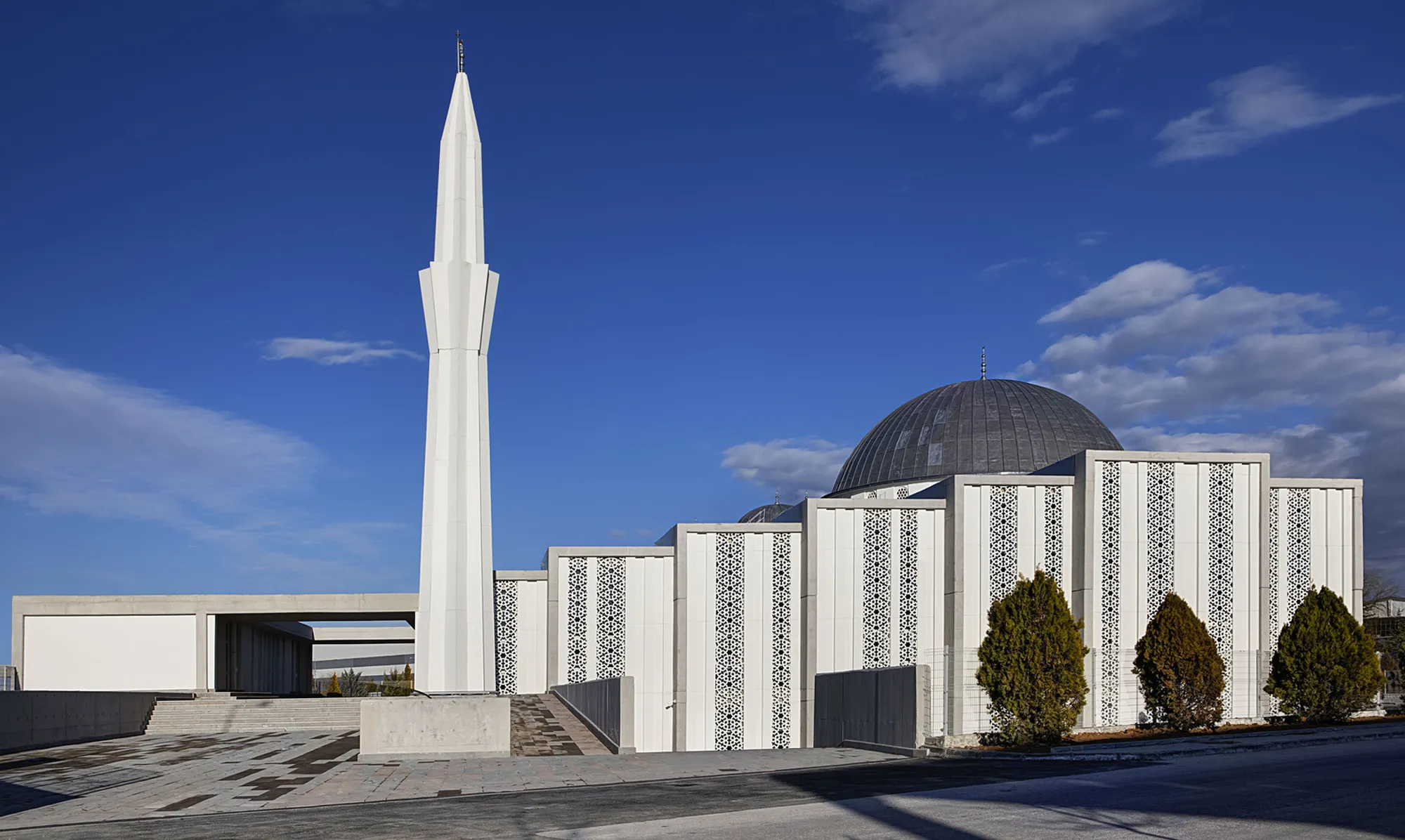
The KOS Mosque renovation project by renowned architectural firm r.a.f.studio redefines how mosques in Turkey can be sensitively upgraded rather than demolished. Situated in the Konya Organized Industrial Zone, this mosque is more than just a religious building—it is a thoughtful intervention addressing structural and spatial deficiencies within the existing structure.
With over 85,000 mosques in Turkey, many requiring upgrades or expansions, KOS Mosque stands as a pioneering example of renovation that balances respect for tradition with the practical demands of contemporary worshipers. This project highlights an innovative approach to mosque architecture that maximizes user capacity, enhances circulation, and maintains architectural harmony.

Project Context and Design Concept
Located at a bustling crossroads within the industrial zone, the mosque faced challenges due to increased user circulation and structural limitations. The original building featured a single elevated entrance accessed through a garden, creating bottlenecks and limiting access flow.
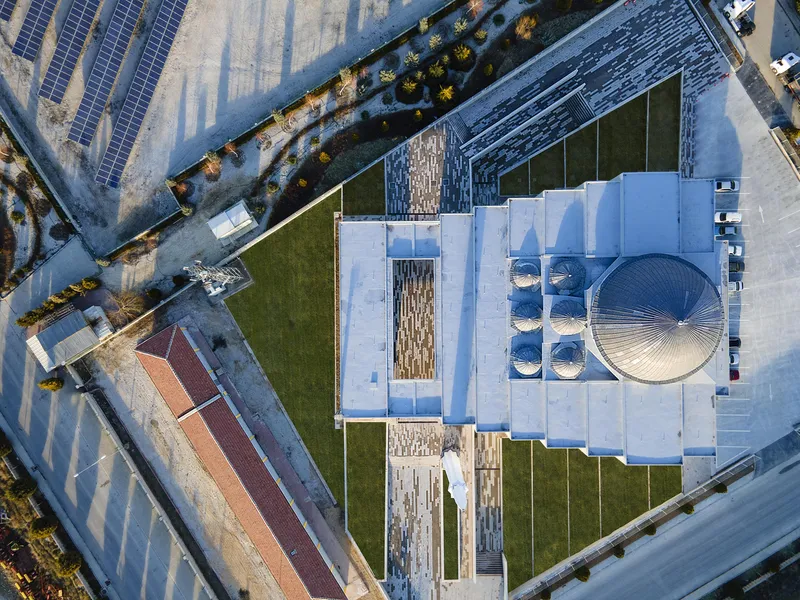
The design team’s primary goal was to double the mosque’s capacity while ensuring smooth circulation of visitors through multiple access points. To achieve this, the existing street entrance was preserved and expanded, and a new secondary entrance was added from the adjacent street. These entrances converge into a newly designed courtyard that functions as the mosque’s social and spiritual heart, housing the ablution area and serving as the main gateway into the prayer hall.
A new minaret, carefully positioned at the intersection of the courtyard and ramps, serves as a prominent architectural focal point with maximum visibility, reinforcing the mosque’s identity within the urban fabric.

Architectural Features and Structural Innovations
The renovation carefully respects the original mosque’s structural logic while introducing new architectural elements to enhance functionality and aesthetics:
- Expanded Access Points: Four entrances distributed across ground and basement floors facilitate efficient entry and exit, addressing the increased number of worshippers.
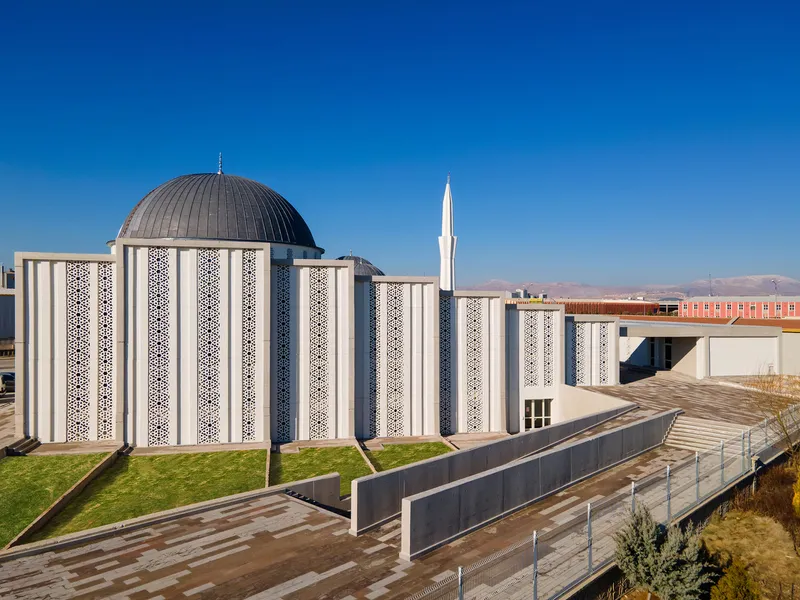
- Exposed Concrete Blocks: Five concrete volumes, including a prominent 12-meter-long block, extend from the main prayer hall, maintaining the carrier system of the existing mosque while adding visual rhythm and structural clarity.
- Integrated Mosque Mass: The new mosque mass comprises essential elements such as the mihrab, entrances, shoe shelves, ablution areas, and courtyard spaces, all connected via 11 carefully designed axes that guide spatial flow.
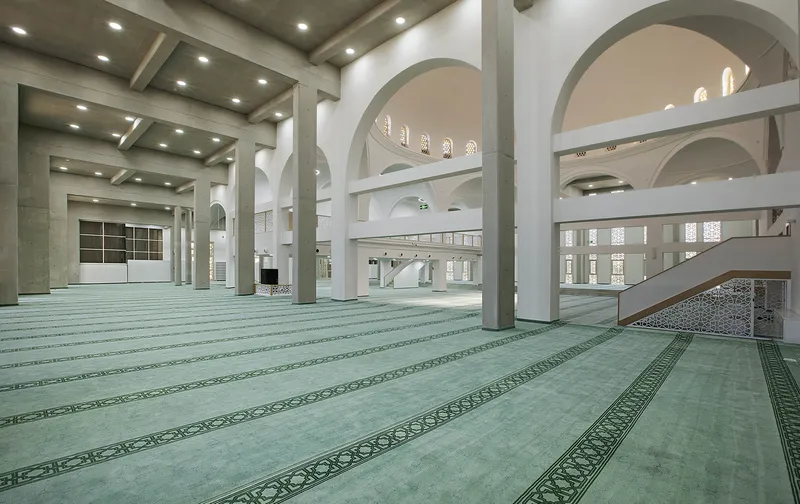
- Curtain Wall Feature: A striking 2-meter glass curtain wall faces southwest, highlighting the mihrab area and inviting natural light to penetrate the interior on both floors.
- Basement Floor Design: The basement is fully exposed to solve natural lighting challenges, enhanced by terraced landscaping that connects different levels and provides a seamless transition between indoor and outdoor spaces.
Sustainable and User-Centered Approach
The KOS Mosque renovation embraces a user-focused philosophy, responding to the growing needs of the local community while emphasizing sustainability. The use of natural light, strategic spatial organization, and material honesty contributes to an environment conducive to prayer, reflection, and community gathering.
By choosing renovation over demolition, the project minimizes material waste and carbon footprint, aligning with sustainable architecture principles increasingly important in Turkey and worldwide.
The KOS Mosque renovation by r.a.f.studio is a compelling example of adaptive reuse in religious architecture, demonstrating how existing mosque structures can be thoughtfully modernized to meet contemporary needs without sacrificing cultural and spiritual significance. The project serves as a model for mosque renovations across Turkey, emphasizing harmony, increased capacity, and architectural innovation.




Popular Articles
Popular articles from the community


Riyadh For All: Intergenerational Urban Design for Active Aging in Rabat
Riyadh For All reimagines urban design in Rabat with intergenerational co-living, adaptive courtyards, and Moroccan cultural exchange today.

The Earth Pod: 3D Printed Homes for Resilient Refugee Communities
The Earth Pod reimagines refugee housing through 3D printed homes made from clay, combining resilience, self-sufficiency, and rapid shelter.
EW PARK: Sustainable Architecture Reimagines the Future of Urban Parking
EW PARK reimagines city parking as a modular wooden tower combining automation, solar energy, electric mobility, and adaptable urban design.

Co-life: Sustainable Architecture for Age-Friendly Community Living
Co-life reimagines sustainable architecture for seniors through courtyards, rammed earth, shared gardens, and spaces designed for belonging.


Similar Reads
You might also enjoy these articles


Hodi-Mandai Geram
Project Function: Preservation and revitalization of the Intangible heritage and socio-spatial identity of the Hodi by Housing, Cultural Memory Center, Sacred Grove, landscape, local tourism economy


Olio Towers: A Mid-Rise for Performers That Fuses Housing, Rehearsal, and Stage
Located blocks from Houston's Theater District, this modular tower stacks living units around a central performance atrium.

Oasis: Modular Green Housing Carved into Dhaka's Urban Fabric
A shortlisted Plugin Housing entry reclaims unauthorized settlements in Dhaka with stepped concrete volumes, green roofs, and ventilation-driven design.

Black Hole: A Floating Megastructure for the Post-Physical Era
Emiliano Mazzarotto envisions a spherical, self-scaling arena where e-sports, digital hotels, and holographic stadiums replace traditional public space.


Explore Religious Building Competitions
Discover active competitions in this discipline


Design Challenge - Contemporary interpretation of a religious complex


Challenge to reimagine the Iron Throne


Photograph architecture without architects


Illustrate the lost glory of Angkor Wat - Render Challenge
Comments (0)
Please login or sign up to add comments
No comments yet. Be the first to comment!