

KRISIS: A Survival School Embedded in Athens' Abandoned Airport
Katarina Bankovic transforms a former Olympic site into a modular humanitarian workshop where architecture simulates normalcy for displaced communities.


What happens when an architect decides that a refugee shelter should teach people how to live again, not just where to sleep? KRISIS answers that question by staging an entire daily life, complete with kindergartens, communal kitchens, a moving library, and workshop spaces, inside the ruins of a decommissioned airport. It refuses the logic of emergency design that reduces displaced people to bodies needing containment. Instead, it builds a temporary world dense enough to simulate stability, routine, and even joy.
Designed by Katarina Bankovic as a People's Choice Award entry for the Bauhaus Neue competition, KRISIS occupies the abandoned Ellinikon International Airport in Athens, specifically a former Olympic baseball pitch from the 2004 Games. The site carries overlapping histories of spectacle, abandonment, and informal refugee settlement. Migratory routes from Istanbul, Cairo, and Tripoli converge on Athens, making the city both a terminal and a threshold. Bankovic takes that charged geography and turns it into a design brief: how can architecture mediate crisis without institutionalizing suffering?
Stacked Platforms and a Magenta Threshold


The section drawing reveals the project's spatial logic in a single cut. Stacked platforms connected by stairs create vertical complexity within what reads as a compressed urban landscape. A large magenta circle dominates the composition, acting as both a graphic marker of urgency and a spatial threshold that organizes circulation. Figures populate every level, reinforcing that this is architecture designed around bodies in motion, not static floor plans.
The perspective rendering shifts the register from diagram to experience. Yellow-edged pathways carve through the site, guiding a solitary figure past sculptural trees bathed in afternoon light. The color palette here is deliberate: bold purples, yellows, and neons push back against the grey dystopia of the surrounding airport infrastructure. Bankovic uses visual intensity as a form of resistance, insisting that humanitarian spaces deserve the same chromatic ambition as any cultural institution.
A Dome and Its Orbiting Program


The axonometric view pulls back to reveal the project's organizational strategy. A dome structure sits at the center, surrounded by yellow circulation paths and clusters of trees that soften the boundary between built form and landscape. The dome functions as a communal anchor while smaller programmatic volumes, including bungalows for temporary housing, reception areas, and consultation rooms, scatter around it in loose constellations. This dispersed arrangement avoids the institutional corridor typology that plagues so many refugee facilities.
Elevation drawings confirm the compositional strategy: the dome is flanked by trees and cubic volumes with exposed structure, creating a skyline that reads more like a village than a camp. The scattered massing allows for intimacy at the scale of individual shelters while maintaining legibility at the scale of the whole site. Nothing about this arrangement feels permanent, which is precisely the point. The architecture is built for flux, designed to be reconfigured as populations shift and needs evolve.
Material Overlap: Panels, Ladders, and Translucent Layers

The close-up view is where the project's material ambitions become tangible. Overlapping grey and turquoise panels create a vertical composition punctuated by magenta ladder elements. The translucent partitions allow light and shadow to filter through, producing interiors that feel open rather than enclosed. Containers, platforms, and these layered panels form the architectural vocabulary: modular, lightweight, and reconfigurable. The ladders are not just circulation devices but visual signals of agency, marking points where inhabitants can ascend, choose, and move freely.
Program Distribution Across Three Levels

The site plan and floor plan diagrams map the full programmatic inventory across three levels, with circular insets isolating specific zones: kindergarten and family areas, learning spaces, communal kitchens, workshop areas, living quarters, and the moving library. Bankovic calls the project a "school of survival," and the plans make that label legible. Each zone is calibrated to simulate a specific aspect of daily normalcy, from the routine of shared meals to the focused quiet of a reading space. The diagrams also trace refugee paths converging on Athens, anchoring the architectural proposal within its geopolitical reality.
What makes this programmatic richness work architecturally is the refusal to separate functions into sealed rooms. Spaces bleed into one another through open gathering areas and flexible partitions, so that a workshop can become a classroom, a kitchen can become a social hall. The architecture does not prescribe behavior; it scaffolds possibility.
Why This Project Matters
KRISIS matters because it reframes what humanitarian architecture is allowed to be. Most emergency design operates under a logic of scarcity: minimal material, minimal color, minimal identity. Bankovic rejects that framework entirely. She embeds long-term thinking into temporary structure, using modular grids and adaptable partitions to create spaces that can grow, shrink, and transform alongside the communities they serve. The project does not erase the crisis; it refuses to let the crisis erase the people inside it.
By siting the intervention within the layered history of Ellinikon Airport, a place that has cycled through aviation, Olympic spectacle, and informal settlement, Bankovic also makes an argument about urban memory. Architecture does not need a blank canvas to be meaningful. Sometimes the most powerful design gesture is to read a site's accumulated trauma and build something that transforms abandonment into welcome. KRISIS turns spatial crisis into pedagogical opportunity, proving that dignity and adaptability can coexist within the same structure.
View the Full Project
About the Designers
Designer: Katarina Bankovic’s
Enter a Design Competition on uni.xyz
uni.xyz runs architecture and design competitions year-round that reward proposals with spatial conviction and real site intelligence.
Project credits: KRISIS by Katarina Bankovic’s Bauhaus Neue (uni.xyz).


Popular Articles
Popular articles from the community


Manzana Morphosis: Stretching Barcelona's Grid into a Living Landscape for 2050
A radical reworking of the Eixample manzana turns density into a tool for generous public space, vertical ecology, and environmental performance.

The Amber Palace Opera: A Geological Fiction Surfaces on Tallinn's Baltic Waterfront
Pierre Brillard reimagines a Baltic legend as a public landscape, opera house, and waterfront promenade rooted in Tallinn's coastal identity.

Cloaked Colonization: A Mobile Underwater Habitat That Moves Like a Fish
Micah Abaya's shortlisted EHC Pacific entry reimagines ocean settlement as a dispersed network of self-sustaining architectural organisms.
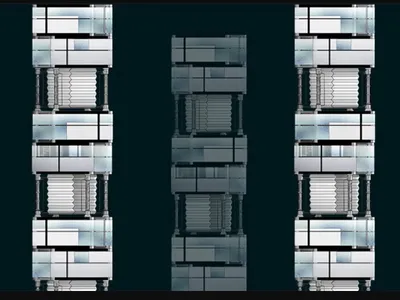
Tsunami Convergenics: Turning Catastrophic Ocean Forces into Underwater Housing Infrastructure
A speculative underwater settlement off the coast of Onagawa, Japan, treats tsunamis and typhoons as energy sources rather than threats.

Similar Reads
You might also enjoy these articles

Day and Night Park: A Time-Based Urban Newsstand in Beijing
A temporary urban newsstand in Beijing blending travel, light, and reading through poetic colors, compact form, and community-focused design.

Modernist Patio Renovation in El Masnou, Barcelona by Oliver Segura Arquitectura + Cebrià Arquitectura
Modernist patio renovation blending tradition and innovation with a movable pool, leveled floors, and Catalan materials in El Masnou.
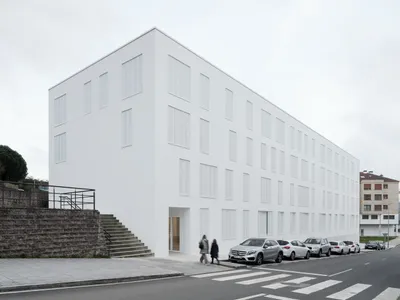
Alto Residencial Coop: Cooperative Housing Development in Santiago de Compostela by Carbajo Barrios Arquitectos
A linear cooperative housing complex blending white volumes and perforated metal façades, enhancing community living, natural light, privacy, and urban integration.
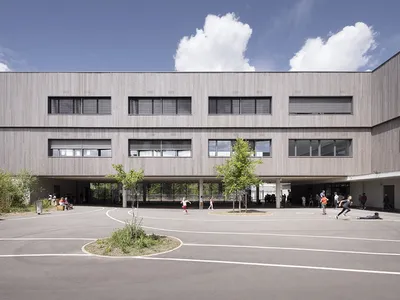
Vil Genis School by BPA ARCHITECTURE – Massy, France
Vil Genis School in Massy, France, features sustainable design, south-facing classrooms, community integration, accessible spaces, and modern educational architecture.


Comments (0)
Please login or sign up to add comments
No comments yet. Be the first to comment!