
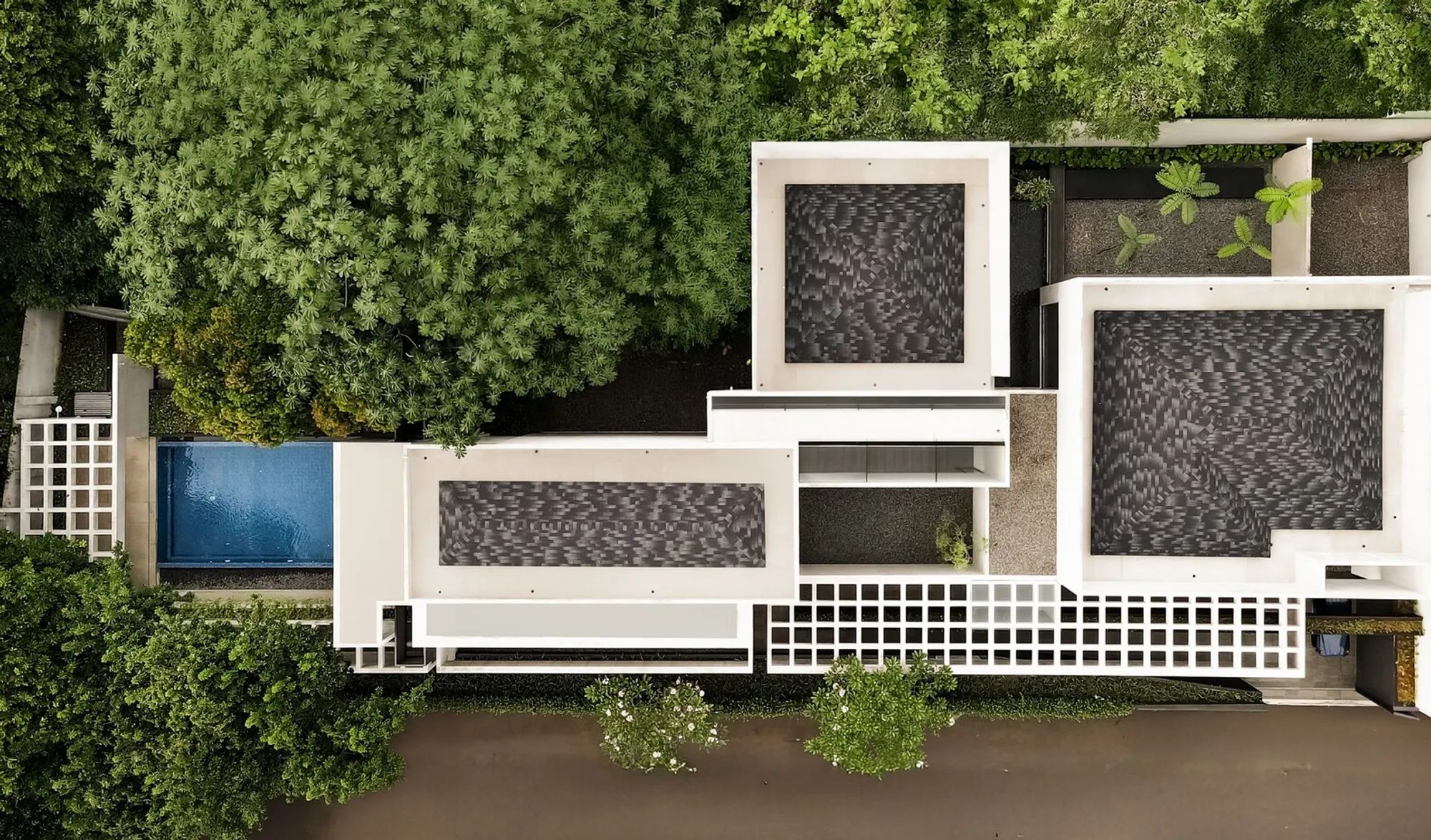
La Posada Hotel: A New Vision in Rural Boutique Hotel Architecture
La Posada Hotel in Asturias exemplifies rural boutique hotel architecture, combining bold design, natural materials, and immersive open-plan interiors.


Nestled in La Pereda, Asturias, between the Sierra del Cuera and the cliffs of the Cantabrian Sea, La Posada Hotel is a remarkable example of rural boutique hotel architecture. Originally established over thirty years ago as a family-oriented rural hotel, it has evolved into a vibrant, open space where architecture, design, and nature converge. Designed by Mariano Martin of MARIANO, the hotel exemplifies how thoughtful interventions can transform a traditional space into a modern, experiential retreat.
A History Rooted in Nature and Family
The founders of the hotel, a couple from Madrid, sought a serene environment to raise their children while offering visitors a unique, immersive experience. Surrounded by oaks, chestnuts, hazels, and birches, the hotel has long been a venue for exhibitions, concerts, and celebrations. This rich history forms the foundation for its latest transformation, marrying tradition with contemporary design principles in rural boutique hotel architecture.
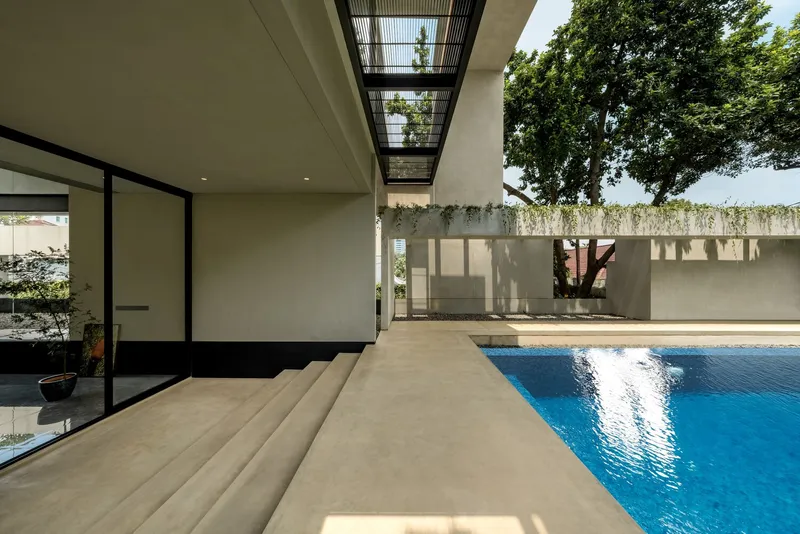
Open-Plan Interiors: Living Like Home
At the heart of the renovation is the creation of an expansive, open-plan space encompassing the lobby, reception, lounge, library, and kitchen. Each visitor can interact with the space as they would in their own home. The bold use of indigo blue, previously part of the lobby’s double-height ceiling, now envelops walls, ceilings, furniture, and the piano, creating a seamless and immersive environment. By eliminating strict boundaries, the design encourages flexibility and personal interpretation of space.
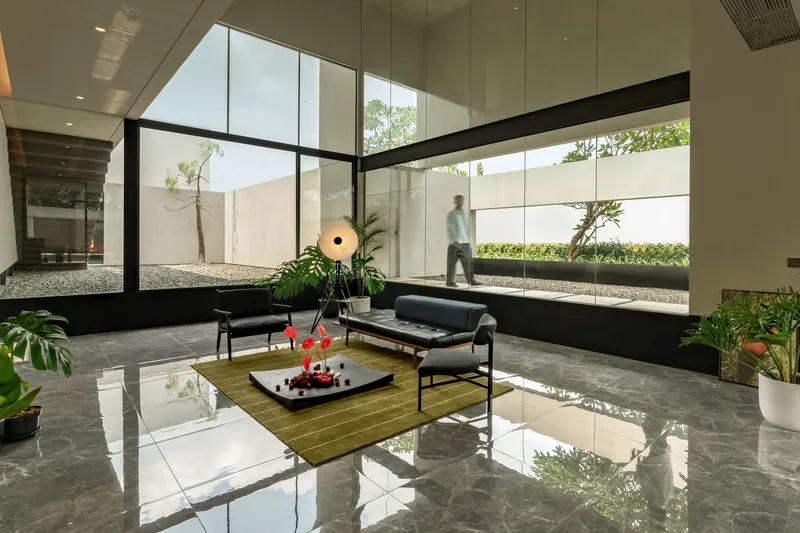
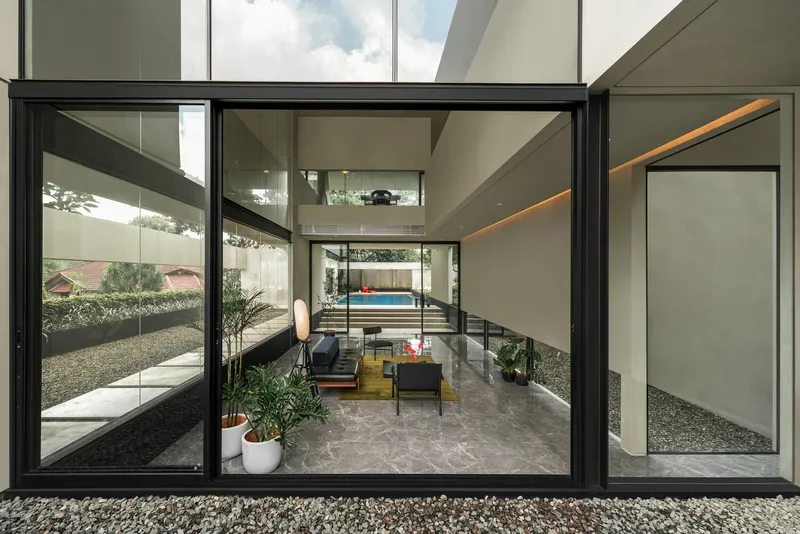
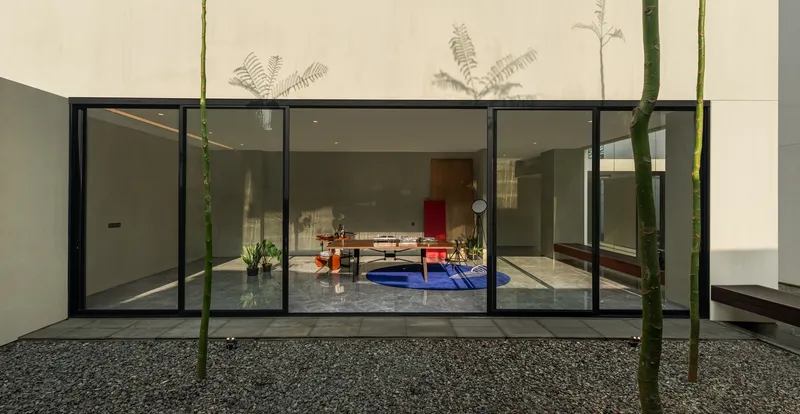
Materiality and Craftsmanship
A single material, untreated iron, organizes the new functions of the hotel. Crafted almost artisanally, the iron forms mobile, divisible furniture that houses pantries and refrigerators for each room. Perforated sheets create moiré effects, revealing glimpses of the products inside while maintaining an elegant aesthetic. The iron also shapes a central island, bar, and table, inviting gathering, reading, dining, and social interactions under “showers of light” that hang from the ceiling, blurring the line between functionality and artistry.
Bridging Interior and Exterior
Folding glass doors seamlessly unite the interior’s indigo blue palette with the lush greenery outside, reinforcing the concept of an open house. Classic and unfinished tiles coexist with the iron furniture, emphasizing natural textures and imperfection. This approach extends to the bedrooms, where wood and blue tones combine to produce a refined yet playful elegance. Every element celebrates reuse, history, and the joy of discovery, creating a hotel that feels simultaneously nostalgic and innovative.
A Refuge More Than a Hotel
La Posada Hotel now embodies the essence of a refuge, encouraging guests to cook, gather, and connect. The broken circle in the kitchen wall symbolizes openness and community, reflecting the philosophy that architecture can foster human interaction. Small interventions, like “The Last Brush” in the lobby, demonstrate how minimal changes guided by perspective can profoundly reshape a space.
With this renovation, La Posada Hotel establishes itself as a leading example of rural boutique hotel architecture, blending color, materiality, and spatial openness. It honors its heritage while embracing a contemporary vision, ensuring another thirty years of memorable experiences. Today, it is simply called The Posada, a space where design, nature, and human experience converge.
All Photographs are works of Imagen Subliminal




Popular Articles
Popular articles from the community


Hill & Cross Opera: Sculptural Opera House Architecture Shaped by Tallinn’s Landscape and Identity
Hill & Cross Opera reimagines opera house architecture in Tallinn through its sculptural hill, civic plaza, glass wave and a luminous cross.

The Musturak Paradise: Senior Living Architecture for a Connected Future in Temara, Morocco
The Musturak Paradise reimagines senior living architecture in Temara via private homes, social spaces, culture, community, and shared care.

Co-Life: Senior Housing Design That Reconnects Older Adults With the City
Co-Life reimagines senior housing design through healing gardens, shared streets, workshops, and a sustainable community across generations.

Conexión: Biophilic Design Reimagines High-Rise Living in Hong Kong
Conexión reimagines high-rise living in Hong Kong through biophilic design, green facades, shared spaces, daylight, water and nature within.


Similar Reads
You might also enjoy these articles

FAMM Arquitectura Organizes Ten Villas Around Courtyards and Jungle in Nosara, Costa Rica
El Molino pairs two elongated volumes with deep overhangs and timber louvers to build a compact coastal community five minutes from the beach.
Oscar Niemeyer's Ibirapuera Park Pavilions Define São Paulo's Cultural Identity in Concrete and Curve
A constellation of modernist volumes set within São Paulo's most important urban park, conceived for the city's 400th anniversary in 1954.
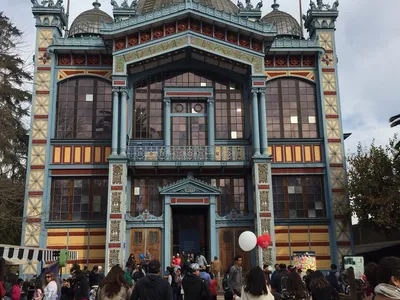
How Henri Picq's 1889 Paris Pavilion Traveled 11,000 Kilometers to Become Santiago's Artequín Museum
A prefabricated iron and glass pavilion built for the Paris Universal Exposition found a second life as a children's art museum in Chile.
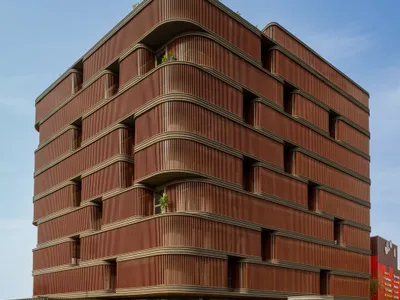
Sanjay Puri Architects Wraps a Jaipur Office Tower in Capsule-Shaped Green Buffers
A nine-level climate-responsive workplace near Jaipur Airport uses stacked planter terraces and aluminium screens to fight 40°C heat.


Explore Architecture Competitions
Discover active competitions in this discipline



Challenge to reimagine the Iron Throne


Photograph architecture without architects


Illustrate the lost glory of Angkor Wat - Render Challenge


Design challenge to reuse E-waste
Comments (0)
Please login or sign up to add comments
No comments yet. Be the first to comment!