
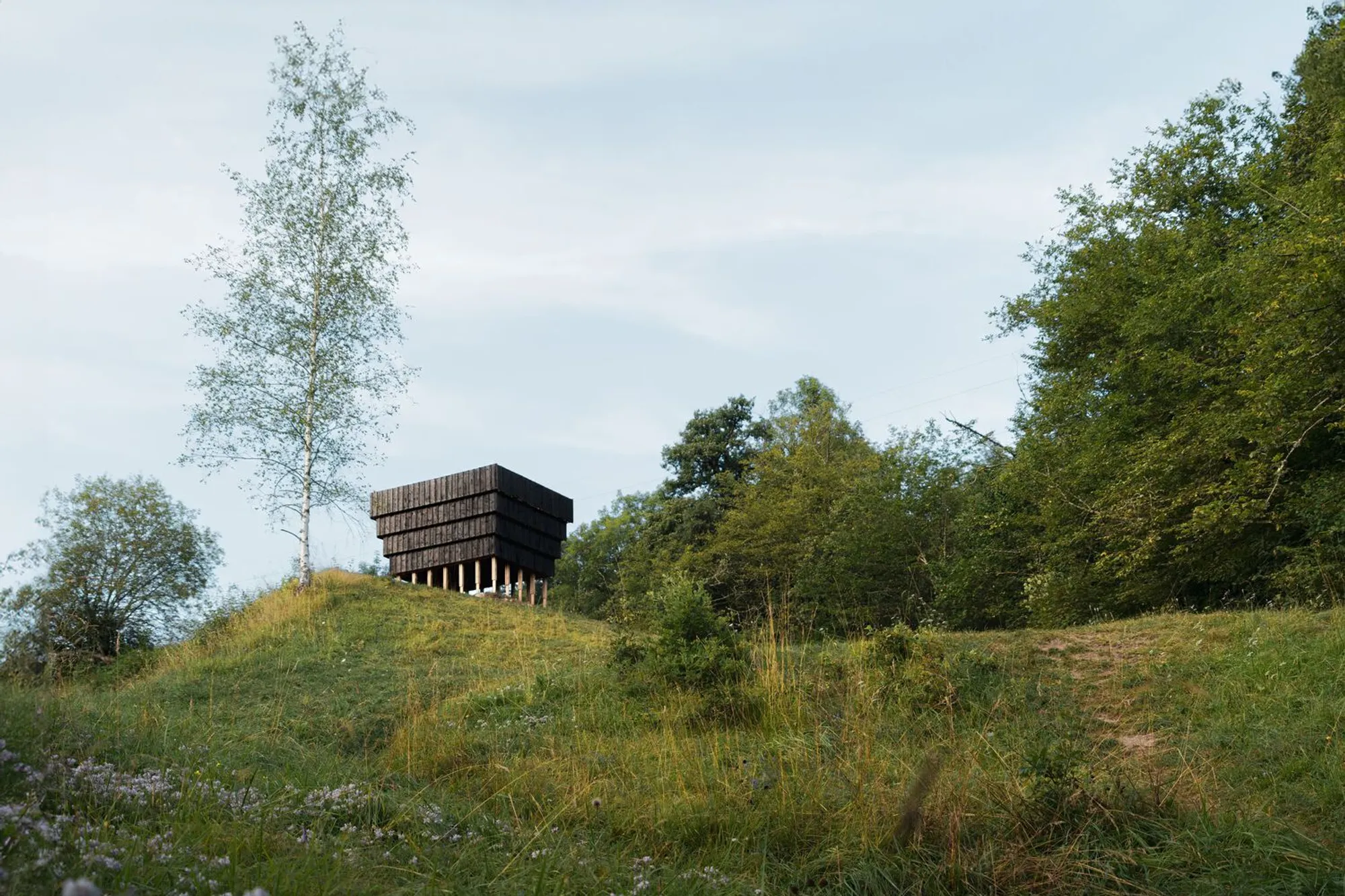
La Suie Cabin by Marina Poli + Philippe Paumelle + Richard Trézeux
La Suie Cabin is a charred wooden pavilion evoking mining memory, light, darkness, and tactile exploration within Alpine landscape context.


Nestled within the Alpine landscape of Faverges, France, La Suie Cabin is a small yet evocative architectural intervention that blurs the boundaries between pavilion, sculpture, and landscape artifact. Designed by Marina Poli, Philippe Paumelle, and Richard Trézeux, the 10-square-meter structure draws its conceptual strength from the site’s industrial and geological memory, specifically referencing the lignite mines once operating just a few hundred meters away.


A Black Mass in the Landscape
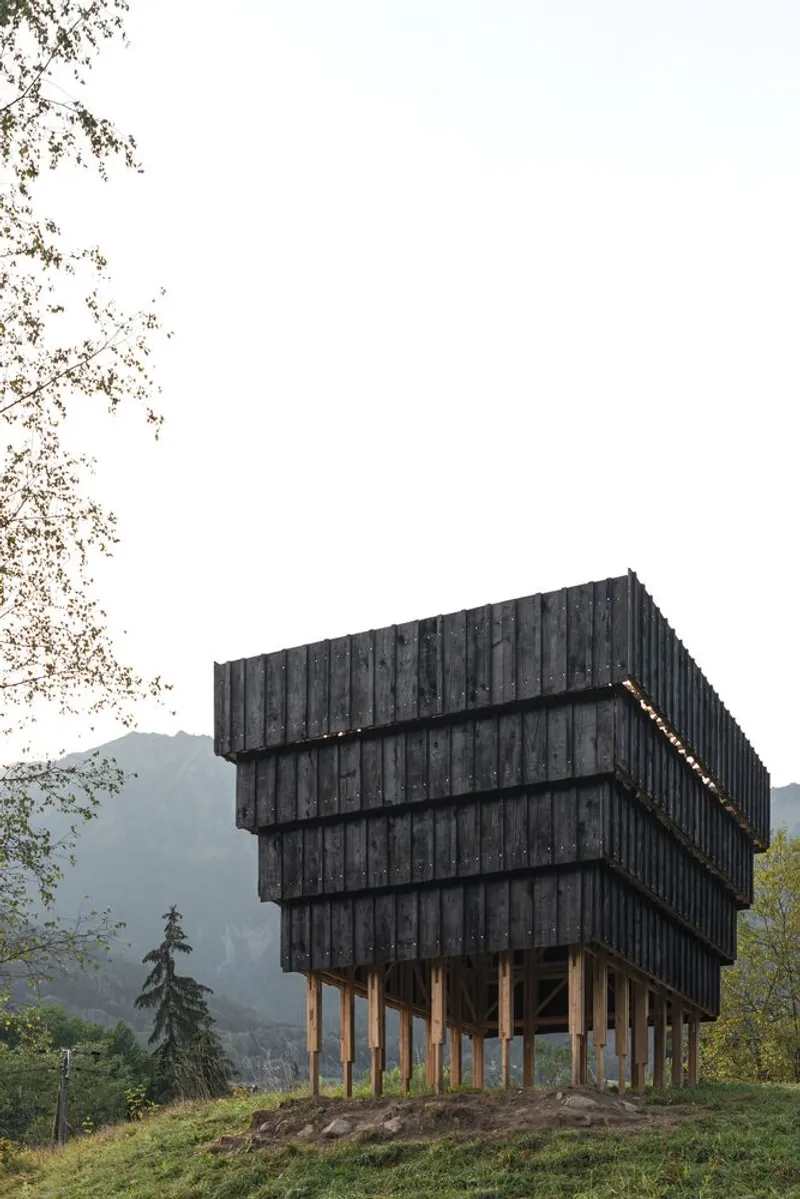
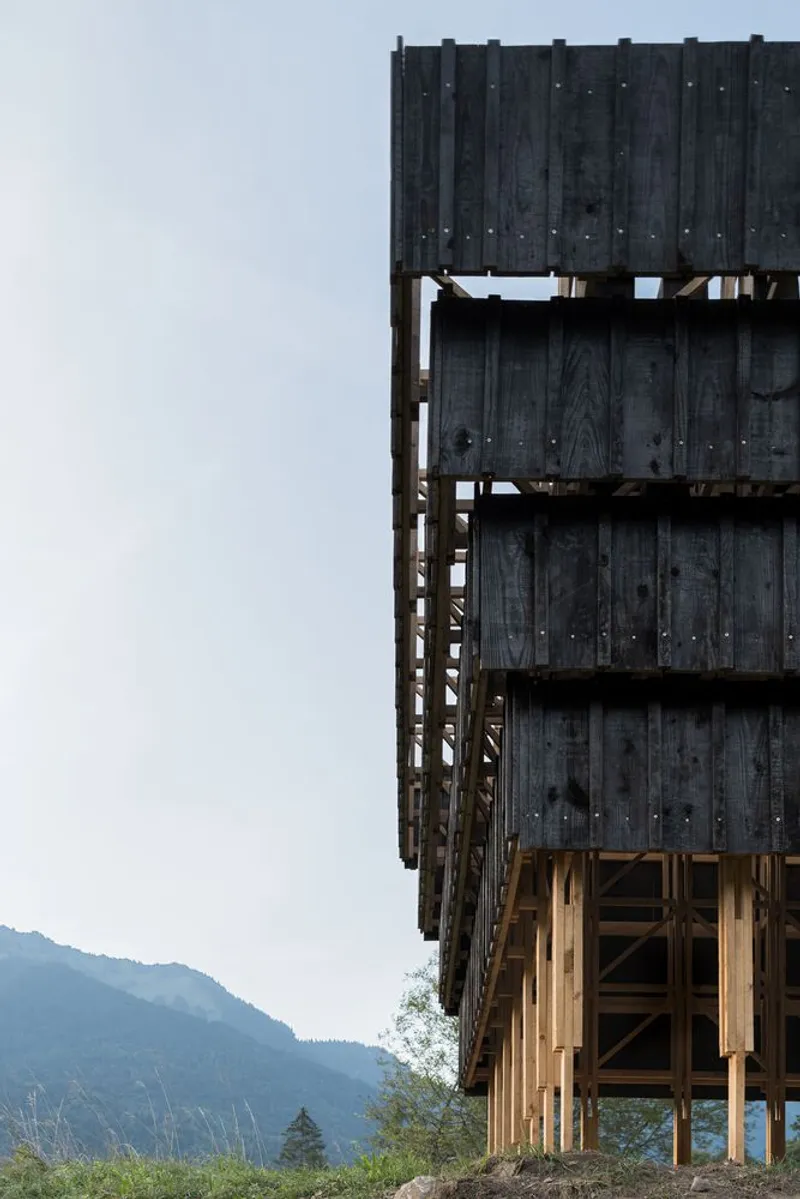
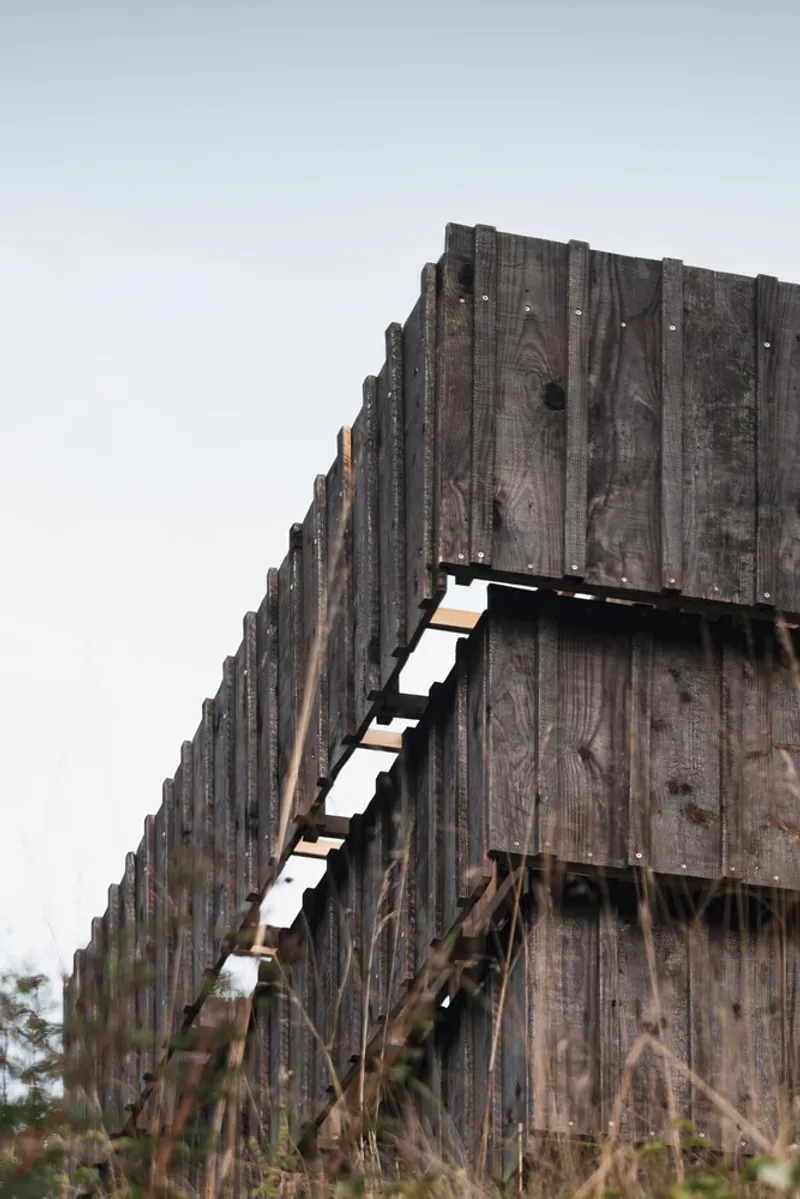
From afar, the cabin appears as a dark, monolithic form, interrupting the brightness of the surrounding terrain. Its charred wooden exterior absorbs light, creating a stark contrast with the Alpine environment. This deliberate darkness transforms the pavilion into a visual landmark, drawing hikers and explorers toward it while simultaneously resisting easy interpretation.
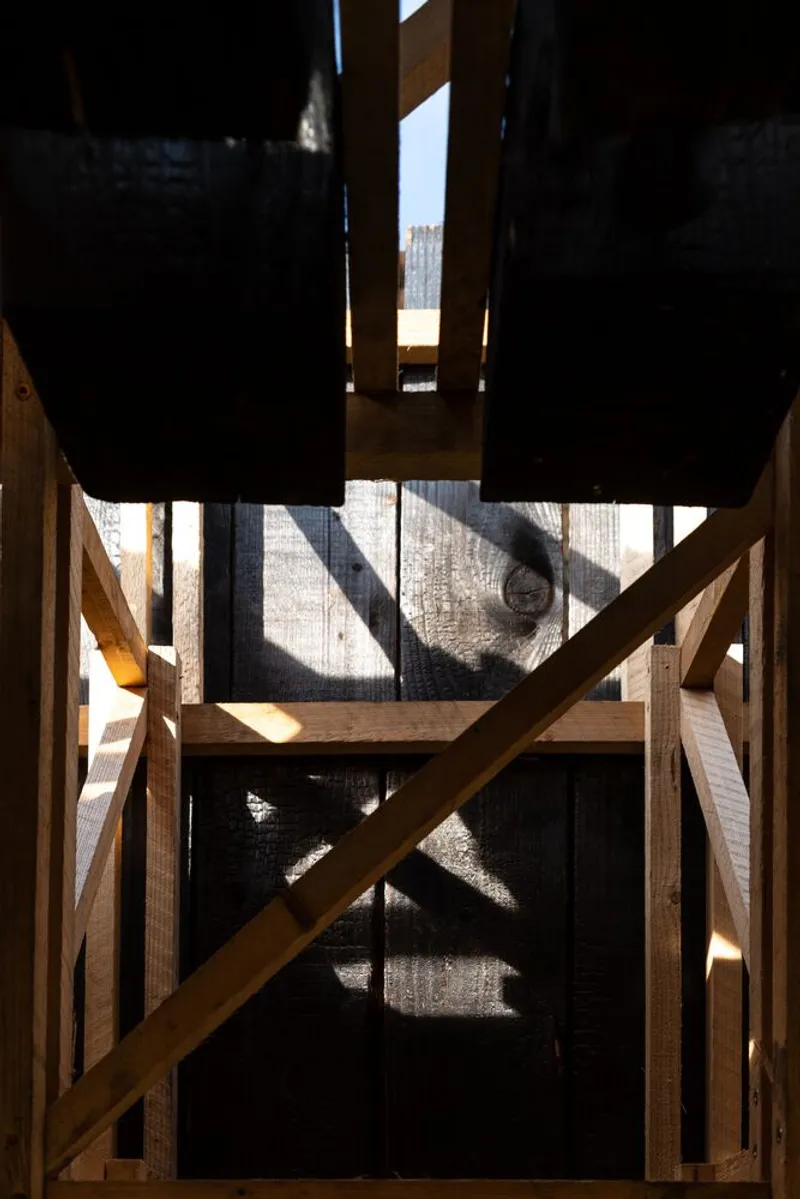
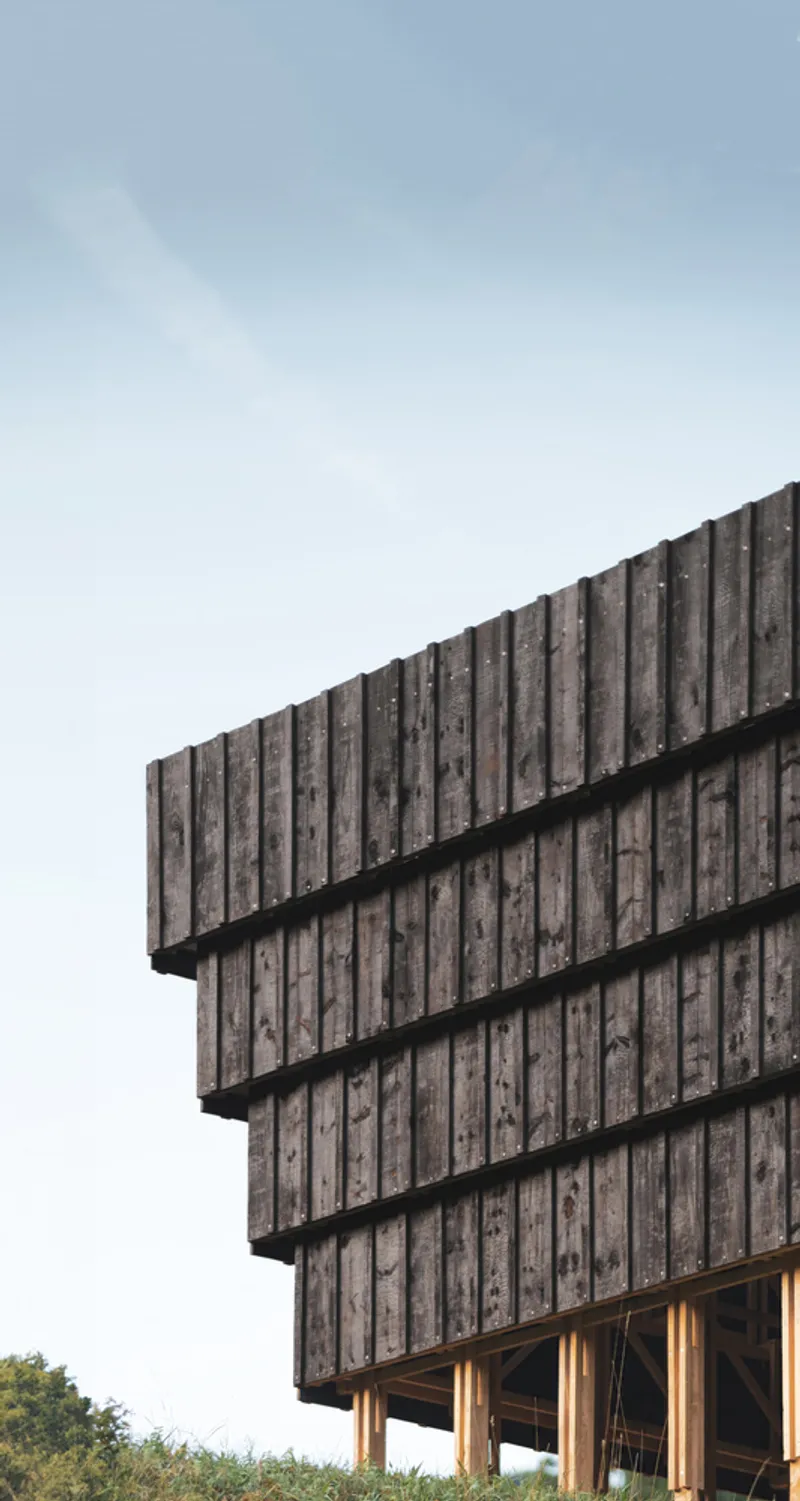
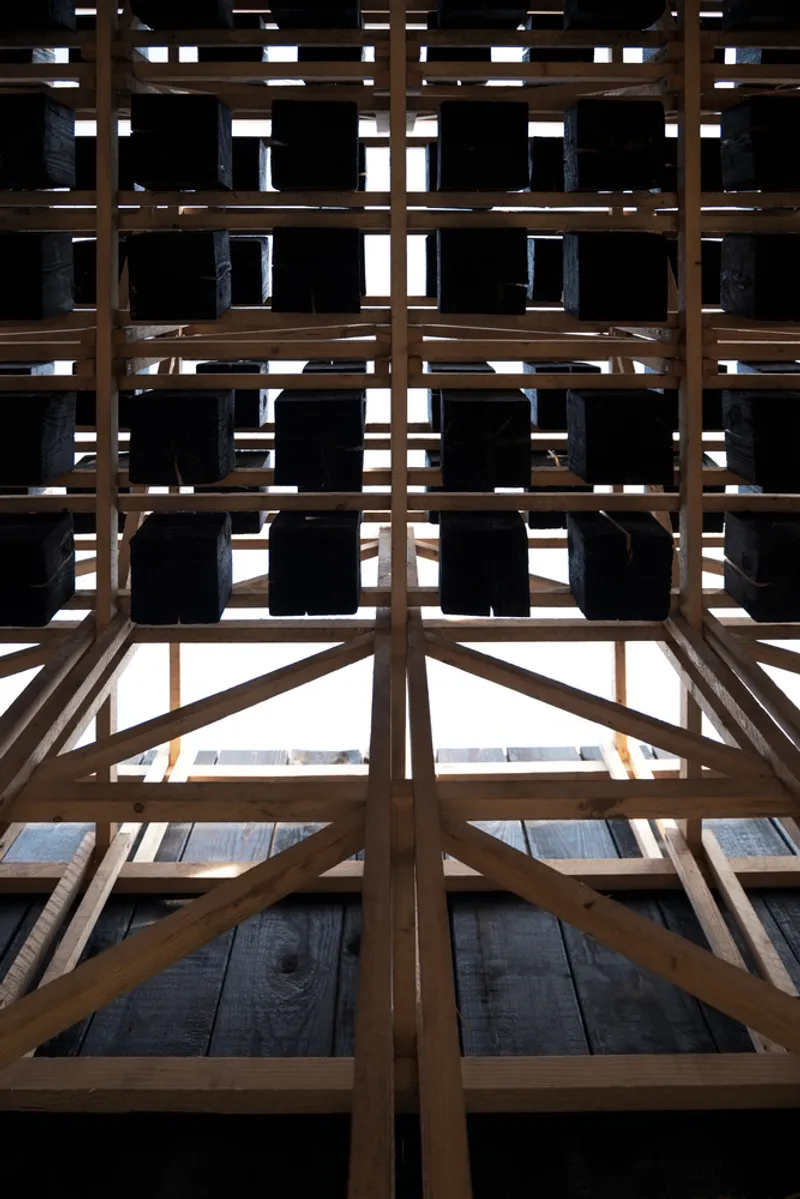
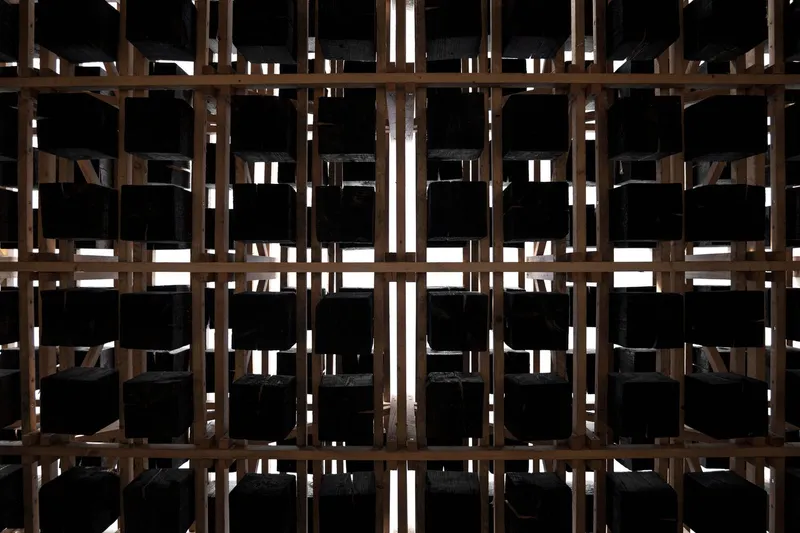
The architects describe this encounter as a tension between light and matter. Sunlight attempts to penetrate the structure, slipping through gaps between the burned timber blocks, much like light filtering through layers of fossilized ore. The cabin becomes a metaphorical fossil of the former mine, anchoring past extraction practices within a contemporary architectural gesture.

An Architecture of Discovery
La Suie Cabin offers no clearly defined entrance. Instead, visitors must pass beneath the structure, navigating a narrow threshold that encourages physical awareness and tactile engagement. The charred surface leaves traces on the hands of the inattentive visitor, reinforcing the idea that architecture is not only seen, but felt and remembered.
Inside, light becomes an event. During the day, subtle rays pierce the dark envelope, projecting fragmented patterns across the interior. At night, the experience reverses, the cabin glows from within, revealing a hidden presence in the landscape. This duality transforms La Suie Cabin into a place of discovery, where concealment and revelation coexist.

Materiality and Meaning
The use of charred wood is both symbolic and material. Evoking soot, coal, and combustion, the blackened timber references the site’s mining heritage while offering durability and resistance to the elements. The structure’s lightweight construction contrasts with its heavy visual presence, reinforcing its role as a temporal marker rather than a permanent building.
Through minimal means, the pavilion engages themes of memory, ritual, and trace. Visitors do not simply pass through La Suie Cabin, they leave with a physical reminder of the encounter, a subtle imprint that mirrors the lingering impact of industrial history on the landscape.
A Pavilion That Leaves a Trace
La Suie Cabin is less about shelter and more about experience. It invites pause, curiosity, and reflection, offering a poetic interpretation of place through architecture. By intertwining material expression, light behavior, and historical reference, the project demonstrates how small-scale architecture can carry powerful narratives.
Ultimately, La Suie Cabin stands as a quiet yet compelling intervention: an object that absorbs light, reveals memory, and leaves its mark on those who encounter it.
All photographs are works of Clément Molinier, Marina Poli


Popular Articles
Popular articles from the community


Co-life: Sustainable Architecture for Age-Friendly Community Living
Co-life reimagines sustainable architecture for seniors through courtyards, rammed earth, shared gardens, and spaces designed for belonging.

Conexión: Biophilic Design Reimagines High-Rise Living in Hong Kong
Conexión reimagines high-rise living in Hong Kong through biophilic design, green facades, shared spaces, daylight, water and nature within.

The Musturak Paradise: Senior Living Architecture for a Connected Future in Temara, Morocco
The Musturak Paradise reimagines senior living architecture in Temara via private homes, social spaces, culture, community, and shared care.
EW PARK: Sustainable Architecture Reimagines the Future of Urban Parking
EW PARK reimagines city parking as a modular wooden tower combining automation, solar energy, electric mobility, and adaptable urban design.


Similar Reads
You might also enjoy these articles


Hodi-Mandai Geram
Project Function: Preservation and revitalization of the Intangible heritage and socio-spatial identity of the Hodi by Housing, Cultural Memory Center, Sacred Grove, landscape, local tourism economy


Olio Towers: A Mid-Rise for Performers That Fuses Housing, Rehearsal, and Stage
Located blocks from Houston's Theater District, this modular tower stacks living units around a central performance atrium.

Oasis: Modular Green Housing Carved into Dhaka's Urban Fabric
A shortlisted Plugin Housing entry reclaims unauthorized settlements in Dhaka with stepped concrete volumes, green roofs, and ventilation-driven design.

Black Hole: A Floating Megastructure for the Post-Physical Era
Emiliano Mazzarotto envisions a spherical, self-scaling arena where e-sports, digital hotels, and holographic stadiums replace traditional public space.

Explore Landscape Design Competitions
Discover active competitions in this discipline



Challenge to reimagine the Iron Throne


Photograph architecture without architects


Illustrate the lost glory of Angkor Wat - Render Challenge


Design challenge to reuse E-waste
Comments (0)
Please login or sign up to add comments
No comments yet. Be the first to comment!