
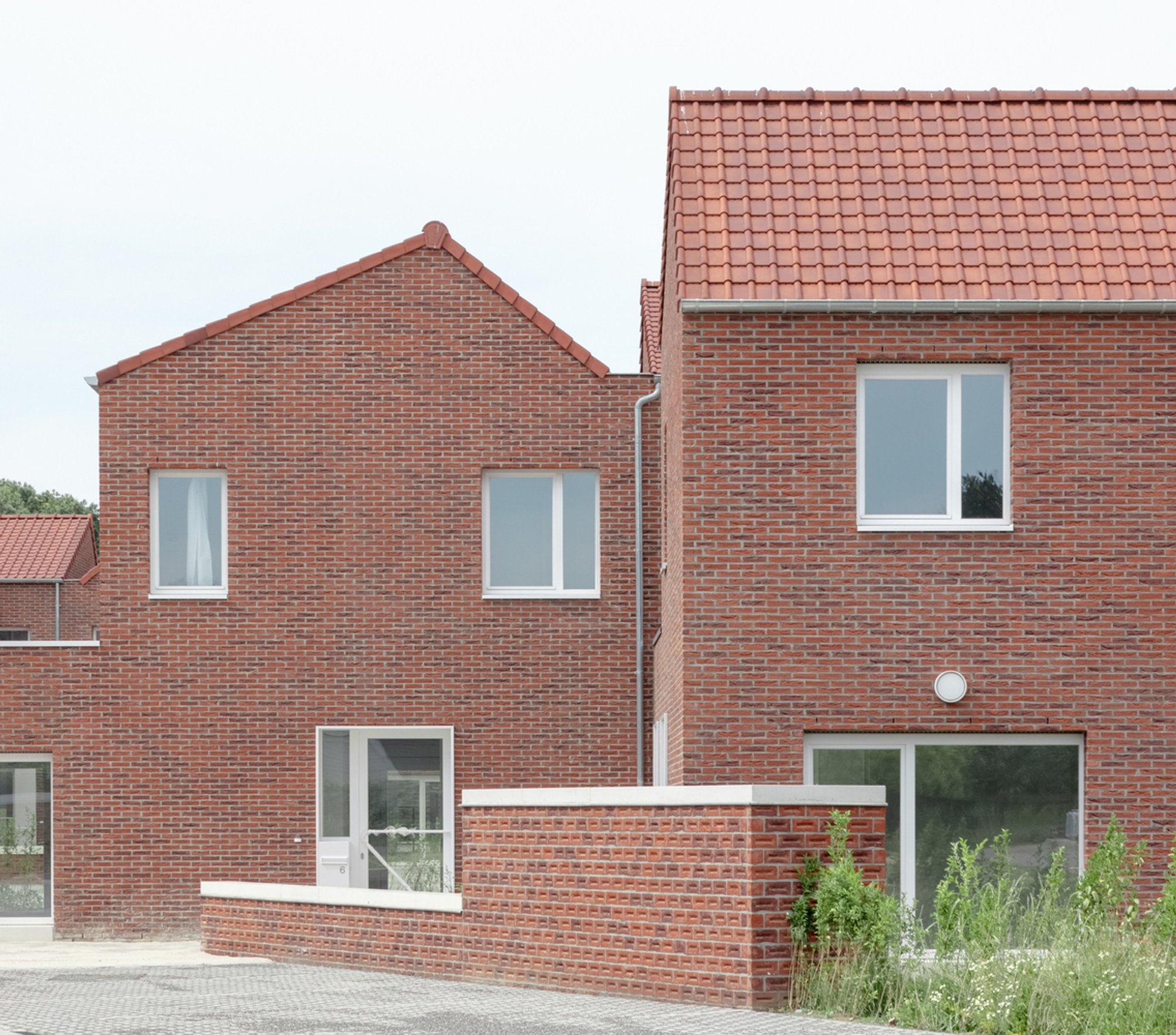
Laathof 44 Social Houses by plusoffice architects: Sustainable and Individualized Community Living in Westerlo, Belgium
Laathof 44 blends sustainable design, diverse housing typologies, and rainwater-neutral infrastructure into a cohesive, future-proof social housing community.

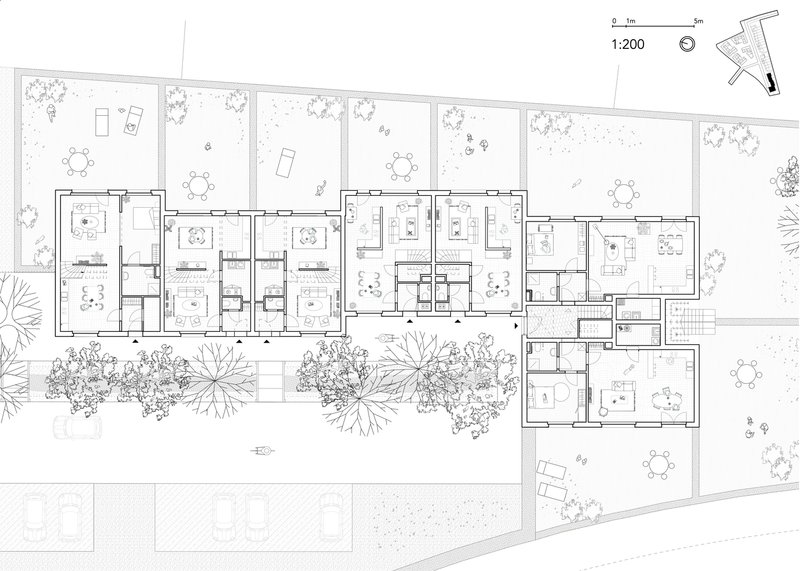
On the green edge of Westerlo, Belgium, Laathof 44 Social Houses, designed by plusoffice architects, redefines what social housing can be—environmentally responsible, energy-efficient, and deeply attuned to the desires for individuality within a collective residential fabric. Covering a total area of 4,026 square meters, the project introduces 44 diverse housing units that integrate seamlessly into the local context while embracing forward-thinking architectural and environmental principles.
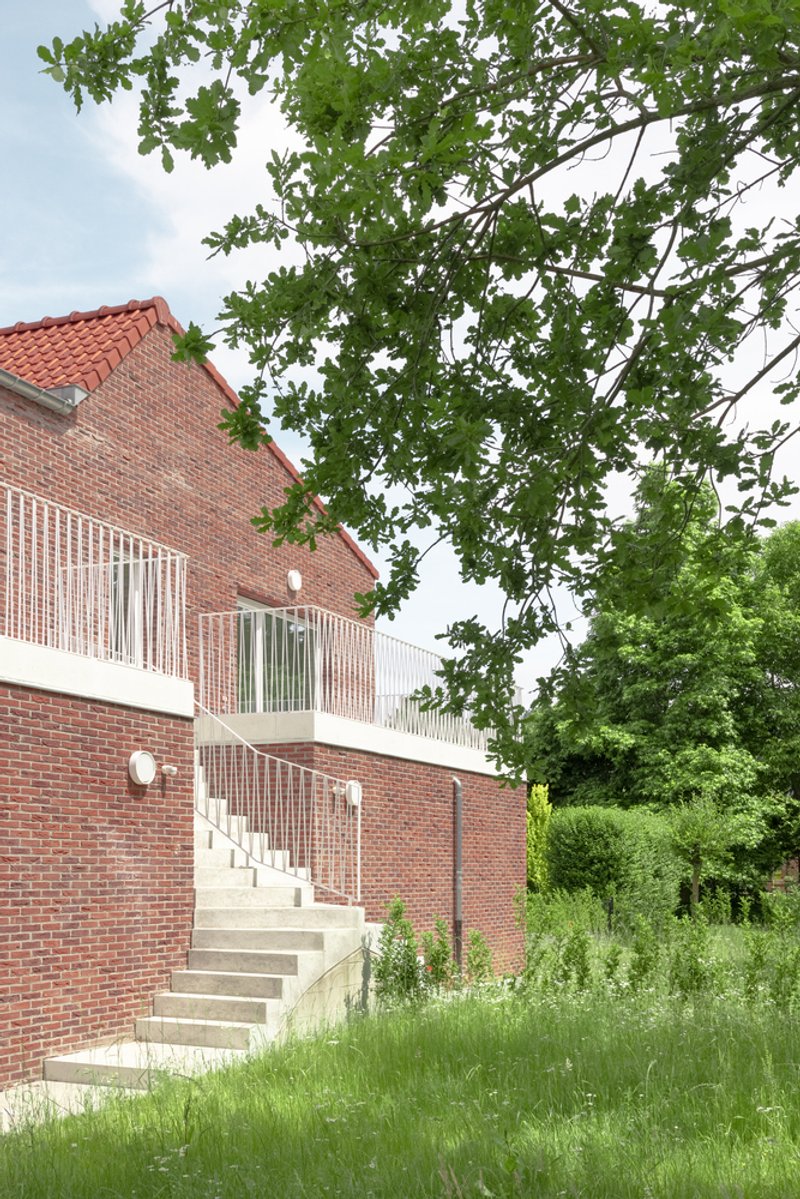
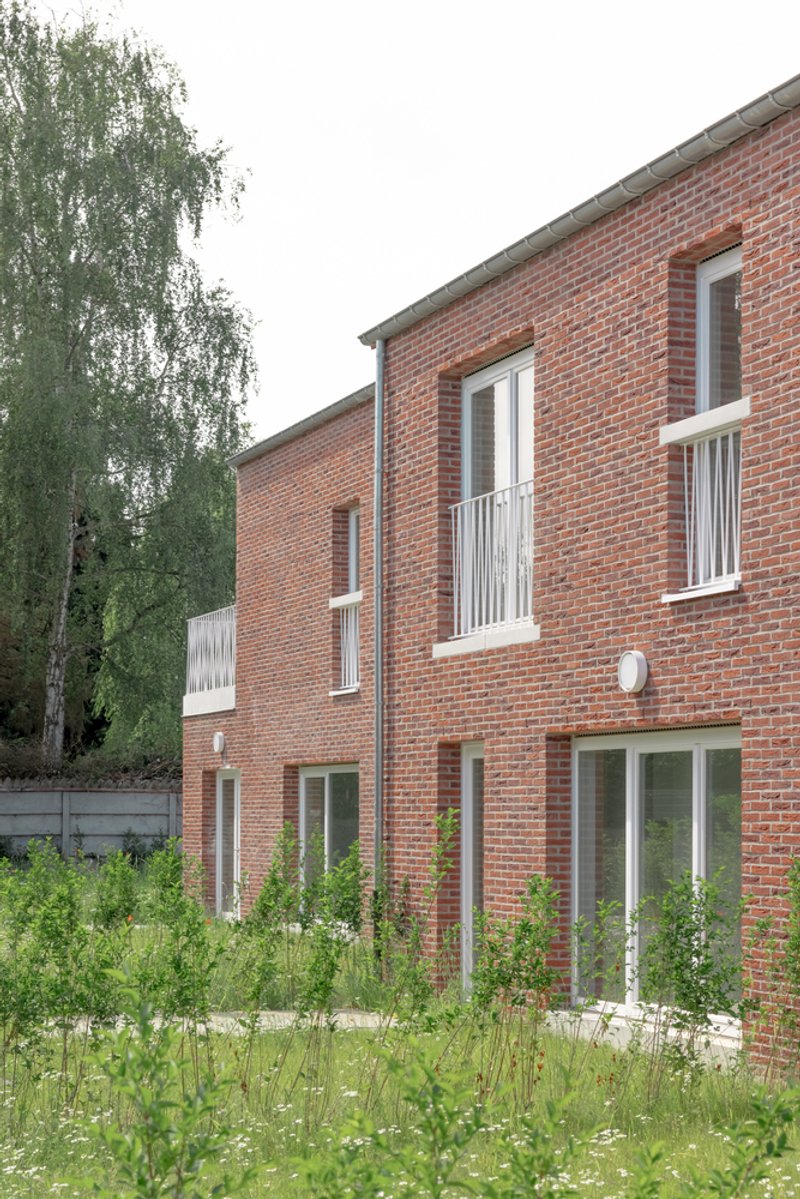
A Rainwater-Neutral Neighborhood Rooted in Landscape Responsiveness
Located near the flood-sensitive Wimp River, Laathof is conceived as a rainwater-neutral neighborhood, where public space functions as an active water machine. Carefully engineered to manage infiltration, buffering, and reuse of stormwater, the outdoor spaces underscore the role of natural systems in urban resilience. Pathways, green strips, and tree-lined avenues are more than aesthetic—they are infrastructural responses to climate challenges, woven into the daily lives of residents.
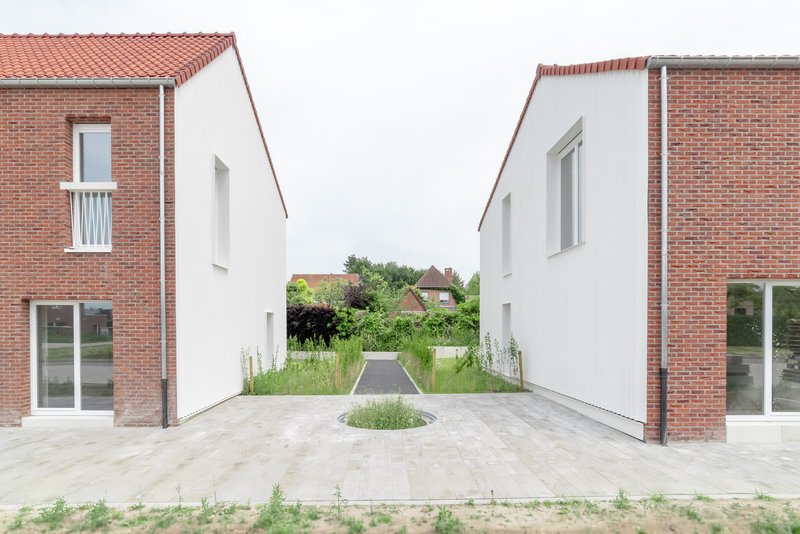
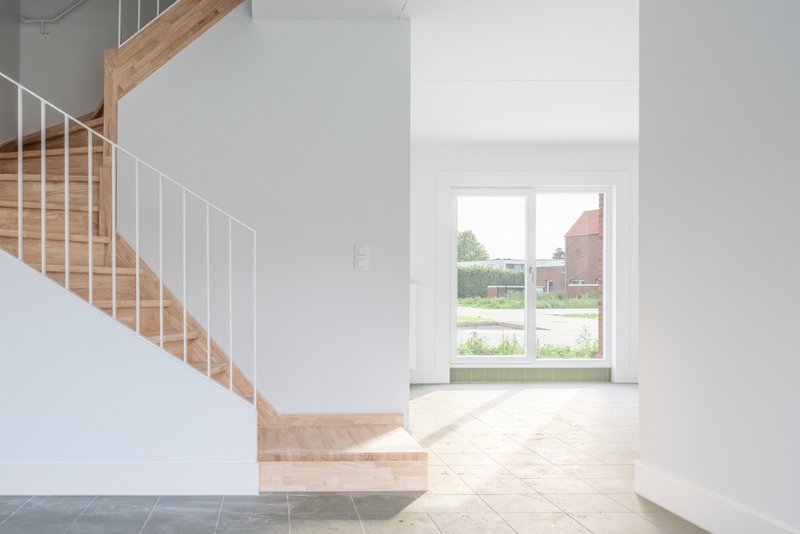
Balancing Individual Expression with Cohesive Urban Design
Flemish culture places a high value on private homeownership, particularly in smaller communities. Laathof addresses this cultural inclination through a design strategy that promotes individual recognizability within a unified architectural language. The project comprises ten different housing typologies—including courtyard houses, terraced homes, and stacked apartments—to accommodate a wide demographic, from young starters and families to seniors and the elderly.
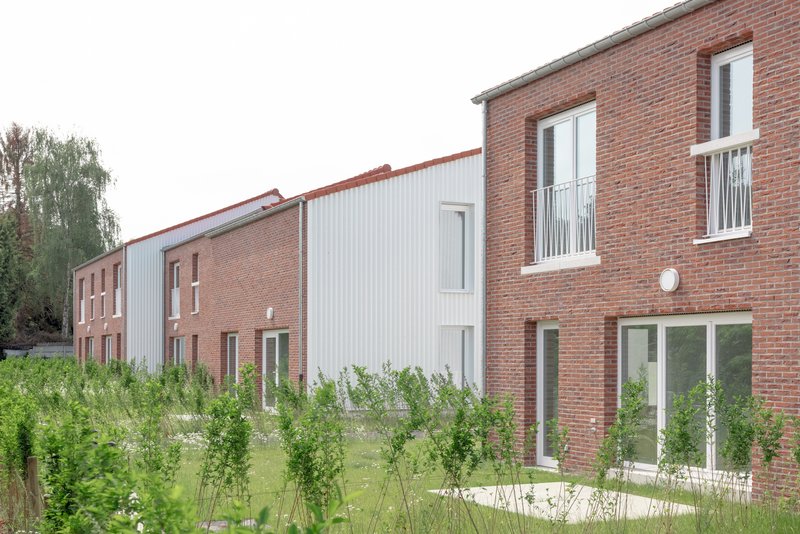
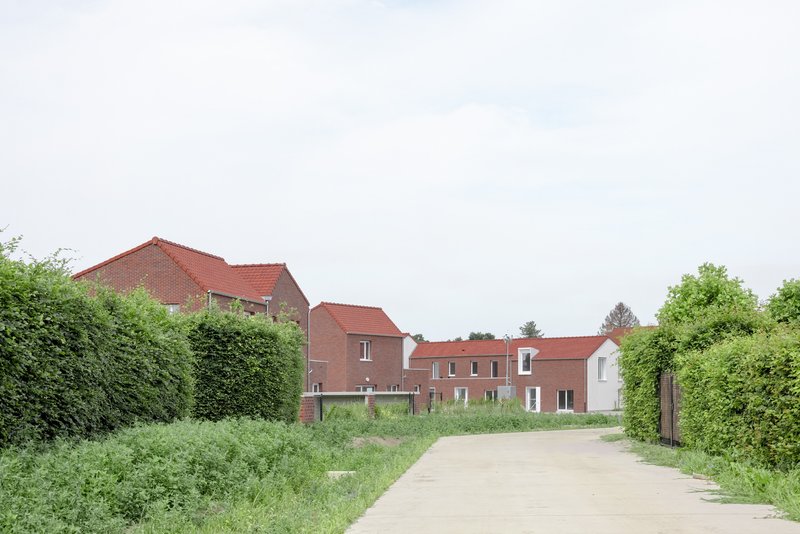
The exterior architecture uses a refined material palette of subtle red bricks, matching roof tiles, and selective accents of white metal and concrete. The playful rhythm of recessed and protruding facades and an undulating roofline blur the boundaries between private dwellings and shared public space, creating a sense of visual variation and human scale. Every home feels distinct, yet contributes to the whole.

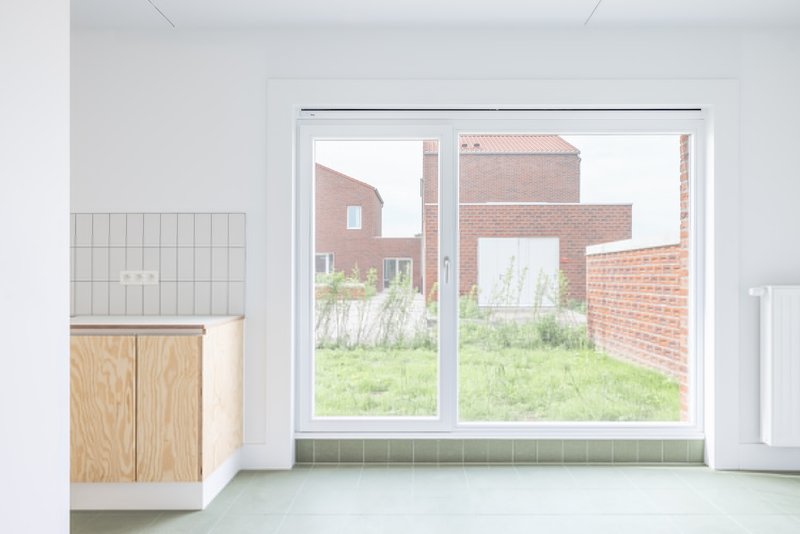
Shared Amenities and Community-First Urban Planning
The compact building arrangement leaves ample room for high-quality communal outdoor spaces. These include shared green zones, an active water buffer, and a continuous central avenue that not only organizes the neighborhood but also connects it to future urban extensions. Importantly, parking is handled through group parking solutions, and with sustainable mobility in mind, the site allows for a shift toward increased bicycle storage as transportation habits evolve.
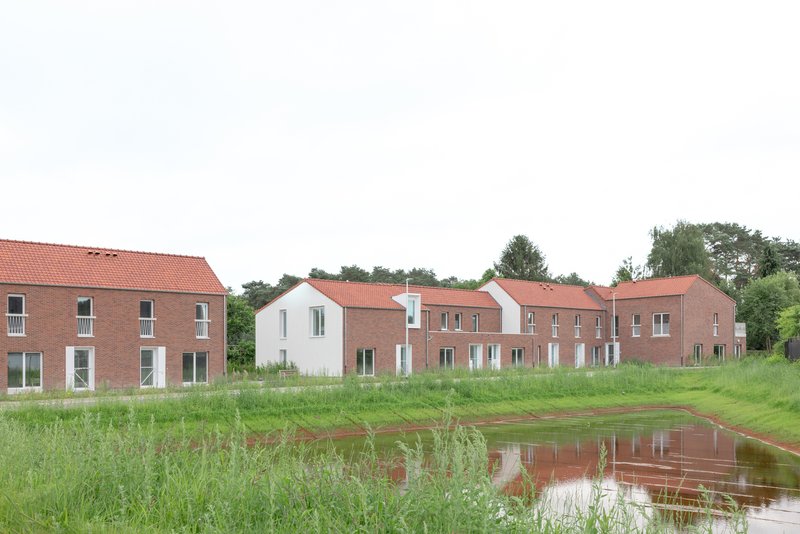
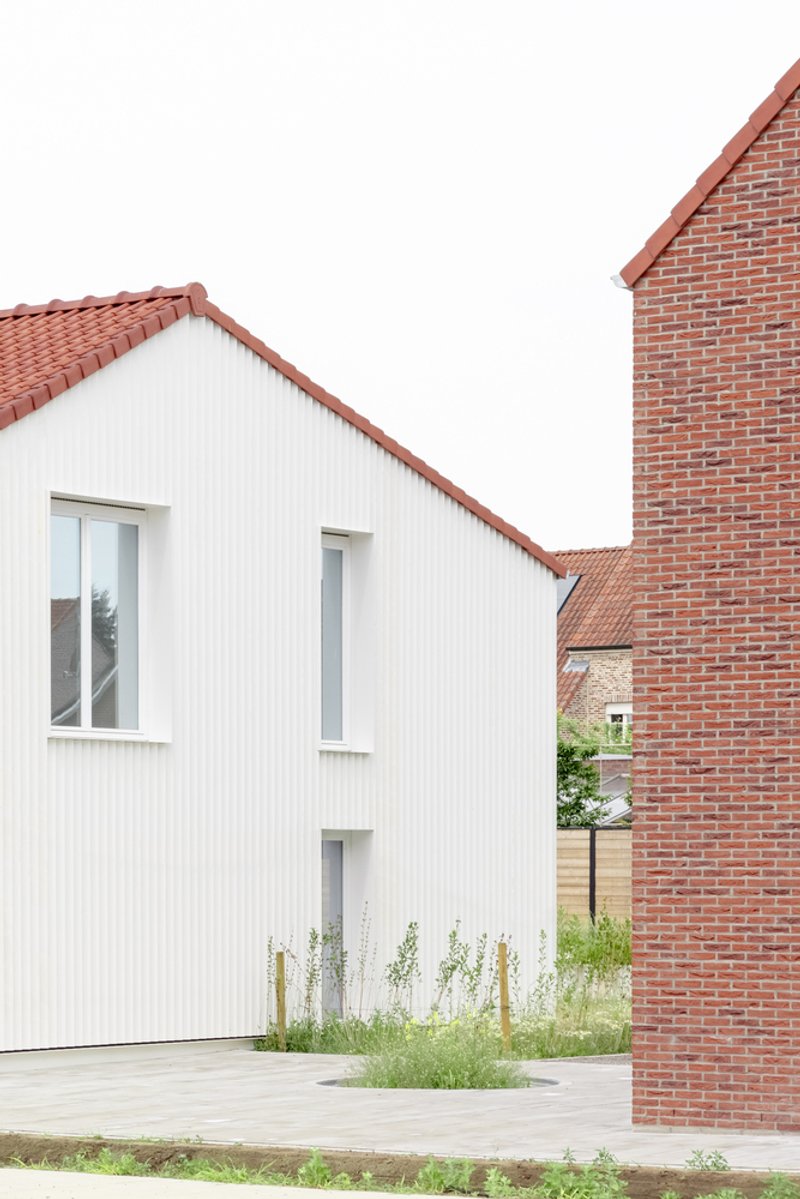
Energy Efficiency and Climate-Conscious Living
Laathof is more than aesthetically thoughtful—it’s engineered for energy-efficient, low-impact living. Partnering with a forward-looking social housing company, plusoffice architects implement a smart local heating network powered by a centralized Combined Heat and Power (CHP) system. This system generates both hot water for heating and electricity as a byproduct, which powers heat pumps for the courtyard homes. When needed, condensing gas boilers act as a backup, ensuring reliability. All homes are additionally equipped with solar boilers to produce domestic hot water, further enhancing the project’s renewable energy profile.
Future-Proof Housing with a Social Vision
With its sustainable energy systems, context-sensitive design, and careful attention to architectural detailing, the Laathof 44 Social Houses offer more than just housing—they offer a vision for the future of inclusive, climate-resilient communities. The project strikes a balance between collective coherence and individual expression, responding both to the region’s cultural values and the global demands of energy transition and climate adaptation.
All Photographs are works of Pieter Rabijns



Popular Articles
Popular articles from the community

20 Most Popular Office Building Projects of 2025
From biophilic workspaces in India to net-positive energy offices in New Delhi, 20 office building projects that defined architecture in 2025.

Takeshi Hosaka Architects Suspends a Concrete Cross Above a Yokohama Cemetery
A 28-square-meter burial renovation in Yokohama lifts the symbol of resurrection into the sky so mourners see it against heaven.
Rojkind Arquitectos and Think Parametric Build a Glueless Pavilion from 67 Interlocking Panels
A serpentine fiber-cement installation in Chapultepec Park celebrates a decade of architectural media in Mexico City.
Ippolito Fleitz Group Identity Architects Turn Eight Floors in Shanghai into a Vertical Creative City
Publicis Groupe's new headquarters in Xintiandi reimagines the office as a courtyard-driven urban landscape stacked across eight floors.


Similar Reads
You might also enjoy these articles
Olio Towers: A Mid-Rise for Performers That Fuses Housing, Rehearsal, and Stage
Located blocks from Houston's Theater District, this modular tower stacks living units around a central performance atrium.

Oasis: Modular Green Housing Carved into Dhaka's Urban Fabric
A shortlisted Plugin Housing entry reclaims unauthorized settlements in Dhaka with stepped concrete volumes, green roofs, and ventilation-driven design.

Black Hole: A Floating Megastructure for the Post-Physical Era
Emiliano Mazzarotto envisions a spherical, self-scaling arena where e-sports, digital hotels, and holographic stadiums replace traditional public space.
Compact & Sustainable Living in Piraeus: A Four-Level Family Home Built Around Light and Air
A narrow townhouse in one of Greece's densest port cities uses a central atrium and passive strategies to house three generations under one roof.


Explore Architecture Competitions
Discover active competitions in this discipline




The International Standard for Design Portfolios


The Global Benchmark for Architecture Dissertation Awards


The Global Benchmark for Graduation Excellence


Challenge to reimagine the Iron Throne
Comments (0)
Please login or sign up to add comments
No comments yet. Be the first to comment!