
Laherrère Center by CoBe Architecture & Paysage + WEEK: A Sustainable Mixed-Use Urban Renewal Project in Pau, France
Laherrère Center revitalizes Pau’s Saragosse district with sustainable mixed-use buildings, combining student housing, workspaces, and community services.


Location: Saragosse District, Pau, France Architects: CoBe Architecture & Paysage + WEEK Project Area: 11,210 m² Year Completed: 2023 Photography: Luc Boegly
Revitalizing Pau’s Saragosse District Through Sustainable Architecture
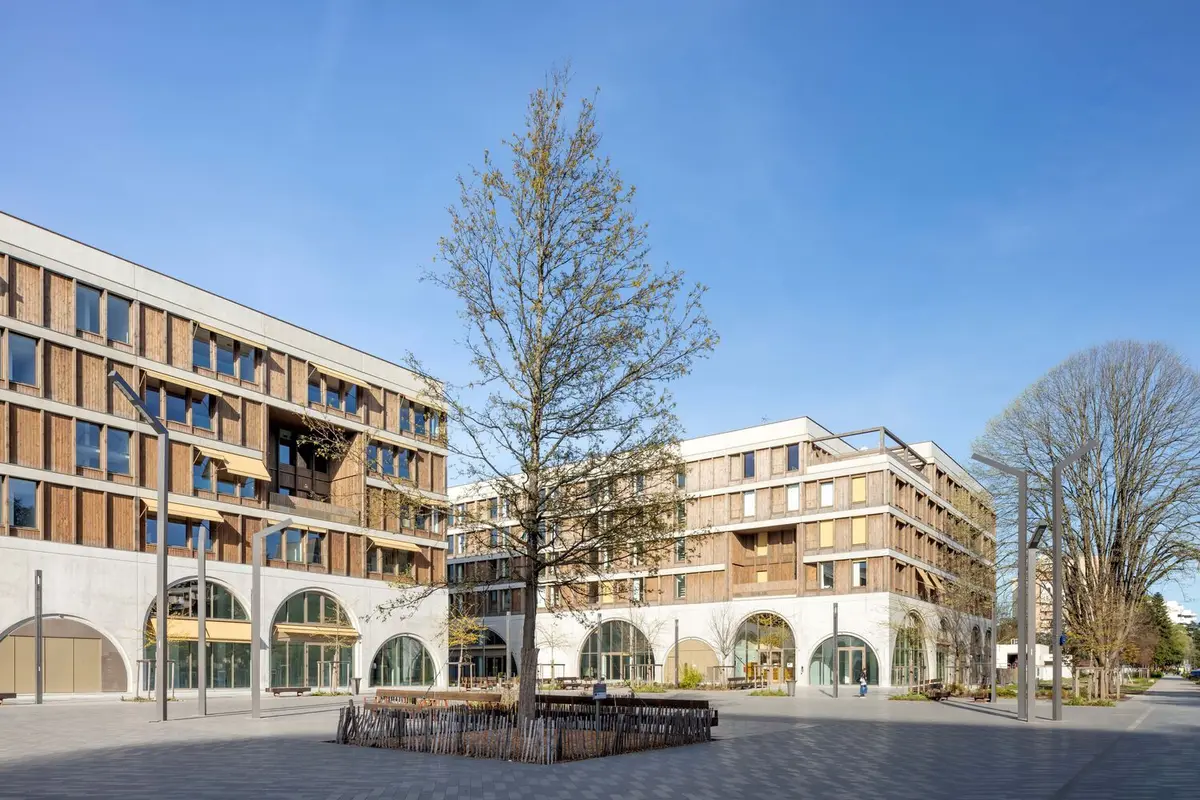
The Laherrère Center, designed by CoBe Architecture & Paysage in collaboration with WEEK, is a flagship mixed-use architectural project that anchors the urban renewal of the Saragosse district in Pau, France. Spanning over 11,210 square meters across two contemporary buildings, this development showcases an innovative blend of wood, concrete, and glass. It embodies a holistic sustainable development approach, integrating bioclimatic design, bio-based materials, and enhanced energy efficiency.
Context: Urban Renewal in a Socially Fragile District
The Saragosse district, originally developed in the 1950s and 1960s, is Pau’s largest social housing area, home to roughly 14,000 inhabitants. Despite its proximity to the city center, Saragosse has faced significant social and urban challenges:
- Aging urban planning typical of large housing estates
- High social fragility with many low-income residents
- Limited local commerce and public services
In response, the French government and local authorities, led by the ANRU (National Agency for Urban Renewal) and Pau Béarn Habitat, have embarked on an ambitious program of renovation, demolition, and public space revitalization through 2027. The city’s commitment to sustainable infrastructure includes expanding bike paths, enhancing public transport, and implementing a district heating system, positioning Saragosse as an official EcoDistrict.
Design Concept: Creating a Vibrant, Multifunctional Community Hub
Central to this urban renewal strategy, the Laherrère Center was conceived as a vibrant, mixed-use complex fostering community life, professional integration, and housing solutions for young residents.
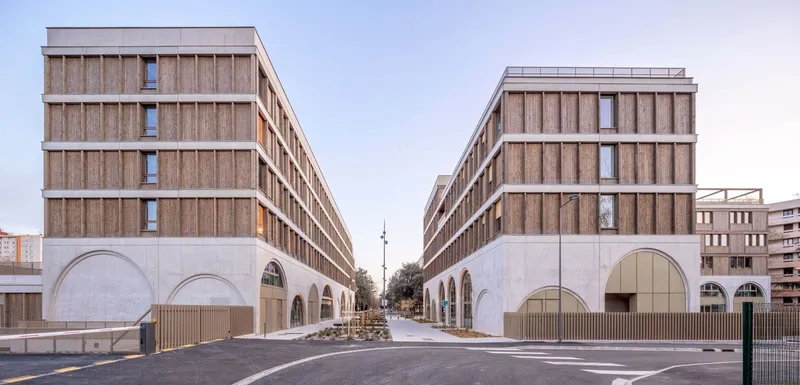
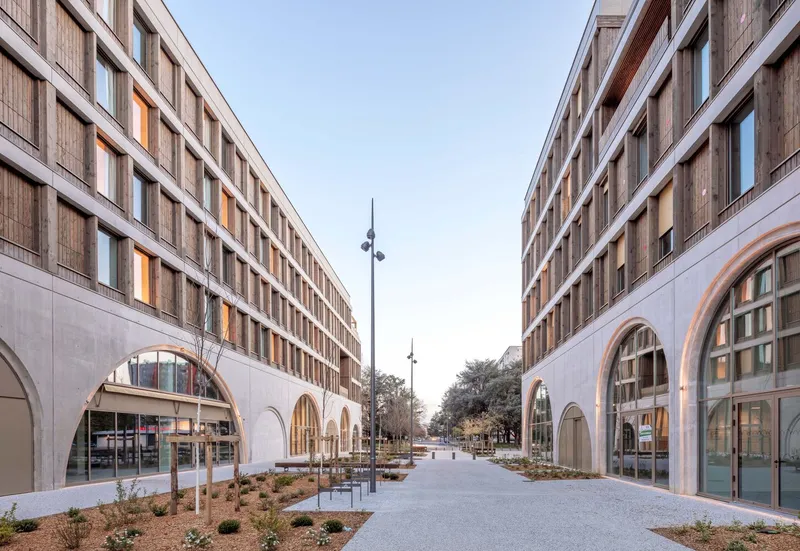
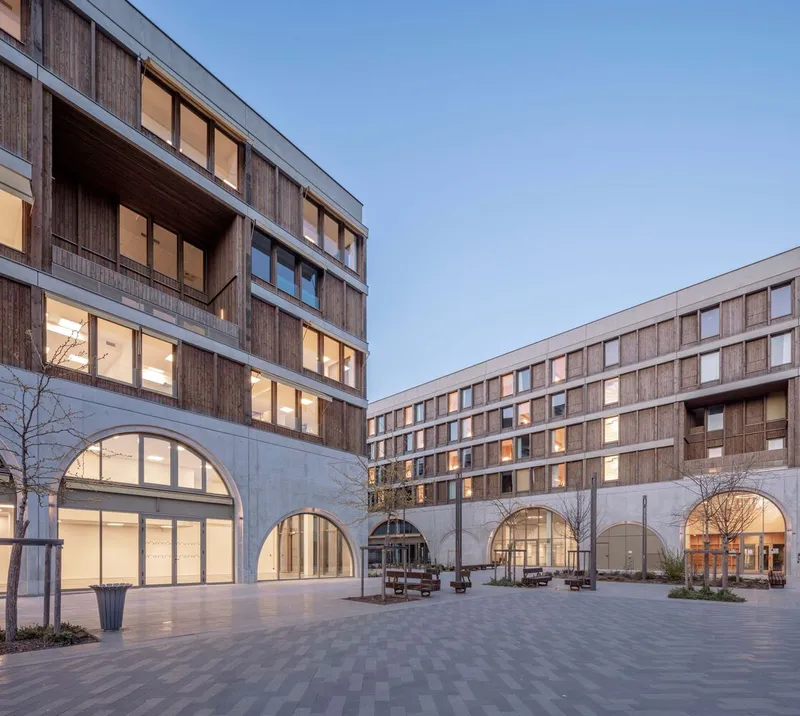
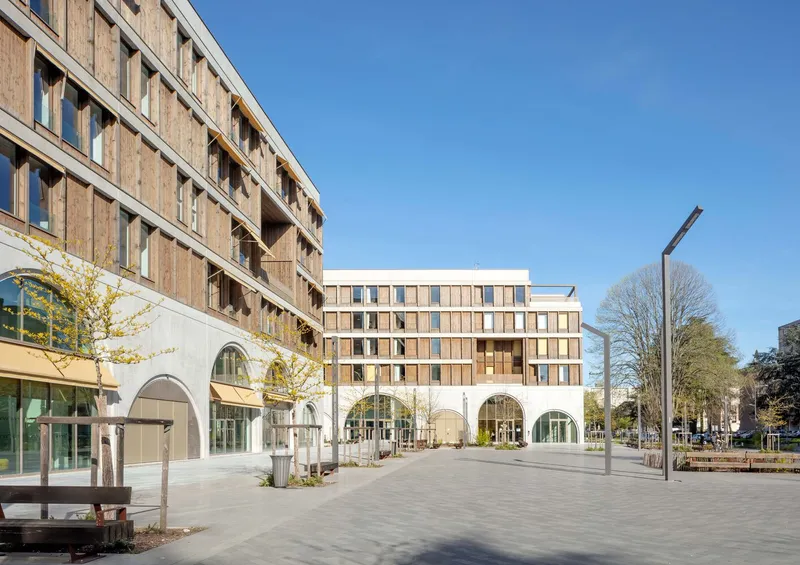
The project features two L-shaped buildings framing Laherrère square, envisioned as a modern village square reminiscent of the traditional market historically held on the site. The architectural language unites:
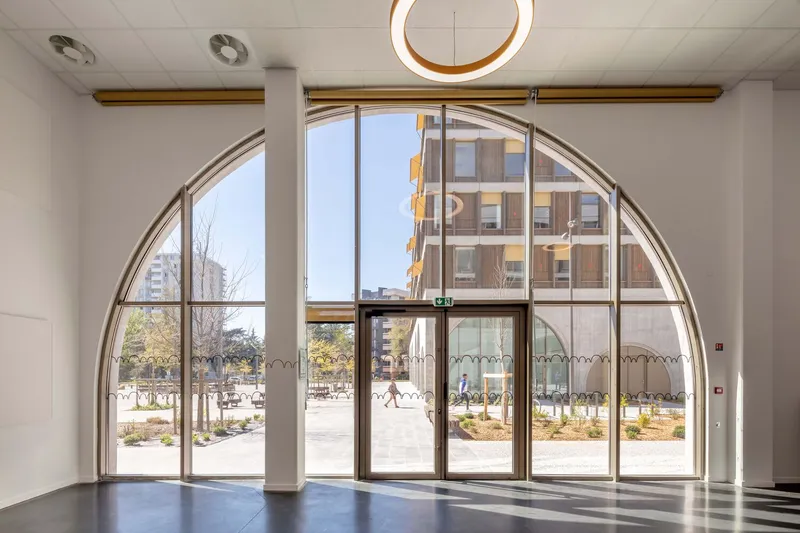
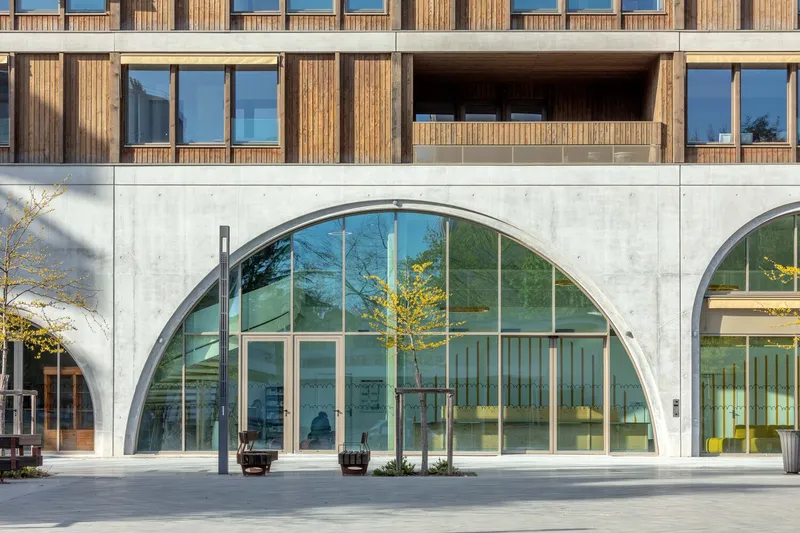
- Ground floors with raw, low-carbon concrete arches poured on-site, evoking local heritage
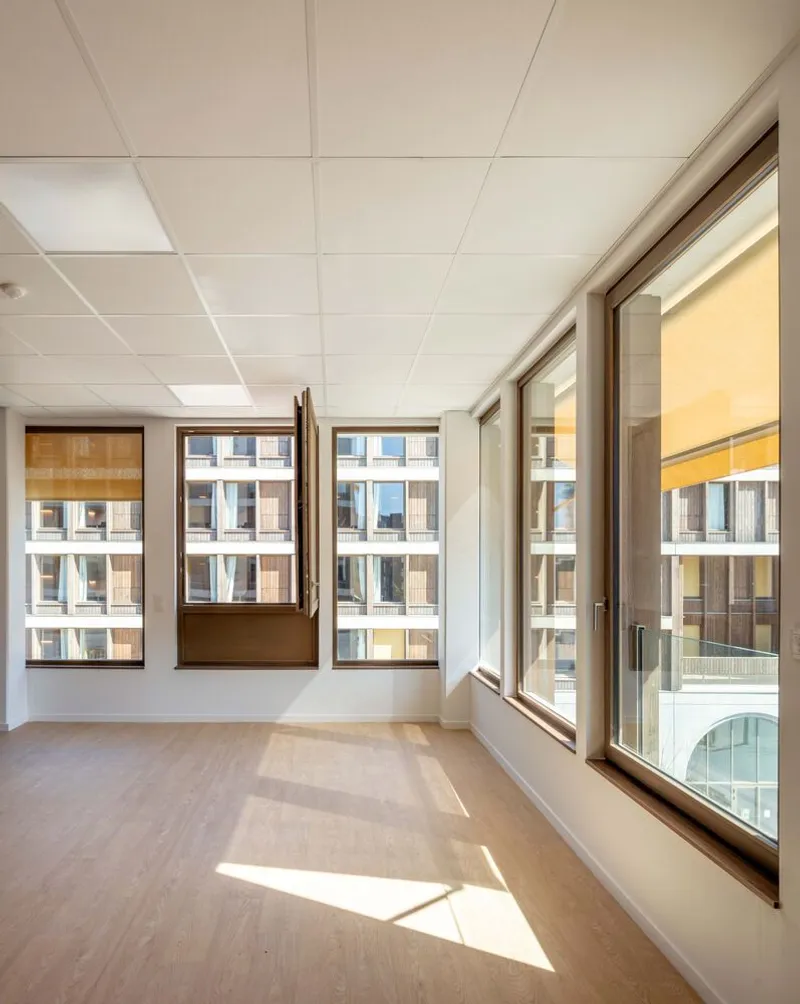
- Upper floors with lightweight wood-frame façades insulated with wood fiber, wooden joinery, and warm-hued blinds
This harmonious combination of materials not only reinforces the district's identity but also promotes sustainable construction with local French timber sourced within 450 km, including:
- Pectinated fir from the Pyrenees
- Pre-greyed Douglas fir from Auvergne Rhône-Alpes
- Scots pine from Corrèze
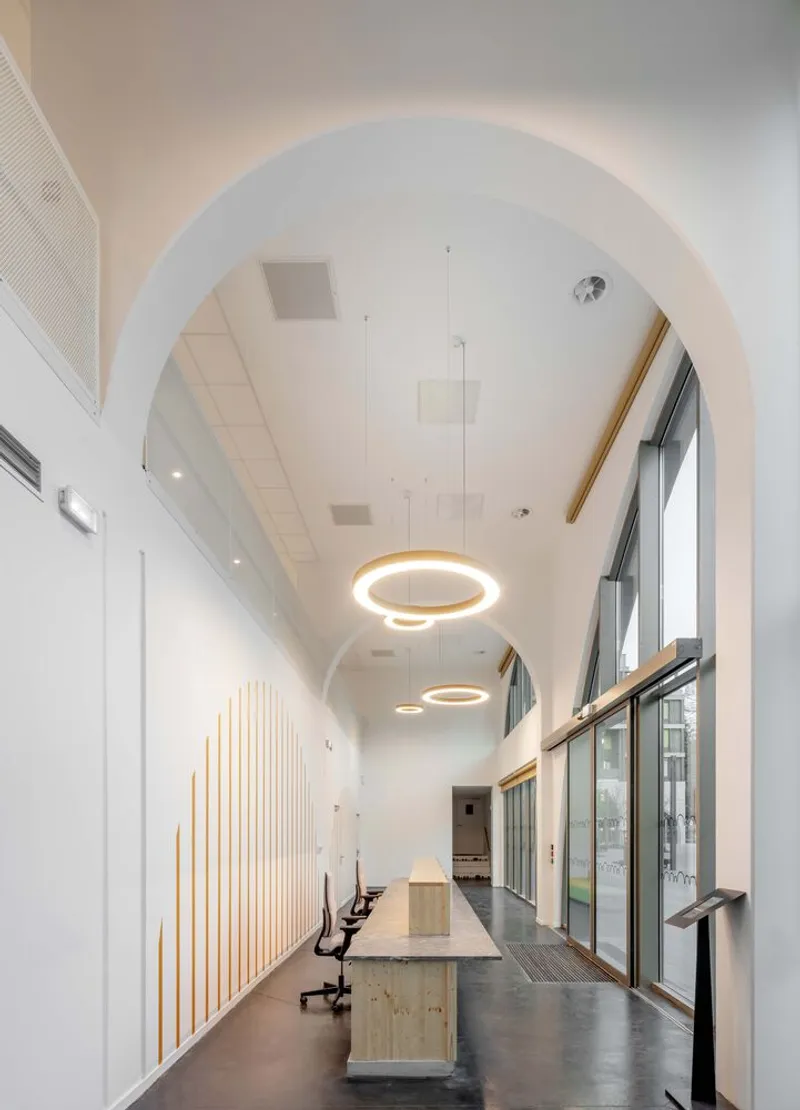
Multifaceted Program: Housing, Entrepreneurship, and Local Services
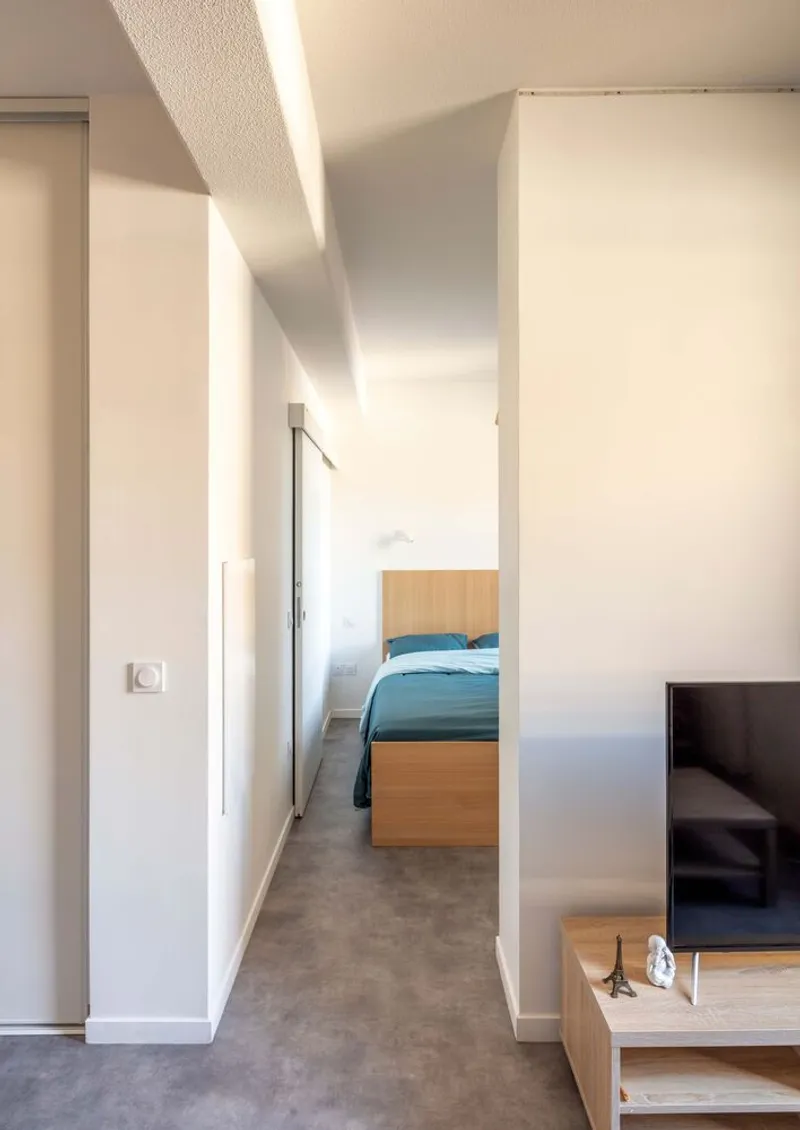
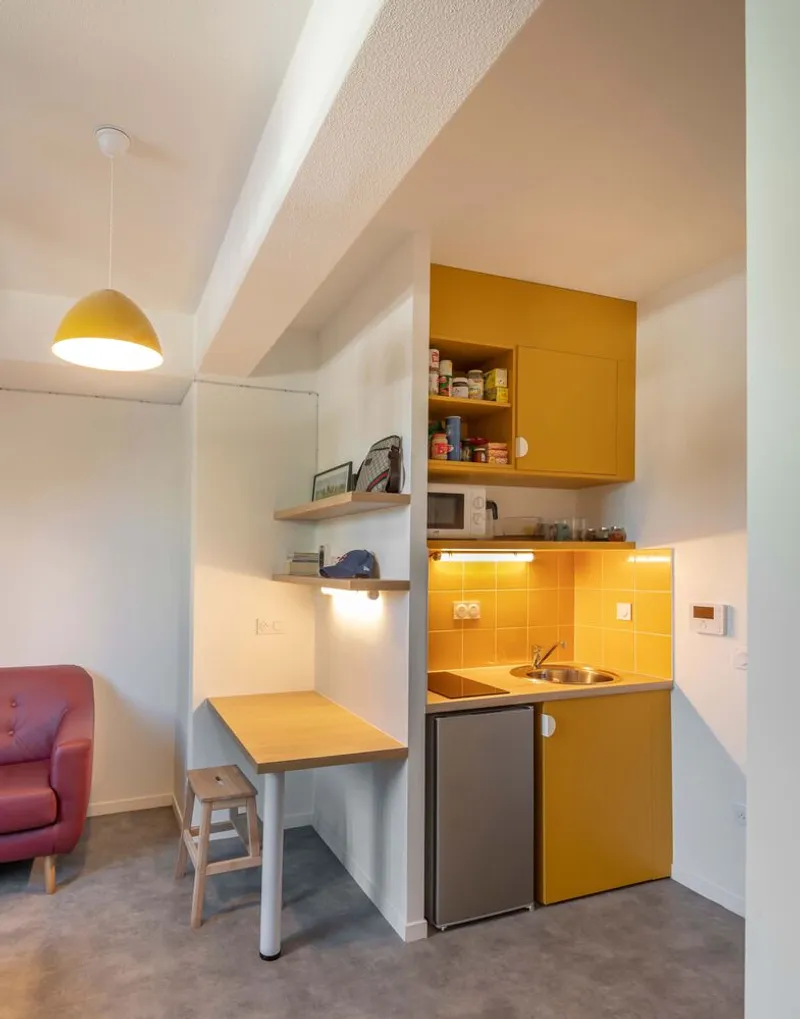
1. Student and Young Worker Housing
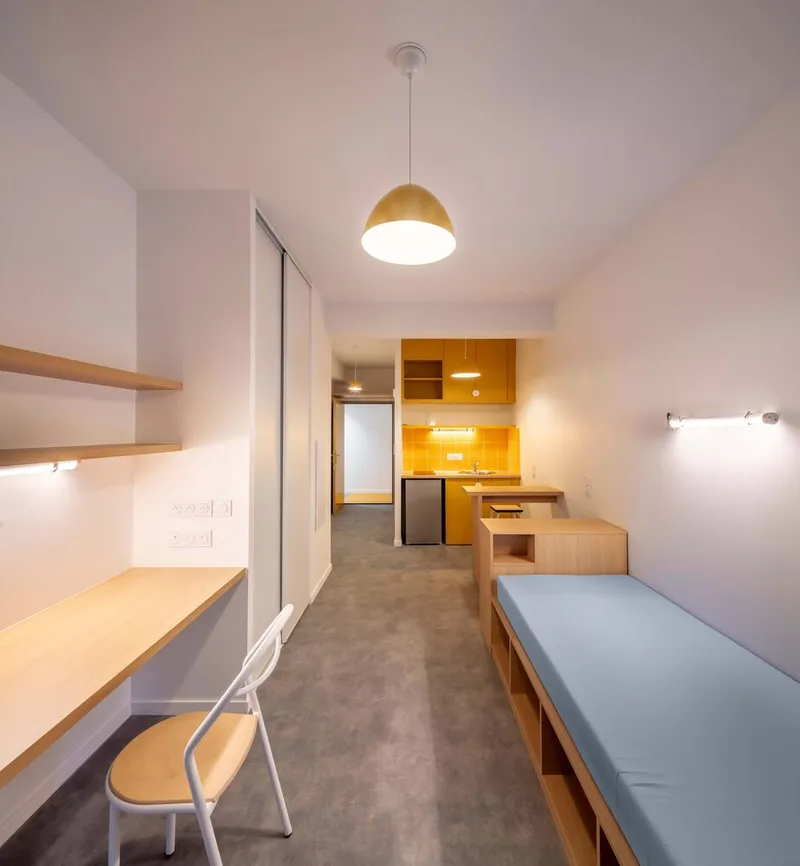
The Laherrère Center provides 176 housing units tailored to young residents:
- 116 units managed by CROUS for students
- 60 units managed by Habitat Jeunes Pau Pyrénées for young workers
Shared common spaces encourage community interaction, linking residents with onsite professional training and employment integration activities.
2. Entrepreneurial and Training Hub
Supporting economic revitalization, the project hosts:
- Offices and coworking spaces for associations and professional training centers
- The Cuisine Mode(s) d’Emploi school and training restaurant founded by Michelin-star chef Thierry Marx
- The Simplon School and the 2nd Chance School, focusing on digital and vocational training
- Five craft workshops encouraging local artisanal production
3. Local Shops and Community Services
To meet neighborhood needs, the center includes:
- A police station and employment-related services
- A concierge service
- Two local breweries
- Retail spaces connected to craft workshops
- A 234 m² “conviviality room” for community events, available to residents and the broader district
Structural Innovation and Flexibility
The project employs a post-and-beam construction system, optimizing material use and allowing future adaptability in programming. This versatile framework supports the complex’s diverse functions—from housing and education to commercial activities—and anticipates evolving community needs.
Laherrère Center as a Model for Sustainable Urban Regeneration
The Laherrère Center exemplifies the potential of integrated architectural and urban planning to transform socially vulnerable districts into thriving, sustainable communities. By combining bioclimatic principles, regional bio-based materials, and a carefully curated program for living, working, and socializing, this project sets a benchmark for future EcoDistrict developments in France and beyond.


Popular Articles
Popular articles from the community


Hill & Cross Opera: Sculptural Opera House Architecture Shaped by Tallinn’s Landscape and Identity
Hill & Cross Opera reimagines opera house architecture in Tallinn through its sculptural hill, civic plaza, glass wave and a luminous cross.

Conexión: Biophilic Design Reimagines High-Rise Living in Hong Kong
Conexión reimagines high-rise living in Hong Kong through biophilic design, green facades, shared spaces, daylight, water and nature within.

ALGAL REALM: A Bio-Integrated Lunar Habitat Design for Life Beyond Earth
ALGAL REALM reimagines lunar habitat design with algae-powered life support, 3D-printed regolith, and vertical living for a lunar future.

Co-life: Sustainable Architecture for Age-Friendly Community Living
Co-life reimagines sustainable architecture for seniors through courtyards, rammed earth, shared gardens, and spaces designed for belonging.

Similar Reads
You might also enjoy these articles


Hodi-Mandai Geram
Project Function: Preservation and revitalization of the Intangible heritage and socio-spatial identity of the Hodi by Housing, Cultural Memory Center, Sacred Grove, landscape, local tourism economy


Olio Towers: A Mid-Rise for Performers That Fuses Housing, Rehearsal, and Stage
Located blocks from Houston's Theater District, this modular tower stacks living units around a central performance atrium.

Oasis: Modular Green Housing Carved into Dhaka's Urban Fabric
A shortlisted Plugin Housing entry reclaims unauthorized settlements in Dhaka with stepped concrete volumes, green roofs, and ventilation-driven design.

Black Hole: A Floating Megastructure for the Post-Physical Era
Emiliano Mazzarotto envisions a spherical, self-scaling arena where e-sports, digital hotels, and holographic stadiums replace traditional public space.

Explore Sustainable Design Competitions
Discover active competitions in this discipline

Challenge to reimagine the Iron Throne

Photograph architecture without architects

Illustrate the lost glory of Angkor Wat - Render Challenge

Design challenge to reuse E-waste
Comments (0)
Please login or sign up to add comments
No comments yet. Be the first to comment!