
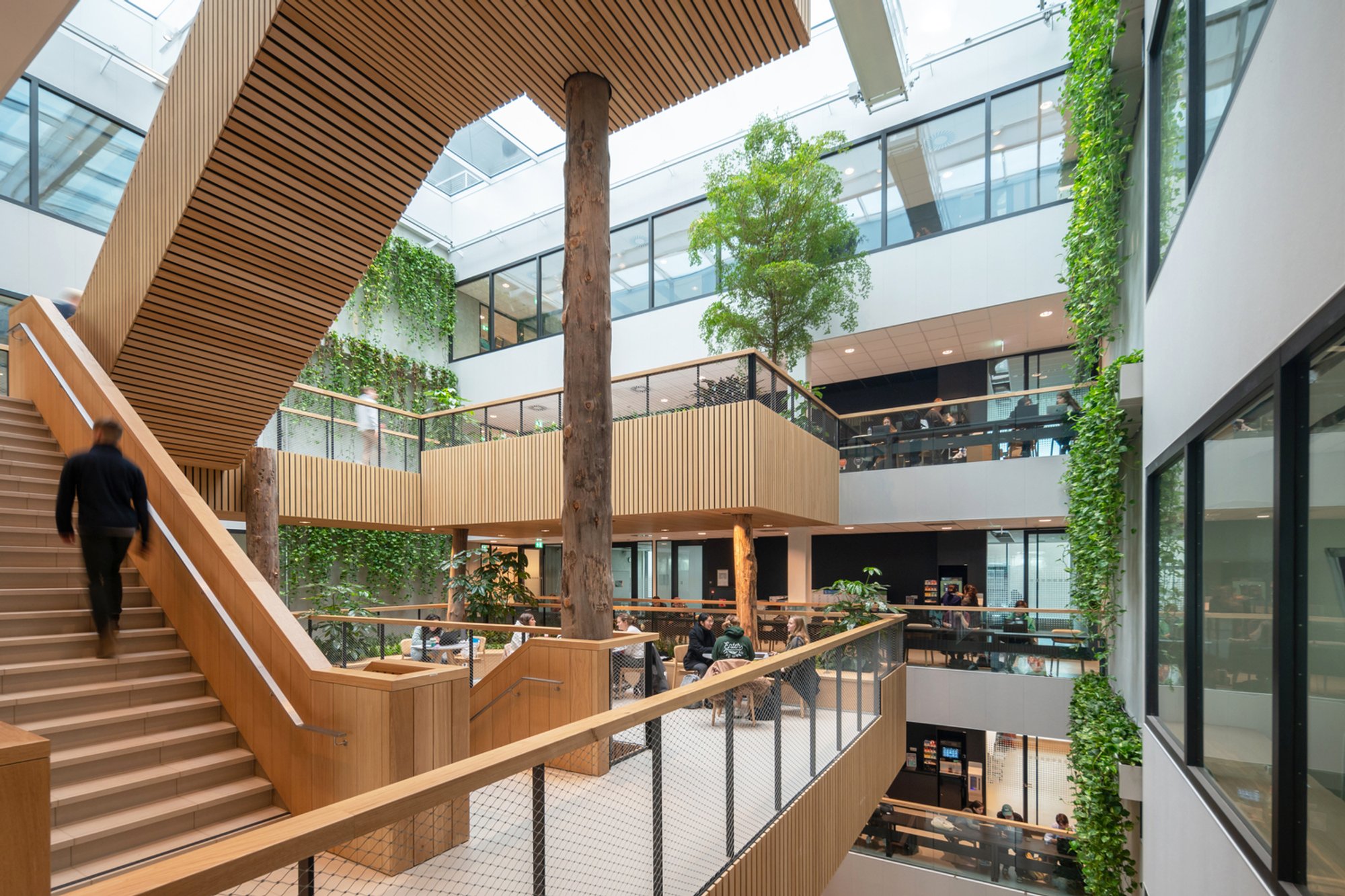
Langeveld Building by Paul de Ruiter Architects – A Benchmark in Sustainable University Design
The Langeveld Building is an energy-positive, sustainable university structure with natural ventilation, biophilic design, circular materials, and BREEAM Outstanding certification.

A Global Leader in Sustainable Architecture
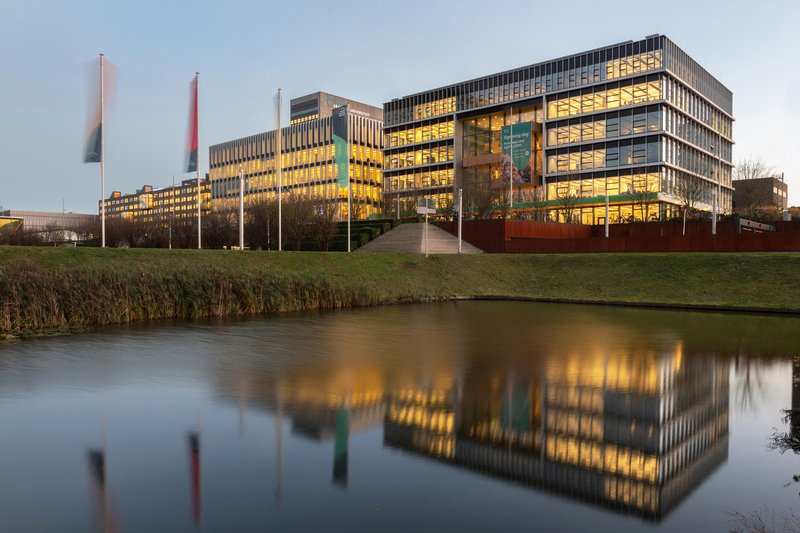
The Langeveld Building at Erasmus University Rotterdam is recognized as one of the most sustainable educational buildings worldwide, achieving a BREEAM Outstanding certification. Designed by Paul de Ruiter Architects, this innovative structure demonstrates that high-performance energy-positive architecture is possible in an academic environment. Powered entirely by wind, solar, and geothermal energy, the building sets a benchmark for future university projects.
Energy-Positive Design Powered by Nature
Through an integrated and smart design strategy, the Langeveld Building is fully energy-positive. A revolutionary natural ventilation system runs on wind and solar energy, dramatically reducing energy consumption. Key features include:
- Solar chimneys on the south façade that create upward airflow, enhancing natural ventilation.
- Venturi-shaped roof structures that accelerate wind, increasing pressure and air circulation.
- Fresh air shafts with cold-water showers that maintain a constant supply of clean air.
This nature-driven ventilation system uses 85% less energy than conventional systems while delivering superior indoor air quality. Seasonal thermal energy storage in the ground further reduces energy demand, storing heat in summer for winter and cold in winter for summer. Combined with photovoltaic solar cells, the building produces more energy than it consumes.
Biophilic and Transparent Architecture
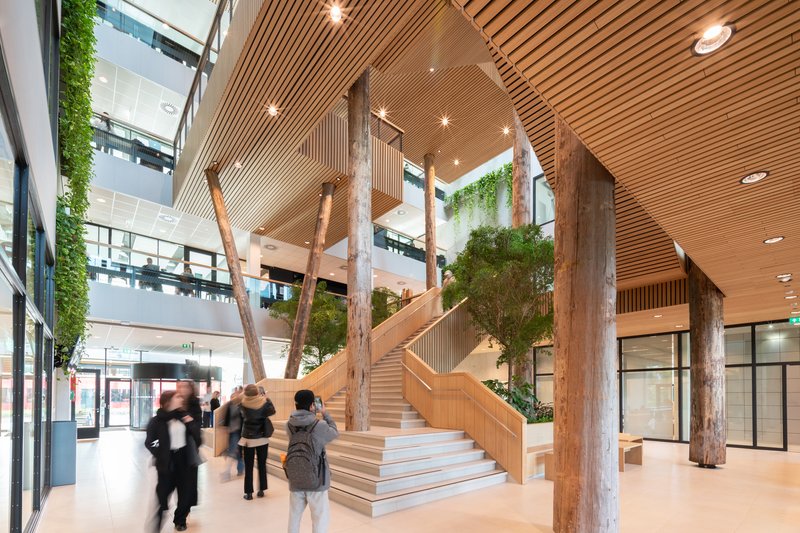
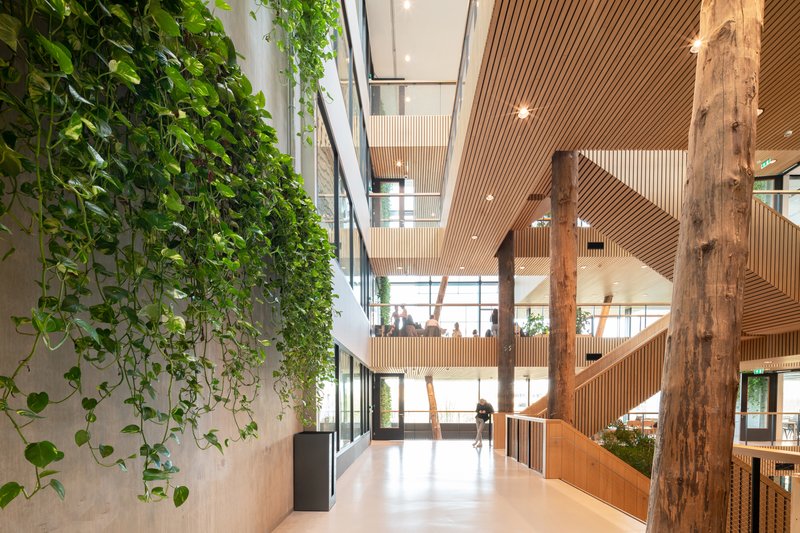
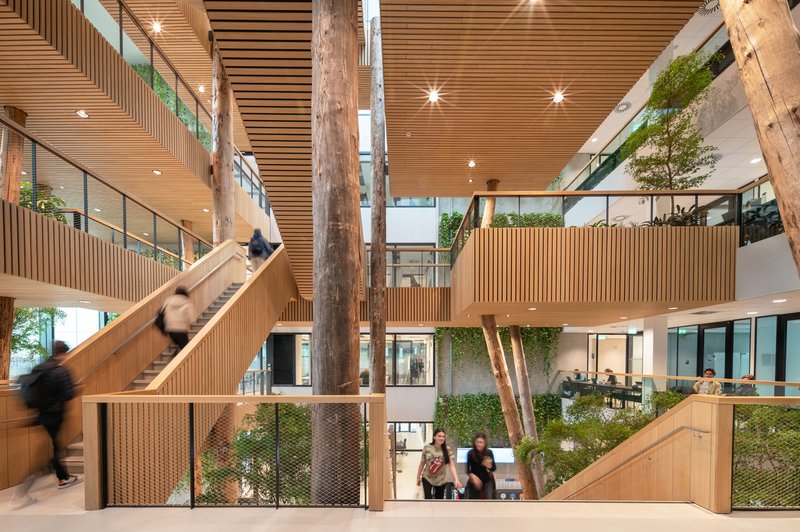
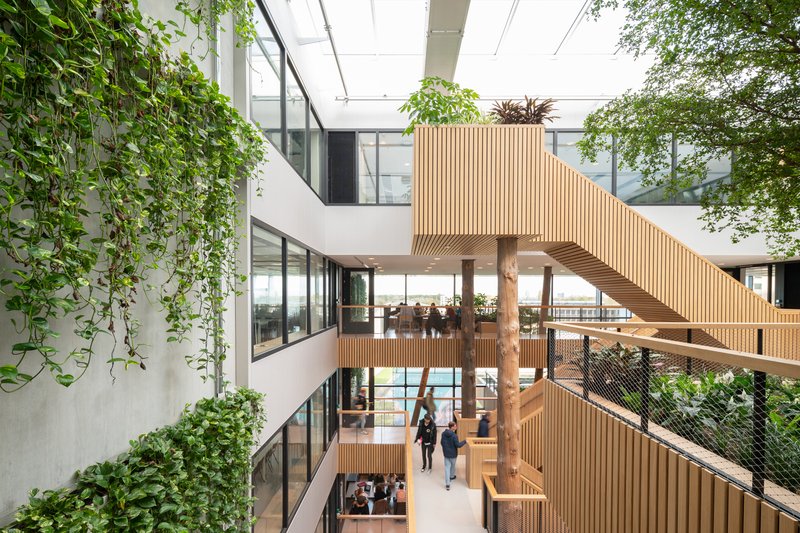
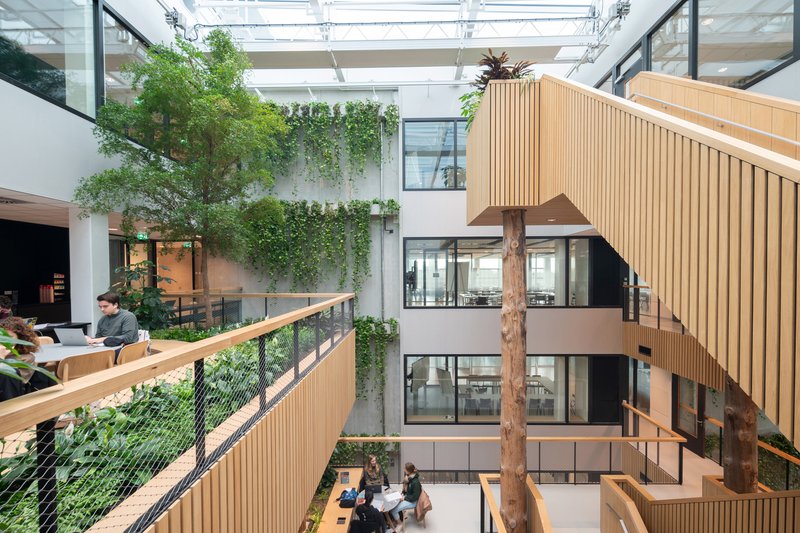
The transparent façades connect the interior with the surrounding campus, filling the building with natural daylight and fostering a strong sense of openness. The interior emphasizes wooden detailing, including an atrium supported by real tree trunks, creating a warm and inviting environment. Key highlights include:
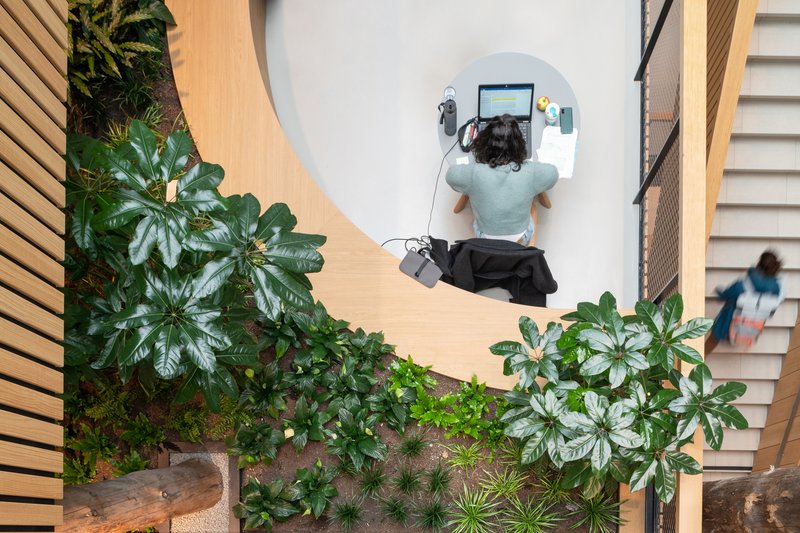
- Green study spaces that support student concentration and well-being.
- A wooden treehouse in the atrium, enhancing interaction and creativity.
- Integration of biophilic design principles to bring nature inside and promote health.
This thoughtful integration of nature and architecture ensures a pleasant, sustainable, and human-centered learning environment.
Circularity and Material Innovation
The Langeveld Building embraces circular construction principles, maximizing the use of recycled and biobased materials. Demolition waste from other buildings was reused, and all materials are cataloged in a digital material passport, enabling future reuse and sustainability tracking. This approach contributed significantly to the building’s BREEAM Outstanding certification, a distinction held by less than 1% of buildings in the Netherlands.
The Langeveld Building exemplifies how sustainable, energy-positive, and biophilic architecture can create a healthier, more productive academic environment. By seamlessly merging technology, nature, and circularity, this project sets a global benchmark for educational buildings.
All Photographs are works of Aiste Rakauskaite



Popular Articles
Popular articles from the community

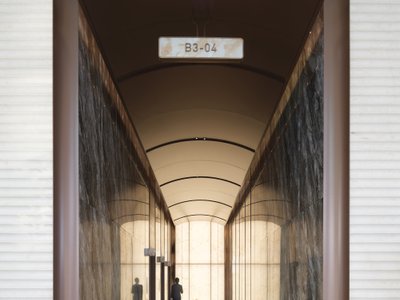
Guangzhou's Twin Towers Interiors Move Like Water
DuShe Architectural Design shapes the lobbies of a massive Guangzhou transit hub with undulating ceilings and deep geological materiality.
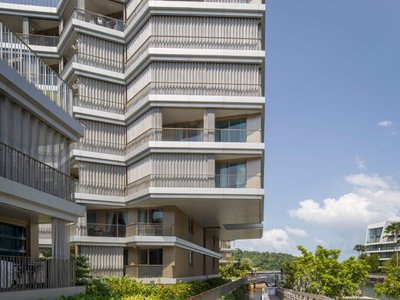
KCAP and DCA Architects Build a Stepped Urban Village on Singapore's King's Dock Waterfront
A 26,000 square meter residential development in Singapore trades tower isolation for terraced courtyards and a planted promenade along the harbor.
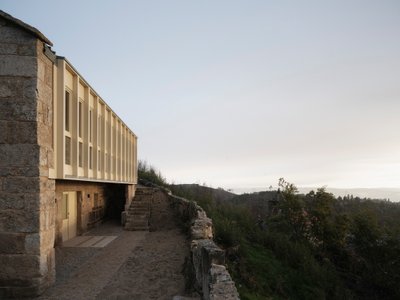
Three Architects Stitch a Social Center into a Crumbling Galician Hamlet
In Muimenta, Spain, timber and plywood volumes graft onto granite ruins to anchor a rural revitalization effort.
Not All Architecture Grounds a Timber Retreat in Victoria's Coastal Bushland
Ironbark House stretches low beneath eucalyptus canopy, threading a quiet domestic life between courtyard, deck, and landscape.

Similar Reads
You might also enjoy these articles

Filtering Space: A Gradual Spatial Experience
From urban intensity to spatial calm.


The Ken Roberts Memorial Delineation Competition (Krob)
As the most senior architectural drawing competition currently in operation anywhere in the world, it draws hundreds of entries each year, awarding the very best submissions in a series of medium-based categories.


Waterfront Redevelopment and Urban Revitalization in Mumbai: Forging a New Dawn for Darukhana
A transformative waterfront redevelopment project reimagining Darukhana’s shipbreaking heritage into an inclusive urban future.

OUT-OF-MAP: A Call for Postcards on Feminist Narratives of Public Space
Rhizoma Design and Research Lab invites artists, designers, architects, researchers, and students to reflect on how feminist perspectives can reshape public space. Selected works will be exhibited in Barcelona, October 2026. Submissions open until 15 April 2026.

Explore Architecture Competitions
Discover active competitions in this discipline




The International Standard for Design Portfolios


The Global Benchmark for Architecture Dissertation Awards


The Global Benchmark for Graduation Excellence


Challenge to design public laboratory
Comments (0)
Please login or sign up to add comments
No comments yet. Be the first to comment!