

Lawrencetown House by Bishop McDowell – A Coastal Retreat Merging Architecture and Landscape
Lawrencetown House by Bishop McDowell blends modern coastal design with natural materials, offering serene ocean views and harmonious family living.


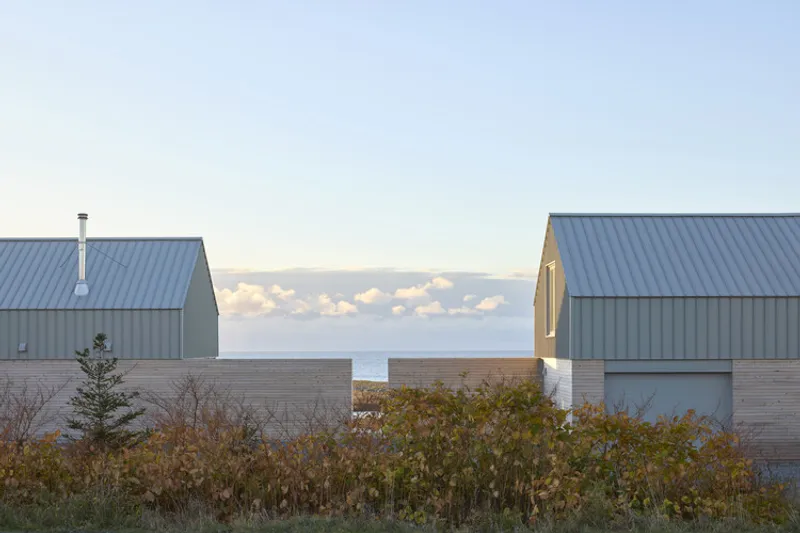
Nestled in the serene coastal community of West Lawrencetown, Nova Scotia, Lawrencetown House by Bishop McDowell Architects captures the rugged beauty of Canada’s Eastern Shore through minimalist yet warm modern design. With a total built area of 2300 ft², the home is positioned against a stunning backdrop of Atlantic Ocean vistas, grassy wetlands, and rocky shorelines, making it a seamless dialogue between architecture and nature.
Context and Design Inspiration
The area’s white sand beaches, provincial parks, and surf culture inspire a design language rooted in natural simplicity and environmental respect. The architects envisioned the house as a balance of protection and openness—a private coastal sanctuary that still invites the ocean’s rhythm inside through light and space.

Architectural Composition
At the heart of the home lies a thick wooden service wall that organizes the plan. This central element divides the northern arrival courtyard and the southern protected terrace, housing essential services such as the kitchen, fireplace, storage, and mechanical systems.
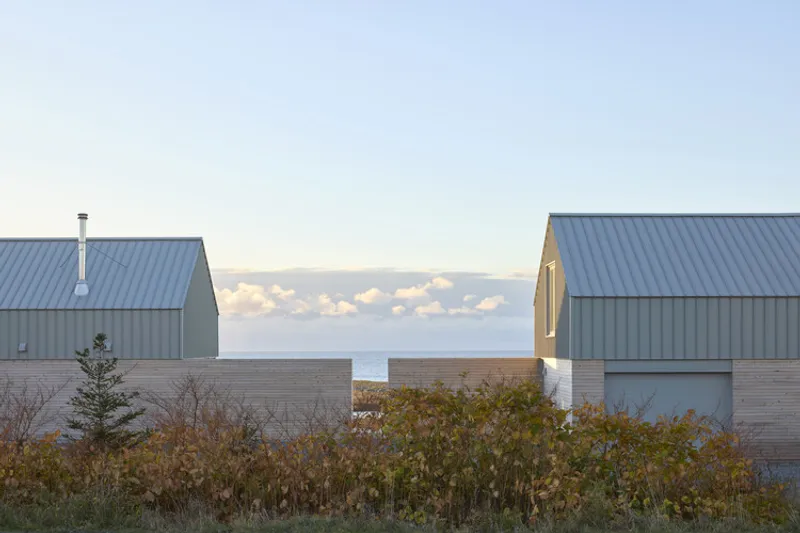
Two offset pitched-roof volumes rest atop this wooden wall, creating the home’s striking form. The main volume contains the primary living and sleeping spaces, while the secondary volume accommodates a garage and guest suite. This interplay of volumes generates an architectural rhythm that resonates with the surrounding topography.

Spatial Experience
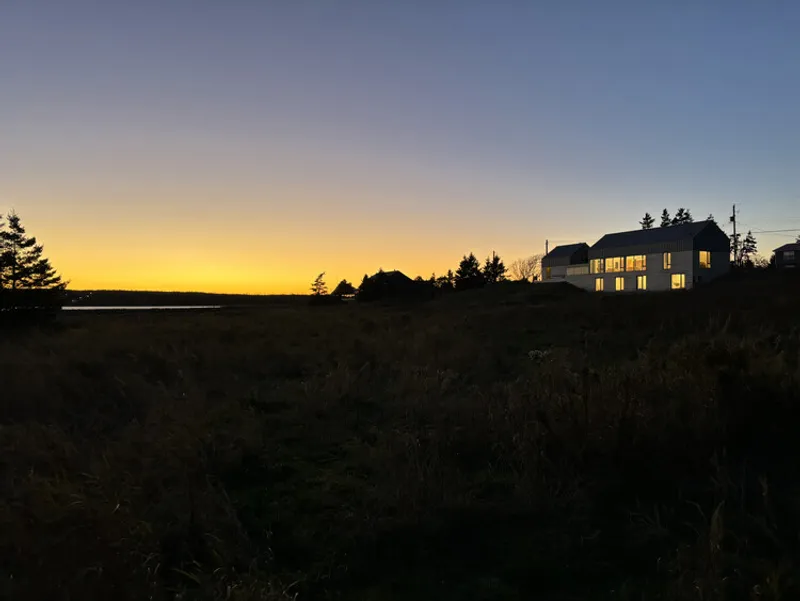
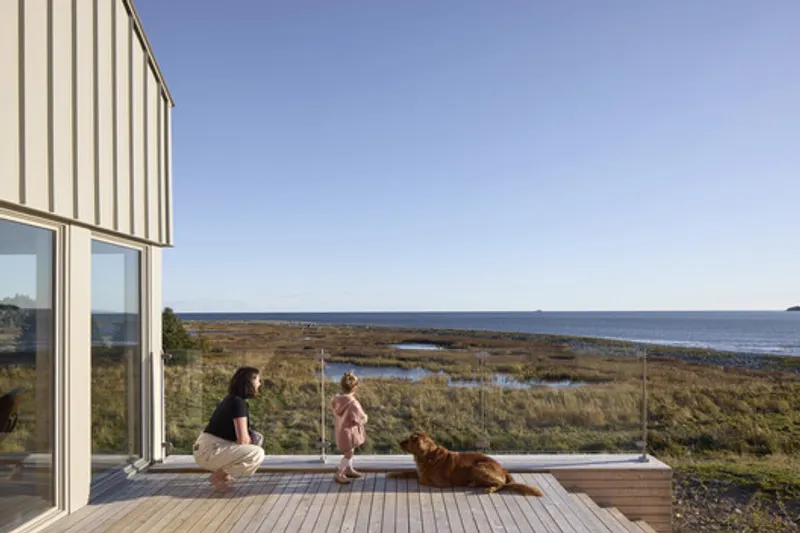
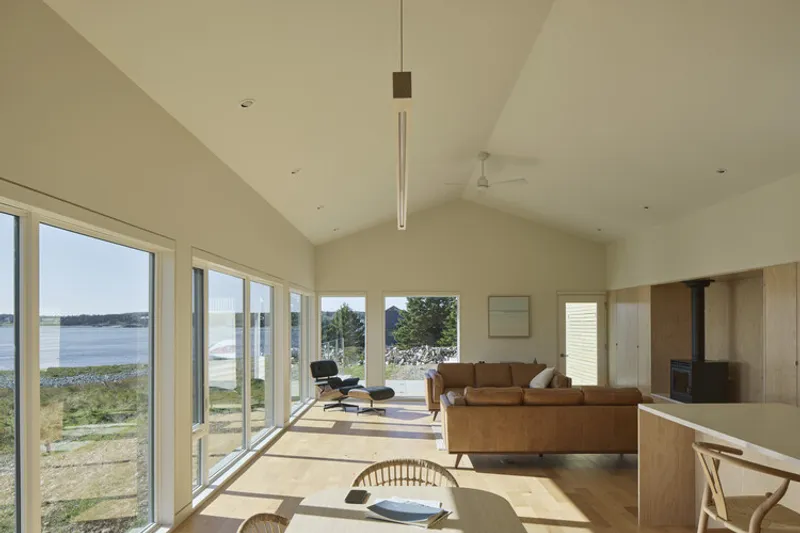
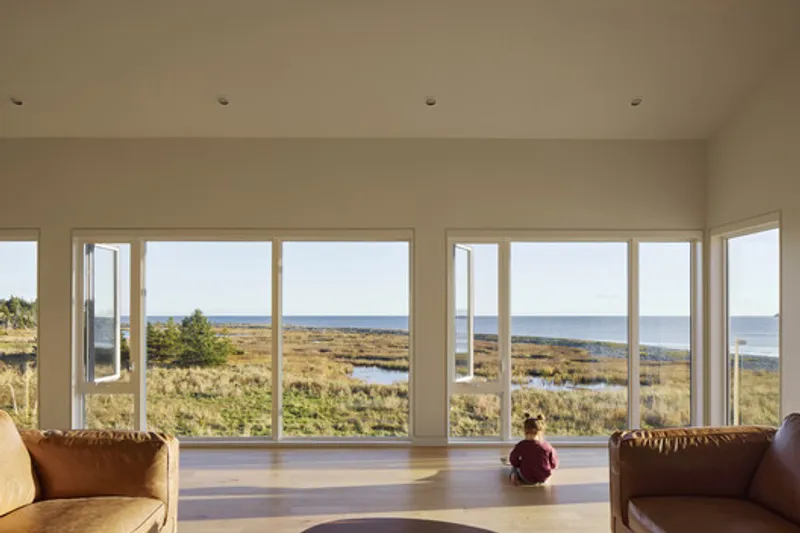
The design smartly uses the site’s natural slope, presenting a modest single-storey façade from the road and a two-storey elevation toward the ocean. The roadside façade is intentionally minimal, allowing privacy and emphasizing a sense of calm upon entry. In contrast, the waterside façade opens dramatically to panoramic coastal views through floor-to-ceiling glazing, immersing the interior in shifting light and ocean hues.
Materiality and Detailing
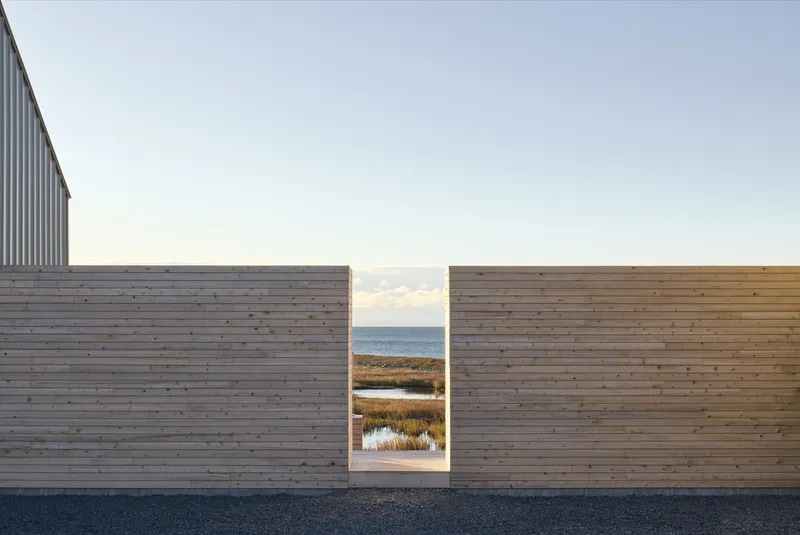
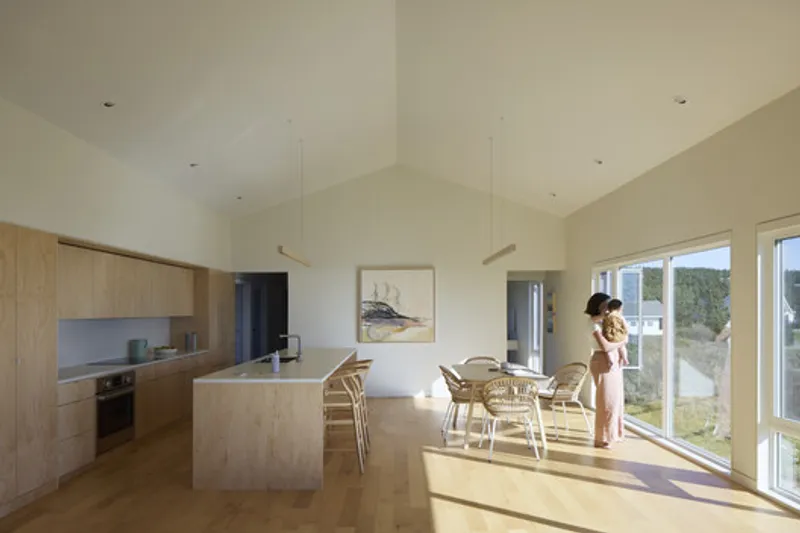
The material palette reflects the raw coastal landscape. The exterior is clad in eastern white cedar shiplap, left unfinished to age gracefully under maritime weather. The pitched roofs are finished with soft grey standing-seam metal, evoking the tone of the misty Atlantic horizon. Inside, clear maple millwork and flooring create a warm, tactile counterpoint to the restrained exterior.
Interior Layout and Atmosphere
Designed for a young family of four, the house follows an inverted layout: living spaces upstairs, bedrooms downstairs. This design maximizes exposure to the views and natural light in the areas where the family gathers most. Entry occurs through a compressed vestibule, heightening the reveal of the vaulted great room, where expansive windows frame the drama of the coastal wetland and sea beyond.

Architectural Philosophy
Bishop McDowell’s approach celebrates quiet resilience and contextual harmony. The house’s restrained geometry, natural materials, and layered transparency reflect the duality of the coast—harsh yet tranquil, open yet sheltering.
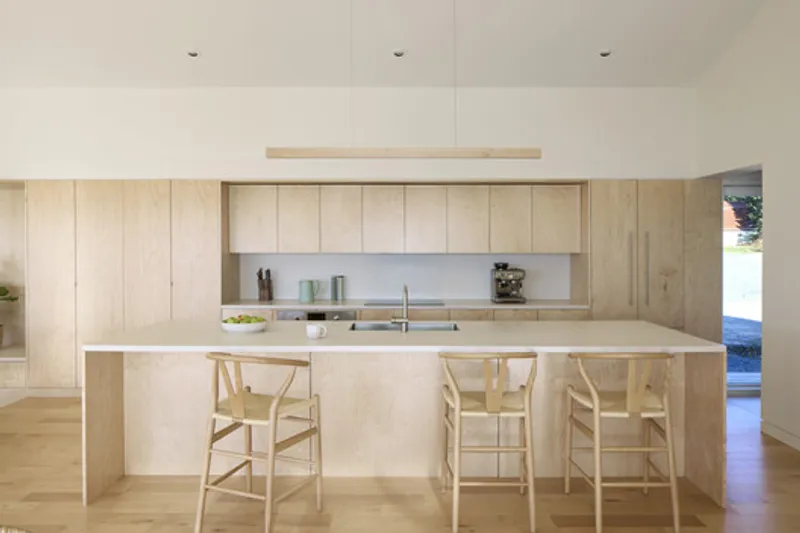

All the photographs are works of James Brittain




Popular Articles
Popular articles from the community


Co-Life: Senior Housing Design That Reconnects Older Adults With the City
Co-Life reimagines senior housing design through healing gardens, shared streets, workshops, and a sustainable community across generations.

Riyadh For All: Intergenerational Urban Design for Active Aging in Rabat
Riyadh For All reimagines urban design in Rabat with intergenerational co-living, adaptive courtyards, and Moroccan cultural exchange today.

Hill & Cross Opera: Sculptural Opera House Architecture Shaped by Tallinn’s Landscape and Identity
Hill & Cross Opera reimagines opera house architecture in Tallinn through its sculptural hill, civic plaza, glass wave and a luminous cross.

The Ocean Hive: Sustainable Architecture for a Self-Sufficient Civilization at Sea
The Ocean Hive imagines sustainable architecture at sea, where modular habitats, algae, wave power and ocean waste sustain a growing colony.


Similar Reads
You might also enjoy these articles


Hodi-Mandai Geram
Project Function: Preservation and revitalization of the Intangible heritage and socio-spatial identity of the Hodi by Housing, Cultural Memory Center, Sacred Grove, landscape, local tourism economy


Olio Towers: A Mid-Rise for Performers That Fuses Housing, Rehearsal, and Stage
Located blocks from Houston's Theater District, this modular tower stacks living units around a central performance atrium.

Oasis: Modular Green Housing Carved into Dhaka's Urban Fabric
A shortlisted Plugin Housing entry reclaims unauthorized settlements in Dhaka with stepped concrete volumes, green roofs, and ventilation-driven design.

Black Hole: A Floating Megastructure for the Post-Physical Era
Emiliano Mazzarotto envisions a spherical, self-scaling arena where e-sports, digital hotels, and holographic stadiums replace traditional public space.

Explore Residential Building Competitions
Discover active competitions in this discipline


Challenge to design mud housing for contemporary communities


Challenge to reimagine the Iron Throne


Photograph architecture without architects


Illustrate the lost glory of Angkor Wat - Render Challenge
Comments (0)
Please login or sign up to add comments
No comments yet. Be the first to comment!