
Learning and Innovation Center: A Belgian Study Hub
evr-Architecten and A229 built a 9,910 m² Learning and Innovation Center in Ixelles, Brussels that connects two ULB campuses through architecture.

Ixelles is one of the densest parts of Brussels, packed with French-speaking university buildings, social housing towers, and the awkward leftover spaces between them. The Learning and Innovation Center, completed in 2024 by evr-Architecten in collaboration with A229, slots into one of those leftover sites and turns it into something the campus has been missing for decades.
At 9,910 square metres, the building is not enormous by university standards. What makes it interesting is what it does with its position. It sits between two existing campuses of the Université libre de Bruxelles, and the architects have used that in-between condition as the brief itself. The Center is both a building and a connector, a place where students cross from one part of the university to another and stop to study on the way.
A Building That Stitches Two Campuses Together
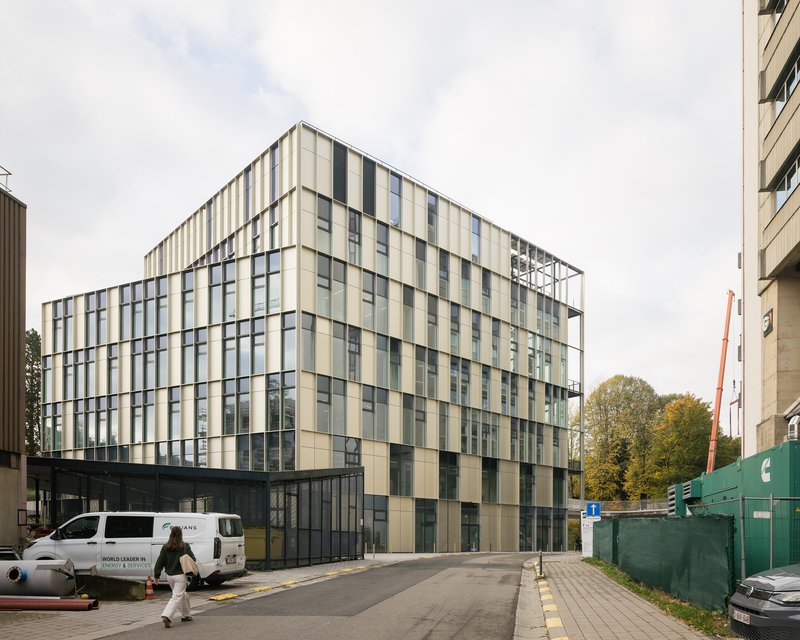
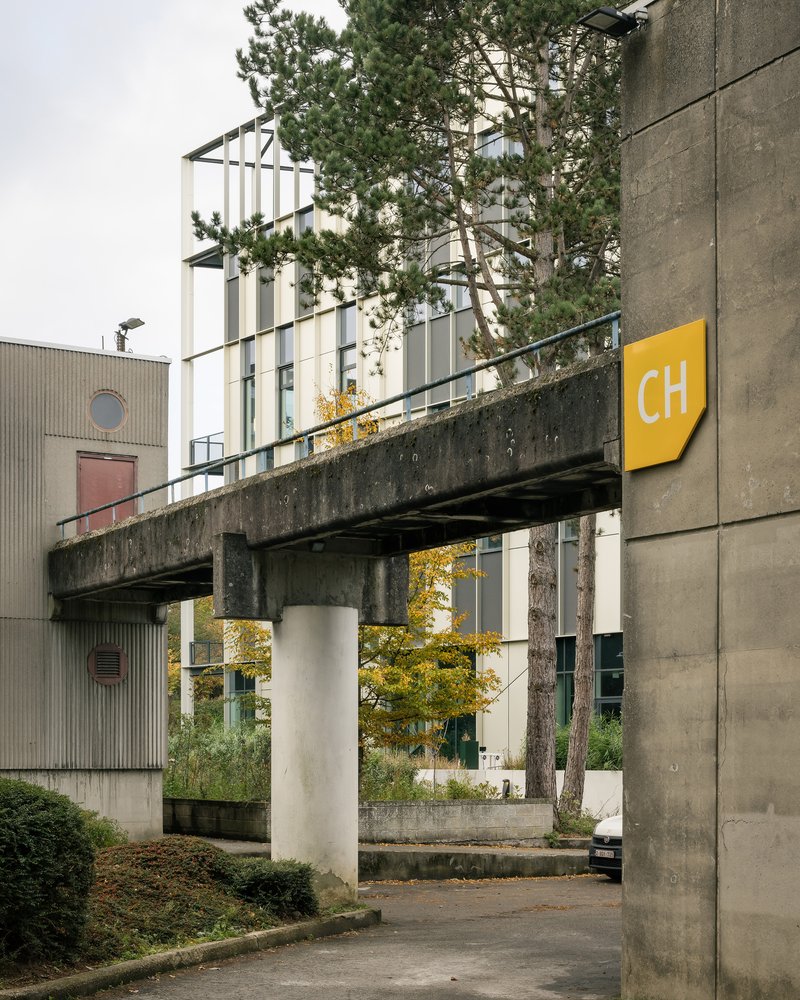
The site is hemmed in by ULB's brutalist towers from the 1970s, several pedestrian bridges, and the kind of tangled green slope that always appears at Belgian campus edges. The new building accepts all of this. It does not try to clear the site or override the existing connections. Instead, it threads itself in, picking up the level changes and continuing the pedestrian routes through the new ground floor.
The architects describe it as a physical connector and a social catalyst. The first part is literal. You can walk from one campus into the building, up through it, and out the other side without ever realising you have crossed a property line. The second part is what every university tries to do with a study center and almost always fails. Here it works because the spatial generosity is real, not decorative.
A Facade Built From Quiet Variation
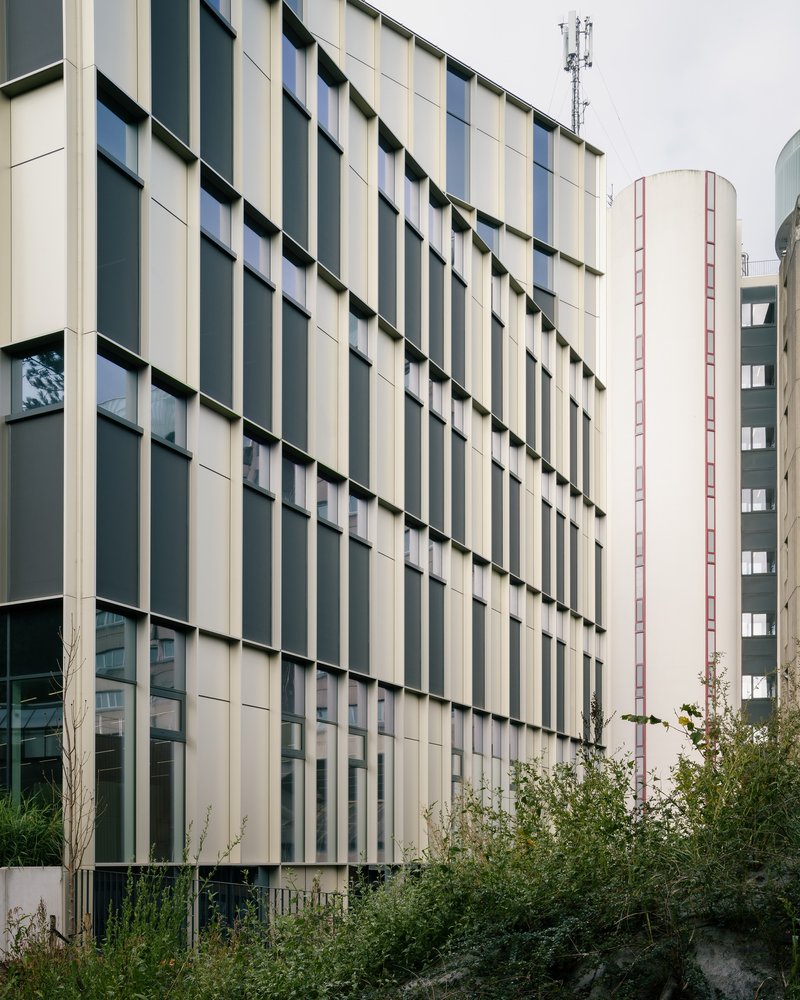
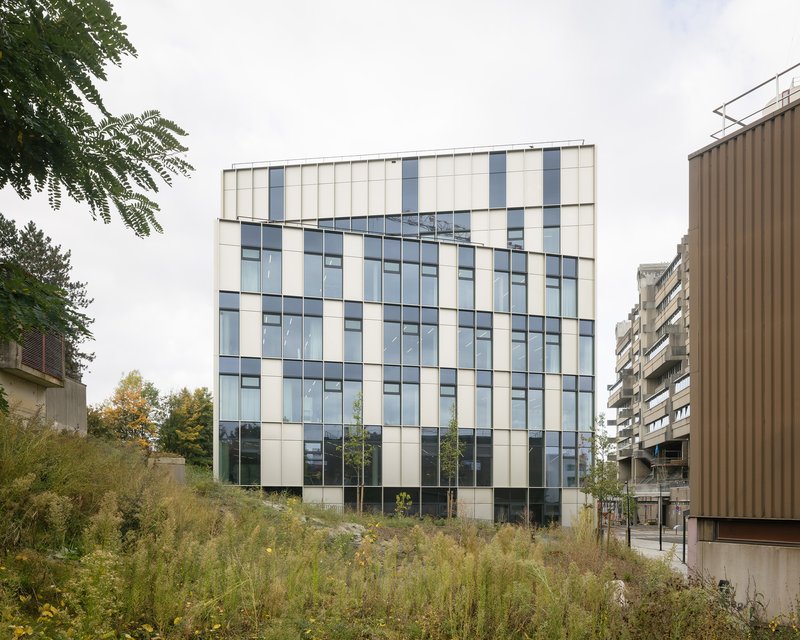
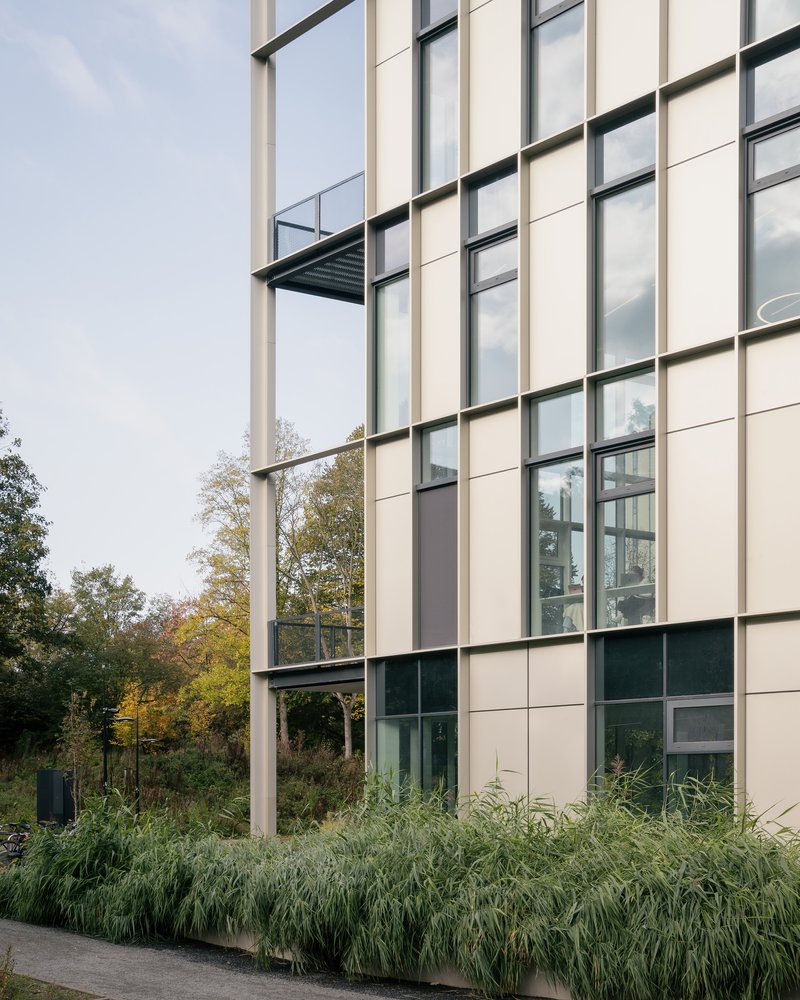
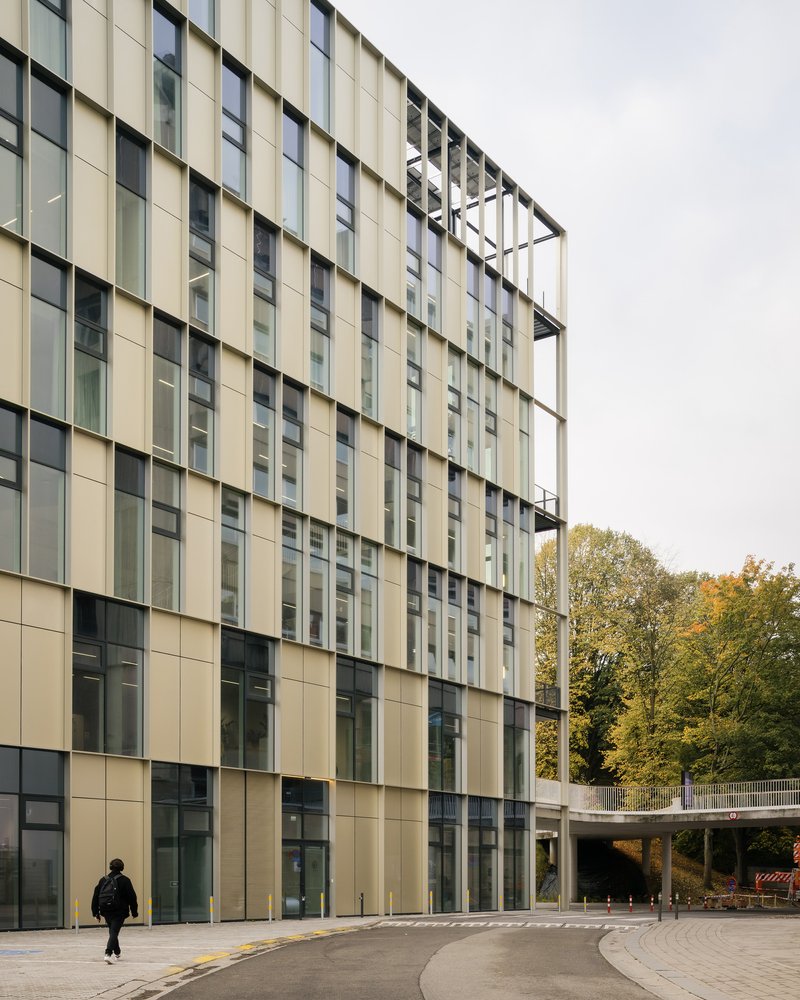
The facade is the building's most distinctive element. From a distance it reads as a regular curtain wall, but a closer look reveals an irregular grid of glazed and panelled openings that shifts across the elevation. The pattern is not random and not strictly modular. It is tuned to what is happening inside each room: where you need a view, where you need privacy, where you need a clerestory.
This is a harder facade to build than a simple repeating module, and a more interesting one to inhabit. From outside, it gives the building a quiet identity that does not depend on signage or coloured panels. From inside, it produces rooms with very specific light conditions that change as you move through them.
The Site as Landscape
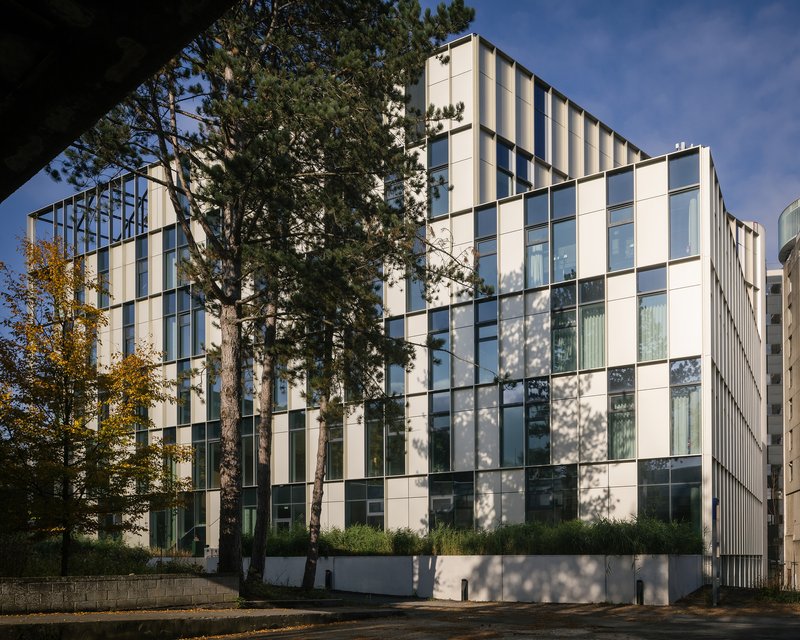
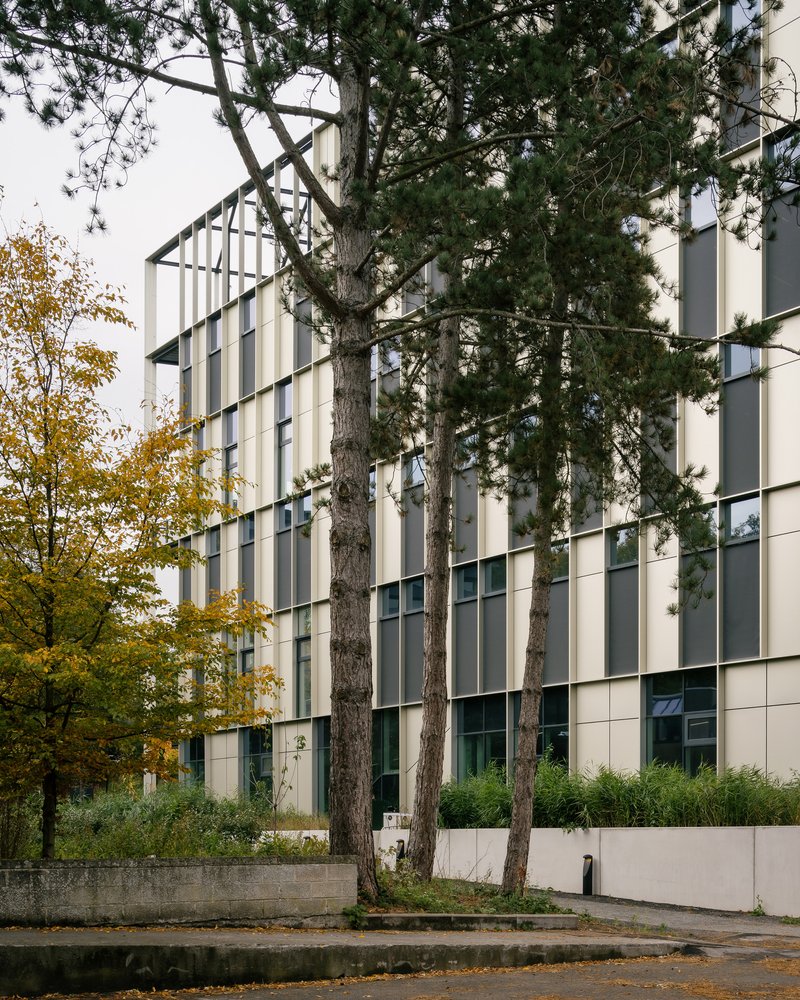
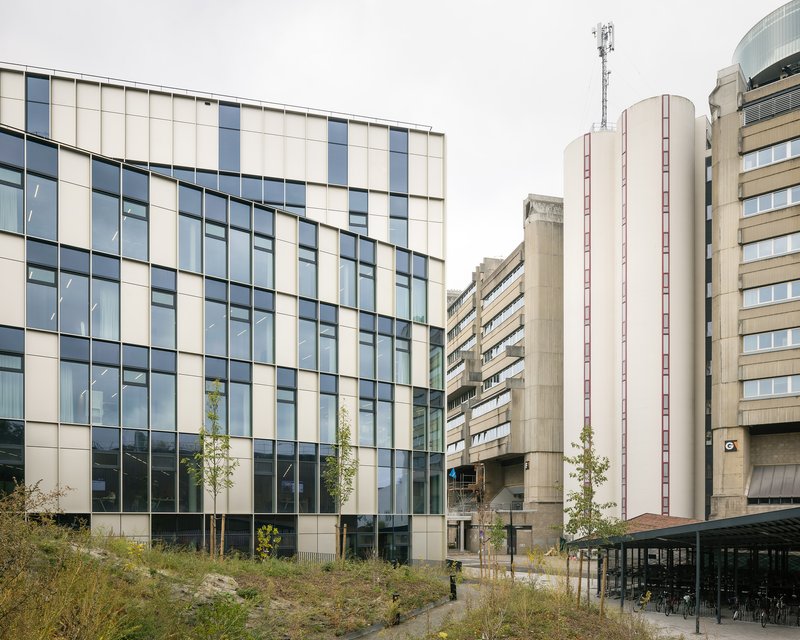
The existing trees on the site, mostly pines and mature deciduous specimens, were kept. The architects routed the building around them rather than clearing the lot. The result is that you arrive at the Center through a small piece of campus woodland, which is a rare experience in this part of Brussels.
The contrast between the new glass and panel volume and the old brutalist towers nearby is left unresolved on purpose. The building does not pretend the towers are not there. It also does not try to copy them. It just sits next to them and lets the comparison happen.
Outdoor Rooms and the Amphitheatre
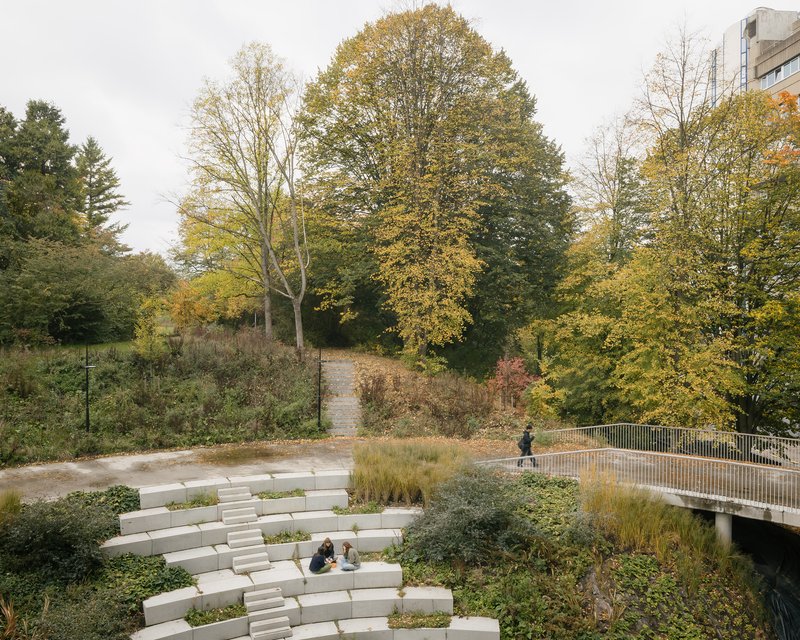
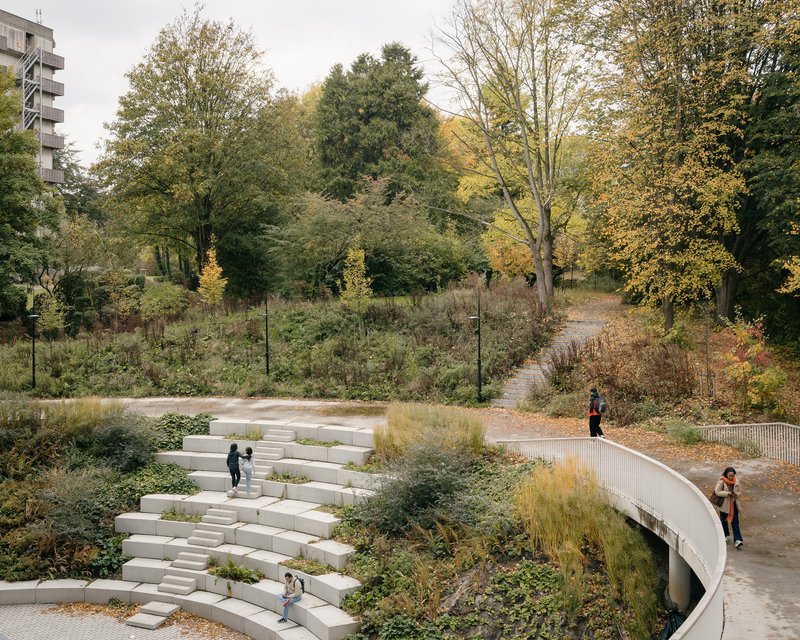
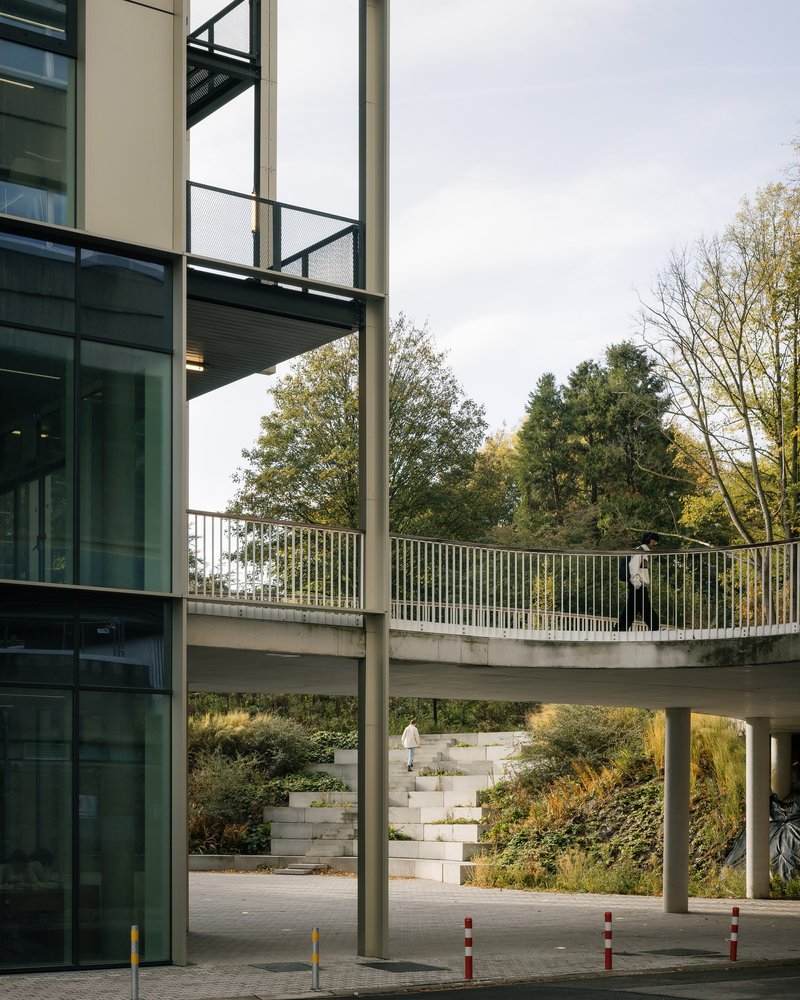
On the slope outside the building, the architects placed a stepped concrete amphitheatre that doubles as informal seating, a teaching space, and a sun terrace. It is connected to the building by a curved path through wild planting. This is the kind of move that costs almost nothing in the overall budget and adds an enormous amount to how the building is used.
Universities tend to ignore their outdoor spaces. The few square metres between buildings get paved over, signposted, and forgotten. Here they have been reclaimed as a real room. On a sunny day, students move out of the library and onto the amphitheatre steps with their laptops.
Inside: Light and Volume
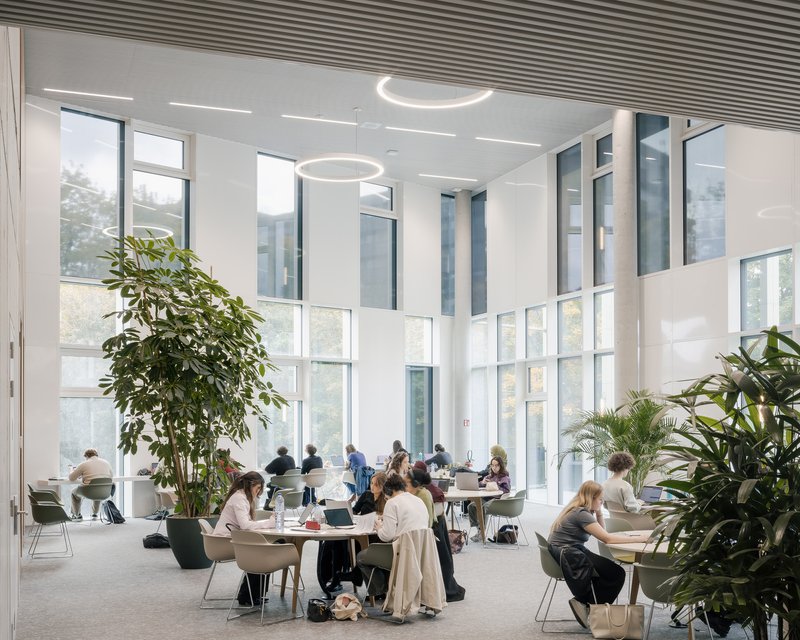
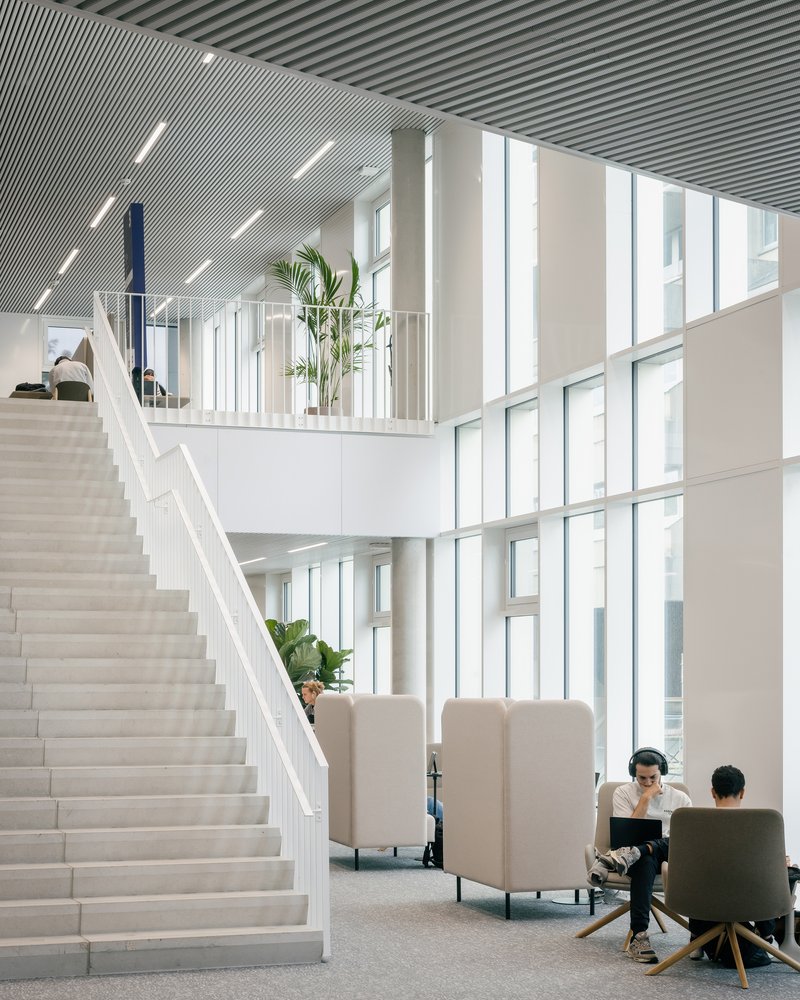
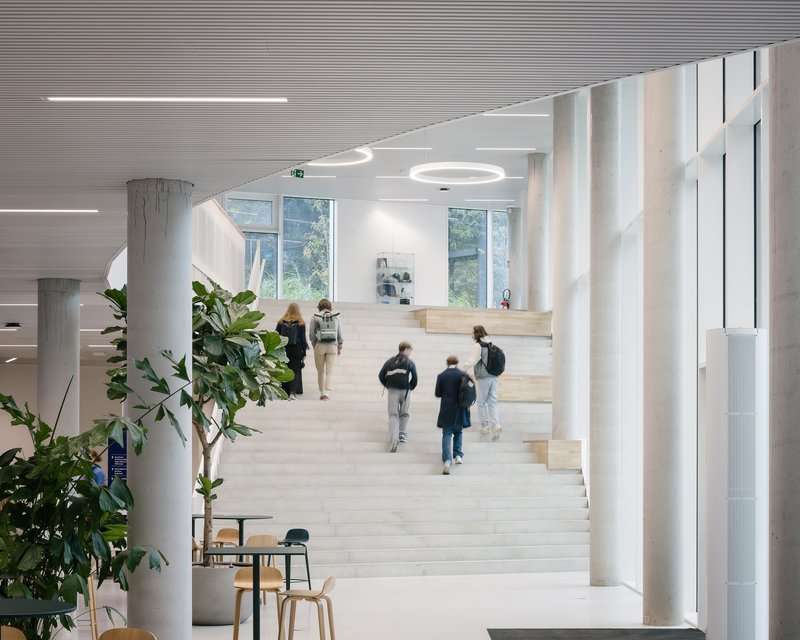
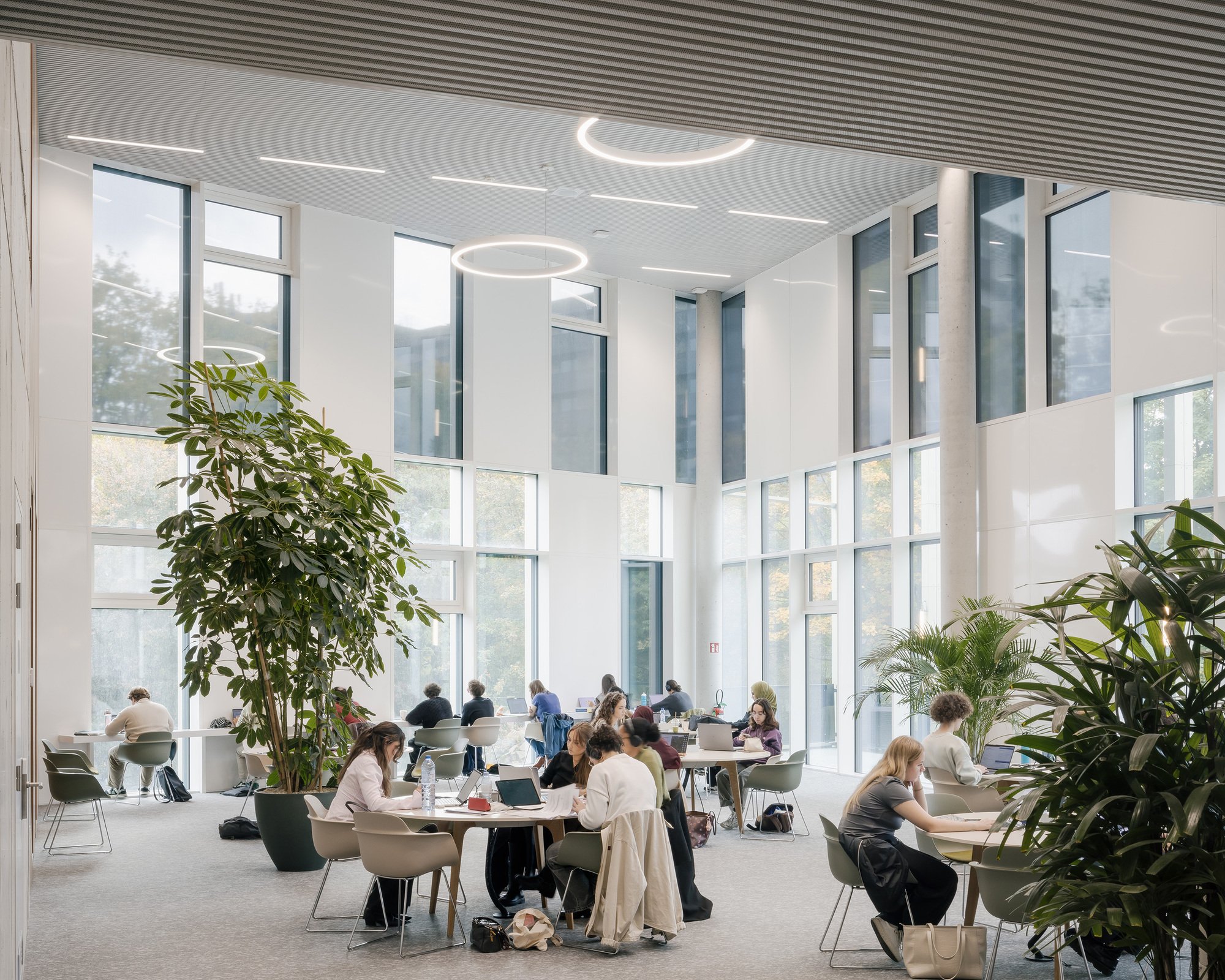
The interior is organised around a tall central atrium that the entrance stair rises through. The atrium is the spatial heart of the project. It pulls light deep into the floor plates, gives the building an obvious orientation point, and creates the kind of visual connection between floors that a study center actually needs.
The reading hall on the upper level is generous, calm, and full of plants. Circular pendant lights provide a layer of ambient warmth above the natural daylight. This is a room designed for long sessions, not quick visits, and the proportions reflect that.
The Atrium and the Cafe Floor
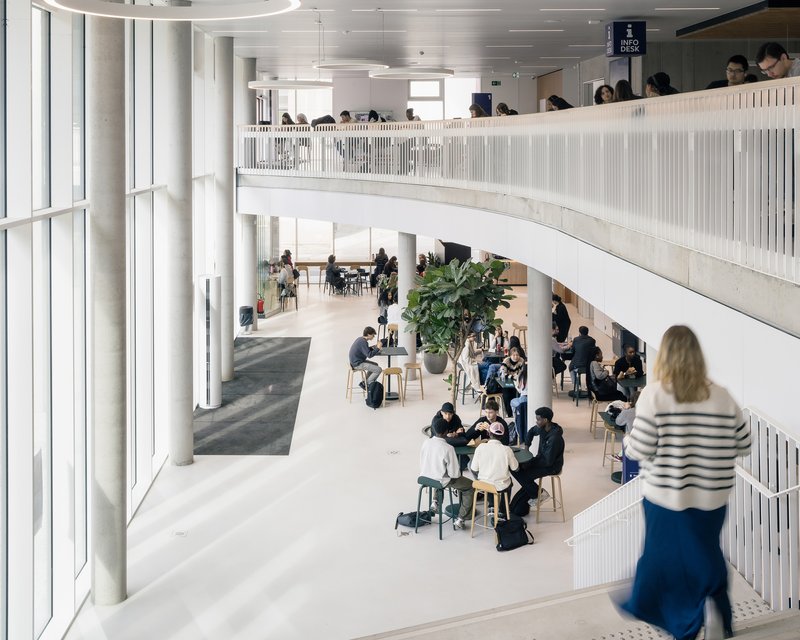
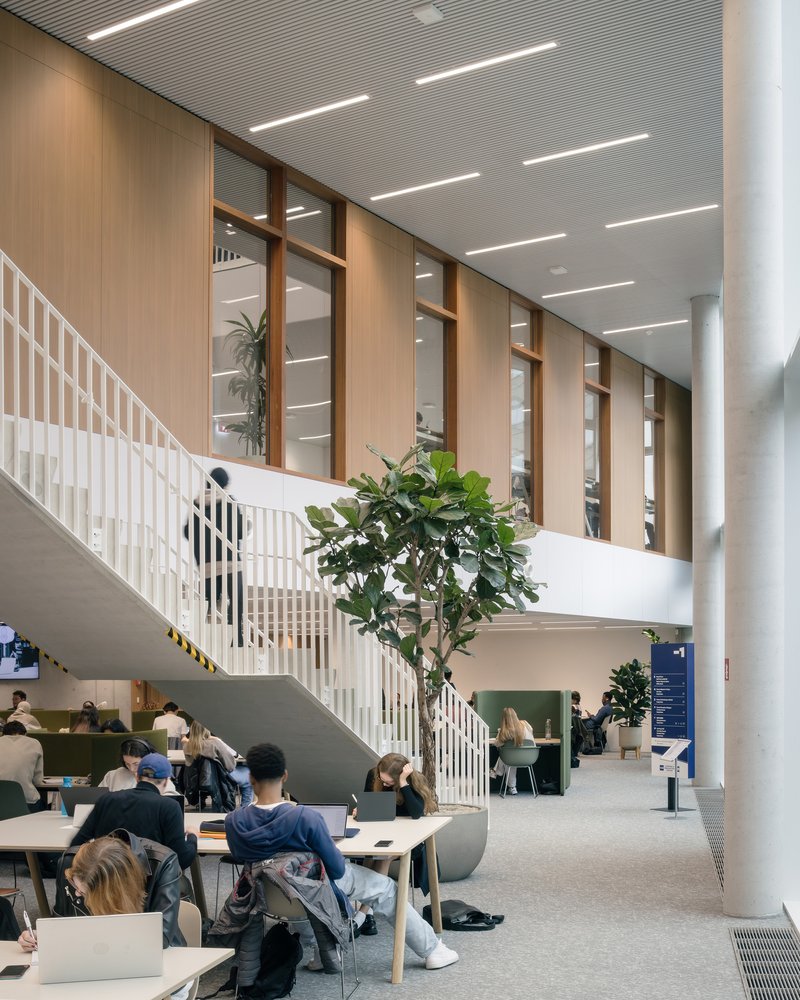
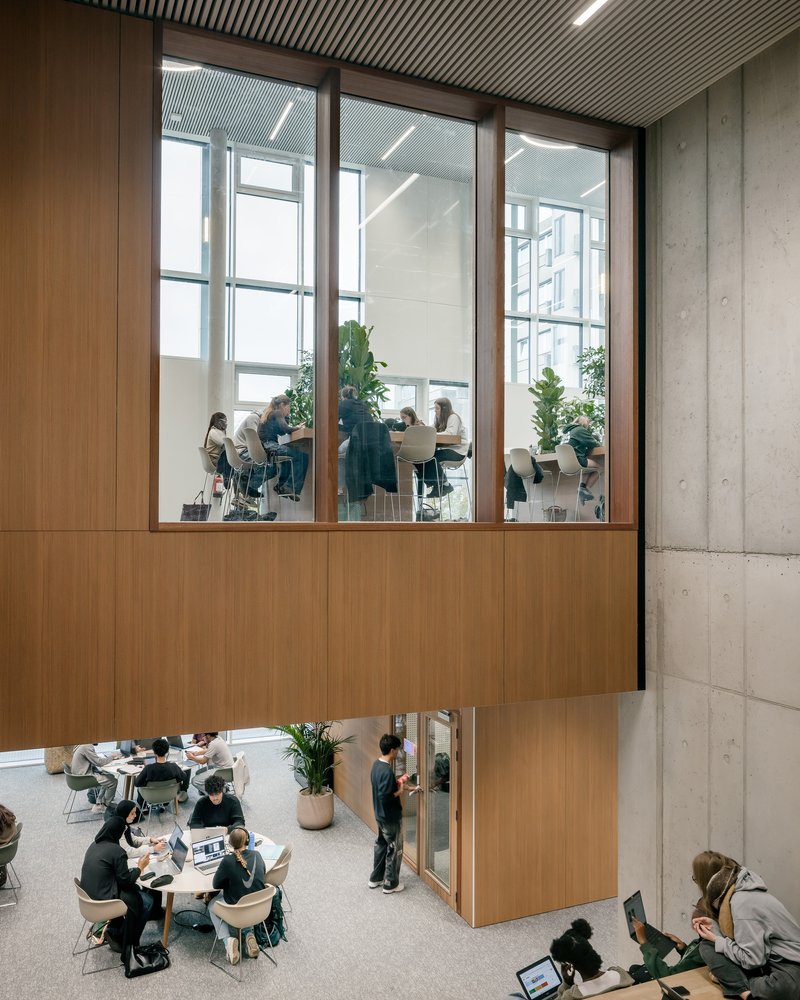
Below the upper reading rooms, the central atrium opens out into a cafe and informal study area. Curved galleries on the upper levels look down into this space, so even when you are working alone on the third floor you remain visually connected to the social heart of the building. This balance of focus and visibility is one of the harder things to design in a learning center, and the section here handles it well.
Study Spaces of Every Kind
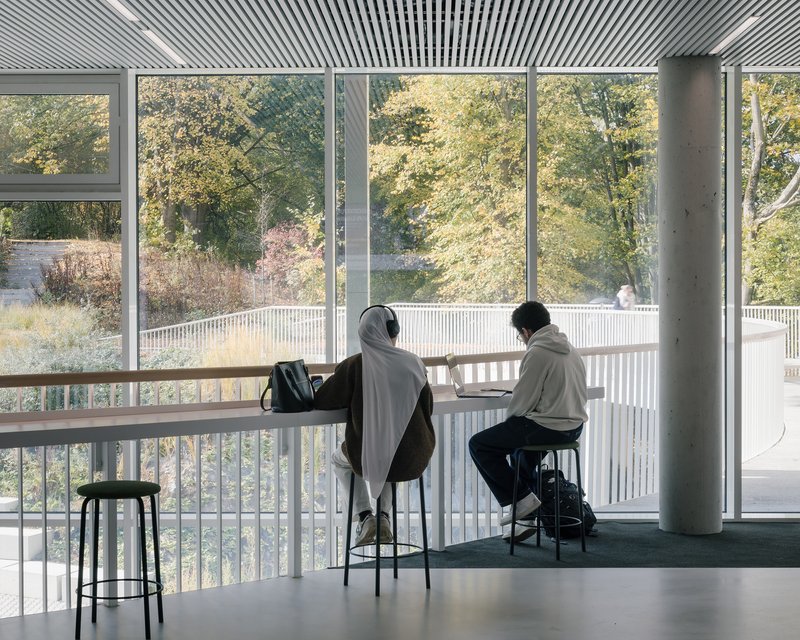
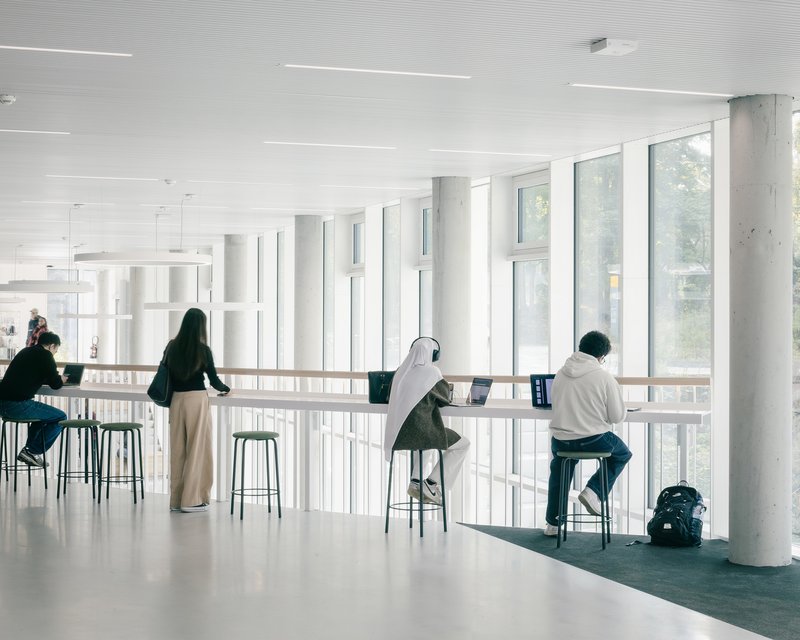
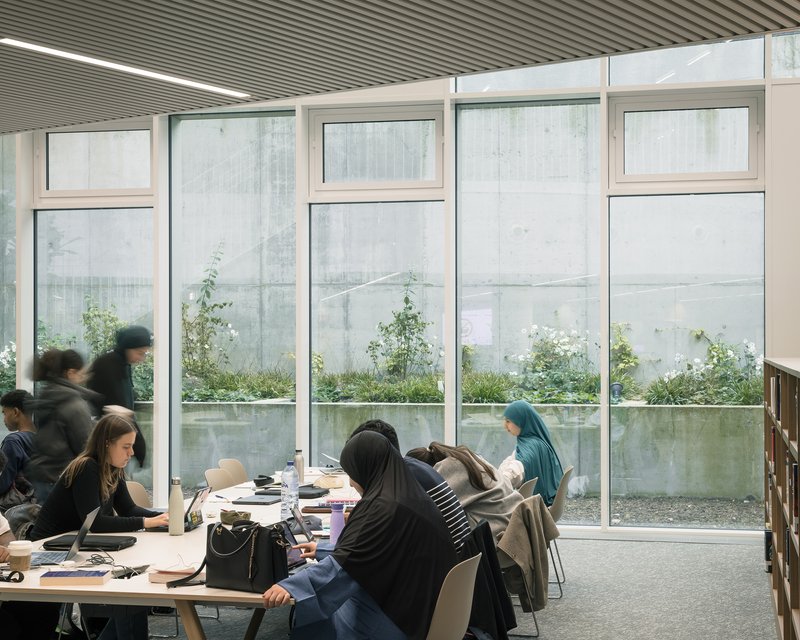
The brief required the building to host every possible mode of study: solo, pair, group, silent, collaborative, formal, informal. The plan responds with a deliberate variety of room types. There are window counters facing the woods, group tables along the glazed walls, quiet zones away from the atrium, and a row of small private study rooms behind glass.
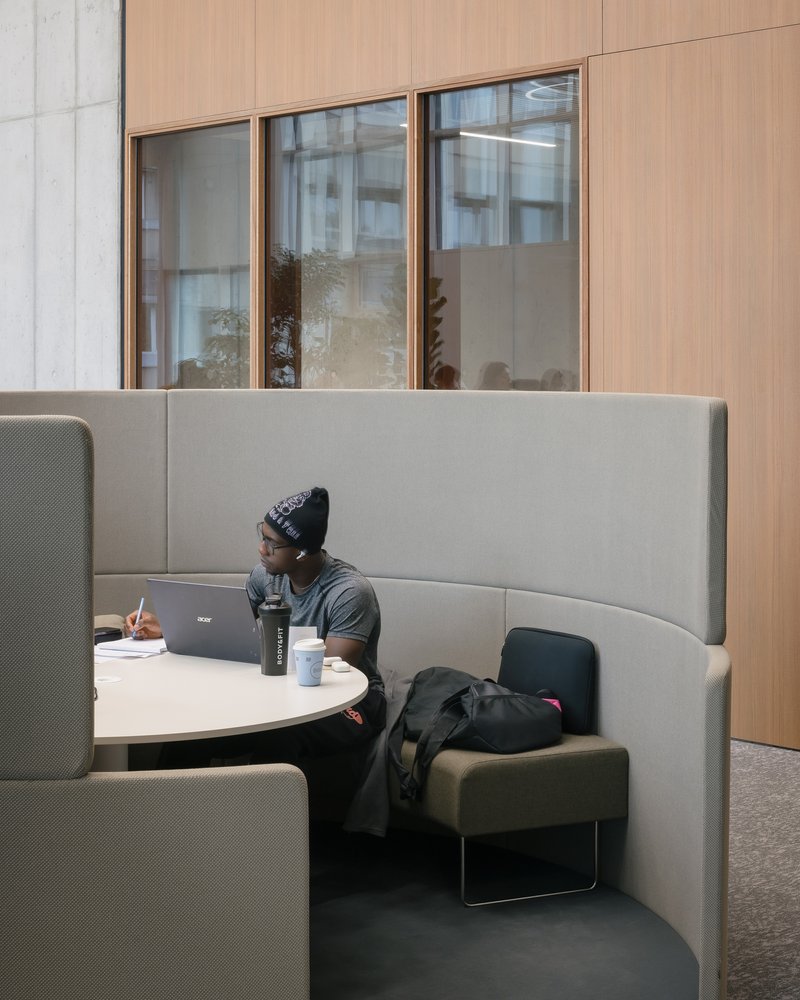
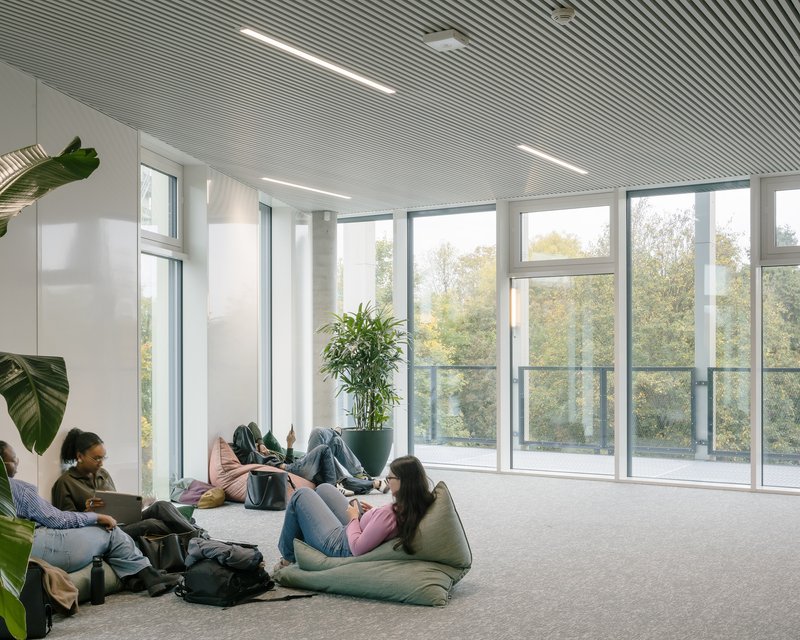
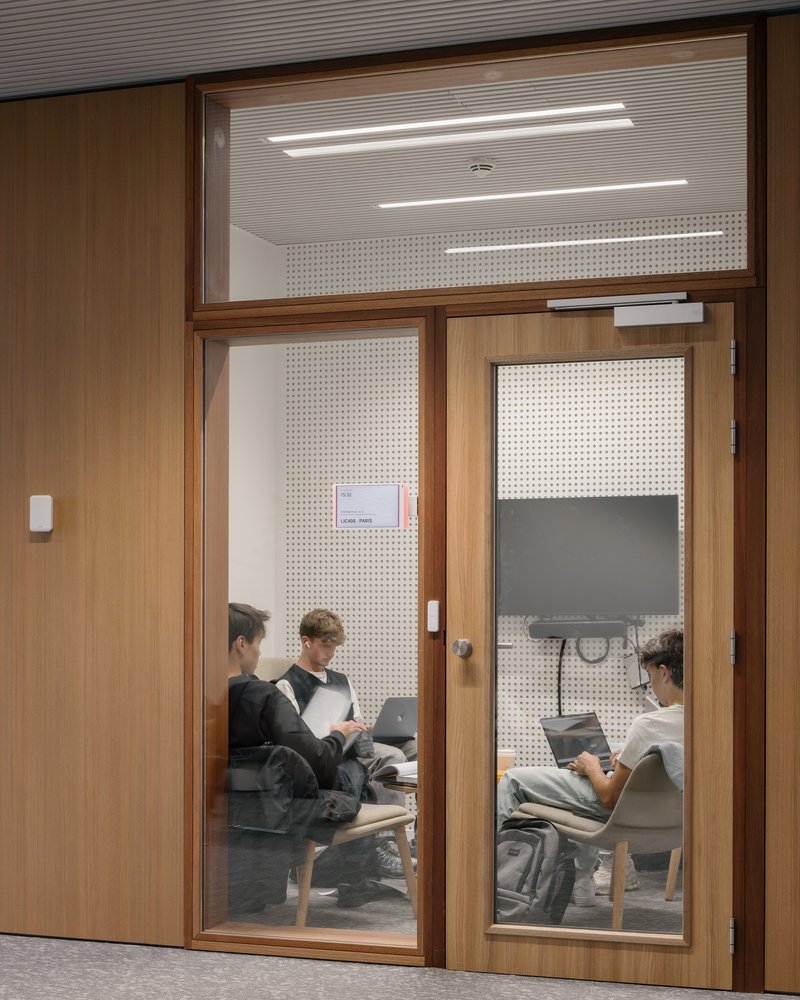
The acoustic booths and the bean-bag lounges may look like a tech-office cliche, but in a university context they make sense. Students study in different ways and the building gives them options instead of forcing one mode on everyone.
Auditoria and Formal Rooms
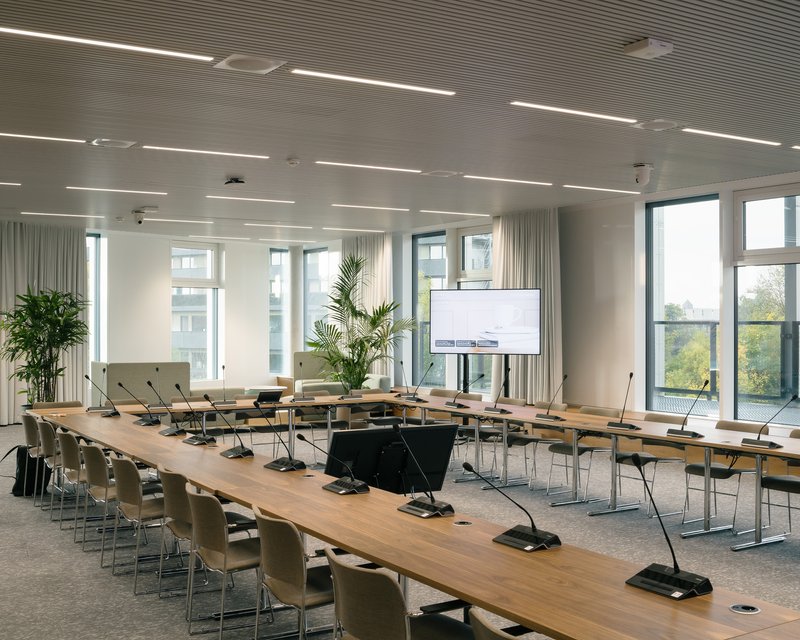
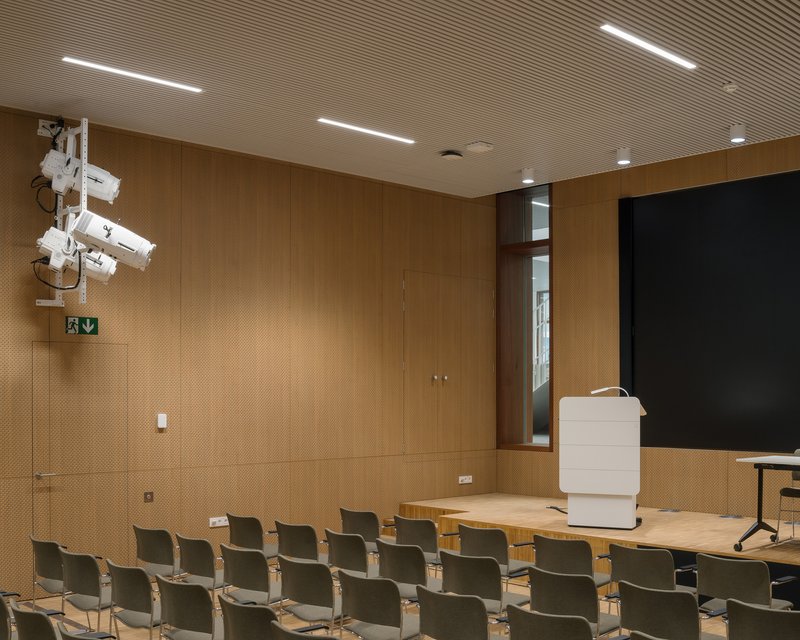
Beyond the open study and library spaces, the programme also includes formal auditoria and conference rooms with timber panelling, integrated AV, and direct daylight. These are the rooms that get used for lectures, public events, and faculty meetings, and they are designed to feel like part of the same architectural family as the rest of the building rather than as a separate institutional zone.
Connections and Exterior Walkways
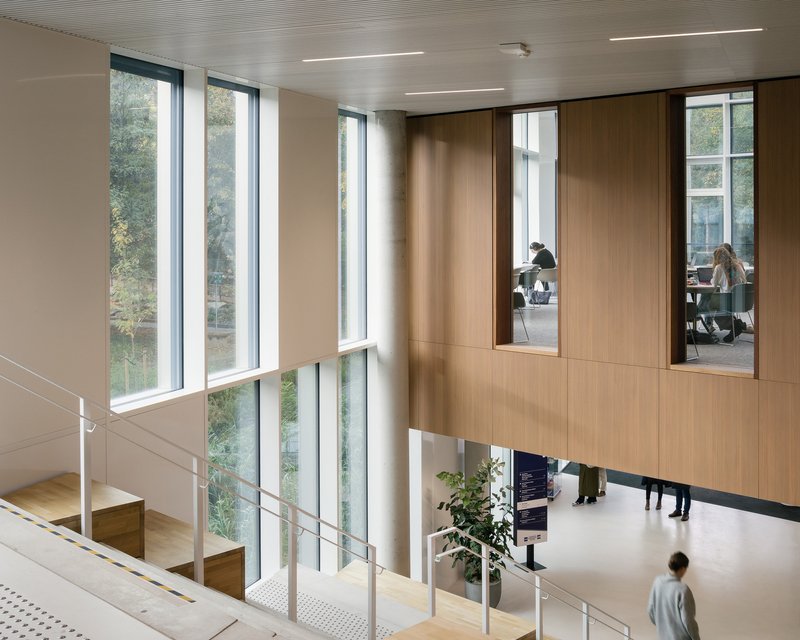
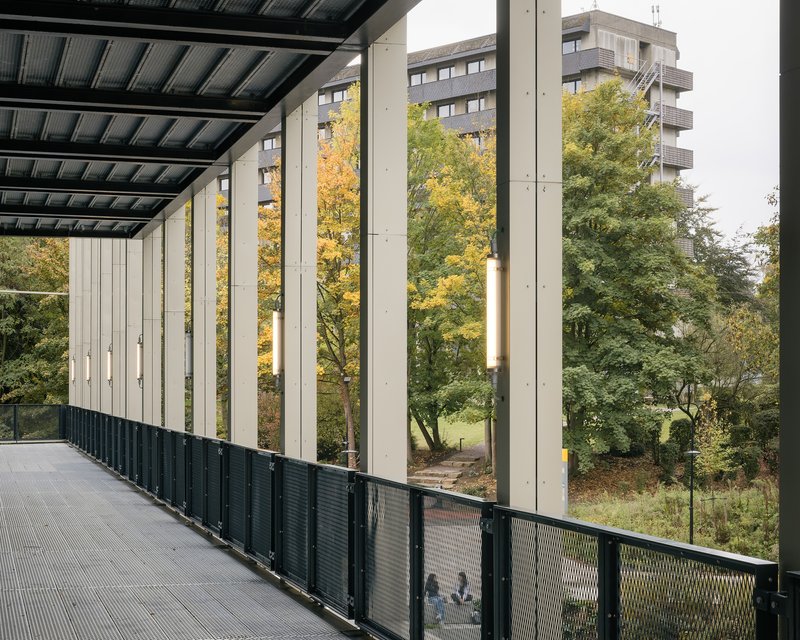
Throughout the building, internal and external walkways link the new volume to the existing campus structures. These are not service afterthoughts. They are designed pieces of architecture in their own right, with timber columns, daylight, and views back to the woodland.
Why This Project Matters
University buildings are unusually difficult briefs. They have to host a programme that changes every semester, accommodate students who use space in unpredictable ways, and survive decades of wear on a public budget. Most of them fail by trying to be impressive. The Learning and Innovation Center succeeds by trying to be useful.
The lessons are transferable to anyone designing for learning, work, or any kind of public gathering: handle the site as it is, design the section as carefully as the plan, give people more than one way to be in a room, and treat the outside spaces as architecture too. evr-Architecten and A229 have made all four moves clearly, and the photographs by Stijn Bollaert show the result in full.
About the Studios
Share Your Own Work on uni.xyz
If you are working on educational architecture, public buildings, or campus projects, uni.xyz is a place to publish your work, find collaborators, and enter design competitions.
Project credits: Learning and Innovation Center by evr-Architecten and A229. Ixelles, Belgium. 9,910 m². Completed 2024. Photographs: Stijn Bollaert.




Popular Articles
Popular articles from the community

Noue Studio Organizes a Swiss Restaurant Around a Single Concrete Wall
In Granges-Paccot, Switzerland, a 216-square-meter renovation turns raw materials and a central spine into a legible dining experience.
Pablo Senmartin Suspends a Steel-and-Timber Refuge Above a River Forest in Córdoba
An 80-square-meter dwelling on pilotis camouflages itself among the trees of Mayu Sumaj, designed to be dismantled without waste.
GGR Architectes Anchors a New Neighborhood in Frouzins with a Brick and Timber School Complex
A cruciform plan of terracotta brick and exposed wood frames four courtyards for 140 students outside Toulouse, France.
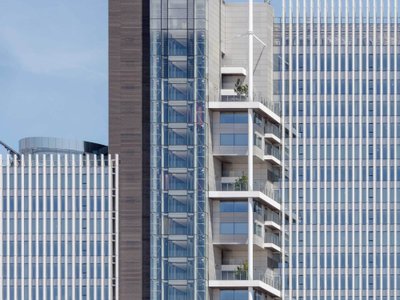
Cro&Co Architecture Builds a 150-Meter Tower on Top of a Seven-Lane Highway in La Défense
Trinity Tower reimagines the office high-rise as a bioclimatic organism threaded with terraces, trees, and public ground in Paris's business district.

Similar Reads
You might also enjoy these articles

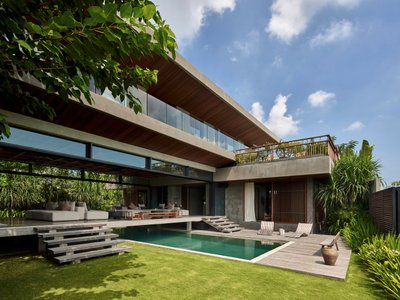
Freebird Residence by Alexis Dornier: A Tropical Modernist Sanctuary in Bali
Floating living pavilion above pool anchors H-shaped tropical villa, blending Japanese minimalism, sustainable strategies, lush landscape, and sculptural interiors.
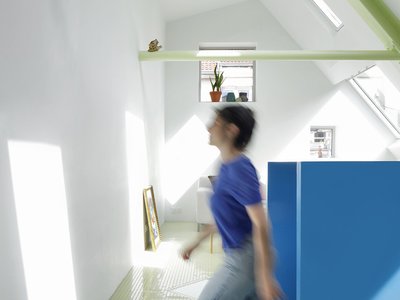
127af Flips a Tiny Bagnolet Rowhouse Upside Down with a Handcrafted Roof Extension
A 55-square-meter terraced house on the edge of Paris gains a luminous upper living floor through lightweight timber and steel.
1.61 Design Workshop Wraps a 600-Square-Meter Café in Vietnam in Sculptural Burgundy Drama
Reden Café & Bistro pairs a helical staircase, mosaic floors, and deep red interiors to rethink Vietnamese hospitality space.

The Unbound Brain: A School Shaped by Cognitive Architecture
Cylindrical learning pods radiate like neurons from a central cortex, turning the floor plan into a spatial model of human thought.


Explore Educational Building Competitions
Discover active competitions in this discipline




The Global Benchmark for Architecture Dissertation Awards


Challenge to design public laboratory
Comments (0)
Please login or sign up to add comments
No comments yet. Be the first to comment!