
Leisure Center Jules Ferry School Group by DEMAIN — Sustainable Architecture for Future Learning Spaces
A sustainable leisure center in Cébazat, France, blending timber, straw, and earth materials to create eco-friendly, child-centered learning spaces.


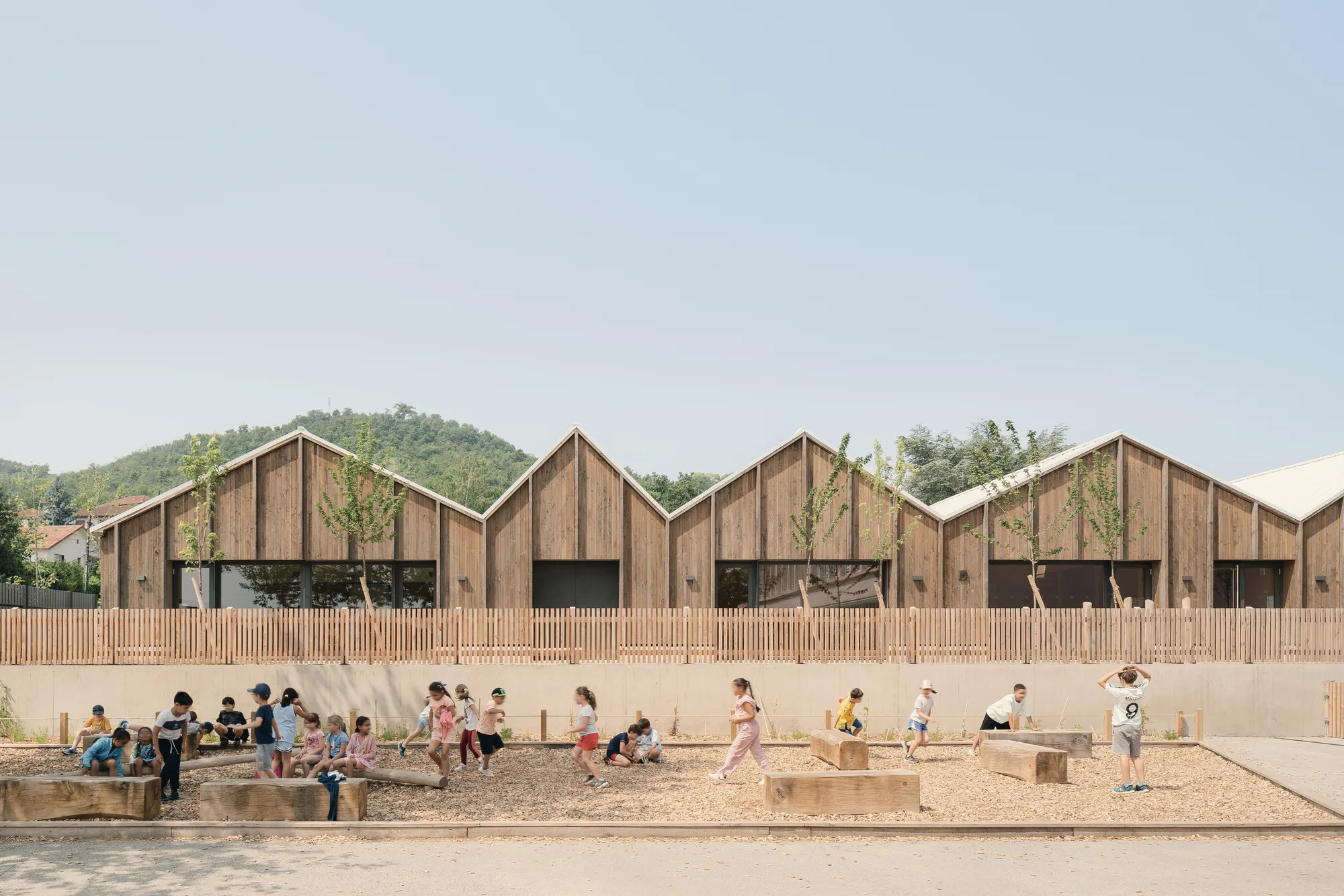
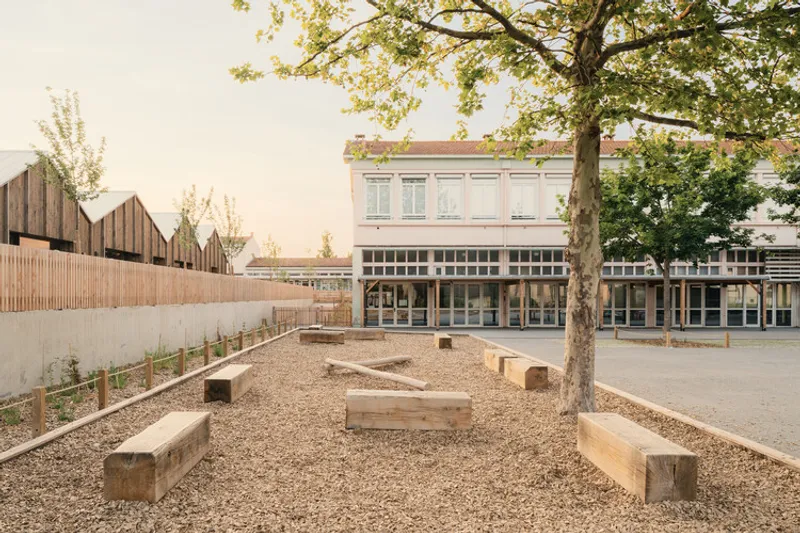
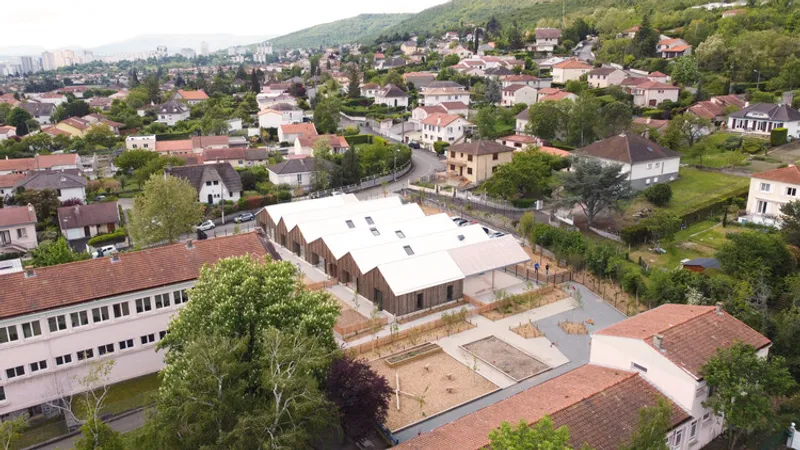
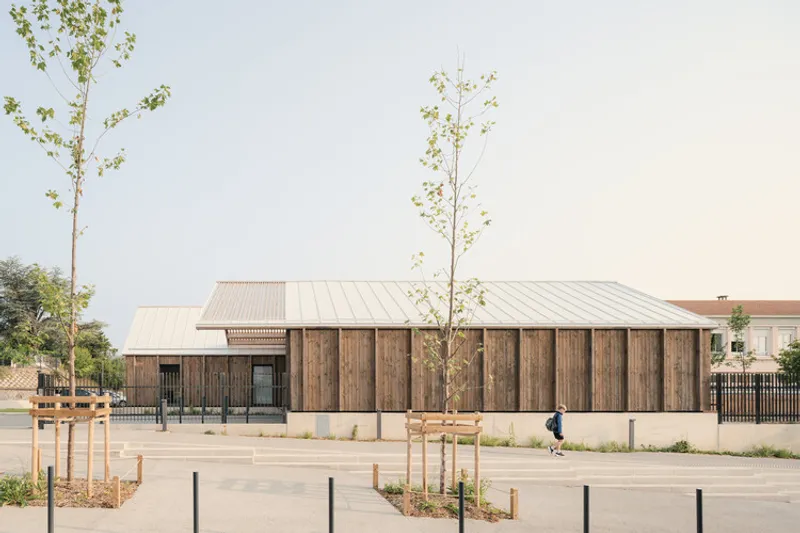
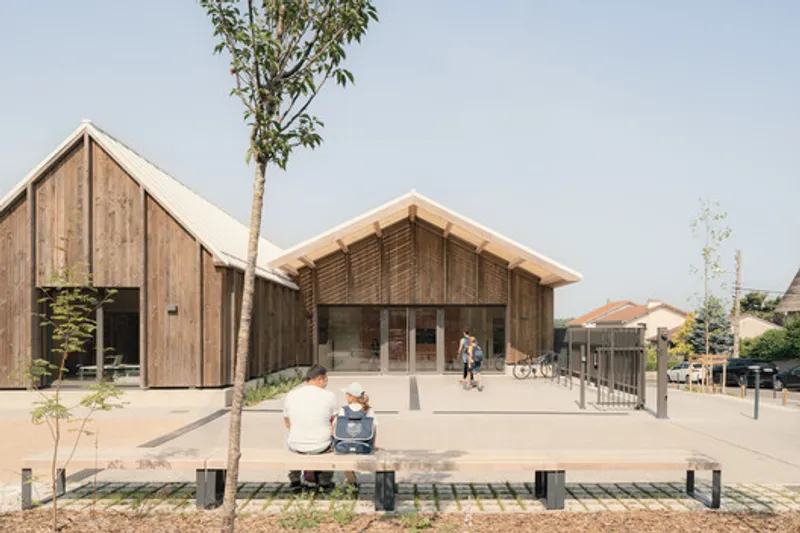
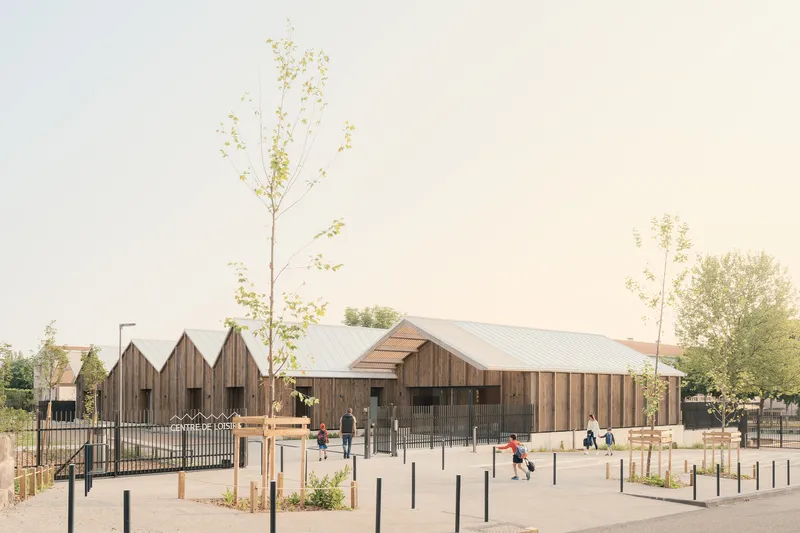
Located in the serene residential hillside of Cébazat, France, the Leisure Center Jules Ferry School Group by DEMAIN Architecture Paysage redefines sustainable school architecture through ecological materials, bioclimatic design, and a child-friendly environment. Completed in 2025, the 660 m² single-story structure harmoniously extends the existing Jules Ferry school complex, connecting the nursery and primary sections with a fluid, nature-inspired layout.
A Human-Scaled, Sustainable Design
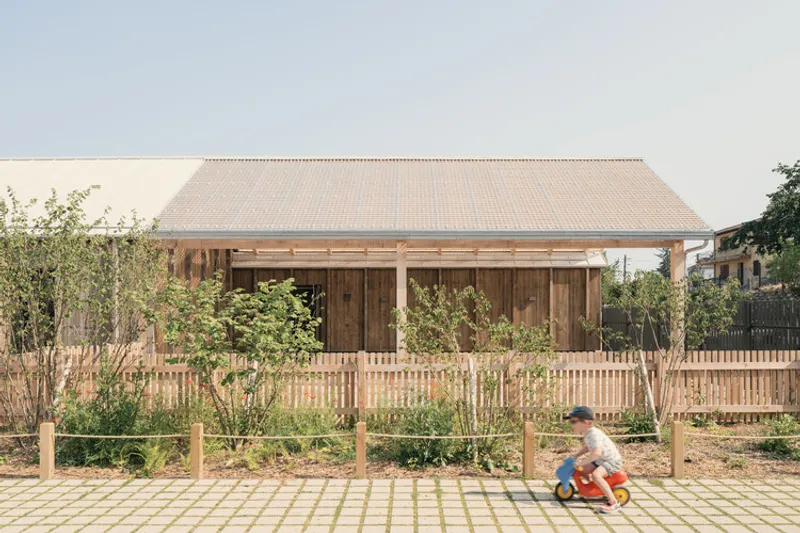
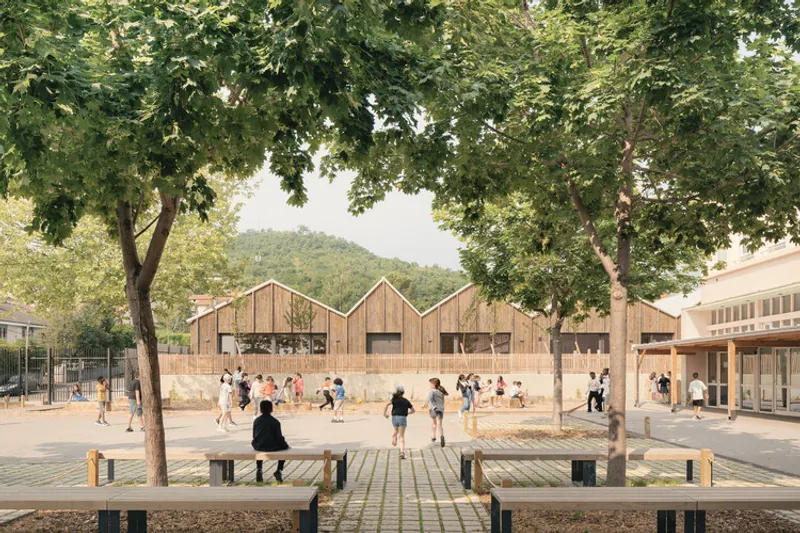
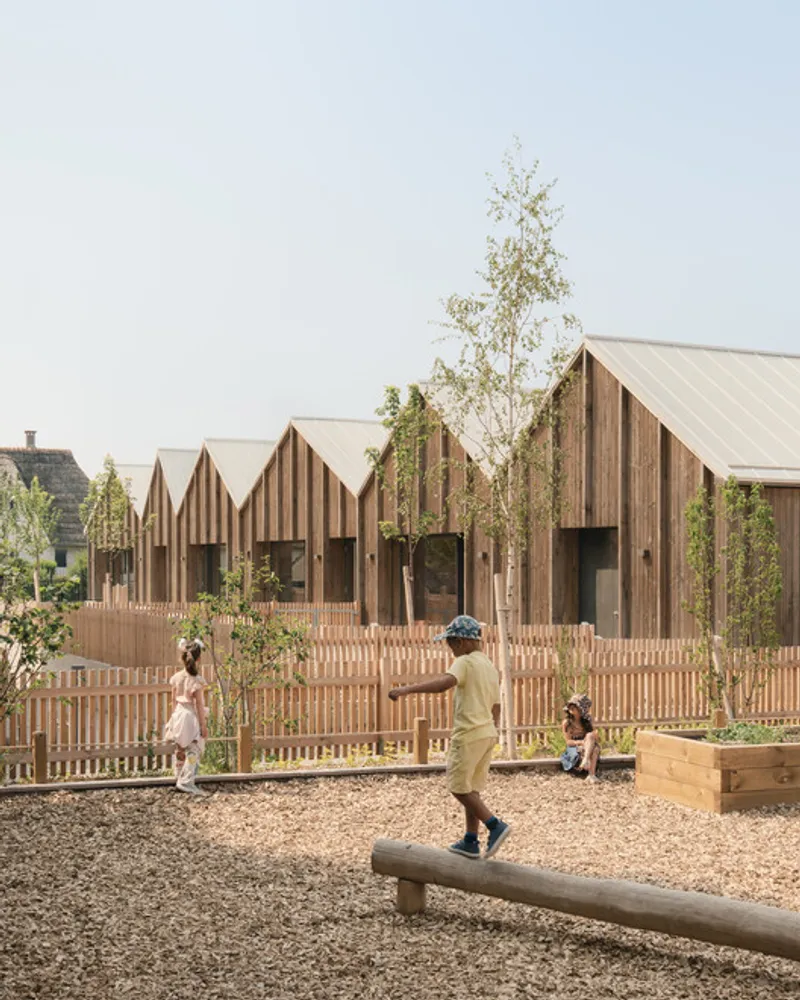
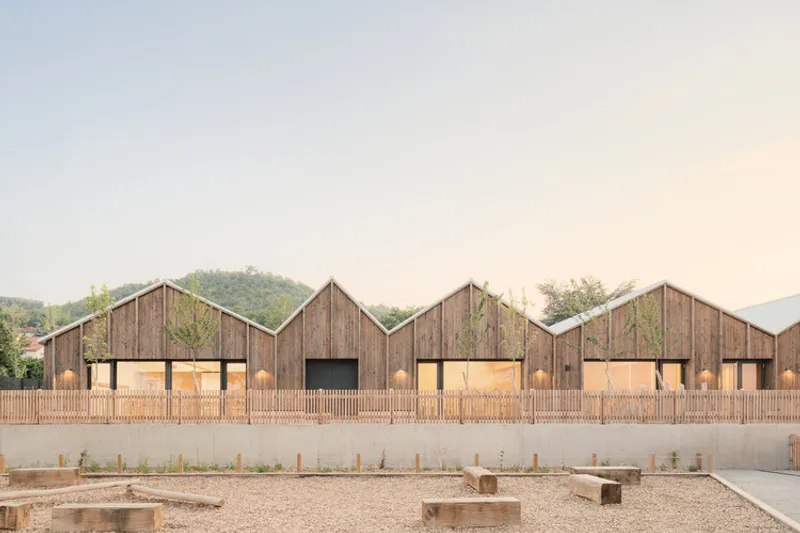
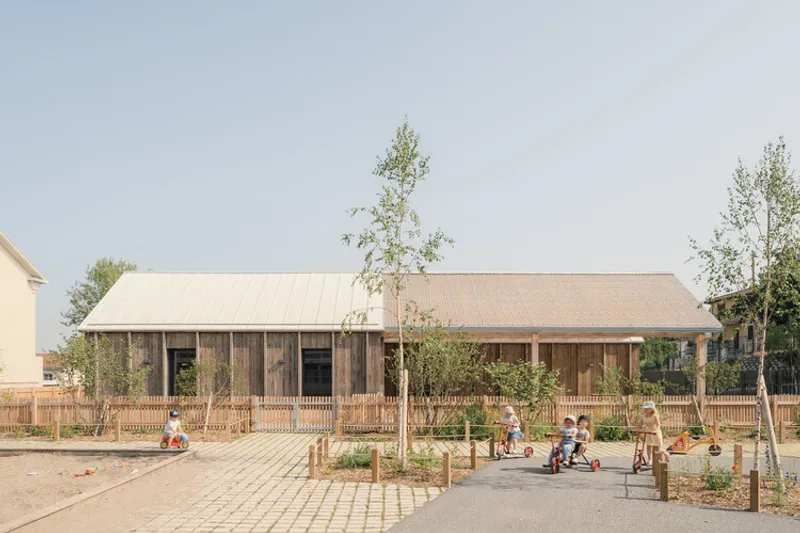
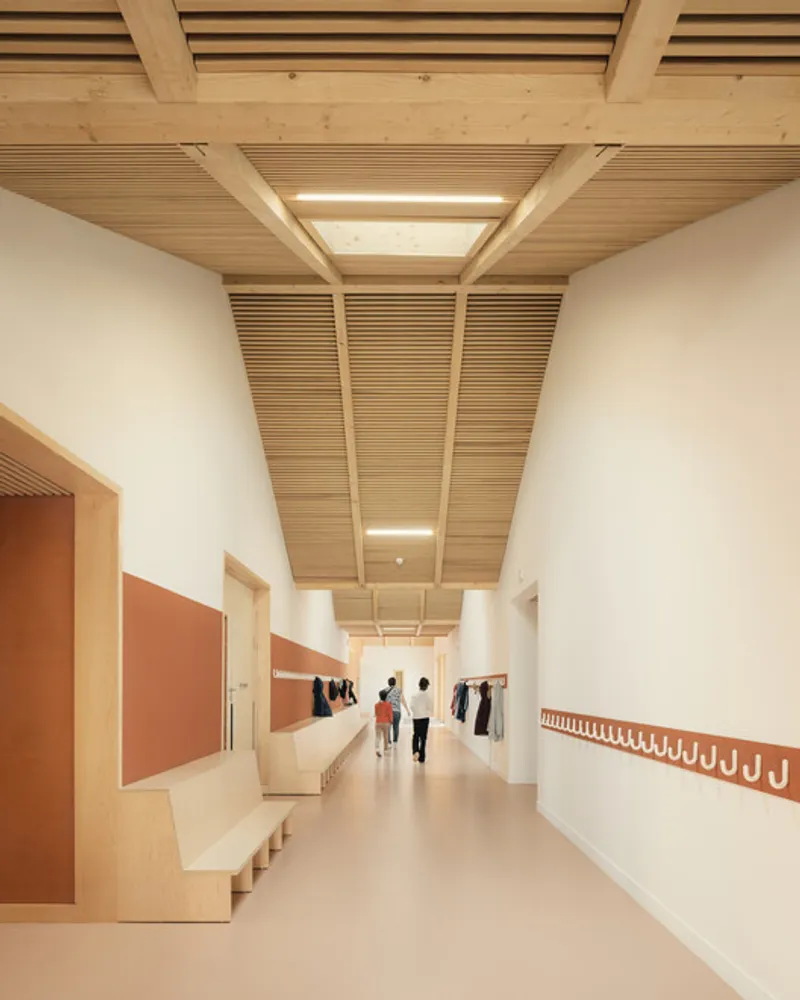
The architectural approach emphasizes simplicity, compactness, and integration with the surrounding landscape. The building’s multi-sloped roof mirrors the neighboring residential forms, creating a soft, domestic silhouette that welcomes children. Constructed with a timber frame, straw insulation, and hemp partitions, the leisure center sets a benchmark in eco-friendly educational architecture. Earth plaster, wooden cladding, and natural linoleum flooring ensure a tactile and healthy interior environment.
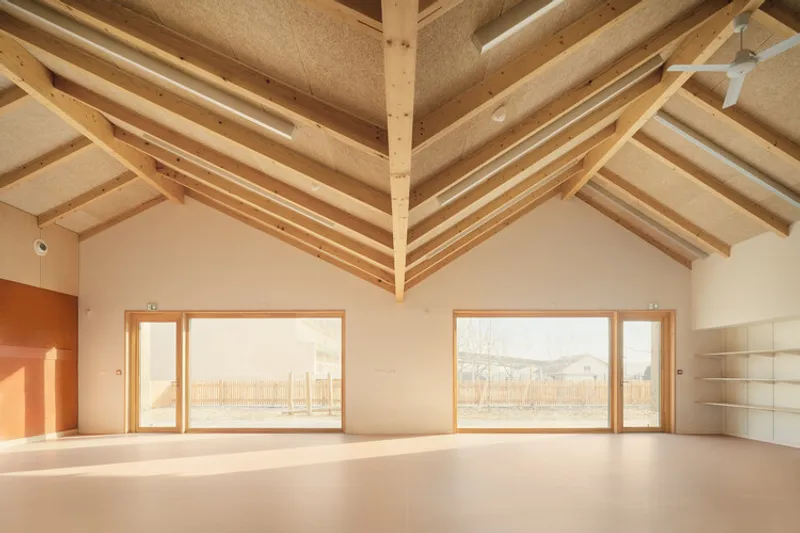
The building’s structural system—solid timber rafters supported by ridge purlins—maximizes flexibility in space planning. This modular approach allows for future adaptability, accommodating evolving educational and recreational needs.
Playful and Functional Spatial Planning
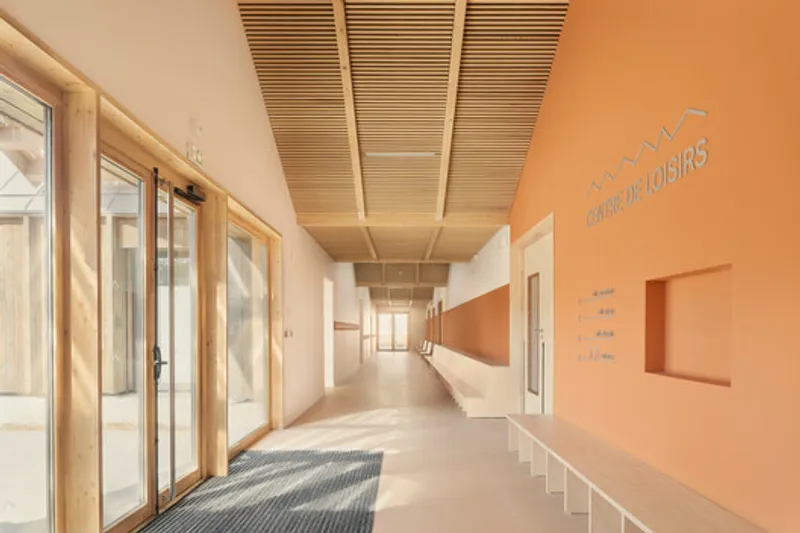
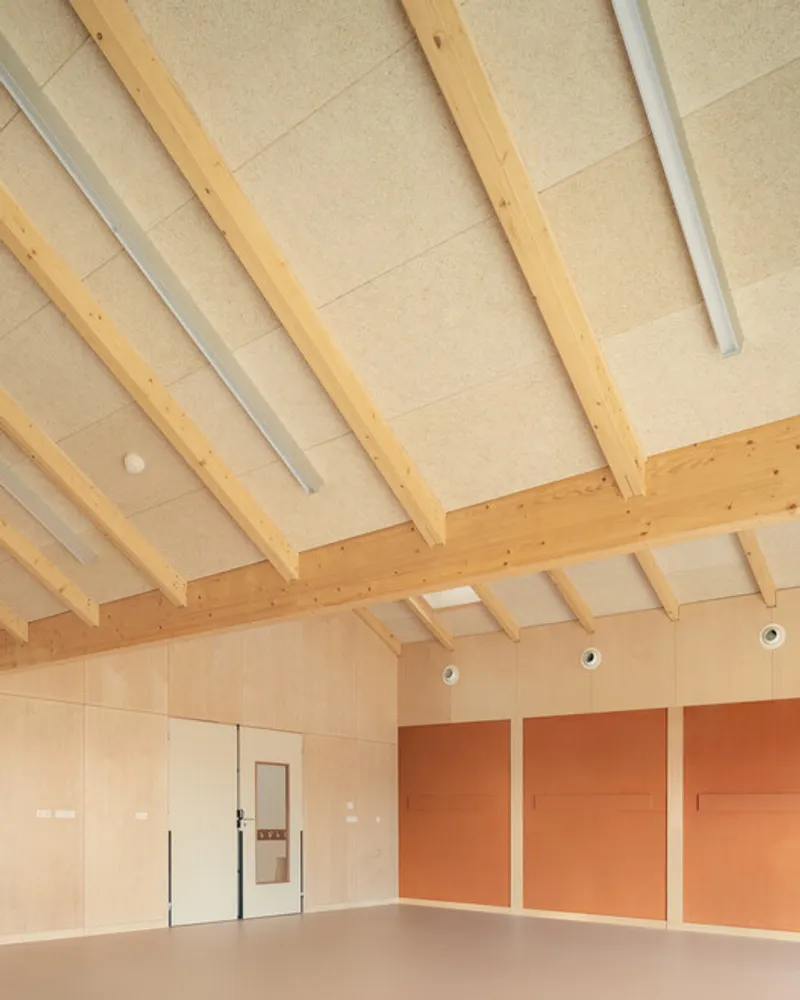
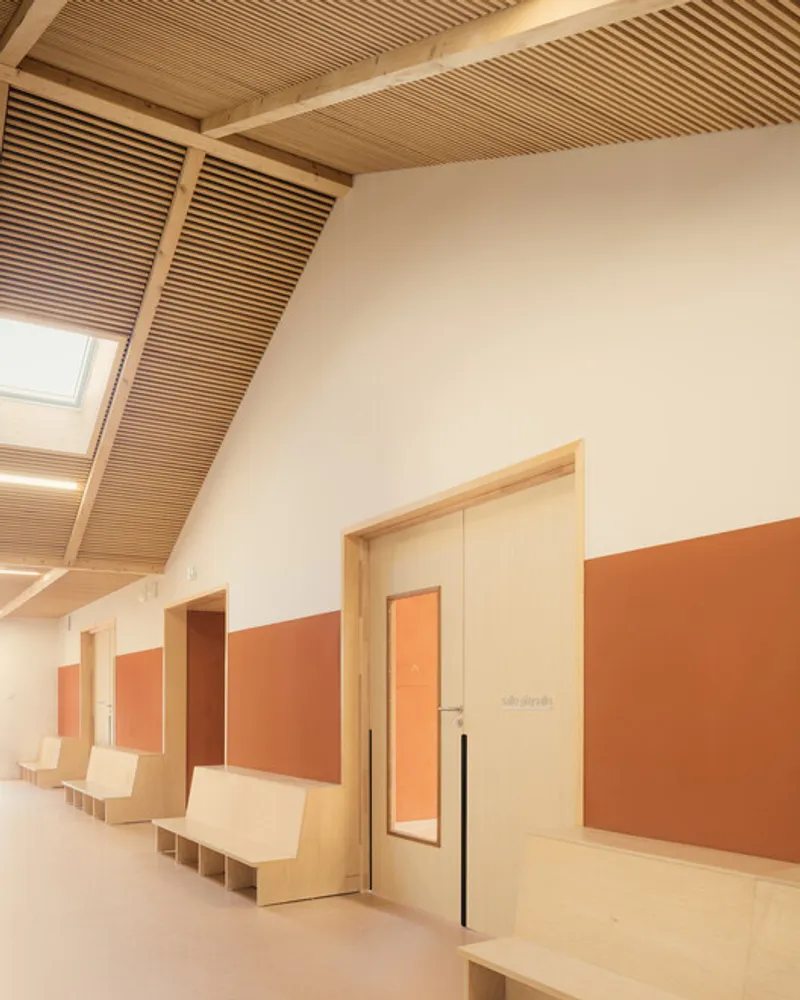
Inside, the design promotes openness, natural light, and warmth. Three large activity rooms, two multi-purpose dormitories, and a wide central corridor form the heart of the layout. This corridor, bathed in daylight from east-facing openings, doubles as a communal living zone, fostering interaction and creativity among children.
Custom wood furniture—benches, storage-integrated seating, and modular work surfaces—enhances comfort and utility. The warm tones of red hemp walls, cork panels, and green accent elements contribute to a soothing yet stimulating environment, carefully designed to nurture sensory and emotional well-being.
Connection to Nature and Community
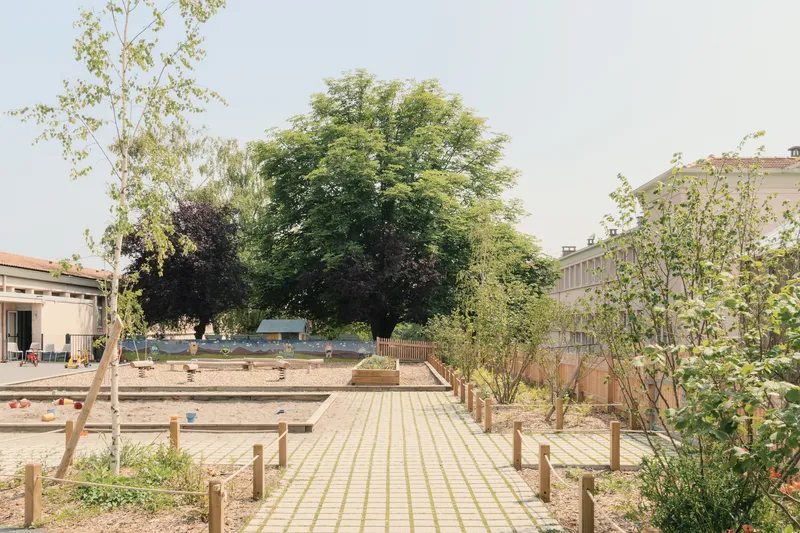
The leisure center’s landscape design aligns with the principles of oasis courtyards, creating temperate outdoor zones with preserved trees, edible plants, and permeable surfaces. These green spaces serve as inclusive, multifunctional playgrounds—combining sports areas, sandpits, gardens, and picnic corners to encourage outdoor learning and social engagement.
Two distinct circulation paths—the upper technical walkway and lower children’s route—ensure smooth transitions between indoor and outdoor spaces while maintaining accessibility and safety. The use of local materials and craftsmen strengthens the project’s ties to the regional economy and heritage.
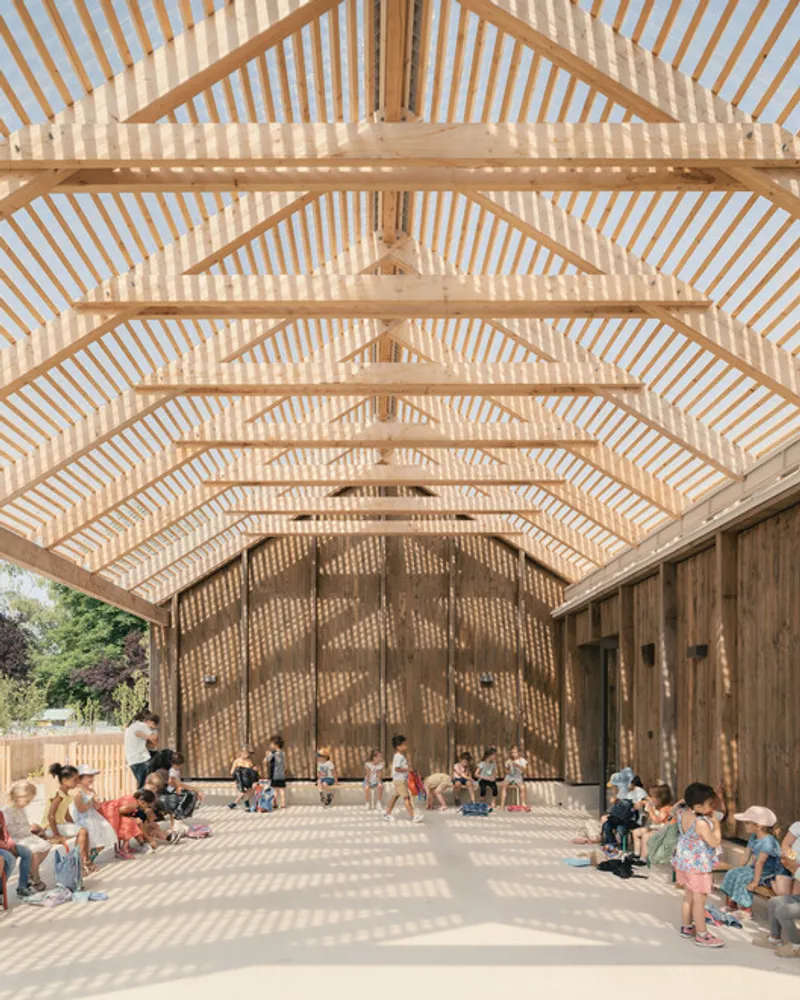
Energy Efficiency and Eco-Responsibility
From construction to performance, the project is rooted in environmental responsibility. A geothermal heat pump system provides efficient heating and cooling through the floors, complemented by a Provençal well for natural ventilation. The structure is PV-ready, allowing for future solar energy integration.
Every detail—from pre-greyed wood cladding ensuring longevity to concealed ducts and integrated ventilation—reflects precision and sustainability. The result is a carbon-conscious building that operates efficiently while maintaining thermal comfort and indoor air quality.
Architectural Identity and Signage
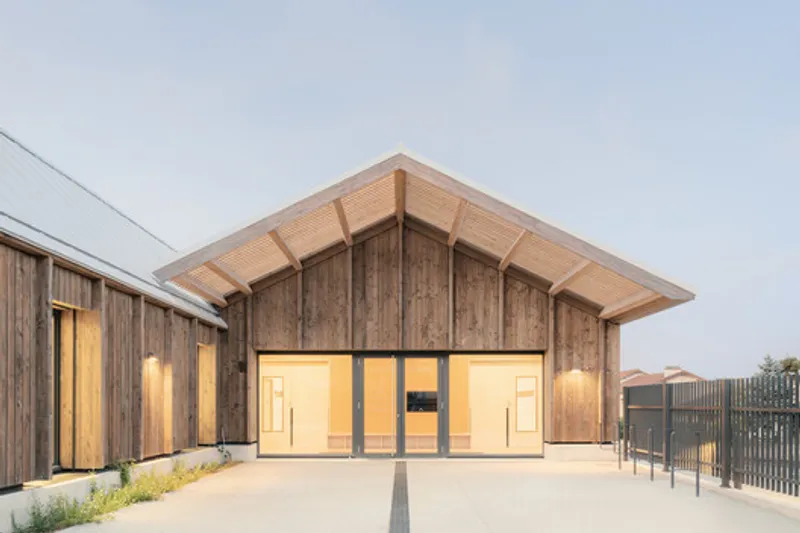
The design introduces a clear architectural identity for the Jules Ferry School Group. Distinct entrance recesses, symbolic pitched roofs, and brushed aluminum signage referencing the building’s archetypal roof form reinforce its cohesive visual narrative. Each space within the center feels intentional, inviting, and deeply connected to its educational purpose.
The Leisure Center Jules Ferry School Group by DEMAIN exemplifies biophilic, low-carbon architecture designed for the future of learning. Through its thoughtful spatial planning, eco-conscious materials, and community-driven landscape, it becomes a model of how architecture, nature, and education can coexist harmoniously.
All the photographs are works of Vladimir de Mollerat du Jeu, Demain




Popular Articles
Popular articles from the community


Riyadh For All: Intergenerational Urban Design for Active Aging in Rabat
Riyadh For All reimagines urban design in Rabat with intergenerational co-living, adaptive courtyards, and Moroccan cultural exchange today.

The Musturak Paradise: Senior Living Architecture for a Connected Future in Temara, Morocco
The Musturak Paradise reimagines senior living architecture in Temara via private homes, social spaces, culture, community, and shared care.

Conexión: Biophilic Design Reimagines High-Rise Living in Hong Kong
Conexión reimagines high-rise living in Hong Kong through biophilic design, green facades, shared spaces, daylight, water and nature within.

Lunar Spiral: Space Architecture Shaped by the Mathematics of the Universe
Lunar Spiral reimagines space architecture through Fibonacci geometry, lunar regolith, levitating habitats, and self-sustaining Moon living.


Similar Reads
You might also enjoy these articles


Hodi-Mandai Geram
Project Function: Preservation and revitalization of the Intangible heritage and socio-spatial identity of the Hodi by Housing, Cultural Memory Center, Sacred Grove, landscape, local tourism economy


Olio Towers: A Mid-Rise for Performers That Fuses Housing, Rehearsal, and Stage
Located blocks from Houston's Theater District, this modular tower stacks living units around a central performance atrium.

Oasis: Modular Green Housing Carved into Dhaka's Urban Fabric
A shortlisted Plugin Housing entry reclaims unauthorized settlements in Dhaka with stepped concrete volumes, green roofs, and ventilation-driven design.

Black Hole: A Floating Megastructure for the Post-Physical Era
Emiliano Mazzarotto envisions a spherical, self-scaling arena where e-sports, digital hotels, and holographic stadiums replace traditional public space.


Explore Pont-Aven School Competitions
Discover active competitions in this discipline



Challenge to design public laboratory


Challenge to reimagine the Iron Throne


Photograph architecture without architects


Illustrate the lost glory of Angkor Wat - Render Challenge
Comments (0)
Please login or sign up to add comments
No comments yet. Be the first to comment!