

LEMA Residence by Padovani Arquitetos: A Topography-Responsive Single-Floor House Blending Lightness, Privacy, and Spatial Integration
LEMA Residence merges topography, light-filled open spaces, and natural materials into a serene, single-level home with seamless indoor-outdoor flow.


The LEMA Residence, designed by Padovani Arquitetos and led by architect Lucas Padovani, is a 400-square-meter home in Mont Blanc, Brazil, that masterfully embraces topography, natural light, and spatial continuity. Completed in 2020, the residence is a refined example of Brazilian contemporary residential architecture that harmonizes structural functionality with a serene and fluid aesthetic.
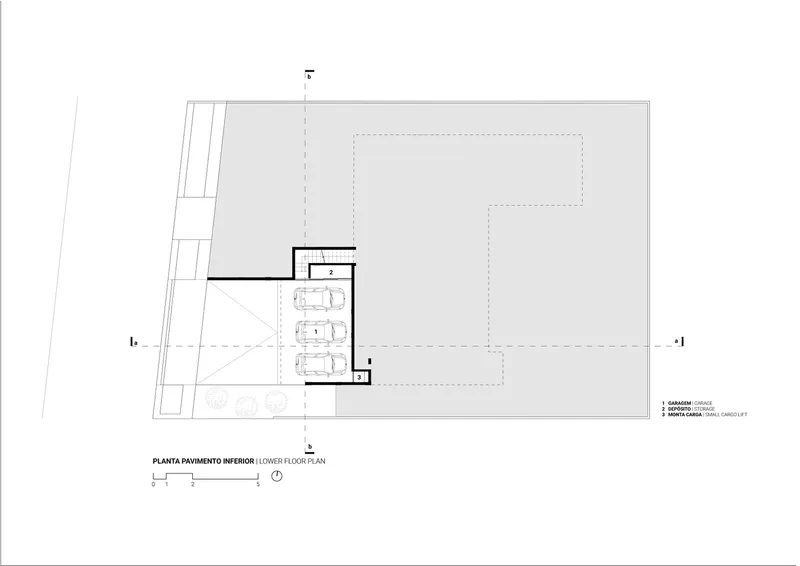
Set on a sloped terrain, the project takes full advantage of its uneven site. The garage sits discreetly at street level, while the main living spaces are elevated, creating a single-level home above that appears grounded yet floating—allowing a more panoramic integration between indoor and outdoor zones.
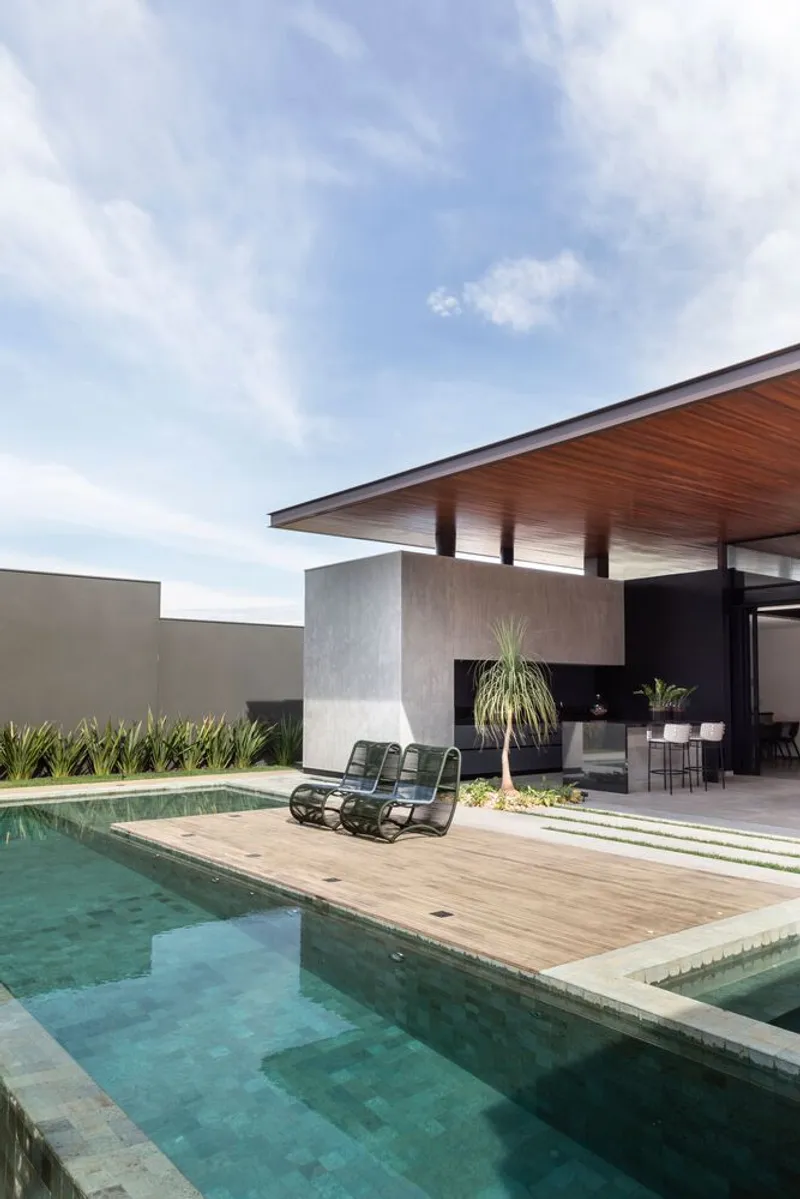
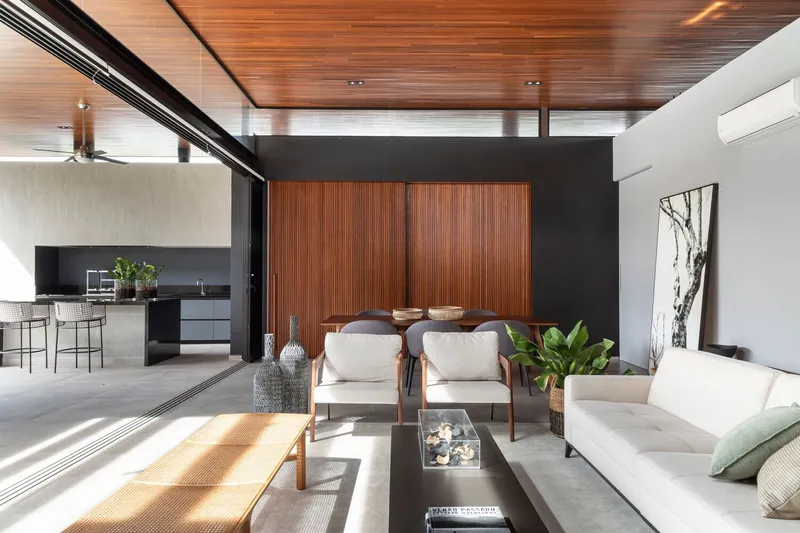
Architecture That Blends Landscape and Structure
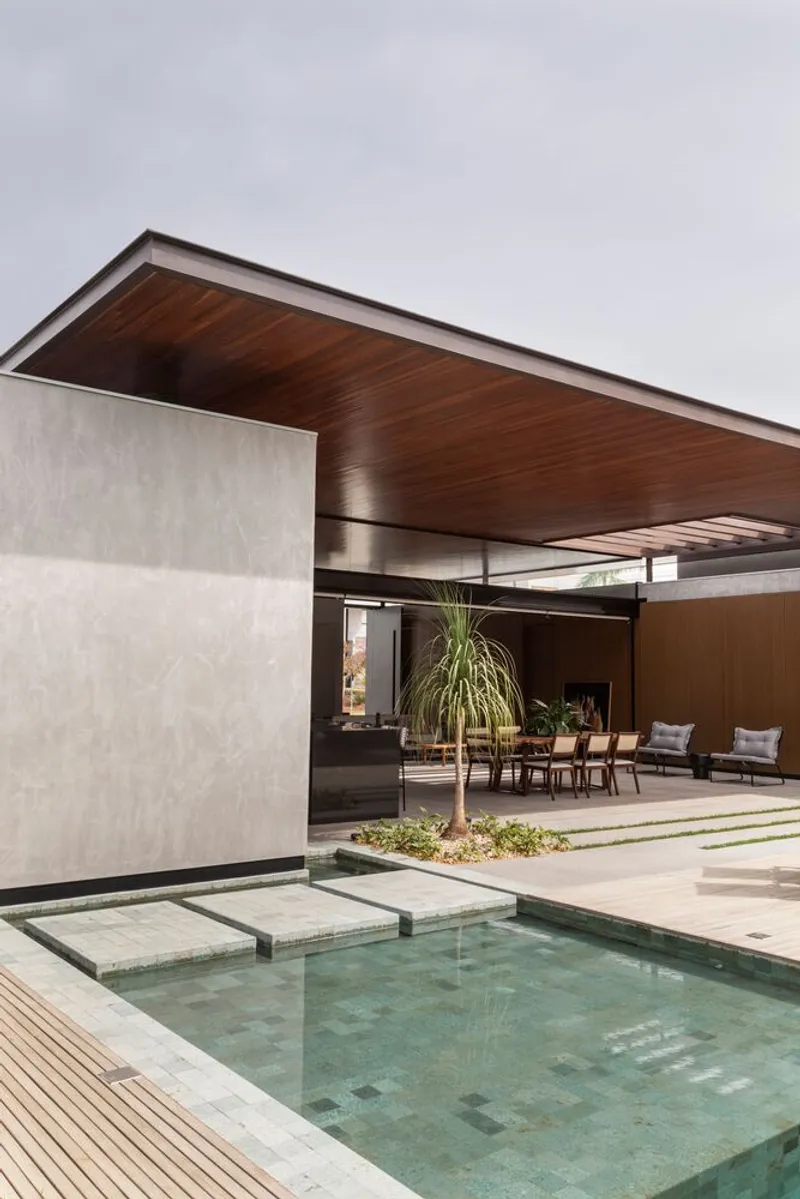
Access to the home begins with a light, sculptural stairway that guides visitors through lush, medium-scale landscaping to the main entrance. This journey is punctuated by a reflecting pool clad in natural stone, offering both a meditative welcome and a spatial buffer that adds drama and calm to the entry sequence.
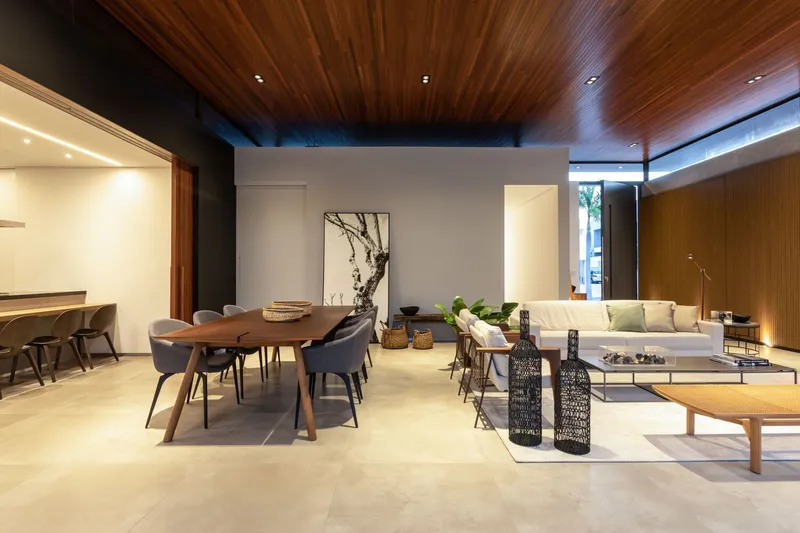
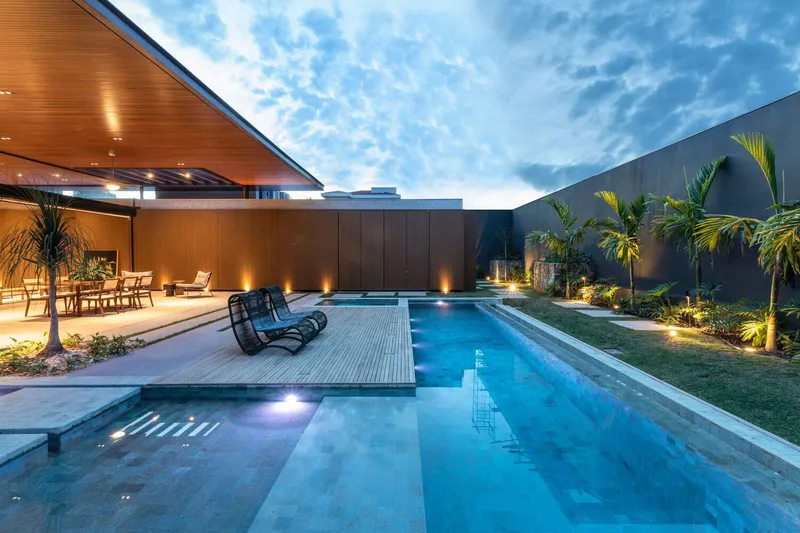
Inside, the layout is organized around a central social void—the heart of the home. This expansive open space merges the living, dining, and kitchen areas, all of which seamlessly extend toward the exterior. Through large sliding glass doors, the boundaries between indoor and outdoor dissolve, forming a continuous veranda-like experience that flows into the pool and garden.
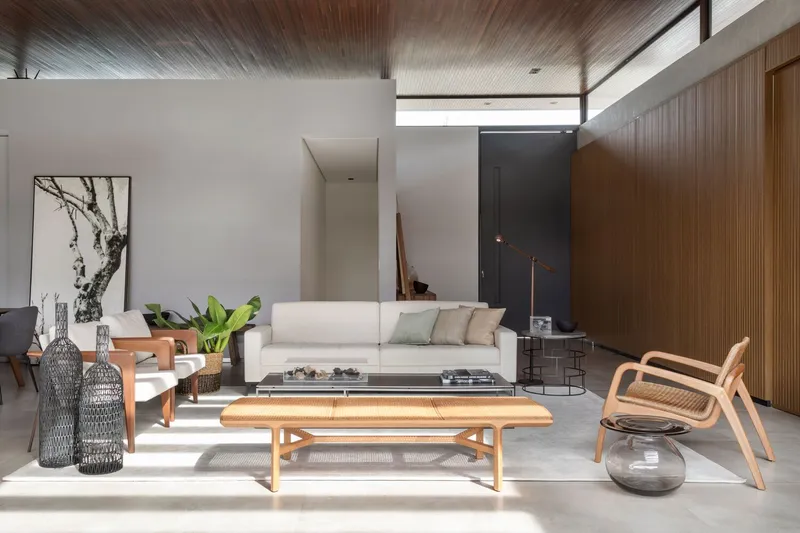
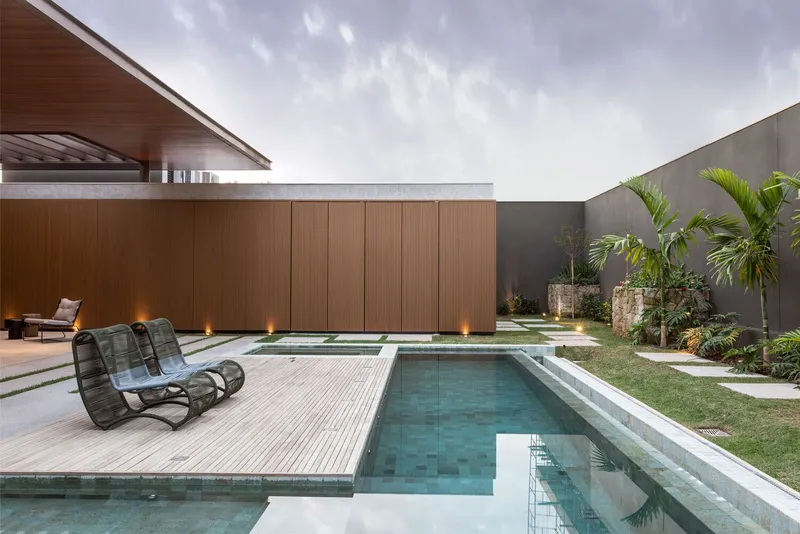
Double-Height Living and Minimal Elegance
A striking double-height ceiling characterizes the social core, made possible by a light metal roof delicately supported by the concrete framework. This structure not only enhances vertical openness but also introduces abundant natural light, reducing the reliance on windows and allowing for clean, minimal facades. These sleek surfaces contribute to the residence’s overall elegance and reinforce the architectural intention of purity and openness.
Material Palette: A Dialogue of Warmth and Modernity
The material choices are deliberately neutral and natural, enhancing the residence’s serene and cohesive ambiance. The interiors feature concrete, wood ceilings, and custom furniture, all in warm earthy tones that contrast beautifully with the slatted metallic panels used on the exterior. These adjustable metal screens offer both solar control and privacy, particularly in the home theater and office, while contributing to a uniform facade expression when closed.
Layered Privacy and Connected Living
The home’s private zones, which include two large suites and one master suite, are strategically located toward the rear and sides of the property. Here, metal slatted shutters offer flexibility—closed for privacy and comfort, or opened to connect with the outdoor social areas. This layout ensures a tranquil retreat for residents without sacrificing connection to the larger spatial experience.
A Model for Contemporary Brazilian Living
The LEMA Residence exemplifies how a thoughtful architectural approach can respond to terrain, climate, and lifestyle. Through elevated living, a void-centric spatial strategy, and a palette rooted in natural materials, Padovani Arquitetos have created a residence that is both elegant and grounded, balancing privacy with openness, and structure with landscape.


Popular Articles
Popular articles from the community


Cube Design Draws an Ecological Corridor Between Two Shenzhen Hills with the Nankai Building
Beside Shenzhen's container docks, the Nankai Building pairs stacked balconies with a climbing green screen to connect two hillsides across its height.

Architekt Andreas Gruber Scatters 23 Dark Timber Chalets Across a South Tyrolean Forest Edge
In Molini di Tures, Amonti Chalets breaks a resort into a hamlet of gabled timber houses, with parking, storage and services pushed into the slope.

longwave studio Reorganizes a 112 m² Tainan Apartment Around the Daily Routines of a Family and Two Cats
In Tainan, Taiwan, birch plywood, rust-red furniture and a freestanding plaster wall link arrival, storage, work and family life in one apartment.

LT2A and OPEN Architectes Thread a Brick and Glass High School Through a Wooded Belgian Campus
In Braine-l'Alleud, a 3,000 m² wing for Collège Cardinal Mercier pairs pale brick with a glazed colonnade, deferring to a small chapel and a dense wood.

Similar Reads
You might also enjoy these articles


Hodi-Mandai Geram
Project Function: Preservation and revitalization of the Intangible heritage and socio-spatial identity of the Hodi by Housing, Cultural Memory Center, Sacred Grove, landscape, local tourism economy


Olio Towers: A Mid-Rise for Performers That Fuses Housing, Rehearsal, and Stage
Located blocks from Houston's Theater District, this modular tower stacks living units around a central performance atrium.

Oasis: Modular Green Housing Carved into Dhaka's Urban Fabric
A shortlisted Plugin Housing entry reclaims unauthorized settlements in Dhaka with stepped concrete volumes, green roofs, and ventilation-driven design.

Black Hole: A Floating Megastructure for the Post-Physical Era
Emiliano Mazzarotto envisions a spherical, self-scaling arena where e-sports, digital hotels, and holographic stadiums replace traditional public space.

Explore Architecture Competitions
Discover active competitions in this discipline

Challenge to reimagine the Iron Throne

Photograph architecture without architects

Illustrate the lost glory of Angkor Wat - Render Challenge

Design challenge to reuse E-waste
Comments (0)
Please login or sign up to add comments
No comments yet. Be the first to comment!